Riley! – To Live and Die in the American South | EP Review

Pure Noise Records

When explaining the peculiarities of the Southern identity, Flannery O’Connor wrote: “Whenever I'm asked why Southern writers particularly have a penchant for writing about freaks, I say it is because we are still able to recognize one.” The freakish nature of the South is all-encompassing, one that swallows you whole rather than sneaking up behind you. It’s a region of endless mourning and gregarious myth. Frightening at times, apologetic in others, uncomfortable always. In their latest EP, To Live and Die in the American South, Riley! attempts to make peace with the anguish their home has wrought. 

Texas’ inclusion in the South has always been hotly disputed by those hailing from the Deepest parts of the region. They claim it’s too Western, too different from the culture found on South Carolina’s patios or in Georgia’s sunrooms. I have always disagreed with this perspective; Texas has the same ghosts in the attic as the rest of the South, the same violence as Louisiana, and the same mountains as Tennessee. I bring up this debate because Riley! is from the Rio Grande Valley, a place at the tip of Texas’ hooked end and near the same Gulf that borders Mississippi and Alabama, a place where the South legitimately meets the West, and To Live and Die in the American South connects them both. 

Beyond this connection, emo, a genre more classically found in the mid-Atlantic or the Midwest, is not necessarily the approach most musicians would utilize to encapsulate the feelings of decay and distress within the American South, but Riley! makes a staggering case for changing the tune. For years, Riley! has toiled away in the remains of the 5th wave emo scene, frustratingly stuck as an ‘if you know, you know’ band. The excitement of their last album Keep Your Cool on Counter Intuitive Records, turned Riley! into one of emo’s most reliable collections of Road Dogs, thanks to near-constant touring. Yet their success keeps climbing, on To Live and Die in the American South, an EP produced by Phillip Odom, the band breaks itself wide open through a raw examination of the complicated relationship the trio has with their home.

The first song on the EP, “Roll for Initiative,” begins with a question, “If I died right now, would I still haunt this house, or would it just rot with my body when I’m put in the ground?” It’s a question that veers the album directly into the literary territory of the Southern Gothic, a genre centered around inspecting the grotesque hauntings of the South. Vocalist and guitarist Ryan Bluhm answers the question for themselves: “I think I’m meant to live and die here, and there’s no way out.” This feeling of dread is threaded through every song on the EP. The conceit of the song, firmly entering it into the Southern Gothic, is Bluhm’s admittance, “There’s nowhere else I’d rather die.” It’s the heart of the genre, a disgust for home infused with an unshakeable feeling of belonging.

Cesar “Izzy” Izaguirre and Kris Gallardo’s rhythm plays “Roll for Initiative” out, leading into the quieter “Another Round of Radical ‘Ritas, Please.” The rot felt in the prior song returns, but instead of the secrecy of experiencing misery in private, this song puts those feelings in front of an audience. Tades Sanville of Hot Mulligan, a writer contending with similar topics of self-hatred and grief, joins in over Izzy’s pounding drums. 

Across this EP, Riley! utilize an arsenal of familiar voices with similar expressions of introspection to deepen the emotionally wrought work. On the next track, the deceptively upbeat “Two Bucks,” a song about feeling useless, one of the angriest, most suspicious voices in the Emo world appears: Eric Egan of Heart Attack Man. It’s an unguarded, honest song; Bluhm and Egan agree that they are both just ghosts. Gabe Wood of saturdays at your place has long studied the impact of his own actions in song, making him the perfect pick for “Backseat Bartender.” Across Bluhm and Gallardo’s intricately woven riffs and basslines, Wood and Bluhm beg someone to crawl into their head and find what’s wrong. 

The final song of the EP, “73 Summer,” catches Bluhm in a moment of grief. For a record contending with the wretchedness life can inflict, it only makes sense to end on the aftermath of death. The band gives the questions within the lyrics plenty of room to linger, creating a specter looking back. In that same quote about the Southerner’s natural predisposition to identifying a freak, O’Connor added that “Ghosts can be very fierce and instructive. They cast strange shadows, particularly in our literature.” The ghost Bluhm is speaking to is made present by their words and the song's ferocity. The shadow may be strange, but it’s familiar.

The final bit of the O’Connor quote referenced throughout all of this is the notion that “It is when the freak can be sensed as a figure for our essential displacement that he attains some depth in literature.” Riley! achieves this in 17 minutes on To Live and Die in the American South. The admissions and frustrations put to song on this EP breathe familiarity into feelings of freakiness, making them whole. Riley! may feel tied to the American South and all of the internal strife it creates, but this is the place that made them, for better or worse. 


Caro Alt (she/her) is from New Orleans, Louisiana, and if she could be anyone in The Simpsons, she would be Milhouse.
Exploring the Atmosphere: An Interview with She’s Green

Photo by Myles Ross

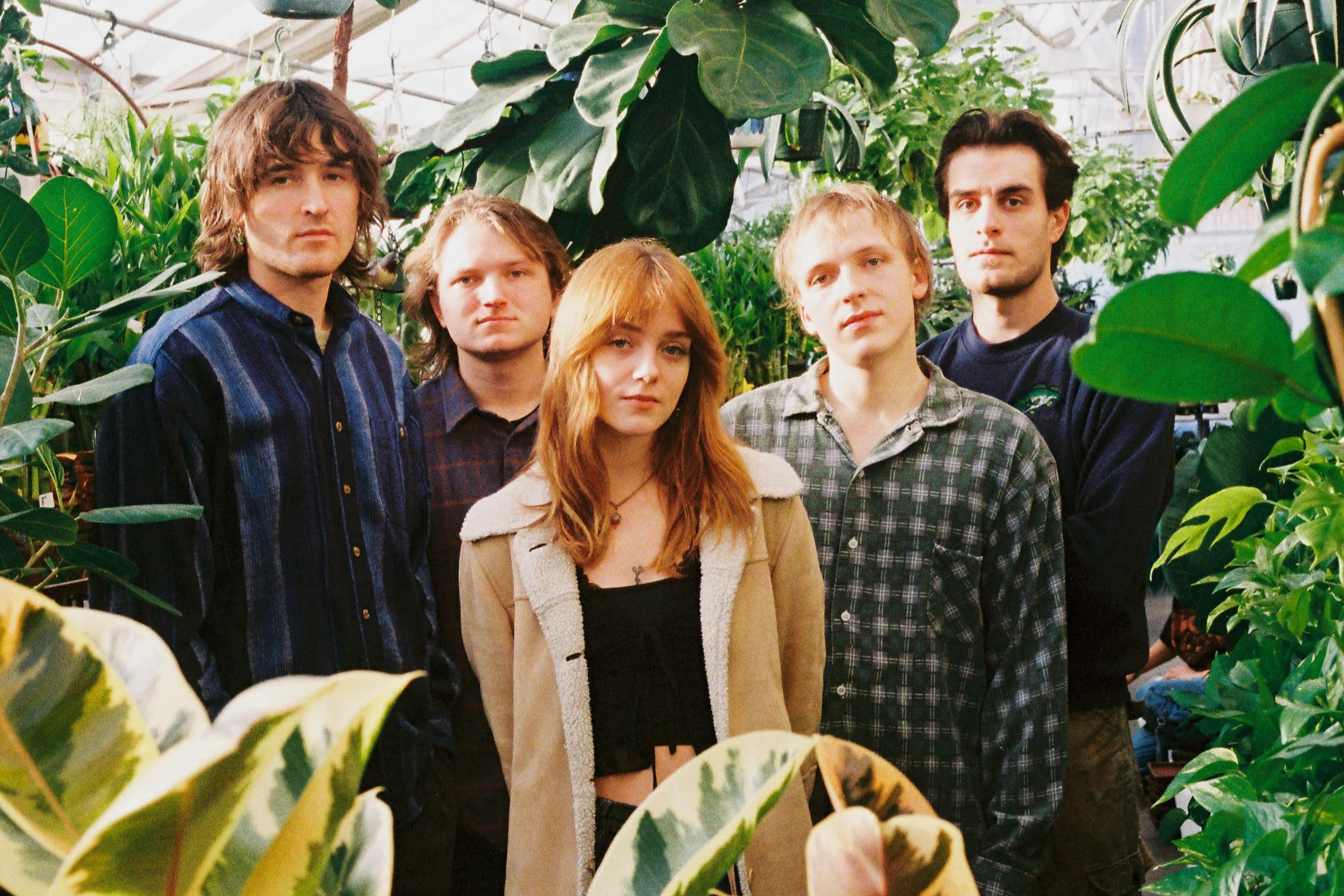
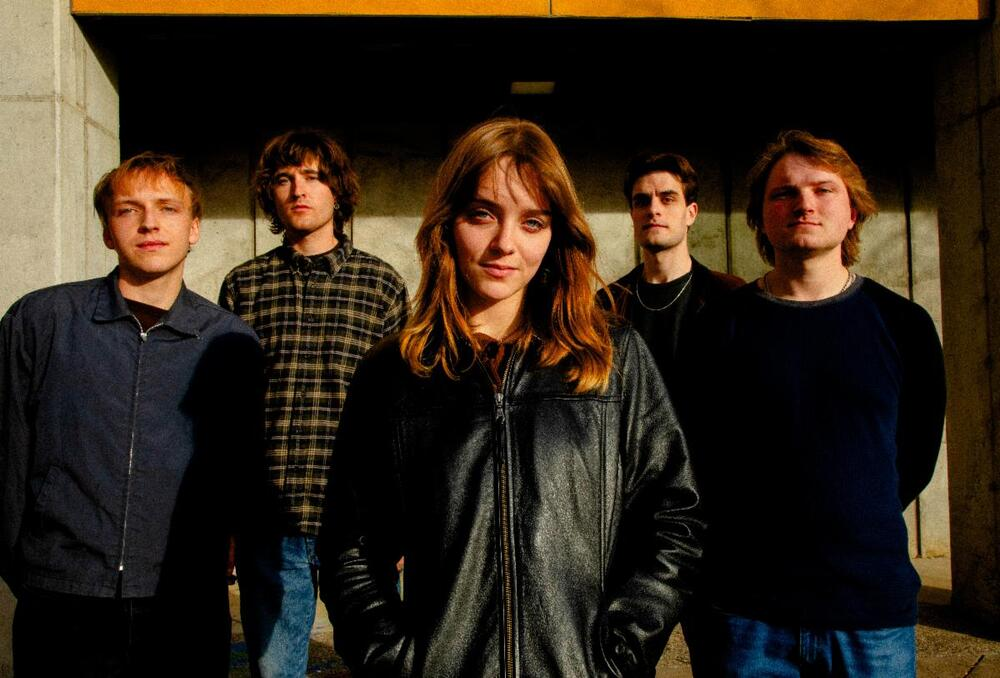
In a world that is becoming more chaotic and artificial by the day, the act of finding your peace has never been more important. The environment that we surround ourselves with is essential to maintaining our sanity and cultivating our creative inner world. Rising indie rock band She’s Green recognize this and have tailored their specific act of creation by going back to basics on the most human and naturalistic level. The Minneapolis quintet has made a habit of heading to various forests, lakes, and quarries to center themselves while creating the kind of music that not only replenishes their own souls but also those of the fans who listen to their music. 

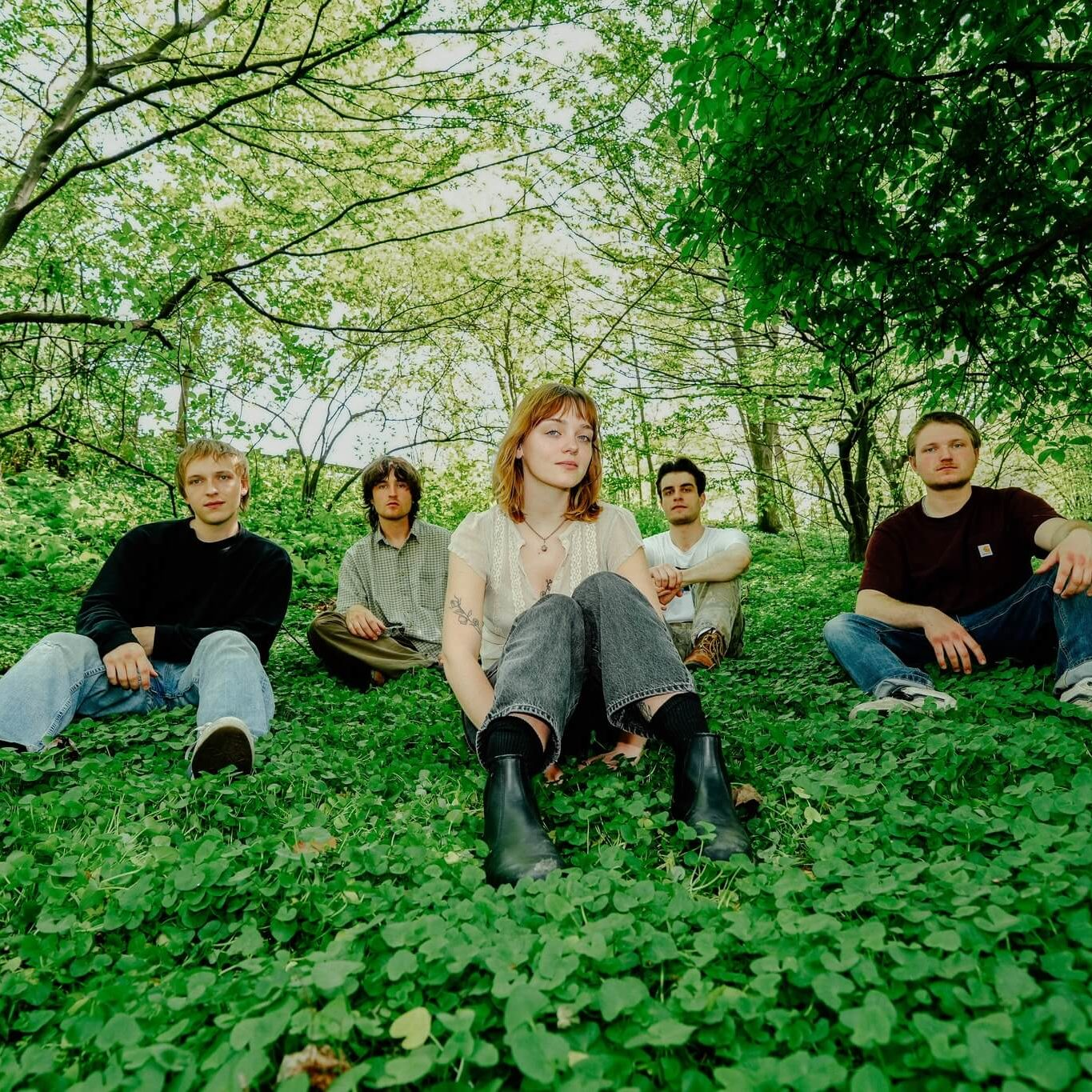
The band – comprised of singer Zofia Smith, guitarists Liam Armstrong and Raines Lucas, drummer Kevin Seebeck, and bassist Teddy Nordvold – has established a worldwide following solely off a few EPs and a handful of singles. The music these five create speaks for itself with lush textures that are richly melodic, designed to draw you into inescapable dreamy atmospheres. Their songs have a cinematic quality, where one stroke of a guitar can feel gut-wrenching, then exhilarating at the drop of a hat. Smith’s otherworldly vocal range, matched with the whirling dervish noisy-yet-melodic guitar leads, is a combination that is just killer, and it’s clear as day why this band is connecting with so many people before they even have a proper debut album under their belts.

The group’s newest EP, swallowtail, has the gratifying feeling of a band finally putting together the pieces of their true potential. Opening track “locket” possesses a clear reverence for the shoegaze ancestors of our collective past, nodding heartily toward the lineage of 90s greats like Slowdive and Cocteau Twins. My favorite song, the mid-album cut “mettle,” has a smoggy wash of reverb-drenched guitar riffs that are thunderous in all the right places. One track later, “keeper” is another standout in which the rich guitar textures are painted with precision, and Smith’s vocal register is yet again a major highlight. It’s one of those songs that you can put on while staring out at the night sky, glaring at the stars and getting lost in space. 

I got a chance to chat with Zofia Smith and Liam Armstrong over Zoom, where we discussed everything from their patented “moss music” sound, the indie scene out in Minnesota, and touring China for the first time. We even managed to sneak in some Jonas Brothers talk.

This interview has been edited for length and clarity.


SWIM: I read that you describe your sound as “Moss Music.” 
What does that label mean to you? 

ZOFIA: Moss Music is a small thing that nourishes its environment and is very firm and dense, but also fuzzy and soft. I think that really describes our sound. Sometimes there's a love sound, and it’s a lot; then it’s heavy, and then there’s this gentleness to it. The point of us making music is to create an environment for a person to nourish their soul. 

SWIM: Are there any other bands that you would consider Moss Music? 

LIAM: That is so tough. I would say Jefre Cantu-Ledesma. He makes an ambient kind of tape guitar. I'm also gonna say George Harrison… And let’s get Weyes Blood in there too.

SWIM: What is it about dream pop and shoegaze that attracts you guys to make records in a similar aesthetic? 

LIAM: We had a huge obsession with 90s bands, but also music with ambient textures. We wanted to see how far we could push experimentation with the sound of a guitar. In a way, we tried to make it not sound like a guitar anymore. I think this helps me paint a more grandiose picture that also leans into our interests in movies and visual art. 

ZOFIA: Those sounds have always seemed captivating. I'm instantly drawn to the sounds of Beach House and that beautiful chorus reverb sound. It just invites me in, and I want to wrap up in a blanket and sink into it. This is the best, most comforting sound to me. That started my deep dive into shoegazing dream pop. That obsession made me want to try it out myself and see what I would come up with with the same sort of sounds. 

SWIM: What was the first concert you ever went to?

LIAM: The first concert I went to with my dad was this folk rock band, Dawes. Then I also saw Rush with my dad. So definitely bands on different ends of the spectrum. 

ZOFIA: My first one was the Jonas Brothers. I was obsessed with them. My parents were kind of in a different lane, so I got into cool music in high school, and it felt like I had all the cool discoveries a bit later than most people. 

SWIM: I gotta ask, did you have a favorite Jonas brother? 

ZOFIA: Nick was my favorite.

LIAM: I also went through a huge Jonas Brothers phase as a kid. My favorite was either Nick or Joe. I don't know, it’s too hard to pick. 

SWIM: I think it was scientifically proven that Nick is the coolest Jonas brother. Who are we to argue with scientists? Are there bands you listened to growing up that influence what you're doing sonically today? 

LIAM: Definitely, I used to listen to a lot of Coldplay and Death Cab for Cutie, because that's what my parents would throw on around the house. That music definitely opened up this kind of emotional side of me. I really just wanted to make some heartfelt music. That still always resonates with me. 

ZOFIA: I don't know if the music I heard growing up did so much for me because I listened to a lot of pop music. I think that definitely has helped me with certain melodies, though; you can come up with a pop melody and put it into any song for a chorus. I was listening to Celine Dion and Mariah Carey, just a lot of female pop artists. It plays a role in the melodies that I come up with, because I was always singing around the house and taking videos of me singing certain big pop songs. 

SWIM: Can you talk to me about how you come up with your melodies? Do you try to find certain pockets lyrically? How do you come about those? 

ZOFIA: Honestly, I am freestyling over something that they made, or we're jamming, and it’s just gibberish coming out. I don't usually have the words first. Usually I'm diving into the instrumental, and sometimes I'll find words in that. I'll listen back, and maybe subconsciously I'm saying this or my heart is telling me that. Other times, I'll have something written beforehand if I can't come up with a melody, and I'll see what works with the lyrics I already have. But, normally I'll come up with the melody first.

Photo by Liam Armstrong

SWIM: Your writing is really eclectic. Is there a specific formula in how She’s Green creates songs? 

LIAM: Nowadays, we all get in the practice space, and we'll be jamming, or we'll start with somebody's guitar riff. Sometimes one of us will have a fully fleshed-out demo, and it won't get changed much. I would say we're leaning more towards writing as a group and building off something that someone brings to a practice session. 

SWIM: How difficult is it to write within a group of people as opposed to solo? 

LIAM: It was definitely something that we all had to learn together, but I feel after touring with each other for so long and practicing so much together, we're all super comfortable now. 

SWIM: I’m always fascinated by how bands come up with names. How did you decide on She's Green? 

LIAM: We were just throwing out names. I think there was something about She’s Green that was kind of vague, but you can also apply a lot of meaning to it. The name kind of paints a metaphorical picture. She’s Green sounded cool and, for us, symbolized Mother Nature in a way because we are all really into plants. 

ZOFIA: I like that the name has a feminine identity. I know we're a band where I'm the only woman in the group, but our music is honestly pretty feminine from our melodies and everything that we're doing. I just think it's cool that we have a feminine-sounding name.

SWIM: What were some of the names that were on the cutting room floor? 

ZOFIA: Moon Due was an option, and before that, Liam and I had released a couple of songs under the name Sad Films. 

SWIM: You described your love of 90s music earlier. Are there any 90s bands you would love to dream of playing with? 

ZOFIA: Slowdive is my number one. Every time I've seen them, I'm overwhelmed. It’s just so, so beautiful.

LIAM: We're playing with Chapterhouse. They're a very sick band from the 90s, and that's a dream come true. 

SWIM: Is there a song you're most proud of creating on swallowtail? 

LIAM: I'm gonna say “close your eyes” because it's a song we've had for a really long time and we’re finally ready to get it out there. 

ZOFIA: Yeah, that one specifically we were sitting on for a long time, and we were messing with the instrumentation for a while, shortening parts, lengthening parts, and re-organizing them. We’ve been working on that song for two and a half years. We finally have this beautiful song, and it feels complete, and I don't want to change anything. It just feels so rewarding to have that payoff. 

SWIM: When you have a song that takes two and a half years to create, how do you fight through that? Do you go at the song head-on, attacking it daily? Do you just let it simmer for a bit? What kind of methods do you work through with writer’s block on a song?

ZOFIA: We put that song on the back burner for a second and took some time away from it because I wanted to have a clear head going in. That way we could listen with a new perspective on what it needs. I think we gave “close your eyes” a few months, actually. We just kept giving it more space to breathe. 

LIAM: It's also been kind of tough for us to really sit down and work on stuff in between touring. Some stuff just gets pushed to the back. There are still things that we would find that I say, “Wow, this is really cool.” It's a constant barrage of information that brings a lot of the good ideas, but also takes time to really find them.

ZOFIA: Our bassist Teddy was the one who figured out “close your eyes.” He knew right away what he wanted while we were practicing, so that definitely helps when someone comes in and knows exactly what they want to do with a song.

Photo by Nick Cai

SWIM: How was it touring in China? How big of a culture shock was it going from your home state of Minnesota all the way to China? 

LIAM: It was wild. I had been to Asia before, and our other guitarist, Raines, has been as well. It was just an insane experience. It helped a lot that Raines actually speaks Mandarin, so it was really fun to communicate more easily with the locals. The food is amazing, everything is affordable, and it's easy to get around. All the crowds were so tuned-in and very polite.

ZOFIA: It was cute. We had Raines on the end of the stage because he could have conversations with people. We could move him along, and then they could talk to him, and it was so sweet to hear from them. We got a bunch of letters from them. 

But it was so nice having Raines there. There were a lot of people that said to us, “I'll take you for a ride, come with me,” and Raines would say, “Okay guys, let's go.” We'd just be in some random person's car. We don't know what they're saying up front. We don't know what's happening. But it's so sweet to see how they open up to Raines and how interested they are in our culture. They're speaking with him about politics, and it was so cool to get that perspective. A lot of people were like, “If you're going to China, be careful,” but it just felt so safe, and everyone was so sweet.

SWIM: How did that feel when people on the opposite side of the world are so attentive and caring about your songs and connecting to your music?

LIAM: It was unbelievable. We were not expecting that at all. I was worried there would be around 10 to 20 people at every show, but it blew us away to have near sellouts every night.

ZOFIA: We were shocked. These venues have a capacity of 300 to 500. We just thought there's no way people are gonna show up, you know? We're gonna get like 15 people, but it was actually bigger than our normal show in America. Honestly, it’s unreal. People had signs they made for us. They wanted to take pictures.

SWIM: To take things back home, your sounds are very scenic. Is there a favorite forest or nature walk you like to go back stateside?

LIAM: We really love St. Croix Falls near River Falls, Wisconsin. There's also Kinnickinnic State Park. It’s a really clean trout stream, and it's nice to get down there because it feels like a different world. We just hang out,  take acoustic guitars, and write.

SWIM: Do you have any favorite bands from Minnesota?

LIAM: Yeah, definitely, The Replacements, obviously. Bands that are currently kind of up and coming are like Lana Leone, Mother Soki, and Berzica. 

SWIM: How tight-knit is the Minnesota indie scene? 

LIAM: It's super welcoming. I mean, people are always willing to help you out with anything you need. It’s so inclusive and also safe. A lot of people really look out for each other. I don't think we would have started playing in a band if we hadn't seen all these cool bands growing up. 

ZOFIA: I had been going to local shows since high school, so it was really just such a welcoming and tight-knit community, and everybody kind of knows each other, even if you're playing in a different genre. It's not just like a folk show or an emo show, you know, we kind of cross paths with the lineups. I love that.

SWIM: Is there anything you would like to accomplish before releasing your debut album? 

LIAM: Just taking everything in, I feel like right now, we're kind of in the brainstorming stage of creating. It's all up in the air. I think it's finding the time to actually sit down and write. We'll probably end up going somewhere, maybe this winter, like a cabin, to start writing it. But right now it's basically all ideas. I mean, we have some songs written and some we're still working on, but I think it'd be really cool to sit down and try to conceptualize the album itself. 

ZOFIA: I personally wanted to be more thought-out, like creating a story and a theme. It would be fun to have a visualizer for the whole thing, like a movie. That would be an ideal scenario where we could come up with some sort of plot and get a cohesive video because our music is very cinematic. I'm excited about some of our ideas from what we've been working on and making something out of that. 

SWIM: Speaking of cinematic, you both directed your music video “paper thin.” How fun was it creating from another platform?

LIAM: That was super fun. It’s something that we also get to do on the side just for fun because all of us are really into films. It was really fun to try our hand at that. 

ZOFIA: It was cool to have direction that day. We had a plan, but it was cool to be like, ‘let's do this. No, let's do this.’ That was a fun environment; nobody was being intense, and we didn't feel stressed about timing. We were just kind of going with the flow. That ended up being one of our favorite videos because it was just a lot of fun and low stakes.

SWIM: Final question. With both of you being big film buffs, what's your favorite movie you've seen this year? It could be new or old.

ZOFIA: Honestly, Purple Rain. It’s a Minnesota classic. I hadn’t seen that movie until recently, and it was awesome. It’s really inspiring. 

LIAM: For me, this Cantonese film called Love on Delivery, that we just went and saw in the theater. It was so funny and just a good time. It was hilarious. I definitely recommend that. You're looking for a goofy movie. 


David is a content mercenary based in Chicago. He’s also a freelance writer specializing in music, movies, and culture. His hidden talents are his mid-range jump shot and the ability to always be able to tell when someone is uncomfortable at a party. You can find him scrolling away on Instagram @davidmwill89, Twitter @Cobretti24, or Medium @davidmwms.

Hurry – Zoned Out | Album Review

Lame-O Records

I didn’t notice how much broken glass was strewn across my neighborhood until I got a dog. Once I got an animal and needed to worry about it, I started to see glass everywhere. Almost immediately, I went from being totally ignorant to uncomfortably aware. 

I had a similar thing happen with power pop. For most of my life, I didn’t really know what power pop was. Sure, I’d come across it from time to time—“Surrender” in Guitar Hero II, “My Name is Jonas” in Guitar Hero III: Legends of Rock, etc.—but I hardly noticed it, and I certainly never thought about it categorically. Then, I started perusing music Twitter regularly, where it felt like every third post was about the genre. Suddenly, power pop was everywhere. I’d hit a bar and Teenage Fanclub would be blasting over the speakers. I’d walk into a thrift store and trip over a box of Dave Edmunds records. Out of nowhere, my uncle started talking to me about the dBs. Once again, I’d gone from totally ignorant to uncomfortably aware. 

Somewhat serendipitously, both of these shifts came around the same time, with me growing fond of Nick Lowe’s “I Love the Sound of Breaking Glass” right as I was beginning to despair at the sight of it. This also synced up pretty perfectly with the release of an album called Don’t Look Back from the band Hurry, which quickly became my favorite thing to listen to as I walked the streets and shepherded my dog away from shattered Miller Lites. To be honest, I’d say that record, more than anything, is probably what drove my budding interest in power pop; if there was more music out there that sounded like that, I wanted to know about it. Now, three years later, both my dog and my understanding of power pop have matured, the glass situation remains unchanged, and we have a new Hurry record. 

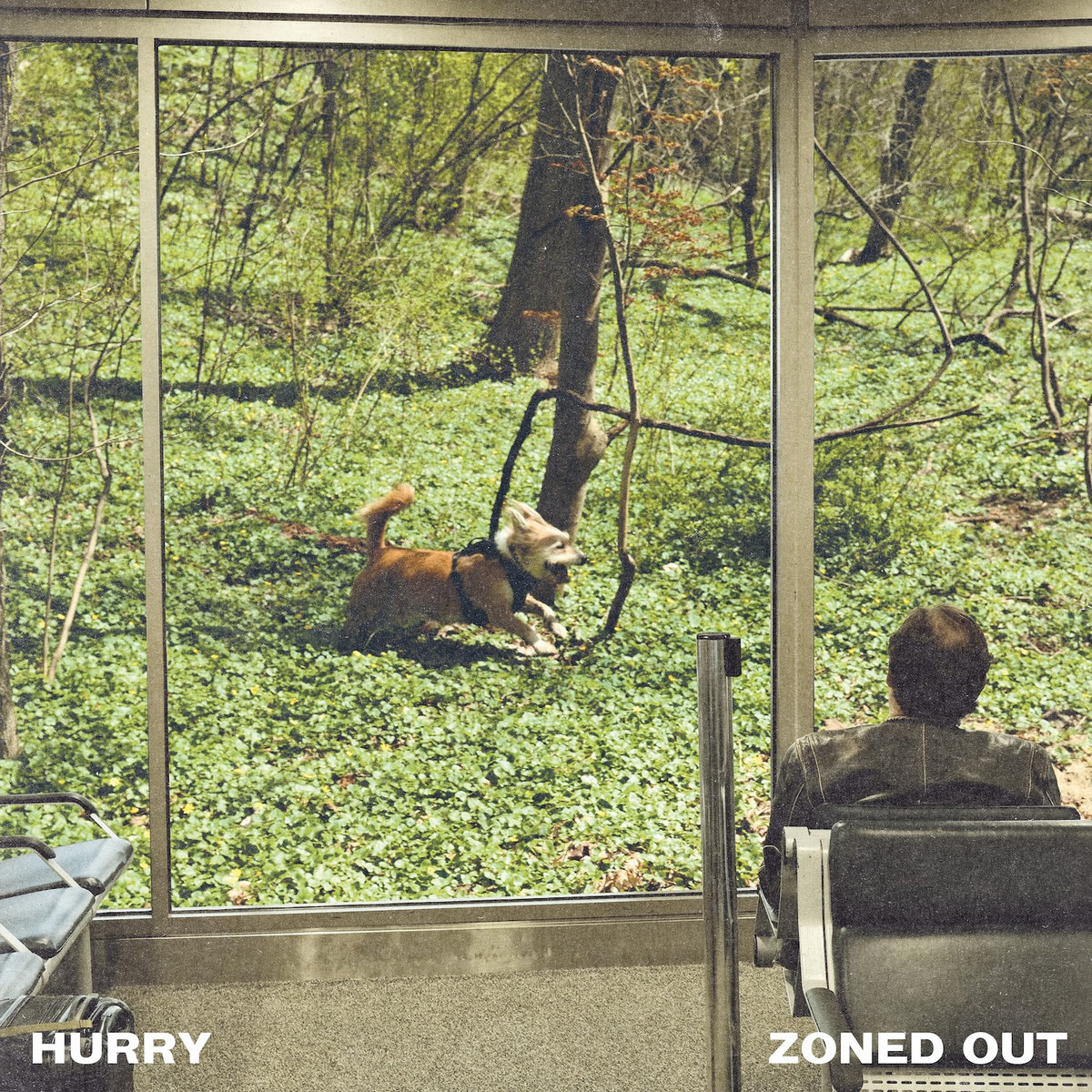
As much as I loved Don’t Look Back, I have to say that Zoned Out is an even better record, and a lot of that has to do with synths. The heavy lifting that synths are doing here is kind of deceptive. Make no mistake, this is still a guitar-first record, but directly beneath that are synth lead lines that are secretly drawing your ear and supporting a ton of the best melodies throughout the album. 

The first track, “All Sunk In,” is maybe the best example of this. The song starts with a nice, crunchy guitar; the vocals come in, and soon the full band enters. For that first minute or so, you’re rocking out with (what seems like) a classic four-piece power pop guitar rock configuration, but when the chorus hits, you hear this high synth lead line get elevated from the background to the midground. As the guitar parts converge and become more stationary, this synth keeps moving around and is really the platform that the main vocal melody is working off of. We also get this secondary benefit of that line disappearing to make room for the guitar solo after the chorus, which makes it feel like the lead guitar is Kyrie Irving calling for an iso—really great stuff. 

Another place where the synth is a secret MVP is on the closing solo of the record’s lead single, “Zoned Out.” Here, instead of clearing out to make room for the guitar lead, the synth joins it, creating more of a Lob City situation. Because the synth is fairly clean and essentially doubles what the guitar is doing, it leaves an opening for the guitar tone to get way nastier than it could otherwise. Then, when that falls away during the last repetition of the clean chorus, the contrast makes it feel extra dreamy, allowing it to fully wash over you. 

Looking at things on a more macro level, “Just Fine” is the track that I found myself going back to the most. It has my favorite hook on the record, with Matt Scottoline singing, “Do you believe me, baby? That I’m not turning back. / Do you believe me, baby? I’m staying on the track / I keep saying I’m not turning back.” One reason this hits so hard is that the song's verses are about how things in this relationship are totally alright, then everything fully cuts out before we launch into that chorus, which is such a great articulation of projected self-doubt. On top of that, it’s a total earworm, boasting the kind of melody that power pop is all about. 

On “Complications,” we see these themes furthered, this time as more of an inward meditation on that same self-doubt. “I’ve got no time for reflection / I can’t retreat into my mind,” Scottoline sings, “We’ve had our fill of conversations baby / I know I shouldn’t be surprised.” It’s a natural progression of the feelings expressed in the chorus of “Just Fine,” with the angst caused by those projections more fully realized. 

To get even more macro here, let’s talk about how Zoned Out fits into power pop as a whole. If you end up in the corners of the internet that first attracted me to the genre, half of what you’ll find is arguments about what is and isn’t power pop. This is something I’ve thought about quite a bit myself, and it was certainly on my mind while listening to Zoned Out. My personal criteria is referential and abstract in a way that may make it unhelpful, but I’m going to share it with you here anyway. 

The Fountains of Wayne b-side compilation Out-Of-State Plates starts with a clip from NPR where rock critic Ken Tucker proclaims “Hip-hop, country music, and post-grunge squall can take a partial summer vacation. I’m applying some #45 sunblock and putting up a sign saying: ‘gone fishing for power pop’.” When I think about what power pop is, that's what I think of. To me, power pop sounds like something you’d find jumping out of the water at your local lake; music that makes it feel like the sun’s beating down on you. That’s how I feel when I listen to “Starry Eyes” by The Records or “Black and White” by The dBs—the two most down-the-middle examples of power pop I’m able to provide. It’s what keeps me coming back to these songs by lovesick artists who seem to wish rock music hadn’t strayed so far from the template the Beatles provided us with back in the 60s. There've been a lot of great power pop and power pop-adjacent records put out in recent years, but none have done more to deliver that specific feeling to me than Zoned Out. Beyond anything technical about production or sage about the lyrics, that’s really what sticks with me here. 

Put even more succinctly: power pop is the best genre and Zoned Out is masterfully executed power pop. Use the transitive property, and that should tell you all you need to know.   


Josh Ejnes is a writer and musician living in Chicago. He has a blog about cassette tapes called Tape Study that you can find here, and he also makes music under the name Cutaway Car.

Welcome to the Rosy Red World: An Interview with Pat King of Labrador

Photo by Jay Lieby, Layout by Chad Jewett

These times are unprecedented. Have you heard that before? It’s all too easy to get caught in the dust devil of inane and insane news that is constantly swirling around our heads. So how do you find clarity amongst the turmoil? I wish I knew. Actually, I was hoping you might be able to tell me. It’s likely there isn’t a one-size-fits-all answer. As time moves on, we’ll probably have to find new solutions because the old ones just don’t work the way they used to.

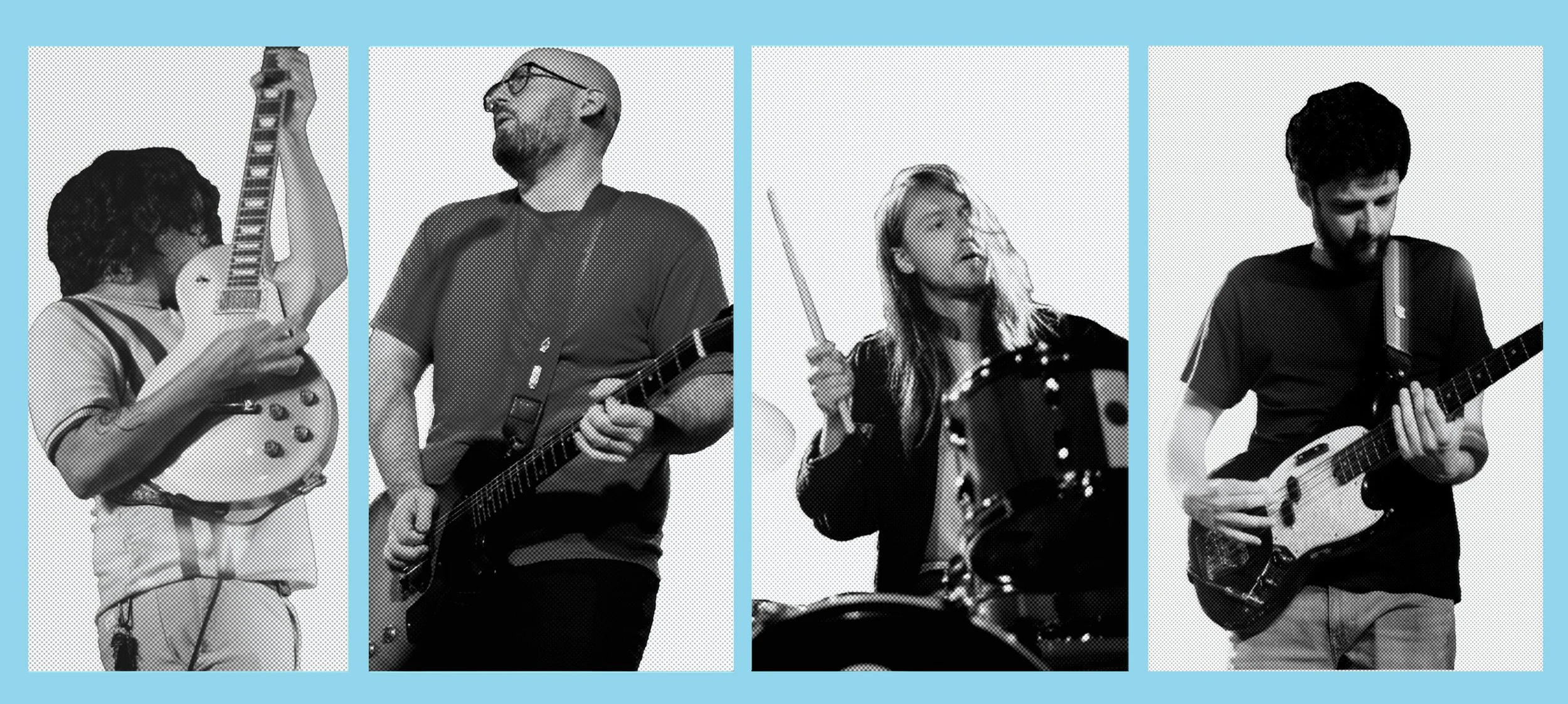
Maybe it’s all as simple as tearing it down to the studs and listening to some politically charged rock ‘n roll. That’s where Labrador comes in with their new album The Rosy Red World, boasting ten songs that continue the tradition of American protest music. The album sets its sights on attacking the rise of fascism, isolationism, oligarchal greed, and the Palestinian genocide, among other things. Labrador aren’t the first artists to confront these injustices in their music, but that doesn’t make what they’re doing any less important or courageous. It’s easy to become complacent toward the realities of our world, which is why it’s important to shine a light on those who are willing to speak out.

Earlier this summer, I met up with Pat King of Labrador to gain a deeper understanding of his perspective on politics, the new album, The Kinks and The Who, and what it means to be Maximum Alt-Country. 

This interview has been edited for length and clarity.


SWIM: Now that The Rosy Red World has been out for a month and you’ve taken it on tour, what’s the reception been like?

PAT: It's been really great. This album doesn't shy away from being political, and we played our biggest hometown show here at Johnny Brenda's, which is one of the big spots to play in Philadelphia. Onstage, I got to introduce our songs, and I always like to explain what they're about. It made me happy to hear how well they were received by people applauding and cheering in agreement.

SWIM: The Rosy Red World is an overtly political album. Songs like “We Drew Straws” and “Metaphors For Love” feature very direct lyrics of political action. You also address the genocide in Palestine with lines like “war crimes for genocide, ceasefire now,” which is also printed across the album’s gatefold and on some of your shirts. Why was it important for you to put this message as clearly and plainly as possible?

PAT: This is one of the biggest reckonings in humanity that we're going through right now. I feel like, between the rise of fascism and the technological advancements that we have, it is so easy to check out and choose an apathetic disposition towards everything that may seem out of our control. I just thought it was disheartening to look at the indie rock landscape, or even at music you would usually find that kind of messaging in, and not see it. 

I felt like this time around, especially a song like “Metaphors for Love,” which is about not hiding behind metaphors anymore, it was important to be straightforward and not dance around anything. I mean, there used to be only three stations you could watch on television, and the public had a very manufactured view of what was happening in the world. I felt like this time around, at this given moment, we're in such a different place where you have to kind of make these convictions known in a direct way. 

I also think this is the quickest I've ever written an album, because I didn't labor over poetry or flowery imagery. I just wanted to say how I felt, you know? Come as completely honest and be direct as possible.

SWIM: Would you say that you mean for the album to be a wake-up call?

PAT: Well, I try not to think about it in those terms. It's certainly a wake-up call for me, for the way I wanted to write, and if that translates, that's amazing. I just hope it kind of shakes people into taking a hard look at what's happening.

SWIM: The album is filled with a ton of complex and conflicting emotions from anger and sadness, to compassion and joy. How do you strike that balance and keep things from sounding too “one-note?”

PAT: You know, for the kind of songs I'm looking for, and the kind of songs that influenced my writing, I've always been influenced by people like Ray Davies of The Kinks, Paul Weller of The Jam, and Pete Townshend of The Who. I feel like they do a great job of talking about their communities and talking about people's everyday lives, and if they heard a song that was grandstanding, they would laugh it off. So using them as a compass was a great barometer for me to attempt stuff like this. 

Billy Bragg has a quote, now I'm gonna butcher it, but he said something along the lines of “all songs are political.” I think that you could be talking about love, you could be talking about sexuality, but when you think about it on a larger scheme, it's like, what do we have the “right” to do? Because of how I grew up, you know, pretty blue-collar, there was a time when we were taught that we don't have a quote-unquote “class system” in America, but now we're seeing that it does exist, and it's kind of the only war worth fighting. So I think when I talk about people, I try to talk about small facets of their lives. But I'm glad it resonated because I try to put them in the broader picture of what is happening in society at this moment. At least I'm trying to do that. 

SWIM: You mention the importance of community in your writing, and I’m interested in your perspective on your own community in Philly. The city has such a vibrant scene with some big success stories, but who are the artists that you’re excited about who maybe don’t get the same attention as some of the bigger names?

PAT: I mean, there’s a bunch. There's some friends of mine. Bands like Golden Apples are incredible. You’ve got Gladie and lowercase roses. We actually recorded with Matt from Gladie, who has his own project called Memorytown. Heather Jones is great. Of course, Greg Mendez is huge – he's blowing up, as he deserves. Let me think. I feel like people always focus on the indie rock or hardcore punk stuff in Philly, but there's this great underbelly of weirdo art rock and space rock. This new band Writhing Squares is great. They're like Hawkwind mixed with The Wipers. It's awesome.

SWIM: You recently started your own record label, No Way of Knowing Records. Why was it important for you to, as you put it on the album, “seize the means of production?”

PAT: I mean, it's mostly out of necessity. There's so much about making music where you make the record, and then you're psyched on making a record and then all the other stuff – getting people to care, getting people to come to your show, sitting in a room with a ton of records – where you just feel bad about yourself, and it's hard to feel pride about doing it. I just really wanted to jump in feet first, do it, and take pride in it. It's a big undertaking, but why not go for it?

SWIM: You describe the band as “Maximum Alt-Country.” What does that mean to you? Do you view it as something different, or beyond what is normally considered alt-country?

PAT: Well, it's kind of funny. When I first started writing songs, maybe a little under twenty years ago, it just made sense in the country kind of world. I think that mainly had to do with the way that I sing and the stuff that I was listening to at that time, like Wilco, The Jayhawks, Gillian Welch, and Neko Case, those kinds of people. And I guess a little Neil Young, Byrds in there too. I've drifted away from that traditional capo third C, A, F, G style of old country and gotten deeply into rock stuff like The Who, The Jam, and The Kinks. 

For the first full-band record that Labrador put out, Hold the Door for Strangers, I was joking because I didn't want to just be like, oh, ‘here's another alt-country band.’ So I called us a “bruised alt-country band” because it was a very defeated-sounding record. It was a Molina vibe, with a touch of Neil Young, and then I started wanting to write more politically. 

For that record, I toured a lot solo, and by the end of playing that material as a solo artist, I was just like, I never want to be this sad alt-country guy ever again. It's just not my personality. You can almost see it on people's faces when you plug in, and you're sandwiched in between two livelier bands. It's just like, “Oh God, here's the sad guy talking about quitting drinking or women and having romantic problems.” I've done that to people, and I've also been to shows where I'm like, “Oh, God, here it is.” I just realized that, for better or worse, I’ll never get the alt-country out of my voice.


Connor is an English professor in the Bay Area, where he lives with his partner and their cat and dog, Toni and Hachi. When he isn’t listening to music or writing about killer riffs, Connor is reading fiction and obsessing over sports.

knitting – Souvenir | Album Review

Mint Records

When you don’t know who you are, it’s easy to let the world drown out the part of your brain that can tell something is wrong. You know the corner of your mind that whispers things you’d rather ignore, don’t you? The one that questions if the gender you were given is the right one. Or if you hurt that loved one. Or if you need a new job or new friends or a new city. It is so quiet compared to the noise from outside, that’s just what happens when you need repression to keep yourself alive. But no matter what happens outside you or how much you actively try to silence that nagging feeling, it will always linger. That voice is all over Souvenir by knitting. 

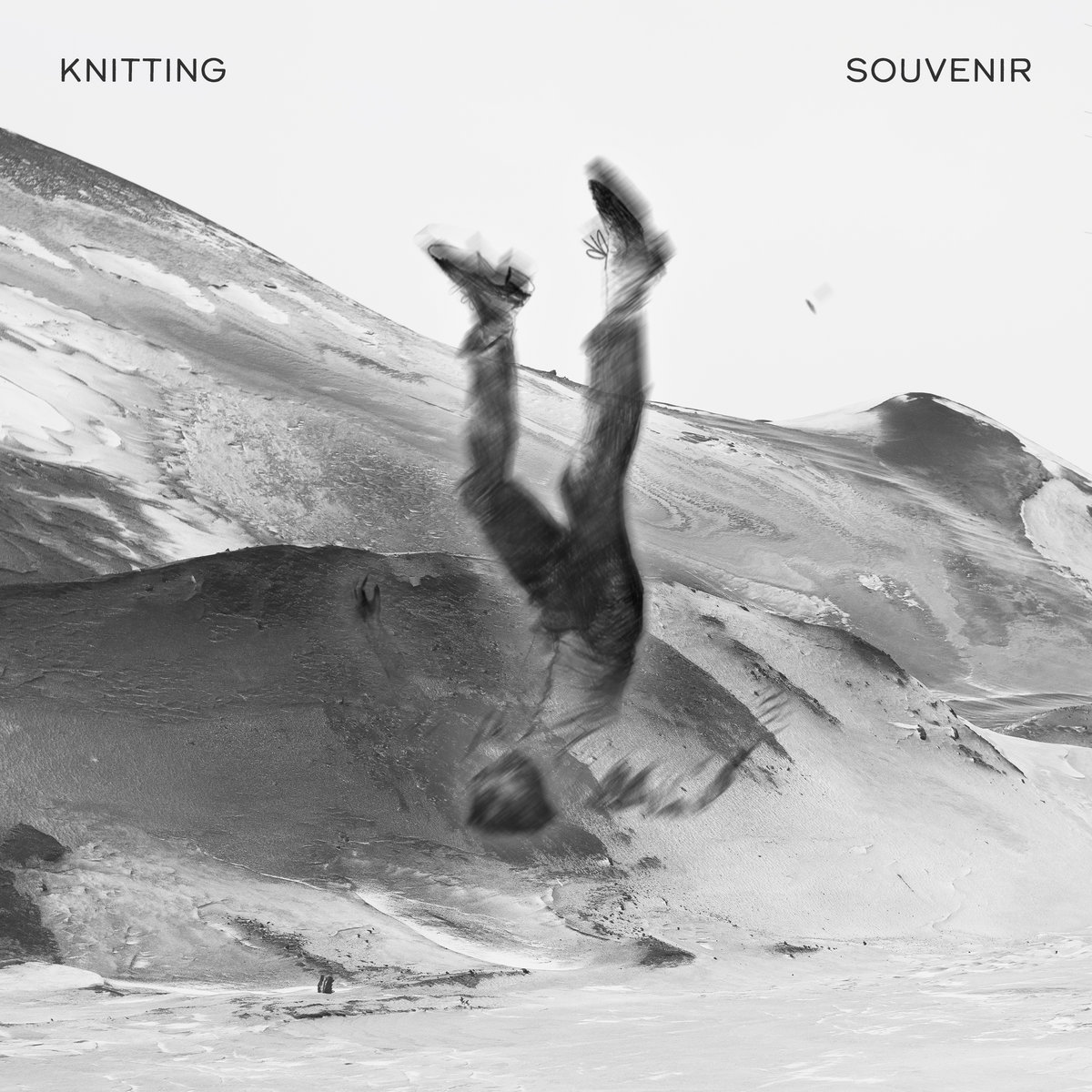
knitting first appeared as the bedroom project of Mischa Dempsey in 2021 with their self-titled Bandcamp tape before expanding into a full band for 2024’s Some Kind of Heaven. That record demonstrated how, even with more minds contributing to each track, Dempsey’s writing could still grow more insular. Their sophomore album, Souvenir, has an even narrower focus on Dempsey's perspective, and the result is a record of patient indie rock capable of subtle devastation. 

The core of these songs is Dempsey’s singing, a solipsistic murmur that crawls through the mix like that whisper in your ears. Even when the music rises, as we hear on the chorus of lead single “I Want To Remember Everything,” their voice remains steady, untroubled by the emotional turbulence around them. Dempsey’s voice is emblematic of the philosophy that underpins these songs, one that they explain plainly on the chorus of “Sunrise,” in which they sing, “I’m trying everything to reach / Another version of me beneath / Layers of static and latency / I’m underground, and I need relief.” Figuring yourself out is a Sisyphean task to begin with, but when your entire emotional world is engulfed in external complicators, that task becomes less about getting the boulder to the top of the hill and more about finding the peace to keep it in place. Or as Dempsey puts it on “Here Comes,” “on and on the world spun / and shook me up.”  

One of my favorite songs on Souvenir is “Shuffle,” for how Dempsey grapples with the difficulties that come with realizing you need to move from passivity. The opening lines “told me / to go easy on myself / I said I’m not sure where to start,” are, for a girl who has avoided therapy for years, far too relatable. How do you unwrap all the layers of repression? How do you address the fears of something bad happening when “we were laughing / with reckless abandon”? That fear comes up again on “I Wasn’t Fully Cooked,” a song built around Dempsey asking if their existence is anything but a tree falling in a forest with no one around to hear it. Is your pain still valid? Can you even claim to be a person when no one acknowledges you? Those are the questions you ask when “[you] can only see / with the aperture of a child.”

My other favorite song here is “Sequel.” The first verse into the chorus sounds so seductive as Dempsey coos that they know assistance is an option, and that not every problem can be fixed alone. The rest of the song captures how hard it is to pretend like you don’t need help. My favorite moment is when they switch up from “if I called, you would come” in the first chorus to “I am not so innocent” in the second. 

When Souvenir closes on “Exit Desire,” Dempsey is alone. After a record spent swaddled in the mix by their bandmates, it all ends with Dempsey singing, “‘cause I know I gotta leave, but I’m not sure where to go” with nothing but a single guitar and the occasional synth. Throughout its runtime, Souvenir vividly documents the difficulties of prioritizing yourself, and it ends with the greatest challenge of all: that we’ll never really know which way to go. But that is the beauty of life; there is no right choice except the one that you believe in. If you’re searching for some path or a reason for life, Souvenir can help you extricate that voice. If you’re still ignoring that whisper, these songs can help you hear what you need.   


Lillian Weber is a fake librarian in NYC. She writes about gender, music, and other inane thoughts on her substack, all my selves aligned. You can follow her on Insta @Lilllianmweber.