Riley! – To Live and Die in the American South | EP Review
/
Pure Noise Records
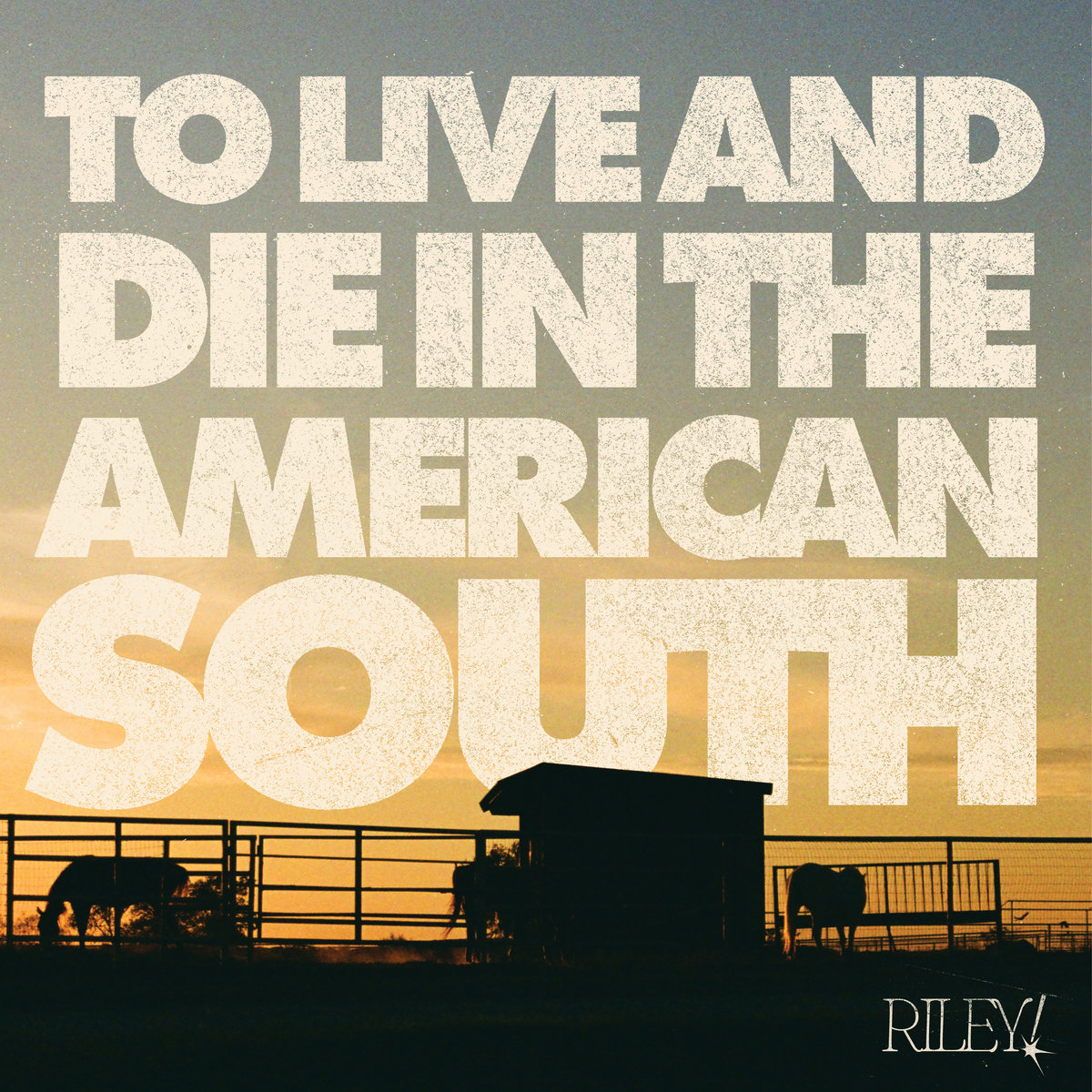
When explaining the peculiarities of the Southern identity, Flannery O’Connor wrote: “Whenever I'm asked why Southern writers particularly have a penchant for writing about freaks, I say it is because we are still able to recognize one.” The freakish nature of the South is all-encompassing, one that swallows you whole rather than sneaking up behind you. It’s a region of endless mourning and gregarious myth. Frightening at times, apologetic in others, uncomfortable always. In their latest EP, To Live and Die in the American South, Riley! attempts to make peace with the anguish their home has wrought.
Texas’ inclusion in the South has always been hotly disputed by those hailing from the Deepest parts of the region. They claim it’s too Western, too different from the culture found on South Carolina’s patios or in Georgia’s sunrooms. I have always disagreed with this perspective; Texas has the same ghosts in the attic as the rest of the South, the same violence as Louisiana, and the same mountains as Tennessee. I bring up this debate because Riley! is from the Rio Grande Valley, a place at the tip of Texas’ hooked end and near the same Gulf that borders Mississippi and Alabama, a place where the South legitimately meets the West, and To Live and Die in the American South connects them both.
Beyond this connection, emo, a genre more classically found in the mid-Atlantic or the Midwest, is not necessarily the approach most musicians would utilize to encapsulate the feelings of decay and distress within the American South, but Riley! makes a staggering case for changing the tune. For years, Riley! has toiled away in the remains of the 5th wave emo scene, frustratingly stuck as an ‘if you know, you know’ band. The excitement of their last album Keep Your Cool on Counter Intuitive Records, turned Riley! into one of emo’s most reliable collections of Road Dogs, thanks to near-constant touring. Yet their success keeps climbing, on To Live and Die in the American South, an EP produced by Phillip Odom, the band breaks itself wide open through a raw examination of the complicated relationship the trio has with their home.
The first song on the EP, “Roll for Initiative,” begins with a question, “If I died right now, would I still haunt this house, or would it just rot with my body when I’m put in the ground?” It’s a question that veers the album directly into the literary territory of the Southern Gothic, a genre centered around inspecting the grotesque hauntings of the South. Vocalist and guitarist Ryan Bluhm answers the question for themselves: “I think I’m meant to live and die here, and there’s no way out.” This feeling of dread is threaded through every song on the EP. The conceit of the song, firmly entering it into the Southern Gothic, is Bluhm’s admittance, “There’s nowhere else I’d rather die.” It’s the heart of the genre, a disgust for home infused with an unshakeable feeling of belonging.
Cesar “Izzy” Izaguirre and Kris Gallardo’s rhythm plays “Roll for Initiative” out, leading into the quieter “Another Round of Radical ‘Ritas, Please.” The rot felt in the prior song returns, but instead of the secrecy of experiencing misery in private, this song puts those feelings in front of an audience. Tades Sanville of Hot Mulligan, a writer contending with similar topics of self-hatred and grief, joins in over Izzy’s pounding drums.
Across this EP, Riley! utilize an arsenal of familiar voices with similar expressions of introspection to deepen the emotionally wrought work. On the next track, the deceptively upbeat “Two Bucks,” a song about feeling useless, one of the angriest, most suspicious voices in the Emo world appears: Eric Egan of Heart Attack Man. It’s an unguarded, honest song; Bluhm and Egan agree that they are both just ghosts. Gabe Wood of saturdays at your place has long studied the impact of his own actions in song, making him the perfect pick for “Backseat Bartender.” Across Bluhm and Gallardo’s intricately woven riffs and basslines, Wood and Bluhm beg someone to crawl into their head and find what’s wrong.
The final song of the EP, “73 Summer,” catches Bluhm in a moment of grief. For a record contending with the wretchedness life can inflict, it only makes sense to end on the aftermath of death. The band gives the questions within the lyrics plenty of room to linger, creating a specter looking back. In that same quote about the Southerner’s natural predisposition to identifying a freak, O’Connor added that “Ghosts can be very fierce and instructive. They cast strange shadows, particularly in our literature.” The ghost Bluhm is speaking to is made present by their words and the song's ferocity. The shadow may be strange, but it’s familiar.
The final bit of the O’Connor quote referenced throughout all of this is the notion that “It is when the freak can be sensed as a figure for our essential displacement that he attains some depth in literature.” Riley! achieves this in 17 minutes on To Live and Die in the American South. The admissions and frustrations put to song on this EP breathe familiarity into feelings of freakiness, making them whole. Riley! may feel tied to the American South and all of the internal strife it creates, but this is the place that made them, for better or worse.
Caro Alt (she/her) is from New Orleans, Louisiana, and if she could be anyone in The Simpsons, she would be Milhouse.