Exploring the Atmosphere: An Interview with She’s Green
/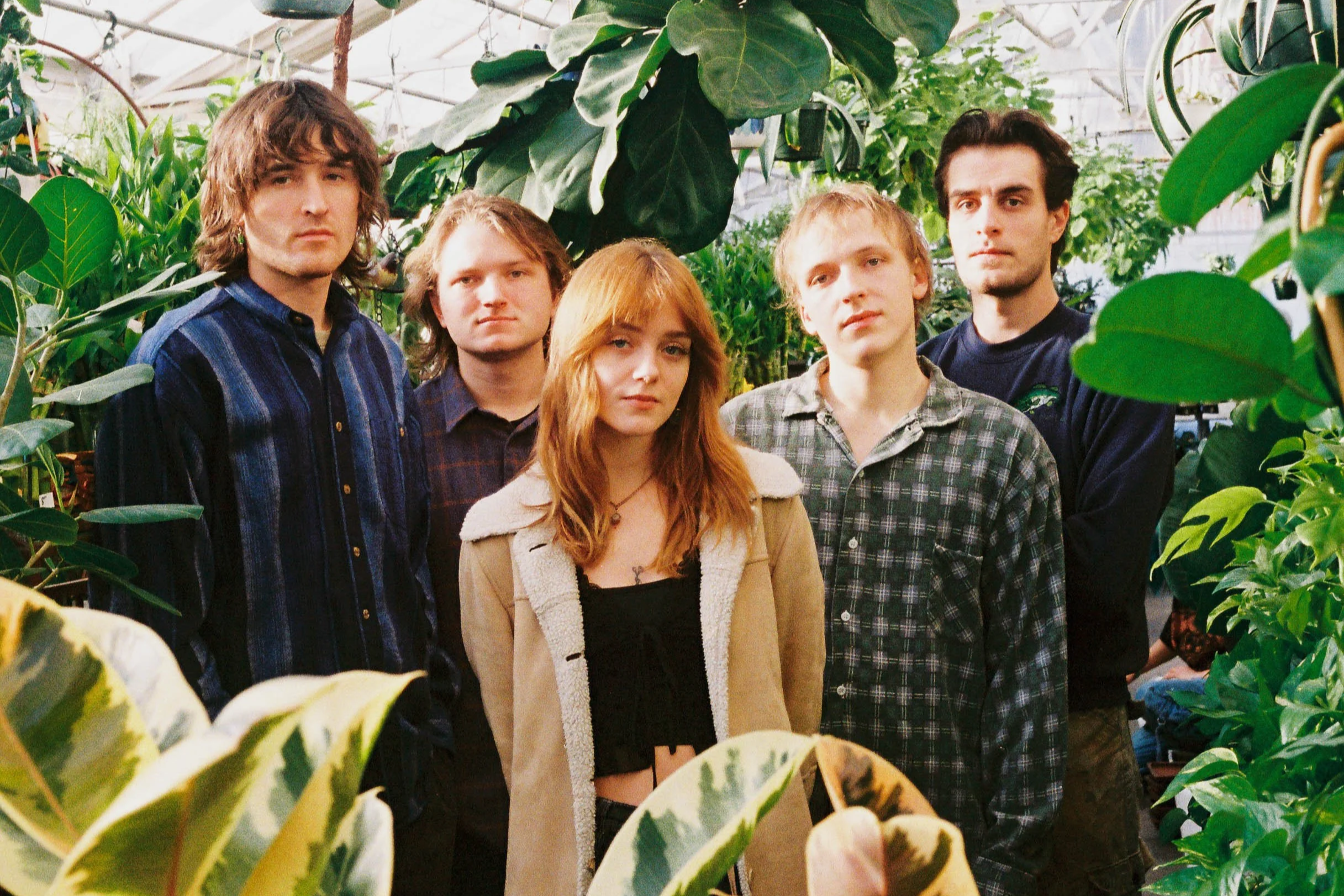
Photo by Myles Ross
In a world that is becoming more chaotic and artificial by the day, the act of finding your peace has never been more important. The environment that we surround ourselves with is essential to maintaining our sanity and cultivating our creative inner world. Rising indie rock band She’s Green recognize this and have tailored their specific act of creation by going back to basics on the most human and naturalistic level. The Minneapolis quintet has made a habit of heading to various forests, lakes, and quarries to center themselves while creating the kind of music that not only replenishes their own souls but also those of the fans who listen to their music.
The band – comprised of singer Zofia Smith, guitarists Liam Armstrong and Raines Lucas, drummer Kevin Seebeck, and bassist Teddy Nordvold – has established a worldwide following solely off a few EPs and a handful of singles. The music these five create speaks for itself with lush textures that are richly melodic, designed to draw you into inescapable dreamy atmospheres. Their songs have a cinematic quality, where one stroke of a guitar can feel gut-wrenching, then exhilarating at the drop of a hat. Smith’s otherworldly vocal range, matched with the whirling dervish noisy-yet-melodic guitar leads, is a combination that is just killer, and it’s clear as day why this band is connecting with so many people before they even have a proper debut album under their belts.
The group’s newest EP, swallowtail, has the gratifying feeling of a band finally putting together the pieces of their true potential. Opening track “locket” possesses a clear reverence for the shoegaze ancestors of our collective past, nodding heartily toward the lineage of 90s greats like Slowdive and Cocteau Twins. My favorite song, the mid-album cut “mettle,” has a smoggy wash of reverb-drenched guitar riffs that are thunderous in all the right places. One track later, “keeper” is another standout in which the rich guitar textures are painted with precision, and Smith’s vocal register is yet again a major highlight. It’s one of those songs that you can put on while staring out at the night sky, glaring at the stars and getting lost in space.
I got a chance to chat with Zofia Smith and Liam Armstrong over Zoom, where we discussed everything from their patented “moss music” sound, the indie scene out in Minnesota, and touring China for the first time. We even managed to sneak in some Jonas Brothers talk.
This interview has been edited for length and clarity.
SWIM: I read that you describe your sound as “Moss Music.” What does that label mean to you?
ZOFIA: Moss Music is a small thing that nourishes its environment and is very firm and dense, but also fuzzy and soft. I think that really describes our sound. Sometimes there's a love sound, and it’s a lot; then it’s heavy, and then there’s this gentleness to it. The point of us making music is to create an environment for a person to nourish their soul.
SWIM: Are there any other bands that you would consider Moss Music?
LIAM: That is so tough. I would say Jefre Cantu-Ledesma. He makes an ambient kind of tape guitar. I'm also gonna say George Harrison… And let’s get Weyes Blood in there too.
SWIM: What is it about dream pop and shoegaze that attracts you guys to make records in a similar aesthetic?
LIAM: We had a huge obsession with 90s bands, but also music with ambient textures. We wanted to see how far we could push experimentation with the sound of a guitar. In a way, we tried to make it not sound like a guitar anymore. I think this helps me paint a more grandiose picture that also leans into our interests in movies and visual art.
ZOFIA: Those sounds have always seemed captivating. I'm instantly drawn to the sounds of Beach House and that beautiful chorus reverb sound. It just invites me in, and I want to wrap up in a blanket and sink into it. This is the best, most comforting sound to me. That started my deep dive into shoegazing dream pop. That obsession made me want to try it out myself and see what I would come up with with the same sort of sounds.
SWIM: What was the first concert you ever went to?
LIAM: The first concert I went to with my dad was this folk rock band, Dawes. Then I also saw Rush with my dad. So definitely bands on different ends of the spectrum.
ZOFIA: My first one was the Jonas Brothers. I was obsessed with them. My parents were kind of in a different lane, so I got into cool music in high school, and it felt like I had all the cool discoveries a bit later than most people.
SWIM: I gotta ask, did you have a favorite Jonas brother?
ZOFIA: Nick was my favorite.
LIAM: I also went through a huge Jonas Brothers phase as a kid. My favorite was either Nick or Joe. I don't know, it’s too hard to pick.
SWIM: I think it was scientifically proven that Nick is the coolest Jonas brother. Who are we to argue with scientists? Are there bands you listened to growing up that influence what you're doing sonically today?
LIAM: Definitely, I used to listen to a lot of Coldplay and Death Cab for Cutie, because that's what my parents would throw on around the house. That music definitely opened up this kind of emotional side of me. I really just wanted to make some heartfelt music. That still always resonates with me.
ZOFIA: I don't know if the music I heard growing up did so much for me because I listened to a lot of pop music. I think that definitely has helped me with certain melodies, though; you can come up with a pop melody and put it into any song for a chorus. I was listening to Celine Dion and Mariah Carey, just a lot of female pop artists. It plays a role in the melodies that I come up with, because I was always singing around the house and taking videos of me singing certain big pop songs.
SWIM: Can you talk to me about how you come up with your melodies? Do you try to find certain pockets lyrically? How do you come about those?
ZOFIA: Honestly, I am freestyling over something that they made, or we're jamming, and it’s just gibberish coming out. I don't usually have the words first. Usually I'm diving into the instrumental, and sometimes I'll find words in that. I'll listen back, and maybe subconsciously I'm saying this or my heart is telling me that. Other times, I'll have something written beforehand if I can't come up with a melody, and I'll see what works with the lyrics I already have. But, normally I'll come up with the melody first.
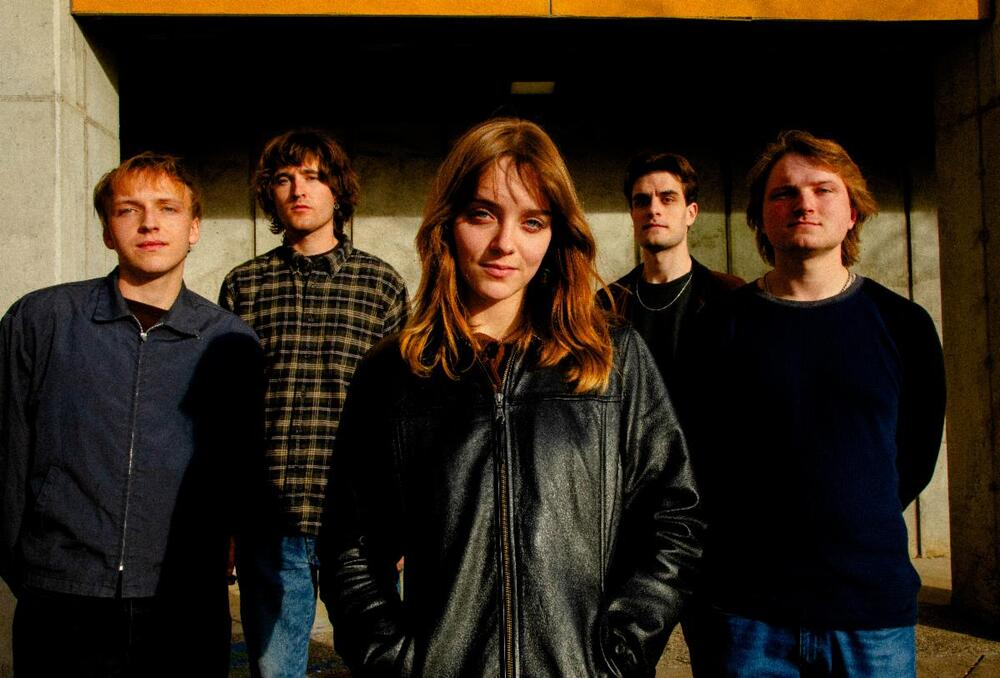
Photo by Liam Armstrong
SWIM: Your writing is really eclectic. Is there a specific formula in how She’s Green creates songs?
LIAM: Nowadays, we all get in the practice space, and we'll be jamming, or we'll start with somebody's guitar riff. Sometimes one of us will have a fully fleshed-out demo, and it won't get changed much. I would say we're leaning more towards writing as a group and building off something that someone brings to a practice session.
SWIM: How difficult is it to write within a group of people as opposed to solo?
LIAM: It was definitely something that we all had to learn together, but I feel after touring with each other for so long and practicing so much together, we're all super comfortable now.
SWIM: I’m always fascinated by how bands come up with names. How did you decide on She's Green?
LIAM: We were just throwing out names. I think there was something about She’s Green that was kind of vague, but you can also apply a lot of meaning to it. The name kind of paints a metaphorical picture. She’s Green sounded cool and, for us, symbolized Mother Nature in a way because we are all really into plants.
ZOFIA: I like that the name has a feminine identity. I know we're a band where I'm the only woman in the group, but our music is honestly pretty feminine from our melodies and everything that we're doing. I just think it's cool that we have a feminine-sounding name.
SWIM: What were some of the names that were on the cutting room floor?
ZOFIA: Moon Due was an option, and before that, Liam and I had released a couple of songs under the name Sad Films.
SWIM: You described your love of 90s music earlier. Are there any 90s bands you would love to dream of playing with?
ZOFIA: Slowdive is my number one. Every time I've seen them, I'm overwhelmed. It’s just so, so beautiful.
LIAM: We're playing with Chapterhouse. They're a very sick band from the 90s, and that's a dream come true.
SWIM: Is there a song you're most proud of creating on swallowtail?
LIAM: I'm gonna say “close your eyes” because it's a song we've had for a really long time and we’re finally ready to get it out there.
ZOFIA: Yeah, that one specifically we were sitting on for a long time, and we were messing with the instrumentation for a while, shortening parts, lengthening parts, and re-organizing them. We’ve been working on that song for two and a half years. We finally have this beautiful song, and it feels complete, and I don't want to change anything. It just feels so rewarding to have that payoff.
SWIM: When you have a song that takes two and a half years to create, how do you fight through that? Do you go at the song head-on, attacking it daily? Do you just let it simmer for a bit? What kind of methods do you work through with writer’s block on a song?
ZOFIA: We put that song on the back burner for a second and took some time away from it because I wanted to have a clear head going in. That way we could listen with a new perspective on what it needs. I think we gave “close your eyes” a few months, actually. We just kept giving it more space to breathe.
LIAM: It's also been kind of tough for us to really sit down and work on stuff in between touring. Some stuff just gets pushed to the back. There are still things that we would find that I say, “Wow, this is really cool.” It's a constant barrage of information that brings a lot of the good ideas, but also takes time to really find them.
ZOFIA: Our bassist Teddy was the one who figured out “close your eyes.” He knew right away what he wanted while we were practicing, so that definitely helps when someone comes in and knows exactly what they want to do with a song.
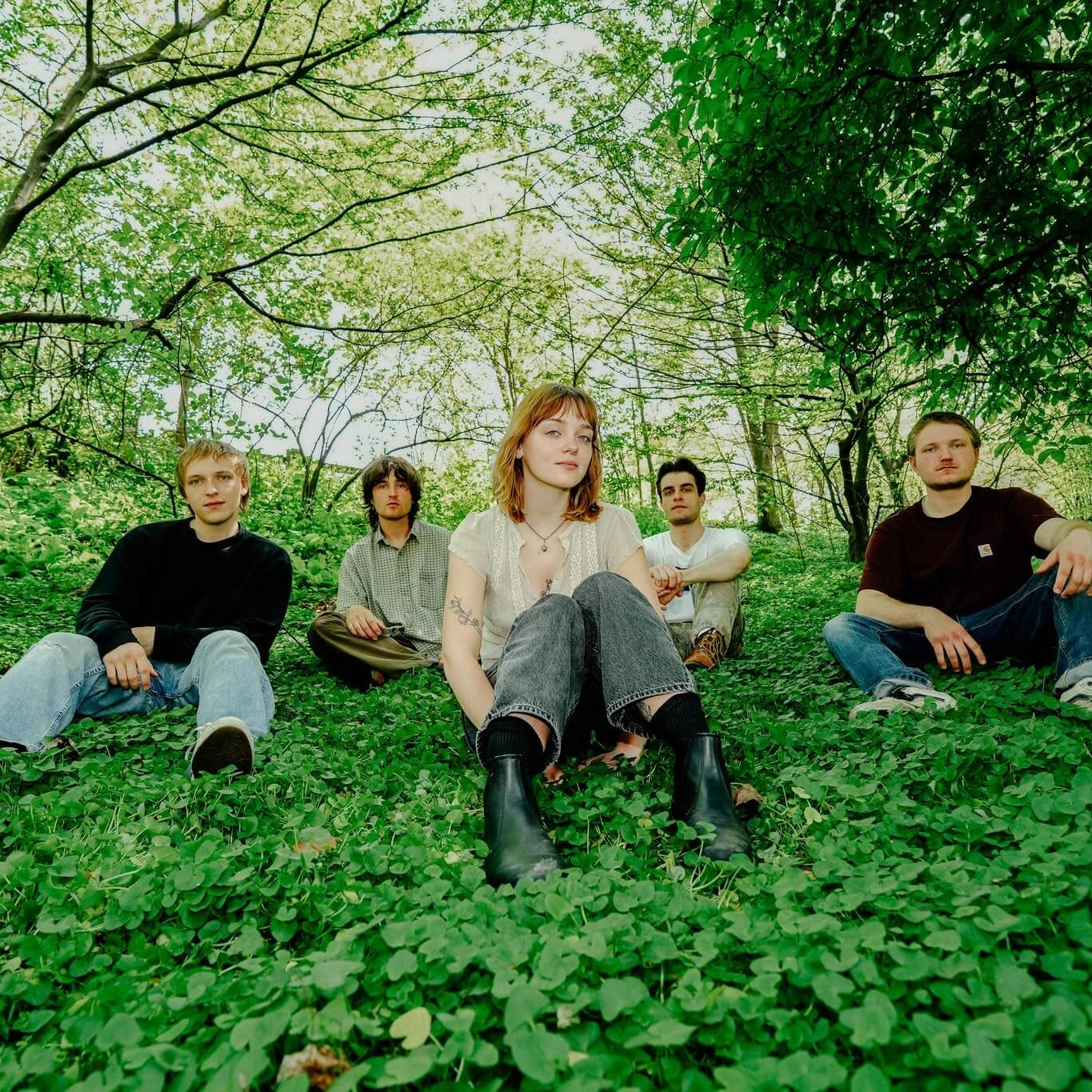
Photo by Nick Cai
SWIM: How was it touring in China? How big of a culture shock was it going from your home state of Minnesota all the way to China?
LIAM: It was wild. I had been to Asia before, and our other guitarist, Raines, has been as well. It was just an insane experience. It helped a lot that Raines actually speaks Mandarin, so it was really fun to communicate more easily with the locals. The food is amazing, everything is affordable, and it's easy to get around. All the crowds were so tuned-in and very polite.
ZOFIA: It was cute. We had Raines on the end of the stage because he could have conversations with people. We could move him along, and then they could talk to him, and it was so sweet to hear from them. We got a bunch of letters from them.
But it was so nice having Raines there. There were a lot of people that said to us, “I'll take you for a ride, come with me,” and Raines would say, “Okay guys, let's go.” We'd just be in some random person's car. We don't know what they're saying up front. We don't know what's happening. But it's so sweet to see how they open up to Raines and how interested they are in our culture. They're speaking with him about politics, and it was so cool to get that perspective. A lot of people were like, “If you're going to China, be careful,” but it just felt so safe, and everyone was so sweet.
SWIM: How did that feel when people on the opposite side of the world are so attentive and caring about your songs and connecting to your music?
LIAM: It was unbelievable. We were not expecting that at all. I was worried there would be around 10 to 20 people at every show, but it blew us away to have near sellouts every night.
ZOFIA: We were shocked. These venues have a capacity of 300 to 500. We just thought there's no way people are gonna show up, you know? We're gonna get like 15 people, but it was actually bigger than our normal show in America. Honestly, it’s unreal. People had signs they made for us. They wanted to take pictures.
SWIM: To take things back home, your sounds are very scenic. Is there a favorite forest or nature walk you like to go back stateside?
LIAM: We really love St. Croix Falls near River Falls, Wisconsin. There's also Kinnickinnic State Park. It’s a really clean trout stream, and it's nice to get down there because it feels like a different world. We just hang out, take acoustic guitars, and write.
SWIM: Do you have any favorite bands from Minnesota?
LIAM: Yeah, definitely, The Replacements, obviously. Bands that are currently kind of up and coming are like Lana Leone, Mother Soki, and Berzica.
SWIM: How tight-knit is the Minnesota indie scene?
LIAM: It's super welcoming. I mean, people are always willing to help you out with anything you need. It’s so inclusive and also safe. A lot of people really look out for each other. I don't think we would have started playing in a band if we hadn't seen all these cool bands growing up.
ZOFIA: I had been going to local shows since high school, so it was really just such a welcoming and tight-knit community, and everybody kind of knows each other, even if you're playing in a different genre. It's not just like a folk show or an emo show, you know, we kind of cross paths with the lineups. I love that.
SWIM: Is there anything you would like to accomplish before releasing your debut album?
LIAM: Just taking everything in, I feel like right now, we're kind of in the brainstorming stage of creating. It's all up in the air. I think it's finding the time to actually sit down and write. We'll probably end up going somewhere, maybe this winter, like a cabin, to start writing it. But right now it's basically all ideas. I mean, we have some songs written and some we're still working on, but I think it'd be really cool to sit down and try to conceptualize the album itself.
ZOFIA: I personally wanted to be more thought-out, like creating a story and a theme. It would be fun to have a visualizer for the whole thing, like a movie. That would be an ideal scenario where we could come up with some sort of plot and get a cohesive video because our music is very cinematic. I'm excited about some of our ideas from what we've been working on and making something out of that.
SWIM: Speaking of cinematic, you both directed your music video “paper thin.” How fun was it creating from another platform?
LIAM: That was super fun. It’s something that we also get to do on the side just for fun because all of us are really into films. It was really fun to try our hand at that.
ZOFIA: It was cool to have direction that day. We had a plan, but it was cool to be like, ‘let's do this. No, let's do this.’ That was a fun environment; nobody was being intense, and we didn't feel stressed about timing. We were just kind of going with the flow. That ended up being one of our favorite videos because it was just a lot of fun and low stakes.
SWIM: Final question. With both of you being big film buffs, what's your favorite movie you've seen this year? It could be new or old.
ZOFIA: Honestly, Purple Rain. It’s a Minnesota classic. I hadn’t seen that movie until recently, and it was awesome. It’s really inspiring.
LIAM: For me, this Cantonese film called Love on Delivery, that we just went and saw in the theater. It was so funny and just a good time. It was hilarious. I definitely recommend that. You're looking for a goofy movie.
David is a content mercenary based in Chicago. He’s also a freelance writer specializing in music, movies, and culture. His hidden talents are his mid-range jump shot and the ability to always be able to tell when someone is uncomfortable at a party. You can find him scrolling away on Instagram @davidmwill89, Twitter @Cobretti24, or Medium @davidmwms.