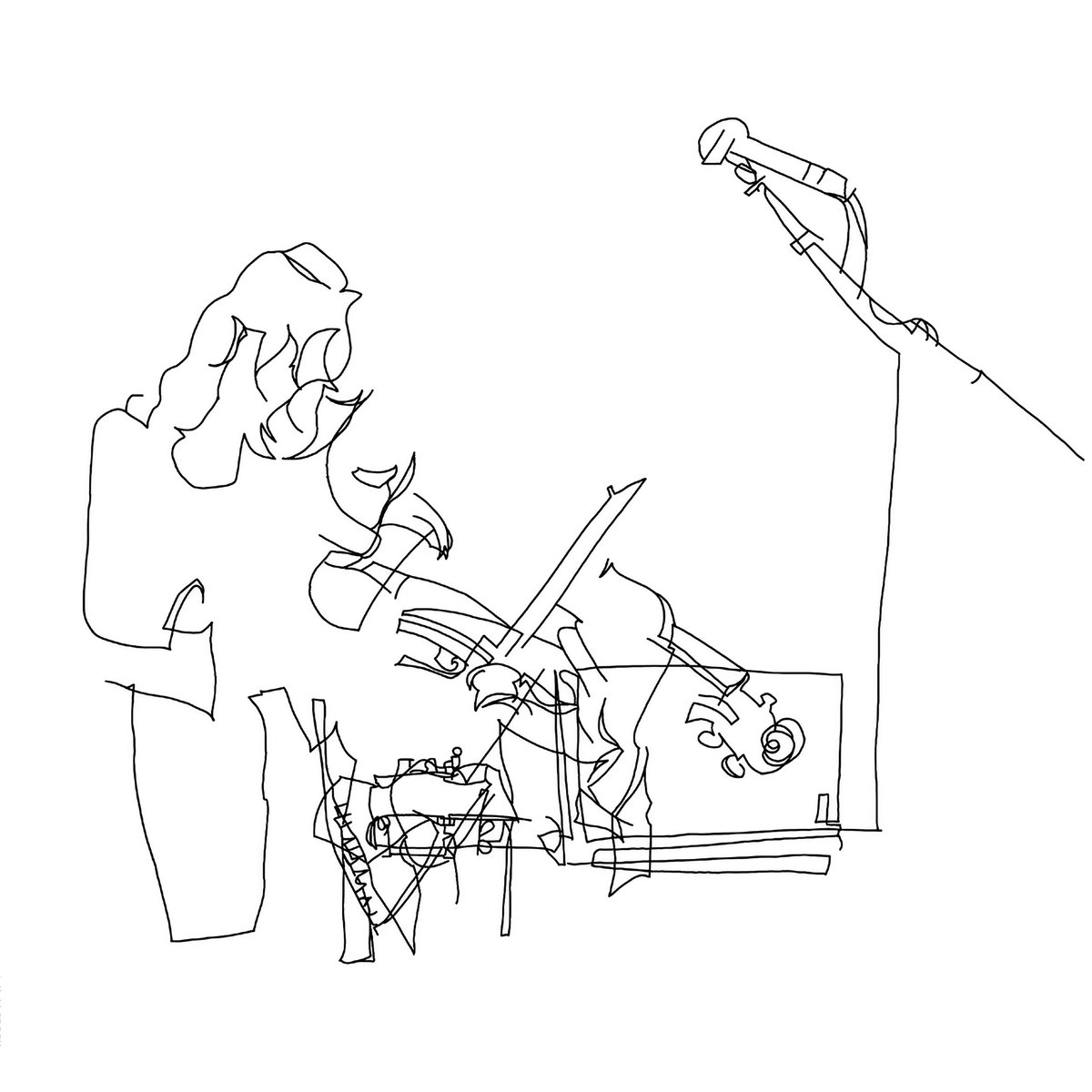
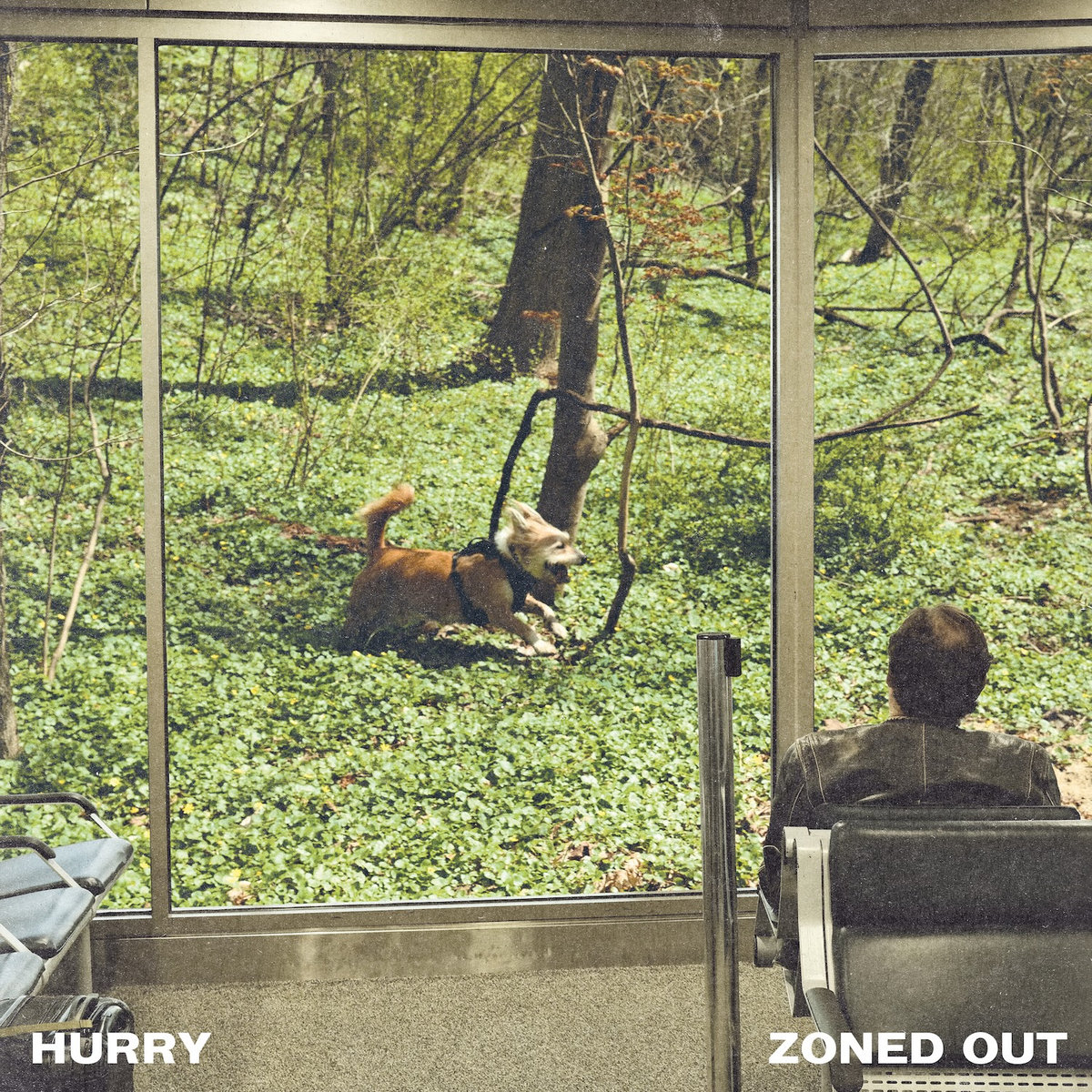
Hurry – Zoned Out | Album Review
/
Lame-O Records
I didn’t notice how much broken glass was strewn across my neighborhood until I got a dog. Once I got an animal and needed to worry about it, I started to see glass everywhere. Almost immediately, I went from being totally ignorant to uncomfortably aware.
I had a similar thing happen with power pop. For most of my life, I didn’t really know what power pop was. Sure, I’d come across it from time to time—“Surrender” in Guitar Hero II, “My Name is Jonas” in Guitar Hero III: Legends of Rock, etc.—but I hardly noticed it, and I certainly never thought about it categorically. Then, I started perusing music Twitter regularly, where it felt like every third post was about the genre. Suddenly, power pop was everywhere. I’d hit a bar and Teenage Fanclub would be blasting over the speakers. I’d walk into a thrift store and trip over a box of Dave Edmunds records. Out of nowhere, my uncle started talking to me about the dBs. Once again, I’d gone from totally ignorant to uncomfortably aware.
Somewhat serendipitously, both of these shifts came around the same time, with me growing fond of Nick Lowe’s “I Love the Sound of Breaking Glass” right as I was beginning to despair at the sight of it. This also synced up pretty perfectly with the release of an album called Don’t Look Back from the band Hurry, which quickly became my favorite thing to listen to as I walked the streets and shepherded my dog away from shattered Miller Lites. To be honest, I’d say that record, more than anything, is probably what drove my budding interest in power pop; if there was more music out there that sounded like that, I wanted to know about it. Now, three years later, both my dog and my understanding of power pop have matured, the glass situation remains unchanged, and we have a new Hurry record.
As much as I loved Don’t Look Back, I have to say that Zoned Out is an even better record, and a lot of that has to do with synths. The heavy lifting that synths are doing here is kind of deceptive. Make no mistake, this is still a guitar-first record, but directly beneath that are synth lead lines that are secretly drawing your ear and supporting a ton of the best melodies throughout the album.
The first track, “All Sunk In,” is maybe the best example of this. The song starts with a nice, crunchy guitar; the vocals come in, and soon the full band enters. For that first minute or so, you’re rocking out with (what seems like) a classic four-piece power pop guitar rock configuration, but when the chorus hits, you hear this high synth lead line get elevated from the background to the midground. As the guitar parts converge and become more stationary, this synth keeps moving around and is really the platform that the main vocal melody is working off of. We also get this secondary benefit of that line disappearing to make room for the guitar solo after the chorus, which makes it feel like the lead guitar is Kyrie Irving calling for an iso—really great stuff.
Another place where the synth is a secret MVP is on the closing solo of the record’s lead single, “Zoned Out.” Here, instead of clearing out to make room for the guitar lead, the synth joins it, creating more of a Lob City situation. Because the synth is fairly clean and essentially doubles what the guitar is doing, it leaves an opening for the guitar tone to get way nastier than it could otherwise. Then, when that falls away during the last repetition of the clean chorus, the contrast makes it feel extra dreamy, allowing it to fully wash over you.
Looking at things on a more macro level, “Just Fine” is the track that I found myself going back to the most. It has my favorite hook on the record, with Matt Scottoline singing, “Do you believe me, baby? That I’m not turning back. / Do you believe me, baby? I’m staying on the track / I keep saying I’m not turning back.” One reason this hits so hard is that the song's verses are about how things in this relationship are totally alright, then everything fully cuts out before we launch into that chorus, which is such a great articulation of projected self-doubt. On top of that, it’s a total earworm, boasting the kind of melody that power pop is all about.
On “Complications,” we see these themes furthered, this time as more of an inward meditation on that same self-doubt. “I’ve got no time for reflection / I can’t retreat into my mind,” Scottoline sings, “We’ve had our fill of conversations baby / I know I shouldn’t be surprised.” It’s a natural progression of the feelings expressed in the chorus of “Just Fine,” with the angst caused by those projections more fully realized.
To get even more macro here, let’s talk about how Zoned Out fits into power pop as a whole. If you end up in the corners of the internet that first attracted me to the genre, half of what you’ll find is arguments about what is and isn’t power pop. This is something I’ve thought about quite a bit myself, and it was certainly on my mind while listening to Zoned Out. My personal criteria is referential and abstract in a way that may make it unhelpful, but I’m going to share it with you here anyway.
The Fountains of Wayne b-side compilation Out-Of-State Plates starts with a clip from NPR where rock critic Ken Tucker proclaims “Hip-hop, country music, and post-grunge squall can take a partial summer vacation. I’m applying some #45 sunblock and putting up a sign saying: ‘gone fishing for power pop’.” When I think about what power pop is, that's what I think of. To me, power pop sounds like something you’d find jumping out of the water at your local lake; music that makes it feel like the sun’s beating down on you. That’s how I feel when I listen to “Starry Eyes” by The Records or “Black and White” by The dBs—the two most down-the-middle examples of power pop I’m able to provide. It’s what keeps me coming back to these songs by lovesick artists who seem to wish rock music hadn’t strayed so far from the template the Beatles provided us with back in the 60s. There've been a lot of great power pop and power pop-adjacent records put out in recent years, but none have done more to deliver that specific feeling to me than Zoned Out. Beyond anything technical about production or sage about the lyrics, that’s really what sticks with me here.
Put even more succinctly: power pop is the best genre and Zoned Out is masterfully executed power pop. Use the transitive property, and that should tell you all you need to know.
Josh Ejnes is a writer and musician living in Chicago. He has a blog about cassette tapes called Tape Study that you can find here, and he also makes music under the name Cutaway Car.