Digging Up the Dirt: A Conversation with Arthur Alligood of phoneswithchords
/
Amiable Alleycat Music
Arthur Alligood started phoneswithchords as a (mostly) solo project after already having forged a career in music under his own name. The project launched in 2022 with Cut the Kid and hasn’t slowed down an iota since. In the last four years, Arthur has put out four more full-length albums, several singles, a collaborative EP with the anonymous bedroom punks Superdestroyer, and a collaborative album with singer-songwriter Ben Sooy of A Place for Owls.
High Up On The Wheel Well is Arthur’s latest excavation of memory. Flashes of summer woods, sunlight, and flittering mosquitoes run through the lyrics as he reflects on where he came from and considers where else the world might take him. Plucked acoustics are as natural as explosive drums and jolting guitar effects. This record finds phoneswithchords leaning fully into a more expansive, electric sound while keeping their folk roots and wrapping it all around a staunchly emo heart. Wheel Well is an exploration of twilight, the liminal space between the light and the dark, heat and cold, youth and experience.
phoneswithchords do not seek to know but rather to experience. “Born” marks the literal birth of a new chapter for the band, with drums by Will Stout lending the project a robust, full-band sound. As the track unfolds with a campfire feel, it grows booming, adopting a sound that feels more at home in a stadium. Alligood also tapped Dustin Ragland and Doug McCarthy for drumming support, letting the project crescendo exactly when the story needs it. Arthur credits himself with all acoustic, electric, and bass guitar, as well as synthesized strings, programmed drums, vocals, and samples. Throughout the album, Nick Webber’s production envelops listeners in reverb, echo, and filters to underscore phones’ awe of both the grand and the infinitesimal.
In the waning days of the summer, Arthur and I got on a call to discuss how family, impermanence, and experience have impacted his career as a musician and mentor, and where phoneswithchords might go after diving into introspective depths. The sun remains high as one season wanes into the next, but the tips of your fingers touch cold. You can wear shorts and walk barefoot, but a hoodie feels good after dinner. Summer is dying again, but this death feels good.
This interview has been edited for length and clarity.
SWIM INTO THE SOUND: First off, thank you for being here. Appreciate you sitting down to talk about your new album, High Up on the Wheel Well. Could you tell us about the impetus for the record?
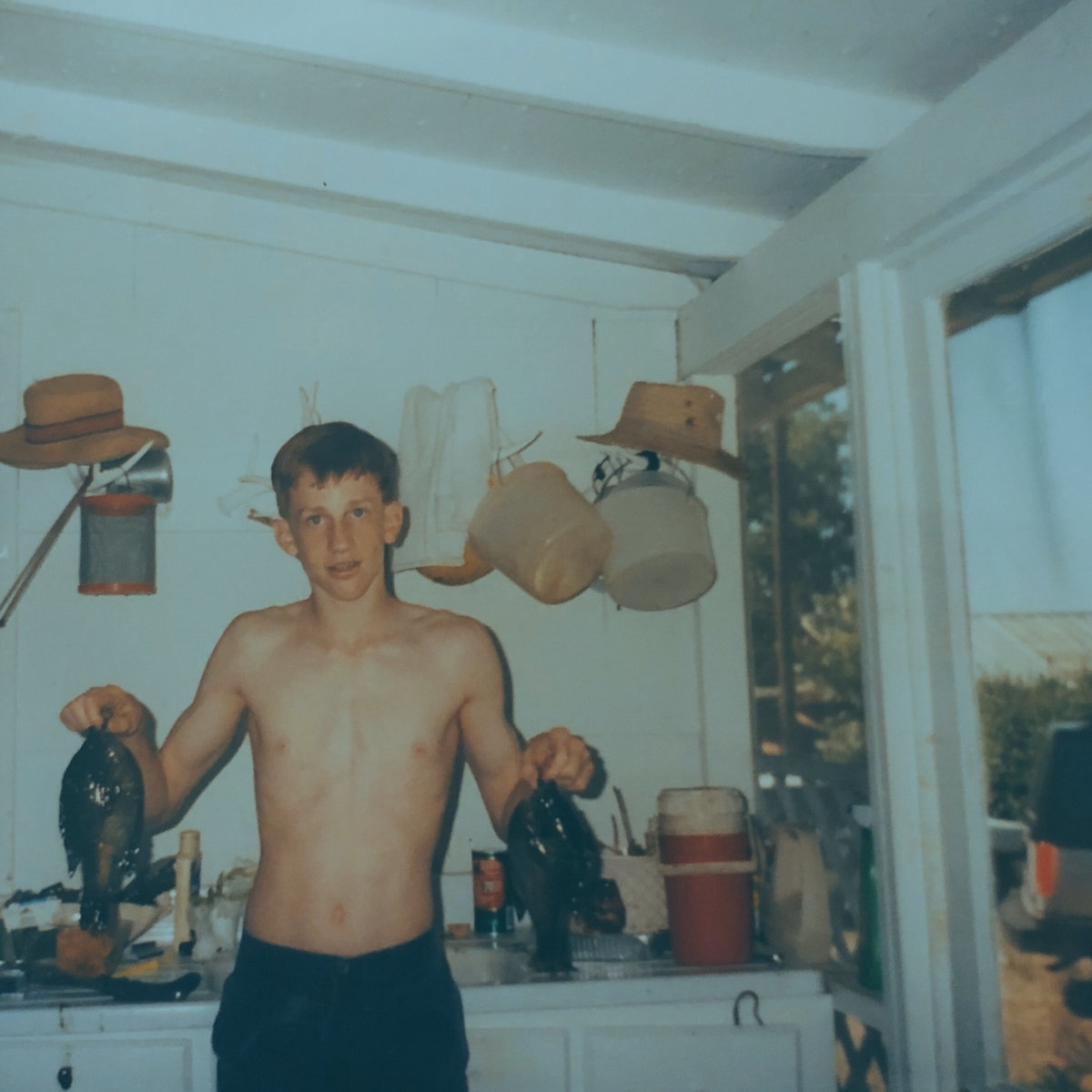
PHONES: Every time I go to talk about the beginning, I get to the point where I'm not totally sure where it started. I know through therapy, and in conversations with friends, I have these certain memories from childhood that have been coming up. Like, why does this one memory from a certain day during a summer when I was 12 keep coming back up? And so I had the idea to do an album years ago, probably ten-plus years ago, to do stories from my family. There have just been a handful of stories that have been told over the years, some of them from my grandfather who was in World War II, and I thought, okay, that’s how I want to tell these stories. But then every time I would try to approach it, it just felt like there was a little bit of disconnection because it's hard to tell someone else's story.
As these old memories kept resurfacing, I thought it would be really fun to write just as an exercise and maybe try to explore that scene. And I did that on one specific song, “Winter in Late June,” that was really the first attempt at this way of approaching it from my perspective as a kid on what I saw.
Then I noticed all these memories were taking place in one season: the summer. The summers of my childhood were pretty epic because I got to explore my grandparents' farm in Georgia. We would have breakfast, and then I could just do all kinds of stuff. So it was just a culmination of resurfacing memories and then getting the key for how to write about these things because it's really hard to write about your own personal experiences. Often I have to change the facts just a little, you know? But this time I felt like I had an in on writing about this stuff, and so I just went with it.
SWIM: It's a very vulnerable album, so what made this the right moment to excavate those feelings and memories?
PHONES: I'm forty-seven, and my oldest daughter is about to graduate college. My other two daughters are going into their senior year of high school. I don't know, it just feels like a very transitional period for me, and it's really got me thinking about life and what shapes us as human beings. The moments, the memories that make up the bedrock of who we are.
And so I think it's a combination of seeing my kids grow up and also going back to therapy, just revisiting some of these memories and going like, “Why did that shape me? Why was this one moment so formative?” So it's almost this dual thing happening where I'm seeing my kids grow up and they're getting older, and they're about to leave for college and do their thing and live their life. It’s also me going, “I'm getting closer to fifty…What the hell? What is happening?”
Then there's like a third kind of mysterious thing. I don't really know why these things have surfaced now. Maybe in five to ten years I will be able to look back and go, “Oh, okay, that's why that was coming up.” It just feels very shrouded.
SWIM: You get a sense of… I don't want to call it mystical or spiritual, but the album has a sense of the unknown throughout. Every song explores these reflective feelings, so there is this abstract notion of reaching for something, but sitting on the outside of it, just observing the feeling and letting it in. Was that almost “objective” reflection on purpose?
PHONES: I don't think it was necessarily on purpose. I think what you just described is how I felt. Since the album's been out, I've listened to it just once all the way through, and after getting a little bit of distance from it, even I don't know where this came from.
It just feels like a culmination of so many things. Again, some of those things I'm able to name, and then a lot of those things I just don't know. So I think I lean sonically into the unknown, and somehow that came across.
That's interesting for you to say that. Because even when I turned in songs to Nick Webber, who mixed and mastered the album, he would sometimes ask, “How did you get the guitar to sound that way?” Or “How did you do what you did here?” And I would have to go back through and try to piece it together.
I think one of my strengths as an artist is that I can recognize when it's working and I don't have to know why it's working. I can just run with it. And so that's why these songs are some of my favorite projects that I've done. Somehow this works, but in the end, I don't even want to know. I want some of it to be a mystery.
SWIM: That reminds me of your album phoneswithBen with Ben Sooy from A Place for Owls. I remember you guys said you were passing songs back and forth Postal-Service-style and that you'd run with whatever imperfections were on there. There's something special when that happens, and it makes it sound extremely human. That just makes it hit all the harder, which is fun for people like me.
PHONES: Yeah, thank you for saying that.
SWIM: I did want to ask about your relationship with Nick because you've been working with him for a while. How has that relationship developed? How's it changed? Because there's definitely the classic phones folk-Americana style on here, but it also does start to expand, and there are those big, resounding live drums on some tracks. It gets really, really dynamic.
PHONES: Yeah. So Nick and I, first of all, we've just become really, really good friends—even though we've yet to meet each other in person. On Wheel Well, I immediately felt like I didn't have to explain things to him the way I did when we first started working together on that record with Ben. That's really the beginning of when we started working together.
I can send him stuff because we’ve got an unspoken language now, and I will sometimes hold back on certain things because I can already hear his instinct. So I might send him just a brief note that says, “Hey, I left some space if you hear anything,” because I know he's already hearing something. He's so good at adding tasteful elements; anything from guitar to other instruments and even vocals.
With this record, I was in the trenches reworking songs. I wrote maybe four different versions of “High Up on the Wheel Well.” One that we may release is totally different from what’s on the record. It didn't work for the album, but it's already mixed, so I think it’s ready to go.
Nick is really good at taking all the information and helping me piece it together. Sonically, he just knows the things that I like. He has a free license at this point; musically, out of anyone in my life, I trust him the most. I will say if you hear anything, add it. If something that I've sent is taking away from it, feel free to delete it. So we are in this really, really beautiful, like, back-and-forth relationship that we have.
And so I think Nick knew kind of the epic quality that I wanted these songs to take. And so he has a very soft way of doing this, but he very much pushes you as a producer, which is what I need. And so a lot of times I would send him something and go, “Do you think we need live drums on this?” And then he would either go, “No, I think we're good,” or “Yeah, live drums would take this over the edge.” And so a lot of the live drums are because we had that back-and-forth.
SWIM: It sounds like you guys have a lot of trust together, which is awesome. Especially since, as you said, you've never met face-to-face, but you're able to pull it off the way you do—that's magic.
PHONES: When we meet, we will probably hug for like ten minutes. He's my little brother from another mother. Beyond music, we chat once a month or so, usually on a Saturday, not really even about music; we just like catching up on life stuff. So it's been really good.
If you don't end up with a friend, then you're kind of doing it wrong, you know? I don't even see our friendship as a byproduct. I just see it as a gift of collaboration.
SWIM: What’s the point of the art that we make if not the community we're trying to build?
PHONES: Exactly. Yeah.
SWIM: It sounds like you had these songs or ideas for a while. You said that you weren't quite ready for them, but they just kept coming up in therapy or in your songwriting, and then you took it as kind of an exercise and ran with it. Was anything particularly difficult about putting the album together?
PHONES: I would struggle when I wanted to write in third person. Every time I tried to do that, I was always drawn back to first person. Anytime I wanted to zoom out, I felt drawn to go into the minute details of my upbringing. So I learned that if I'm gonna do this, I'm gonna have to get really personal, and I'm going to have to write about things that just tell it how I saw it.
Part of my struggle with it is that I referenced my cousins in these songs. My family moved away, so I grew up in the middle of Georgia for the first four or five years of my life. And then we moved away because my dad was a journalist. He got his first real paper job in Tennessee, so we moved.
Every summer I would come back, I want to reconnect with my cousins and we would play and we would go swim and go fishing and all that stuff. But I knew I was sharing my perspective of the things I remember and the things I saw. And I did worry a little about one of my cousins going, ‘That's not how I remember that.’ I didn't want to feel like I was pushing a narrative. I just didn't want to over-tell my perspective. But it's been cool.
They listened to the album, and they were just very, very encouraging and said some really sweet things. For me, that was a success. It felt very full-circle to get their stamp of approval on it.
So yeah, it was really great.
SWIM: I can imagine that's pretty scary when there's some element of autofiction in the art that we make, but the people who are in it as characters or players in your life. But it's really good that they were supportive about it.
PHONES: No one's asked me about this yet, but the only person that I called by name was my brother. I didn't want to name my cousins or even my mom or dad. I still wanted there to be a little bit of separation because we all have these stories. I wanted the door open for people to hear these stories and remember their own experiences.
SWIM: I saw on Bandcamp that you wrote about how you hope the songs bring comfort and joy and liberate your listeners. What do you mean when you hope they feel liberated by listening to your album?
PHONES: I guess I want them to be free to accept the struggle. I just thought, well, I'm focusing on all the good moments, and I struggle with that. Is it wrong that I'm not talking about the things that weren't so good? But then as I got more into it, I realized, no, that's not what I'm doing here.
I guess what I'm inviting the listener into is to treasure those formative moments that were really positive. Those are the things that, whether we realize it or not, really drive us forward. We all have 'em in different moments of our lives.
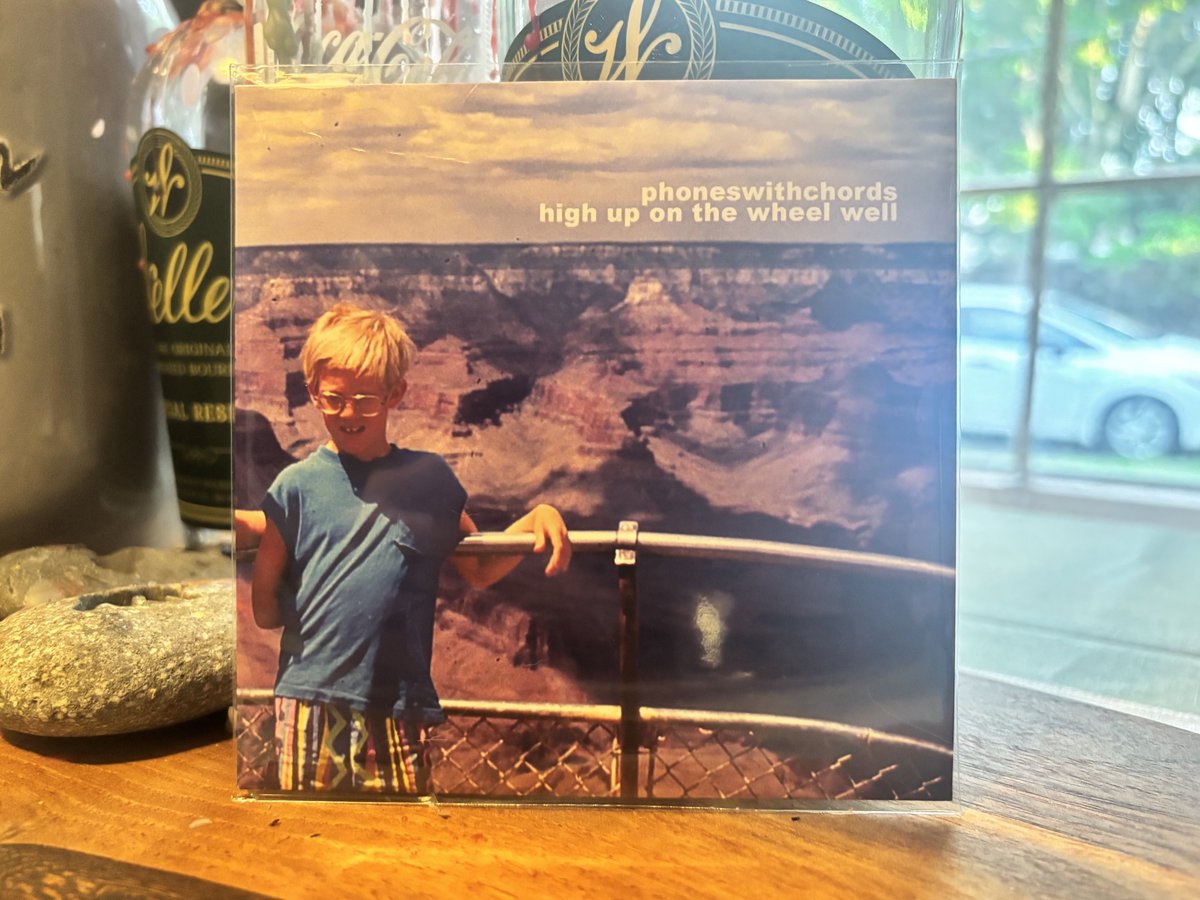
Physical editions of High Up On The Wheel Well
I've thought many times that winter may be more impactful for listeners than summer was for me, but for some it may be fall or whatever, so I'm just inviting listeners to remember the beautiful times.
I think sometimes we live so many different lives and we all experience really horrible things, but it's just a remembrance of the light trying to shine through, especially nowadays. I feel like it's really a big struggle in our society to remember that it's not all shit, you know? Even saying that out loud sometimes feels scandalous, but I'm learning this in my own life, so it's a work in progress for sure.
SWIM: There is a whole golden hue about Wheel Well. You can feel it. What I love is that I can imagine listening to this in late August and autumn twilight as it starts to cool down, and I will have those wistful feelings of the summer that just passed. I think that there is a timeless nostalgia in that.
PHONES: Yeah, I'm really looking forward to every summer because it will be this gift back to myself, and hopefully a gift to listeners. I hope it's for my kids; maybe even my grandkids.
SWIM: When we started the conversation, you said that this album felt like a culmination of sorts. I felt the same way while listening. It felt like all your work up to now had been building to this point, sonically, thematically, lyrically. You feel the reflection and the acceptance coming in your songs. And that just leads to catharsis. So we get this relief.
If this is kind of a culmination, where do you think phoneswithchords is going from here?
PHONES: I'm always writing. Wheel Well was mastered, and we had set a release date and everything, but I just kept going. So I'm like, “Okay, I did this. Now I want to do the exact opposite.” That's the pattern in me.
Will Stout, who plays drums on “Born,” lives outside of Nashville and has a little studio. We've been, just for the fun of it, writing almost power pop-type songs.
I sent him a couple of demos and was like, “Hey, would you want to play drums on all these fuzz pop songs or whatever that I have?” And he was like, “You had me at fuzz.” So I went over and, in a day, we just had mapped out with electric guitars and scratch vocals and everything. Then we went over and recorded like three or four one day at his little studio.
It was so much fun. It was kind of dissonant, because I'm trying to figure out how to get ready to release this album, and then I'm getting these really fun drum tracks and songs that I don't know what to tell you people. I'm just gonna do whatever the hell I wanna do, so yeah.
SWIM: Ha, that's awesome!
PHONES: It's been really fun. I think that phones, from the beginning, was just to follow whatever's in front of me. So far, it's been a meandering trail, you know? I've just been doing all kinds of different things. There's no pressure for this culmination record. It's cool because I can do whatever I want, and I don't even have to do anything. I feel a lot of freedom with it, and I feel like people who have followed me so far know, ‘Okay, yeah, this is a fun little ride we're on. Let's see where we're going.’
SWIM: I'll be there for the fuzzy power pop phones era whenever it comes.
PHONES: Yeah, man, I'm having a lot of fun.
SWIM: That's it for me. Do you feel like there's anything that we didn't get to discuss or cover about the record or anything else?
PHONES: I just really want to highlight the people that played on the album. I did most of the guitars and bass and programming and synths and obviously vocals and all that. But as I mentioned, I had three different drummers playing on the record. Dustin Ragland, an amazing drummer out of Atlanta, played on “Summer of ‘91,” which made for the most epic ending ever. Then on “Winter in Late June,” the drums were played by Doug McCarthy. And then obviously Nick Webber played all kinds of little stuff along the way, adding little sonic textures to everything so it feels very much like a DIY album.
You got all kinds of people. The cords have been expanded now.
Joe is an all-purpose creative from Brooklyn, NY. He loves reading, writing, and playing the bass almost as much as he loves his dog. Every now and then, he discovers another reason to love Jimmy Eat World more deeply. Check out all of his work here.