Welcome to the Rosy Red World: An Interview with Pat King of Labrador
/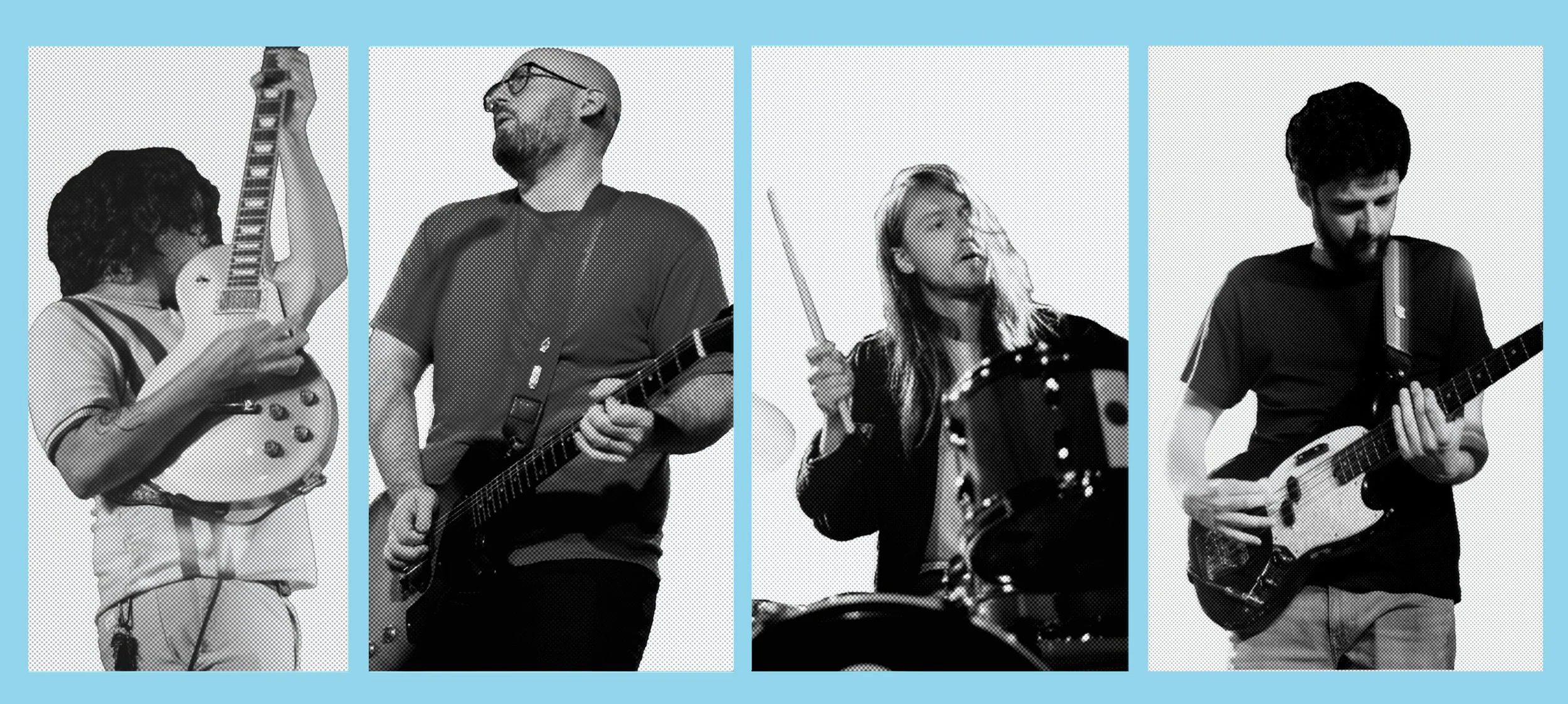
Photo by Jay Lieby, Layout by Chad Jewett
These times are unprecedented. Have you heard that before? It’s all too easy to get caught in the dust devil of inane and insane news that is constantly swirling around our heads. So how do you find clarity amongst the turmoil? I wish I knew. Actually, I was hoping you might be able to tell me. It’s likely there isn’t a one-size-fits-all answer. As time moves on, we’ll probably have to find new solutions because the old ones just don’t work the way they used to.
Maybe it’s all as simple as tearing it down to the studs and listening to some politically charged rock ‘n roll. That’s where Labrador comes in with their new album The Rosy Red World, boasting ten songs that continue the tradition of American protest music. The album sets its sights on attacking the rise of fascism, isolationism, oligarchal greed, and the Palestinian genocide, among other things. Labrador aren’t the first artists to confront these injustices in their music, but that doesn’t make what they’re doing any less important or courageous. It’s easy to become complacent toward the realities of our world, which is why it’s important to shine a light on those who are willing to speak out.
Earlier this summer, I met up with Pat King of Labrador to gain a deeper understanding of his perspective on politics, the new album, The Kinks and The Who, and what it means to be Maximum Alt-Country.
This interview has been edited for length and clarity.
SWIM: Now that The Rosy Red World has been out for a month and you’ve taken it on tour, what’s the reception been like?
PAT: It's been really great. This album doesn't shy away from being political, and we played our biggest hometown show here at Johnny Brenda's, which is one of the big spots to play in Philadelphia. Onstage, I got to introduce our songs, and I always like to explain what they're about. It made me happy to hear how well they were received by people applauding and cheering in agreement.
SWIM: The Rosy Red World is an overtly political album. Songs like “We Drew Straws” and “Metaphors For Love” feature very direct lyrics of political action. You also address the genocide in Palestine with lines like “war crimes for genocide, ceasefire now,” which is also printed across the album’s gatefold and on some of your shirts. Why was it important for you to put this message as clearly and plainly as possible?
PAT: This is one of the biggest reckonings in humanity that we're going through right now. I feel like, between the rise of fascism and the technological advancements that we have, it is so easy to check out and choose an apathetic disposition towards everything that may seem out of our control. I just thought it was disheartening to look at the indie rock landscape, or even at music you would usually find that kind of messaging in, and not see it.
I felt like this time around, especially a song like “Metaphors for Love,” which is about not hiding behind metaphors anymore, it was important to be straightforward and not dance around anything. I mean, there used to be only three stations you could watch on television, and the public had a very manufactured view of what was happening in the world. I felt like this time around, at this given moment, we're in such a different place where you have to kind of make these convictions known in a direct way.
I also think this is the quickest I've ever written an album, because I didn't labor over poetry or flowery imagery. I just wanted to say how I felt, you know? Come as completely honest and be direct as possible.
SWIM: Would you say that you mean for the album to be a wake-up call?
PAT: Well, I try not to think about it in those terms. It's certainly a wake-up call for me, for the way I wanted to write, and if that translates, that's amazing. I just hope it kind of shakes people into taking a hard look at what's happening.
SWIM: The album is filled with a ton of complex and conflicting emotions from anger and sadness, to compassion and joy. How do you strike that balance and keep things from sounding too “one-note?”
PAT: You know, for the kind of songs I'm looking for, and the kind of songs that influenced my writing, I've always been influenced by people like Ray Davies of The Kinks, Paul Weller of The Jam, and Pete Townshend of The Who. I feel like they do a great job of talking about their communities and talking about people's everyday lives, and if they heard a song that was grandstanding, they would laugh it off. So using them as a compass was a great barometer for me to attempt stuff like this.
Billy Bragg has a quote, now I'm gonna butcher it, but he said something along the lines of “all songs are political.” I think that you could be talking about love, you could be talking about sexuality, but when you think about it on a larger scheme, it's like, what do we have the “right” to do? Because of how I grew up, you know, pretty blue-collar, there was a time when we were taught that we don't have a quote-unquote “class system” in America, but now we're seeing that it does exist, and it's kind of the only war worth fighting. So I think when I talk about people, I try to talk about small facets of their lives. But I'm glad it resonated because I try to put them in the broader picture of what is happening in society at this moment. At least I'm trying to do that.
SWIM: You mention the importance of community in your writing, and I’m interested in your perspective on your own community in Philly. The city has such a vibrant scene with some big success stories, but who are the artists that you’re excited about who maybe don’t get the same attention as some of the bigger names?
PAT: I mean, there’s a bunch. There's some friends of mine. Bands like Golden Apples are incredible. You’ve got Gladie and lowercase roses. We actually recorded with Matt from Gladie, who has his own project called Memorytown. Heather Jones is great. Of course, Greg Mendez is huge – he's blowing up, as he deserves. Let me think. I feel like people always focus on the indie rock or hardcore punk stuff in Philly, but there's this great underbelly of weirdo art rock and space rock. This new band Writhing Squares is great. They're like Hawkwind mixed with The Wipers. It's awesome.
SWIM: You recently started your own record label, No Way of Knowing Records. Why was it important for you to, as you put it on the album, “seize the means of production?”
PAT: I mean, it's mostly out of necessity. There's so much about making music where you make the record, and then you're psyched on making a record and then all the other stuff – getting people to care, getting people to come to your show, sitting in a room with a ton of records – where you just feel bad about yourself, and it's hard to feel pride about doing it. I just really wanted to jump in feet first, do it, and take pride in it. It's a big undertaking, but why not go for it?
SWIM: You describe the band as “Maximum Alt-Country.” What does that mean to you? Do you view it as something different, or beyond what is normally considered alt-country?
PAT: Well, it's kind of funny. When I first started writing songs, maybe a little under twenty years ago, it just made sense in the country kind of world. I think that mainly had to do with the way that I sing and the stuff that I was listening to at that time, like Wilco, The Jayhawks, Gillian Welch, and Neko Case, those kinds of people. And I guess a little Neil Young, Byrds in there too. I've drifted away from that traditional capo third C, A, F, G style of old country and gotten deeply into rock stuff like The Who, The Jam, and The Kinks.
For the first full-band record that Labrador put out, Hold the Door for Strangers, I was joking because I didn't want to just be like, oh, ‘here's another alt-country band.’ So I called us a “bruised alt-country band” because it was a very defeated-sounding record. It was a Molina vibe, with a touch of Neil Young, and then I started wanting to write more politically.
For that record, I toured a lot solo, and by the end of playing that material as a solo artist, I was just like, I never want to be this sad alt-country guy ever again. It's just not my personality. You can almost see it on people's faces when you plug in, and you're sandwiched in between two livelier bands. It's just like, “Oh God, here's the sad guy talking about quitting drinking or women and having romantic problems.” I've done that to people, and I've also been to shows where I'm like, “Oh, God, here it is.” I just realized that, for better or worse, I’ll never get the alt-country out of my voice.
Connor is an English professor in the Bay Area, where he lives with his partner and their cat and dog, Toni and Hachi. When he isn’t listening to music or writing about killer riffs, Connor is reading fiction and obsessing over sports.