Swim Team Summer Bev Check 2026

Beverages are one of life’s simple pleasures. No matter how down bad you are, you can always get a 99¢ Arizona from the store around the corner. No matter how much you wanna bail on the gig tonight, there’s always a sugar-free Red Bull to pick you up and help you power through. There’s champagne to celebrate, whisky to make you woozy, and Gatorade to help you recover from it all. The right drink can make a long shift at work a little less shitty or be the cherry on top of an already perfect day. 

We here at Swim are big fans of hydration in all its forms. I personally keep my 32-oz Nalgene filled and within arm’s reach, basically 80–90% of the time. I keep multiple flavors of seltzer on-deck and in my fridge at all times, and I have needlessly strong opinions on the best flavors of Red Bull, Monster, and Rockstar. I’m lucky that most of The Swim Team share similarly strong beliefs and passions about the world of snack and bev, because we gotta talk about something in between complaining about Spotify and trading indie music recommendations back and forth. 

To that end, the illustrious Swim Team has come together to whip up a summer bev check, aka a list of a dozen or so different drink recipes for you to try this season. We’ve paired each drink with a song that you can listen to as you sip for the optimal summer experience. You can find all the songs in this playlist right here. Happy listening and happy sipping, I hope you have a beautiful summer.


Cigarillo
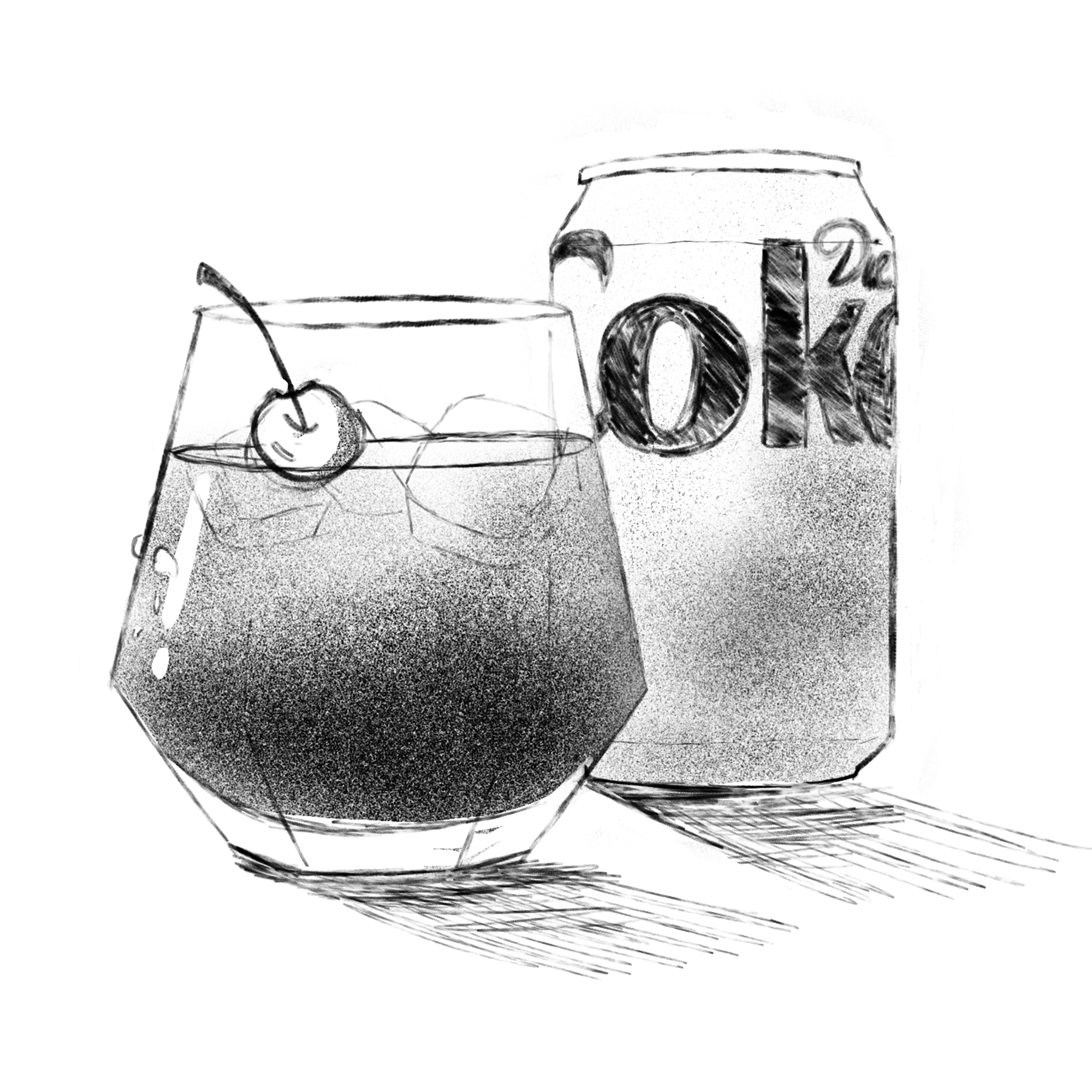
Illustration by Amanda Deering

I have to shout out my buddy Tim from Pop Music Fever Dream for coming up with the name of this delicious bev. The humble Diet Coke is one of our most versatile beverages, to the point of transcending its status as a beverage—I believe this is why it’s been nicknamed the “fridge cigarette.” Add a bit of grenadine for some sweetness, dirty it up with the tequila of your choice, and you’ve got yourself a cigarillo, my friend. 

Ingredients

  • Ice

  • 1 oz tequilla 

  • Diet Coke (approximately 1 mini-can’s worth)

  • A splash of grenadine

  • A maraschino cherry, if ya nasty

For best results, pair with “Bartender” by Lana Del Rey (or more likely, the entirety of Norman Fucking Rockwell!)

– Grace Robins-Somerville


In Shirley’s Eyes
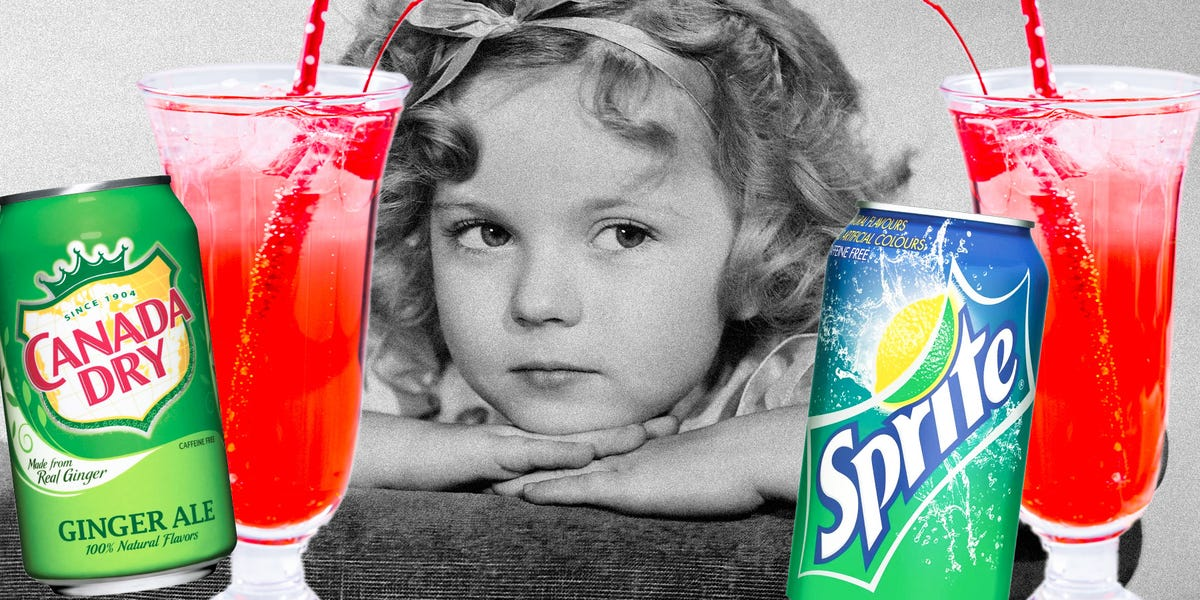
I stopped drinking a couple of years ago, and a Shirley Temple has become my drink I look forward to after a hot day in the sun. There is nothing better to sip while enjoying a hazy sunset with friends than this delightful syrupy concoction. 

Ingredients

  • Ice

  • Ginger ale

  • Grenadine 

  • As many cherries as you damn well please

For best results, pair with “Out of Step” by Minor Threat.

– Lillian Weber


The Uncle Tupelo
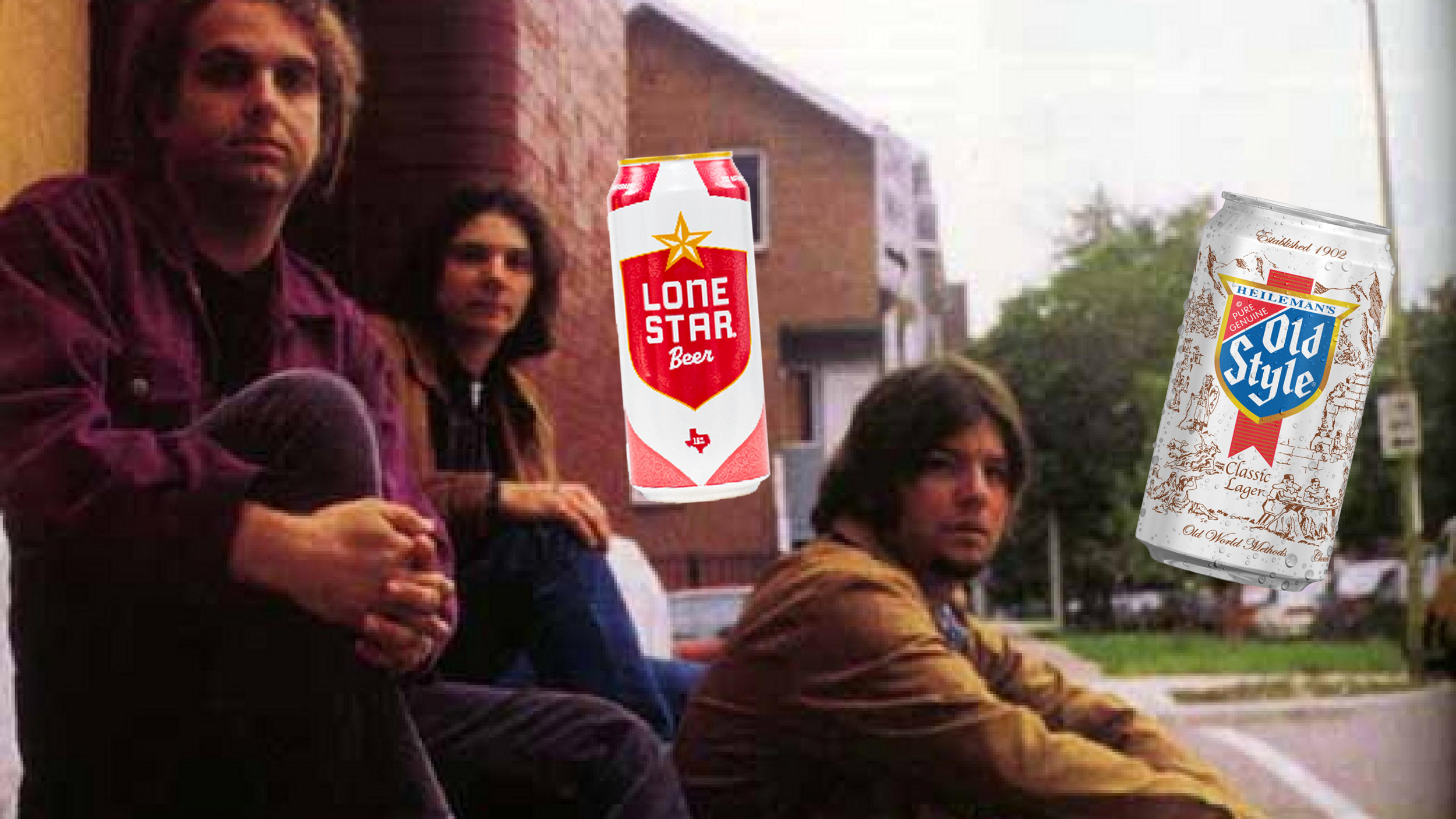
I’ve never been a smoker, but cigarettes legally do not count after four beers… Three if you’re petite. There’s something about bar-hopping in the summertime–feeling the stick of the air as you wade through a cloud of someone’s cigarette smoke on your way into your favorite dive. In four short beers, you’ll have a cloud of your own. A moment best shared with no more than two loved ones.

Ingredients

  • 1 whiff of someone smoking a cigarette on the patio as you enter the bar

  • 3–4 “Uncle” beers (Beers you see your uncle drink in the garage on Thanksgiving. Depending on your region, this could be Stag, Hamm’s, Old Style, or Lone Star. If necessary, PBR will do)

  • 1 Camel Blue (it has to be Camel Blue)

For best results, pair with “Chickamauga” by Uncle Tupelo.

– Caleb Doyle


Aunt Caroline’s Famous Down Home Old Fashioned Style Switchel

Well, gather ‘round y'all, and let Aunt Caroline pour you a nice tall glass of my world-famous switchel. Now, back before all you youngins drank lemonade, this is how us old timers would quench our thirst after bringing in the harvest on a sweltering summer day. I know I’m telling you to drink a beverage that contains a not-insignificant amount of vinegar and molasses, but I swear to god, it's delicious. Your great-aunt Caroline even made this for General Sherman and his men on their way down to Atlanta.

Ingredients

  • 2 tablespoons apple cider vinegar

  • 4 teaspoons sweetener (Aunt Caroline only uses genuine black strap molasses, but you city folk can use honey, maple syrup, or sugar)

  • 1/4 teaspoon ground ginger or 1 teaspoon grated fresh ginger

  • 1 cup water

Combine all ingredients in a jar or glass and refrigerate for at least two hours, or overnight if possible. Strain if using fresh ginger. Serve over ice. 

For best results, pair with “John Brown’s Body” by Pete Seeger. 

– Caroline Liaupsin

The Dirty Palmer
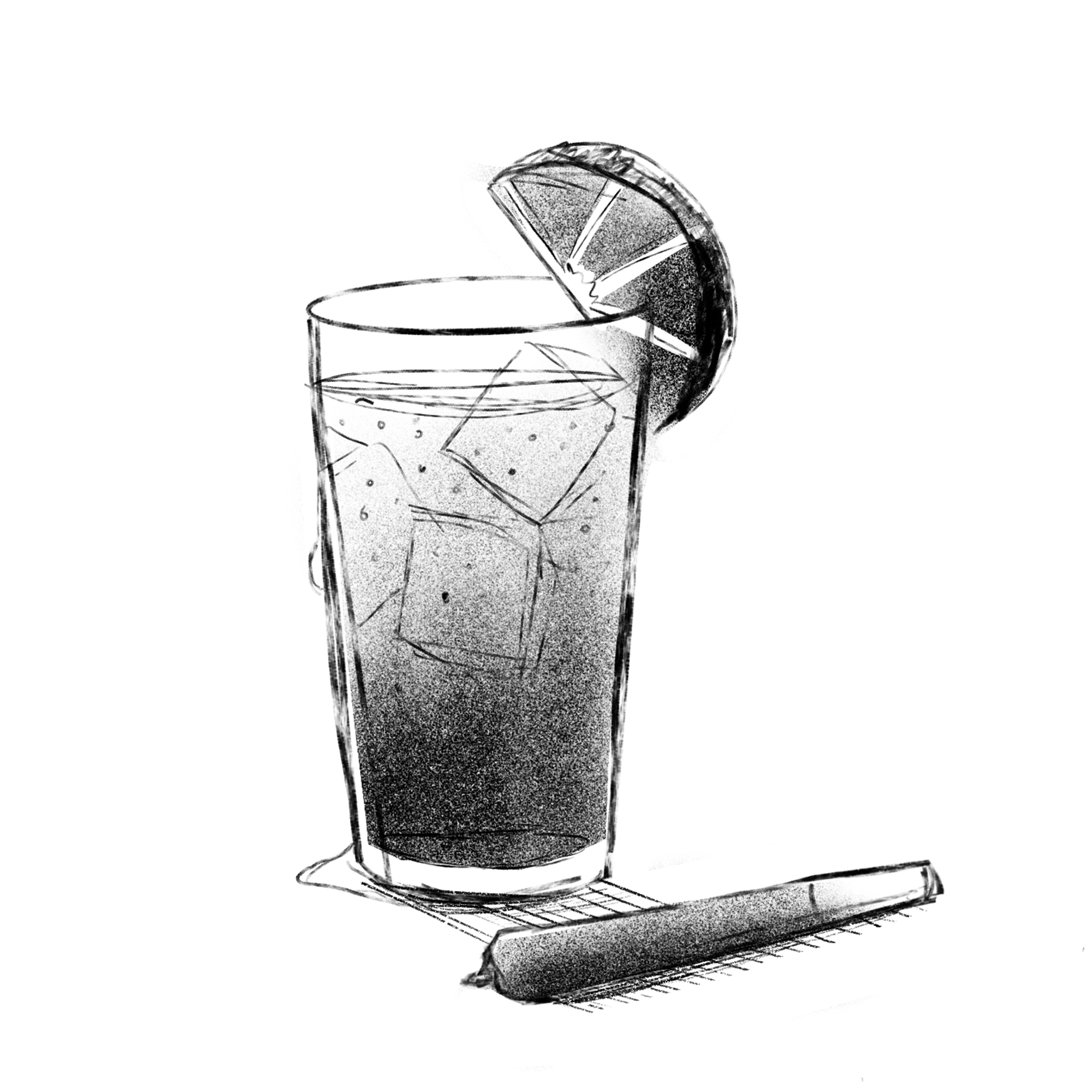
Illustration by Amanda Deering

I’ve been known to fuck up some mini golf, but I’m not a golfer. If anything, I’m anti-golf; it’s a rich guy sport that monopolizes land, hoards water, and acts as a conduit for the worst people in the world to conduct shady backdoor business deals. All that said, I still have mad respect for Arnold Palmer. He has an impressive list of career accolades, but perhaps his greatest achievement is his signature beverage, a blend of lemonade and iced tea. You can buy it at any convenience store in this great country for 99¢, and that’s beautiful. If you throw a little booze in there, you have a beautiful concoction that pairs with any sunny summer activity, whether you’re day drinking by the pool, lazing in a hammock, or heading out for a night out on the town. 

Ingredients

  • Ice

  • 1–2 shots of Tito’s Vodka

  • Half a bottle of JOE TEA Half Lemonade Half Lemon Tea

  • A splash of plain seltzer (preferably Polar Original)

  • A slice of lime

  • A sativa joint (optional)

For best results, pair with “Dozen Roses” by Thomas Dollbaum.

– Taylor Grimes


2009 Four Loko
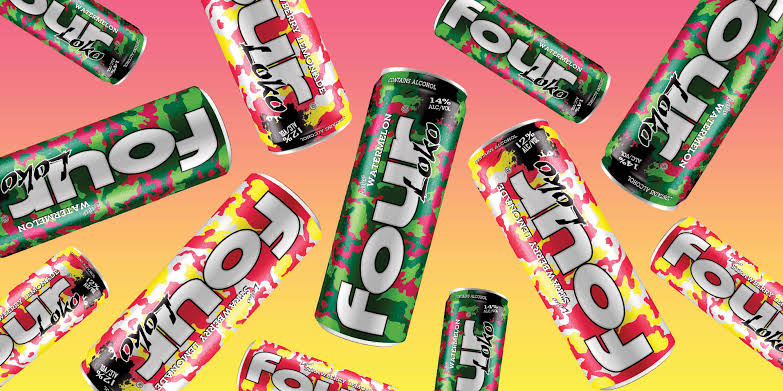
This summer, if you want to know the feeling of high-voltage electricity pulsating through your entire body, there’s only one solution… the FDA-banned version of Four Loko from 2009. It’s a drink so powerful that in just one night of consuming this toxic beverage, you could experience the highest of highs, like levitating in the middle of a crowded street, but it could also lead to you being helped on a gurney headed to your nearest CPR machine. The only hindrance you might incur is the time travel part, but where there’s a will, there’s a way. I’m sure with the correct equipment, that won’t be a problem for you.

Ingredients

  • 1981 DeLorean DMC

  • Flux Capacitor

  • Liquid Nitrate

  • CPR Machine 

For best results, pair with “Sikamikanico” by Red Hot Chili Peppers.

– David Williams


The Nancy

The Little Apple – Manhattan, Kansas – is situated at the edge of the Flint Hills, has one of the top agricultural universities in the country, and provides (almost) all of the fixin’s of the big city with all of the charm of a small town. The best part of this little city is easily Aggieville, a short drag of college bars, where you can find the “Nancy” offered year-round at Rock-A Belly Deli, Taco Lucha, and So Long Saloon. Always available, always refreshing, and—most importantly—always cheap. 

Ingredients

  • 20 oz plastic diner cup

  • 50% cheap light beer (Old Milwaukee is traditional)

  • 50% canned pineapple juice

Variations include: Pirate Nancy (add 1 oz rum), Dirty Nancy (1 oz vodka), Whiskey Tango Nancy (1 oz whiskey), Fancy Nancy (1 oz Crown), or, if you dare, a Long Island Nancy.

For best results, pair with “Hey Jealousy” by The Gin Blossoms or this cover by The Ergs.

– Braden Allmond


The (Extra) Dirty Beertini

Illustration by Amanda Deering

Much like the average yacht rock tune, a Beertini can be appropriately enjoyed at both your local dive bar or any country club wedding reception. This Midwestern concoction is what it feels like to indulge in simplicity. You can adjust the brine to your liking, but I prefer mine extra dirty. The adventurous yacht-rocker might even try subbing olive juice out for pickle juice. No matter your preference, there’s a beer-brine combination out there for everyone, so go experiment and then kick back this summer with your very own Beertini.

Ingredients

  • Your favorite light beer

  • A splash of olive brine

  • Garnish with olives or a pickle spear

For best results, pair with “What a Fool Believes” by The Doobie Brothers, or your yacht rock artist of choice.

– Annie Watson


Change of Address
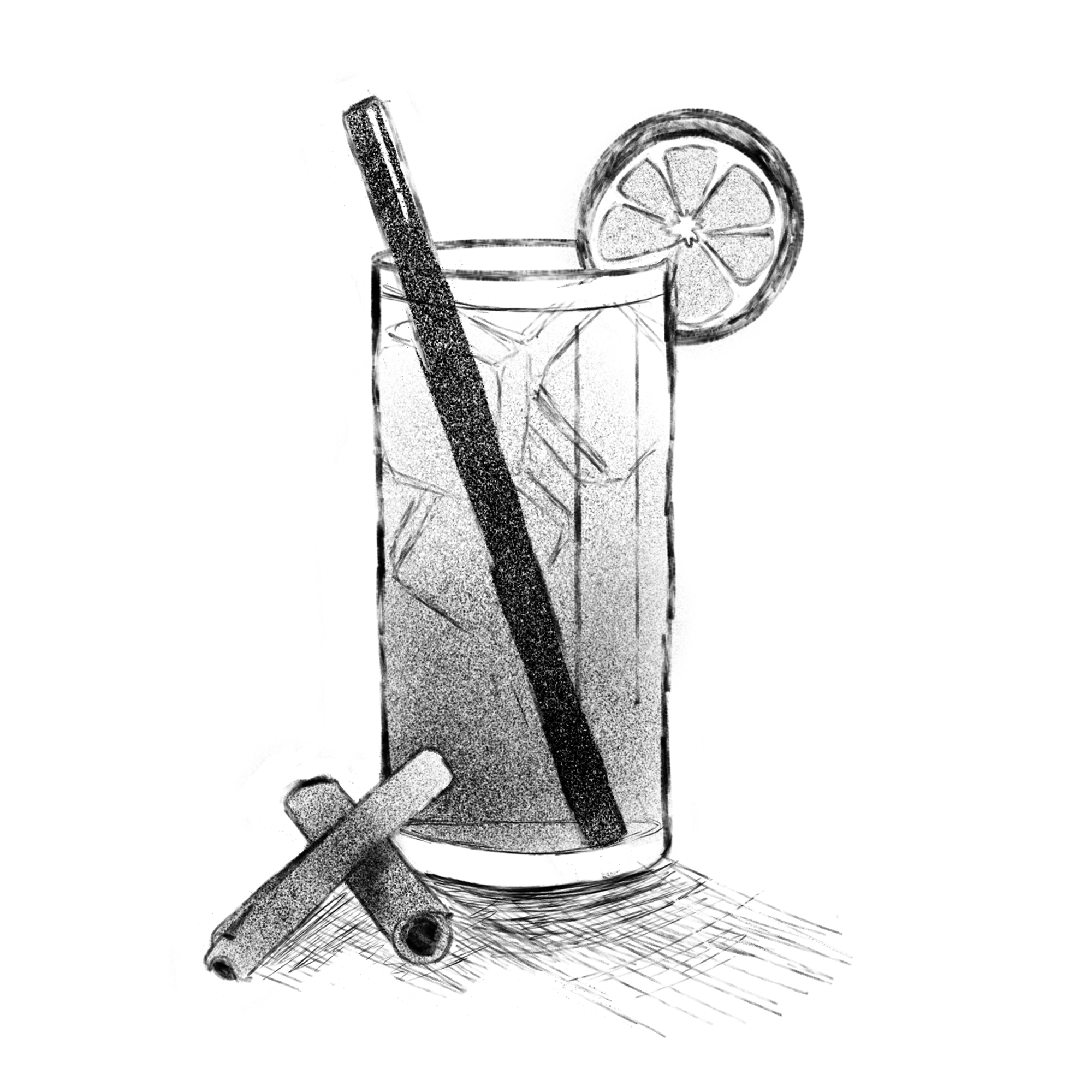
Illustration by Amanda Deering

I am the lightest of lightweights and therefore appreciate a satisfying mocktail. The unusual and intriguingly delicious Change of Address is my favorite mocktail of all time; both simple and impressive. It’s a great twist on plain cola with a solid balance of sweet, spice, and umami. This specific recipe is by Eric Nelson, sourced from the wonderful cookbook Good Drinks by Julia Bainbridge.

Ingredients

  • 0.75 oz fresh lemon juice

  • 0.75 oz maple syrup

  • 1 tsp soy sauce

  • 3 oz Coca-Cola (or any cola really – I like the Vintage Cola Olipop)

  • Freshly grated cinnamon, for garnish

Combine the lemon juice, maple syrup, and soy sauce in a cocktail shaker. Fill with ice, seal the shaker, and shake for about 3 seconds to combine. Add the Coca-Cola, then double-strain into a Collins glass filled with crushed ice. To serve, grate cinnamon over the top.

For best results, pair with “What Is Left To Say (ft. The Lemon Twigs)” by Thundercat and a really good cheeseburger.

– Britta Joseph


Sun Tea 
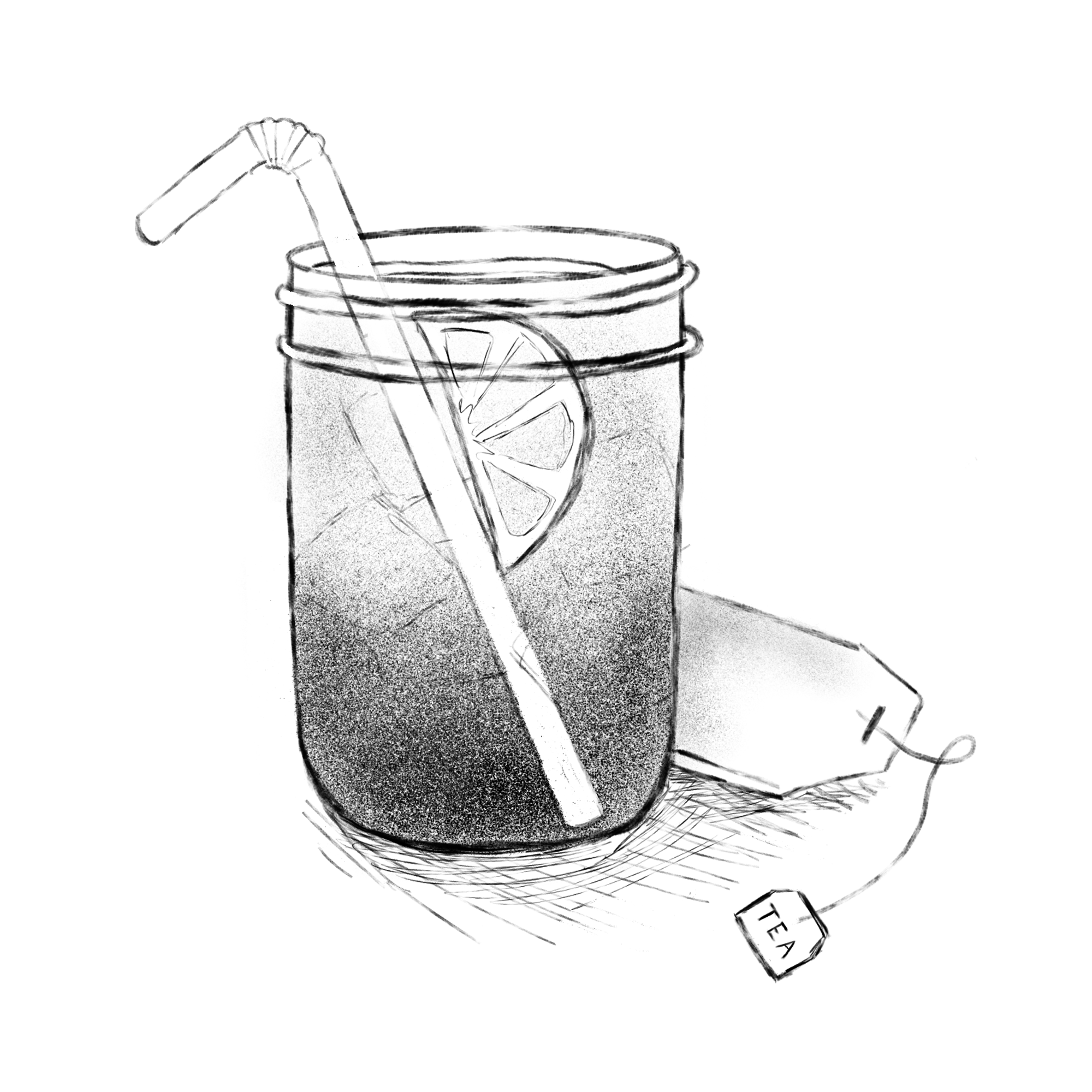
Illustration by Amanda Deering

The one constant in my childhood was a huge glass jar on the porch, filled with Lipton tea bags and tap water, brewing in the afternoon sun. Sun tea (or porch tea, as my mom called it) is a Southern staple– easy to make and hits harder than a freight train on a hot summer day. 

Ingredients

  • 1–2 quart glass container with a tight lid (no plastic, I’ve seen it melt, I swear) 

  • 4–6 Lipton tea bags (you could probably use better tea here, but it’s rough out here)

  • Water

  • Ice

  • Sugar, honey, or a simple syrup, if you need a lil sweetness in your life 

For best results, let it steep for 3–5 hours, but no longer to avoid any bacteria growth. And refrigerate immediately! 

Pair it with some John Fahey, Bill Callahan, or whatever artist makes you feel like you and the sun are taking a well-deserved break together after a long, sunny day.  

– Nickolas Sackett 


Emerald Effervescence 
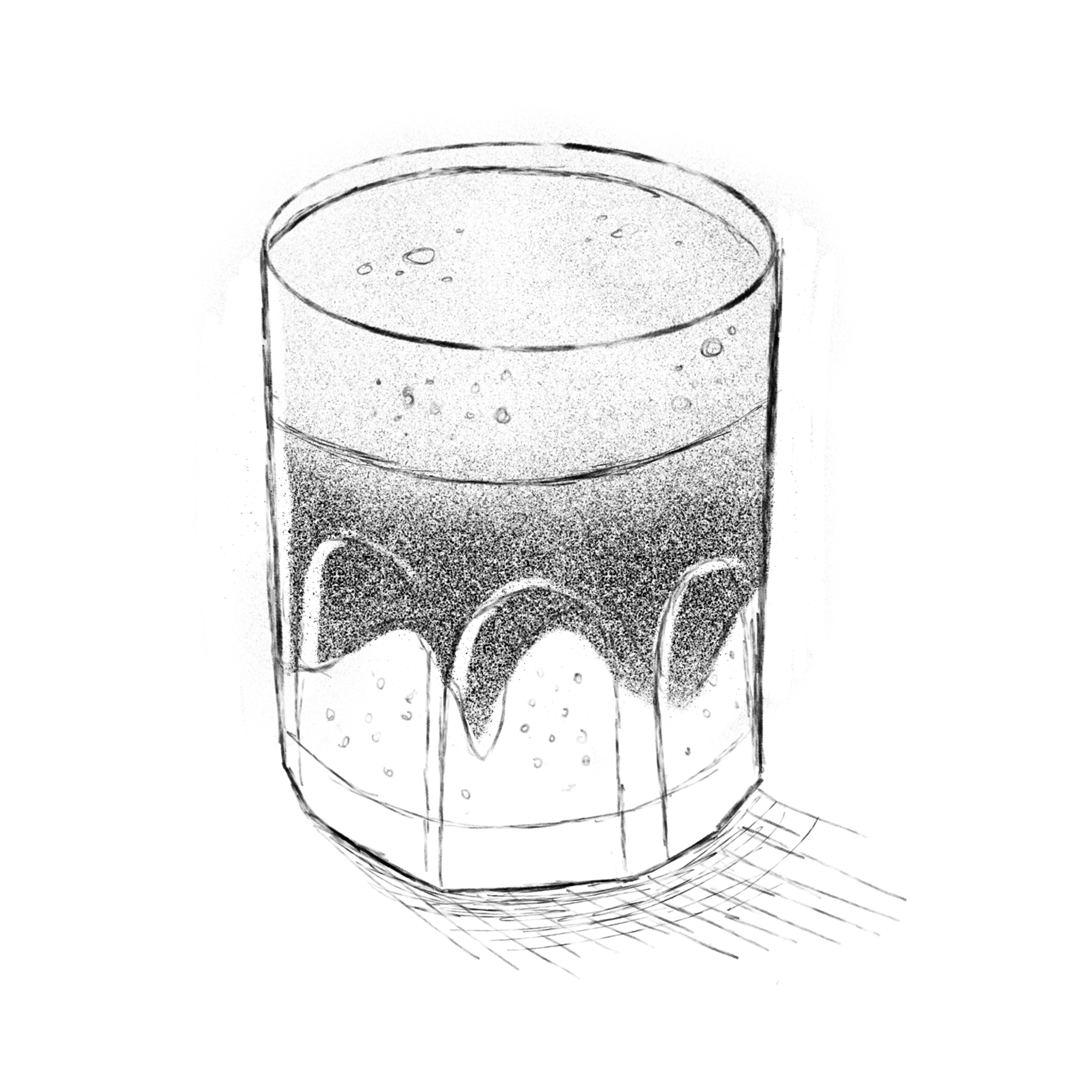
Illustration by Amanda Deering

Despite my affinity for the alcoholic libation, I’m tapping in to help round out the n/a squad for my summer refresher. I recently started working at a coffee shop again, and nothing is keeping me functional during my humid industry shifts like the matcha tonic. Matcha has had quite the uptick in popularity in recent years and, while mainly accompanying one’s milk of choice or dusting whatever the hot confectionery craze currently is, there’s something about the light, bubbly, sharp combination of matcha and tonic that I cannot get enough of whenever I’m looking to cool down while I caffeinate. 

Ingredients:

  • 3g matcha + 2 oz boiling water

  • 20–30 g syrup of your choice

  • Lemonade (optional) 

  • Tonic of choice (Fever-Tree or craft preferred)

  • Crushed or nugget ice

Add your syrup to your vessel of choice – I’ve been using the homemade grenadine we have at my coffee shop, and it’s next level. Fill your chosen vessel with ice and tonic (maybe a little lemonade if you’re looking to add even more depth), while making sure to give enough room for your matcha on top. Whisk your matcha and water together until light and frothy with the traditional bamboo whisk, automatic frother, or whatever gets the job done, then top off the concoction. Appreciate the layers you’ve created, take a couple pictures for posterity, and give the beverage a gentle, purposeful stir to incorporate the layers. 

Best enjoyed with “Quench (ft. pulses.)” by Cheem or any unapologetically fun and snappy song that makes you feel like a kid on a hot summer day again. 

– Ciara Rhiannon


Mai Tai

Here is the grand imposter of the cocktail world. A drink so simple, so perfect, that the trash tiki forces that be can’t help but add a whole host of fuck-it-up ingredients. If it’s blue, it ain’t a Mai Tai. If there’s pineapple juice, it ain’t a Mai Tai. If there’s grenadine, then pack it up and go home. Basically, it’s a rum margarita with orgeat, an almondish syrup that elevates this drink to the sublime. The initial concept behind tiki was to create a vacation experience for the post-war patrons of the 50s who couldn’t afford to fly to Fiji. For your purposes, ditch the queasy Polynesian exoticism and make this drink when you need a little escape. 

Ingredients

  • 2 oz rum (I prefer a funky & strong Jamaican rum like Smith & Cross)

  • ½ oz orange curacao

  • ¾ oz freshly-squeezed lime juice

  • ¼ oz orgeat (I will allow you to sub amaretto if you can’t find it)

  • ½ oz simple syrup

Shake with cubed ice, strain, and pour over crushed ice; garnish with mint. 

For best results, pair with “Miami - Live at Café Carlyle” by Hamilton Leithauser (covering Randy Newman)

– Joshua Sullivan


Something Similar
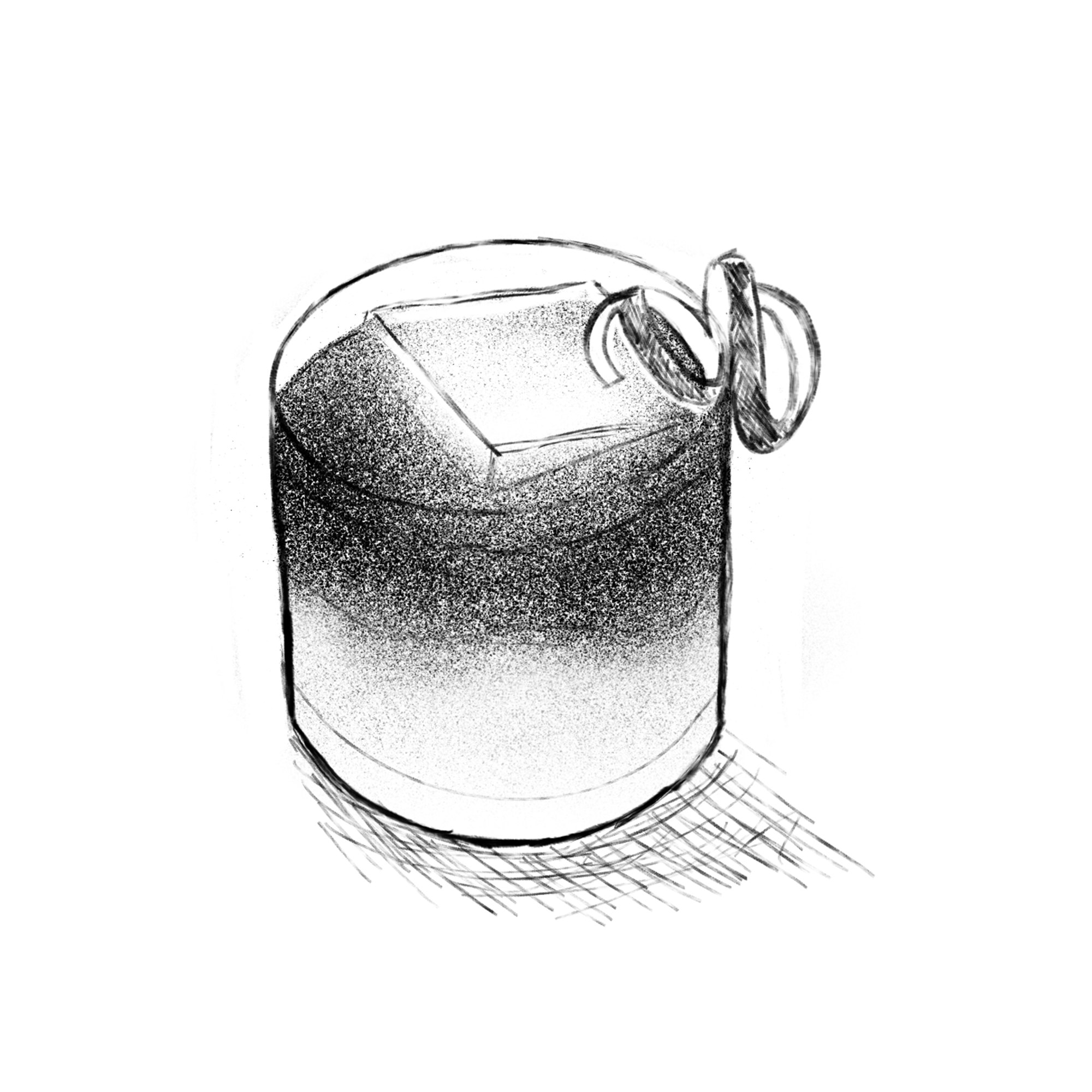
Illustration by Amanda Deering

A cocktail as prickly as the song it’s based on, Something Similar seeks to take the familiar tastes of the New York Sour and distort them until there’s something both unexpected and surprisingly familiar, much like the music of The Mercury Tree, who take the trappings of math rock, post-metal and progressive metal, mix them with microtonality, and spit them out as something a little weird, but undeniably delightful. The color of the Empress gin and red wine float reflect the colors of the album art for Self Similar, the record “Dreamwalking” is taken from.

Ingredients

  • 2 oz Empress gin

  • 1 oz lemon juice

  • ½ oz prickly pear syrup

  • ½ oz tamarind syrup

  • Shake with ice

  • Pour over a rock

  • Float dry red wine

For best results, pair with “Dreamwalking” by The Mercury Tree.

– Noëlle and Yael Midnight


The Breakfast Red Bull
Have a Red Bull for breakfast. Certainly you won’t regret drinking an entire Red Bull for breakfast.

Ingredients

  • 1 can of Red Bull (any size, any flavor)

  • Crippling debt

  • Planet Fitness Guest Pass

For best results, pair with “Fucking Hostile” by Pantera.

– Logan Archer Mounts


Aperol Spritz

Hey guys, I am pretty drunk in London right now and forgot about the deadline for this. Typing on my phone. So my drink is an Aperol Spritz. Ever heard of it? I have had three today, and they rock.  

Ingredients

  • ONE BIG GLASS

  • Ice

  • Fill half of that ice glass with Aperol. On the back of the Aperol bottle it tells you the recipe. That’s wrong, and I am right. 

  • Bad prosecco. It has to be bad. Fill like ¼ of the rest of the glass. 

  • Club soda. Fill the rest of the glass. I actually like Topo Chico the most here #hack. 

Listen to “Rock Music” by Charli xcx, the Queen of Aperol. Also, while I am on my soapbox, the drink of 2028 will be the Sarti Spritz. It’s coming to America, I promise. It’s hot pink. Okay, love you, bye.

– Caro Alt
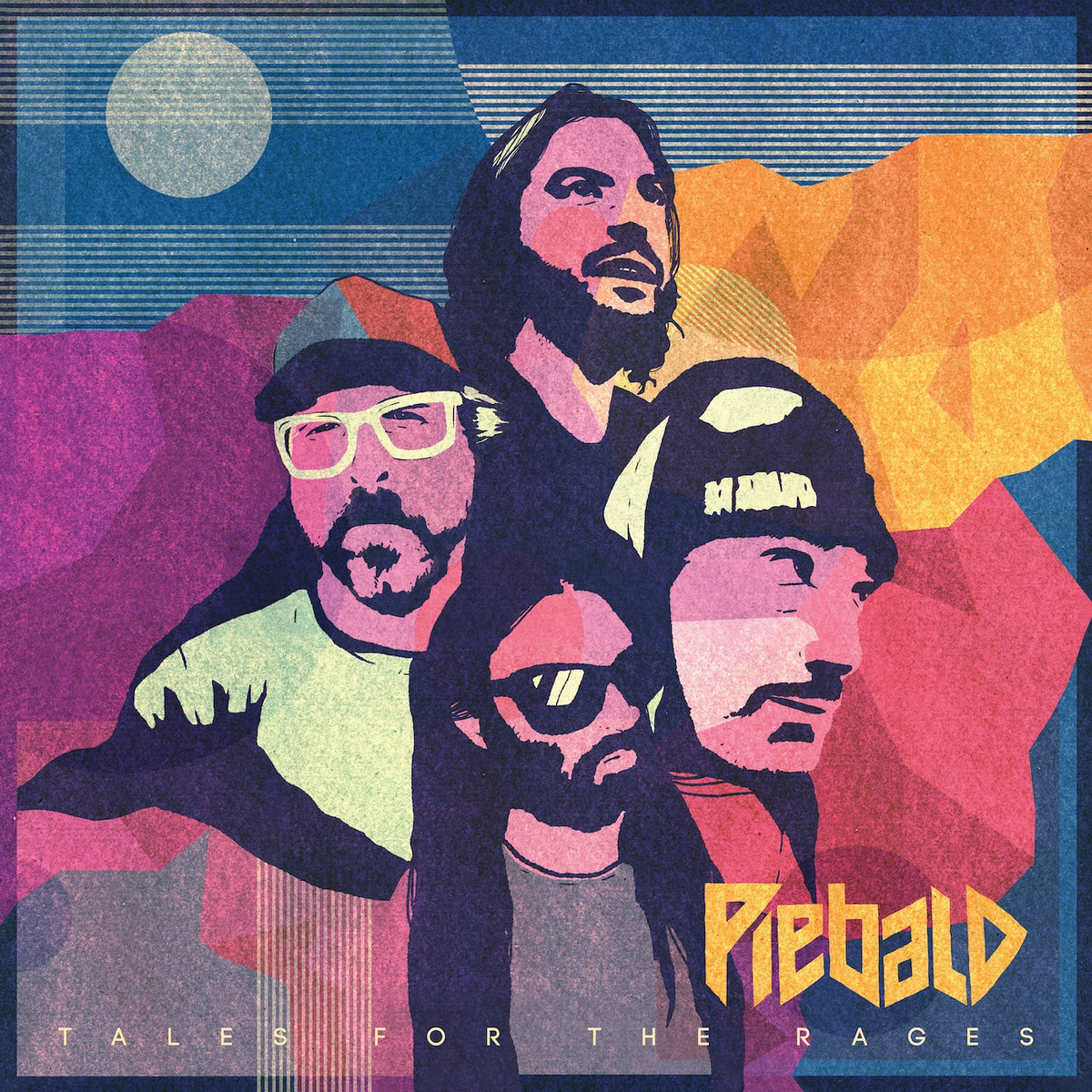
Piebald – Tales for the Rages | Album Review

Iodine Recordings

Like most music fans, I’m equal parts fascinated and excited when a band I love reunites. The mind races imagining all the interactions and decisions that brought these individuals back to one another; you can’t help but wonder what the impetus was for this kind of reformation. Of course, the cynical answer is “money,” but the romantic side of me likes to imagine there’s something more profound at work; a sort of cosmic tether that keeps these people coming back to each other and creating art together. When it comes to Piebald, a punk band from Massachusetts who only ever, at most, enjoyed a modest hit on MTV and college radio in the early days of the aughts, you have to take money out of the equation. I say this with a heart full of love, but Piebald are not putting out their first album in nineteen years because it’s a goldmine. 

Luckily, Piebald have always been a band who tell it like it is; their decision to make “Still On The Couch” both the album’s lead single and opening track tells you everything you need to know right outta the gate. As the title suggests, things start from a place of complacency – fused to the refuge of the sofa either out of fear or an over-abundance of comfort. Given that this album was recorded, as the press material puts it, “slowly, honestly, and stubbornly over six years” from 2019 to 2025, it’s entirely possible that this is also meant to capture some of the home-stuck energy of the early pandemic years when we had nothing to do but be on the couch. Regardless of the exact intention, we’ve all felt that pull to remain unchallenged and unimpeded in the comfort of our safe space, and I think any healthy person knows how important it is to break out of that. 

“Still On The Couch” is a sub-two-minute rocker that expertly sets the stakes of the record, justifies its existence, and acts as an official re-introduction to Piebald’s brand of hyper-articulate punk rock. The group takes this lethargy we’re all prone to and convert it into an optimistic burst of energy that makes you want to fling your front door open and get out into the world. They accomplish this primarily through the track’s boppy road-ready riff, but it ends up feeling like an expert-level jujutsu move the way these four flip defeatist self-sabotage into something actionable and fun. When you put those two possible paths next to each other, the choice couldn’t be more clear. 

After forming in the mid ‘90s, Piebald released five awesome albums, a fuckton of splits and EPs, then put the band to rest via a Myspace bulletin if that helps you place us in time at all. Outside of some recent anniversary reissues and a jokey Christmas 7”, the band hadn’t put out anything official since 2007’s Accidental Gentlemen. Long intermission short, the band reunited in 2016 for a bunch of tours, and it sounds like they’ve been stockpiling scraps of ideas since then, slowly building these tracks up and nurturing them until they took the form of Tales for the Rages

The record’s second song and second single, “This Thing Is Old,” speaks to this gap most explicitly, addressing the elephant in the room: we’re all getting up there. As a band comprised mostly of 40-something-year-old dudes, Piebald’s primary audience isn’t too much younger. I personally got into Piebald at the tail-end of high school when Rise Records bound together all of the group’s early work and demos into a three-volume collection, and even I have grey in my beard at this point! I guess what I’m saying is that anyone still listening to (or making) this type of music at this age is here for one reason: because they fucking love it. 

While it might be tempting to write a song like “This Thing Is Old” and take a “woe is me, my body is falling apart” approach, lead singer Travis Shettel chooses to mark the passage of time in a more positive way through the books, records, shirts, and other meaningful art he’s exchanged with friends over the years. Rather than explicitly name these things in a cheap play for nostalgia, the lyrics keep things general, opting instead to point to the decades of friendship and connection that they represent. This is, obviously, immensely relatable to any punk past 30 whose shelves are lined with friends' CDs and closets are packed with band shirts that fit a little too tight. It’s a smart way to address the nearly two decades that have passed since we’ve last heard from Piebald, and it helps sketch out the life that has unfolded between records. 

The song’s second verse also bears the album’s title and, over the course of a few lines, transforms what could just be a blanket invitation to let loose and reminisce into a genuine mission statement that offers a justification for why Piebald and why now. In a syrupy-sweet voice, Shettel sings, “Telling stories as if they were alive / Worn grooves and pages / Epic tales for the rages.” Using this way in, Piebald continue to set the stakes and invite the listener to rise to the occasion with them. “The hardest person responds to the softest voice / We have obligations to future generations / We weren't made for these times / These times weren't made for us.” There’s your reunion rationale right there. 

Beyond contextualizing the record’s title, this song also features an emphatic guitar solo, a punchy chorus, and a puppet-centric music video. Everything consistently rocks, and as the band invites the listener to “feel the wind inside the heart,” it feels downright cynical to deny them that request. This thing may be old, but that doesn’t mean it’s decrepit, at least not yet. 

After two songs about the traps of lethargy, consumerism, and nostalgia, “Used to Good Advantage” offers the most blunt assessment of where we find ourselves in 2026. Here we join the band as they try to get to the bottom of what turns our neighbors from normal, empathetic humans into short-haired businessmen who only have slimy verbal gymnastics to offer. The thrust of the song finds Piebald articulating what it feels like to find out you’re the bad guy, or at least trapped as part of an evil machine that you never even signed up for. They turn this into a clear call to action with a set of the album’s most overt and uplifting lyrics:

If rules can be destroyed by truth
Then they should be
All power to the student, the worker, and those who aren’t free

This becomes a recurring theme throughout Tales for the Rages as the group talk openly and honestly about the plight of the working class. This isn’t necessarily new for Piebald (after all, their biggest song is a hooky plea for worker solidarity) but it feels more pointed than ever on Tales for the Rages. They may be musicians, but the members of Piebald are in this with the rest of us. They see the exceptionalism that leads to nationalism. They know what it’s like to be treading water financially, to live in a country where our taxes are used to murder, to be wary of cops and landlords and billionaires. The press material puts it beautifully: “They’re not giving a lecture, just trying to make sense of everything like everyone else, but with guitars.”

I’ve been talking a lot about the lyrics because, just like every other Piebald record, they’re presented front and center, but Instrumentally, this record sounds incredibly tight. Obviously, there are the aforementioned high-flying guitar theatrics from Shettel and Aaron Stuart, but there’s also Andrew Bonner and Lucian Garro, who sound incredible holding down the rhythm section. Together, their bass and drums give each song a natural center of gravity that the group can easily return to, but they also have lots of fun little breakdowns and flourishes they get to throw in the mix. It’s refreshing to hear such a shaggy combination of indie and emo rock. Each song feels distinct, with lots of little moments that will grab you, whether it’s a specific lyric or a fist-pump-worthy riff – which is exactly what every other Piebald record has felt like. It all comes across a bit Weezer-esque and at times, maybe a smidge of Saves The Day, but also feels like the clear older brother of groups like Michael Cera Palin. This is all catnip to a dude like me, and meant to be a compliment as much as a comparison. 

Even as Piebald hack their way through the world of abject poverty that capitalism breeds, they still manage to navigate these ideas in funny ways, whether it’s lines like “My retirement plan is dying in the class war” or actively undercutting the very thing they’re participating in. While music can sometimes feel like a mere frivolity in the face of our potentially dismal situation, it’s also a source of delight, catharsis, uplift, and community. Plus, it’s only a dismal situation if you resign it to that. The cover is accurate: these are bright and multicolored reflections culled from a world that tries its absolute damndest to sap the light and joy out of everything. It’s nice to see an album that believes in change, improvement, and betterment. After all, what’s the defeatism and cynicism going to get us besides defeated and cynical? 

Before you even reach the midpoint of the album, it becomes clear that Piebald got back together because they actually have something to say. While some of the lyrics can come across a little heavy-handed, it’s worth being explicit about where you stand, lest you be misconstrued as an impartial fence-sitter. It’s also so much more interesting than being non-descript. This all struck me in a similar way to the Algernon Cadwallader album from last year, in that both records come from super-celebrated decade-old scene staples who broke up but eventually came back, matured, hardened, and refined. In both cases, the bands managed to remain true to their original sound while also becoming more explicit and vocal about where they stand. Piebald have always been political and outspoken; it makes sense that they’d be even more so in 2026. 

In true Piebald-ain fashion, they also make these points in the funniest ways, with just enough pop culture references sprinkled throughout. In one track, they evoke LMFAO by singing with utter remorse, “Party rock just makes no sense right now…” One song later, they’re directly quoting Tupac, and a few tracks after that they’re name-dropping Voltaire. It takes all kinds.

Tales for the Rages is an album lovingly packed with meaning, motivation, and memories that Piebald not only proudly packages up and puts on display, but directly involves the listener in. There are so many quotable lyrics, bits of genuinely good advice, and catchy-fun choruses scattered throughout this record. The final kick in the pants comes at the end in the form of a poignant 40-second song that feels so beautifully Piebald and is too good to spoil by quoting here. 

As many music fans have learned time and time again, just because your favorite band is reuniting doesn’t mean it’s going to be good. In the case of Piebald, some combination of time away, years of creative percolation, and good old-fashioned friendship seems to have resulted in the perfect conditions for another great record. While some artists participate in the rat race of dropping an album every year or two so they can tour, Piebald appear to recognize the sanctity of the creative process and are opting to be as thoughtful as possible. 

I look at this band and see an inspiring model for how to move forward. I’m only in my early thirties (turning 33 next week, thank you very much!) and so many weird, fucked up things have already started happening to my body. I’m scared to think of how they could compound with time, and I’m doing everything I can to combat that decay. Some of that is physical, but over the last few years I have also come to realize how much of it is mental, too. It’s so important to have friends and riffs and actual perspectives about things going on in the world. It’s important to voice those things so people know you’re standing with them. After all, isn’t that why so many of us started going to shows or getting involved in our local scenes? To be a part of something bigger and find other people that feel like “our kind of people”? Tales for the Rages proves that journey is a lifelong process, and I wouldn’t have it any other way.

A MILLI

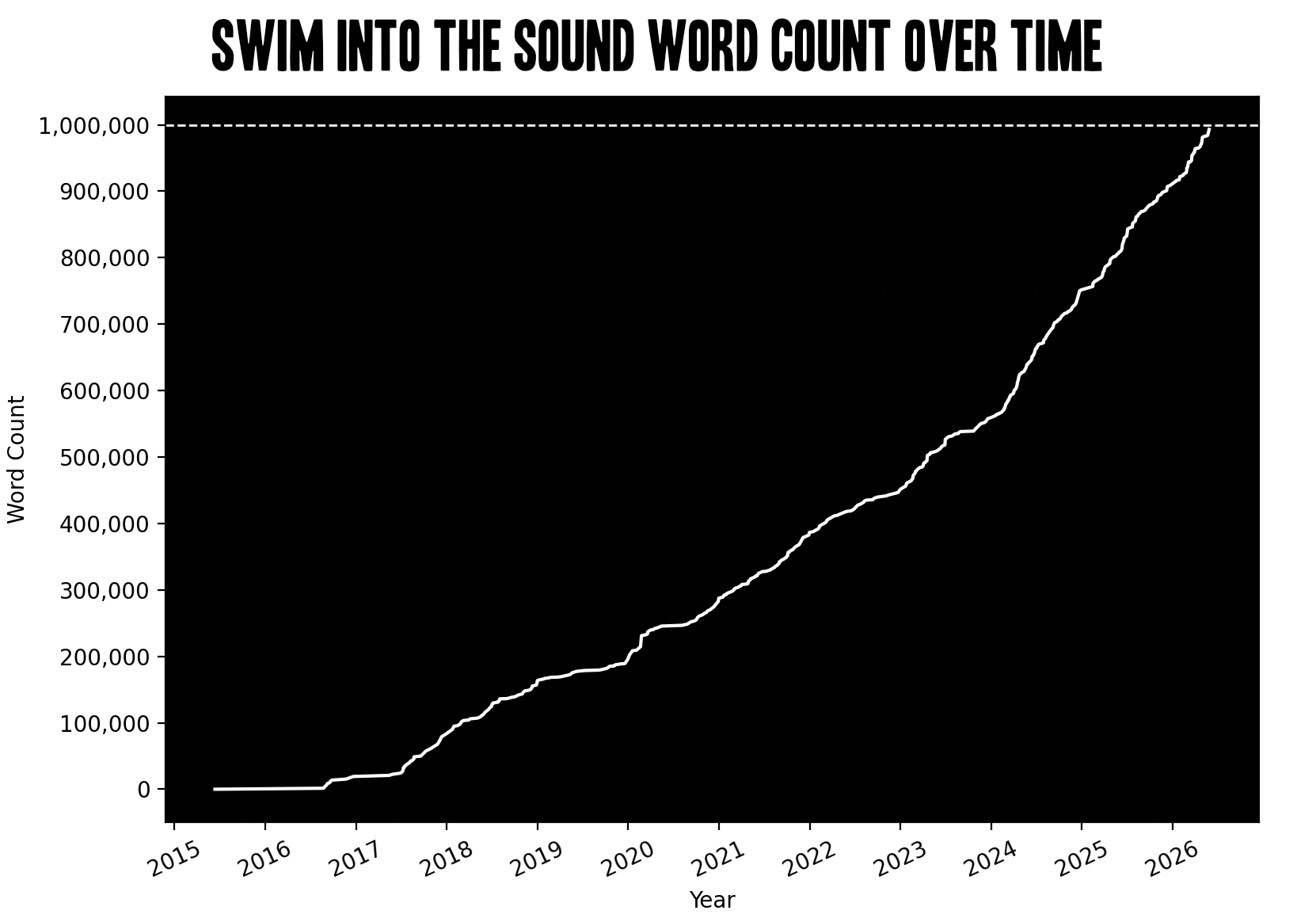
That’s right, with this post, Swim Into The Sound has officially hit one million words published! That’s one million words just on the main feed, so not counting Swim Selects, playlists, photography, or anything else. It’s also worth noting that Google Docs counts hyphenated phrases like “post-hardcore” as one word, not two, and knowing how much we hyphenate the shit out of stuff, we very well could have hit a million a while back. 

Even still, I wanted to take a break from our regularly scheduled emoposting to commemorate this gargantuan milestone. This happens to be coming at a good time, as we’re also coming up on 600 posts and Swim Into The Sound’s eleventh birthday in June. Truth be told, I was hoping those things would overlap more, but we’ve been (expectedly) verbose, so I’m not surprised we reached this million milestone a little early. 

If you are curious to see this website's word count over time, take a look at this plot from one of our resident data enthusiasts, Braden Allmond.

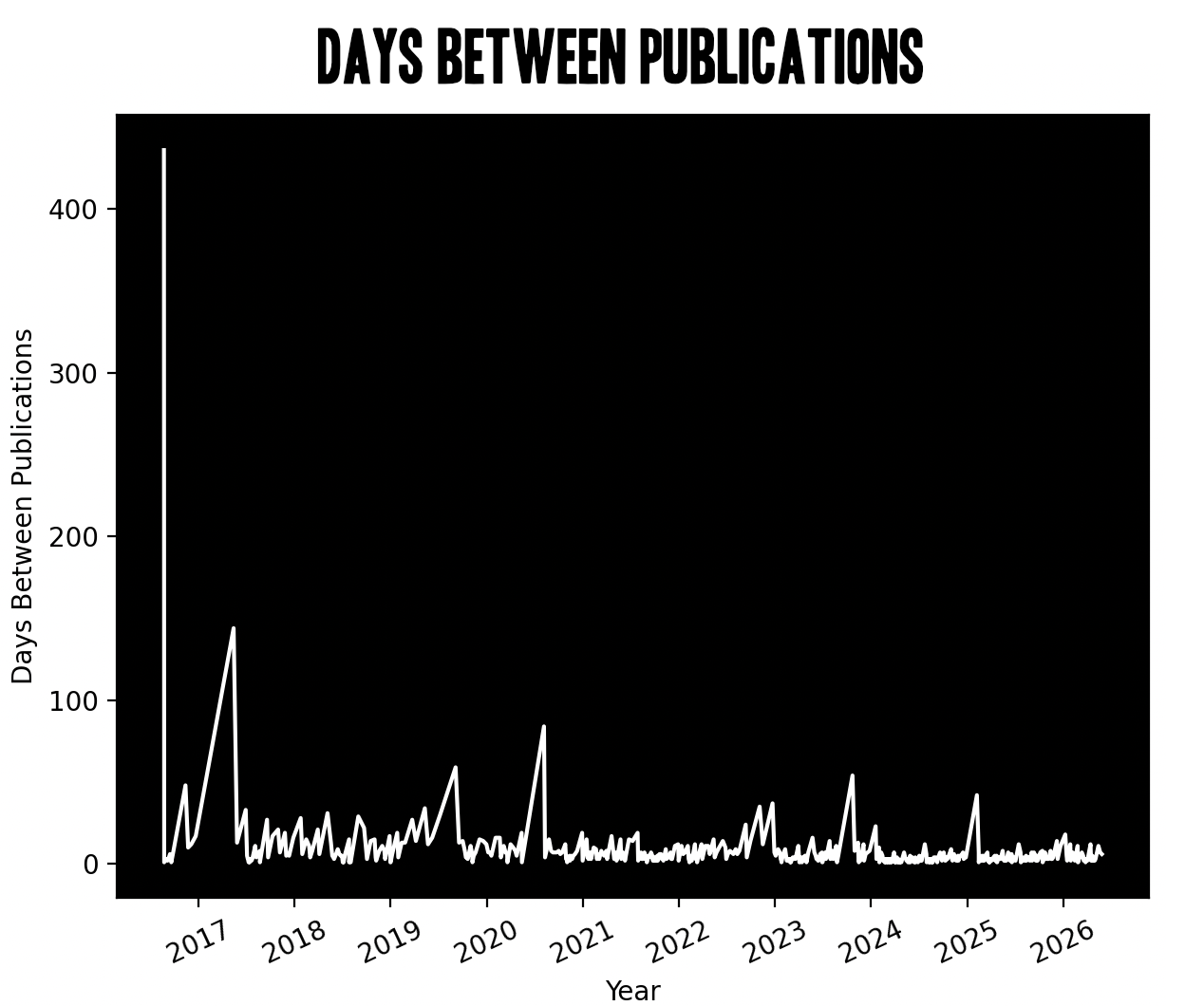
You may notice that flatline at the beginning. This is a stretch I’d like to refer to as “The Great False Start of Swim Into The Sound.” 

Those of you in the know might remember our big-ass Tenth Anniversary Bash from last June. In that article, The Swim Team broke down our favorite albums from the ten-year window from when this site started on June 13th, 2015, to the date the article was published on June 13th, 2025. Goofy premise, but it resulted in an incredible list of really important and fun records. 

That June 13th start date essentially comes from the day I published a review of Mogwai’s Come On Die Young to Tumblr. That’s how the site started, and I’m simultaneously proud of and embarrassed by that fact. Despite linking it above, I really don’t recommend that you go back and read that review. I would recommend you listen to that album, though. 

Back to the timeline at hand. 

Essentially, I spent a few days writing and editing that article, then shared it on June 13th. From that point, I proceeded to enjoy my Summer listening to Barter 6, DS2, and Donnie Trumpet. It was my last summer in college; what are ya gonna do? 

The following summer, I graduated, worked an internship, and found myself committing to picking this thing back up after leaving it dormant for a full calendar year. I view this as one of the most pivotal decisions of my life, and it’s something that was initially borne of strife as I navigated the post-college world for the first time. 

To this day, I remember someone, upon seeing my portfolio, asking me, “Sure you can write, but what do you care about?”

I spiraled out about that for an afternoon, went for a walk, treated myself to a 24-oz pour of an IPA at a pizza place near my old campus, and worked myself into an existential froth. I’d just spent the last four years focused on a business degree and building out a portfolio of copywriting for brands that I had no personal connection to. He was right: what do I care about?

After a little thinking and a few sips of beer, I realized that music is the thing I care about. It’s always been the thing. It was the thing when I was ripping CDs to my family laptop to fill my iPod Nano. It was the thing as a surly high schooler who was too cool for everything else. It was the thing all throughout college, and it will probably be the thing for the rest of my life. This is just the way my brain works. 

At that moment, I decided to commit to Swim Into The Sound as something I did — a living entity that also served as an articulation of my fandom and obsession. Here’s that same timeline showing just the days between posts. It’s obvious to see this one-year incubation between the site’s first post and me truly committing to it. 

Okay, time to put aside the fun graphs and move on to the posts that made us a millionaire

In brainstorming how to celebrate this million-word milestone, a braintrust of Braden, coder-artist Alex Couts, and data visualist Katie Hayes, we arrived at a timeline breaking down each article that pushed us into a new 100k. When we ran the data, this resulted in a pretty great crop of articles that also mirrors this site’s growth from one nerd yappin’ about emo to many talented writers following their intuition and covering the music we love. 

Please enjoy this miniature stroll back through the word count with an interactive timeline built by Alex with commentary by yours truly.


101,596 words

Universal Melodrama: Lorde and Medea
Grant Hillyer Febuary 25th, 2018

Funnily enough, the post that pushed us over our first 100k words was also this site's very first article from someone besides myself. Penned by Grant Hillyer, one of many lovely friends I met through the /r/indieheads subreddit, he had reached out to me sometime in the early days of 2018 asking if he could have the space to pontificate long-form about connections he was formulating between Lorde's sophomore album Melodrama and Medea, the ancient Greek tragedy by Euripides. This type of hyper-specific connection is exactly the kind of writing I had hoped to be putting out on Swim, and, up to this point, it had never even occurred to me that other people might want to write for this site. I gave him the thumbs up, and we worked together to craft the most compelling version of his argument. The result was this 3k-word piece that binds an ancient Greek play together with a pop album released over 2,000 years later. True nerd shit, and I wouldn't have it any other way.

202,442 words

Swim Into The Sound's 20 Favorite Albums of 2019
Taylor Grimes December 31st, 2019

New Year's Eve, I was really working on this one up to the eleventh hour, huh? Pretty solid list; some records here I still listen to regularly and a few that have fallen far out of rotation. Not to toot my own horn, but Morbid Stuff, Basking in the Glow, Super Enthusiast, Somewhere City, and It's Not Forever is an iron-clad Top 5 for an emo fool such as myself. Retroactively, both Greet Death and Mannequin Pussy should have both been way higher. Overall, a great crop of albums to cap off a really distinct phase of my life and, in a way, the world.

301,806 words

The Best of Febuary 2021
Taylor Grimes March 1st, 2021

Here, we have a 2021 articulation of me doing my own little “new notable release” lineup. Looking back half a decade later, Wild Pink's third album, A Billion Little Lights, absolutely remains a must-listen, especially if you find yourself on a road trip or anywhere else while driving serenely at 70+ miles an hour. For a more underrated pick, go check out Mister Goblin's Four People in an Elevator and One of Them Is the Devil , a beautiful, freaky little folk album from Sam Goblin where, yes, the opening track is devoted to recounting the 2010 M. Night Shyamalan film Devil.

400,665 words

I AM GOING TO TAKE THIS A LITTLE WHILE LONGER: 20 YEARS OF ALL HAIL WEST TEXAS
Grace Robins-Somerville February 19th, 2022

A beautiful and compelling retrospective from Grace as she looks back at her own history with the Goats and celebrates the two-decade anniversary of what is perhaps the most pivotal record in the band's discography, All Hail West Texas.

502,514 words

Fauxchella: The Only Music Festival That Matters - An Interview with Conor Alan of The Summit Shack
Taylor Grimes April 18th, 2023

This one was a beast. The final article weighed in at around 8k words and wound up composing a pretty comprehensive timeline of the pivotal Ohio-based emo festival. This included lots of pictures, videos, flyers with lineup history, and deep-in-the-weeds fun facts from festival organizer Conor Alan. Overall, I had a blast chatting with him and weaving together the history of this festival, which has been a central nexus for so much of the emo world.

600,005 words

The Best of Q1 2024
The Swim Team April 1st, 2024

Oh brother, another album roundup? Before you pull me off the stage with a comically-sized hook, I'd implore you to note that this roundup comes courtesy of The Swim Team! To me, this reflects the ongoing democratization of this Swim Into The Sound as it evolved from one guy talking about albums he loves to many people talking about records they're enjoying. Looking back, there were a few records from this timeframe that wound up being some of my favorites of the year; shout-out to Glitterer, Gulfer, and Katie Crutchfield- love you, divas.

702,191 words

The Name of the Band Is Pop Music Fever Dream
Lillian Weber September 9th, 2024

An absolutely excellent and, at times, hysterical interview that Lillian Weber conducted with the New York no-wave band Pop Music Fever Dream. Great band, great music, knockout live show. Don't sleep on them or this interview.

800,400 words

Beauty Saloon - BS | Album Review
Logan Archer Mounts May 2nd, 2025

Here we have Logan's review of a record that soundtracked much of my hot, hazy spring-summer of 2025, Beauty Saloon's semi-eponymous BS. A really fun record that deserved to be in the conversation with the Florrys and MJ Lendermans of the world.

900,974 words

Smashing Pumpkins Misunderstood Madness of Machina: 25 Years Later
David Williams November 24th, 2025

Last up, we have a great retrospective piece that David Williams put together, contextualizing (and going to bat for) Smashing Pumpkins' messy, bloated, beautiful, complicated, high-concept fifth album, Machina/The Machines of God.


That brings us to 1,000,000. 

I truly owe a million thanks.
Thanks to anyone whose words have helped us reach this number.
Thanks to everyone who has encouraged me at any point in the last ten-plus years.
Thanks to anyone who’s read, shared, or connected with any of these million words.

I hope you enjoy it here.
No AI bullshit, no advertising, just a bunch of people writing about music they care about. Laboring over it. Meaning it. 
As it should be. 

Thank you, I love you, here’s to a few million more. 🥂

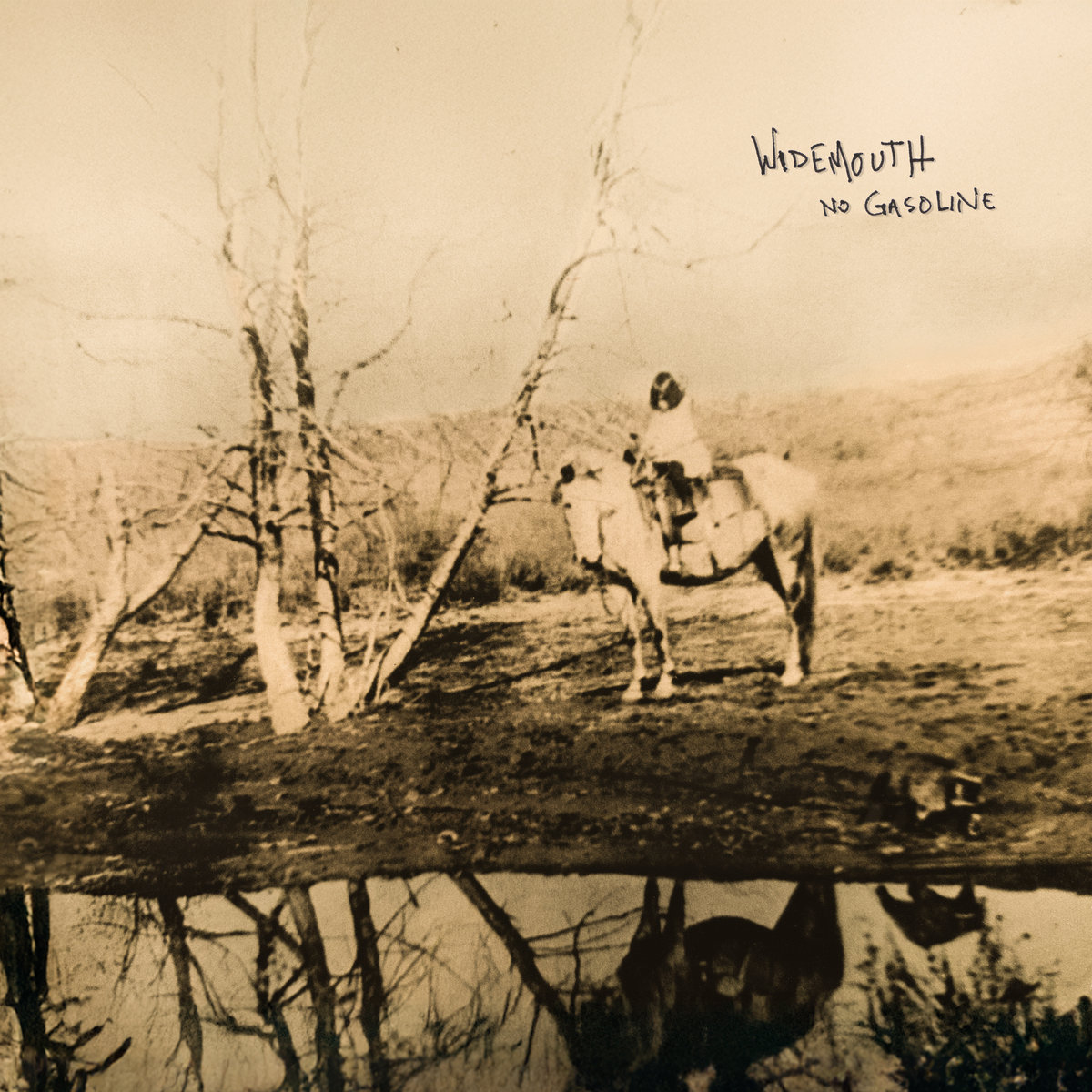
Widemouth – No Gasoline | Album Review

Urban Scandal Records

I have been meaning to buy a chair for my patio for months. I moved here last summer, and almost a year has gone by with nothing to sit on while I stare at the stars besides the steps to my neighbor’s apartment or the hood of my car. I like the idea of having a patio chair, though. Somewhere I can exist while listening to slow, syrupy music on my speaker at a reasonable volume. Somewhere I can bask in the hotter days while mosquitoes buzz around my ears. Somewhere I can watch the trees rustle at night. Maybe I’ll even get a table too. But after all this thinking about my own patio, I never thought about getting a second chair. That is, until I listened to No Gasoline by Widemouth.

For several years, Mak Carnahan and Jamie Eder have been toiling away in Chicago, writing song after song about growing up, growing into yourself, and how friendships bend and curve with all this growth. While they released Well, a twangy EP about a similar subject in 2024, No Gasoline is their debut album, with these same concepts paradoxically tightened up and everflowing. 

This album will undoubtedly receive comparisons to the works of the current steel indie stars. These comparisons to people like Phoebe Bridgers, Katie Crutchfield, or Karly Hartzman won’t necessarily be wrong, but Widemouth makes the sound their own. The band points themselves away from Wednesday’s fuzz or Waxahatchee’s clarity, instead opting to build a minimal sound within the expansive space that alt-country provides. With the help of producers Jack Henry and Sam Genualdi, all attention is on Carnahan’s and Eder’s harmonies as they ruminate on the quietest moments of friendship.

PHOTO BY Bella Peterson

No Gasoline begins with familiarity and a lot of names: Meme’s paintings, Frances smoking, Christian gone, Rachel, your family, you, me, and her. As the listener, it is up to you to conjure images of these people while you take in the opener, “I Wish You Passed On a Little Anger.” The brushstrokes Meme painted, the steps that Frances is smoking on, whatever Rachel said to irritate us, and the emptiness that Christian left behind. By being so personal so immediately, Widemouth trusts you with their private reflections. As Lily Mitchell’s drums build, the observations turn more personal, something you could only bear to whisper: “I know you hate her / I know you dream about being choked out on the mattress / I wish you passed on a little anger / I just feel sorry / you’re getting older.” Both searingly specific and purposefully vague, the music swells as the song ends, leaving you with your hands outstretched as you desperately try to learn more about these people too.

As the pensive “Pinecone” shifts to “Hotel Pool,” the restraint Widemouth shows through the album briefly unwinds, unearthing the careful fragility that this project balances on. Part of weaving together moments of friendship is that it requires equal reflection on yourself. Amongst whispered voices and steadfast strumming, Carnahan’s voice wavers as she sings “no open tongue,” and again when she sees “no future, no intent.” The music matches these brief moments, the instruments breaking away from the haunted sound of the melodies to collide with each other while Carnahan and Eder sing, “blame your hands blame yourself / what’s the matter I can’t tell.” The song trips over itself, as one does when trying to outpace yourself, outpace your past, in an attempt to find a truer version of you.

Of all the songs in the album that teeter on the edge of an unstoppable misery, “You & Your Girlfriend,” spirals directly in. Not every memory of your friends is a good one, something Carnahan roils over as she sings “I think you said you loved me, but I really don’t know at all / you just sat up back to the wall, and you cried / hands on your temples / that’s what I recall.” It’s a plain memory, one so bleak that it’s shrouded in potential mismemory, but Carnahan knows she’s remembering this right. Eder takes over on the next verse, “you told us your girlfriend was not a good person / with fear in your eyes like a dog on the fourth / none of us knew what to say / drove into town in the morning for groceries.” These lyrics are stark, barren in their simplicity. Carnahan and Eder conjure an immediate closeness between these characters, but one so close that the fear of conflict hurts more than helps. It’s a song about whispered confessions left to linger heavily and uncomfortably in a dark but loving air. 

After Eder’s voice joins Carnahan’s to ask, “Remember when you lost it?” in “The Water,” the titular song on No Gasoline arrives, carrying the cry of Sam Genualdi’s steel guitar. “No Gasoline.” A track that immediately envelopes the listener in a dimly lit atmosphere. The tension of the album–the friction caused by years of memories, secrets, and promises—had to break somewhere, and it turns out that's right here, only a few songs away from the end of the LP. Carnahan’s voice builds and builds as she croons “no gasoline / fourteen degrees” before demanding a promise and an apology from someone she loves. Despite the agonizing demand, she and Eder end on a hopeful note: “my last lonely winter / from what I can tell.”

After “Cattle,” the album ends on an instrumental reprise of “Pinecone” accompanied by the clatter and chatter of O’Hare’s bustling hallways as people desperately try to make their connections. A fitting button for an album quilted together by names and places and reflections on the unsaid complexities of building relationships with one another. 

Summer is basically here with warm nights and loving friends. I need to buy two patio chairs.


Caro Alt (she/her) is from New Orleans, Louisiana, and if she could be anyone in The Simpsons, she would be Milhouse.

Cover Collector – May Purples

Design by Ryan Morrissey

I don’t know about you guys, but I love a good album art collage. One of the first things I do every Friday is head over to tapmusic.net and render a 4x4 chart of the albums I listened to most over the past week. At the end of each month, I do the same thing with a 5x5 that recaps my previous 30 days of listening. By the time December rolls around, I look forward to recapping the last twelve months with a gigantic 10x10 grid in an unwieldy encapsulation of the 100 albums that defined my year. 

Is it a little self-aggrandizing? Sure, but it’s also a fun way to see a quick snapshot of what my last week, month, or year has sounded like. At its best, this practice has led to fun conversations and solid recommendations going back and forth with friends as we bond over specific albums. Sometimes it’s that shared love over a deep pull from years gone by, other times it’s just noticing trends with a recent fave that seems like an unshakable presence week in and week out. At the very least, I suppose it’s satisfying to see a bunch of records that I feel an affinity toward lined up and embodying a specific stretch of my life. 

At some point near the tail end of last year, I conceived of a more communal way to bring this love of album collage to life. Because, sure, getting a live readout of your listening history is cool, but this is also about album art, an essential part of the experience and something us music nerds can fixate on just as much as the songs that sit beneath the cover. As such, I’m excited to welcome you to the fifth edition of Cover Collector: a monthly installation where the Swim Team discusses some of our favorite albums based on album color. For May, we’re writing about posh purples


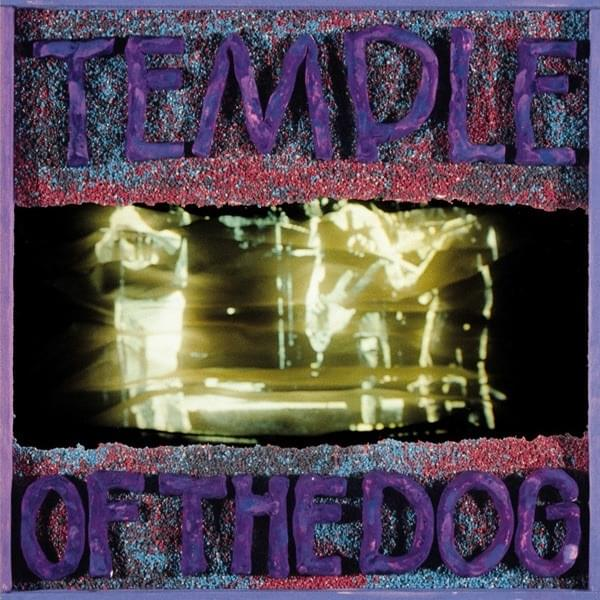
Temple of the Dog – Temple of the Dog

A&M

If, like me, you are a Second Generation Grunge Fan, an album like Temple of the Dog seems impossible the first time you hear it. All the members of Pearl Jam *before* Pearl Jam had formed? Soundgarden’s Chris Cornell on lead vocals and an Eddie Vedder cameo *before* any of those guys had really worked with Eddie before? It seems insane, and it is. Temple of the Dog existed for about 18 months, recorded one album, played fewer than a dozen live shows, and launched its members into 90’s Music Royalty.

Tragically, the band was formed as a tribute to Andrew Wood, lead singer of Mother Love Bone and roommate of Cornell, who died of a heroin overdose in March of 1990. Grieving and directionless, bassist Jeff Ament described the band as “a really good thing at the time” for him and guitarist Stone Gossard, which put them in a “band situation where we could play and make music.”

Cornell had written the first two tracks, “Say Hello 2 Heaven” and “Reach Down,” before Wood passed, and lyrically those songs became ever more prescient in the aftermath. The music is jammier, heavier, and more melodic than the music the guys of Mother Love Bone and Soundgarden were making at the time, but the darker vibe of the music served as a perfect platform for Cornell’s otherworldly rock vocals.

The centerpiece and most notable track from the album, “Hunger Strike,” features the first lead vocal performance of Eddie Vedder, who had flown in to Seattle to audition for the new iteration of Mother Love Bone. Vedder sang the lead in his now-trademark low register, perfectly fitting the space that Cornell was aiming to fill. In Cornell’s words, “He sang half of that song not even knowing that I'd wanted the part to be, and he sang it exactly the way I was thinking about doing it, just instinctively.”

Temple of the Dog remains a colossal work of art in the scope of 90’s Grunge music, a testament to the healing power of creating art in times of pain, and a remarkable jumping-off point for the most influential titans of the era.

When my high school/college friend Colby Dorf passed away in 2024, Temple of the Dog was a huge comfort to me. I listened to “Say Hello 2 Heaven” and “Hunger Strike” on repeat for a week, and I played them both as loudly as local statutes would allow. I suggest, even if you aren’t in pain, that you do the same. Your neighbors deserve to hear Chris Cornell and Eddie Vedder trading melodies over huge guitars.

– Caleb Doyle


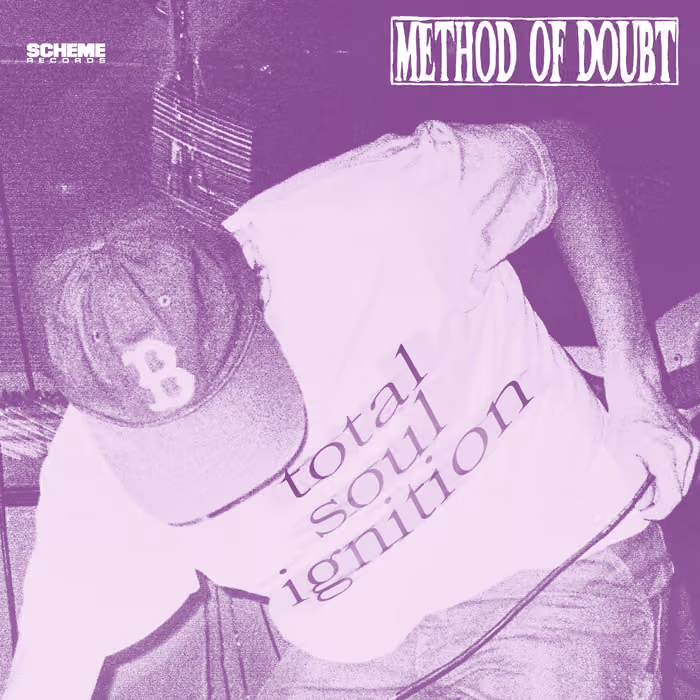
Method of Doubt – Total Soul Ignition

Scheme

2025 saw a lot of stellar releases in the underground music community, and one EP in particular was a major standout to me: Method of Doubt’s Total Soul Ignition was my favorite hardcore release of the year. The purple-tinted cover, depicting a figure mid-two-step wearing a shirt that has the title emblazoned across it, feels classic and timeless. Even the elongated serif font the band chose to display their name is reminiscent of the font commonly used by hardcore titans Earth Crisis. 

This EP spans four furious tracks, featuring guitars with just a hint of grit, snappy drumming, and urgent vocals that pack a punch without losing clarity. In a world that feels saturated with fuzz, excess reverb, and heavy compression, all of this caught my attention immediately. It’s a refreshingly crisp listen. The lyrics are a sharp stand against apathy, stating, “There’s got to be a different way, and I will live it out / Still in search of the quiet life / Still in search of the righteous life.” On the second track, the band follows this declaration with a snarling question directed at those in power: “Have you ever stopped to think, for once in your life, that you might not be right?” Method of Doubt offers up eight minutes of scintillating hardcore and doesn’t waste a single second.

– Britta Joseph


Olivia Rodrigo – SOUR

Geffen Records

Summer 2021 felt like it was covered by an ecstatic purple haze. A cloud had descended, and every breath brought pain and exaltation into your lungs in equal measure. Everyone felt it. Olivia Rodrigo’s debut album, SOUR, was just that fucking good. I’m not speaking hyperbolically when I describe Rodrigo’s music as ecstatic. What makes her songs so good is that while, yes, they hurt, each song feels so fucking good. She’s not content for “drivers license” to just wallow in the agony of romantic euphoria being upended that she describes on the verses and choruses; she knows the song needs that chanting bridge declaring how much she still feels love for him during the small moments of sitting at red lights to make it hurt so damn good. Sure, she can be childish, like who doesn’t know Billy Joel? But who hasn’t felt a little childish in a breakup? They broke your heart. Why should you be charitable? That’s the other thing about Rodrigo’s music and why adults respect her songwriting so much: she reminds us we’re all a little childish. 

– Lillian Weber


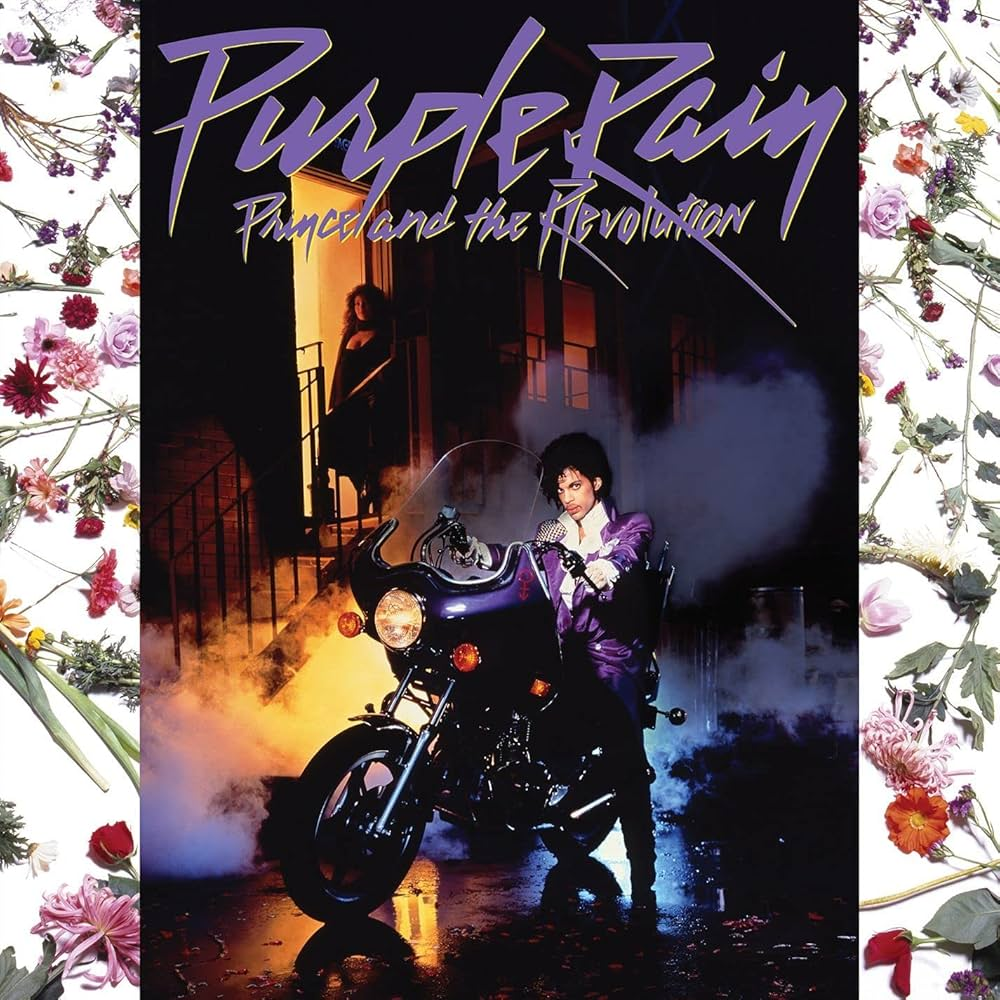
Prince – Purple Rain

NPG Records

Dearly beloved, we are gathered here today to talk about Purple Rain. Not only is this one of my favorite albums of all time, but it’s also easily the greatest soundtrack ever created. The film of the same title vaulted Prince from household name to international icon, a status he has held ever since. Prince’s star is a celestial one. Take, for instance, the vicious guitar solo on the ending of “Let’s Go Crazy,” or the monumental, career-defining ballad “Purple Rain.” The songs are transcendent, full stop. On Purple Rain, Prince kept climbing sky-high plateaus until he reached the very top of the mountain, something that only a select few artists ever reached.

My personal favorites, “I Would Die 4 U” and “Baby I’m Star,” bleed into one another back-to-back; the songs are jovial, glistening, and sound like a party I would never want to leave. Even the B-sides on the deluxe album that never made it to the official release, in the words of Martin Scorsese, are “pure cinema.” Tracks like “17 Days,” “Velvet Kitty Kat,” and “The Dance Electric” would be most pop artists’ best songs if we were being honest.

Since May is purple month over on Swim Into The Sound, it’s only right to write about “The Purple One.” No one, and I mean no one, has owned a color more than Prince. His Royal Badness has been the “Grand Poobah” growing strong for over forty years, steamrolling every other purple object in his path from lilacs to eggplants to Grimace. So, if the elevator tries to bring you down, put on Purple Rain. Game blouses.

– David Williams


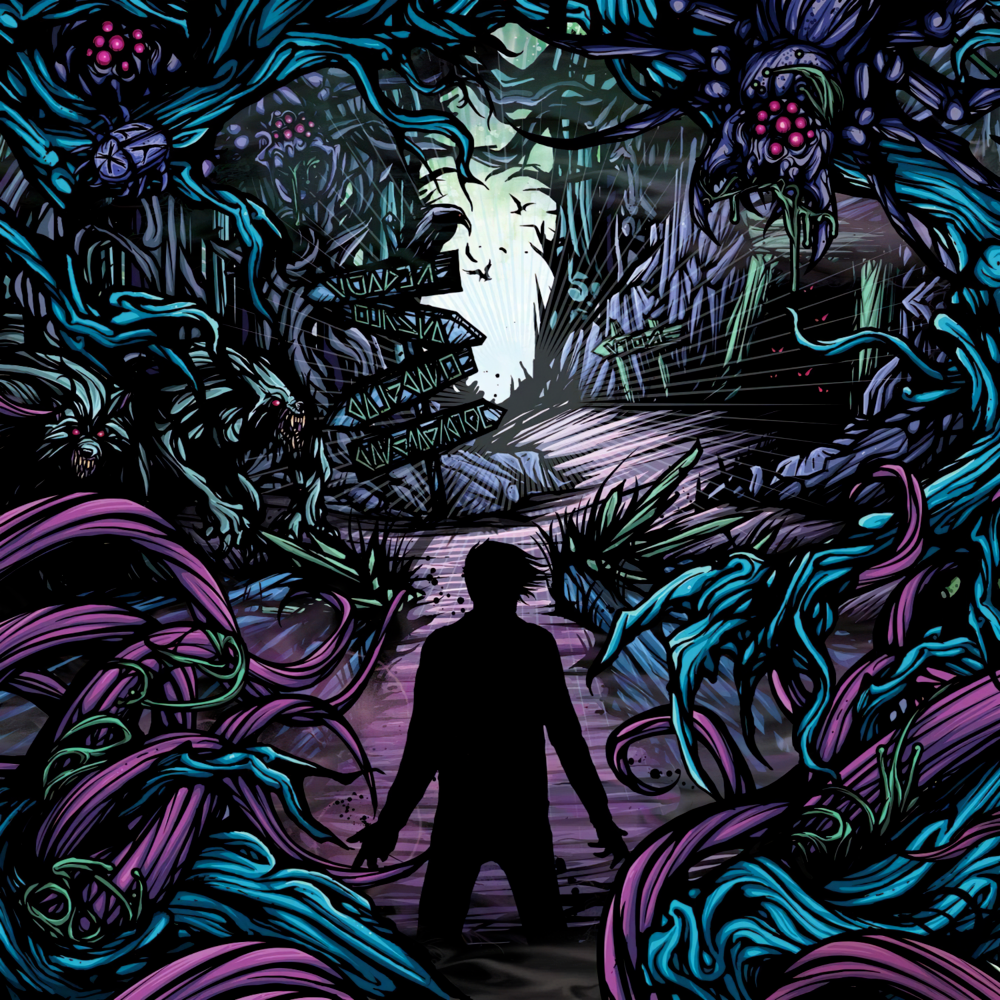
A Day to Remember – Homesick

Victory Records

A Day to Remember’s tenure in the pop-punk and metalcore scene goes largely unappreciated for the run that they’re on. A band, formed in 2003, that’s kept the same lineup (for the most part) while still kicking 23 years later can garner respect from even the snobbiest of scene gatekeepers. While their more recent albums leave little to write home about, the Florida-based group’s early run is one for the history books. When discussing the best pop-punk units of all time, I firmly believe that ADTR remains strongly in contention, particularly with Homesick

Homesick showcases ADTR’s patented seamless blend of infectious pop-punk choruses with crushing metalcore breakdowns at a time when the two genres were just beginning to converge. The band members find themselves at a thematic crossroads as well, as Homesick details their begrudging commitment to leave Ocala behind for a life on the road. The group’s range is on full display here, and it shines even in the sequencing of tracks where the circle-pit invoking “Mr. Highway's Thinking About The End” sits confidently before the arena-ready anthem “Have Faith In Me.” Ultimately, the record stands not only as an ode to the lives they left behind in Florida, but a vindictive lament to those who said they would never make it. 

– Brandon Cortez


The Reptilian – Full Health

Count Your Lucky Stars Records

In the grand scheme of things, an old adage holds true. I do not remember it word for word, but it’s something to the effect of: Proximity can breed fondness. I think. Either way, because my formative years were in the thick of DIY activity in the 2010s, it is with utter fondness that I remember records that fell out of the general looping zeitgeist. Whether they deserve it or not is to be argued elsewhere; my real point here is one of recollection. Full Health is a record hewn from a time when post-hardcore was about a raised brew in-hand, waved and spilled to mathy, noodley punk packed out in a small room where every word shouted was known, and falling down felt only half as good as getting back up. The Reptilian’s positing of up-and-down thrashy emo felt like it was at the center of all things, and Full Health certainly had its own center of gravity, existing as an eternal marker for the scene at the time, perfectly held and suspended in that indescribable feeling. As the band captures it on the album closer, “Aerosmith Kids,” when they sing: 

Now I'm living for myself / Varsity blues can't bring me down and stop me in my tracks / Don't bring me down / My best friends write the best riffs / Don't bring me down. / We'll stay to the end. 

– Elias Amini


Cave In – Jupiter

Hydra Head

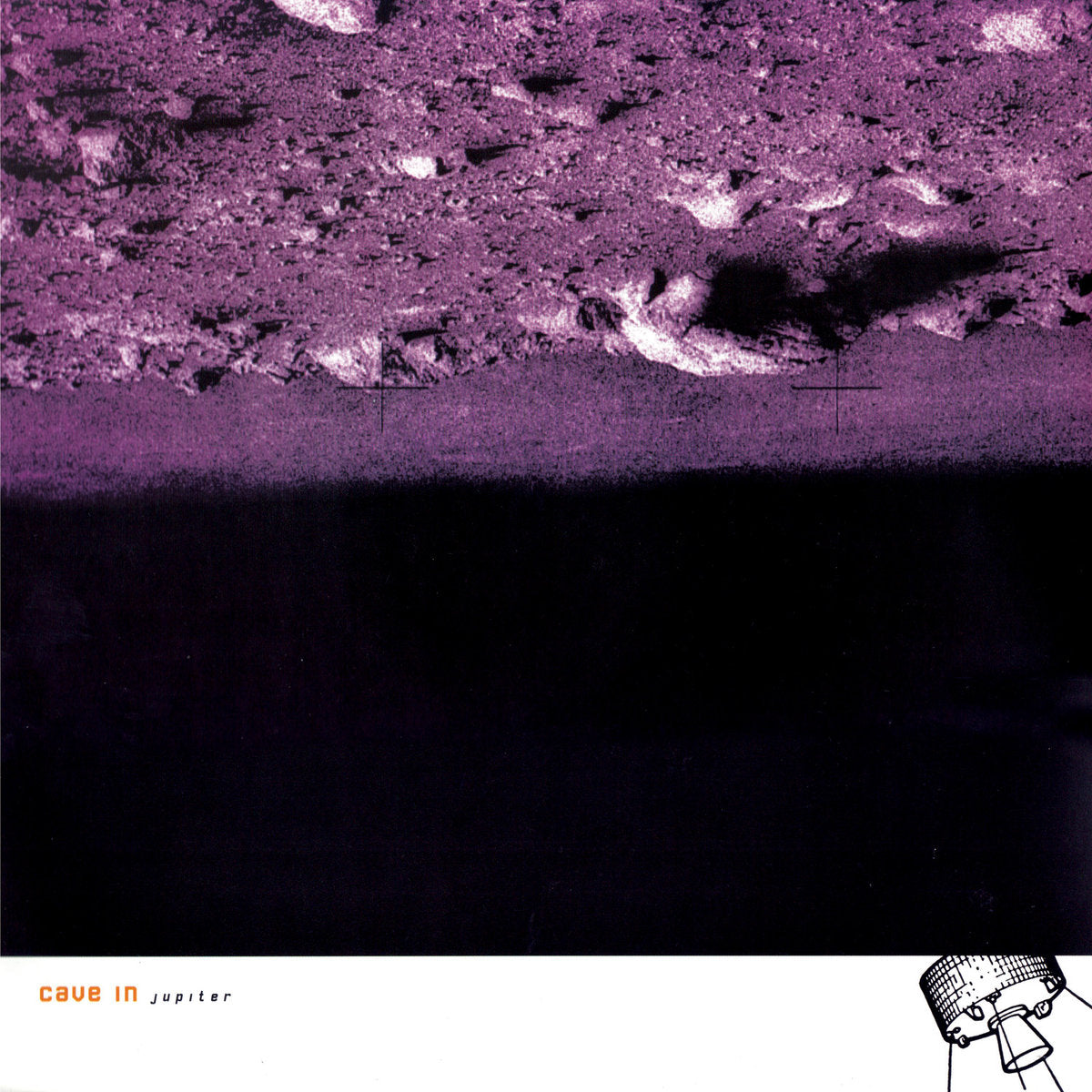
Part space rock, part post-hardcore, part metalcore, and all parts uniquely brilliant, Cave In’s second album, Jupiter, is a shining satellite that kicked off the new millennium in a way no other band could. It was originally released on the legendary heavy label Hydra Head with a number of different colored cover variations, but one of the initial two, and the one used for the 25th anniversary edition via Relapse Records last year, was the purple-tinted crater close-up that allows its entry into this list. Cave In remains a limitless band even through their latest album, 2022’s Heavy Pendulum, with Jupiter being a defining moment of their expansive artistic reach. Coming off the already ambitious Until Your Heart Stops just a couple of years earlier, Cave In dialed back the chaos and focused on more accessible (but just as proficient) metal music, straying from their original hardcore roots but laying the foundation for a new take on the nebulous post-hardcore genre. It’s an essential transmission sequence from top to bottom, but “Big Riff” is a standout moment of the band’s entire catalog, a piece of media more important than the moon landing broadcast. Jupiter widened the lens of what a band in a hardcore space could be capable of, and it still sounds cosmically enchanting today.

– Logan Archer Mounts


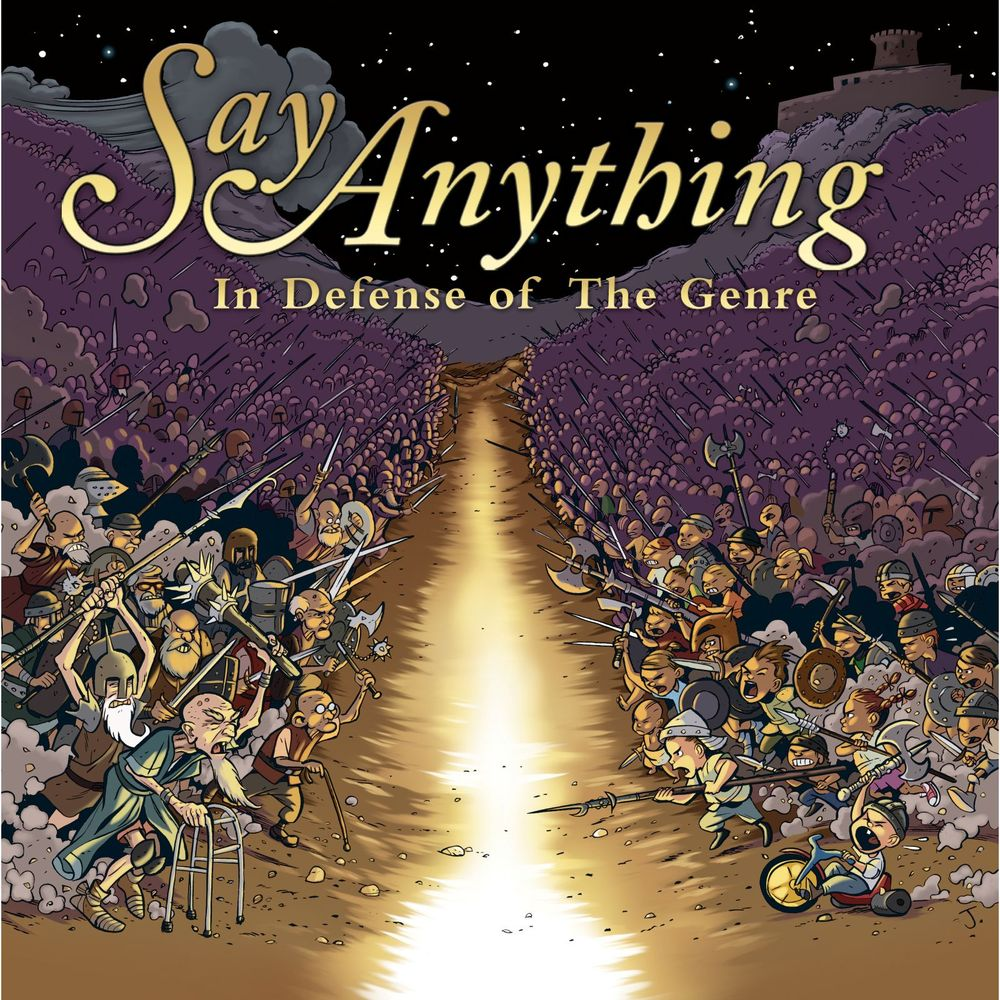
Say Anything – In Defense of the Genre

J Records

I have a love/hate relationship with the band Say Anything and their vocalist, Max Bemis. I’ve been listening to their music for over two decades, with my fandom reaching its peak during my teen years. The irreverent humor, inflammatory verbiage, and erratic song-writing, while feeling right at home in the ears of my teenage self, have somewhat soured and left me with complicated feelings towards the band and the man behind it in the years since. 

All that to say, I feel as though Say Anything’s third studio album, In Defense of the Genre, is the perfect capsule of everything the band has ever had to offer, both the good and the bad. In Defense holds many of my favorite Say Anything songs, from the R&B-inspired bops “Baby Girl, I’m A Blur” and “No Soul” to the musically chaotic “That Is Why” and the album’s grandiose title track. One of the album’s most glaring issues is its length. At a bloated 27 tracks (despite its 23 features from the era’s most iconic emo singers), it doesn’t always stick the landing, and the cringeworthy tracks like “Died A Jew” just leave me feeling puzzled and intensely rolling my eyes twenty years later. I don’t even feel comfortable dropping the title of one of my favorite tracks on the album in this space (yeah, that one). 

There’s a part of me that will always love Say Anything, always feel perplexed and challenged by Max Bemis as both a person and a songwriter, and come to the defense of the band’s second, third, and fourth LPs. I ultimately feel as though there's beauty in that kind of relationship. Clinging to the music we used to love and the people we used to be in our adolescence, both to the ends of comfort and of protecting a piece of ourselves we can no longer fully relate to, but identify with all the same. In Defense of the Genre, shortcomings and blemishes and all, will forever be a chapter of my life I will inevitably and intermittently again forever.

– Ciara Rhiannon


Future – DS2

Epic

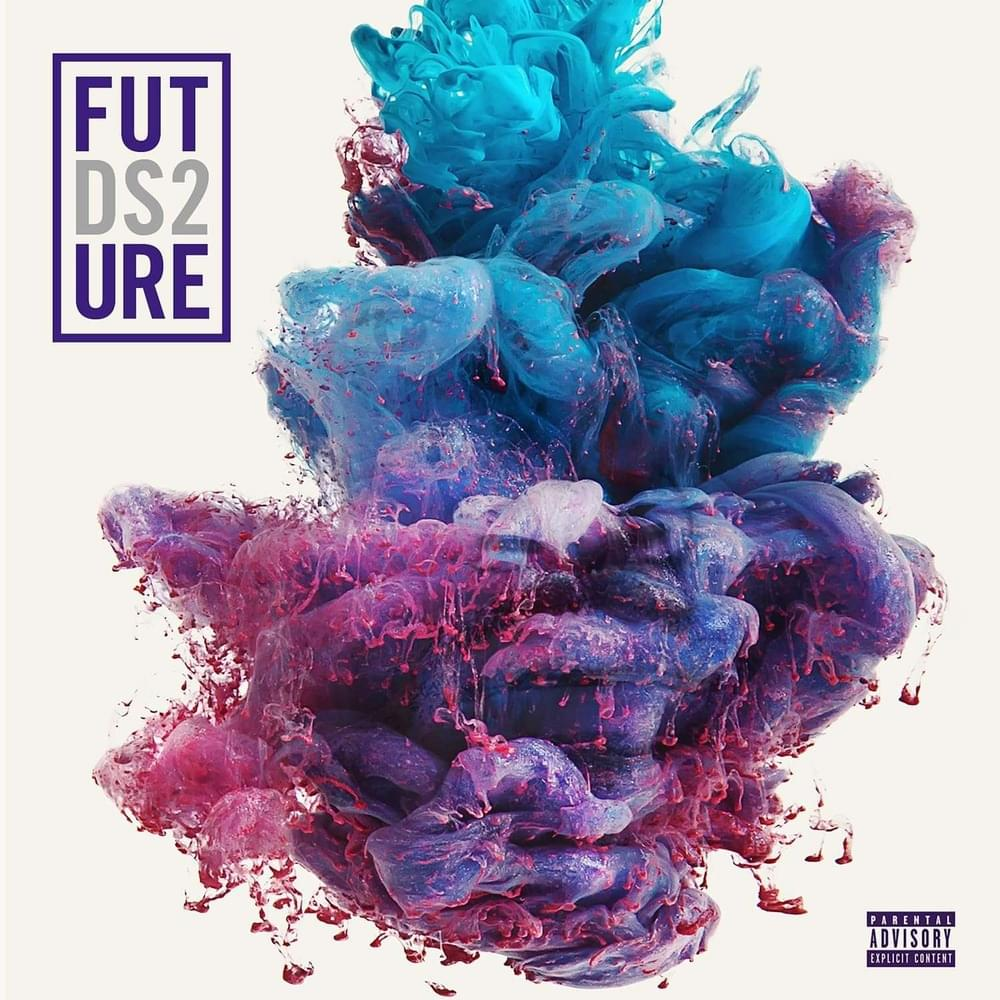
I don’t care if it’s not majority purple, this counts. Come on, that’s literally purple drink. Check out that crisp purple logo in the top right. Did you know that the CD version of this album is made from a reflective, holographic-type material and features a 9-panel foldout? Really adds to the overall effect. There’s also a face hidden in the blue swirl that I didn’t know about until researching this right now, almost eleven years later (squint and you’ll start to see an eye right by the bottom corner of the logo). There was also a rumored textbook cover that bears the same image, but there’s also a 13-minute YouTube video where a guy attempts to track it down and calls it “lost media”, so maybe that was just a meme all along. Cover aside, holy shit does this DS2 still hit hard as fuck over a decade later. “Stick Talk”? Come on. That beat on “I Serve the Base”? Unforgettable. “Blood on the Money”? Cold as ice. “Thought It Was a Drought”? Get the fuck outta here. I had the absolute best summer in 2015 riding around and listening to this record, and it’s genuinely surprising how consistent and fulfilling it remains this many years later. Peak Future.

– Taylor Grimes


Hum – Inlet

Earth Analog Records

It's a great feeling to know that your legends can still dunk. After years of wear and tear on the body, you'd expect a decline in hops because, as we say in the game, “Father Time comes for us all.” So when you see your OGs get up for one final slam that turns out to be an all-time posterization, you're forced to rethink everything you ever thought about life and existence. Well, that's what Hum did with 2020's Inlet. They emerged from a twenty-two-year hiatus with their best album. By the time Inlet was released, Hum-indebted heavy shoegaze and spacerock had really started to pick up steam, and this felt like a direct response as if to say, “I see what you kids are doing, but don't forget why you ever attempted this sound in the first place.” This is Hum and their tightest and most titanic. Their riffs have never been more pummeling, and Bryan St. Pere's drums have never been so thunderous. A perfect exclamation point to a career-long highlight reel. 

– Connor Fitzpatrick


My Chemical Romance – I Brought You My Bullets, You Brought Me Your Love 

Reprise

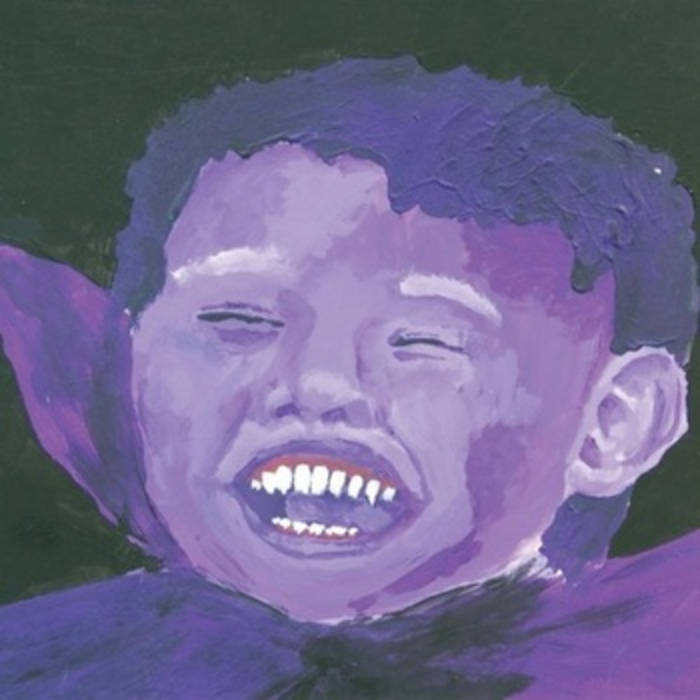
In Julio Torres’ new special, Color Theories, he declares that purple is the color of mystery and intrigue. I bring this up because I think this is the only My Chem album that actually embraced that feeling, and it’s the only one with a kinda purple cover. My Chem had to end up in this series for me somewhere, so it’s here. When I think of I Brought You My Bullets, You Brought Me Your Love, I think about how it’s kind of bad. It’s an absolutely sloppy album, too wordy, too vampiric (not like their later albums), the fan lore is a bit obnoxious, and it gets a bit into Metallica in a way that sucks. But I love it. 

Bullets has a real mythology around it. Gerard Way was in agonizing pain during the recording sessions. Mikey Way begged Geoff Rickly to listen to the songs at a house party, and Rickly essentially rolled his eyes. Ray Toro didn’t know the difference between lead guitar and rhythm guitar, so he rolled all of it into one. They almost poisoned themselves with spray paint fumes for a music video. Frank Iero got hold of a demo and couldn’t stop listening. The band stopped playing “Drowning Lessons” because they thought it was cursed. The CD declares that Gerard will suck your blood if you duplicate it. It’s messy and gross, and they eventually figured out how to do everything better on the next album, but that’s why it’s good. It’s a desperate project by desperate people. It’s their greatest trick. That’s why Houdini is on the cover. 

– Caro Alt


MGMT – Oracular Spectacular

Columbia Records

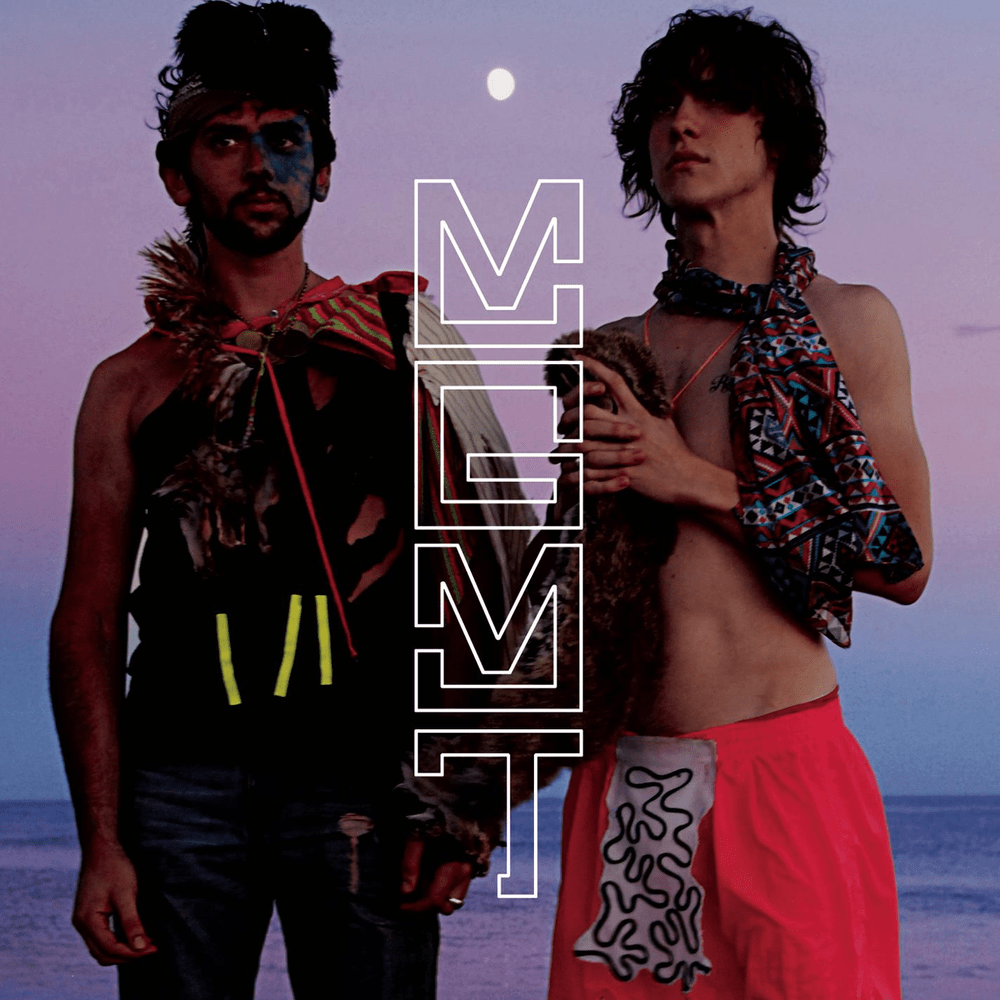
There are a handful of albums from each decade that now elicit pure, unadulterated nostalgia. For the late 2000s, MGMT’s debut album Oracular Spectacular fits the bill to a T. Work on the album initially began while the duo were still freshmen in college, before they signed to a label. Released in 2007, Oracular Spectacular remains instantly recognizable, with a sound that can immediately flood the listener with memories of a place, a feeling, or a very specific moment from 15-plus years ago.

Standout tracks are, of course, “Kids” and “Electric Feel,” which feel like decade-defining sounds of the late 2000’s, but the album still holds up beyond those nostalgia touchpoints. Some of the less synth-driven songs still sound great. A couple of my favorites are “Pieces of What” and “Of Moons, Birds & Monsters.” Turns out, if you want to encase 2007 in amber, it wouldn’t be yellow, but the purple-blue you see on the cover of Oracular Spectacular.

– Ryan Morrissey


Paw – Death to Traitors

A&M Records

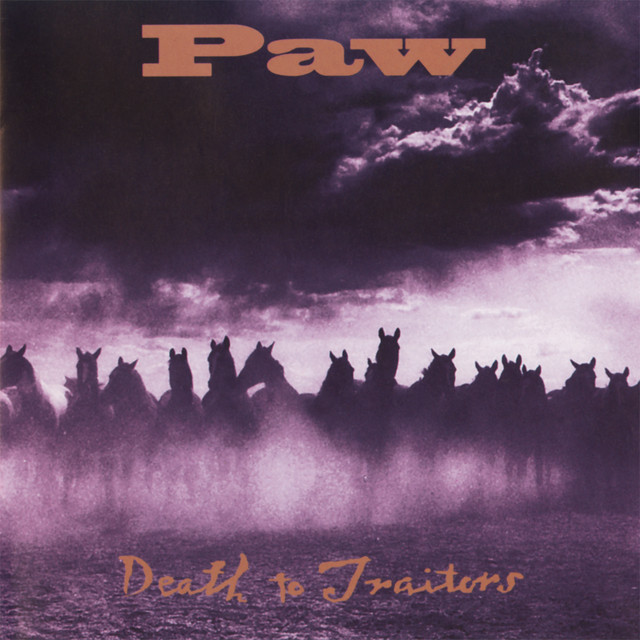
This is grunge with a capital G, from the early ‘90s in Lawrence, Kansas. I’ve written before that this is proto divorced-dad rock, with lyrics like “Everyone is bored and boring / Not me, I am drunk and roaring.” 

If the mainstream hadn’t had Nirvana, they would’ve had Paw. A&M picked them up on the strength of a demo recorded at Smart Sounds in 1992. With major label support, Paw released their debut album Dragline in 1993. Their sophomore release, Death to Traitors, came out two years later and treads similar territory, albeit with fewer off-genre intrusions. The record wasn’t significantly promoted due to internal difficulties at the label and never achieved major acclaim. This is surprising because every song in the hour-long album fucking rocks. Case in point, “Built Low” is a 6-minute cruiser, split perfectly into thirds with a 2-minute exposition, a 90-second breakdown, and a riff-filled instrumental outro. On first listen, you’d have no idea how long this song is. Like all really great bands, Paw broke up a few years later, with a smattering of reunion efforts afterward. 

This album is just over 30 years old, released when the marketing machine was pre-internet, pre-iTunes, pre-Spotify, and pre-analytics. Compared to now, labels were basically throwing darts at a wall, drunk, with their eyes closed. Albums that sailed under the radar like this also tend to be preserved poorly. For example, the cover on Spotify, YouTube, and Discogs is a purple haze of storm clouds over a stampeding herd of horses. The image on Wikipedia is inexplicably red-hued and is not another version of the album, just a poorly digitized image. It’s hard to say how or why a band this talented falls through the cracks, but it’s a great example of why exploring and developing personal taste matters. It’s the only way to know for yourself what groups are being overlooked.

– Braden Allmond


Free Throw — Those Days Are Gone

Count Your Lucky Stars Records

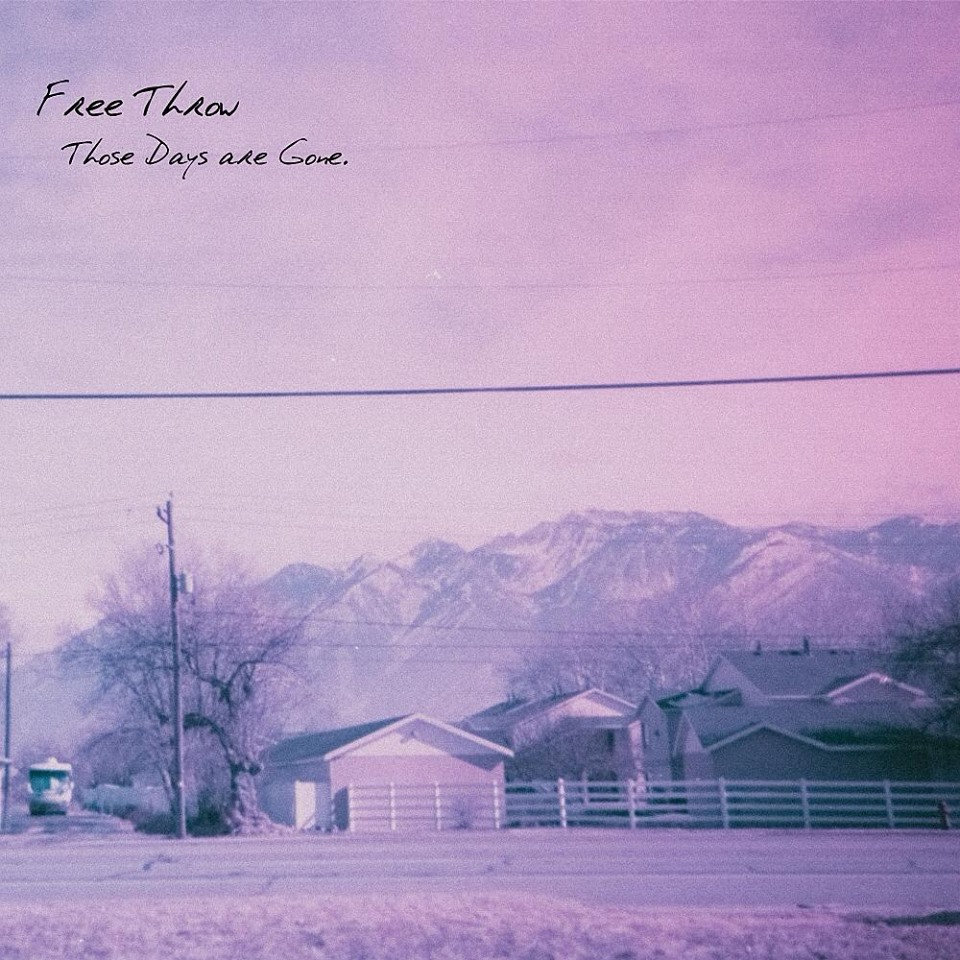
If the emo genre were to have its own equivalent to a drinking song, one that nobody in the room could resist singing along to, it would undoubtedly be “Two Beers In.” Whether in a cramped basement or on the stereo between sets at a show, this beloved song instantly brings people together. But it’s far from the only recognizable track off of Free Throw’s debut LP, Those Days Are Gone. The entire record has become something of a modern classic amongst the scene, and it isn’t hard to see why.

Those Days Are Gone dives deep into the anger and grief-stricken reality of a love that didn’t last–a nearly universal pain. The contemplative intro to “Such Luck” quickly gives way to the guttural heart of the record, signaling to the listener that things are about to get uncomfortably honest. 

Unlike earlier incarnations of emo that were steeped in figurative prose, Free Throw and their fourth wave counterparts tend to speak quite literally. Stories of heartbreak are sprinkled throughout the yelling and heaviness, and admissions of unhealthy coping mechanisms are sandwiched between twinkly guitar riffs. Nearly every song on the record makes space for both calmness and intensity, mimicking the whiplash one feels between anger and sadness. Those Days Are Gone feels like driving too fast, then slamming on the brakes, yelling at your phone, and staring into the distance. The final line of the record dwells on if things “could have stayed the same,” but deep down, we know that sometimes, it’s better to move on and begin healing.

– Annie Watson


Bladee – Gluee

YEAR0001

For better or worse, I discovered Bladee through a Twitter meme- a video of a kid sleeping, and someone pours water on him- as he wakes up, they slap him across the face. Instead of screaming, what else could come out of this poor kid’s mouth but the undeniable intro to “Be Nice 2 Me.” I tracked the song down through the comments on the tweet, and thus began my journey into Drain Gang.

Gluee is Bladee’s debut mixtape, and, as a whole, one of the lesser-loved works by the world’s AutoTune Angel. And I can see why- much of what Bladee is doing on Gluee is much better executed in his later work as he becomes not only more confident in his rapping and singing but also in dialing in his AutoTune parameters. But it’s hard to deny just how unique Gluee sounds, not just in Bladee’s discography, but just in general. It is truly a marvel that this album exists. Here, we have a white boy from Sweden, taking in copious amounts of American rap and pop music via the internet, creating a sound that somehow captures the emotional undercurrent of it all, no matter how disparate the starting influences were. You can hear the braggadocio of Chief Keef, the rhythmic flows of Lil B, the digital haze of James Ferraro, the emotional vulnerability of the Beach Boys, often all in just one Bladee song- it really is incredible how he makes it sound so easy, so fresh.

In fact, it’s hard to imagine the current musical landscape without Bladee. What seemed to be just another internet curiosity turned out to be an artist who changed what music could sound like. Gluee, as amateurish as it can seem at times, planted the seeds for the whole Drain sound. Although Bladee’s influence can now be heard in more and more artists across the world, Gluee has a special, spectral vibe to it that isn’t quite like anything else. I can’t promise you’ll like it the first time, but I will promise that it will elicit a visceral reaction from you.

– Nickolas Sackett


The Buried Heart – Safe Harbor

Self-Released

One of the greatest gifts in this life, and one that I never try to take for granted, is how fortunate I am to call some of my favorite musicians my friends. Next year will mark a decade since my buddy Jack Wittich released his first EP under the project The Buried Heart. I am truly not exaggerating when I say Jack is one of the best musicians I know, and revisiting his first EP, Safe Harbor, only reminds me of how his passion for the game and his abilities as a creator have not faltered over the past decade. 

The Buried Heart is a project that wears its influences on its sleeve; a cosmic amalgamation of emo, post-hardcore, Japanese video game music, and animated orchestration that has given this project such a unique feeling and scope. The five songs across Safe Harbor cover so much ground. While “Opia” has always been the standout track for me, “Veins,” “Dichotomy,” and “Flowers & Theft” can sling punches with the best of them in the hardcore scene and beyond. The heart of the EP, however, lies in the track “Garden,” a melancholic love letter to Jack’s younger brother, whom he lost far too young. Not only does this track cut deep as someone who has come to consider Jack a brother over the past several years, but its musicality is equal parts breathtaking and emotive on every listen. 

Each time I’m treated to new Buried Heart music, whether it's the 2020 self-titled LP or various WIP demos, I’m thoroughly blown away by how much Jack has improved as a musician over the years and how obviously the magic was there from the start. If you’re lucky enough to be friends with some of your favorite artists, you know it's both a privilege and a gift to see their growth and to cherish these kinds of earlier works.

– Ciara Rhiannon


Glitterer – erer

Purple Circle Records

While I think I’m still partial to the music and album art for Glitterer’s 2024 album Rationale, it’s hard to deny the striking design of erer. For this cover, the band embraced a prominent purple (hex code #992bd5 to be exact) stretched edge-to-edge that allows the red type band name and album title to pop out in a shocking contrast, smashed together, reading extra hypnotic and repetitive: “Glitterererer.” Below that, the album name is blown up to massive proportions, making it instantly recognizable from miles away. The band used this same color scheme to turn their name into a tricky little “face” logo and even gave them the namesake for their own “Purple Circle Records,” which they used to self-release this album. Beneath the cover, tracks like “Somebody” and “Stainless Steel” are instant career bests for Ned Russin & co. The tracks hit hard as fuck and sound great live, solidifying into a killer 25 minutes of punk music primed for shouting, sweating, and dancing along to. 

– Taylor Grimes


Honorable Mentions

Hey, we can’t write about every album with this color, so here’s a list of some more that we feel like we should mention.

  • Erykah Badu - New Amerykah Part Two (Return of the Ankh)

  • Ben Seretan, John Thayer - Sunbeam of No Illusion

  • Alex G - I Saw The TV Glow (Original Motion Picture Soundtrack)

  • Dehd - Poetry 

  • Paramore - After Laughter

  • Cassandra Jenkins - My Light, My Destroyer

  • Bam Bam - Free Fall from Space

  • Teethe - Magic of the Sale

  • Cory Hanson - Western Cum

  • Infant Island - Obsidian Wreath

  • Footballhead - Overthinking Everything

  • Great Grandpa - Patience, Moonbeam

  • Chat Pile - Remove Your Skin Please

  • Buggin - Concrete Cowboys

  • Take Care - Southtowne Lanes

  • Shudder To Think - Pony Express Record

  • Boris - Heavy Rocks 

  • Doomriders - Black Thunder

  • Paul Stanley - Paul Stanley

  • Fred - Fred

  • The Smiths - The Smiths

  • Edgar Froese - Aqua

  • Pallbearer - Sorrow And Extinction

  • Donovan - A Gift From A Flower To A Garden

  • Hot Mulligan - Why Would I Watch

  • Drug Church - Prude

  • Smashing Pumpkins - Gish

  • Cross My Heart - Cross My Heart

  • Fall Out Boy - MANIA


Collect some more Covers:

January Blues

February Reds

March Yellows

April Greens