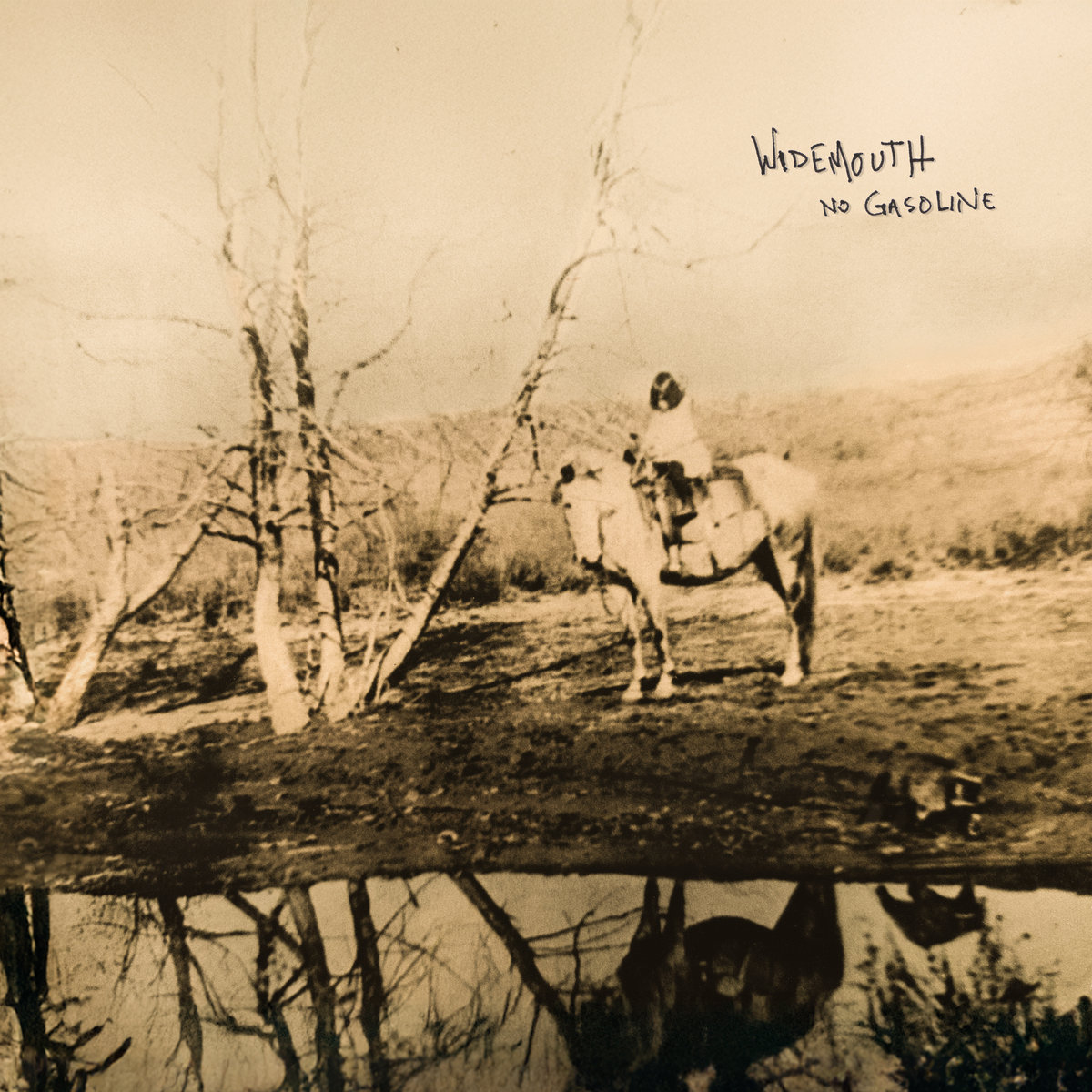
Widemouth – No Gasoline | Album Review
/
Urban Scandal Records
I have been meaning to buy a chair for my patio for months. I moved here last summer, and almost a year has gone by with nothing to sit on while I stare at the stars besides the steps to my neighbor’s apartment or the hood of my car. I like the idea of having a patio chair, though. Somewhere I can exist while listening to slow, syrupy music on my speaker at a reasonable volume. Somewhere I can bask in the hotter days while mosquitoes buzz around my ears. Somewhere I can watch the trees rustle at night. Maybe I’ll even get a table too. But after all this thinking about my own patio, I never thought about getting a second chair. That is, until I listened to No Gasoline by Widemouth.
For several years, Mak Carnahan and Jamie Eder have been toiling away in Chicago, writing song after song about growing up, growing into yourself, and how friendships bend and curve with all this growth. While they released Well, a twangy EP about a similar subject in 2024, No Gasoline is their debut album, with these same concepts paradoxically tightened up and everflowing.
This album will undoubtedly receive comparisons to the works of the current steel indie stars. These comparisons to people like Phoebe Bridgers, Katie Crutchfield, or Karly Hartzman won’t necessarily be wrong, but Widemouth makes the sound their own. The band points themselves away from Wednesday’s fuzz or Waxahatchee’s clarity, instead opting to build a minimal sound within the expansive space that alt-country provides. With the help of producers Jack Henry and Sam Genualdi, all attention is on Carnahan’s and Eder’s harmonies as they ruminate on the quietest moments of friendship.

PHOTO BY Bella Peterson
No Gasoline begins with familiarity and a lot of names: Meme’s paintings, Frances smoking, Christian gone, Rachel, your family, you, me, and her. As the listener, it is up to you to conjure images of these people while you take in the opener, “I Wish You Passed On a Little Anger.” The brushstrokes Meme painted, the steps that Frances is smoking on, whatever Rachel said to irritate us, and the emptiness that Christian left behind. By being so personal so immediately, Widemouth trusts you with their private reflections. As Lily Mitchell’s drums build, the observations turn more personal, something you could only bear to whisper: “I know you hate her / I know you dream about being choked out on the mattress / I wish you passed on a little anger / I just feel sorry / you’re getting older.” Both searingly specific and purposefully vague, the music swells as the song ends, leaving you with your hands outstretched as you desperately try to learn more about these people too.
As the pensive “Pinecone” shifts to “Hotel Pool,” the restraint Widemouth shows through the album briefly unwinds, unearthing the careful fragility that this project balances on. Part of weaving together moments of friendship is that it requires equal reflection on yourself. Amongst whispered voices and steadfast strumming, Carnahan’s voice wavers as she sings “no open tongue,” and again when she sees “no future, no intent.” The music matches these brief moments, the instruments breaking away from the haunted sound of the melodies to collide with each other while Carnahan and Eder sing, “blame your hands blame yourself / what’s the matter I can’t tell.” The song trips over itself, as one does when trying to outpace yourself, outpace your past, in an attempt to find a truer version of you.
Of all the songs in the album that teeter on the edge of an unstoppable misery, “You & Your Girlfriend,” spirals directly in. Not every memory of your friends is a good one, something Carnahan roils over as she sings “I think you said you loved me, but I really don’t know at all / you just sat up back to the wall, and you cried / hands on your temples / that’s what I recall.” It’s a plain memory, one so bleak that it’s shrouded in potential mismemory, but Carnahan knows she’s remembering this right. Eder takes over on the next verse, “you told us your girlfriend was not a good person / with fear in your eyes like a dog on the fourth / none of us knew what to say / drove into town in the morning for groceries.” These lyrics are stark, barren in their simplicity. Carnahan and Eder conjure an immediate closeness between these characters, but one so close that the fear of conflict hurts more than helps. It’s a song about whispered confessions left to linger heavily and uncomfortably in a dark but loving air.
After Eder’s voice joins Carnahan’s to ask, “Remember when you lost it?” in “The Water,” the titular song on No Gasoline arrives, carrying the cry of Sam Genualdi’s steel guitar. “No Gasoline.” A track that immediately envelopes the listener in a dimly lit atmosphere. The tension of the album–the friction caused by years of memories, secrets, and promises—had to break somewhere, and it turns out that's right here, only a few songs away from the end of the LP. Carnahan’s voice builds and builds as she croons “no gasoline / fourteen degrees” before demanding a promise and an apology from someone she loves. Despite the agonizing demand, she and Eder end on a hopeful note: “my last lonely winter / from what I can tell.”
After “Cattle,” the album ends on an instrumental reprise of “Pinecone” accompanied by the clatter and chatter of O’Hare’s bustling hallways as people desperately try to make their connections. A fitting button for an album quilted together by names and places and reflections on the unsaid complexities of building relationships with one another.
Summer is basically here with warm nights and loving friends. I need to buy two patio chairs.
Caro Alt (she/her) is from New Orleans, Louisiana, and if she could be anyone in The Simpsons, she would be Milhouse.