Piebald – Tales for the Rages | Album Review
/
Iodine Recordings
Like most music fans, I’m equal parts fascinated and excited when a band I love reunites. The mind races imagining all the interactions and decisions that brought these individuals back to one another; you can’t help but wonder what the impetus was for this kind of reformation. Of course, the cynical answer is “money,” but the romantic side of me likes to imagine there’s something more profound at work; a sort of cosmic tether that keeps these people coming back to each other and creating art together. When it comes to Piebald, a punk band from Massachusetts who only ever, at most, enjoyed a modest hit on MTV and college radio in the early days of the aughts, you have to take money out of the equation. I say this with a heart full of love, but Piebald are not putting out their first album in nineteen years because it’s a goldmine.
Luckily, Piebald have always been a band who tell it like it is; their decision to make “Still On The Couch” both the album’s lead single and opening track tells you everything you need to know right outta the gate. As the title suggests, things start from a place of complacency – fused to the refuge of the sofa either out of fear or an over-abundance of comfort. Given that this album was recorded, as the press material puts it, “slowly, honestly, and stubbornly over six years” from 2019 to 2025, it’s entirely possible that this is also meant to capture some of the home-stuck energy of the early pandemic years when we had nothing to do but be on the couch. Regardless of the exact intention, we’ve all felt that pull to remain unchallenged and unimpeded in the comfort of our safe space, and I think any healthy person knows how important it is to break out of that.
“Still On The Couch” is a sub-two-minute rocker that expertly sets the stakes of the record, justifies its existence, and acts as an official re-introduction to Piebald’s brand of hyper-articulate punk rock. The group takes this lethargy we’re all prone to and convert it into an optimistic burst of energy that makes you want to fling your front door open and get out into the world. They accomplish this primarily through the track’s boppy road-ready riff, but it ends up feeling like an expert-level jujutsu move the way these four flip defeatist self-sabotage into something actionable and fun. When you put those two possible paths next to each other, the choice couldn’t be more clear.
After forming in the mid ‘90s, Piebald released five awesome albums, a fuckton of splits and EPs, then put the band to rest via a Myspace bulletin if that helps you place us in time at all. Outside of some recent anniversary reissues and a jokey Christmas 7”, the band hadn’t put out anything official since 2007’s Accidental Gentlemen. Long intermission short, the band reunited in 2016 for a bunch of tours, and it sounds like they’ve been stockpiling scraps of ideas since then, slowly building these tracks up and nurturing them until they took the form of Tales for the Rages.
The record’s second song and second single, “This Thing Is Old,” speaks to this gap most explicitly, addressing the elephant in the room: we’re all getting up there. As a band comprised mostly of 40-something-year-old dudes, Piebald’s primary audience isn’t too much younger. I personally got into Piebald at the tail-end of high school when Rise Records bound together all of the group’s early work and demos into a three-volume collection, and even I have grey in my beard at this point! I guess what I’m saying is that anyone still listening to (or making) this type of music at this age is here for one reason: because they fucking love it.
While it might be tempting to write a song like “This Thing Is Old” and take a “woe is me, my body is falling apart” approach, lead singer Travis Shettel chooses to mark the passage of time in a more positive way through the books, records, shirts, and other meaningful art he’s exchanged with friends over the years. Rather than explicitly name these things in a cheap play for nostalgia, the lyrics keep things general, opting instead to point to the decades of friendship and connection that they represent. This is, obviously, immensely relatable to any punk past 30 whose shelves are lined with friends' CDs and closets are packed with band shirts that fit a little too tight. It’s a smart way to address the nearly two decades that have passed since we’ve last heard from Piebald, and it helps sketch out the life that has unfolded between records.
The song’s second verse also bears the album’s title and, over the course of a few lines, transforms what could just be a blanket invitation to let loose and reminisce into a genuine mission statement that offers a justification for why Piebald and why now. In a syrupy-sweet voice, Shettel sings, “Telling stories as if they were alive / Worn grooves and pages / Epic tales for the rages.” Using this way in, Piebald continue to set the stakes and invite the listener to rise to the occasion with them. “The hardest person responds to the softest voice / We have obligations to future generations / We weren't made for these times / These times weren't made for us.” There’s your reunion rationale right there.
Beyond contextualizing the record’s title, this song also features an emphatic guitar solo, a punchy chorus, and a puppet-centric music video. Everything consistently rocks, and as the band invites the listener to “feel the wind inside the heart,” it feels downright cynical to deny them that request. This thing may be old, but that doesn’t mean it’s decrepit, at least not yet.
After two songs about the traps of lethargy, consumerism, and nostalgia, “Used to Good Advantage” offers the most blunt assessment of where we find ourselves in 2026. Here we join the band as they try to get to the bottom of what turns our neighbors from normal, empathetic humans into short-haired businessmen who only have slimy verbal gymnastics to offer. The thrust of the song finds Piebald articulating what it feels like to find out you’re the bad guy, or at least trapped as part of an evil machine that you never even signed up for. They turn this into a clear call to action with a set of the album’s most overt and uplifting lyrics:
If rules can be destroyed by truth
Then they should be
All power to the student, the worker, and those who aren’t free
This becomes a recurring theme throughout Tales for the Rages as the group talk openly and honestly about the plight of the working class. This isn’t necessarily new for Piebald (after all, their biggest song is a hooky plea for worker solidarity) but it feels more pointed than ever on Tales for the Rages. They may be musicians, but the members of Piebald are in this with the rest of us. They see the exceptionalism that leads to nationalism. They know what it’s like to be treading water financially, to live in a country where our taxes are used to murder, to be wary of cops and landlords and billionaires. The press material puts it beautifully: “They’re not giving a lecture, just trying to make sense of everything like everyone else, but with guitars.”
I’ve been talking a lot about the lyrics because, just like every other Piebald record, they’re presented front and center, but Instrumentally, this record sounds incredibly tight. Obviously, there are the aforementioned high-flying guitar theatrics from Shettel and Aaron Stuart, but there’s also Andrew Bonner and Lucian Garro, who sound incredible holding down the rhythm section. Together, their bass and drums give each song a natural center of gravity that the group can easily return to, but they also have lots of fun little breakdowns and flourishes they get to throw in the mix. It’s refreshing to hear such a shaggy combination of indie and emo rock. Each song feels distinct, with lots of little moments that will grab you, whether it’s a specific lyric or a fist-pump-worthy riff – which is exactly what every other Piebald record has felt like. It all comes across a bit Weezer-esque and at times, maybe a smidge of Saves The Day, but also feels like the clear older brother of groups like Michael Cera Palin. This is all catnip to a dude like me, and meant to be a compliment as much as a comparison.
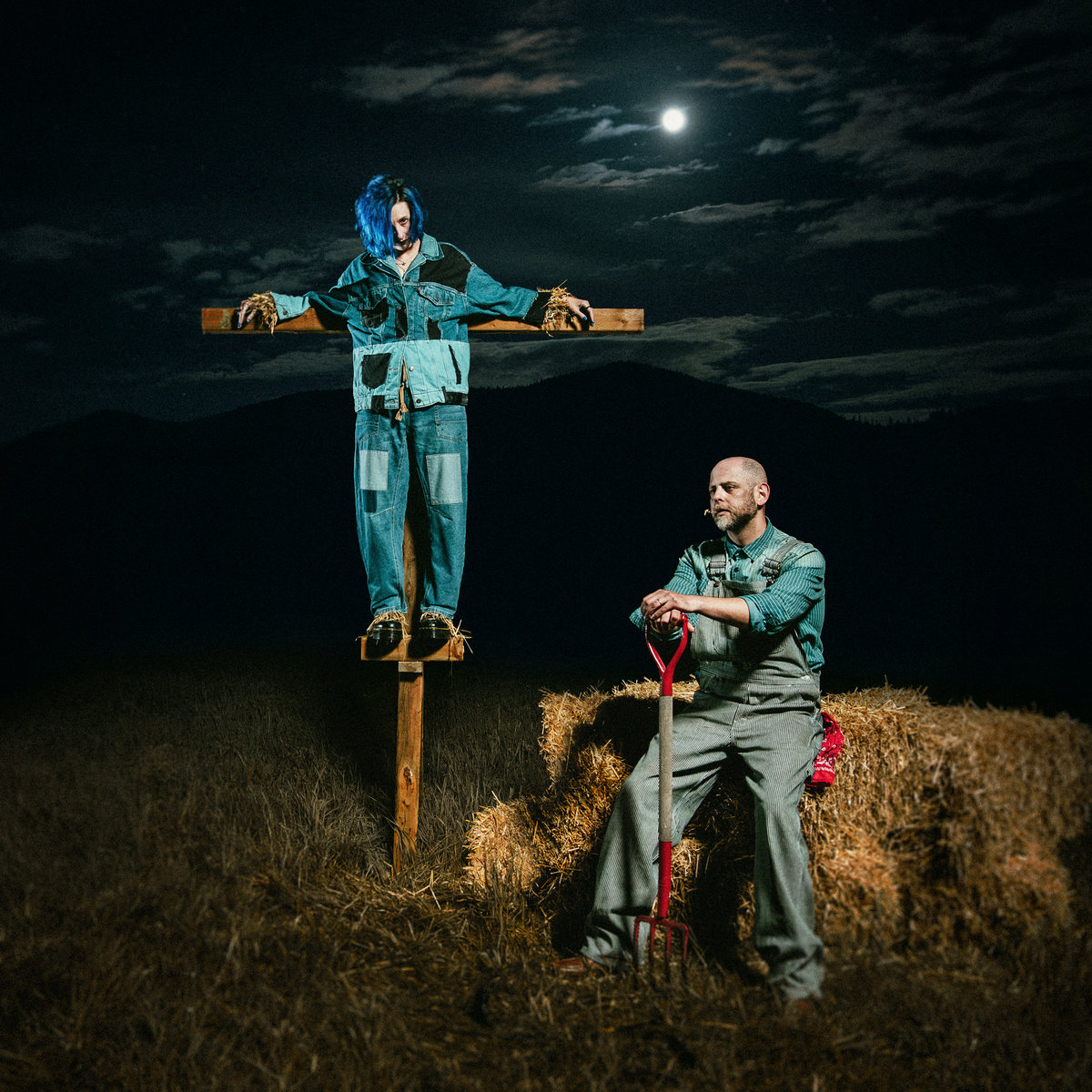
Even as Piebald hack their way through the world of abject poverty that capitalism breeds, they still manage to navigate these ideas in funny ways, whether it’s lines like “My retirement plan is dying in the class war” or actively undercutting the very thing they’re participating in. While music can sometimes feel like a mere frivolity in the face of our potentially dismal situation, it’s also a source of delight, catharsis, uplift, and community. Plus, it’s only a dismal situation if you resign it to that. The cover is accurate: these are bright and multicolored reflections culled from a world that tries its absolute damndest to sap the light and joy out of everything. It’s nice to see an album that believes in change, improvement, and betterment. After all, what’s the defeatism and cynicism going to get us besides defeated and cynical?
Before you even reach the midpoint of the album, it becomes clear that Piebald got back together because they actually have something to say. While some of the lyrics can come across a little heavy-handed, it’s worth being explicit about where you stand, lest you be misconstrued as an impartial fence-sitter. It’s also so much more interesting than being non-descript. This all struck me in a similar way to the Algernon Cadwallader album from last year, in that both records come from super-celebrated decade-old scene staples who broke up but eventually came back, matured, hardened, and refined. In both cases, the bands managed to remain true to their original sound while also becoming more explicit and vocal about where they stand. Piebald have always been political and outspoken; it makes sense that they’d be even more so in 2026.
In true Piebald-ain fashion, they also make these points in the funniest ways, with just enough pop culture references sprinkled throughout. In one track, they evoke LMFAO by singing with utter remorse, “Party rock just makes no sense right now…” One song later, they’re directly quoting Tupac, and a few tracks after that they’re name-dropping Voltaire. It takes all kinds.
Tales for the Rages is an album lovingly packed with meaning, motivation, and memories that Piebald not only proudly packages up and puts on display, but directly involves the listener in. There are so many quotable lyrics, bits of genuinely good advice, and catchy-fun choruses scattered throughout this record. The final kick in the pants comes at the end in the form of a poignant 40-second song that feels so beautifully Piebald and is too good to spoil by quoting here.
As many music fans have learned time and time again, just because your favorite band is reuniting doesn’t mean it’s going to be good. In the case of Piebald, some combination of time away, years of creative percolation, and good old-fashioned friendship seems to have resulted in the perfect conditions for another great record. While some artists participate in the rat race of dropping an album every year or two so they can tour, Piebald appear to recognize the sanctity of the creative process and are opting to be as thoughtful as possible.
I look at this band and see an inspiring model for how to move forward. I’m only in my early thirties (turning 33 next week, thank you very much!) and so many weird, fucked up things have already started happening to my body. I’m scared to think of how they could compound with time, and I’m doing everything I can to combat that decay. Some of that is physical, but over the last few years I have also come to realize how much of it is mental, too. It’s so important to have friends and riffs and actual perspectives about things going on in the world. It’s important to voice those things so people know you’re standing with them. After all, isn’t that why so many of us started going to shows or getting involved in our local scenes? To be a part of something bigger and find other people that feel like “our kind of people”? Tales for the Rages proves that journey is a lifelong process, and I wouldn’t have it any other way.