Sella – Well I Mean | Album Review

Bar/None Records

“Biggest rule of two-song Tuesday—where’s Brian? … Brian?”
“Everyone say ‘Brian’ really loud. One, two, three…”
BRIAN!!!

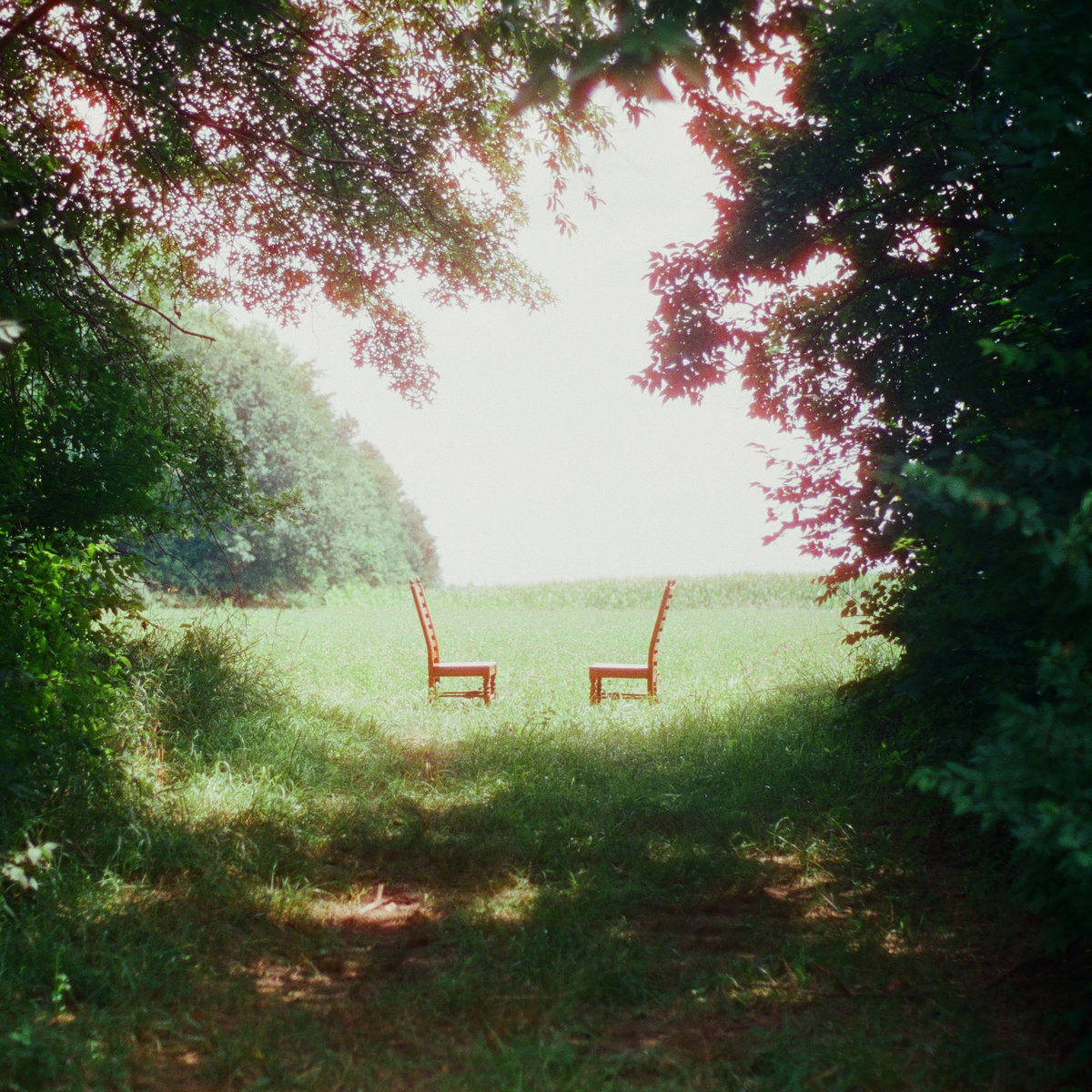
These are the opening seconds of Well I Mean, the first album of Brian Sella’s mononymous new solo project, Sella. You might recognize that name as the singing and guitar-playing half of The Front Bottoms, and while he’s still unmistakably himself throughout this new venture, we find him in a completely new soundscape. According to Bar/None Records, this album was recorded “to amuse the muse, to re-find the fun and deliver something personal to the listener.” This music is pretty in a way that TFB has never ever been; it’s wholly its own, and completely sheds any baggage it might have had coming from a frontman of an established act, though it might take the listener a few passes to come to terms with that.

As someone who’s read, sung, hummed, cried, and shouted every TFB lyric, I feel pretty confident saying that Brian’s characters are always asking themselves questions: where they are, where they want to be, how they’re going to get there. This album is a fresh start, and it knows it, reflecting on lessons learned the hard way, advice accumulated over the years, and overflowing with gratitude for the people who stuck through it all. 

Sonically, Well I Mean is a brass-dominant 25-minute jaunt that dispenses with the usual guitar-forward sound of TFB, opting instead for a softer style with plucky strings, shiny horns, and upright piano. Lyrically, there’s still a spool of matter-of-fact wisdom, picked up in remote places and doled out in an introspective, storytelling style. At times abstract, and at others more concrete than an ocean, Well I Mean could take a few listens to pick apart, but don’t worry, self-help has never sounded catchier.

After the opening shout, we get into the music with the faraway and somewhat regretful “American Shark.” We’re brought in with a shimmering set of strings, accompanied by a simple finger-picked melody, setting the tone as pensive and self-assuredly unworthy. Brian then immediately upends this table-setting with “Skipping Out,” which is ridiculously bright, youthful, and full of color. This is primarily thanks to the cornet, which you first hear in the call-and-response with the lyrics, “Falling into a nice routine / I’m drunk every time you see me.” The cornet lingers and builds in the verse, then lithely breaks away to support the piano in the chorus, “It seems / I’ve been lookin’ at things reversed / this whole time / So much so that at this point / the right way just don’t feel right.” It evokes the feeling of dancing at a celebration of life, summoning joy on a day meant for mourning. Positive tunes to losing-it-a-little lyrics is a classic juxtaposition very much in the TFB wheelhouse, now masterfully rendered in a new domain, setting the album on a firm foundation of its own. 

A little later on, we hear the similarly light and jubilant “South Dakota.” If you’re from a rural part of a landlocked state like me, you should understand immediately that roads, highways, and interstates are our lifelines to other people, hence the metaphor “The ocean is the highway.” Even in 2026, there are miles and miles of dead zones where you’re left to contemplate why you’re on that road in the first place. In the bridge, the narrator shares a revelation he had out there: “You finally realize / life’s but a dream / But exactly how you’re feeling / ain’t exactly how it seems.” Notably, “All that we see or seem / is but a dream within a dream” comes from Edgar Allen Poe’s A Dream Within a Dream. I think the narrator of “South Dakota” is assuring themself that emotions are not our reality; with time and experience, the difficult ones will pass.

Obviously a huge part of Well I Mean are the trumpets (or cornets, or flugelhorns). They have a literally instrumental role in a third of the songs on the album, most notably on “Perfect Worth It,” at first in support of the narrator, then fully taking over and playing out into a silvery conclusion. In researching for this review, I actually couldn’t believe that the last three TFB albums don’t have brass at all. The most recent song in their discography with a trumpet is “Don’t Fill Up On Chips” from Going Grey, then “The Plan (Fuck Jobs)” and “2YL,” both from Back on Top, around 10 years ago. It’s poetic for the brass on Well I Mean to be so good, because it was inspired directly by the intentionally amateurish brass sounds in TFB’s early catalog, namely “Flashlight,” “12 Feet Deep,” and “Swear to God the Devil Made Me Do It.” This album is orchestral in a way that we only saw glimpses of in early TFB. The best example is “Maps” from their self-titled album, which uses strings and simple piano to get about halfway to the style of Well I Mean. Now, Brian has made it out of his room, onto his big, big plans.

Well I Mean was produced by the prolific and incredibly cool Chad Matheny, of the DIY folk-punk band Emperor X. Actually, the music video for “Perfect Worth It” was a part of a joint release, with Emperor X publishing “Pissing With the Flashlight On” on Bar/None Records the same day, which details the darkly humorous realities of the all-too-real evil in our world. Emperor X and Sella have a short tour together this spring, and, in one final piece of kismet, it’s not the first time they’ve been on the road together. About 15 years ago, Emperor X and The Front Bottoms went on a DIY tour, which you can read a bit about in this interview from The Aquarian. This long friendship bearing fruit couldn’t summarize the album any better; dipping into the past for inspiration, finding new ways to be yourself, and creating something at once bathed in history and completely unique. 

At the beginning of this review, I mentioned Brian’s intent with this solo excursion was to “refind the fun.” In that same Bar/None Records page, they open by talking about the distance between the stage and the bedroom. Throughout, I’ve referred to Brian as, well, Brian. It felt so odd to call him Sella, even though that would be the correct “journalistic practice.” To me, he’s an everyman; he could be my eccentric neighbor, my favorite buddy’s favorite buddy, or the mailman. His songs have always seemed like something a friend of a friend could have made and played in a garage or backyard. Those qualities are most obvious to me in TFB’s earliest on-label works, The Front Bottoms and Talon of the Hawk, which Brian magically channeled into Well I Mean

For example, on their self-titled album from 15 years ago, The Front Bottoms built their album closer, “Hooped Earrings,” around voicemails. They’ve had voice samples here and there throughout their discography since, and now Sella uses this trick again, building a full song around a voicemail in “Stocking Up.” Actually, what we’re privy to sounds more like a deposition, which, oddly enough, also sounds like directions for a DIY music video. In it, we hear the lines, “You got a gun in your hands / but it should be a guitar” and “At this point giving up the gun / should be easy to do / Don’t worry, just know / I’ve got another you could use.” At first, I thought this meant another gun, but I think the narrator is saying he wants to help his friend change, letting them know that if they want to change, he’ll support them. It might seem like a reach, but I think it actually falls nicely into place if you consider the line, “I’m sure that we could find something for you to do on stage / Maybe shake a tambourine or when I sing, you sing harmonies” from TFB’s most famous song, “Twin Size Mattress.” These are the same sentiments: making space in your life to help someone, even going so far as to let them join your band if it means they can get better.

While we’re on the abstract stuff, two quick notes about the stream-of-consciousness track “Wichita.” First, the line “If you were brave enough / to drink the Arkansas / you cast a shadow / on the river like an art piece” refers to the Keeper of the Plains on the Arkansas River in downtown Wichita, Kansas, about 30 miles from my hometown. Second, I couldn’t help but notice the similarity between the Yogi Berra quote “You can observe a lot by just watching,” and the line “Walk around from light to dark / you see a lot.” Neither of these guys are trying to be profound; they are kindred spirits articulating how they see the world, and through their matter-of-fact descriptions, they arrive at somewhat profound (if at times cockeyed) conclusions.
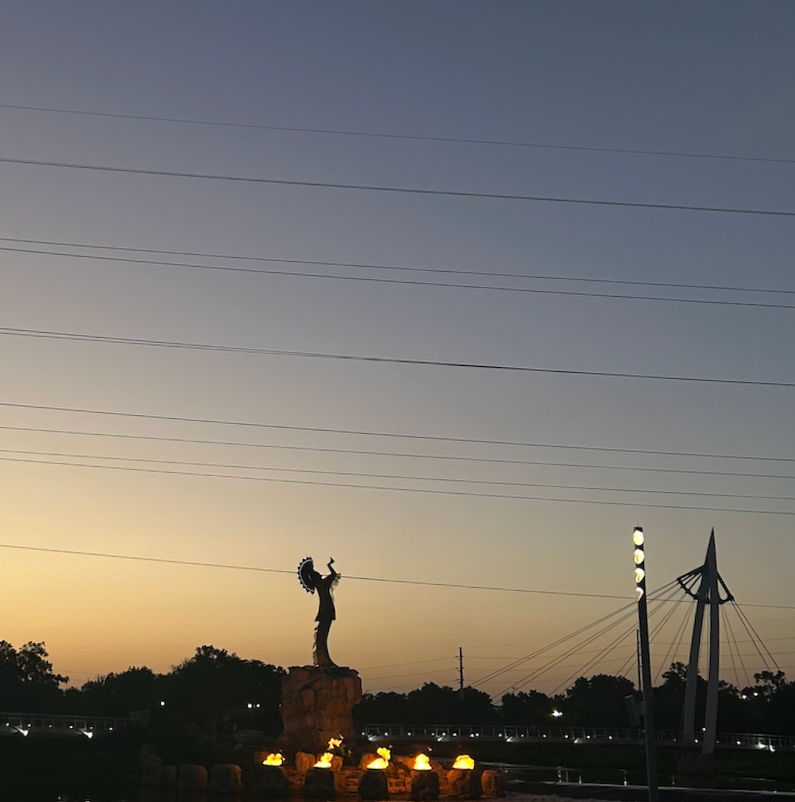
THE KEEPER OF THE PLAINS ON THE ARKANSAS RIVER IN WICHITA, KANSAS. PHOTO BY ANNA WATSON.

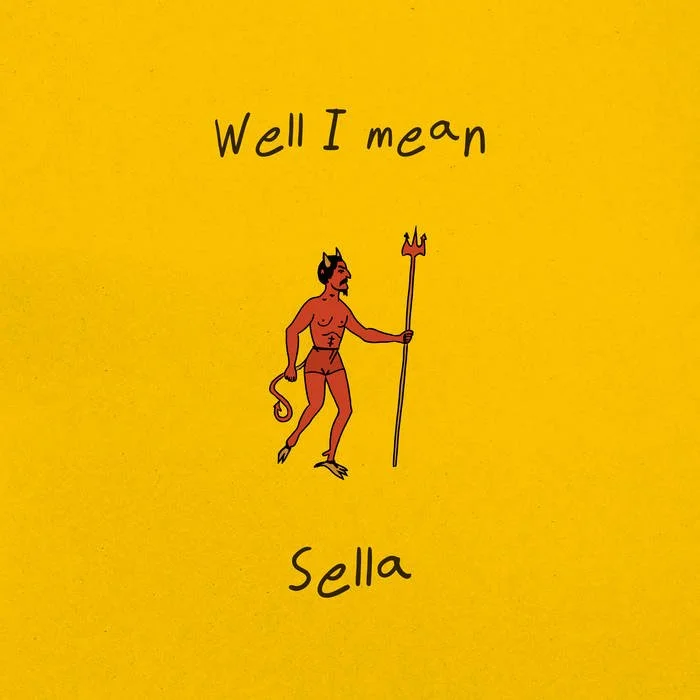
One track before the end of the album is “Daredevil.” This is the second time the narrator directly refers to himself as the devil, saying, “I was the same old snake / We made a cute couple / and a couple mistakes.” The first instance can be found in the opener “American Shark” where Brian says, “I feel like I am the devil / and I’ve got an angel / lying next to me.” Also, Captain Obvious has indicated to me that there is a devil even on the album cover, how subtle. Where other tracks used rhythm guitar or Latin percussion to keep time, “Daredevil” uses a drum machine, breaking sharply with the rest of the album. 

While I really do think it stands on its own, making space for a new sound with a matured voice and musical style, there is a rich web of connections to older TFB songs. In some ways, Brian’s always talking about the same ideas, but—miraculously—he keeps it fresh. After all, he told us a long time ago, “Freshness is expected from any hip-hop artist.” Brian is always saying something new, even when it’s the same, or as he puts it on “Daredevil”: “But this new normal / is under heavy disguise.”

Earlier, we got the line “Walk around in circles / like I’m trying to walk my manic out / Talk to all my problems / but I’m only talking to myself” from “Skipping Out,” which now pairs nicely with “In my life and in my mind / endless running around / chasing highs.” The majority of the narrator’s perspective in this album can be explained by just these two songs. It seems that they suffer from bipolar depression, experiencing mania, chasing highs, fucking up, blaming themselves, getting depressed, and repeating the cycle. These two songs alone tell us the album is about recognizing wrongs and trying to be better, and just about every other lyric on the album supports that conclusion. 

In all, Well I Mean is a shining example of what 15 years of growth looks like, both personally and musically—waking up, approaching healing as a process, and making a choice every single day to get better and to be better. The album doesn’t sugarcoat the slip-ups, but the narrator’s best days are not begrudged to them. It ends with a winding ambient track helpfully called “Untitled,” which I believe contains audio from a eulogy. In it, the priest says, “It was one of the saints that said, ‘Music is the only art of heaven we can experience on Earth, and the only art of Earth that we will take with us to heaven.’” But I think this is a paraphrase of something normally attributed to the 18/19th century English poet Walter Savage Landor, who once wrote, “Music is God's gift to man, the only art of Heaven given to Earth, the only art of Earth we take to Heaven.” I make the point of crediting the poet because Brooklyn Vegan quoted Brian recently as saying, “I’m a poet first and foremost, so my focus is always on communicating something emotionally and artistically.” I’ve always thought that about him, but I’m glad to know he thinks it about himself, too.


Braden Allmond is a particle physicist and emo music enthusiast. He anticipates graduating from KSU in August with a PhD in experimental high energy physics. When he isn’t writing his thesis, he’s data-scraping articles and books about emo music, making tables and graphs to interrogate and understand the genre.

Radicalizing Self-Love: An Interview with JER 

Bad Time Records

Over the last several years, Jeremy “Jer” Hunter has become a prolific fixture in the New Tone ska movement. They have been a viral sensation countless times, racking up nearly 40 million views across YouTube and TikTok for crafting ska covers of popular songs under the moniker Skatune Network. A true multi-hyphenate and one-person band, in the average Skatune video, you can see Jer playing trombone, trumpet, guitar, bass, sax, and singing – to list a handful of their proficiencies. 

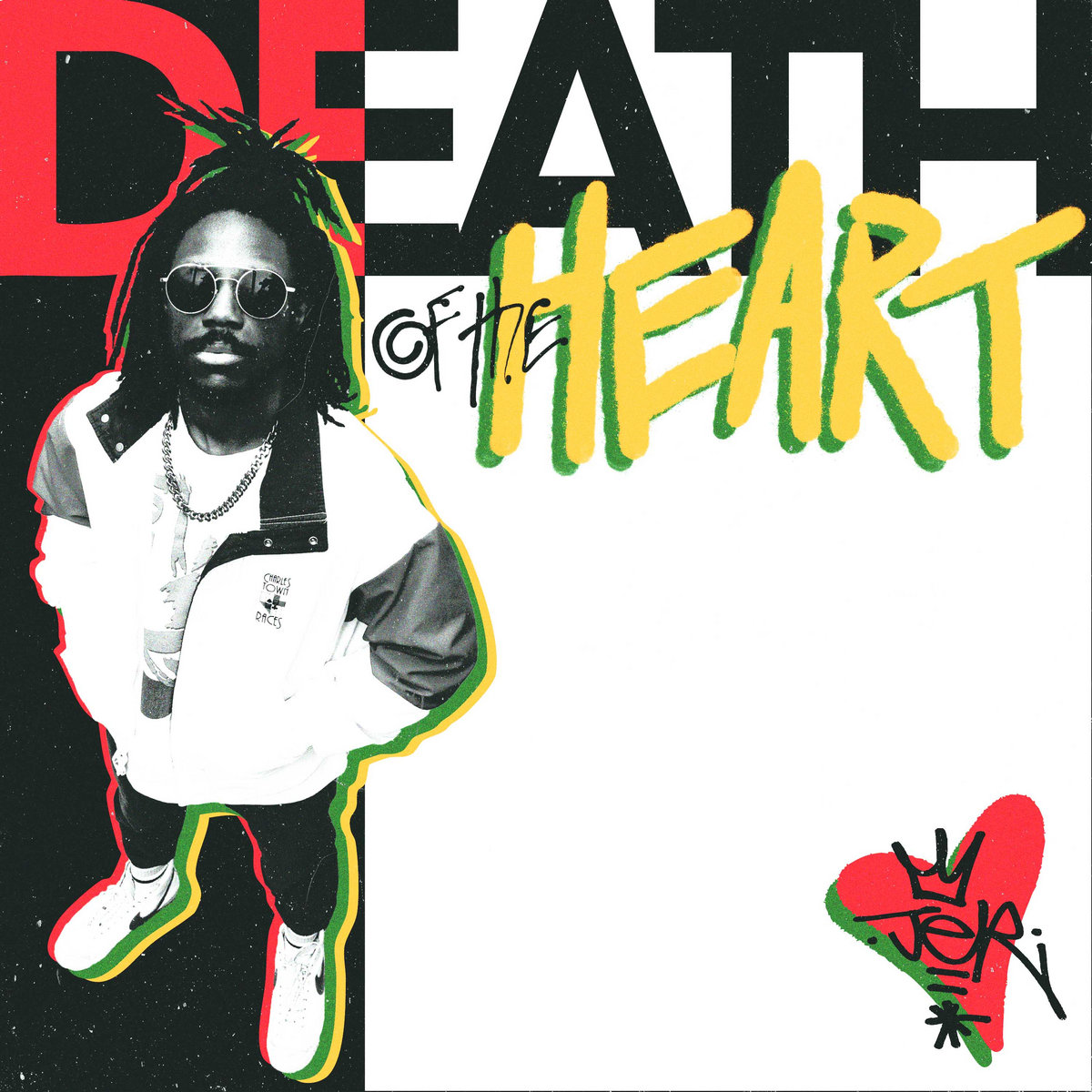
Jer has wielded these talents on numerous records and on stage for acts such as Jeff Rosenstock, Fishbone, We Are The Union, The Bruce Lee Band, and many other notable names in the ska and punk scenes. In recent years, Jer has begun putting out their own original music as JER – releasing their first LP, BOTHERED/UNBOTHERED, in May of 2022 and their sophomore album, Death of the Heart, in August of 2025. 

Jer capped off the end of last year not only with the release of their new album, but with plenty of touring to keep their hands full. This recent bout of time on the road included a jaunt to Japan, as well as stops at FEST in Jer’s home state of Florida, No Earbuds Fest in Southern California, and MAGfest up in Maryland earlier this year. Now that they’re back from trotting the globe, I had the pleasure of sitting down with Jer to chat about these enthralling live shows before thoroughly delving into the creation, inspirations, and broader meaning behind their thought-provoking and politically-charged new album, Death of the Heart.

This interview has been edited for length and clarity.


SWIM: How has touring, MAGFest, FEST, and coming back from all that been?

JER: It's been really good, the back half of 2025 was very eventful. We went to Japan again, and this was the first time for the JER band. Those shows gave me a new reason to play music live. The love and the energy was so revitalizing. Then FEST had the same energy. So many people that I love from across the music industry, the music world, all the music scenes, typically they're at FEST.

So, to feel that love again, it fueled me. We ended our year in SoCal at No Earbuds Fest, and SoCal showed up. It was just banger, after banger, after banger. All the touring has been great, but that last run of shows in particular, the energy was through the roof.

Earlier this year, there was MAGFest with Rebecca Sugar. Steven Universe is such an important show to me – especially the music. I probably wouldn't be doing Skatune Network if it weren't for Steven Universe. What Aivi and Surasshu were doing on that show inspired me to open Logic and start making music, so that full-circle moment was very cathartic.

SWIM: Crazy full circle. My friends Sierra and Carina went to MAGFest too, and they were sending me videos of the Rebecca Sugar show, and I was like, “Oh, there's Jer in the back on the Trombone!”

JER: I didn't really talk about it a lot, because I got doxxed around the same week that they announced that. Far-right Twitter was having a field day. I think if I announced that I'm performing with the creator of the Gay Space Rocks show as far-right Twitter was dogpiling on me, that might just add fuel to their fire. I kind of just didn't post about it, and then I went on tour and realized I'd never posted about it, so that was a surprise to a lot of people. 

SWIM: ‘Joke’s on you. I'm literally never home!’ [Laughs]

JER: Yeah, right. Good luck showing up at my door, no one’s here!

SWIM: My friend Avery was in a couple bands that were at No Earbuds Fest, and that seemed really cool. 

Something I also never thought about until the last several years was how big ska is in Japan and how many ska bands there are, like ORESKABAND. It's so cool that it's such a big pocket in Japanese music culture. 

JER: Yeah. I've gone twice now: once in October 2024 with the Bruce Lee Band, and then this past October again with the JER band. Japan feels like it is almost 20 years behind when it comes to pop culture. The best way I can describe it is how there's a bunch of people who are nostalgic for the 80s, but they were literally born in the 90s, so they have this nostalgia for the 80s through seeing 80s media. I feel like Japan's the same way: they're seeing ska, punk, and alternative through the media's gaze, and now they're recreating it years later. 

They consume so much American culture, and they might not understand all of the reasons why that American culture happened, but they're still recreating it in their own way. On top of that, their culture just values music and art way more; it's more accessible there. It's the perfect combination of those factors that have allowed Japanese ska to be so big, but also alternative music in general.

SWIM: Absolutely. That's how I've always felt about K-pop, too, where it's a mirror reflection that keeps going back and forth between Korea and America. If you look at J-pop, Hikaru Utada’s career, their 2000s stuff sounds like the 90s. It's just a cool pattern.

Something I’ve always admired about you is how prolific you are and how much stamina you have to put out content, be in so many different bands, and do the marching band. Where do you feel that initiative to do all of those things comes from?

JER: Part of it is a love for the craft. It's that mantra that's capitalist propaganda of "Find a job you love, and you'll never work another day in your life,” when the reality is, it is work. I love music, and I'm more inspired to create a ska cover, play music, or teach marching band than I ever was to flip bacon at Waffle House. It's easier for me to get out of bed knowing I can make music than it is to make meat as someone who's vegan. [Laughs]

Photo by Rae Mystic

It's a very volatile and uncertain profession. I'm grateful people back me up and support me with Patreon and buying my music and merch. That is the only reason I'm able to do this. Even if I'm not feeling motivated, it helps knowing that people love it when I share a cover, or seeing the comments from people really hyped on it. Whether it's people telling me at shows or people showing up to concerts, anything like that, those are the things that make me want to keep creating. 

Sometimes there are days when I'm not really feeling it. It might take me a little longer to get it done, but there's also the time constraint: I have a month before I go on tour, and I need to get X, Y, and Z done. Sometimes the pressure of that just forces me to get things done. There always comes a point in every cover, even if it feels like I’m dragging my feet, where I have to get this done. By the time I'm halfway through the process, I start getting hyped on it. ‘Oh, this sounds really cool, and I know people are going to really dig this!’

The other work that I do are kind of my anchors. Every summer I'm doing band camp, every fall I'm doing marching band competitions, and every October is FEST. Those things ground my life into some sort of reality where, during all the time in between, I could probably make three months’ worth of covers, and then I'm not making covers when I'm on the road. It’s a lifestyle where you have to be adaptable. I once saw someone say that they gave up their 9-to-5 to work 24/7, and damn, that's so true. 

The Undertale cover record I did was purely out of passion, but then [Toby Fox] used it for a stream. I did not make money on that at all. Even after selling records, I only broke even because I paid the artists to record on it and the people who made the art. I wasn't expecting them to compensate me for making that cover record. I really didn't make money off of it, and then two years later, that money came back.

There are some months where I worked all day, every day, for months at a time, and I made very little money. Then there are other months where I can go on tour, and that work I put in is still sustained. If I'm not posting, the Patreon does go down gradually. If I'm posting, it goes up gradually. So, there still is a consistency that needs to be there. There's a give-and-take with it. 

SWIM: Exactly. One of the things I think that you’re known for in the music industry and in general is how outspoken you are about social media and the algorithm. Being a content creator and a musician while under the constantly changing social media culture we're in right now, what is your general approach to tackling that uncertainty?

JER: My whole philosophy lately for myself and what I try to internalize is moving back to logging off, unplugging, the same way that there are people who are ditching Spotify and streaming altogether. People are starting to buy CD players again and build up their physical collection. I just bought a DVD player, because I went to watch Steven Universe, only to find out it's not on HBO Max, it's on Disney+, which is ridiculous. I just want to watch my show and don't want to give Disney any money. I just bought the DVD boxset, and now this can never be taken away from me, unless I lose it or something. It's something I've been meaning to do, but how do I translate that to music?

I've been building an email list since last year, basically harassing anyone who joins my TikTok live streams to sign up. We announced this tour, and ticket sales have been better than any tour we've done so far. Some people say they don't want to join the email list because they get so many emails. I have multiple email accounts, so when I'm looking for this information, I'm not digging through spam. I'm encouraging people to really lean into that; being intentional about the content that they're taking in, especially in an era of AI slop on the rise.

Social media feeds are so overwhelming, and I don't blame people who might see me, but then see like 500 more posts that day. I can't even remember the last three posts I saw on social media. I have to treat everyone like that. Someone might've seen my tour announcement, someone might've seen my new record, someone might've seen my last cover, but they probably saw a million posts after that and forgot about it. You don't forget going out to a show, unless you're blackout drunk, then you forget. [Laughs]

If you're going out to a show and you're actively engaging, you're not going to forget that. If you go up to the merch table and meet the artist, you're not going to forget that. An email with very specific information that you'll only see on that email list. So for me, it’s finding the quality people within the quantity; find the people who want to be there and reach out to them. The people who see all my posts, who constantly see me repeating the same things – for every one person like that, there's a thousand people who may have followed me for years, and they've never heard that I make my own music, or that I'm on tour, or that I have a new cover. I've been touring, and it's not even your fault; you just haven't seen it because I've been pushed out of the algorithm, not because the algorithm is evil, but because there's an oversaturation of content. On top of the algorithm being evil. [Laughs]

SWIM: Absolutely. I'm stoked to hear that you're getting so much love for the Seattle date of the Bad Time tour. I'm glad people are seeing that and buying tickets because, like you've said in your videos, we are the farthest away from you right now. So that means people are talking about it, sharing it, and actually seeing that information.

JER: No, Seattle's been great. Honestly, most of the more remote places, like Denver, have been great. The Northwest is not used to bands making it through as much as Chicago, New York, or Philly. Those cities are also doing great, but Seattle, by far, is the best one. Also, a lot of my videos do well there. When I checked the top cities, Seattle has always been one of those. We played Seattle on the Fishbone tour, and that was by far the best show of the tour for us. I'm really thankful for that.

SWIM: You mentioned AI when you were talking about the algorithm, and I was curious, as an artist who is so vocally anti-AI, what's getting you through this AI slop era we’re in? 

JER: Yeah, the whole AI thing is really annoying in general. Even most of the time, it's just slop in every sense of the word. It looks bad, it sounds bad, but it's gotten to the point where it's indistinguishable. It's still slop, it's just slop that looks better. The point of it being slop isn't that it looks bad; it’s that no effort went into creating it. What makes art cool is that somebody couldn't express something that they were feeling, so they developed the skill to express that thing. With AI, somebody felt something, but instead of developing any sort of skill, they just made a computer do it.

It's getting to the point where more people reject AI than not, but these algorithms are just shoving it down our throats whether we want it or not. Bandcamp announced that they're banning AI, and I haven't seen a single person say that's a bad thing. Moves like that are starting to show that there is a market for it. I see a future where you might start seeing indie artists selling DVDs. I've seen some Kickstarters where they offer that as a perk, but you might see more of a push. I already see it on TikTok, where artists are really pushing CDs and CD players. Vinyl is coming back for all the people who didn't know that it never went away. Bands have been selling records forever, but CDs are also getting a huge push right now. I think people will move more towards physical media and become more intentional about what they consume. 

If every TikTok or Instagram Reel or YouTube short is a minute, you can at most watch 60 of them an hour, and that's assuming you dedicate a full hour to doing that. So, how much content is going to get on there to the point where you can't even watch stuff? You can just get offline and go directly towards who you follow to find out about stuff. I think that's where the future is moving. I can already see that happening with people deleting or getting off of Instagram and signing up for email lists.

SWIM: When I deactivated Twitter, I had that nostalgia of “This is where I met so many of my music friends and this has offered me so many opportunities,” but now it's this soulless reflection of something I used to like, and it's not even serving me anymore. So that made it easier for me to push it away. The same thing is happening on Instagram right now. The same thing's happening on TikTok. 

pulses. is a band I always bring up, but they just released a dual-CD/DVD for their 10th-anniversary show from last year. When I was talking to Kevin about that last year, he said, “You know, I don't know if we're going to be able to do it. It's hard, and I'm figuring it out all by myself, and I don't know if we're going to make money off of it, but we're going to put it out there for people.” People need to be taking that risk and offering that, so people have shit to put on their shelves and in their collections. 

JER: I agree, 100%.

SWIM: Death of the Heart has been out for months now. How's the reception been?

JER: It's been great! Death of the Heart came out in August of 2025, and especially in the back half of the year, I feel like every week there were banger records coming out. Pool Kids dropped their record the same day as Death of the Heart. Kerosene Heights dropped their record that day as well. We went on tour with The Bouncing Souls over to Japan and back to FEST. By the time we got back to FEST, people were singing the new songs more. Even going to California in December, people knew the new songs more than the older ones. The general consensus is that people have really latched onto Death of the Heart a lot quicker, which is really cool. 

It wasn't a record that took over the world, but I think it's really dope that, within the following, people are really loving it. Bands often put out a second record and people say they like the first one better, but I'm finding a lot of fans saying it's been a step up. People who are finding me through Death of the Heart are now finding BOTHERED / UNBOTHERED retroactively. Death of the Heart has been, without a doubt, more successful on social media. Every time I post a video that does well on Instagram or TikTok, I gain a lot of followers, but I also attract a lot of other cool people. Topaz Jones is a rapper I found a couple years ago, and he followed my page, which is cool. I'm noticing a lot of rappers, hip-hop artists, R&B singers, and jazz artists are finding it. I think it's a testament to how good music is good music. People are really resonating with that.

It's also been 100% DIY; I'm not really getting a publication push from the music industry. I'm not getting features on huge podcasts or reviews. It's literally word of mouth. The fact that the social media push and the word of mouth have gone this far has been really cool. There's so much room to grow with the record. People might come out to the Bad Time tour, and they might not have listened to the record yet, but then they're going to see the band absolutely tear it up, because the JER band rips. I'm excited for people to hear these new songs and see the band’s energy.

SWIM: That's awesome. I think all DIY and smaller artists are feeling that inundation of music. If you're someone who tries to follow music as much as possible, the weekly deluge of new albums, EPs, and singles can be disheartening if your mindset is to be on top of everything as it's released. Something I try to tell artists when they're feeling discouraged is that their music isn't going anywhere. Just because a week has passed since it was released, people go back and find records literally all the time. Don’t be so focused on, “I have this finite amount of time to release my music and talk about it. Otherwise, it'll never be heard.”

JER: Yeah, the music industry is just like that. “You need a new record in two years.” I put out the record six months ago. I'm supposed to be 25% through this whole era before I put out the next record. I don't think a record's coming in the next year and a half, but there's nothing wrong with that. 

There's this one bit from Family Guy: it's some dude in jail watching TV, and he’s like, “If I haven't seen it, it's new to me.” I'm pretty sure you know exactly what scene I'm talking about. [Laughs]

SWIM: Yeah. That's so funny, I have that Family Guy vocal stim, I could recite the inflection verbatim. [Laughs]

JER: But it’s so true! I see videos that went viral on Tumblr and Facebook 15 years ago going viral on Instagram now. That song “Chinese New Year” is another great example. That band, SALES, put out a five-song EP, they toured a little bit, they weren't going anywhere, they broke up. Five years later, Chinese New Year went viral on TikTok, they went up to 3 million monthly listeners on Spotify, and then that band literally came back. They weren't on TikTok posting, that was just organic.

Someone with 10 million subscribers on YouTube could find and talk about Death of the Heart, and then as a creator and as an artist, it's my job to always be ready. That's what I've learned after 10 years of doing Skatune Network. I could wake up tomorrow with an influx of followers, but are they seeing what I want them to see? Are they seeing my tour dates? My new music? Is it easy for them to find? You never know what the future's going to be. 

SWIM: What are some of the musical or non-musical media influences that went into Death of the Heart

JER: Normally, I always have these references sitting around, but Death of the Heart ended up not having any. That's just naturally what happened. When I first started doing JER, “R/Edgelord” uses a sample from Arthur with Buster being like, “You really think someone would do that? Just go on the internet and tell lies?" If you didn't grow up on Arthur, that's something that wouldn't necessarily be on your zeitgeist. “Say Gay or Say Goodnight” sampled the series finale of The Owl House. Most people my age weren't watching that show unless you were really into animation. Going into Death of the Heart, that record was formed at a time when I was finding a lot more real-life influences. At the end of “What Will You Do?” there is a sample from a two-hour news report about the MOVE bombing, with the citizens of that neighborhood airing their grievances about how the police handled that whole situation.

While writing this record, I was doing a lot of reading, learning, growing, and expanding. There’s that Jamie Baldwin quote where the record's name comes from. There are more nuanced, subtle influences. I believe it’s “Cult of the Lonely” talking about love being a contraband. That's an Assata Shakur quote. “Claim Yr True Feelings, Wounded Child” is actually a paraphrased Bell Hooks quote, talking about love and the action of love being a verb and not a noun. There are six pillars that she talks about, like respect, communication, care, and nurture. “The death of the heart” is the absence of love, and with things like racism and sexism, bigotry, and transphobia, you cannot be a loving person and hold those in your heart, because you're doing the active opposite of love. The action of love, of caring and respecting and communicating with people.

The flip side of “the death of the heart” is not allowing yourself to grow. That's where the record ends. You can't say you're about growth and care if you're not allowing yourself or others around you the space to learn, grow, and care. That's what revolution is. That's what being radical is. It's recognizing that we have been raised by a system of harm and doing the work to unlearn that harm and repair it with love, care, accountability, and healing. If you're not willing to allow that to happen, then that is “the death of the heart.” 

I took a sample from The Truman Show, which I think is the only actual media reference. The whole movie is about how Truman is in a TV show, and everyone knows about it except him. He's having a nervous breakdown, because he's been made into a product against his consent. He's trying to figure out what's going on, and people know, but they don't care because they just want to be famous and want money. His wife in the show is like, ‘You seem stressed! Product placement!’

SWIM: That was one of my favorite memes for a while. The world is burning around you, but all of these content creators are putting up the Mococoa drink, and he’s like, “What are you talking about? Who are you talking to?”

JER: I thought it'd be cool to splice that up over a beat, because the whole front half of the record is, “The world is burning and this person is just promoting a product and acting like nothing's wrong and there very clearly is something wrong.” I first got the idea when I was watching that movie again, I heard the “Do something!” and I needed that to be how that sample ends. In the movie, she's calling out for the film crew to do something to save her. In reality, we collectively need to do something. 

SWIM: BOTHERED / UNBOTHERED came out square in the middle of the Biden presidency. We shift into this complacency mode when there's a liberal president, but when we have a sitting dictator president, people are angrier. Do you feel like Death of the Heart is a heavier record, especially with the Omnigone feature and the themes? Where is that coming from?

JER: It definitely is a much heavier record, both in its tone and the actual music itself. Hardcore and heavy music has always been an influence of mine; I just wasn't really writing in that style quite yet with BOTHERED / UNBOTHERED. That record was also me figuring out my own sound. One of the first tracks I demoed on Death of the Heart was “What Will You Do?” and I was like, “There's no way this could be a JER song, it's way too heavy.” I was listening to a bunch of Gouge Away, Turnstile, and Soul Glo. As the record started coming together, it felt almost like a disservice to leave it out. At a certain point, I was like, “I'm Jer, so if I write it, it's the JER sound.” It's my music.

I remember when Biden won, I made a post saying, “If we treat this like a victory and celebrate, we're going to be saying good morning to President Trump or President DeSantis in 2025.” Especially being a Floridian, watching Florida go through what we've gone through, everything that's happening everywhere has been happening to Black America for so long.

People are already making the parallels now. The ICE raids, they're slave patrols. They're doing what slave catchers were doing. Black people have been saying this. That's where “What Will You Do?" came from, speaking of that song and where the record starts getting heavier. That song was inspired in October of 2023, when I was posting a lot about Palestine, and somebody was like, “You know, you're really worried about the Palestinian struggle, but why aren't you posting like this about the Black struggle? Shouldn't you be focusing on the people in your own backyard who are your people instead of this other entity?” My response is: that is the Black struggle. That person asked me, “What are you going to do when they do what they're doing to Palestine in America? You're so focused on Palestine, but you're not worrying about America.” I said, “Dude, do you not realize when I see Palestine being bombed, I see the MOVE bombing. When I see ICE detaining people and throwing them in prisons and tearing families apart, I see the slave patrols who tore families apart and auctioned children off to be sold into slavery. When you see the prison industrial complex, you see chattel slavery. Anything that is happening to any marginalized group of people, it happened to Black people first. That's something that became a core tenet of Death of the Heart.

Even amongst progressive people, if it happened to a marginalized non-Black person, it's being spun as if it's never happened to Black people. When Black people have talked about this, they're reprimanded for their anger. People who are supposed to be in our scene and on our side, progressives, will say that I'm aggressive for being angry at systemic injustices, but then, when those same systemic injustices happen to other groups of people, they speak out with that same anger. The non-Black people who do that are suddenly rewarded for their bravery and their courage. This is why I wanted to write a record that represents not only my queer and Black identity, but also the queer and Black plight. They have to be interconnected, and anti-Blackness is the root of it all. That's where the theme of the record started shifting towards how we can't have an honest conversation about the injustices and pain and the suffering and everything about the system that we're in if we're not going to talk about the fact that it is rooted in anti-Blackness. 

The first couple of songs on the record talk about the problem being there, but not being able to identify it. The assumption of “Couldn't Be Me,” where that song quite literally was written about these things. There are people who are asking, “How is ICE doing this now?” What do you mean now? It's always been fuck ICE, it's just that it’s only affecting you now. These things have always affected Black people. The whole chorus, “Did you lose your safety?” Black people never had safety in this country. “Guaranteed by the roots of the family tree.” Your family tree, being a white person, allowed you to feel safe up until the point where fascism got too far. “Based on the fruits of the labor of Ebony bodies.” Black people built this country. The decaying fruits of our labor are what created the fertile soil for those white family trees to grow to the point where they are. Now fascism has risen to the point where it's affecting everybody. Now you have white people getting shot by officers. Now you have a bunch of white people who are scared. We've been trying to tell y'all this entire time. The writing's been on the wall. That's the angle that I chose with this record. I think for a lot of people it resonates, because it gets to the root of it.

Lyric art for “couldn’t be me” By JER

I'm not impressed when a band says, “Capitalism is bad.” Tell me why it's bad. There are bands who will say, “Fuck ICE” on stage, but then that's where it ends. You're not giving a solution; you're just saying a thing that's already stating the obvious. I knew with this record, I didn't just want to say “Conservatives are bad,” I wanted to explain why it's part of upholding a system that is racist and transphobic and how that harms people.

Then there's the back half of the record, the part about restorative justice and accountability. Understanding that we're all victims of this system that we live in. “Claim Yr True Feelings, Wounded Child" is a great example. I often get misgendered a lot and don't get included when talking about queer people in ska, because people have a very specific idea of what it means to be queer and non-binary. That song in particular is about reckoning with the fact that I identify as non-binary and I'm a queer person, but that doesn't change the fact that I was raised in this society as a man, through toxic masculinity. That whole song is about how men are taught not to feel their feelings. This heavily affects Black men. This is a very Black song, and it's also a very queer song. The intersection of those things is so important, and that song is not seen as either of those things for the same reasons. Men are taught to shove their feelings down, and that is what causes a lot of harm to be perpetuated. You are taught not to process your feelings. You are reprimanded for processing your feelings, and then you repeat the system of harm. Recognizing that and learning to feel again and knowing it's important to feel, but also to recognize that I could identify as non-binary or queer, but that doesn't mean that the masculinity that has been instilled in me is gone.

In the same way, if somebody is raised in a conservative household, they're probably going to have some racist microaggressions, whether they realize it or not. It's not bad that you do it; it's that you recognize it so you can learn not to do it. That goes for everything. That song, again, was inspired by Bell Hooks, somebody who truly believes in the abolition of prisons. She said, “You can't abolish prisons if you're going to treat everybody like cops and punish people for making mistakes and never giving them that room to grow. Assuming that everyone always has malicious intentions and assuming that people can't make mistakes.” That's the whole point of that song and Death of the Heart in general. 

I wanted “Death of the Heart” and “Claim Yr True Feelings, Wounded Child” to be the songs next to each other. “Death of the Heart” being the title track where I'm screaming, the time signature is asymmetrical, getting really heavy in the record. It ends with this big moment, and then it goes into the lightest and purest and most vulnerable moment of the record, musically speaking. Thematically, that's the moment of the record where there's recognition of the pain and, instead of ignoring that pain, you're embracing it. You're learning to feel those feelings and how to move forward with that.

The record getting heavier with each song was very intentional. Starting in the typical JER sound of ska punk, but then growing into “Capitalism Breeds Devastation,” which gets darker. Then “What Will You Do?” gets heavier, and then “Cult of the Lonely” gets heavier, then “Death of the Heart.” Then you get to this moment of “Claim Yr True Feelings, Wounded Child,” which is the first moment of relief, musically. That lack of tension leads through the rest of the record, which has a much more hopeful sound. The music, to me as a composer, is so important too. Where you start getting a lot more of those denser chords, like seven chords, nine chords, with the song “Grow Through What We Go Through.”

To me, life isn't black and white. It's not major – happy, minor – sad. You could have a major seven chord, which has the qualities of minor and major, because life and everything that we go through is a lot denser than just happy or sad, good or bad. Whether it is the Republican next door who might be flying a Trump flag or the other queer person in your scene.

I have found, especially in the last couple of years, that I have an easier time conversing with middle-of-the-road conservatives and talking to them as people and we can find some middle ground. I realized if you don't use the scary buzzwords like “communism” and “socialism,” you can meet in the middle better than some progressive people. “The death of the heart” is demonizing these people for the way they think, but you're not learning about why they think that way. That was the entire arc of the record. 

SWIM: Absolutely. That is what’s so lasting and refreshing about your music, and especially Death of the Heart. Not only are people under the impression that ska went somewhere, but that the last place it was was third-wave ska with the mozzarella stick memes and ska punk and Bosstones and Less Than Jake. Both thematically and musically, that version of ska didn't have those heavier roots, wasn't talking about workers' rights and race relations, or any of those core elements of ska, and the music got diluted and pigeonholed. 

Even right now, there are a lot of ska bands in the scene that just want to sound like Less Than Jake, and that's the biggest impression they want to leave. Something so great about Death of the Heart is how it starts somewhere familiar, and people can latch onto that – “This is JER” – and then as they're listening to it, you're pulling apart the layers thematically. Getting people into different genres and exploring new types of music and ska can feel different and look different and sound different and still be ska.

JER: Yeah, there was a period on the record where I was trying to hone it in and have a consistent sound. I wrote “Claim Yr True Feelings, Wounded Child” in the American Football tuning, like Midwest emo. I wrote “What Will You Do?” like a heavy-ass song and these songs that just kept not fitting. “Log Off” is like an R&B track. At a certain point, it's a disservice to me as an artist to try to limit my sound. In a sense, one of the most punk rock things that you can do is stand on your shit, regardless of whether people are expecting you to sound or look a certain way.

Photo by Rae Mystic

One of the most fun things we've been doing at our shows is we get four or five songs into the setlist, hit them with “What Will You Do?”, and watching the whiplash in the audience. Especially people at No Earbuds Fest, where many of them have not seen a ska band before, and they have this preconceived idea of what a ska band is going to be. Then I start screaming and there's breakdowns and shit. All of the bartenders just stopped and put their stuff down and looked up at once. Then I see them engaged through the rest of the set. A genre of music that you didn't think you were going to like, by the end of the set, they're so stoked on it. That's been the theme of the JER band. We finished these sets, and the workers at the venues are always so hyped on it. The security guy is running over, trying to buy some merch real quick. I don't know if other bands experience this, but at every show we play, there are four or five people on staff at the venue who buy merch from us. People who work at venues probably buy merch all the time, but they're really invested, and I think that's the power of good music.

There wasn't a Less Than Jake before Less Than Jake. They heard Operation Ivy, and they heard a ska punk band that might've been active before that, but they also heard The Descendants and those types of bands, and they just started playing the music they liked together, and that's why it was so special. There was no Op Ivy before Op Ivy. Tim Armstrong saw Dance Craze and was like, “I want to do that, but I also play hardcore punk,” and that's how Op Ivy was formed. There was no Two-tone ska before The Specials. They saw what their peers were listening to, like Studio One Jamaican ska, and they wanted to do that. Then they mixed that with their influences. That's how great music has always happened. They weren't focused on creating the new sound. That's less of a ska problem, even though it is a big problem in modern ska. It’s more that capitalism has made genres into identities.

In the 90s, 80s, 70s, and 60s, they were just playing music that they loved, and that's what created something special. Then, in the 2000s, you have these industries that are selling emo as an aesthetic. If you can hone in on an aesthetic, you can go to Hot Topic and get all your emo shit, you can go to Warped Tour, you can get your band tees, and you just created an archetype of person that is profitable. Whereas ska never was particularly profitable, which is why it fell off in the industry. Now people have to be this archetype and wear the fedora and the checkerboard everything, but I'm dressing like I'm in a '90s hip-hop music video, and I love to pull influences from Gouge Away, A Tribe Called Quest, and The Specials all in one song, because that's who I am. That's exactly what all the great, legendary bands have done, and it's what has created success. They focused on writing a good song. They didn't focus on, “How can I sound like a ska band, a punk band, a metal band?” I think focusing on just being good at your instrument and writing a good song is all you need to do and the rest will flow.

Photo by Rae Mystic

SWIM: Super well put. That's always how I feel about Blink. There was no Blink sound before them. Current, contemporary pop-punk is so fucking boring because all they're trying to do is sound like Blink. Blink’s biggest influence was the fucking Cure. They created their own thing that was then copied and done to death.

Earlier, you mentioned having less time for Skatune Network and that JER is your main focus now. How has it been for you, shifting gears like that? 

JER: It's been all over the place, honestly. It depends on who you're asking. It's really funny that my biggest focus for Death of the Heart was to create branding and an identifiable look for the record. I created a whole aesthetic chart, because Skatune Network is always going to be there. That's what I make most of my money through; it's my stability, so it's not necessarily going to go away, and it's not necessarily a bad thing either. There are things I love about Skatune Network, but I don't want to just be recognized as the person who has the ska covers; my artistry goes so much further than that.

I get some sort of validation whenever I make a post on my friends-only TikTok, and I'll get a response from one of my mutuals who just talks about pre-historic dinosaur facts. They’re a very special interest autistic person who has no business about music, but they liked one of my covers, and they'll always respond, “Why are people confused? Isn't JER your original music and Skatune Network is your covers?” Thank you, random TikTok person who's not in the music scene, because some people make it sound like building the two brands is the most confusing thing in the world. This rollout with Death of the Heart and the JER band has been very strong, and people are starting to really latch on. People from other music scenes are finding me through JER. Skatune Network reaches people who have nostalgia for whatever I'm covering, but it doesn't go much further than that. JER music is reaching people where the message resonates with them.

I found a new creator who talks a lot about communist stuff, and they're following the band page, not Skatune Network. The first 40,000 or so followers didn't follow Skatune Network. People don't believe me when I say that, but they are two very different followings. Sometimes they'll be following some Bad Time Records bands, but most likely it's bands like Scowl, Turnstile, or Pinkshift. They'll maybe follow Doechii and Kendrick Lamar, then a bunch of leftist creators. My music is reaching this audience of people who may not normally go to shows and may not be into the music scene we're into, but that's been the core JER following for a little while.

Photo by Rae Mystic

When we played Minneapolis with the JER band, I asked the audience who was at the Bad Time Records show not even a year ago, and maybe 15 people raised their hands. That's crazy, because the Bad Time show also sold 500 tickets in Minneapolis. It was mostly people who are into ska and punk. Definitely a different audience, but I expected more than 15 people to raise their hands. From the outset, the JER audience has been very different from the Bad Time shows. Part of that is probably because I tour with bands both in and out of the ska scene, so I'm bringing in different groups. People find me through TikTok, and that's how they show up. I'm at the merch table, and a lot of my TikTok mutuals who make content not geared toward music are the ones coming out to shows, and they are still the ones who come out to shows multiple times. I'm finding people who don’t have a regular show-goer background, but they're getting into shows and live music because of that. 

In the last year, especially with Death of the Heart, a lot of people in ska are starting to get hip. There was also a moment I noticed that happened a lot, where I'd be at a show, and people are like, “Oh, you're coming through New York?” I would say, “Yeah, I'm playing with We Are The Union, but also I have my own project, and I'm coming through here,” and people would straight up say, “I'd rather just see We Are The Union.” That was part of why I stepped away from playing with other bands, because it wasn't just We Are The Union; people were saying things like, “I saw you when you were playing on tour with Catbite!” I hopped up for a song or two, but I wasn’t a member of Catbite. I didn't even announce I was going on stage; you just went to the show and you saw me on stage.

It got to the point where, until people understand, I need to make it clear online and through social media that the JER band is the thing. I also do covers, but Skatune Networks is not a band. If you want to see me live, go see the JER band. That's my main focus. Over the last year, especially with the new record, I think that has been achieved.

SWIM: Hell yeah. What's up next for the JER band? Anything that you want people to know?

JER: The Bad Time tour, round two. 2026. We're doing the full U.S. West Coast, East Coast, and Midwest. Sorry, Texas, we're going to get back there as soon as we can. We were supposed to play Texas last year, but I was in a bad financial spot and had to drop off those shows. If I forced those shows to happen, it probably would've left me in a worse financial spot, which would've made it where I had to drop off the Bad Time tour. I'd rather save energy, recover more, and be able to do the Bad Time tour in a much healthier spot. Especially with the way shows are selling now, if those shows do well, my goal is to play some more in the back half of the year. 

I've been demoing and writing lyrics. I know I said earlier that I probably won't put out a record in the next year and a half, but anything could happen. My main focus is the Bad Time tour. It might just be a little touring hiatus after that.

SWIM: Well, I'm excited to see you in Seattle. That'll be a lot of fun. 

JER: Yeah, I'm so excited for that show in particular. 

SWIM: Any lasting thoughts or impressions about the album? 

JER: Thanks for having me. This record wasn't getting any sort of press push, so whenever people like you want to talk about this record or show up to shows, any sort of love or support is so appreciated from the bottom of my heart. Shouts out to y'all as well as the people who make the band possible. The JER band, in particular, the musicians who have dedicated so much to this band. Mike, for putting the record out. It takes a village. If it were just me, I'd be in my room playing songs to nobody. What makes it special is the people who listen, the people who connect, the people who care to be there. That's what makes this shit dope. So thank y'all. 

SWIM: Absolutely. Thanks so much.


Ciara Rhiannon (she/her) is a pathological music lover writing out of a nebulous location somewhere in the Pacific Northwest within close proximity of her two cats. She consistently appears on most socials as @rhiannon_comma, and you can read more of her musical musings over at rhiannoncomma.substack.com.

Abacot – Songs About Problems | Album Review

Abacot and Many Hats Distribution

It’s been almost three years, but I still remember where I was when I first heard Abacot’s EP Promo 2023. I had just hiked over a bridge for a mile in direct sunlight, and it was only getting hotter as I tried to get through my dreaded commute. I made the mistake of wearing a cloying polyester dress, and mosquitoes were tearing me up as I descended the endless Woodley Park-Zoo/Adams Morgan escalator. Ultimately, it was just a regular Tuesday in July. I waited for the train, squeezed in, and, naturally, the A.C. was out. I checked my phone while crammed between two businessmen and saw that Swim Into The Sound had reviewed a new EP from a band in the DMV, so I listened to the whole thing through the rest of my commute. I was late for work.

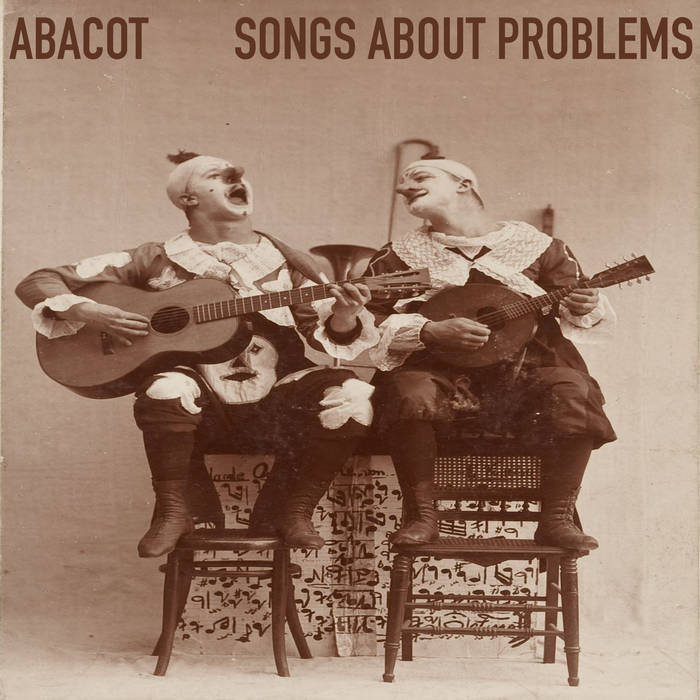
It’s been a couple of years and change since I was sweating it out on that train, and Abacot has returned with a follow-up to that EP today — Songs About Problems is here in all of its bright and bitter glory. For those out of the loop, Abacot is a project helmed by Claudio Benedi, the former frontman of D.C.’s beloved Commander Salamander. Abacot always feels like a true puzzle piece to understanding the larger regional rock sound: this album was produced and engineered by Ryland Heagy, and better yet, when they perform live, their shows are stacked with familiar faces from the world of DMV music (think Combat, think Origami Angel).

Songs About Problems picks up where Promo 2023 left off. While it still features the three songs from that initial EP (with some rerecording), the concentrated misery underpinning all of Promo 2023 is expanded into a rounder emotional release. Benedi totally recontextualizes the initial project – one born out of grief, betrayal, and banality – and transforms it into an examination of difficult personal growth after these dark moments have passed. Beyond the inimitable ear of Ryland Heagy, this album was mixed by Drew Portalatin, the mastermind behind Origami Angel’s mixtape The Brightest Days and Combat’s instant thrasher classic, Stay Golden. It was also mastered by Will Yip, fresh off his Grammy win for Turnstile’s NEVER ENOUGH —a combination that instantly pushes Songs About Problems into an echelon of undeniable ragers.

Sonically, Songs About Problems starts somewhere in 2001 or maybe 2003; I’m still debating the exact year, but it was definitely when you could buy checkered wristbands at Hot Topic, guys in emo bands wore collared shirts, and it was mandatory to spike your hair like Deryck Whibley. The lyrics of “Remember When” match this nostalgic sound as Benedi reflects on the distance between him and a former friend. What starts as something The Starting Line-adjacent switches up mid-song, and Benedi shows off his guitar prowess, a sound distinctly reminiscent of that early ‘20s emo sound he helped popularize, across the bridge.

The frustration of “Remember Me” softens into “One Way Street,” a daringly optimistic song. Benedi is a very talented musician, and one of his undeniable strengths is his ability to create absolute earworms. After just one listen to the chorus, I caught myself singing along to that helplessly catchy, “And I’m yours / are you mine?” on the second spin. The song chugs along, evoking a kind of Fountains of Wayne-style build before opening into “Check Engine Light” and “Vertigo” from Promo EP

These songs have lived on my shelf and in my playlists for three years, and they are still just as electric as they were when I first listened to them on that Metro ride. I’ve thought about “Check Engine Light” every time I can’t get my car engine to turn over when it gets a bit too cold out. “Vertigo,” devastating yet unafraid to get a little King of the Hill-theme song with it, has been perpetually stuck in my head since the first time I heard Benedi sing “I see all your lies / I see through your disguise!” 

After revisiting these tracks from the Promo EP, we have some songs that totally reorient the Abacot project from something wrought with nausea and exhaustion into a broader, more pop-bent with begrudging positivity. “Vertigo” launches into the anthemic, arena-rock “Show You,” molding Benedi’s shapeshifting agony into a single question: “I freed my heart / what about you?” On “Iridescent,” he flexes his Bowling For Soup-y humor over a song that could easily soundtrack a Tony Hawk Pro Skater game, and the synths on “Drifter” take the whole album to Saturn and back.

In Swim Into The Sound’s initial review, Taylor Grimes aptly diagnosed how “When people think of ‘emo music,’ they tend to think of sappy, tappy, whiny bullshit. That’s all well and good, but it’s SUMMER, and the people need something light, something they can sing along to with the windows down.” That’s what “Horror,” the third song from Promo EP, does. While the other two carryover songs are visceral in their anguish, “Horror” is hauntingly hopeful. Benedi soars into the song as he sings, “If we’re going to make it / I know we’re gonna make it to the end.”

“Horror,” in this new context, provides the perfect aerial arc for the album’s ending on the titular “Songs About Problems.” I wouldn’t call it a positive or even a helpful song, any more than I’d call this album particularly optimistic, but it’s honest and self-assured. Benedi doesn’t necessarily regret these difficult years, but that doesn’t mean that the outcomes don’t still hurt. Instead, he diffuses what frustrates him the most and recognizes it in others. We will get through this together.

I don’t live in D.C. anymore and no longer have to do that long commute, but for one day, I wish I could do it one more time, listening to Songs About Problems.


Caro Alt (she/her) is from New Orleans, Louisiana, and if she could be anyone in The Simpsons, she would be Milhouse.

Heart Sweats II: Another Swim Into The Sound Valentine’s Day Mixtape

Rip open that box of chocolates, pour out some red wine, and grab a handful of chalky heart-shaped candies, ‘cause we’ve got a lovey-dovey Valentine’s Day roundup for all you hopeless romantics out there. In celebration of the world’s most amorous holiday, we asked the Swim Team what love songs are hitting them particularly hard right now. Much like last year’s edition, the result is a beautiful and wide-ranging mixtape from the Swim Team directly to you. 


Alien Boy – “Seventeen”

Get Better Records

Falling in love is stupid. It’s one of the most senseless things you can throw yourself into, but that’s how it has to be. Love is going to embarrass you, humble you, and terrify you; it's going to make you act crazy and hurt in ways you never thought possible… It’s also the best thing in the world. Before there can be love, there must be that weird liminal period where you’re not sure what’s going on within yourself or with this person. You’re not sure if this feeling is one-sided or just something you’re thinking too much about and building up in your head. Most people call this the “crush” stage, and it can be just as exhilarating as it is disastrous.

That feeling of a new relationship, of fresh, dumb, pure emotional adoration is captured perfectly in “Seventeen” by Alien Boy. It’s a song embodying the feeling of adolescent love, the type of love that takes over your body and abducts your mind. The bouncy guitar jangle acts as the heartbeat while the bass and drums add a propulsive, restless energy like a leg you can’t stop bouncing. Every waking moment, you’re consumed with this sense of possibility; all the imagined realities and possible futures. You need reckless abandon. You need to let it out, or you’re gonna implode. You’ve gotta love like you’ve never loved someone before. It’s all or nothing.

– Taylor Grimes


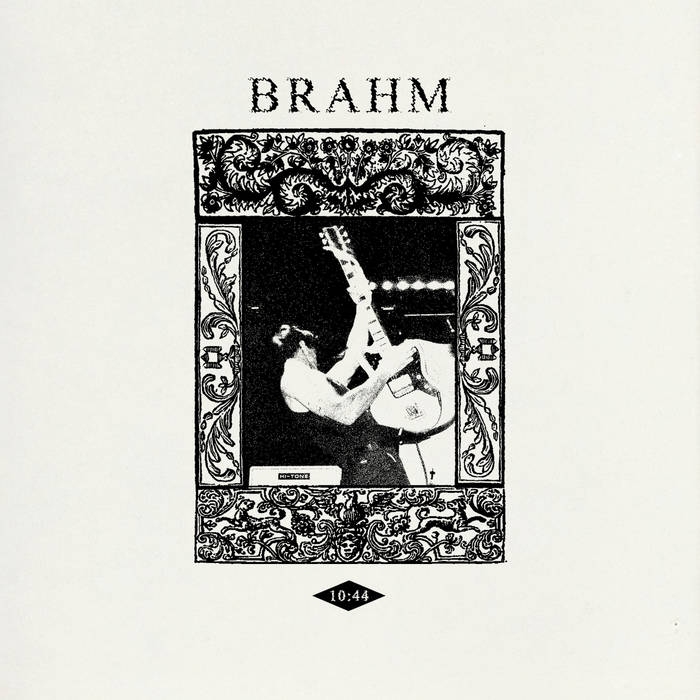
Brahm – “I will find you”

Self-Released

Screamo is not typically the place you look to for romantic love songs. Despondent longing, sure, plenty of examples there, but espousals of deep care and adulation not rooted in agony can be a bit hard to come by. Which is really a shame. A genre as complex and passionate as this owes itself to have at least a few tracks that explore love in its connective tenderness. This is why when Brahm released “I will find you,” I was very quickly moved to tears. Here, so much of what makes this music powerful was being channeled into a grand exultation of the relationship between the singer and his now-fiancée, concentrated into an incantational promise: “I will find you / In every lifetime / Just like we / Were always meant to.” Screamed, repeated, driven up into a crescendo: “I will find you” is one of the few screamo songs that feels truly pure in its love while claiming and owning all the sonic intensity one can expect from a legendary band like Brahm. Tender, subtle, gentle, then explosive. Though few in number, screamo love songs are immense and absolutely worth weeping over on our most saccharine of holidays.

– Elias Amini


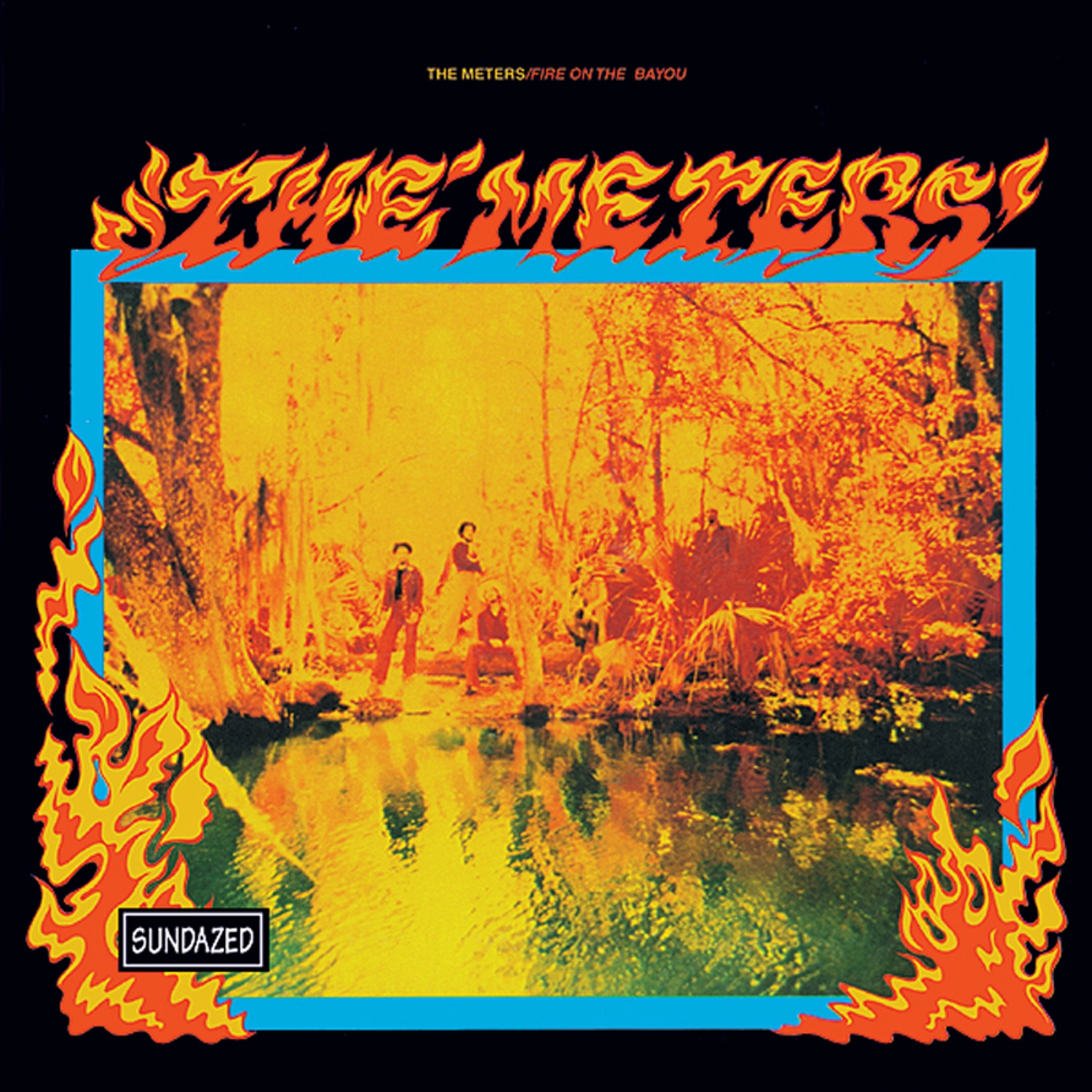
The Meters – “Mardi Gras Mambo”

Warner Records

Every few years, like this year, Valentine’s Day coincides with the final round of Mardi Gras festivities. It always kind of irritated me when that happened. Mardi Gras is such an insular holiday with days upon days of nonstop partying and local antics, while Valentine’s Day’s appearance always felt like it was abruptly intruding—a pink and red reality check while I’m dealing with purple, green, and gold. I have softened on this position over time and have personally compromised by including Mardi Gras songs amongst my pantheon of the greatest love songs. When measuring how much love I feel towards my favorite Mardi Gras songs, I think I love The Meters’ cover of “Mardi Gras Mambo” the most. Quite frankly, the little funky keys part at the beginning is one of the most beautiful things put to wax and best enjoyed with a daiquiri in hand. It's an old song, somewhere around 70 years old, meaning that it’s been played for generations of New Orleanians like me. This means that everyone knows it, everyone sings it, and everyone does the same little dance to it while standing on the streets. Love is in everything, and love is everywhere, but love is especially in the Mardi Gras mambooooo down in New Orleans.

– Caro Alt


ManDancing – “I Really Like You (Carly Rae Jepsen cover)”

Something Merry

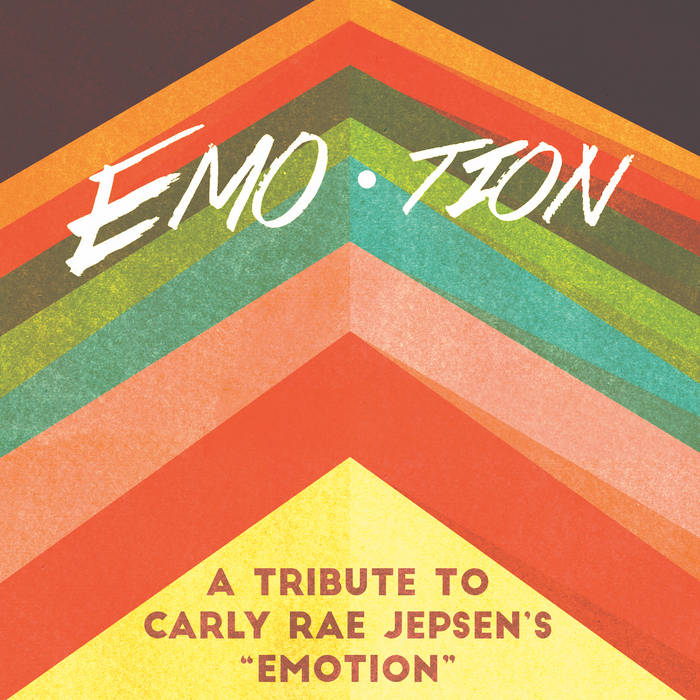
Sometimes people joke about Carly Rae Jepsen being the queen of emo, except I’m not joking. In 2015, she blessed the world with an instant-classic pop album, Emotion, absolutely overflowing with timeless desire, courageous sincerity, and selfless love. Three short years later, Something Merry and 15 talented artists orchestrated a cover album, with all proceeds donated to Immigration Equality.
EMO-TION redirects the original album’s skyscraper-high pop sensibilities into intimate articulations for any occasion. In their cover of “I Really Like You,” ManDancing takes the already perfectly unsure, desperate, brave lyrics and fills them with bated breath, yearning, and a passion literally begging to be met. The guest vocals from Em Noll in the chorus mirror lead singer Steve Kelly’s feelings, not knowing if falling so fast is a good idea, and not really caring. 

I met my partner at a rock concert, and after our second date, 72 hours later, I said to her, “I think we’re in trouble.” What began as innocently getting to know each other quickly spiraled into a long-distance relationship spanning the Atlantic Ocean. These days, our distance only spans Iowa, and even then, we’re lucky enough to see each other almost every month. This song reminds me of when we met, let go of everything, and fell for each other. 

ManDancing, king of this single; Carly Rae Jepsen, queen of emo music; Annie Watson, queen of my heart.

– Braden Allmond


Oso Oso – “skippy”

Self-released

This just in: love is just liking everything about a person?

I like how you’re a little messy when you’re in your comfortable spaces–like how you leave your socks by my bed, yet you’re so put-together everywhere else. I like how you know that I can be a bit of a fuck-up sometimes, but you see who I am on the inside and, even more so, who I’m trying to be on the outside. I like the songs you show me, even when I don’t like the genre. But I like them because you showed them to me. I like how every melody of every song I hear is a sunny-bright hook, like literally every line of music and lyrics in “skippy” by Oso Oso. With you in the world, every song is catchier, every bite tastes better.
Most of all, I like the way that it could only be you and that you knew it before I did. I might be late to our party, but I’m grateful and lucky to go with you on my arm.

– Joe Wasserman


Touché Amoré – “Come Heroine”

Epitaph Records

I’ve never been one for love songs. I often find them saccharine, bogged down by cliche emotion and sticky with reductive lyrics that I’m sure I’ve heard elsewhere. I’ve been in love with my husband for nearly a decade, and it’s nearly impossible to find a song that accurately captures the enduring and torrential force of that kind of love, yet Touché Amoré manages to do just that in “Come Heroine.” The song crashes forward like an avalanche, rushing headlong into a crashing ocean of honest declaration: “You brought me in / You took to me / And reversed the atrophy / Did so unknowingly / Now I’m undone.” I’ve repeated this raw confession countless times, the rhythm of my heart counting the syllables. Love has disarmed me, shown me my weaknesses, and simultaneously strengthened me. “When I swore I’d seen everything / I saw you.” And even after a decade, seeing my husband every morning feels like the first time I realized I was in love with him. Even when the day comes that I finally have seen everything, I know it will still pale in comparison to him. Maybe I am one for love songs after all. 

– Britta Joseph


The Smashing Pumpkins – “Stand Inside Your Love”

Virgin Records

What does it actually mean to actually stand inside someone’s love? The hell if I know, but what I do know is that in the Y2K era Billy Corgan still had his fastball when it came to writing pop songs. “Stand Inside Your Love” is a shining example of this. It’s catchy as all get out, the lyrics are simple and easy to remember, I mean, I don’t know what else to tell you, it’s just a groovy listening experience. Those classic Pumpkins' new wave guitar textures still hit like an anvil to the heart to this day. It’s one of those love songs that still has some oomph when listening. Do yourself a favor and play this for your partner for Valentine’s or cruising around town on date night. You can thank me later. If they love the song, tell them that David sent you. If not, lose my number.

For extra credit, if you’re into the vaudeville subgenre, this song’s music video will scratch every itch you could ever imagine. 

– David Williams


Kings of Leon – “Find Me”

RCA

My partner and I have been together for almost a decade, which means there are a lot of songs to choose from that have been cornerstones to our relationship. I’d been finding it difficult to choose the best one to write about this year, and I suppose it took the pressing deadline of this article’s publish date to bless me with the source. Kings of Leon have unabashedly been one of my favorite bands since I was in grade school, despite their more recent material falling a bit flat for me. But it’s actually a song from their 2016 album WALLS that comes up quite a lot in our musical lexicon with one another, a song that finds the Followill family doing their best Interpol impression, of all bands. “Find Me” is without a doubt the best piece of music the band has released in the last ten years, an upbeat rocker that doesn’t mute Caleb’s signature voice like their other latest singles do. The chorus, which is largely anchored by the question “How did you find me?”, is an effervescent feeling we share and echoes the gratitude we carry that we found each other at all. In the second verse, Caleb pleads, “Take me away, follow me into the wild with a twisted smile, I can’t escape. And now I got you by my side, all my life, day after day.”

The WALLS Tour was one of the first concerts we ever went to together, and the jolt we got when they played “Find Me” kept us going throughout the rest of the 2+ hour set. I am gushingly lucky to have found my one, even if the “how” of it all doesn’t have a definitive answer. Although, it may be hard sometimes to find each other at Costco.

– Logan Archer Mounts


Angel Olsen – “Spring”

Jagjaguwar

“Don’t take it for granted, love when you have it,” is a line that has felt like a mantra ever since my first listen to this track on Angel Olsen’s 2019 album, All Mirrors. Sometimes the songs most indicative of love are the ones that describe the spaces in between it, the moments longing for it, and the times when it’s found, even if its presence only exists in a brief moment. “Spring” is downtempo enough to soundtrack a slow dance, but as the keys and orchestral production swell, it’s easy to get lost inside of due to its musical syntax and structure. It’s the auditory equivalent to the head rush of a kiss; it overtakes you but brings you back down from it gently. Even as Olsen reflects on others who may have found “it,” her optimism reaches the song’s ultimate peak of vulnerability as she plainly asks for it: “So give me some heaven just for a while, make me eternal here in your smile.”

– Helen Howard


MUNA – “Kind Of Girl”

Saddest Factory Records

Valentine’s Day can be hard when you’re single. I spent most of my twenties in a committed relationship, and now I can’t remember the last Valentine’s Day I celebrated that lined up with me being in a romantic relationship. However, even if you’re not romantically entangled on February 14th this year or any year, what’s most important is your perspective. I’ve been in and out of relationships quite a bit since my last major relationship broke off, and when any of those relationships have fizzled out, I found myself clinging to negative self-talk as I often do. “Kind Of Girl,” off of MUNA’s self-titled record, is a song I cling to when I need a reminder that it’s more important than anything to treat myself with grace and accept my flaws as human. Despite their catalog being full of sad queer girl music, this track takes a softer approach to sitting with your emotions. I’m the kind of girl who feels her emotions so intensely, both when falling in and out of love, or even in the presence of the slightest crush. A connection can simply run its course, yet I have to tell myself all the ways I should’ve done things differently and that I’m better off avoiding further entanglements. I’m glad I have MUNA to remind me in those moments that I need to love myself harder. I need to be gentle with the kind of girl I am, maybe lean into one of my many hobbies, and keep my heart open to the next person who wants to connect with me – and this time, let them. 

– Ciara Rhiannon

Ratboys – Singin' to an Empty Chair | Album Review

New West Records

Snowed in. Roads iced over. Trying on New Year’s resolutions and dropping New Year’s resolutions. What else is there to do at this time of year but think about last year? Openly celebrate what went right and privately obsess over what went wrong. Why did that one thing happen? How can you make sure it never happens again? Why did they say that to you? What should you have said back? Why didn’t they talk to you after that? Why didn’t they listen to you? Why didn’t you try harder to make them stay?

Julia Steiner, frontwoman of Ratboys, got the title for the band’s latest album, Singin' to an Empty Chair, from a therapy tool called The Empty Chair Technique. The premise of the exercise is simple on paper: you imagine that someone you want to have a difficult conversation with is sitting right across from you, and you have that complicated conversation. Alone. But this is obviously easier said than done. Actually mustering up the courage to verbalize the words you have kept buried for so long, to even say them by yourself, is intimidating. Gathering the courage to admit wrong, to share a secret, to ask for better, to try again, is an impossible feeling. Ratboys know this well.

Singin' to an Empty Chair is the sixth album from the Chicago indie stars and their first release on New West Records. This album also marks their second collaboration with Chris Walla of Death Cab for Cutie, who also produced 2023’s The Window. Steiner described their last album as a “dedicated and intentional process,” the product of a meticulous couple years of writing and rehearsing before recording anything officially. Singin' to an Empty Chair offers a different perspective. Bassist Sean Neumann describes this record as a quilt – a collection of songs written in different places and recorded in different spaces. This patchwork approach is pieced together by songs describing half-conversations and one-sided admittances, all sewn together with their signature mind-bending guitar and twangy lilt. 

Photo by MILES KALCHIK

Where were you while we were getting high? Wanna go for a ride? On “Open Up,” Steiner adds to the canon of great rock music questions when she asks, “What’s it gonna take to open up tonight?” She asks this over the confident strum of a guitar, but as the song builds, Steiner’s bright voice is interjected by sparks of the rest of the band, a moment of fuzz here, a kick drum there, before building into a folksy jam. The whole band is firing on all cylinders, and the only place to go from here is the stars.

Ratboys’ greatest sleight of hand is their cosmic bend, and they are very precise with how they blend it into their twang. On their last album, Ratboys took listeners to the brink of the world on “Black Earth, WI.” On Singin' to an Empty Chair, Ratboys avoid their own beaten path but find a new supersonic twist on “Light Night Mountains All That.” The song starts by sweeping you off your feet, sending you into a vortex of Dave Sagan’s swirling guitar and the uncanny rhythm of Marcus Nuccio’s drumming. At first, Steiner’s voice steadies the spinning, repeating an increasingly frustrated accusation that “you didn’t care.” Her voice, while always clear and measured, builds and builds until it’s blistering because “you didn’t care / you didn’t care / you didn’t / care!” This irritation seems to blow a hole in the vortex, turning Sagan’s guitar into something more intergalactic. 

The music video released alongside this single matches its extraterrestrial spin. Styled like a found-footage horror film, some kind of haunting evil forces invade while the band plays their song. The ghouls flicker in and out of the video, almost like they’re interfering with the signal, until they’re playing the song too. This cataclysmic feeling Ratboys spin is one of their most exciting tricks—a soundtrack for the final frontier. 

Just because we’re singing to an empty chair here and embracing conversations we hesitate to have does not mean that every imagined conversation has to be upsetting or frustrating. It’s hard to admit how much you love someone, too. In “Penny in the Lake,” serene optimism is conveyed through berry pies, Ringo Starr, and the breathless crow of a rooster. “Strange Love” is an earnest confession that conjures slightly sweaty palms, and “Anywhere” evokes a vulnerable, but freeing feeling, like admittance with avoidant eye contact. 

The title of the album appears in “Just Want You to Know the Truth,” the album’s 8-minute bittersweet barnstormer. Across a mournful pedal steel, Steiner weaves snapshots of a past she can’t return to: construction sites, lasagna on Christmas Eve, and Antiques Roadshow. The emotional core of the album is buried somewhere in the sawdust of this song, between Steiner’s aching lyrics and Sagan’s biting guitar. The resonance of the Empty Chair Technique is laid bare as Steiner grimly sings “A couple some odd years ago / You said, ‘Sweetie take your time’ / So now I’m singin’ to an empty chair / Bleedin’ out every line.” It’s a punishing admonishment about forgiveness and time, combined with a cathartic release of finally saying something, even if it's alone.

The album closes with two opposed songs. The penultimate track, “Burn it Down,” while starting syrupy, turns incendiary as the band unleashes a fury they have tamped down for five albums. Steiner gives in to the doom built up by the song’s ferocious sound, just for a moment, saying, “It’s always been this way / It’s never gonna change.” But this anger washes away. The album ends on “At Peace in the Hundred Acre Woods” offering a bookend to the breezy sound that it began with. It’s a swaying, reassuring song, something that is supposed to play softly from a speaker on your patio while you’re talking to an empty lawn chair. 

On “Just Want You to Know the Truth,” Steiner sings, “Well, it’s not what you did / it’s what you didn’t do / I just want you to know the truth.” It was here, as I was caught in my thoughts about 2025 and my weirdest, lowest points, that I understood the Empty Chair Technique. It’s not just about addressing the truth, but verbalizing what you need to get to the truth. Since then, I’ve been thinking about who I want to talk to in the empty chair next to me. The blue one next to the couch I’m writing this on. What truth do I need to be made real? What about you? Who is in your empty chair? What do you want to tell them?


Caro Alt (she/her) is from New Orleans, Louisiana, and if she could be anyone in The Simpsons, she would be Milhouse.