Gladie – No Need To Be Lonely | Album Review
/
Get Better Records
When things get bleak, you can talk to the chatbots. You can talk to the one your coworker uses for recipes and travel tips; you can talk to the one that lives in a necklace; you can talk to whatever the hell a Freakbob is. You can talk to them even when you can’t talk to fellow humans, when you’re ostracized at school, when your marriage is crumbling, or when you’re working long hours and haven’t seen your friends in weeks. And you can practically envision the misanthropic computer nerd, an odd sheen over his face, spittle flying from the corners of his mouth as he sells you this glorious vision of the future. The words unfurl as a threat: “There’s no need to be lonely.” Reassurance and menace, two sides of a coin.
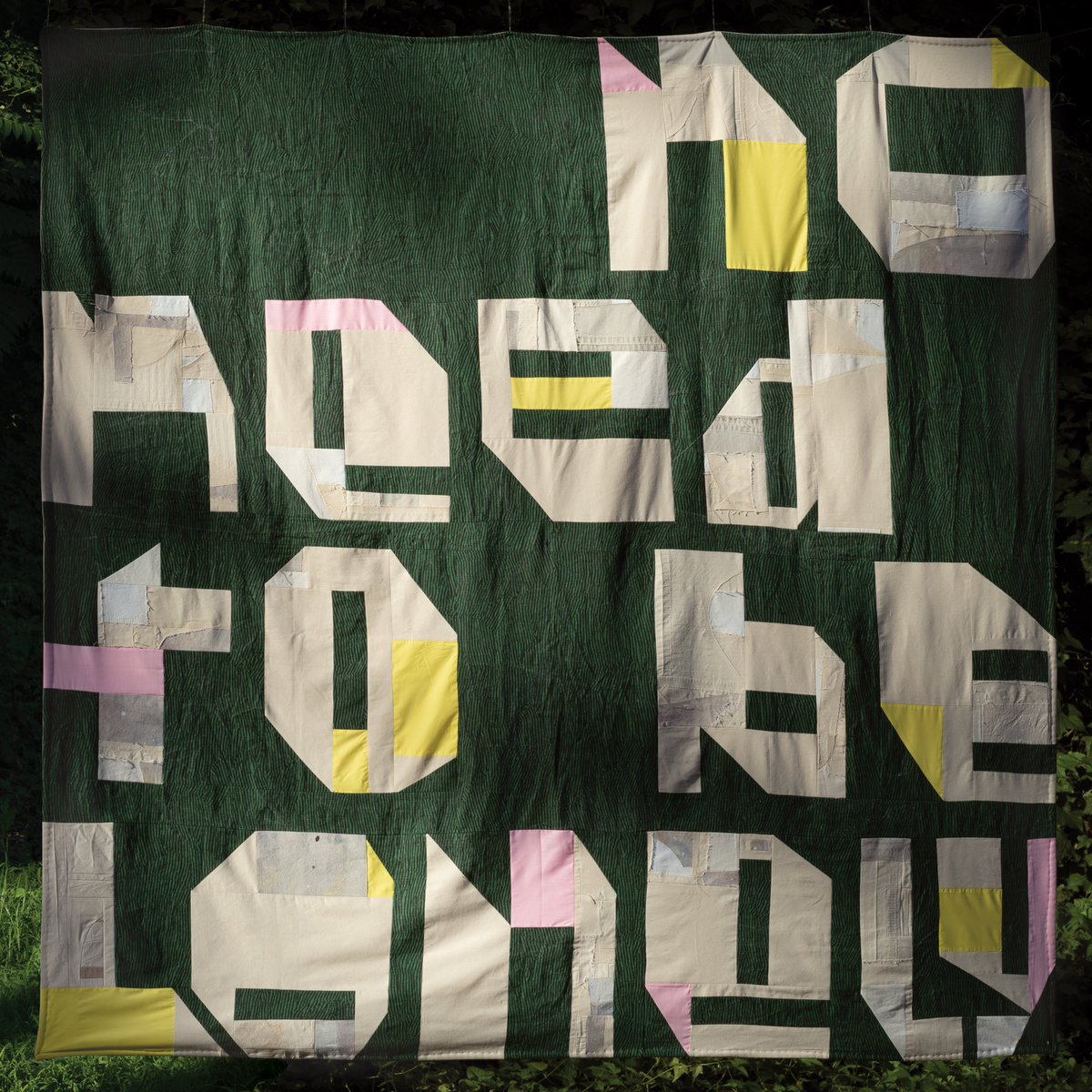
Augusta Koch, the songwriter behind scrappy Philly DIY veterans Gladie, hears a similar dual meaning in this phrase. It’s the title of the band’s third album, invoked in both senses on the recent single “I Want That For You.” At the beginning of the song, Koch wanders the city at sunrise and marvels at its emptiness, eschewing human contact wherever possible. If she gets good enough at the temporary condition of being alone, she surmises, then perhaps she could negate the more permanent condition of loneliness. But she course-corrects immediately, clutching tightly to those who push her away, choosing friendship even at its most difficult: “If you stick around I’ll stick around / Now there’s no need to be lonely.” Understanding this tonal dichotomy leads directly to its refutation, humanism always outweighing its corresponding cynical refraction.
Koch’s first band, Cayetana, was born out of friendship before any of the members had even picked up instruments. It would ultimately end in an effort to preserve that intimacy rather than surrender it to the stressors of a life in the arts. The group played pop-punk at a canted angle, the shaggy guitar chords offset by buoyant lead basslines (particularly instructive here is their 2017 split with like-minded trio Camp Cope). Koch wrote songs that reflected her immediate surroundings about the follies and foibles of Philadelphians in their mid-20s navigating romances, shitty jobs, and lives in the arts. She delivered her lyrics in a signature rasp, the kind of voice that immediately positioned her as a friend or peer.
Gladie emerged from the wreckage as a collaboration between Koch and her longtime romantic partner Matt Schimelfenig. Her lyrics now tackled similar subject matter, albeit for a slightly older set, accounting for milestones like aging, sobriety, and the way in-groups diffuse over time. On Gladie’s last record, she penned one of the best indie rock songs in recent memory about wanting to separate herself from desire entirely. For its bridge, she turned early thirties existentialism, singing the endlessly relatable refrain “Do you feel it in your knees? / Does it settle in your gut?”
Friendship is a recurring theme in Koch’s writing, one she documents in almost survivalist terms, like on “Brace Yourself,” where she sings, “Instead I brace myself / To embrace you / To face you / To hear your voice.” In recent interviews, she’s extolled her love for the novelist and poet Ocean Vuong, honing in on Vuong’s idea that an artist’s entire body of work is often in service of answering key questions about that person. To hear Koch tell it, her writing is all about how to “remain an optimistic person who is also a depressed person.” It would also suggest that friendship is just about the best reason a depressed person could have for continued optimism.
For the first time, this “it takes a village” philosophy manifests itself in Gladie’s creative process. Beyond Koch and Schimelfenig, Gladie has always been fleshed out by a rotating cast of fellow Philly stalwarts, at times including members of Slaughter Beach Dog, Tigers Jaw, Spirit of the Beehive, and more. Currently, the lineup has solidified to include Evan Demianczyk on bass, Miles Ziskind on drums, and Liz Parsons on backing vocals. After hearing Koch’s new demos, longtime friend and DIY compatriot Jeff Rosenstock offered to man the boards for this record, and the crew decamped to record at Jack Shirley’s studio out in Oakland, CA. Koch pared her writing down, inspired by economical punks like The Marked Men, and surrendered more riff duty than ever to Schimelfenig. Rosenstock’s fingerprints can be found in the production through the sharpness of each instrument and the way Koch’s voice is situated therein. Where most prior Gladie releases layer her singing in reverb, fuzz, or pointed double tracking, her vocals here are dry and center-stage, putting more emphasis than ever on her tales of modern anxieties.
These stories are at their sharpest when Koch interweaves her inner world with the one outside, such as when she likens her bouts of unnameable dread to broken car alarms, or later on the tracklist when poisonous air reinforces all of the self-doubt and broken dreams that accumulate over time. Conversely, she can occasionally veer into the language of therapy and pop psychology in ways that jar the listener out of the scene, like the reference to “people pleasing” on “Talk Past Each Other.” Luckily, these extremes are unified by a clear care for her subjects’ interiority, whether she’s writing about herself or others.
On “Future Spring,” Koch consoles a distraught companion by telling them, “Hey, you’re invited, and we’re glad you’re here.” To return briefly to the chatbots: sure, maybe one of these phantasms could conjure up a similar phrase if prompted for comforting words, but it couldn’t deliver that phrase with the conviction of a fellow person, one who has also felt pain and sadness. It couldn’t pour you a cup of coffee or hold you and cry, as Koch does earlier in the song. These gestures are what hold us together; the moments of solidarity between flesh-and-blood humans who struggle through modern life in the same ways.
The last words uttered on No Need To Be Lonely are “Nostalgia’s just fool’s gold,” repeated over and over again on “Unfolding” like an incantation; a poignant idea as society collapses and people begin romanticizing the past. If things are ever going to improve for the people depicted in these songs, we will need to embrace each other and our flaws to imagine a future that is not just better than the present, but the past as well.