Getting Loud About The Quiet with Josaleigh Pollett and Jordan Watko

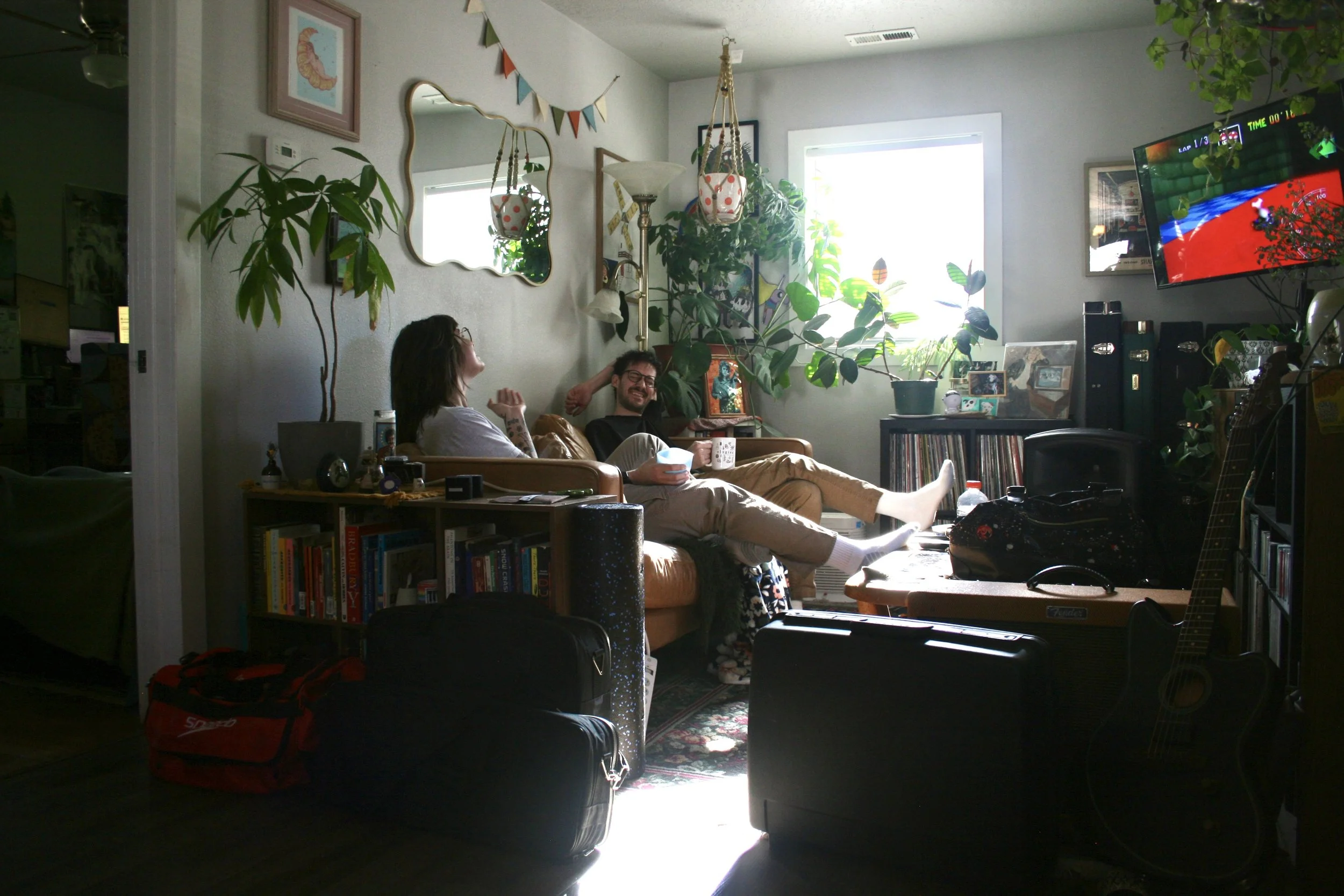
Photo by Josaleigh Pollett

Who’s your favorite musical duo? Lennon and McCartney? Becker and Fagan? Morrissey and Marr? For Salt Lake City-based musician Josaleigh Pollett and their collaborator Jordan Watko (AKA Crowd Shy), the answer to that question is simple: the one that they formed together. They say this not in a conceited or self-grandeurizing way, but in an extremely compassionate, heartfelt, and mutually appreciative way. Those same qualities are the ones that define their latest project, If I Let It Quiet, releasing tomorrow via Audio Antihero.

The pair began working together in 2020 with Pollett’s second LP, No Woman Is The Sea, and garnered further attention from the indiesphere with 2023’s In The Garden, By The Weeds. In the last six years, their musical relationship has evolved into an unbreakable symbiotic bond that persists even with a 14-hour time difference between Pollett’s native Utah and Watko’s new dwellings in Japan. I conducted my virtual conversation with them from my home in Illinois, and of the almost two hours we spent together across our three time zones, Pollett and Watko spent a majority of it talking about each other as much as their music, sentiments that were never better confessed than at the very end of the call...


The themes of emotional, physical, and spiritual distance are explored in a number of different ways throughout If I Let It Quiet, although the duo views the separation as less of a challenge and more of a resource.

“It’s made us get a lot more intentional,” observes Pollett. “When we made the last record, we were spending time on it regularly. But because of the nature of a long-distance friendship, even without the creative partnership element to it, you can't just be like, ‘Maybe I'll see you this weekend,’ and then it magically happens. Now, it’s, ‘What are you doing next week on Wednesday? I mean, my Wednesday morning, but your Wednesday night. I will send you a Zoom invite.’ And you have to do that just to hang out across the ocean. I think it was really helpful that right after Jordan moved, we weren't making a record yet; we were prioritizing our friendship first.”

They continue, “When Jordan lived in Salt Lake, every Saturday we would get together, and we would go get breakfast, and then chat for four hours. Then maybe work on some music. Nobody wants to sit on a Zoom call for several hours without an agenda. And my day job is work from home, too, so I was like, ‘Jordan, I love you, but I don't want to get off my Zoom call day job and then hang out on a Zoom call with you for four hours after that.’ So we have to do all of this shit, condensing our close friendship and creative partnership, in just an hour or two each time we talk. We have to prioritize the friendship, stay connected, stay close, understand each other, and then also be very open to an entirely new way of creating something, because what does our music look like or our collaboration look like when we don't have that breakfast and four-hour therapy hang where we talk through what happened to us that week? We had to have a plan in place because we didn't have limitless time. It was a really interesting experience because of that.”

From a production angle, Watko describes, “From my perspective, the big thing was that we both knew the long-distance thing was gonna be possible. Just given how we had worked together in the past, which was a lot of back and forth and working through these songs together and then apart, and then coming back together, and then apart again. Before the move even happened, our mantra was like, ‘If we're gonna blow this up, let's blow it up. Whatever needs to change, let's change it. Let's do whatever needs to happen.’ Specifically, the biggest change from working together in Salt Lake versus working long-distance was that I felt early on that I missed having air in the recordings. So much of the record is about distance, and I felt it was important to keep the air in as much of the recordings as possible. The biggest change for me was relying a lot less on synthesis and MIDI instrumentation, and a lot more starting from real audio. Whether it was field recordings or scratch tracks from Josaleigh, then throwing those in through a lot of different effects to make them sound a little more synthesized. I think it did make a difference that there was more of a human element in the production of this record.”
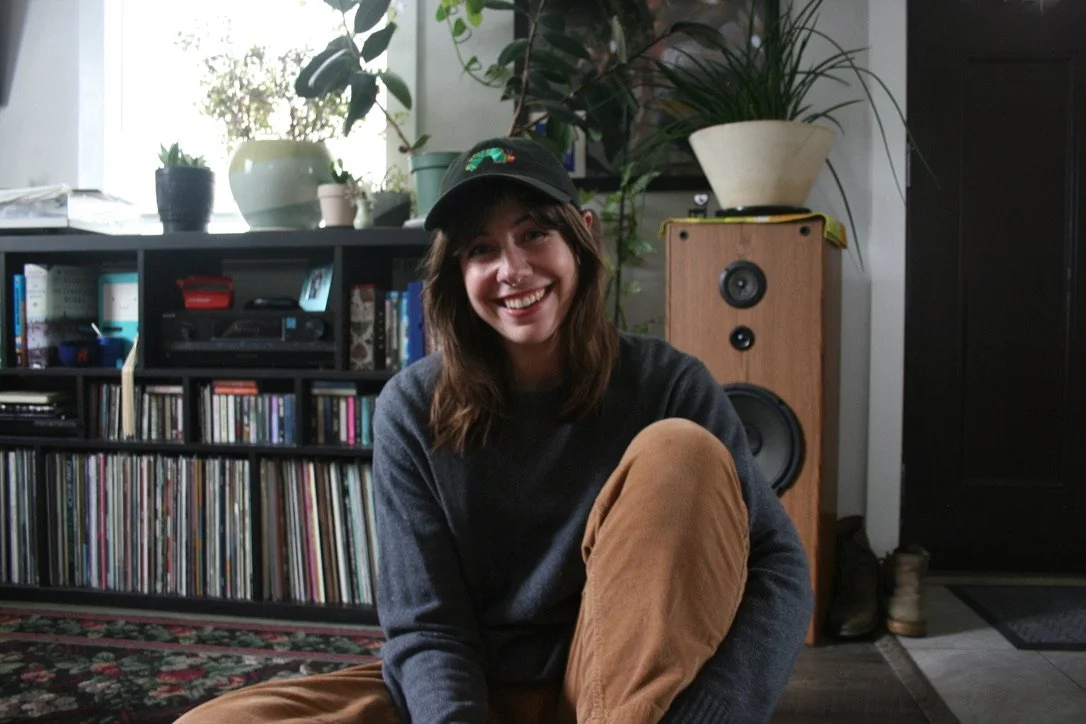
If I Let It Quiet is far from the first internationally recorded album, but it may be the one that hides the players’ separation the best that I’ve heard. Pollett and Watko have made their most blended and seamless record yet entirely on their own continents, and they were set up for success from their previous work together.

Pollett explains, “I think it really benefited us that this move, and this adjustment that we had to make for the distance, happened after we'd already been really close and worked on two records together. If this would have been our first record, there would have been no fucking way. We had already been building our friendship in a vulnerable way that allowed me to let Jordan into the lyric writing process. We've been building that trust for years.”

Speaking further on their tenacity, Pollett says, “I knew from recording and writing In The Garden, By The Weeds that there are so many things that I was precious about, but that I could have done so much better. I trust Jordan so much to be able to tell me that something's not working, or to brainstorm what could look differently. It took six years of hanging out together for me to feel comfortable enough to really accept that from Jordan and truly know that it makes our work better together.”

Watko has also had to push himself as a producer being in unfamiliar territory. “Living where I am definitely influences what I’m doing now,” he says. “This has been my chance to use a lot of my own field recordings from the city. I think I've got three or four different ones of our busy street taken from the 14th floor of our apartment building. You get all these cool reverberations, especially the samples I used on “Yasaka, Natsu” of a parade that happens every summer right by us. In some ways, it's an interesting mix of peacefulness and cacophony, more than anything I experienced in Salt Lake. Those have worked their way onto the record to some degree.”

Pollett shares in and about one of my favorite tracks on the record, “Escape Routes,” which features the standout production advancements from Watko. “I've felt so incredibly proud of that song,” they say, emphatically. “The production feels so deeply unique and special. When I listen to it, I don't know anything else that sounds like it, but it feels so connected to both of us. It was one of the first ones we started writing for this record; I actually had written the initial demo for it before Jordan moved. He was trying to be very sweet by giving me enough time to emotionally prepare, but for months I was out of control and would cry and shake him whenever we’d see each other. When I showed the song to Jordan, I was in this interesting space where the move was still two months away, but obviously I couldn’t really do anything else about it. There was all this stress and anticipation, and I was really trying to keep all my fits from getting to him. I just felt like a disaster because I love him so much and I want to be supportive, and I want to be like a safe place for him to talk about his moving stress without me sobbing every time. “Escape Routes” came out of that space, and Jordan said it was one of the first times he’s ever seen himself in my lyrics. It was resonant for both of us for drastically different reasons. I even felt like I was trying to write it from his perspective.”

Watko follows, “There was so much anxiety when we were working on that one that ended up coming out in the production. It kept getting increasingly anxious and frenetic. I was trying to recreate the sickness we were feeling, but at some point towards the end, I wanted to highlight the optimism that also existed. But anxiety in general is certainly one of the throughlines on the entire record.”

“We are super intentional about sequencing and themes,” Pollett says further about those throughlines. “When Jordan came back to play Kilby Block party with me last year, we spent so much downtime noodling on song ideas, and were able to pull a concept together. We had finished “Escape Routes,” “Radio Player,” and “Repeating,” and we had a chunk of ideas for other things. We were able to talk through, in person, how things could feel thematically, and how they could be connected and flow for a record. There’s distance, and doubt, and anxiety, and relationships, and the record is very authentic to us because it's what we were living in. The themes were revealed to us after some time, but they were also created by us.”

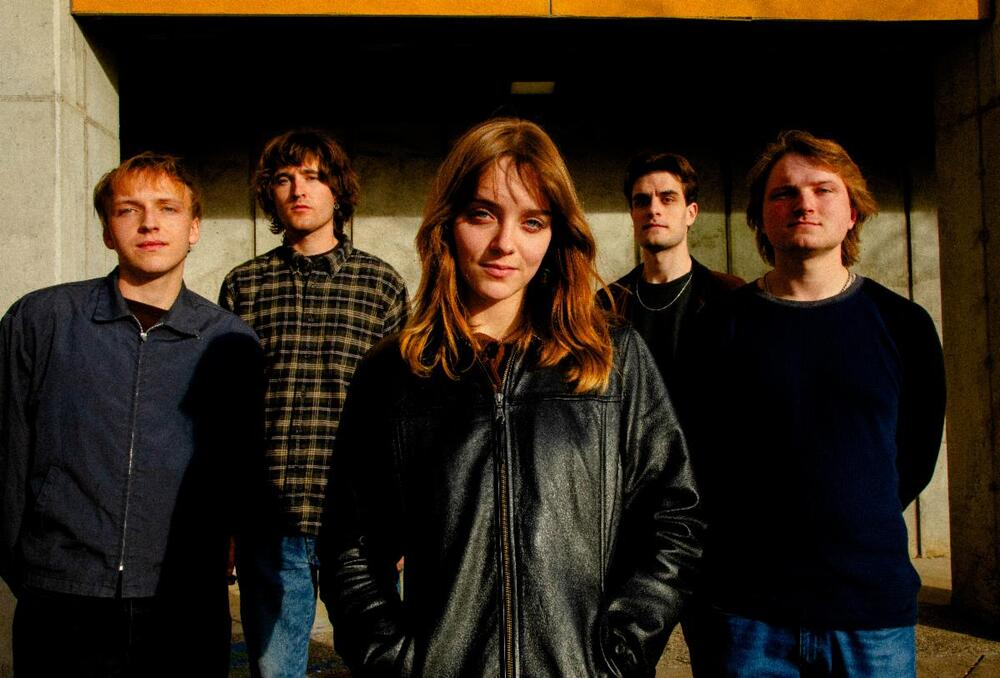
Photo by Kyle S. Ford

Pollett and Watko’s creative partnership stands out among the slew of bedroom-pop singer-songwriters you can find on Bandcamp at any given moment, and they’ve achieved record after record of truly one-of-a-kind music. I was curious if that happened to them naturally, by accident, or some mad-scientist level of self-awareness in their lab.

“We’re both perfectionists to an extent with our music,” says Pollett, “but sometimes I do feel like Jordan and I are on a different level at certain moments. I usually know sooner than him, but then maybe two weeks later or two months later, he’ll feel the same.” From a lyrical standpoint, Pollett feels, “There are so many times when I go back and look at a song and think, ‘what was I talking about?’ ‘What did I mean?’ It won’t be until years later that I'll realize how much sense it makes. Lyric writing, to me, is a weird, intentional job, but also alchemy. I love when I don't really know what it's about or if it doesn’t mean anything grammatically. Maybe the assumed meaning is something totally different. I love writing as nebulously as possible, but with a certain amount of specificity. I can get my feelings out, but it can be a blank slate for those feelings. I can come back to a song that I wrote ten years ago, apply it to a completely different situation now, and still connect to it. Meaning is so subjective, and I never feel like I have to figure it out.”

Watko says, “We definitely overthink things a lot. Even talking about when you're onto something, that first 25% of working on a song has a lot of uncertainty. And then the last 25% is us trying to figure out if we’ve made all the right decisions. The bulk of the middle of the process is when it can feel like we have it, but I often need Josaleigh to rein me in. I have a tendency to overcook things.”

When the team tries to figure out how Pollett’s lyrics and vocals will mix with Watko’s production, it’s a collective effort across the LP. Pollett describes, “Prior to working on this record, we had a pretty concrete process. I would write a melody on guitar and some lyrics, then send it over to Jordan. He would spend some time with it, thinking through some production ideas, and then we would come together a little bit more and work through the more granular details together. With this album in particular, it was a little bit more collaborative from the get-go. We'd really build out the song structure together, and Jordan was so much more involved in the lyric writing and editing with me too. Which is hilarious to think about because we did it from way farther away this time.”

Watko agrees with the irony and continues, “It was fun to dig into these scratch takes that Josaleigh would send me in their infancy, and it allowed us to work through more arrangement decisions together. This record felt more informed by both of us, and I think we both got to do what we each do best: Josaleigh as a songwriter, and me getting to create some fun sounds with what they sent me.”

…I chose an absurd but intentional penultimate question: “Josaleigh Pollett, what is your favorite thing about Josaleigh Pollett?” This was their answer:

“I probably would have used to say that it was being able to process the world around me through writing songs. It’s always just been how I get through big feelings, hard times, joyful times… I'm so grateful to have this tool that is always present and accessible and something that I can use to navigate whatever the fuck is happening in my life. But honestly, now it's my creative partnership with Jordan. I feel so deeply blessed — and I don't use that word because I'm not a religious person whatsoever — but it feels insane to me that I've had so many relationships in the past where it’s either platonic, or romantic, or creative, but it feels so otherworldly to have this platonic love in this creative partnership that inspires me to be a better person, to grow the craft that I care about, and also to like the music that I'm creating more, and to be a part of something that I truly believe in.

I would still probably be making music, writing, and recording songs if I hadn't met Jordan, but I certainly wouldn't be thinking that other people should listen to them. What Jordan and I have is so special. When I hear one of our songs, it sounds like our friendship. I talk all the time about how my favorite bands are the ones that, when you go see them live, you can tell they fucking love each other. If you can tell that they don't give a shit about each other and they're just on the stage to play the music or whatever, that’s rarely gonna resonate with me. I've always coveted that, and I don't feel like I have to anymore because I have that with Jordan. I believe in what we do so much, and can feel how much we love each other in the music.”

Josaleigh Pollett: talented songwriter, loving friend, mind reader. My final question for them had already been answered: “What is your favorite thing about Jordan Watko?” They got to the place I was looking to guide them towards, but they were already there waiting ahead of me. Both Pollett and Watko didn’t need the follow-up, or any additional clarification. Because when I asked Jordan Watko what his favorite thing about Jordan Watko is, he matched Josaleigh’s freak without missing a beat:

“It's the same answer. I've forever been tinkering with things in my own space, and I wouldn't trade that for anything, but Josaleigh has an ability to connect to people in a way that I feel so lucky that I get to be in the orbit of. It’s opened my world up so much; the fact that I've been able to meet, share, and collaborate with so many other people through Josaleigh is the joy of my life. I know you asked what my favorite thing about me is, but that’s it. I feel really lucky to have people that want to work with me, as a human being and as a musical collaborator.”

It’s this humble and considerate partnership that is at the core of the record, where you can’t talk about Josaleigh Pollett’s vocals and lyrics without also talking about Jordan Watko’s production and composition, worldwide distance be damned. If I Let It Quiet proves no strong relationship can ever be broken, and is a testament to their determination to release the art that matters to them more than anything, showered in the audible love that they’ve worked so long to grow. So listen to this record with your best friend, whether they’re in the car with you in your hometown or they’re on Zoom half a world away. And most importantly, don’t let your feelings towards them quiet.


Logan Archer Mounts once almost got kicked out of Warped Tour for doing the Disturbed scream during a band’s acoustic set. He currently lives in Rolling Meadows, IL, but tells everyone he lives in Palatine.


Riley! – To Live and Die in the American South | EP Review

Pure Noise Records

When explaining the peculiarities of the Southern identity, Flannery O’Connor wrote: “Whenever I'm asked why Southern writers particularly have a penchant for writing about freaks, I say it is because we are still able to recognize one.” The freakish nature of the South is all-encompassing, one that swallows you whole rather than sneaking up behind you. It’s a region of endless mourning and gregarious myth. Frightening at times, apologetic in others, uncomfortable always. In their latest EP, To Live and Die in the American South, Riley! attempts to make peace with the anguish their home has wrought. 

Texas’ inclusion in the South has always been hotly disputed by those hailing from the Deepest parts of the region. They claim it’s too Western, too different from the culture found on South Carolina’s patios or in Georgia’s sunrooms. I have always disagreed with this perspective; Texas has the same ghosts in the attic as the rest of the South, the same violence as Louisiana, and the same mountains as Tennessee. I bring up this debate because Riley! is from the Rio Grande Valley, a place at the tip of Texas’ hooked end and near the same Gulf that borders Mississippi and Alabama, a place where the South legitimately meets the West, and To Live and Die in the American South connects them both. 

Beyond this connection, emo, a genre more classically found in the mid-Atlantic or the Midwest, is not necessarily the approach most musicians would utilize to encapsulate the feelings of decay and distress within the American South, but Riley! makes a staggering case for changing the tune. For years, Riley! has toiled away in the remains of the 5th wave emo scene, frustratingly stuck as an ‘if you know, you know’ band. The excitement of their last album Keep Your Cool on Counter Intuitive Records, turned Riley! into one of emo’s most reliable collections of Road Dogs, thanks to near-constant touring. Yet their success keeps climbing, on To Live and Die in the American South, an EP produced by Phillip Odom, the band breaks itself wide open through a raw examination of the complicated relationship the trio has with their home.

The first song on the EP, “Roll for Initiative,” begins with a question, “If I died right now, would I still haunt this house, or would it just rot with my body when I’m put in the ground?” It’s a question that veers the album directly into the literary territory of the Southern Gothic, a genre centered around inspecting the grotesque hauntings of the South. Vocalist and guitarist Ryan Bluhm answers the question for themselves: “I think I’m meant to live and die here, and there’s no way out.” This feeling of dread is threaded through every song on the EP. The conceit of the song, firmly entering it into the Southern Gothic, is Bluhm’s admittance, “There’s nowhere else I’d rather die.” It’s the heart of the genre, a disgust for home infused with an unshakeable feeling of belonging.

Cesar “Izzy” Izaguirre and Kris Gallardo’s rhythm plays “Roll for Initiative” out, leading into the quieter “Another Round of Radical ‘Ritas, Please.” The rot felt in the prior song returns, but instead of the secrecy of experiencing misery in private, this song puts those feelings in front of an audience. Tades Sanville of Hot Mulligan, a writer contending with similar topics of self-hatred and grief, joins in over Izzy’s pounding drums. 

Across this EP, Riley! utilize an arsenal of familiar voices with similar expressions of introspection to deepen the emotionally wrought work. On the next track, the deceptively upbeat “Two Bucks,” a song about feeling useless, one of the angriest, most suspicious voices in the Emo world appears: Eric Egan of Heart Attack Man. It’s an unguarded, honest song; Bluhm and Egan agree that they are both just ghosts. Gabe Wood of saturdays at your place has long studied the impact of his own actions in song, making him the perfect pick for “Backseat Bartender.” Across Bluhm and Gallardo’s intricately woven riffs and basslines, Wood and Bluhm beg someone to crawl into their head and find what’s wrong. 

The final song of the EP, “73 Summer,” catches Bluhm in a moment of grief. For a record contending with the wretchedness life can inflict, it only makes sense to end on the aftermath of death. The band gives the questions within the lyrics plenty of room to linger, creating a specter looking back. In that same quote about the Southerner’s natural predisposition to identifying a freak, O’Connor added that “Ghosts can be very fierce and instructive. They cast strange shadows, particularly in our literature.” The ghost Bluhm is speaking to is made present by their words and the song's ferocity. The shadow may be strange, but it’s familiar.

The final bit of the O’Connor quote referenced throughout all of this is the notion that “It is when the freak can be sensed as a figure for our essential displacement that he attains some depth in literature.” Riley! achieves this in 17 minutes on To Live and Die in the American South. The admissions and frustrations put to song on this EP breathe familiarity into feelings of freakiness, making them whole. Riley! may feel tied to the American South and all of the internal strife it creates, but this is the place that made them, for better or worse. 


Caro Alt (she/her) is from New Orleans, Louisiana, and if she could be anyone in The Simpsons, she would be Milhouse.

Exploring the Atmosphere: An Interview with She’s Green

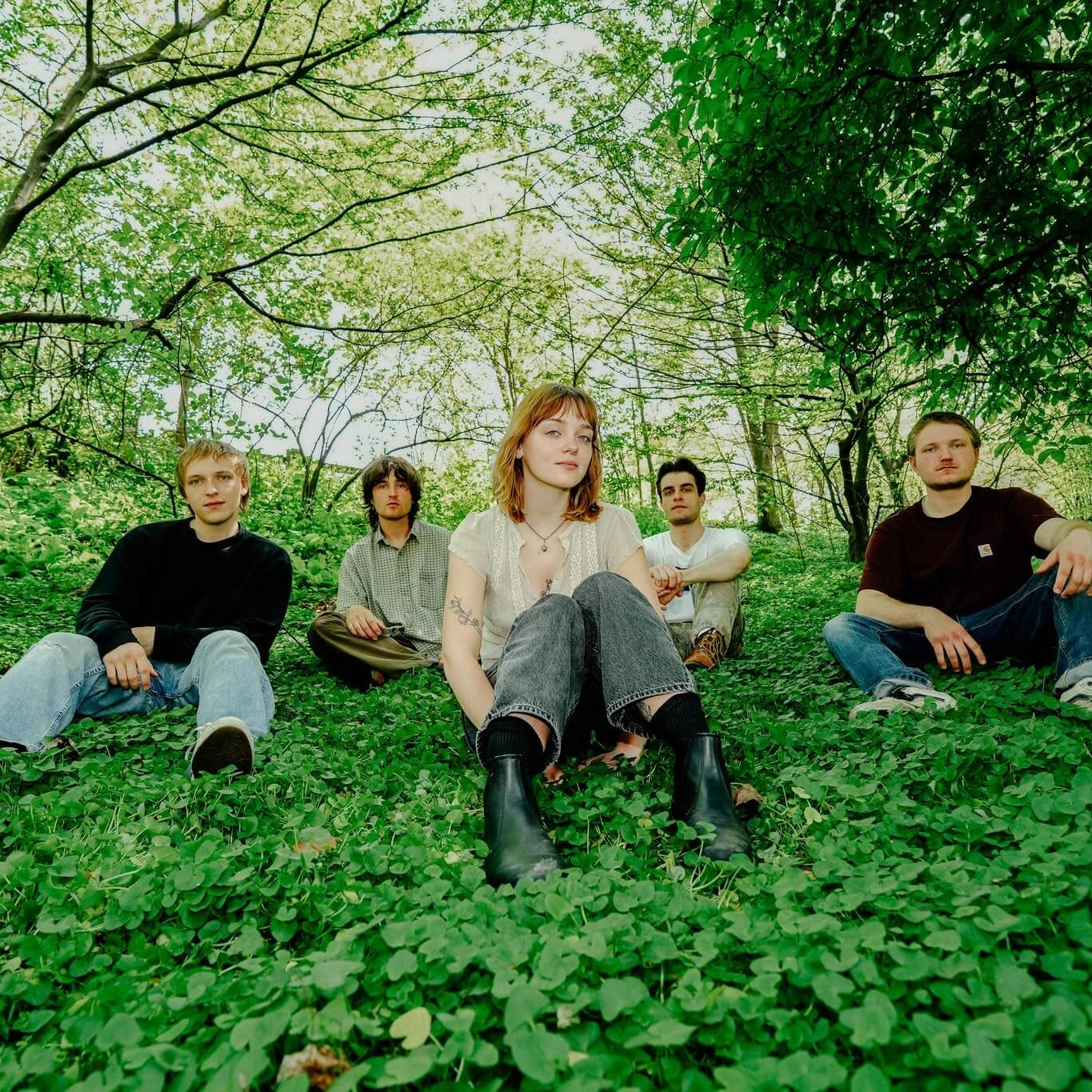
Photo by Myles Ross

In a world that is becoming more chaotic and artificial by the day, the act of finding your peace has never been more important. The environment that we surround ourselves with is essential to maintaining our sanity and cultivating our creative inner world. Rising indie rock band She’s Green recognize this and have tailored their specific act of creation by going back to basics on the most human and naturalistic level. The Minneapolis quintet has made a habit of heading to various forests, lakes, and quarries to center themselves while creating the kind of music that not only replenishes their own souls but also those of the fans who listen to their music. 

The band – comprised of singer Zofia Smith, guitarists Liam Armstrong and Raines Lucas, drummer Kevin Seebeck, and bassist Teddy Nordvold – has established a worldwide following solely off a few EPs and a handful of singles. The music these five create speaks for itself with lush textures that are richly melodic, designed to draw you into inescapable dreamy atmospheres. Their songs have a cinematic quality, where one stroke of a guitar can feel gut-wrenching, then exhilarating at the drop of a hat. Smith’s otherworldly vocal range, matched with the whirling dervish noisy-yet-melodic guitar leads, is a combination that is just killer, and it’s clear as day why this band is connecting with so many people before they even have a proper debut album under their belts.

The group’s newest EP, swallowtail, has the gratifying feeling of a band finally putting together the pieces of their true potential. Opening track “locket” possesses a clear reverence for the shoegaze ancestors of our collective past, nodding heartily toward the lineage of 90s greats like Slowdive and Cocteau Twins. My favorite song, the mid-album cut “mettle,” has a smoggy wash of reverb-drenched guitar riffs that are thunderous in all the right places. One track later, “keeper” is another standout in which the rich guitar textures are painted with precision, and Smith’s vocal register is yet again a major highlight. It’s one of those songs that you can put on while staring out at the night sky, glaring at the stars and getting lost in space. 

I got a chance to chat with Zofia Smith and Liam Armstrong over Zoom, where we discussed everything from their patented “moss music” sound, the indie scene out in Minnesota, and touring China for the first time. We even managed to sneak in some Jonas Brothers talk.

This interview has been edited for length and clarity.


SWIM: I read that you describe your sound as “Moss Music.” 
What does that label mean to you? 

ZOFIA: Moss Music is a small thing that nourishes its environment and is very firm and dense, but also fuzzy and soft. I think that really describes our sound. Sometimes there's a love sound, and it’s a lot; then it’s heavy, and then there’s this gentleness to it. The point of us making music is to create an environment for a person to nourish their soul. 

SWIM: Are there any other bands that you would consider Moss Music? 

LIAM: That is so tough. I would say Jefre Cantu-Ledesma. He makes an ambient kind of tape guitar. I'm also gonna say George Harrison… And let’s get Weyes Blood in there too.

SWIM: What is it about dream pop and shoegaze that attracts you guys to make records in a similar aesthetic? 

LIAM: We had a huge obsession with 90s bands, but also music with ambient textures. We wanted to see how far we could push experimentation with the sound of a guitar. In a way, we tried to make it not sound like a guitar anymore. I think this helps me paint a more grandiose picture that also leans into our interests in movies and visual art. 

ZOFIA: Those sounds have always seemed captivating. I'm instantly drawn to the sounds of Beach House and that beautiful chorus reverb sound. It just invites me in, and I want to wrap up in a blanket and sink into it. This is the best, most comforting sound to me. That started my deep dive into shoegazing dream pop. That obsession made me want to try it out myself and see what I would come up with with the same sort of sounds. 

SWIM: What was the first concert you ever went to?

LIAM: The first concert I went to with my dad was this folk rock band, Dawes. Then I also saw Rush with my dad. So definitely bands on different ends of the spectrum. 

ZOFIA: My first one was the Jonas Brothers. I was obsessed with them. My parents were kind of in a different lane, so I got into cool music in high school, and it felt like I had all the cool discoveries a bit later than most people. 

SWIM: I gotta ask, did you have a favorite Jonas brother? 

ZOFIA: Nick was my favorite.

LIAM: I also went through a huge Jonas Brothers phase as a kid. My favorite was either Nick or Joe. I don't know, it’s too hard to pick. 

SWIM: I think it was scientifically proven that Nick is the coolest Jonas brother. Who are we to argue with scientists? Are there bands you listened to growing up that influence what you're doing sonically today? 

LIAM: Definitely, I used to listen to a lot of Coldplay and Death Cab for Cutie, because that's what my parents would throw on around the house. That music definitely opened up this kind of emotional side of me. I really just wanted to make some heartfelt music. That still always resonates with me. 

ZOFIA: I don't know if the music I heard growing up did so much for me because I listened to a lot of pop music. I think that definitely has helped me with certain melodies, though; you can come up with a pop melody and put it into any song for a chorus. I was listening to Celine Dion and Mariah Carey, just a lot of female pop artists. It plays a role in the melodies that I come up with, because I was always singing around the house and taking videos of me singing certain big pop songs. 

SWIM: Can you talk to me about how you come up with your melodies? Do you try to find certain pockets lyrically? How do you come about those? 

ZOFIA: Honestly, I am freestyling over something that they made, or we're jamming, and it’s just gibberish coming out. I don't usually have the words first. Usually I'm diving into the instrumental, and sometimes I'll find words in that. I'll listen back, and maybe subconsciously I'm saying this or my heart is telling me that. Other times, I'll have something written beforehand if I can't come up with a melody, and I'll see what works with the lyrics I already have. But, normally I'll come up with the melody first.

Photo by Liam Armstrong

SWIM: Your writing is really eclectic. Is there a specific formula in how She’s Green creates songs? 

LIAM: Nowadays, we all get in the practice space, and we'll be jamming, or we'll start with somebody's guitar riff. Sometimes one of us will have a fully fleshed-out demo, and it won't get changed much. I would say we're leaning more towards writing as a group and building off something that someone brings to a practice session. 

SWIM: How difficult is it to write within a group of people as opposed to solo? 

LIAM: It was definitely something that we all had to learn together, but I feel after touring with each other for so long and practicing so much together, we're all super comfortable now. 

SWIM: I’m always fascinated by how bands come up with names. How did you decide on She's Green? 

LIAM: We were just throwing out names. I think there was something about She’s Green that was kind of vague, but you can also apply a lot of meaning to it. The name kind of paints a metaphorical picture. She’s Green sounded cool and, for us, symbolized Mother Nature in a way because we are all really into plants. 

ZOFIA: I like that the name has a feminine identity. I know we're a band where I'm the only woman in the group, but our music is honestly pretty feminine from our melodies and everything that we're doing. I just think it's cool that we have a feminine-sounding name.

SWIM: What were some of the names that were on the cutting room floor? 

ZOFIA: Moon Due was an option, and before that, Liam and I had released a couple of songs under the name Sad Films. 

SWIM: You described your love of 90s music earlier. Are there any 90s bands you would love to dream of playing with? 

ZOFIA: Slowdive is my number one. Every time I've seen them, I'm overwhelmed. It’s just so, so beautiful.

LIAM: We're playing with Chapterhouse. They're a very sick band from the 90s, and that's a dream come true. 

SWIM: Is there a song you're most proud of creating on swallowtail

LIAM: I'm gonna say “close your eyes” because it's a song we've had for a really long time and we’re finally ready to get it out there. 

ZOFIA: Yeah, that one specifically we were sitting on for a long time, and we were messing with the instrumentation for a while, shortening parts, lengthening parts, and re-organizing them. We’ve been working on that song for two and a half years. We finally have this beautiful song, and it feels complete, and I don't want to change anything. It just feels so rewarding to have that payoff. 

SWIM: When you have a song that takes two and a half years to create, how do you fight through that? Do you go at the song head-on, attacking it daily? Do you just let it simmer for a bit? What kind of methods do you work through with writer’s block on a song?

ZOFIA: We put that song on the back burner for a second and took some time away from it because I wanted to have a clear head going in. That way we could listen with a new perspective on what it needs. I think we gave “close your eyes” a few months, actually. We just kept giving it more space to breathe. 

LIAM: It's also been kind of tough for us to really sit down and work on stuff in between touring. Some stuff just gets pushed to the back. There are still things that we would find that I say, “Wow, this is really cool.” It's a constant barrage of information that brings a lot of the good ideas, but also takes time to really find them.

ZOFIA: Our bassist Teddy was the one who figured out “close your eyes.” He knew right away what he wanted while we were practicing, so that definitely helps when someone comes in and knows exactly what they want to do with a song.

Photo by Nick Cai

SWIM: How was it touring in China? How big of a culture shock was it going from your home state of Minnesota all the way to China? 

LIAM: It was wild. I had been to Asia before, and our other guitarist, Raines, has been as well. It was just an insane experience. It helped a lot that Raines actually speaks Mandarin, so it was really fun to communicate more easily with the locals. The food is amazing, everything is affordable, and it's easy to get around. All the crowds were so tuned-in and very polite.

ZOFIA: It was cute. We had Raines on the end of the stage because he could have conversations with people. We could move him along, and then they could talk to him, and it was so sweet to hear from them. We got a bunch of letters from them. 

But it was so nice having Raines there. There were a lot of people that said to us, “I'll take you for a ride, come with me,” and Raines would say, “Okay guys, let's go.” We'd just be in some random person's car. We don't know what they're saying up front. We don't know what's happening. But it's so sweet to see how they open up to Raines and how interested they are in our culture. They're speaking with him about politics, and it was so cool to get that perspective. A lot of people were like, “If you're going to China, be careful,” but it just felt so safe, and everyone was so sweet.

SWIM: How did that feel when people on the opposite side of the world are so attentive and caring about your songs and connecting to your music?

LIAM: It was unbelievable. We were not expecting that at all. I was worried there would be around 10 to 20 people at every show, but it blew us away to have near sellouts every night.

ZOFIA: We were shocked. These venues have a capacity of 300 to 500. We just thought there's no way people are gonna show up, you know? We're gonna get like 15 people, but it was actually bigger than our normal show in America. Honestly, it’s unreal. People had signs they made for us. They wanted to take pictures.

SWIM: To take things back home, your sounds are very scenic. Is there a favorite forest or nature walk you like to go back stateside?

LIAM: We really love St. Croix Falls near River Falls, Wisconsin. There's also Kinnickinnic State Park. It’s a really clean trout stream, and it's nice to get down there because it feels like a different world. We just hang out,  take acoustic guitars, and write.

SWIM: Do you have any favorite bands from Minnesota?

LIAM: Yeah, definitely, The Replacements, obviously. Bands that are currently kind of up and coming are like Lana Leone, Mother Soki, and Berzica

SWIM: How tight-knit is the Minnesota indie scene? 

LIAM: It's super welcoming. I mean, people are always willing to help you out with anything you need. It’s so inclusive and also safe. A lot of people really look out for each other. I don't think we would have started playing in a band if we hadn't seen all these cool bands growing up. 

ZOFIA: I had been going to local shows since high school, so it was really just such a welcoming and tight-knit community, and everybody kind of knows each other, even if you're playing in a different genre. It's not just like a folk show or an emo show, you know, we kind of cross paths with the lineups. I love that.

SWIM: Is there anything you would like to accomplish before releasing your debut album? 

LIAM: Just taking everything in, I feel like right now, we're kind of in the brainstorming stage of creating. It's all up in the air. I think it's finding the time to actually sit down and write. We'll probably end up going somewhere, maybe this winter, like a cabin, to start writing it. But right now it's basically all ideas. I mean, we have some songs written and some we're still working on, but I think it'd be really cool to sit down and try to conceptualize the album itself. 

ZOFIA: I personally wanted to be more thought-out, like creating a story and a theme. It would be fun to have a visualizer for the whole thing, like a movie. That would be an ideal scenario where we could come up with some sort of plot and get a cohesive video because our music is very cinematic. I'm excited about some of our ideas from what we've been working on and making something out of that. 

SWIM: Speaking of cinematic, you both directed your music video “paper thin.” How fun was it creating from another platform?

LIAM: That was super fun. It’s something that we also get to do on the side just for fun because all of us are really into films. It was really fun to try our hand at that. 

ZOFIA: It was cool to have direction that day. We had a plan, but it was cool to be like, ‘let's do this. No, let's do this.’ That was a fun environment; nobody was being intense, and we didn't feel stressed about timing. We were just kind of going with the flow. That ended up being one of our favorite videos because it was just a lot of fun and low stakes.

SWIM: Final question. With both of you being big film buffs, what's your favorite movie you've seen this year? It could be new or old.

ZOFIA: Honestly, Purple Rain. It’s a Minnesota classic. I hadn’t seen that movie until recently, and it was awesome. It’s really inspiring. 

LIAM: For me, this Cantonese film called Love on Delivery, that we just went and saw in the theater. It was so funny and just a good time. It was hilarious. I definitely recommend that. You're looking for a goofy movie. 


David is a content mercenary based in Chicago. He’s also a freelance writer specializing in music, movies, and culture. His hidden talents are his mid-range jump shot and the ability to always be able to tell when someone is uncomfortable at a party. You can find him scrolling away on Instagram @davidmwill89, Twitter @Cobretti24, or Medium @davidmwms.

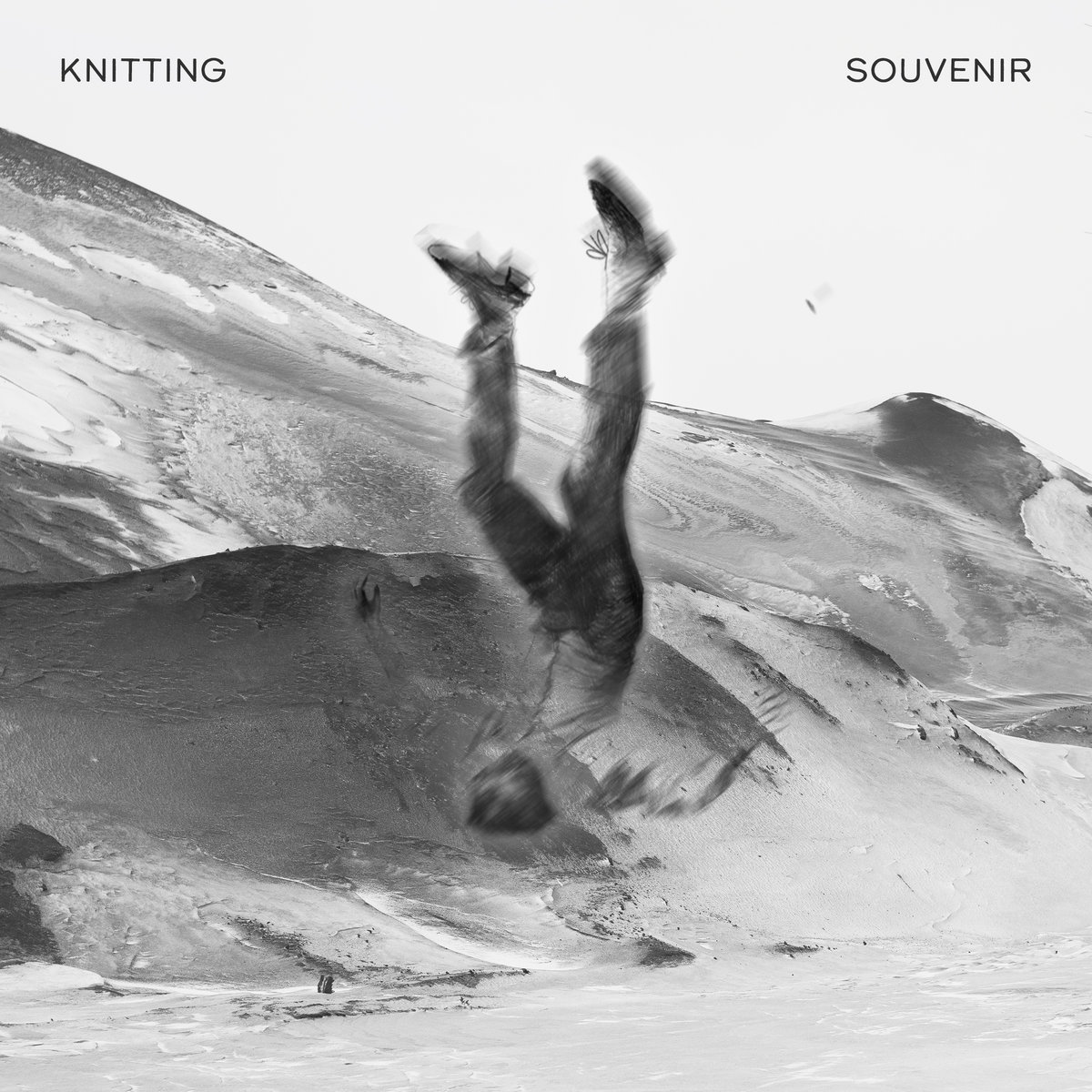
knitting – Souvenir | Album Review

Mint Records

When you don’t know who you are, it’s easy to let the world drown out the part of your brain that can tell something is wrong. You know the corner of your mind that whispers things you’d rather ignore, don’t you? The one that questions if the gender you were given is the right one. Or if you hurt that loved one. Or if you need a new job or new friends or a new city. It is so quiet compared to the noise from outside, that’s just what happens when you need repression to keep yourself alive. But no matter what happens outside you or how much you actively try to silence that nagging feeling, it will always linger. That voice is all over Souvenir by knitting. 

knitting first appeared as the bedroom project of Mischa Dempsey in 2021 with their self-titled Bandcamp tape before expanding into a full band for 2024’s Some Kind of Heaven. That record demonstrated how, even with more minds contributing to each track, Dempsey’s writing could still grow more insular. Their sophomore album, Souvenir, has an even narrower focus on Dempsey's perspective, and the result is a record of patient indie rock capable of subtle devastation. 

The core of these songs is Dempsey’s singing, a solipsistic murmur that crawls through the mix like that whisper in your ears. Even when the music rises, as we hear on the chorus of lead single “I Want To Remember Everything,” their voice remains steady, untroubled by the emotional turbulence around them. Dempsey’s voice is emblematic of the philosophy that underpins these songs, one that they explain plainly on the chorus of “Sunrise,” in which they sing, “I’m trying everything to reach / Another version of me beneath / Layers of static and latency / I’m underground, and I need relief.” Figuring yourself out is a Sisyphean task to begin with, but when your entire emotional world is engulfed in external complicators, that task becomes less about getting the boulder to the top of the hill and more about finding the peace to keep it in place. Or as Dempsey puts it on “Here Comes,” “on and on the world spun / and shook me up.”  

One of my favorite songs on Souvenir is “Shuffle,” for how Dempsey grapples with the difficulties that come with realizing you need to move from passivity. The opening lines “told me / to go easy on myself / I said I’m not sure where to start,” are, for a girl who has avoided therapy for years, far too relatable. How do you unwrap all the layers of repression? How do you address the fears of something bad happening when “we were laughing / with reckless abandon”? That fear comes up again on “I Wasn’t Fully Cooked,” a song built around Dempsey asking if their existence is anything but a tree falling in a forest with no one around to hear it. Is your pain still valid? Can you even claim to be a person when no one acknowledges you? Those are the questions you ask when “[you] can only see / with the aperture of a child.”

My other favorite song here is “Sequel.” The first verse into the chorus sounds so seductive as Dempsey coos that they know assistance is an option, and that not every problem can be fixed alone. The rest of the song captures how hard it is to pretend like you don’t need help. My favorite moment is when they switch up from “if I called, you would come” in the first chorus to “I am not so innocent” in the second. 

When Souvenir closes on “Exit Desire,” Dempsey is alone. After a record spent swaddled in the mix by their bandmates, it all ends with Dempsey singing, “‘cause I know I gotta leave, but I’m not sure where to go” with nothing but a single guitar and the occasional synth. Throughout its runtime, Souvenir vividly documents the difficulties of prioritizing yourself, and it ends with the greatest challenge of all: that we’ll never really know which way to go. But that is the beauty of life; there is no right choice except the one that you believe in. If you’re searching for some path or a reason for life, Souvenir can help you extricate that voice. If you’re still ignoring that whisper, these songs can help you hear what you need.   


Lillian Weber is a fake librarian in NYC. She writes about gender, music, and other inane thoughts on her substack, all my selves aligned. You can follow her on Insta @Lilllianmweber.

Emperor X – Unified Field | Album Review

Bar / None

Emperor X, real name Chad Matheny, is an incredible example of how algorithms fail us. Look anywhere in his discography and be amazed. Uncategorizable, extremely versatile, massively talented, and underplayed. Seriously, you could pick any work from his Bandcamp and be treated to a completely new idea that doubles as a masterclass in DIY music. Until today’s release, my favorite work of Emperor X was his EP on transportation infrastructure improvements, although his 10,000-Year Earworm to Discourage Settlement Near Nuclear Waste Repositories was a strong runner-up. If we all lived our lives half as intentionally as this guy does, we very seriously might solve our problems.

In addition to being a long-time musician in the indie-punk-emo-DIY scene, Matheney is an accomplished producer and oversees a jazz club in Berlin. Earlier this year, he produced Brian Sella’s debut solo album (reviewed right here by yours truly), and both bands hit a five-date run of shows together in March. The two originally toured together way back in 2013, laying the groundwork for this rekindling over a decade later. In one final tidbit, when Emperor X and Sella announced their respective albums, they dropped their first singles on the same day. On both LPs, you hear fully actualized artists wielding years of sharpened talent and percolated thought.

Unified Field is devastating, exhilarating, and ultimately hopeful. The majority of the album was written and recorded in Ukraine, spurred by what Emperor X calls an “aesthetic emergency.” In the release announcement, he explains, “I had a strong instinct that the record would come out better, and be more meaningful, if I did it with my friends who also lived their lives under fire.” It’s safe to say that instinct was correct. This album is one of Matheny’s most produced public-facing works and comes at a time when we need clear, strong voices in art and the world.

Before talking about the tracks, we’ve got to talk about the album title. Emperor X says the name “Unified Field” is a loose reference to David Lynch and Transcendental Meditation. It’s important to point out that the album is bookended by songs named “Unified Field” and “Also Unified Field.” In the first, Emperor X brings us into the scope of this work and in the chorus insists “in the unified field / materials collapse / into a unified field / materials collapse.” In the final song, we hear a portion of the opener, but without Emperor X. This last song is the world we leave behind, the echoes of our impact in life. 

Matheney uses “unified” in the sense of being globally connected, having a shared future on this planet, and eventually being reduced to the same raw materials. It took me a lot of listens to internalize why that’s important to the album, but ultimately it boils down to the pointlessness of conflict. Seriously, we are more technologically advanced than we’ve ever been before, more “productive” than at any time in human history, and more entertained than at any point in the past. And still, we fight, we militarize borders, and we underreact as we slip into more extreme climate change. To me, that’s what this album is about—that slip, that apathy, that impending destruction. More than that, it’s about the possibility to change, to rally together, and to encourage one another. All of that AND awesome instrumentation—what a bargain.

Photo by Carly Hoskins

When Lynch evoked the idea of a “unified field” in Twin Peaks, it was used to emphasize two things: one was the Greek idea of the muses—revelatory thoughts brought to individuals seemingly from nowhere and nothing, much like Dale Cooper’s sometimes ridiculous investigative methods. The other is the balance of light and dark. Lynch was told by a “scientist” that these concepts are intrinsically related to quantum fluctuations in a field permeating the universe, which anyone can reach through meditation courses at the low, low introductory price of $1,000. That “scientist” was Dr. Chris Hagelin, who, despite having serious mathematical proficiency and a legitimate work history, believes you can literally connect your mind to this field and influence the world by meditating. What Emperor X is singing about is something different. You can tell because the refrain “In the unified field / materials collapse” uses some language that doesn’t appear in Lynch’s public remarks. 

Right about here, I should mention I’m graduating with my Ph.D. in experimental particle physics this fall. In popular culture, when someone says “The Unified Field,” they’re typically referring to a theory of everything, i.e., a single equation that governs all fundamental particles. That’s what Transcendental Meditation is about: paying some bizarre company to teach you how to connect your mind to that equation. If you can’t tell from my tone, that equation doesn’t exist, and they’re using scientific language to grift. 

The idea of everything coming together is beautiful and has broad artistic license, but it is extremely difficult to test. If you want some more science background, you can check out my blog post here. The part of that artistic license that Emperor X is using is indistinguishability (unification) at high energy. At the end of “Feeling Nothing,” we get the line “hold my hand as we vaporize / feeling nothing.” This preoccupation with destruction and technology is interwoven with religion, responsibility, and citizenship throughout the album. Some examples include: being gifted a religious icon, burning a passport, staring at screens, mistaking radio signals for the voice of god, and on and on.

In the lead single “Praise Jesus! Hail Reagan!” Emperor X uses this fiery energy to call out the zealotry of pseudo-religious churchgoers who unthinkingly rebuke the teachings of their prophet in favor of Reagan’s beliefs. Improvements in technology, such as radio, television, and the internet, have made it easier to spread all kinds of messages, including propaganda. This has led to, among other types of grifters, televangelists running pay-for-salvation models of remote worship. Transcendental Meditation follows this same model, and the main message isn’t for anyone to actually do anything, because, as Emperor X sarcastically sings in an adapted worship song, “my feelings bear the weight of moral sanction / and that all we have to do / is praise Jesus, spread the gospel.”

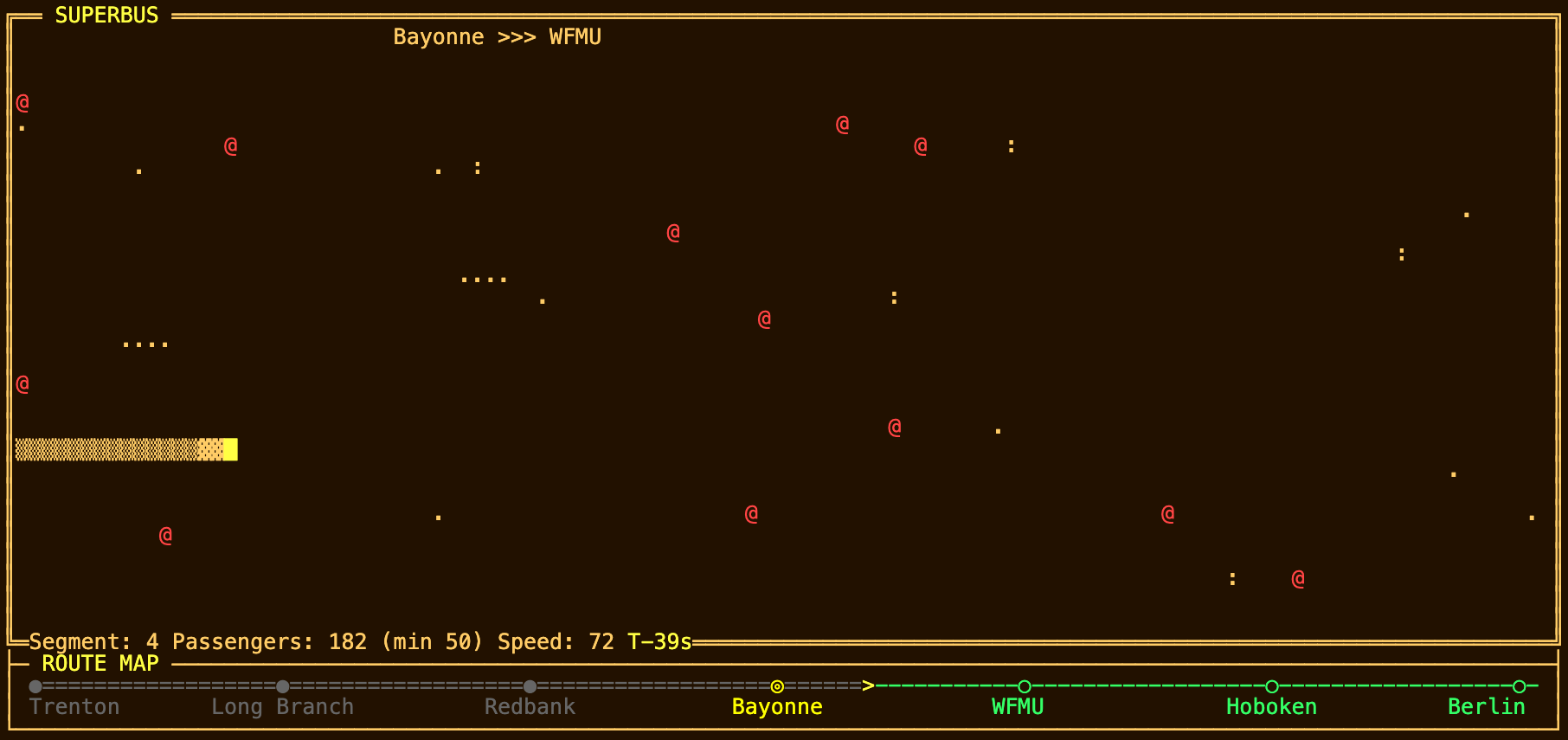
An important component of Emperor X’s presentation is his sense of humor, found in the mocking guitars of “Ostrich Toss,” the premise of “Pissing with the Flashlight On,” and the browser game accompanying “Superbus.” I personally can’t get further than the WFMU stage, but I keep trying because I love the lo-fi instrumental version of the song that plays in the game. In the actual song, I’m like 90% sure the piano you hear at the end of Superbus is the exact same one used at the end of Well I Mean. Together with “Cybertruck,” these songs transition the album from religion into technology and the human cost of it all.

SCREENSHOT OF SUPERBUS GAMEPLAY

On “A Mouthful of Increasingly-Dangerous Substances,” we get drowned in two ways. First by ever-stronger toxins, and then by rising water levels. None of this should be easy to swallow, yet year after year, we let glaciers melt and sea levels rise. In some ways, climate change would be easier to deal with if it weren’t so gradual. If the water weren’t boiling so slowly, maybe more of us would try to hop out of the pot. 

Emperor X describes tracking this song while vacationing in the Netherlands: “In idle moments, I found myself imagining what creeping sea level rise in a country that has always been half underwater would bring, and I began to believe with both hope and nausea that humans would adapt. There will be chaos and death along the coastlines and in the floodplains, but also something like a new normal in the lucky places that were prepared with bikes, dykes, windmills, and power pylons that could absorb the impact of the rising brine.”  

The hope and nausea that Emperor X describes are evident across the whole album. It’s difficult to see how bad climate change has already gotten and to know how much worse it will get if nothing changes. But what do you do with this knowledge? Who do you turn to? How do you put this anger into something that makes the world better? The rising lake in this song connects very neatly to the stock market in the following track, because market output is currently directly connected to global warming (thank you, industrial revolution and data centers).

Photo by Akhil Kodamanchili 

Line Go Up Line Go Down” is a biting, scathing, acid-boring critique of all of us, everyone. Everything in the world could fall apart tomorrow, and half of the American public would still try to go to the office. This track perfectly captures the public apathy at our own destruction, guided by the waxing and waning of the stock market. “To the middle of the Earth,” we will let business leaders destroy the world if it seems to be the will of the market. As a U.S. public, we are too polite. France whips our ass at protesting, and it’s because their government understands that its people hold the power, not corporations. We—you and I personally—need to shout as loud as Emperor X. This is the answer to the question asked in the previous song. We are not powerless, “not me, not her, and not you.”

Following up that political dirge with a palette cleanse, "Ostrich Toss” is my favorite track on the album. Silly as it may seem on first pass, if you pay attention to the dialogue, it’s not really lighthearted at all. The song starts with roommates bickering about climate change and has a really cute mocking guitar in the chorus: “If you’re so mad, what are you gonna do about it?” Among the roommates’ escalating aggressions, one brings an ostrich home, and the other throws it off the roof. A week later, we realize the ostrich is the main character, setting a car on fire and driving the two terrified roommates together. The best lines of the album are “THE THINGS YOU BUILD ARE USELESS / AND THE THINGS YOU BURN ARE GOOD / YOU PUT YOUR FAITH IN CONCRETE / WHEN THE WORLD IS MADE OF WOOD.” The all-caps come from the liner notes, giving the ostrich the voice of an almighty entity as opposed to an animal, because it’s a stand-in for Mother Nature. We talk about global warming as though it will end the world, but really, all it will end is human civilization. The Earth does not care whether you, I, or any society lives to see tomorrow, and one can easily view global warming as the Earth sweating out an infection. In the infinite complexity of the natural world, the ostrich says, “I CHOOSE NOT TO DESTROY YOU / I CAN SEE THAT'S WHAT YOU WANT / AND MY FORGIVENESS WILL ANNOY YOU / SO I FORGIVE YOU / FUCK YOU / FUCK YOU.”

This album makes me feel cataclysm and optimism. Despite this, I don’t hear any alarmism in Unified Field, just an honest artistic reaction to a heating world straining under “market forces.” There is as much global conflict today as there was during World War II. Part of this album is a relief valve for the frustration of waking up to new conflicts, new propaganda, and new lost futures. The other part is hope—the hope that we, as a species, are smart enough to read the past and predict the future. If we keep going like this, destruction is our future, but we have the choice for something else. And it is as simple as a choice. I’m not saying quit your job, abandon your family, or sell everything and find a bunker. I’m saying make a choice to do good in your community. The only control we have is in our communities, so you damn sure better be using it. Emperor X has been leading his own revolution for decades, and this album is an invitation to start yours.


Braden Allmond is a particle physicist and emo music enthusiast. He anticipates graduating from KSU in December with his Ph.D. in experimental high energy physics. When he isn’t writing his thesis, he’s data-scraping articles and books about emo music, making tables and graphs to interrogate and understand the genre.