Getting Loud About The Quiet with Josaleigh Pollett and Jordan Watko
/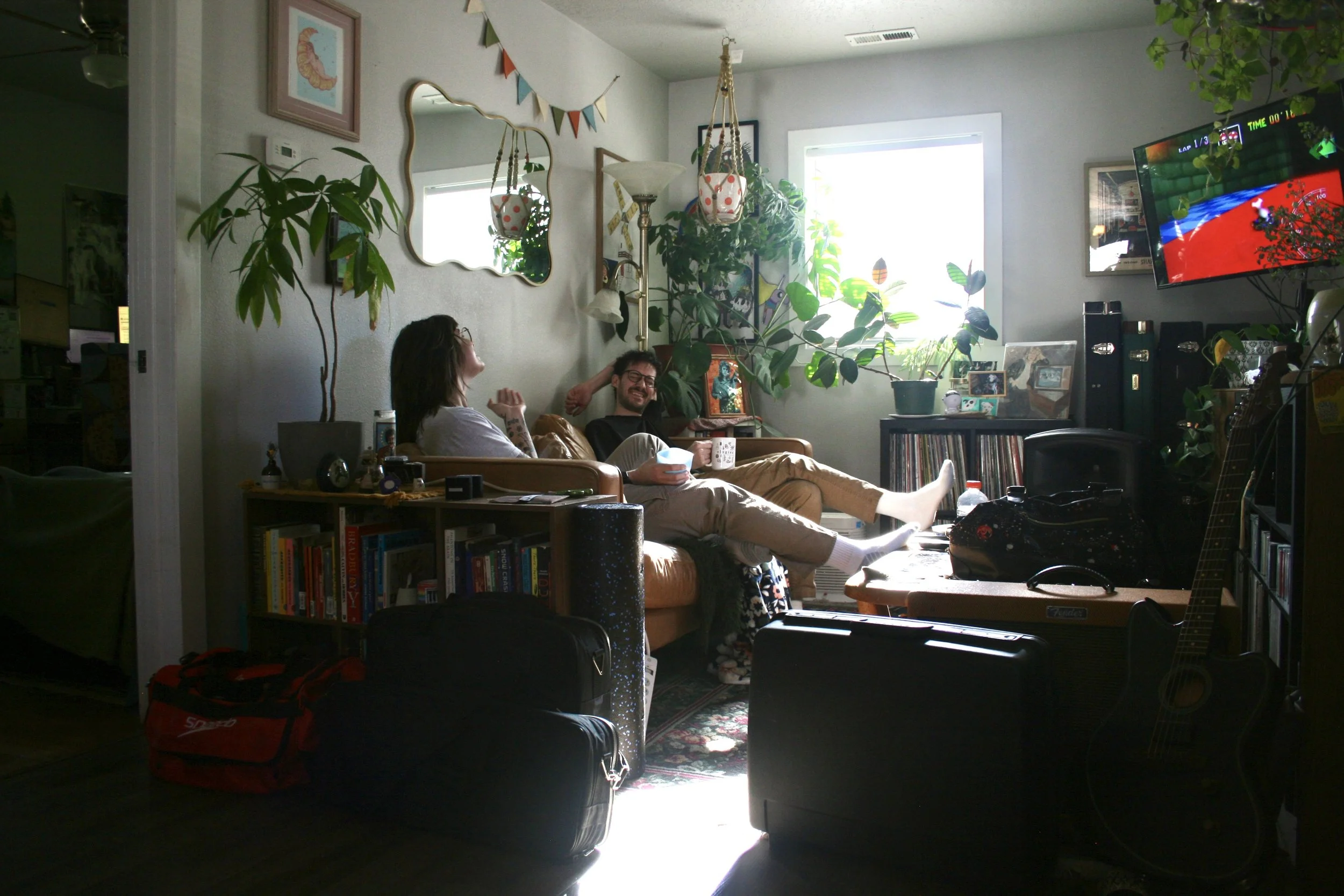
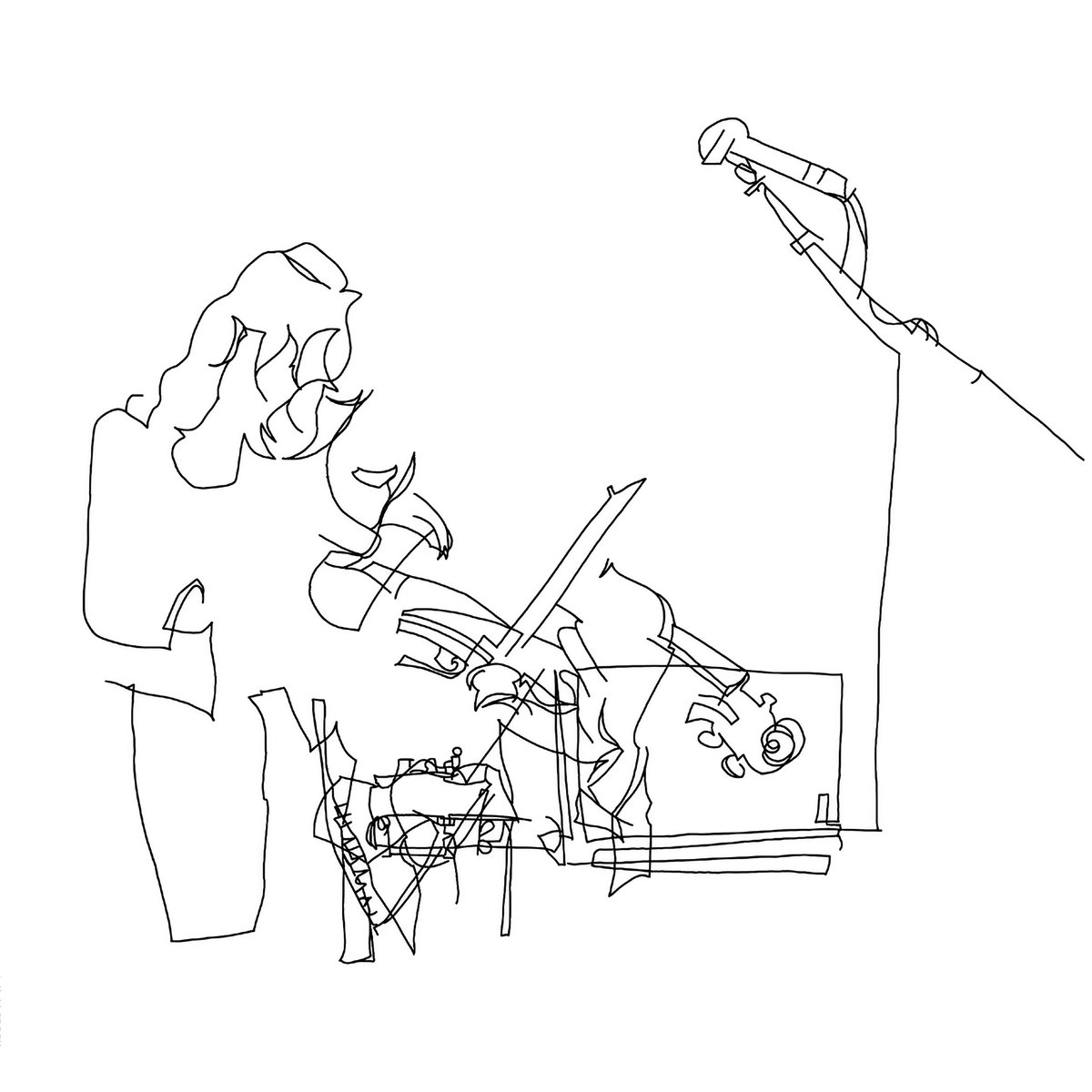
Photo by Josaleigh Pollett
Who’s your favorite musical duo? Lennon and McCartney? Becker and Fagan? Morrissey and Marr? For Salt Lake City-based musician Josaleigh Pollett and their collaborator Jordan Watko (AKA Crowd Shy), the answer to that question is simple: the one that they formed together. They say this not in a conceited or self-grandeurizing way, but in an extremely compassionate, heartfelt, and mutually appreciative way. Those same qualities are the ones that define their latest project, If I Let It Quiet, releasing tomorrow via Audio Antihero.
The pair began working together in 2020 with Pollett’s second LP, No Woman Is The Sea, and garnered further attention from the indiesphere with 2023’s In The Garden, By The Weeds. In the last six years, their musical relationship has evolved into an unbreakable symbiotic bond that persists even with a 14-hour time difference between Pollett’s native Utah and Watko’s new dwellings in Japan. I conducted my virtual conversation with them from my home in Illinois, and of the almost two hours we spent together across our three time zones, Pollett and Watko spent a majority of it talking about each other as much as their music, sentiments that were never better confessed than at the very end of the call...
The themes of emotional, physical, and spiritual distance are explored in a number of different ways throughout If I Let It Quiet, although the duo views the separation as less of a challenge and more of a resource.
“It’s made us get a lot more intentional,” observes Pollett. “When we made the last record, we were spending time on it regularly. But because of the nature of a long-distance friendship, even without the creative partnership element to it, you can't just be like, ‘Maybe I'll see you this weekend,’ and then it magically happens. Now, it’s, ‘What are you doing next week on Wednesday? I mean, my Wednesday morning, but your Wednesday night. I will send you a Zoom invite.’ And you have to do that just to hang out across the ocean. I think it was really helpful that right after Jordan moved, we weren't making a record yet; we were prioritizing our friendship first.”
They continue, “When Jordan lived in Salt Lake, every Saturday we would get together, and we would go get breakfast, and then chat for four hours. Then maybe work on some music. Nobody wants to sit on a Zoom call for several hours without an agenda. And my day job is work from home, too, so I was like, ‘Jordan, I love you, but I don't want to get off my Zoom call day job and then hang out on a Zoom call with you for four hours after that.’ So we have to do all of this shit, condensing our close friendship and creative partnership, in just an hour or two each time we talk. We have to prioritize the friendship, stay connected, stay close, understand each other, and then also be very open to an entirely new way of creating something, because what does our music look like or our collaboration look like when we don't have that breakfast and four-hour therapy hang where we talk through what happened to us that week? We had to have a plan in place because we didn't have limitless time. It was a really interesting experience because of that.”
From a production angle, Watko describes, “From my perspective, the big thing was that we both knew the long-distance thing was gonna be possible. Just given how we had worked together in the past, which was a lot of back and forth and working through these songs together and then apart, and then coming back together, and then apart again. Before the move even happened, our mantra was like, ‘If we're gonna blow this up, let's blow it up. Whatever needs to change, let's change it. Let's do whatever needs to happen.’ Specifically, the biggest change from working together in Salt Lake versus working long-distance was that I felt early on that I missed having air in the recordings. So much of the record is about distance, and I felt it was important to keep the air in as much of the recordings as possible. The biggest change for me was relying a lot less on synthesis and MIDI instrumentation, and a lot more starting from real audio. Whether it was field recordings or scratch tracks from Josaleigh, then throwing those in through a lot of different effects to make them sound a little more synthesized. I think it did make a difference that there was more of a human element in the production of this record.”
If I Let It Quiet is far from the first internationally recorded album, but it may be the one that hides the players’ separation the best that I’ve heard. Pollett and Watko have made their most blended and seamless record yet entirely on their own continents, and they were set up for success from their previous work together.
Pollett explains, “I think it really benefited us that this move, and this adjustment that we had to make for the distance, happened after we'd already been really close and worked on two records together. If this would have been our first record, there would have been no fucking way. We had already been building our friendship in a vulnerable way that allowed me to let Jordan into the lyric writing process. We've been building that trust for years.”
Speaking further on their tenacity, Pollett says, “I knew from recording and writing In The Garden, By The Weeds that there are so many things that I was precious about, but that I could have done so much better. I trust Jordan so much to be able to tell me that something's not working, or to brainstorm what could look differently. It took six years of hanging out together for me to feel comfortable enough to really accept that from Jordan and truly know that it makes our work better together.”
Watko has also had to push himself as a producer being in unfamiliar territory. “Living where I am definitely influences what I’m doing now,” he says. “This has been my chance to use a lot of my own field recordings from the city. I think I've got three or four different ones of our busy street taken from the 14th floor of our apartment building. You get all these cool reverberations, especially the samples I used on “Yasaka, Natsu” of a parade that happens every summer right by us. In some ways, it's an interesting mix of peacefulness and cacophony, more than anything I experienced in Salt Lake. Those have worked their way onto the record to some degree.”
Pollett shares in and about one of my favorite tracks on the record, “Escape Routes,” which features the standout production advancements from Watko. “I've felt so incredibly proud of that song,” they say, emphatically. “The production feels so deeply unique and special. When I listen to it, I don't know anything else that sounds like it, but it feels so connected to both of us. It was one of the first ones we started writing for this record; I actually had written the initial demo for it before Jordan moved. He was trying to be very sweet by giving me enough time to emotionally prepare, but for months I was out of control and would cry and shake him whenever we’d see each other. When I showed the song to Jordan, I was in this interesting space where the move was still two months away, but obviously I couldn’t really do anything else about it. There was all this stress and anticipation, and I was really trying to keep all my fits from getting to him. I just felt like a disaster because I love him so much and I want to be supportive, and I want to be like a safe place for him to talk about his moving stress without me sobbing every time. “Escape Routes” came out of that space, and Jordan said it was one of the first times he’s ever seen himself in my lyrics. It was resonant for both of us for drastically different reasons. I even felt like I was trying to write it from his perspective.”
Watko follows, “There was so much anxiety when we were working on that one that ended up coming out in the production. It kept getting increasingly anxious and frenetic. I was trying to recreate the sickness we were feeling, but at some point towards the end, I wanted to highlight the optimism that also existed. But anxiety in general is certainly one of the throughlines on the entire record.”
“We are super intentional about sequencing and themes,” Pollett says further about those throughlines. “When Jordan came back to play Kilby Block party with me last year, we spent so much downtime noodling on song ideas, and were able to pull a concept together. We had finished “Escape Routes,” “Radio Player,” and “Repeating,” and we had a chunk of ideas for other things. We were able to talk through, in person, how things could feel thematically, and how they could be connected and flow for a record. There’s distance, and doubt, and anxiety, and relationships, and the record is very authentic to us because it's what we were living in. The themes were revealed to us after some time, but they were also created by us.”
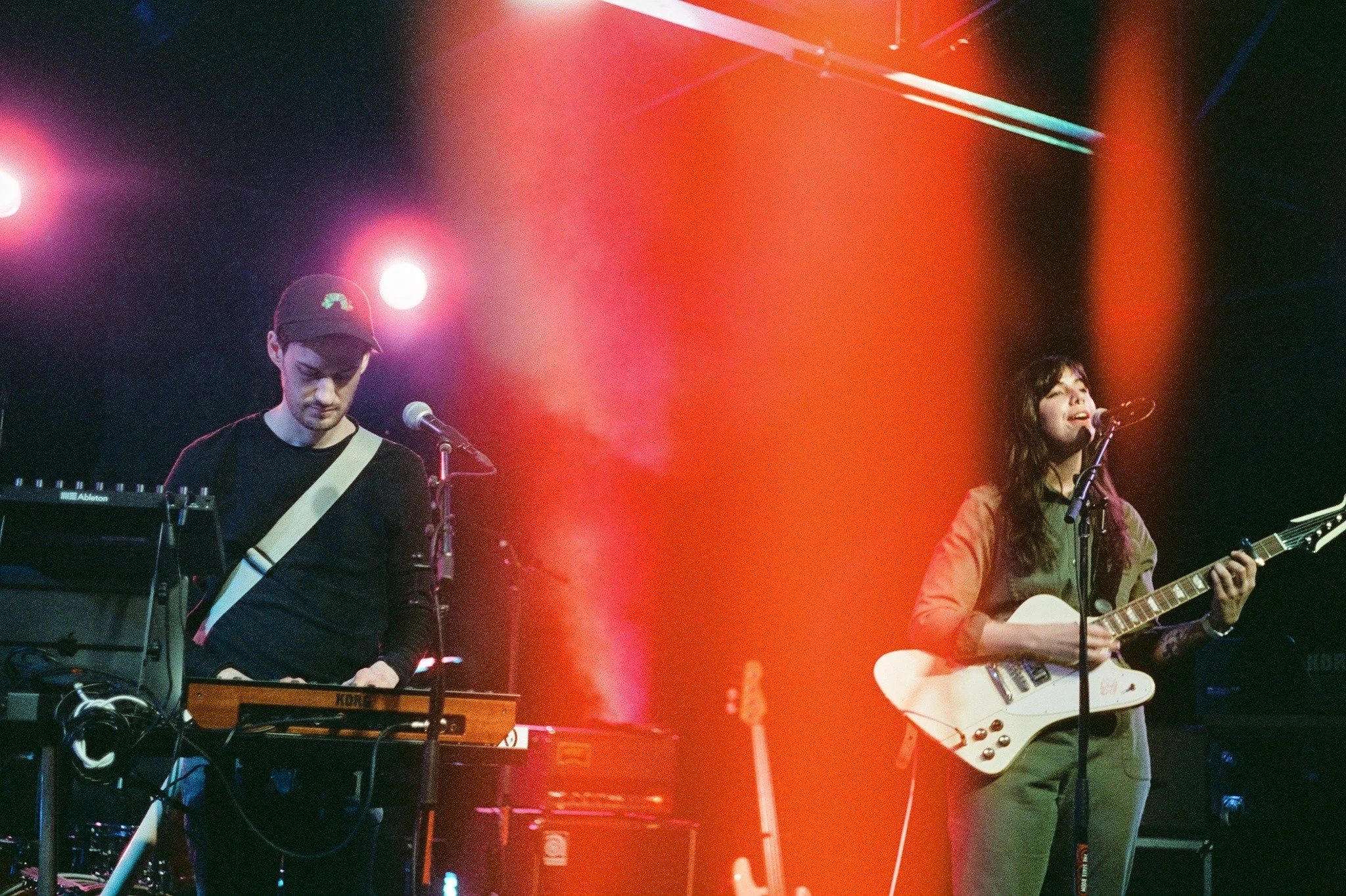
Photo by Kyle S. Ford
Pollett and Watko’s creative partnership stands out among the slew of bedroom-pop singer-songwriters you can find on Bandcamp at any given moment, and they’ve achieved record after record of truly one-of-a-kind music. I was curious if that happened to them naturally, by accident, or some mad-scientist level of self-awareness in their lab.
“We’re both perfectionists to an extent with our music,” says Pollett, “but sometimes I do feel like Jordan and I are on a different level at certain moments. I usually know sooner than him, but then maybe two weeks later or two months later, he’ll feel the same.” From a lyrical standpoint, Pollett feels, “There are so many times when I go back and look at a song and think, ‘what was I talking about?’ ‘What did I mean?’ It won’t be until years later that I'll realize how much sense it makes. Lyric writing, to me, is a weird, intentional job, but also alchemy. I love when I don't really know what it's about or if it doesn’t mean anything grammatically. Maybe the assumed meaning is something totally different. I love writing as nebulously as possible, but with a certain amount of specificity. I can get my feelings out, but it can be a blank slate for those feelings. I can come back to a song that I wrote ten years ago, apply it to a completely different situation now, and still connect to it. Meaning is so subjective, and I never feel like I have to figure it out.”
Watko says, “We definitely overthink things a lot. Even talking about when you're onto something, that first 25% of working on a song has a lot of uncertainty. And then the last 25% is us trying to figure out if we’ve made all the right decisions. The bulk of the middle of the process is when it can feel like we have it, but I often need Josaleigh to rein me in. I have a tendency to overcook things.”
When the team tries to figure out how Pollett’s lyrics and vocals will mix with Watko’s production, it’s a collective effort across the LP. Pollett describes, “Prior to working on this record, we had a pretty concrete process. I would write a melody on guitar and some lyrics, then send it over to Jordan. He would spend some time with it, thinking through some production ideas, and then we would come together a little bit more and work through the more granular details together. With this album in particular, it was a little bit more collaborative from the get-go. We'd really build out the song structure together, and Jordan was so much more involved in the lyric writing and editing with me too. Which is hilarious to think about because we did it from way farther away this time.”
Watko agrees with the irony and continues, “It was fun to dig into these scratch takes that Josaleigh would send me in their infancy, and it allowed us to work through more arrangement decisions together. This record felt more informed by both of us, and I think we both got to do what we each do best: Josaleigh as a songwriter, and me getting to create some fun sounds with what they sent me.”
…I chose an absurd but intentional penultimate question: “Josaleigh Pollett, what is your favorite thing about Josaleigh Pollett?” This was their answer:
“I probably would have used to say that it was being able to process the world around me through writing songs. It’s always just been how I get through big feelings, hard times, joyful times… I'm so grateful to have this tool that is always present and accessible and something that I can use to navigate whatever the fuck is happening in my life. But honestly, now it's my creative partnership with Jordan. I feel so deeply blessed — and I don't use that word because I'm not a religious person whatsoever — but it feels insane to me that I've had so many relationships in the past where it’s either platonic, or romantic, or creative, but it feels so otherworldly to have this platonic love in this creative partnership that inspires me to be a better person, to grow the craft that I care about, and also to like the music that I'm creating more, and to be a part of something that I truly believe in.
I would still probably be making music, writing, and recording songs if I hadn't met Jordan, but I certainly wouldn't be thinking that other people should listen to them. What Jordan and I have is so special. When I hear one of our songs, it sounds like our friendship. I talk all the time about how my favorite bands are the ones that, when you go see them live, you can tell they fucking love each other. If you can tell that they don't give a shit about each other and they're just on the stage to play the music or whatever, that’s rarely gonna resonate with me. I've always coveted that, and I don't feel like I have to anymore because I have that with Jordan. I believe in what we do so much, and can feel how much we love each other in the music.”
Josaleigh Pollett: talented songwriter, loving friend, mind reader. My final question for them had already been answered: “What is your favorite thing about Jordan Watko?” They got to the place I was looking to guide them towards, but they were already there waiting ahead of me. Both Pollett and Watko didn’t need the follow-up, or any additional clarification. Because when I asked Jordan Watko what his favorite thing about Jordan Watko is, he matched Josaleigh’s freak without missing a beat:
“It's the same answer. I've forever been tinkering with things in my own space, and I wouldn't trade that for anything, but Josaleigh has an ability to connect to people in a way that I feel so lucky that I get to be in the orbit of. It’s opened my world up so much; the fact that I've been able to meet, share, and collaborate with so many other people through Josaleigh is the joy of my life. I know you asked what my favorite thing about me is, but that’s it. I feel really lucky to have people that want to work with me, as a human being and as a musical collaborator.”
It’s this humble and considerate partnership that is at the core of the record, where you can’t talk about Josaleigh Pollett’s vocals and lyrics without also talking about Jordan Watko’s production and composition, worldwide distance be damned. If I Let It Quiet proves no strong relationship can ever be broken, and is a testament to their determination to release the art that matters to them more than anything, showered in the audible love that they’ve worked so long to grow. So listen to this record with your best friend, whether they’re in the car with you in your hometown or they’re on Zoom half a world away. And most importantly, don’t let your feelings towards them quiet.
Logan Archer Mounts once almost got kicked out of Warped Tour for doing the Disturbed scream during a band’s acoustic set. He currently lives in Rolling Meadows, IL, but tells everyone he lives in Palatine.