Metadata, Alienation, and Music Ownership

Let’s talk about metadata. That’s right, metadata; the least-sexy part of cultivating your offline media library, even for a geek-ass music nerd like myself. 

For those unfamiliar, metadata is “data that provides information about other data,” which, yes, I pushed my glasses up the bridge of my nose as I wrote that. How could you tell? Within the context of your local music library, this includes things like song titles, album names, track numbers, artwork, and everything in between. 

See, I first started cultivating my music library when I got an iPod Mini sometime around 2006. Gradually, my iTunes collection blossomed from a handful of Matchbox 20 singles and Weird Al albums into the sprawling 60k-file monstrosity that it is today. Over time, this library has been corrupted, lost, recovered, converted, moved between computers, backed up, digitized, and, most importantly, edited

It’s the closest thing I have to a documented musical history. Sure, I have last.fm, but that just shows what I listen to and when. This collection of MP3 and ACC files sitting in my iTunes feels representative of my entire musical taste and, by extension, who I am as a person. I have music from every phase of my life: Bandcamp rarities from DIY bands, Myspace-era metalcore demos long since lost to time, a one-for-one replication of my childhood CD collection, and screen recordings of Tiny Desk performances that I’ve painstakingly spliced up into individual songs. It’s a labor of love, there’s no other way to put it. 

Aside from the act of obtaining and listening to this music, a seldom-discussed aspect of curating an offline music library is how much work goes into actually organizing it. Not just the structured nest of Artist > Album > Song folders buried deep in my computer’s hard drive, but also the way that iTunes interprets, arranges, and displays these files.

Despite using Spotify almost every day, I’m still hyper-critical of the platform and streaming giants at large. First, there’s the issue of just paying the artists, which, any rational person will agree, is one of the most imbalanced systems in the entire music industry today. There’s also the far more amorphous topic of how streaming has adjusted the way we value and consume music, making it more disposable in the process. It’s also robbed us of things like hidden tracks and any sense of physicality related to our music. This perceived loss is one of the big reasons why vinyl, cassettes, and CDs have all regained popularity in recent years.

Another negative aspect of streaming that I’d like to talk about today is the idea of ownership. The music on your Spotify app is not yours, full stop. That company could go bankrupt, destroy your account, or go down tomorrow, and all would result in the same thing; you losing everything attached to it. All your saved albums, hearted songs, and carefully constructed playlists; gone in an instant. 

That’s standard operating procedure for any digital-based company in 2022. You buy a game on Steam? Sure, you “own” it, but if Steam ever goes away, that shit’s gone for good. This is why companies like GOG and Bandcamp have gained extra momentum over the last decade because they offer the consumer a digital purchase without any DRM (digital rights management). That means when you buy a game or an album from those platforms, you can download it, play it, share it with a friend, back it up to a USB, and generally do anything you want with it short of going off to sell it again yourself. Those files are yours, and you are in control. 

So how does this apply to Spotify and streaming?

Well, one of the recent downsides I’ve been grappling with in regards to streaming is how out of my control my library feels. God knows I’ve spent dozens, if not hundreds, of hours just making playlists on Spotify. For the most part, these playlists only exist on that one platform, and that scares me. By contrast, the playlists in my iTunes library are based on actual files saved directly to my machine, which means they’re in my control. Hell, I can burn those playlists to a CD or export them to Unicode, XML, M3U, or even good ol’ plain text if I wanted to. If you don’t know what all that means, it’s okay. Essentially, even if my computer gets fried and my backups fail, I still have the playlists. This freedom is a massive benefit to cultivating an offline music collection.

This applies to everything outside of playlists too. I can import a CD, download my Bandcamp purchases, or rip a song off Youtube and then craft those files in my image. I can add the album art, adjust the song titles, change the album name, or give the songs track numbers, and all of that is my decision. If this seems overwhelming or doesn’t sound like something you’d do, that’s totally understandable. But when you’ve spent the better part of your life carefully curating and adding on to this collection of files, this freedom means the world. 

If I like the physical cover of an album more than the digital one? I can change that. If I want to add a one-off B-side to the end of an album in order to keep the entire release in one place, I can. If I have a remastered version of an album where all the song titles end in “(Remastered),” then I can take that word out of every track and keep the song titles in their original form. Why would I care about this? First off, it looks nice. I’m a control freak, and it feels good to keep these files as clean as possible. Another very simple answer is last.fm.

See, in a way, my last.fm goes hand-in-hand with my iTunes library. My last.fm account might not be as longstanding as my music collection, but it still goes all the way back to 2010. That platform has recorded over a decade of listening history and statistics that I view as priceless. It’s cool to look back and see what I was listening to on a random Thursday in college, or what my listening habits were like over the summer of 2016. There’s value to be had in that kind of information, especially for a music nerd like me.

This leads to genuine anguish when I look at my music history on last.fm and see that I’ve listened to Nevermind by Nirvana a certain number of times, but those play counts are allocated to two different versions of the album; one simply titled Nevermind and a second one titled Nevermind (Remastered). This is aside from the other versions that exist on Spotify like Nevermind (Deluxe Edition), Nevermind (Super Deluxe Edition), and Nevermind (30th Anniversary Super Deluxe). Guys, what are we even doing? At a certain point, this is just bad stewardship of your own musical catalog, and for what? A twelfth demo version of “Something In The Way” to catch runoff streams? No thank you. 

This on its own is frustrating, but where Spotify gets even more cheesy in this metadata conversation is how little autonomy you have in what you want to listen to. To continue the grunge examples, let’s say that you want to listen to Gish by Smashing Pumpkins. Well, I hope you don’t mind listening to the two-disc 2011 Deluxe Edition with 28 tracks because that’s all that exists on Spotify!

In my mind, this destroys the sanctity of the core album experience as originally envisioned by the artist. Sure, you can still listen to tracks 1 through 10 on Gish and experience the album as initially released, but that’s not what Spotify wants. Most importantly, they don’t even give you the choice. Gish as it originally existed in its 1991 form with its ten tracks and non-codeine-colored album art does not exist on Spotify

To keep using this one album as an example, this problem gets even funnier if you want to listen to those bonus tracks like the killer 8-minute version of “Drown” that ends with an alternate guitar solo, which is inexplicably not playable right now for some unknown licensing reason. You can listen to all the other 27 tracks of Gish (Deluxe Edition), but the last song is just… unplayable. 


Sometimes, this even results in instances where an objectively worse remaster of an album (like Soundgarden’s Superunknown) will be the only version available on your streaming service of choice. Want to listen to the songs as they existed in their original form? Well, you can’t! Examples like this are few and far between but still highlight how little choice we have in the music that’s readily available to listen to on these services. 

This is a horrible way to interact with music. It hurts the “vision” of the original album and poses more problems than it does conveniences. Sure, for the average music listener, these details are negligible, but when you’ve spent your whole life caring about shit like this, it’s hard not to notice. 

At the risk of sounding like a doofus equating music listening with genuine human suffering, I’d like to relate this to Marx’s theory of alienation. For Marx, this theory essentially posits that the further workers are from the end product, the less satisfaction they will find in their work. It’s obviously a lot deeper than that, but that’s the best I got for a one-sentence summary. 

If you’re a cog in a machine sitting on a computer all day and you never interact with the thing you’re actually making (or theoretically contributing towards making), what are you actually doing? More importantly, what do you have to draw satisfaction from in your work? Sure, you’re making money so that you can live, but you’re also making more money for someone further above you who’s even more removed from the process. You lose connection to your autonomy, so you become increasingly alienated from the goods and services produced by your labor, eventually estranging you from your own humanity. 

Now, look at your streaming library through this lens. Your library is not yours. These files exist to play when called upon, but the entire thing could go away tomorrow, and you’d be left with nothing. Owning these files and having them on a hard drive I can hold in my hands is a satisfying feeling. Knowing that I can change these files, edit their data, and load them onto any device I please is a relief. Sure, there are lots of other things that could go wrong that would lead me to lose this data, but it’s my data to lose, not some mega-corporation.

The same day that I wrote the majority of this 2,000-word rant, the awesome Endless Scroll Podcast uploaded an episode talking about Spotify Canvas, album visualizers, and things of the like. One of the most poignant conclusions made about 33 minutes into the episode by host Miranda Reinert was, “Spotify doesn’t want you to have a library; Spotify wants you to use Spotify and perceive Spotify as music.” And therein lies the problem. It felt serendipitous to hear this the same day that I spent hours articulating my own feelings on the topic.

I write this, riddled with caffeine, not to shame anyone for using Spotify but to get you to think about your music collection. If you care about it, you might want to re-analyze what’s actually yours. When music is as integral to your identity as it is for me, it’s easy to spend hours thinking about this type of stuff. I’ve also spent countless hours doomsday prepping for a world without streaming. It’s a world that seems further away with each passing day, but one I’m willing to hold onto just in case.  

Spotify is a bad company for many reasons, and it’s okay to ask for more. I still use Spotify almost every day… that said, if the service went belly-up tomorrow, I wouldn’t lose that much. Would you?

The Great Dismal: Falling in Love With Shoegaze and Finding Hope in the Darkness

It’s always odd when a single album is held up as the “definitive” work of a band or even an entire genre. It leads to this interesting phenomenon where prospective fans will become interested in said band or genre, learn that this single work is the de facto entry point, and dive in with skewed expectations. The problem then becomes; what if they don’t like that one album?

Let’s say someone wants to get into Radiohead. They might learn that Kid A is considered the group’s most groundbreaking record and give it a listen. If they don’t like Kid A, they might write Radiohead off as not “for them.” In reality, this hypothetical listener might have enjoyed a different Radiohead album more, and it may only be Kid A that’s not “for them.” There’s no accounting for taste, and there are few (if any) points of consensus when it comes to music.

This exact thing happened to me with shoegaze. It’s easy to see why My Bloody Valentine’s Loveless is as lauded as it is, especially when you factor in its influence and historical context. But here’s a controversial sentence: I don’t really like Loveless. I can see the appeal, and I don’t begrudge anyone for digging it, but the record has never quite clicked with me in the way it has with others. 

The problem becomes when a single album is cited as the groundbreaking masterwork of a genre, that must also mean that it’s the best, right? It almost feels as if there’s nowhere to go from there but down. That means when I listened to Loveless for the first time and didn’t love it, I thought, “huh, shoegaze must not be for me.” Au contraire. I spent the better part of 2021 immersing myself in shoegaze, eventually hitting an obsessive fever pitch sometime in December. While everyone else was getting holly and jolly in a month that’s usually reserved for my endless supply of holiday playlists, I was listening to some of the most dour shit imaginable and loving it. 

I found something in shoegaze, something I couldn’t get anywhere else. While I’ve long been a fan of Greet Death, I hadn’t considered myself a “shoegaze guy” because all my love was allocated to this one band. Something about Greet Death’s macabre midwest lyricism and heavy-as-shit riffs clicked with my brain. For months I listened to their discography on a near-nightly basis. I never found any other bands that even came close until Wednesday dropped Twin Plagues midway through 2021. 

Twin Plagues soon supplanted Greet Death as my go-to music for those times when nothing else sounded good. It was a record that lent me some degree of comfort and compassion in a year when I needed those things badly. If you’re curious to read more about Twin Plagues, I covered the album in greater detail in our Album of the Year countdown. For the purposes of this article, the important thing to note is that this record ended up opening the floodgates to a whole host of shoegaze bands. For some reason, Wednesday’s approach gave me a new perspective on the genre and I was able to approach shoegaze with an open mind. As often happens with music I love, my curiosity gave way to obsession.

With this renewed enthusiasm, I dug back through my own history and realized I had more brushes with the genre than I initially realized. I soon discovered that the dream-pop bands I’d been listening to for years like Beach House, Alvvays, and Slowdive were considered shoegaze-adjacent. I traced the genre back to grungy songs of my youth like “Mayonaise” by The Smashing Pumpkins and “Exhausted” by Foo Fighters, which were informed by the genre while it was at its commercial peak. I even learned that recent bands like Gleemer, Holy Fawn, and Clearbody all fit the bill as well. It turned out I’d been enjoying shoegaze for longer than I realized. 

Once my mind was re-opened to the genre thanks to Twin Plagues, I went on an absolute tear, slowly uncovering (and subsequently falling in love with) different landmark albums throughout the genre’s history. I spent weeks obsessing over the bouncy Cure-inspired flavor of DIIV’s Oshin. I wrapped myself in the comforting crush of Cloakroom’s Time Well. Hell, even this silly TikTok got me to dig through Hum’s back catalog, and that’s not something I would have even considered a year ago. It’s been a blast. 

This is all a (very long) preamble to talk about my latest and deepest obsession: Nothing’s fourth studio album, The Great Dismal. This is a record I listened to a couple of times when it was first released in 2020, but I only recently rediscovered thanks to this personal shoegaze renaissance. An unattentive or cursory listen to The Great Dismal will reveal many standard trappings of the genre; fuzz, feedback, and far-off vocals. Still, something about this record kept drawing me back in. At first, it was “Famine Asylum,” which opens with a burst of guitar distortion that rears its head up through the track like a powerful stallion. Then one day, while on a run, I caught myself singing the chorus of “Catch a Fade.” Soon after that, I became transfixed by the cathartic build of “Blue Mecca.” 

Gradually, individual pieces of this album began to reveal themselves to me, and before I knew it, I was listening to the whole thing in full because every song hit a different fold of my brain. As I kept listening, individual lyrics and more subtle instrumental aspects slowly emerged from the dark swirl. 

I think that slow unveiling is a huge reason why I kept gravitating towards The Great Dismal and why I’m writing about it now. Once the few killer riffs, earworm choruses, and bizarre samples become commonplace, individual words begin to unveil themselves. First, it’s just a single phrase that rises above the dreamy swirl like “Feed me grapes” or “Innocence preserved by death,” but soon, deeply poetic and philosophical sentiments appear from the ether. The aforementioned “Blue Mecca” hinges on a repetition of “Yesterday is a long way down / Leviathan but can't be found,” which I find both achingly beautiful and spiritually provocative. It’s also sung over a gorgeous crescendoing post-rock guitar which feels tailor-made for my taste. 

Elsewhere on the album, there are musings like, “It’s amazing that my shell has kept its shape,” which embody a sort of ideological physical resilience. It’s snapping to in the midst of chaos, unplugging, and taking stock of your own being. Lines like this stand out like a lighthouse offering respite to weary sailors. It’s a nine-word observation that carries the same self-assured punch as the entirety of “This Year” before delving back into the depths. 

Occasionally the group turns their gaze outward, like on “April Ha Ha,” where lead singer Domenic Palermo sings, “Isn't it strange / Watching people / Try and outrun rain?” which comes across as a poignant observation on the futility of denialism. In other places, Nothing prod at themselves, singing, “So stumble through / A work of art / Something simple and defeating from the start.” Lines like these speak to the futility of creating anything right now, given what we are all facing down.  

On top of these incredible lyrics, the more I learned about Nothing and the history of this album, the more I found myself fascinated. Recorded in February of 2020 at the very beginning of quarantine, the band essentially sealed themselves in the studio to record this album. As the world outside slowly unfurled, Nothing crafted these crushing riffs and honed these cutting observations. It felt like a probe, investigating the human condition from a one-of-a-kind vantage point that has now long since passed us by. This is all on top of a tumultuous history of wrongful imprisonment, genre pivots, lineup changes, and general tragedy. At a certain point, recording an album while teetering on the brink of a global pandemic seems par for the course for a group who self-describes themselves as a “notoriously unlucky band.” 

Side-note, the hazmat suit press photos that came out of this album cycle are downright iconic.

The Great Dismal bills itself as an exploration of “existentialist themes of isolation, extinction, and human behavior in the face of 2020’s vast wasteland.” In regards to its relation to the swamp of the same name in southeast Virginia, the band explains, “The nature of [the swamp’s] beautiful, but taxing environment and harsh conditions can’t ever really be shaken or forgotten too easily.”

That’s another reason I find myself pulled towards this album. While 2020 was one thing, we currently find ourselves on the brink of something potentially worse. That uncertainty has been plaguing my mind for the last few months, and I’ve ironically found some level of solace in the soundscapes of shoegaze. These songs mirror my internal landscape; dark, rocky, and not entirely forthcoming. They’re not nihilistic per se, but they still acknowledge the darkness that we find ourselves in. One of the reasons I essentially swapped my holiday playlists for shoegaze this past season is that it felt ingenuine to be celebrating or forcing warmth at a time when the world feels like it’s falling apart. 

There’s plenty to be angry and upset about out in the world. Every day we face down fascism, racism, impending climate collapse, a worldwide plague, and an indifferent government operating an ever-growing police state. Even in the face of all that, I think it’s important to hold on to some sense of hope. If we don’t have hope, what’s it all for? The songs on this record may be sonically dismal, but they’re not hopeless. That’s the type of energy I hope to maintain this year. 

On reading that, you might think that striving to maintain a disposition of anything sided with “dismal” might sound less-than-optimistic, but I don’t view it that way. Large swaths of our reality are tainted by abject horror, and we can’t shy away from that. Pretending things don’t exist doesn’t make them go away. Things are bleak, terrifying, and dismal, but in the face of all this horror, there’s still a world worth fighting for.

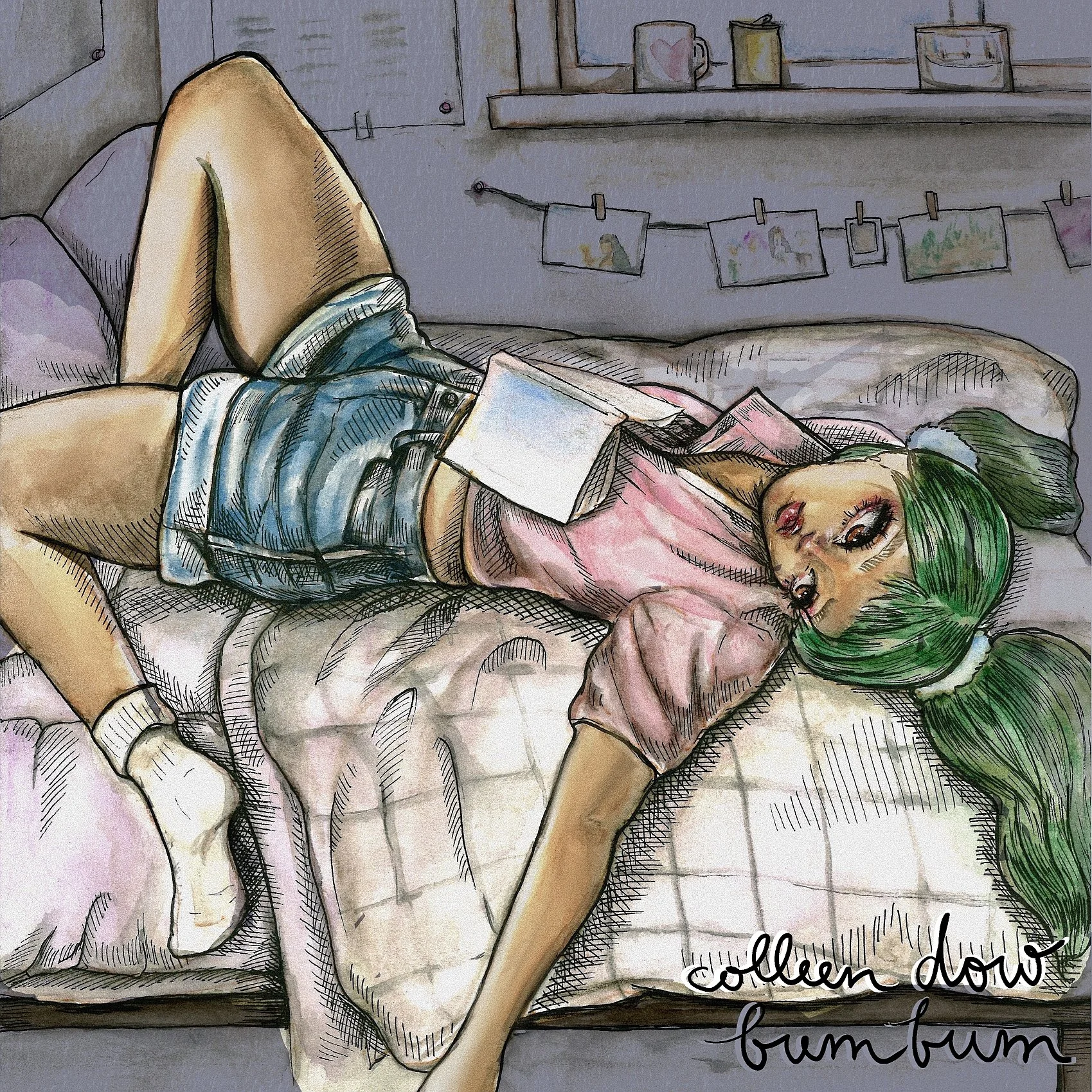
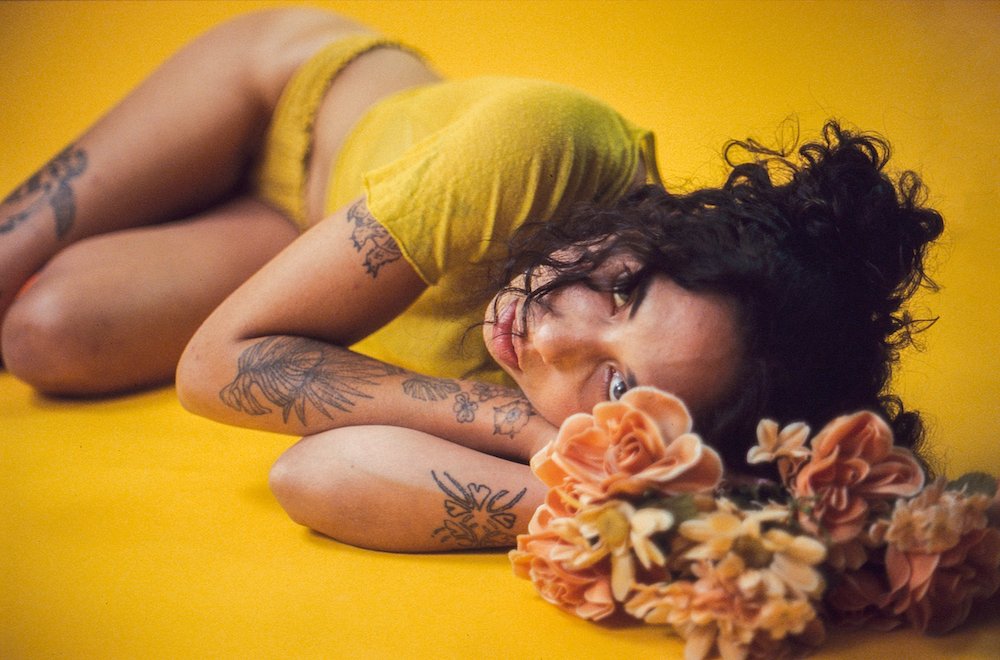
Colleen Dow – Bumbum | Single Review

Blanketed in soft layers of reverb, the guitar intro of “Bumbum is an invitation to a dream. A much-needed lullaby for the time when it’s a little bit too past your bedtime. Here, in the third single under their own name, Colleen Dow muses on a midnight daydream of falling asleep in a warm white room, listening to city sirens while wrapped in sheets and someone else’s embrace. It’s a fantasy I could only describe as “everything I could ever ask for.” 

But it’s not meant to last. Even before the first verse comes to a close, Dow starts having doubts about the staying power of this situation. The guitar is joined by bass, drums, and a plunky piano that simultaneously maintain the bedtime tempo while creating a march. It’s giving pacing around your kitchen at one a.m. waiting for the water for your sleepytime tea to boil. 

The song is a move away from the syrupy indie-punk of Dow’s main band Thank You, I’m Sorry towards a more intimate and inward sound inflicted by bands like Postal Service and Now, Now. Together with producer Abe Anderson, they’ve crafted a sonic treat that allows Dow’s personality as a songwriter to shine through these influences.

The second half of “Bumbum” is where the lyrics begin to hit a little *too* close to home for me. If the first verse is a cozy dream, the second verse is a rude wake-up call from Dow’s internal critic. Their fantasy turns to a vision of abandonment, loss, and fear of waking to find your partner’s bags packed so they can flee. Worse even, Dow begins to wonder if these anxieties are mutual.

Look, I’m no stranger to imagining worst-case scenarios and projecting them onto my partner's. I just wasn’t expecting to feel called out about it today. It is nice to know that the person I usually trust with playlist recommendations on Tik Tok has the same insecurities as me.

Historically, the kind of music I would compare to an anxiety attack involves a lot of screaming and thrashing guitars—the sort of thing you can see coming from miles away. But I’m actually pretty good at keeping anxiety attacks to myself. Sure, I’ll talk the ear off of anyone who will listen, but I mean this more in a physical sense. I wring my hands, I clench my jaw, and I carry it all in my chest. The choruses of “Bumbum” are an incredibly accurate representation of the feelings inside of my body. The tension of my chest lives in this bassline. Bum bum goes my beating heart. Even the layer of acoustic guitar is in rhythm with the wringing of my hands.

“Bumbum” feels like a reflection of both my physical and mental state at my most anxious. It’s as if Dow took my own desires, fears, and insecurities and wove them into a pop song. That may not be an experience most listeners would willingly flock to but, in addition to being catchy as heck, it really is incredibly comforting to have these feelings echoed back at me. In this way, “Bumbum” feels like an anxiety attack and a security blanket at the same time. It’s the sheets in a warm white room I look forward to wrapping myself in for the rest of the winter. 


Cailen Alcorn Pygott is a writer, musician, and general sadsack from Halifax, Nova Scotia. He’ll tell you even more about his anxieties on his band No, It’s Fine.’s album I Promise. Tell him how brave you think that is on Twitter @noitsfinereally and on Instagram @_no_its_fine_.

The Year In Music: 2021 Month By Month

Back in 2018, I fell ass-backward into monthly new release roundups. This was spurred by a better-than-normal crop of January albums and soon evolved into a self-issued challenge. Could I write interesting and insightful descriptions about eight albums each month? It turns out the answer was yes, I could! It proved to be a fruitful experiment that allowed me to write candidly in short-form about everything I loved as I was enjoying it. From brand-new discoveries to the latest records from bands I was already following, I loved being “up” on new music throughout 2018 and documenting my excitement somewhere concrete. Those posts now read like a time capsule for where I was and who I was each of those months. While it was freeing to break the bounds of this site’s typical review format, it was also tiring, and I had no desire to do it again… until this year.

In January of 2021, we received a great crop of releases, including but not limited to Beach Bunny, Shame, and Cheekface. January is also a time where the music industry is in a (relative) lull as musicians and journalists alike are recuperating from the holidays and getting back into the swing of things. It felt like nobody was really talking about or celebrating these records, so I went ahead and filled the gap. Thus, another monthly tradition was born. 

After two years off from these types of single-paragraph reviews, it was refreshing to jump back into this monthly tradition. I don’t think I’ll do it again next year, but it was fun (and often challenging) to try to get these roundups out in a timely and relevant manner each month. This post is simply a compendium of every monthly review roundup from 2021 so you can look back and see what I was excited about each month. Here’s hoping there’s something new here that you haven’t heard of or seen a million times on every publication’s album of the year list. Cheers and thanks for reading along this year.


January Roundup

Featuring Camp Trash, Beach Bunny, Abe Anderson, Cicala, Cheekface, Cathedral Bells, Mikau, Ps.You’redead, and Shame.

February Roundup

Featuring Foo Fighters, Vampire Weekend, Black Country New Road, Wild Pink, Katy Kirby, Mister Goblin, Miss Grit, and Mogwai.

March Roundup

Featuring Tigers Jaw, Biitchseat, Home Is Where, Glass Beach, Riley!, Harmony Woods, Future Teens, Bicycle Inn, and Brown Maple.

April Roundup

Featuring Ratboys, Wild Pink, Jeff Rosenstock, Remember Sports, Spirit Of The Beehive, PONY, BROCKHAMPTON, Hey Ily, and Godspeed You Black Emperor!

May Roundup

Featuring Stars Hollow, NATL PARK SRVC, The Black Keys, Smol Data, Just Friends, The Devil Wears Prada, Mannequin Pussy, Fiddlehead, Bachelor, Downhaul, The Give & Take, Gulfer, Charmer, Jimmy Montague, Palette Knife, and Superbloom.

June Roundup

Featuring Japanese Breakfast, We Are The Union, ME REX, Parting, Lucy Dacus, Newgrounds Death Rugby, Iceburn, and Pom Pom Squad.

July Roundup

Featuring Jodi, Runner, Gang Of Youths, Gnawing, Skirts, Lakes, Bad Luck, and Midwife.

August Roundup

Featuring Mud Whale, Kississippi, Ty Segall, Snow Ellet, Indigo De Souza, Farseek, Wednesday, A Great Big Pile Of Leaves, Big Red Machine, Bon Iver, The National, See Through Person, Telethon, and Pink Navel.

September Roundup

Featuring Injury Reserve, Eichlers, Dormer, Sincere Engineer, 5ever, Common Sage, Sufjan Stevens, Angelo De Augustine, and Shortly.

October Roundup Part 1

Featuring Hovvdy, Roseville, The World Is A Beautiful Place & I Am No Longer Afraid To Die, Gollylagging, Knocked Loose, Ship & Sail, Mo Troper, and Superdestroyer.

October Roundup Part 2

Featuring Trace Mountains, Virginity, Angel Du$T, Spirit Was, Boyfrienders, The War On Drugs, Swim Camp, Every Time I Die, Super American, Save Face, and Minus The Bear. 

November Roundup

Featuring Greet Death, Glass Beach, Caracara, The Wonder Years, Guitar Fight From Fooly Cooly, Floating Room, Carly Cosgrove, and Wild Pink.

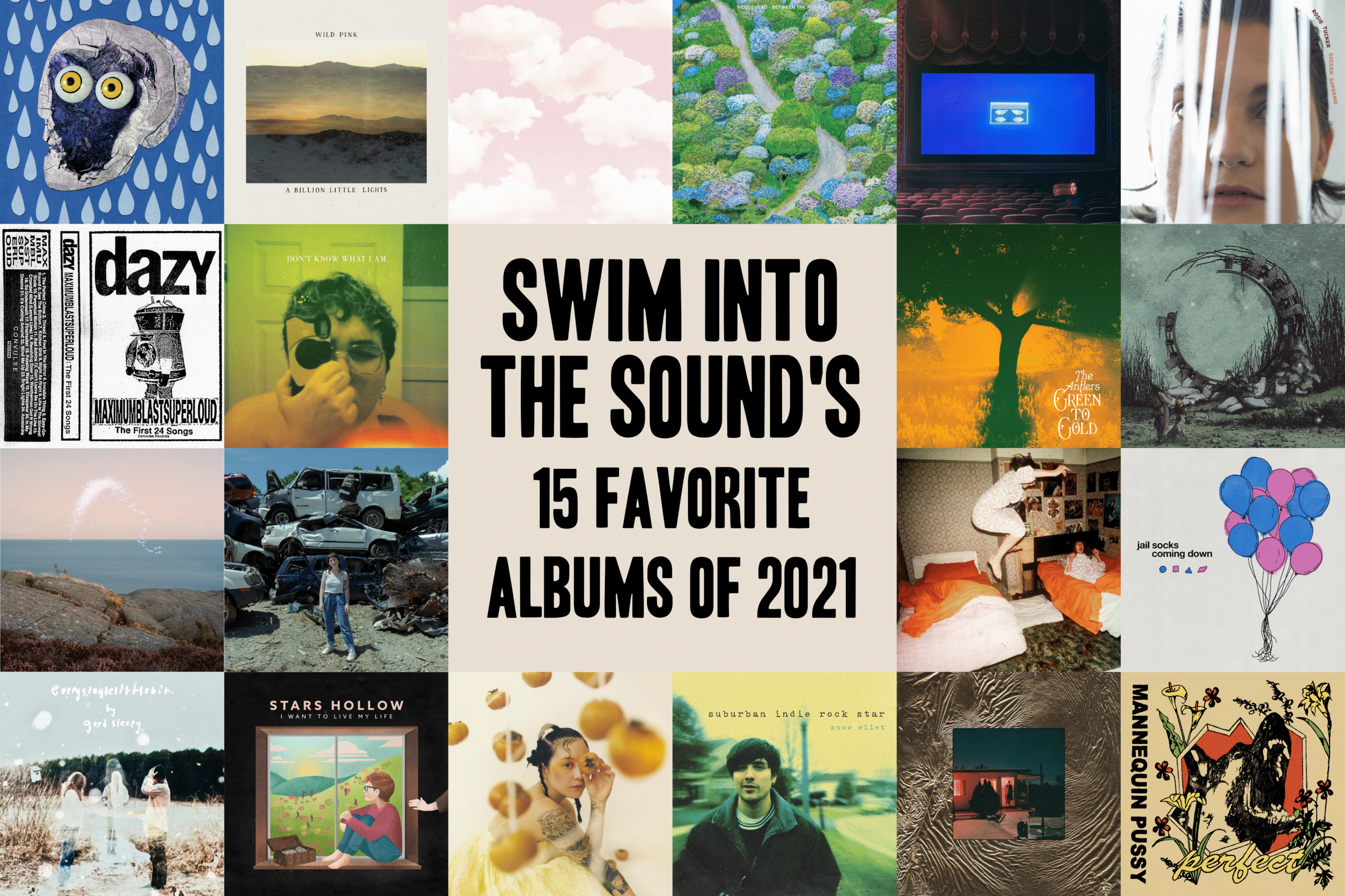
Swim Into The Sound's 15 Favorite Albums of 2021

I hate to always start these with a gloomy intro paragraph, but I’ll be real; 2021 has been hard. In some ways, harder than 2020. While many of us spent last year hunkered down and reeling from a global pandemic, this year has been far more undefinable. We’re nearing a million dead from COVID here in the US, and the government response has essentially boiled down to a shrug. At least last year, it felt like we were all in this together. 

For me, 2021 has been a year of breakups, burnouts, and overall bummers. As we sit on the brink of another outbreak with collective “pandemic fatigue,” I’m beginning to think that we’re never getting out of this. It seems that, when faced with two options, most people will opt for the one that helps them and them alone. Either that or people are so far down their individualistic rabbit holes that they can’t see the forest for the trees. It’s been a debilitating and demoralizing season, but I’m still here, and so are you. 

As with most other years, music was a shining bright spot in my life that helped me through each and every day. Whether consoling, comforting, or just helping me forget about the outside world for a few minutes, there were plenty of albums this year that I found peace in. These albums have been my oasis. The safe space that allowed me to weather the storm and make sense of it all. They’ve soundtracked moments of joyous exhilaration and crushing loss. No matter what they sound like, these are the albums that have helped me through a very dark, very long, very hard year. 

Despite how dour I sound and how paralyzed I feel, I am thankful to be here and grateful that I get to experience works of art such as these. Here are my 15 favorite albums of the year. 


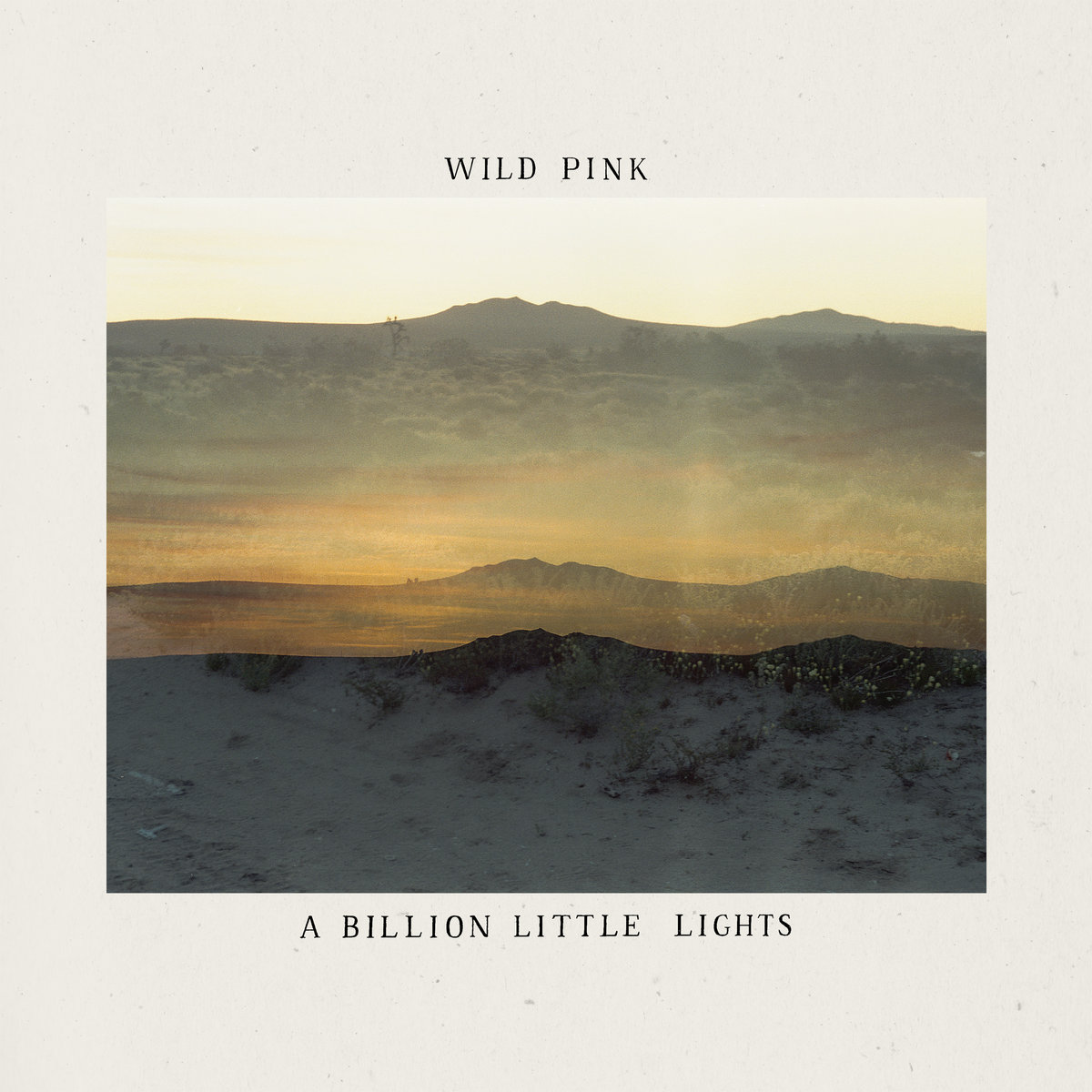
15 | Wild Pink - A Billion Little Lights

Royal Mountain Records

For the better part of the last decade, Wild Pink have been carefully fleshing out their own corner of the musical world with loving brushstrokes. Sometimes those brushstrokes would be long, vibrant streaks like 2018’s Yolk in the Fur, and other times they would be shorter dispatches like an EP here, or a random Taylor Swift cover there. Throughout 2021, the heartland indie rockers seemed hellbent on adding more onto their canvas than ever before. Released in February, A Billion Little Lights is a searching album that conjures the awe-inspiring feelings of a drive through America’s heartland. The sun shines down upon you as you feel the wind in your hair and take in the vast expanse before you. The amber-coated fields of grain contrast the cloudless blue skies, and you feel at home, even though you’re hundreds of miles away from everything you’ve ever known. That’s what listening to A Billion Little Lights is like. Supported throughout the year by a tour, an EP, some covers, a live album, and capped off by an excellent single, there has never been a better or more rewarding year to live within the world crafted by John Ross & co.


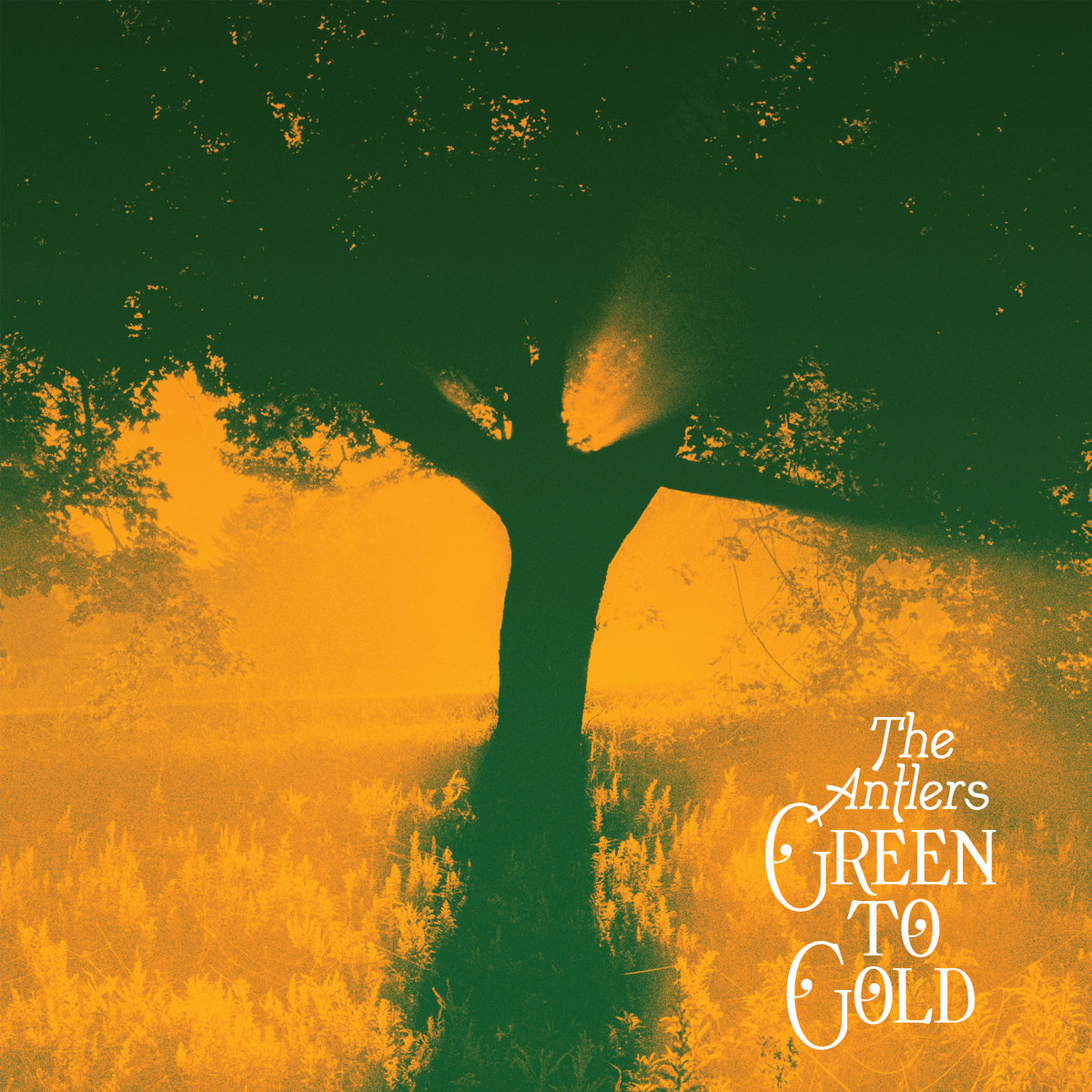
14 | The Antlers - Green To Gold

Anti-

Some albums capture the frigid landscape of winter. Others embody the celebratory warmth of summer. While I love those types of albums, I’ve never heard a record capture the transition between seasons quite like Green To Gold. With dreamy lounge piano, vibrant steel guitar, and expansive instrumental stretches, The Antlers’ sixth studio album (and first in seven years) sees the band at a transitionary period too. Conceived and written almost entirely in the morning hours, the band’s latest is, as lead singer Peter Silberman puts it, “the first album I’ve made that has no eeriness in it.” He went on to elaborate, “I set out to make Sunday morning music.” Despite this aversion to darkness, everything about Green To Gold, from its title to the songs contained within it, is about the liminal spaces of life. And when you really think about it, aren’t those in-between moments are more compelling anyway? It’s easy to paint life with binaries, but the truth is more often somewhere in the middle. What’s really telling of who you are as a person is what you do to swing out of those periods and move between them. What do you do when you don’t know what to do? For The Antlers, the answer lies within this record. 

Just as Green To Gold soundtracked our world’s unthawing, the recently-released Losing Light captures our yearly withdrawal. Slower, darker, and released at the perfect time in the depths of November, the EP is a worthy addendum to the band’s latest record that makes it feel like a living, breathing piece of art. 


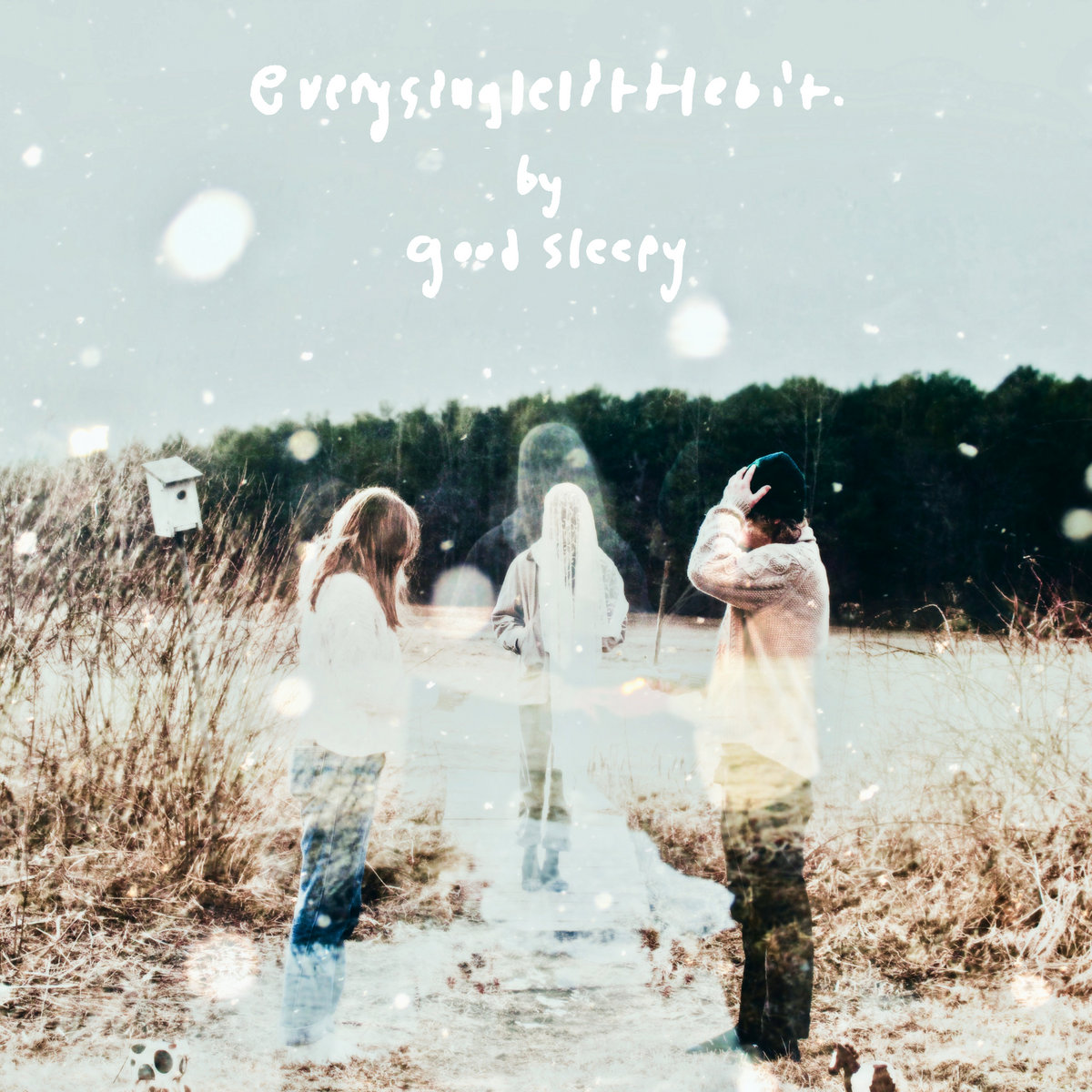
13 | Good Sleepy - everysinglelittlebit

No Sleep Records

everysinglelittlebit begins like a dream. As the album’s introductory track unfolds, it feels as if you’re making your way through a dense, moss-covered forest. Thick fog fills the air, carrying disembodied voices that swirl around the outer reaches of your perception, and suddenly everything drops out at once with “suffokate.” It’s like one of those trapping pits where hunters cover the opening in branches and leaves. You set foot onto it, shift your weight, and suddenly find yourself in a freefall. The song hits you like a punch to the gut, combining jittery guitarwork with a tight rhythm section and weighty shout-along vocals. Despite this bombastic sequencing, the tracklist does a good job of giving the listener a chance to catch their breath every once in a while, only to sap it away with the next track. Good Sleepy spend the duration of their debut album grappling with overwrought emotions, complicated relationships, and the idea of emotional self-sustainability. The instrumentals are tight and punchy, settling in at a middle ground somewhere between Stars Hollow and Ogbert The Nerd. The end result is an album with the nervous energy of speeding down the highway while chugging a Red Bull on your way to a basement gig. I know with everysinglelittlebit of myself that we’ll all be back there soon.


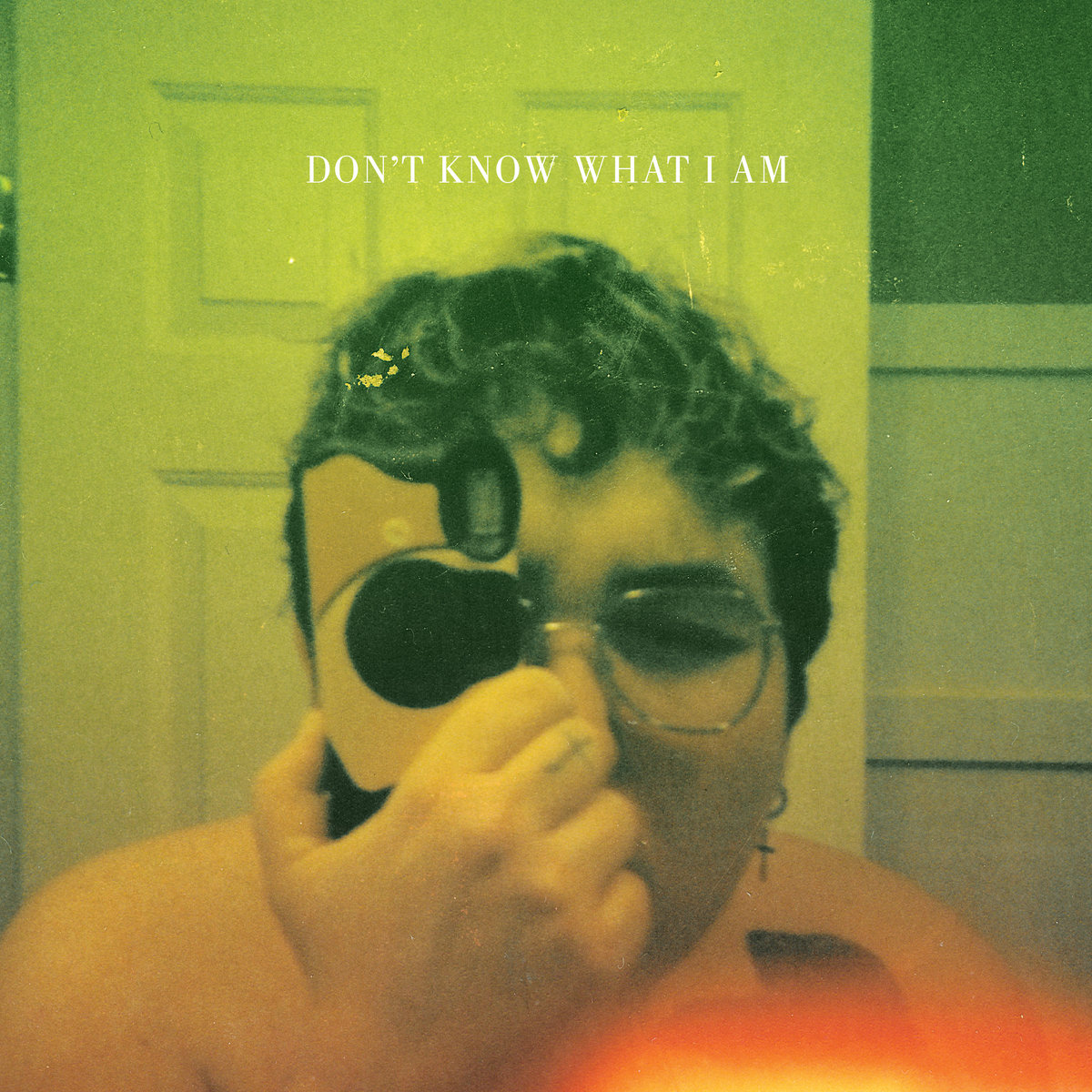
12 | Alien Boy - Don’t Know What I Am

Get Better Records

Don’t Know What I Am plays out like the soundtrack to a long-lost ​​mid-90s coming-of-age teen comedy. I’m not even talking about that made-for-TV trash, I’m talking top-of-the-line teen dramedies like Heathers and 10 Things I Hate About You. The kind of movies that culminate in a house party and always know when to bust out a peppy pop-punk tune. I suppose that would make “The Way I Feel” the scene-setting opening credits song that would play as we swoop into some bustling high school and meet our main characters. Throughout the record, the Portland rockers do an excellent job of introducing themselves to the audience, guiding them along this emotional journey, and pulling on our heartstrings with expertly-crafted hooks fit for 90s alt radio. The instrumentals are dripping in fuzzy shoegaze feedback that borrows equal parts from power pop and emo. Best listened to loud af, Don’t Know What I Am tackles topics of self-discovery, partnership, and queerness. More than anything, this record sounds like unrepentant love. It sounds like teenage adoration. It sounds like finding someone who loves you for who you are. This is the way things should have always been and should always be. It’s love the way you always wanted. 


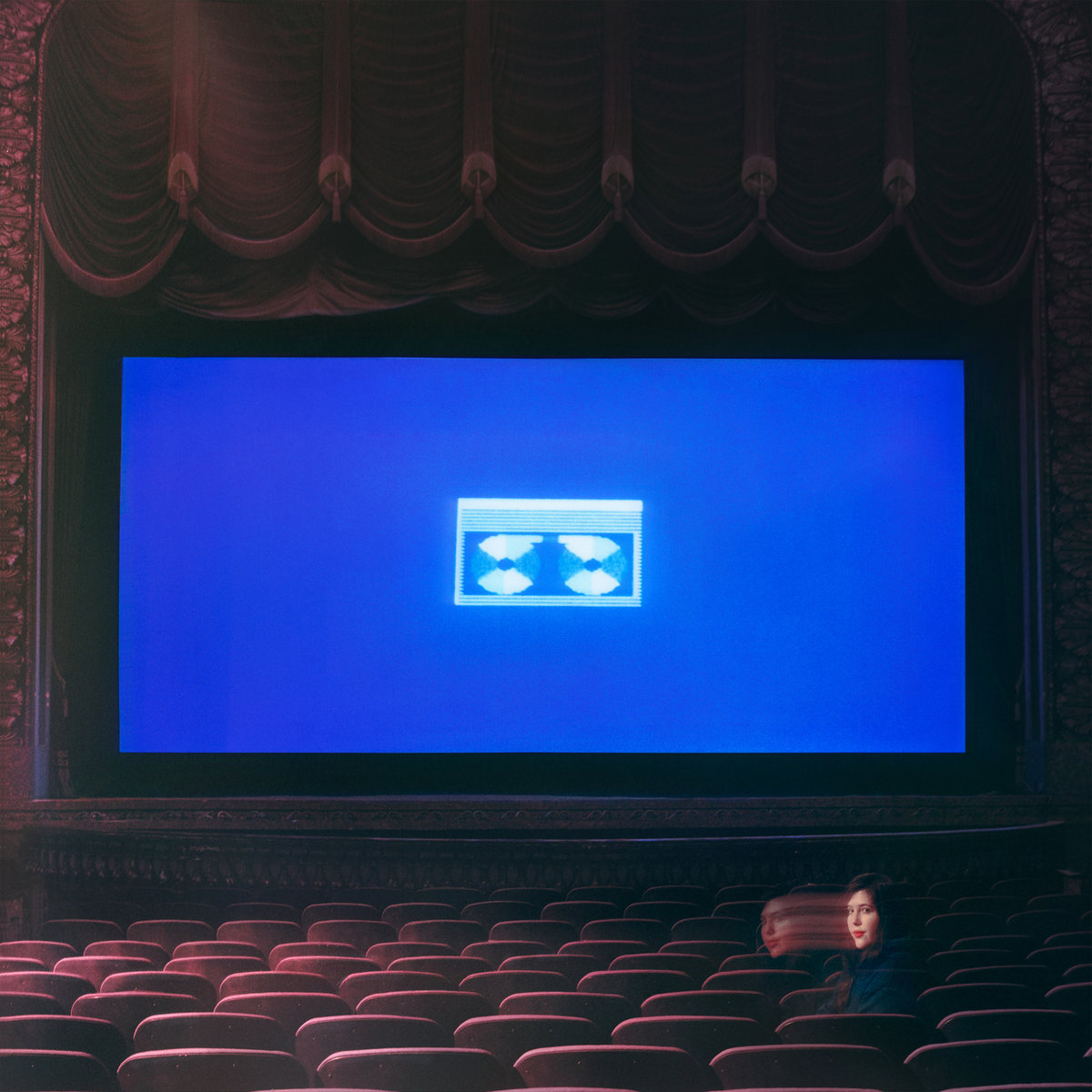
11 | Lucy Dacus - Home Video

Matador Records

Home Video hurts to listen to. Not just because it’s a collection of raw feelings and confessional songs, but because it was released as my relationship was crumbling in real-time. I usually try to not inject too much of my personal life on here (much less in an AOTY countdown), but this album’s pain feels intertwined with my own. The songs of unfit pairings, longing, and heartbreak mirror the feelings I’ve experienced this year. Home Video is a hard album to listen to, but even still, I can’t deny its mastery. This record delivers everything I loved about 2018’s Historian and makes it even more approachable. There are still killer guitar solos, anthemic choruses, and aching balladry, but Dacus seems even more sure of herself. These pleasant qualities help dislodge these songs from the hurt. This record may still be hard for me to listen to, but a few years down the line, I can’t wait to revisit this release from a new perspective and ride alongside in Dacus’ passenger seat, taking in the world.


10 | Stars Hollow - I Want to Live My Life

Acrobat Unstable Records

Like most emo records, the debut album from Stars Hollow sees our narrator coming face to face with their faults. The key difference between I Want to Live My Life and most other emo records is that we actually accompany our hero on their journey towards self-betterment. While other releases of this genre lament not being able to get the girl or dig yourself out of a rut, I Want to Live My Life rolls up its sleeves and actually does the hard work. This means is that the listener experiences every phase of this journey as the band works their way from merely maintaining to striving to achieve something more. It’s a beautiful and true human experience captured in a compelling 25-minute run time.

Read our full review of I Want to Live my Life here.


9 | Fiddlehead - Between the Richness

Run For Cover Records

While Springtime & Blind was an album mired in death, Between the Richness is an album about life. Specifically, about the things that define a life. Inspired by lead singer Patrick Flynn’s experience as a recent father, the album uses his newfound perspective to unflinchingly capture the things that define us early on. Childhood friendships, mentors, conflicting emotions, growing apart, and academic expectations are all topics that inform the songs here. This all builds to an album-length collage that mirrors the building blocks most of us are comprised of.

After many, many, many repeated listens of Between the Richness, there’s one thing that always sticks in my mind. After all the dust has settled; after the EE Cummings poem, the Latin passages, and the obituary readings, one lyric always rattles around in my brain for hours on end; “How do I say goodbye?” Like many other lines on the album, it’s belted in a near-scream by Flynn, but is swaddled in a melody that can get stuck in your head for hours… and therein lies the beauty of Fiddlehead. Complicated articulations of even more complicated feelings delivered in a cathartic way that not only makes sense but makes you want to join in.


8 | Mannequin Pussy - Perfect

Epitaph

Punk music was never meant to be indulgent, and no release this year proved that more than Mannequin Pussy’s Perfect. A compact collection of five songs weighing in at a collective 14-minute runtime, this might be (pardon my pun) the perfect punk album… or at the very least, the best distillation of Mannequin Pussy’s range of sounds. “Control” is the ultra-relatable lead single, “Perfect” is the burn-it-all-down punk cut, and “To Lose You” is the soaring lovelorn middle child. Beyond that trifecta, “Pigs Is Pigs” is a bass-led hardcore sucker-punch with a vital message immediately contrasted with “Darling,” the EPs solitary closing ballad. Perfect is a full range of emotions captured in a rapid-fire montage of rage, love, injustice, hate, loneliness, and adoration. There’s simply nothing more you could ask for. 


7 | Cory Hanson - Pale Horse Rider

Drag City Inc

In my mind, Pale Horse Rider is a concept album. It’s a record about a cowboy riding an undead skeletal horse to the psychedelic depths of hell. The reason isn’t entirely clear, but odds are he’s going to rescue the girl from a hulking demonic behemoth. It’s like a Robert Rodriguez film, but way more laid back. Or maybe Evil Dead if the characters cracked a few less jokes. It’s Dante’s Inferno in a western setting. 

The title track is an early tent poll that plays out like the would-be movie’s title card. From there, we wind from the desert-like desolation of “Necklace” to the epic battle portrayed as a guitar solo on “Another Story From the Center of the Earth.” Even the celebratory moments like “Limited Hangout” are carried out after acknowledging how arduous the journey has been. “Sometimes it's so hard not to feel like a corpse Dragging a soul on two broken wheels / I have often felt the edges of my body trying to escape,” Hanson bemoans before picking up a drink. It’s a nice little moment of lightness that still acknowledges the dark reality we often find ourselves in.

With Hanson as our ferryman, he guides us through the voyage with crystalline pedal steel, rumbling cowboy drums, and jangly campfire acoustic guitar. Despite the macabre theme and overall mood, the release closes out with a sunny disposition on “Pigs,” which plays out like the final credits after we’ve clawed our way back to the surface of the earth. In true old west fashion, the album leaves you ready for another pulpy expedition, but not before celebrating with a stiff drink.


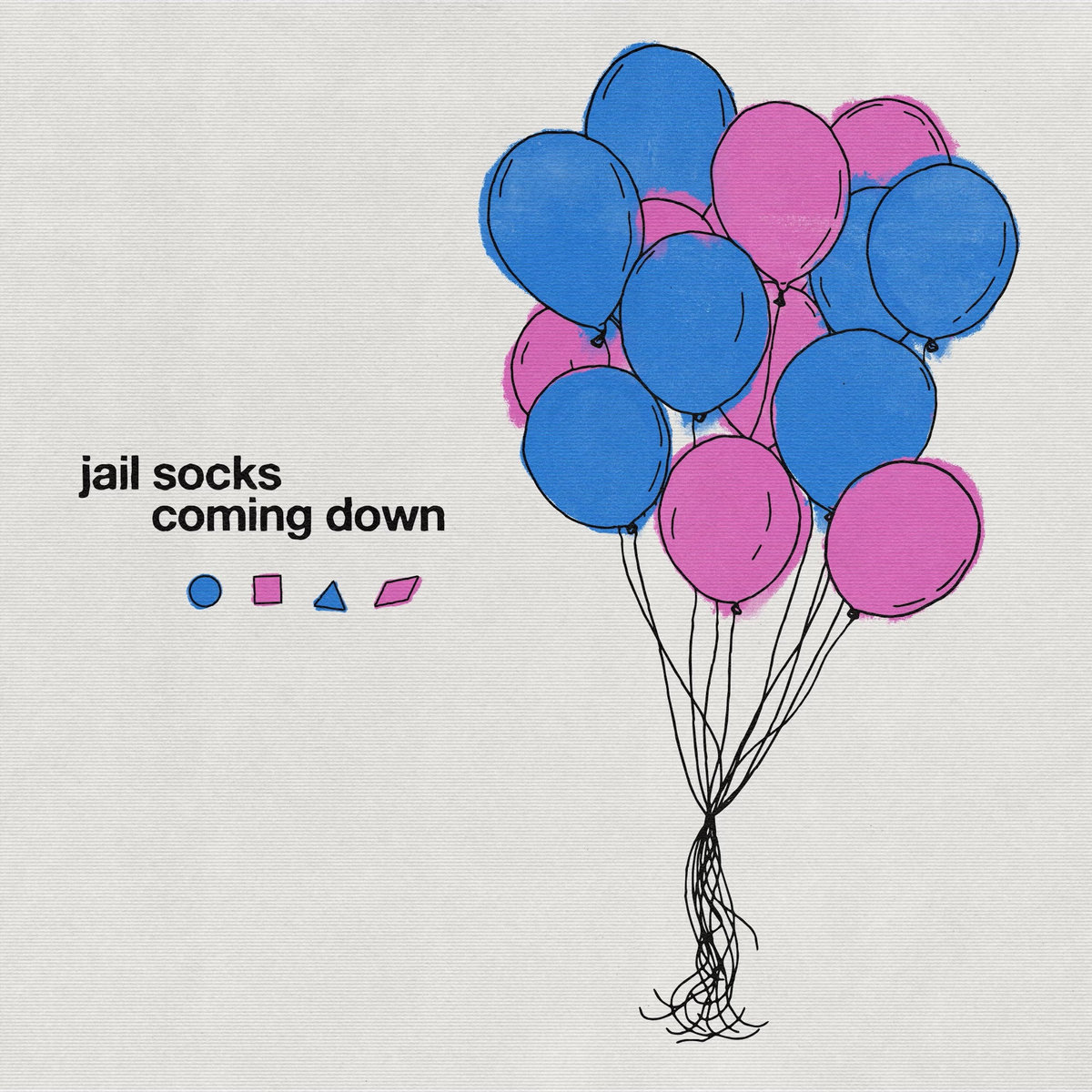
6 | Jail Socks - Coming Down

Counter Intuitive Records

When I listen to Coming Down, I hear Jail Socks, but I also hear my childhood. I hear my first collection of CDs like Sum 41, Good Charlotte, and Simple Plan. I hear candy-coated pop-rock with immaculate hooks and catchy choruses that mask a more profound layer of emotions lying just beneath the surface. Essentially an album about the comedown of youth, the band’s debut album builds off the foundation laid out in their 2019 EP and draws influence from 90s alt-rockers like Third Eye Blind and Jimmy Eat World. From outright rippers like “Peace of Mind” and “Point Point Pleasant” to more pensive moments found on “Pale Blue Light” and “More Than This,” the band explores a dazzling range of early-20-something lamentations on this record. Already my most-listened-to album of 2021, I know that Coming Down will be an album I’ll return to for many years to come. 

Read our full review of Coming Down here.


5 | The World Is A Beautiful Place & I Am No Longer Afraid to Die - Illusory Walls

Epitaph

An 80-minute post-emo, post-hardcore, post-rock album about the social, moral, and ideological rot of late-stage capitalism? AND it’s all passed through a conceptual Dark Souls filter? I am in. There’s simply no amount of hyperbole I could pack into this introduction that would do Illusory Walls justice, so I’ll just say that this was one of the most impactful first listens I’ve had with an album in years. The World Is a Beautiful Place & I Am No Longer Afraid to Die are perhaps best known for being forebears of the 2010s Emo Revival. Famous for their long name and even longer list of band members, everything about Illusory Walls seems counter to their previous work. It’s a darker, fiercer, and more focused album that was conceived amongst the group’s (now core) five members. 

While the singles range from a mixture of The Anniversary and Broken Social Scene on “Queen Sophie For President” and heavy metal riffage on “Invading the World of the Guilty as a Spirit of Vengeance,” the group rounds out distant corners of their universe on songs like “We Saw Birds Through the Hole in the Ceiling” and “Your Brain is a Rubbermaid.” The cherry on top of this album comes with the one-two punch of its closing tracks. Both the 16-minute “Infinite Josh” and the 20-minute “Fewer Afraid” are absolutely jaw-dropping tracks that are guaranteed to inflict goosebumps upon any listeners who might take them in with an open heart. While “Infinite Josh” is built around a post-rock build and steadfast bassline, “Fewer Afraid” is a career highlight manifesto complete with a spoken-word passage and philosophical sentiments. The latter of these two songs evoked an actual joy-filled scream from me upon first listen when the band broke out into an interpolation of my favorite song of theirs from nearly a decade earlier. 

Over the course of this album’s final 36 minutes, the group touches on topics like death, the passage of time, religion, and the desire to make the world a better place. It’s inspiring, cosmically-affirming, and downright staggering. In one of the record’s most profound lines, friend of the band Sarah Cowell sings,

You cry at the news, I just turn it off
They say there's nothing we can do and it never stops
You believe in a god watching over
I think the world's fucked up and brutal
Senseless violence with no guiding light
I can't live like this, but I'm not ready to die

Even if you aren’t a fan of this band or emo as a whole, Illusory Walls is a boundless work that shatters nearly every preconceived notion one might have about the possibilities of this genre—an extraordinary feat of the medium.


4 | Japanese Breakfast - Jubilee

Dead Oceans

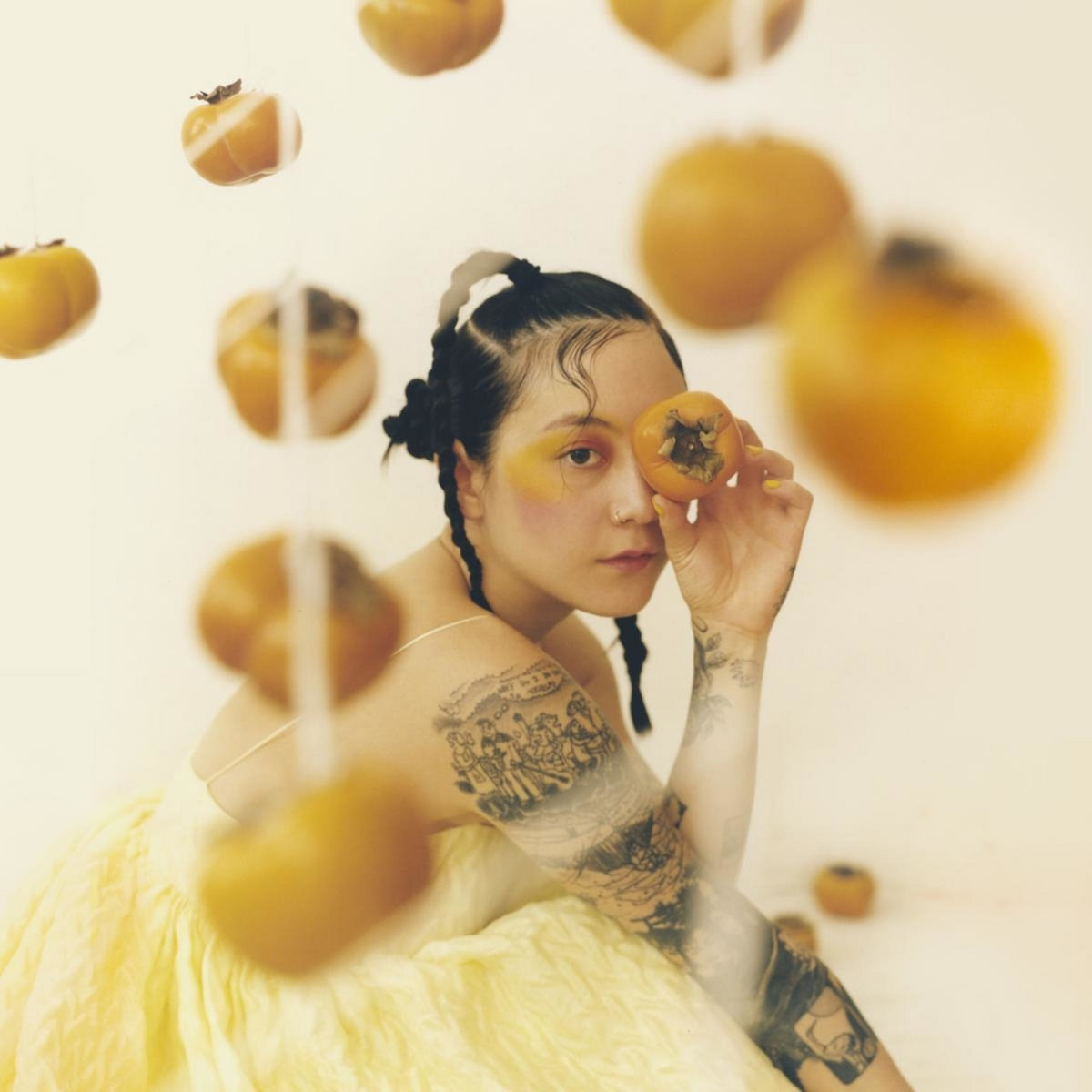
Michelle Zauner has had a hard couple of years. After the dissolution of her previous band and the death of her mother, Zauner coped the best way musicians know how: by creating. She recoiled into grief over the series of several Bandcamp EPs, culminating in 2016’s phenomenal Psychopomp. She processed her loss in the outer reaches of space with 2017’s Soft Sounds From Another Planet and then took a few years to explore her creative whims. She recorded some covers, did some collabs, and even wrote a damn book. This is all to say that Zauner has kept busy, and after plumbing the depths of sorrow for nigh on five years, she has earned herself a bit of joy. Enter Jubilee

Japanese Breakfast’s aptly-titled third album finds Zauner basking in vibrant colors, biting into a sweet persimmon, and allowing herself a cautious bit of happiness. “Paprika” sifts through the rubble, eventually uncovering a triumphant parade of love. This leads directly into “Be Sweet,” which is a downright untouchable anthem that deserves nothing less than to be sung at the top of your lungs while bouncing around in pure revelry. This is not to say Jubilee is all good vibes; the album’s happiness is also tempered with plenty of realism and darkness found in songs like “Posing In Bondage” and “Savage Good Boy.” Just as there will always be loneliness and shitty men even in life’s best moments, Jubilee acknowledges the presence of good alongside the bad. It’s a complete spectrum of emotions that all cement in the epic six-minute slow-burn closer “Posing For Cars.” Michelle Zauner will not be defined by her grief nor her happiness. She is a complete human with a planet’s worth of emotions contained within. Jubilee is merely Zauner’s attempt at capturing that ever-shifting mix of feelings. It’s a rush.


3 | Turnstile - Glow On

Roadrunner Records Inc.

Before Turnstile even announced Glow On, the band’s four-song Turnstile Love Connection had already made its way onto my album of the year shortlist. On Turnstile’s third studio album, the band builds off their summer sample platter (and excellent visualization) into an expanded world of pink cloud hardcore punk. One spin of the album’s opening call to action, and it’s easy to see the appeal; muscular guitar riffs, exhilarating instrumentals, and catchy scream-along lyrics are all things the group has mastered now over a decade into their career. 

Months ago, I saw someone online describe the album as “pop-punk,” and I have become obsessed with that descriptor. Glow On isn’t pop-punk in the frosted tips Sum 41 sense of the term but in a much more literal interpretation of those two words. This is hardcore punk music made in a poppy, approachable way. This is radio rock that can deadlift hundreds of pounds and throw up a 6-minute mile no problem. If this album doesn’t want to make you take flight, then quite frankly, nothing will.


2 | Wednesday - Twin Plagues

Orindal Records

How many of us have experienced Twin Plagues over the last year? The loss of a family member and the loss of a job. A life-threatening accident and a breakup. Bad news following already bad news. Sometimes these things just overlap, and when they do, they compound, making each feel worse in the process. Add a climate crisis, political regression, and a pandemic on top of it, and you’ll find that one section of your brain has been passively worrying for the last two years, if not longer.

Twin Plagues is an album full of these dual-wielding worries, contrasted against midwest mundanities. NFL teams, burned-down fast food buildings, high school acid trips, family photos, and dead pets are brought up and passed by like a roadside attraction that nobody wants to stop the car for. While nondescript on paper, these observations are rendered beautifully within the album, set to an instrumental backdrop that ranges from fuzzed-out shoegaze to wistful slide guitar.

This record captures these overlapping plagues and offers a surprising amount of compassion to the emotionally rung-out listener. It’s the sound of multiple major life events converging on you at once, all while the world outside continues to spin onward. It’s the sound of catastrophe happening while you find yourself caught in the eye of the storm. 

That said, there’s still escape and comfort to be found here. Twin Plagues may not offer a solution, but in a way, it offers something better; solidarity. It provides the knowledge that you are not alone. It quells your mind with the fact that there are other people out there experiencing the same thing, and, despite how it may seem, we are stronger together than anything the world can throw at us individually. And if you’ve made it this far? If you’ve weathered those Twin Plagues or you doubt that you have the strength to do so, then look no further than the affirmative first words of the album: you are fearless


1 | Home is Where - I Became Birds

Knifepunch Records

If I were to describe I Became Birds with one word, it would be electrifying. There are tons of things you can compare Home Is Where to: Neutral Milk Hotel, Bob Dylan, and your favorite local punk band, just to name a few. But simply put, this band is unlike anything I’ve ever heard before. As a collection of songs, I Became Birds is all of those sounds and influences packed into a magnificent 19 minutes that strikes my soul like a bolt of lightning. With poetic and visceral lyrics that capture the trans experience, these songs tackle important and seldom-discussed topics like body dysmorphia and self-discovery in inventive and affirming ways. The band also touches on rustic backcountry sentiments, the desire to pet puppies, and presidential assassinations throughout the album’s blistering fast runtime. 

Back in March, I described the release as a rickety roller coaster, and I stand by that. Every time I give this record a listen, I half expect it to collapse under the weight of itself. This is even reflected in the band’s live performances as lead singer Bea MacDonald leaps, screams, shouts, wails, and collapses as the songs unfold. The guitars sway, tap, and shred with a fiery passion, floating just above the propulsive rhythm section, which alternates between gently guiding the songs forward and putting the pedal to the metal, forcing them into a careening full-tilt. Throw in some harmonica, synth, horns, violin, group chants, and a singing saw, and you have an honest, revelatory, and elating experience that also makes for the best album of 2021.