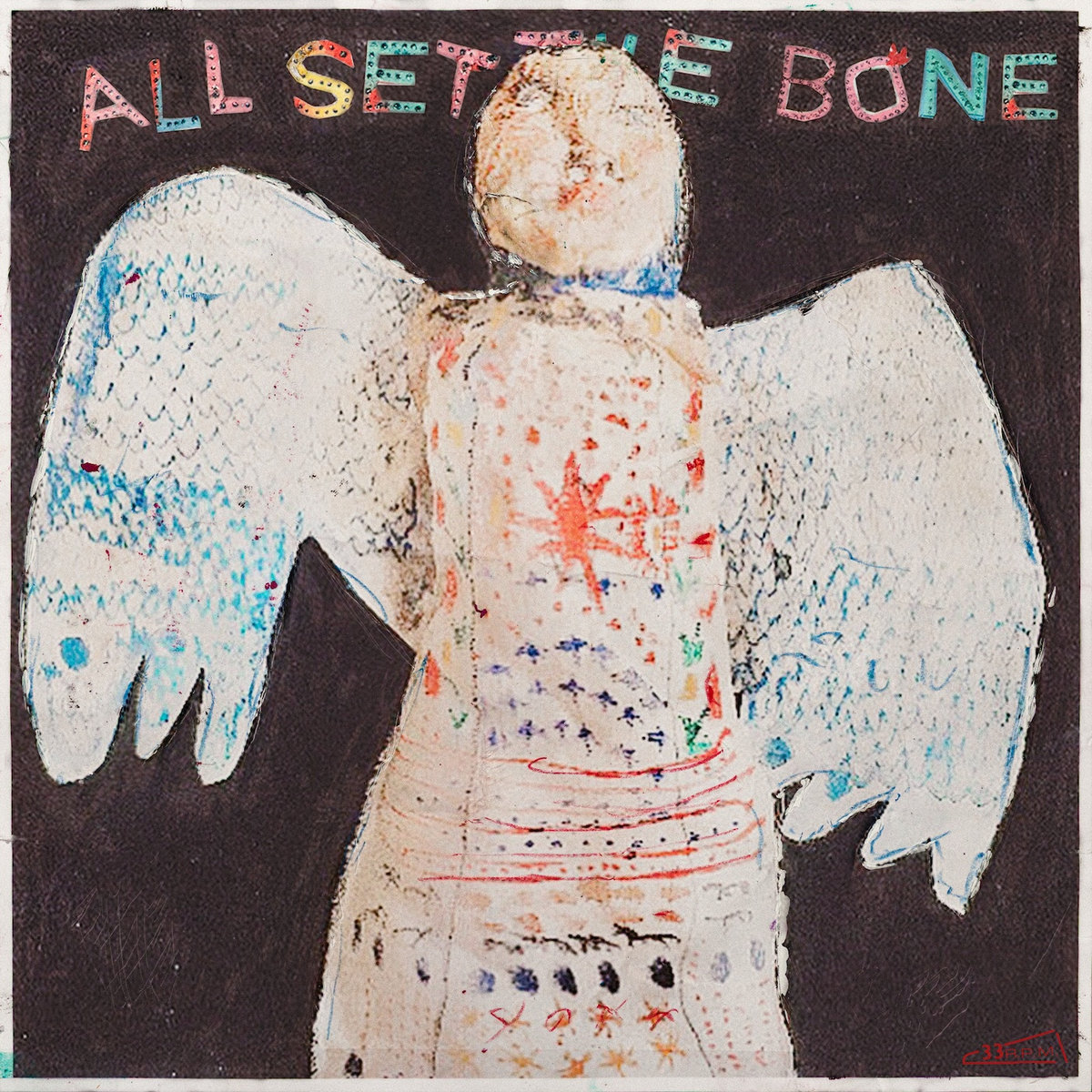
Dry Cleaning – Secret Love | Album Review
/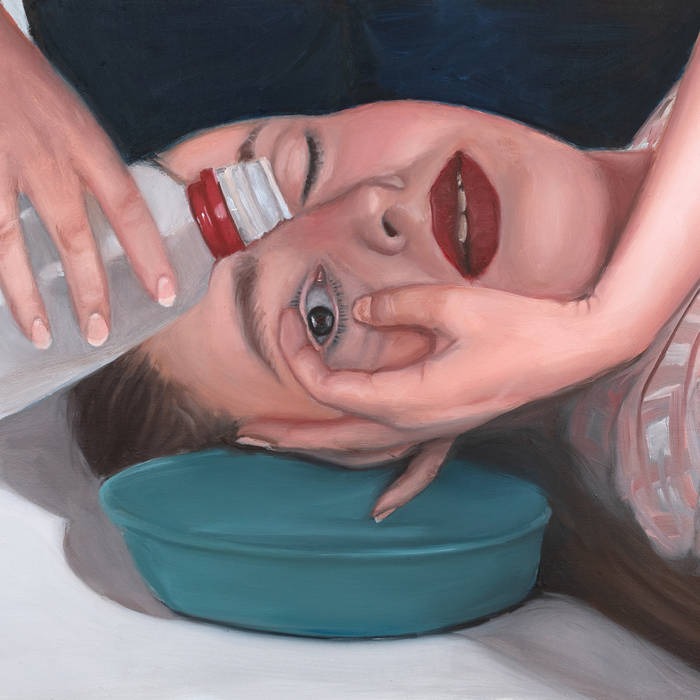
4AD
I threw my hair into space buns as I ran ten blocks from my late shift at the library to catch Dry Cleaning at Webster Hall. This was the band’s second US tour post-lockdown, and friends I made in line for a Mannequin Pussy show months ago were saving me a spot on the barricade. At that first meeting, I’d ached to come out as trans, shameful to be seen as a man taking up space, and desperate to express the femininity I related to so deeply. When I joined them on the floor at Webster Hall, Lily complimented my hair, and I immediately blurted out my confession. There was no better place to do it than a Dry Cleaning show.
Since their initial duo of EPs in 2019, Dry Cleaning has undergone subtle shifts that have refined their style to its core elements. Their debut LP, New Long Leg, was less outwardly caustic, resulting in a creepier, more sinister record, while 2022’s Stumpwork included Florence Shaw almost singing and the band diving deeper into constructing haunting grooves.
Over the last four years, with the production help of Cate Le Bon, Dry Cleaning have once again burrowed deeper into themselves and emerged with Secret Love, their finest record yet. Secret Love is an expansive album with lyrics that explore the genocide in Palestine, gender roles, manosphere food influencers, and the search for love, all while the instrumentals bounce from hardcore punk to jangle pop and synth ballads. All of these influences and topics coalesce around a single question: how do you live an authentic life today?
Dry Cleaning has always had hooks. So many of Shaw’s lines have the uncanny ability to become instantly inscribed in listeners’ brains as if they’d always been there. The first time I heard her declare “never talk about your ex / never, never, never, never / never slag them off because then they know / then they know,” I could tell I would be screaming it at friends while commiserating breakups for the rest of my life. Then there was her sigh of “must I look at my belly in the mirror” on “Every Day Carry,” which stuck with me as someone who hated everything she saw in the mirror. Few bands have drum rolls I want to sing along to, like on “More Big Birds,” guitar lines I want to whisper into my lover's ear like on “Viking Hair,” or bass lines I want to murmur as I shake mourners' hands at a funeral like on “No Decent Shoes For Rain.”
I once met Florence Shaw after a show and got to tell her how essential the Dry Cleaning records have been to my transition. She replied that she was grateful they helped, as her lyrics speak to her own feelings of disaffection with the world, and on Secret Love, she reveals more of her soft underbelly than she ever previously allowed. On “Let Me Grow and You’ll See the Fruit,” she sings about how “people move away from me / I constantly think there are spiders on me and around me.” As someone who bristled anytime I was asked to turn to my neighbor and share during class, when she recites these lines, I’m reminded of the lecture halls full of classmates who paired off and left me alone. The following line, “I yearn for a friend who I can tell my secrets to,” cuts when all your life has felt like desperately waiting for someone to understand you so innately that you don’t have to speak. Alongside Shaw’s pained vocals, I want to travel back in time to hold my past self and whisper this track's sighing horns to her in an attempt to help her understand that everything will be okay.
Then there is Shaw’s love of tidying, as detailed on “My Soul / Half Pint,” where she discusses how much joy organizing her possessions and assigning them set places in her home provides. But don’t get her confused; she doesn’t love cleaning, in fact, she “find[s] cleaning demeaning.” Over a strutting instrumental, she resents the implication that, as a woman, she should be the one cleaning. At each piano-key plink, you feel her shaking off the expectations her gender assigned to her. It’s simply thrilling.
The group returns to objects of love on “The Cute Things” and “I Need You,” as Shaw describes the sacrifices one makes for their partner over a whimsical, drifting melody on the former and a synth mire of want on the latter. “I Need You” contains one of the most unexpected references Shaw has ever made in her lyrics, likening the selection of a lover to Donald Trump picking an Apprentice. It’s an unsettling comparison to make, but isn’t love by definition unsettling? If love weren’t unsettling, the sacrifices made in pursuit wouldn’t be worth it.
When Shaw looks towards the larger world, she sees manipulation everywhere: “objects outside the head control the mind / to arrange them is to control people’s thinking,” she sings on the lead single “Hit My Head All Day.” That track slinks along seductively as Cate Le Bon’s production almost turns the band into a pick-up artist. They stay in the realm of bad advice givers on “Evil Evil Idiot,” one of the most aptly titled tracks in the band’s discography, as Shaw takes on the perspective of a man who only eats food that has been burnt so severely it may as well just be charcoal. Tom Dowse’s guitar springs into the mix like a performer jumping into your face from around the corner of a good haunted house. “Evil Evil Idiot” perfectly captures the feeling of radicalization, showing how people descend from normal fears like ingesting too many microplastics to refusing to even let black plastic touch their food.
“Evil Evil Idiot” is an excellent example of Shaw’s newfound strength in writing explicitly from manipulative characters’ perspectives. But it is not just the exaggerated personalities she’s interested in, elsewhere she looks at the mundanities of life. On “Cruise Ship Designer,” she takes on the titular job and forces you to listen to someone justify their career choice. When contrasted with the late-album highlight “Blood,” the cruise ship designer seems quaint, but Shaw understands he is just as insidious as a drone pilot. One provides escapism from the terrors of the world that the other enacts with the cold detachment provided by distance. On the latter, over a constant beat that pounds away like the thrum of violence that undergirds society, she sings about looking away from tragedy: “I’ve shown my arse now.”
Dry Cleaning’s advice after all these challenges to living a good life? Caring. After being confronted with dozens of obstacles to happiness as described on “Rocks,” Shaw sings on the final track, “Don’t give up on being sweet.” You never know what can come from putting kindness and empathy into the world. In the face of malicious actors, sweetness could be what builds a better world.
Lillian Weber is a fake librarian in NYC. She writes about gender, music, and other inane thoughts on her substack, all my selves aligned. You can follow her on Insta @Lilllianmweber.