The Emo(Con) Diaries

Photo by Annie Watson

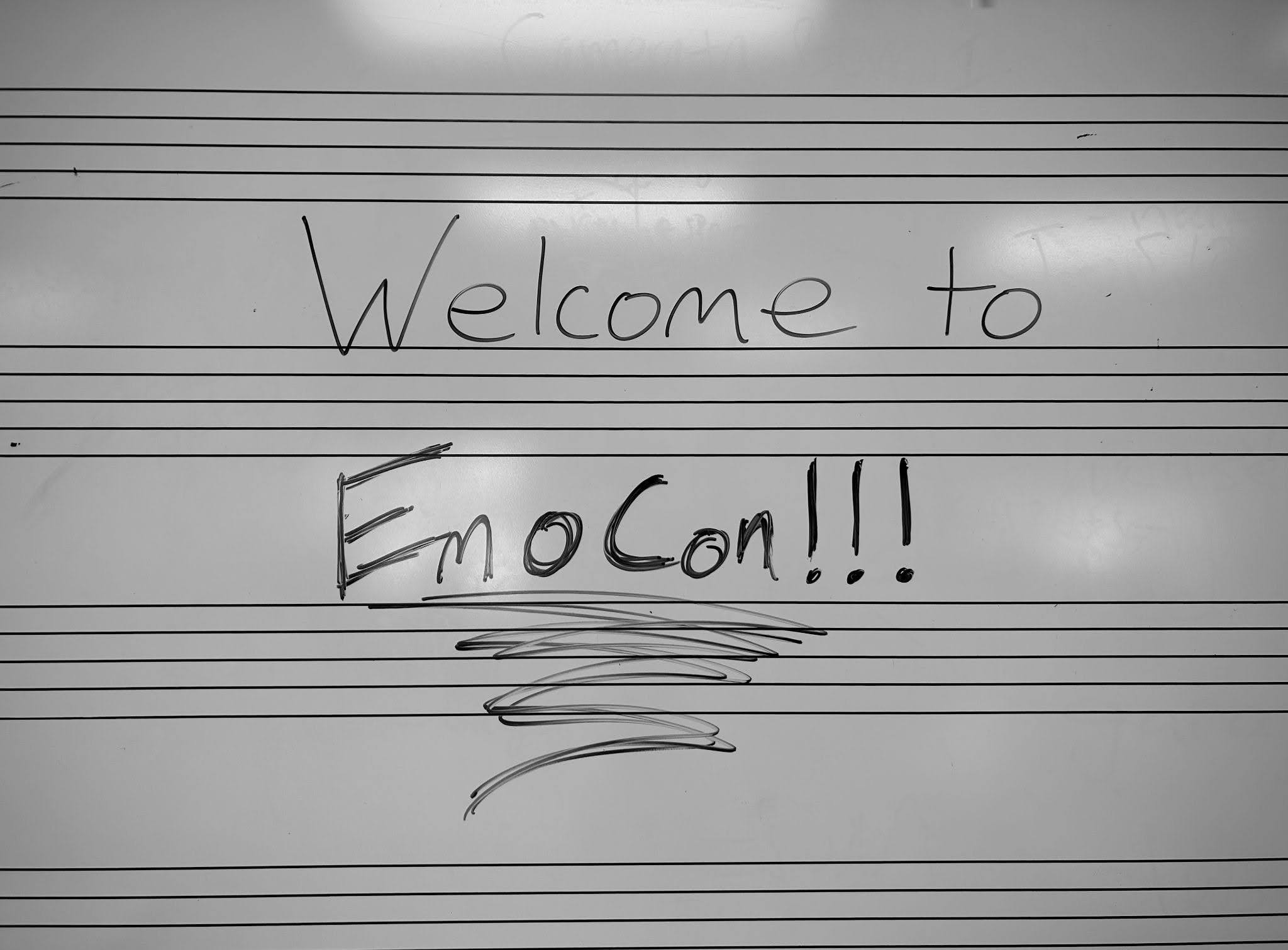
Earlier this month, I went to a first-of-its-kind, academic conference on emo music, called “A Conference…, but it’s Midwest Emo” aka EmoCon for short. If you’re getting déjà vu, it’s because I interviewed the organizers about a month ago, chatting about the conference’s inception and their goals.

Things kicked off on Friday, April 10th when Dr. Steve Lamos, drummer for American Football and professor of writing and rhetoric at University of Colorado Boulder, gave a fantastic opening keynote at the music building of Washington University in St. Louis. His talk was about writing with nostalgia, closely following an article he published in the Journal of Popular Music Studies earlier this year. After about 90 minutes of discussion, Q&A, and meeting other attendees, we headed to a beautiful bar called Blueberry Hill, where we retreaded old topics with new friends in the tiniest, oldest wooden booths in all of Missouri and geared up for a Saturday full of talks.

Saturday morning, after opening remarks and familiarizing ourselves with the exceedingly generous coffee and bagel spread, attendees split up to catch whichever talks interested them the most. At any given time, there were four panels running simultaneously, each featuring 20-minute talks and 10 minutes for questions. 

The panels ranged from discussions on archivism, the aesthetics of catastrophe, and kayfabe in MCR’s current tour. It was a whirlwind of people and ideas, and I wish I could have been at every single talk. There was an immense variety of presenters, not only in topic but also in discipline, methods, and personal backgrounds. I scribbled several pages of notes, shook a lot of hands, gave out many business cards, and did my best to keep up with everyone else. 
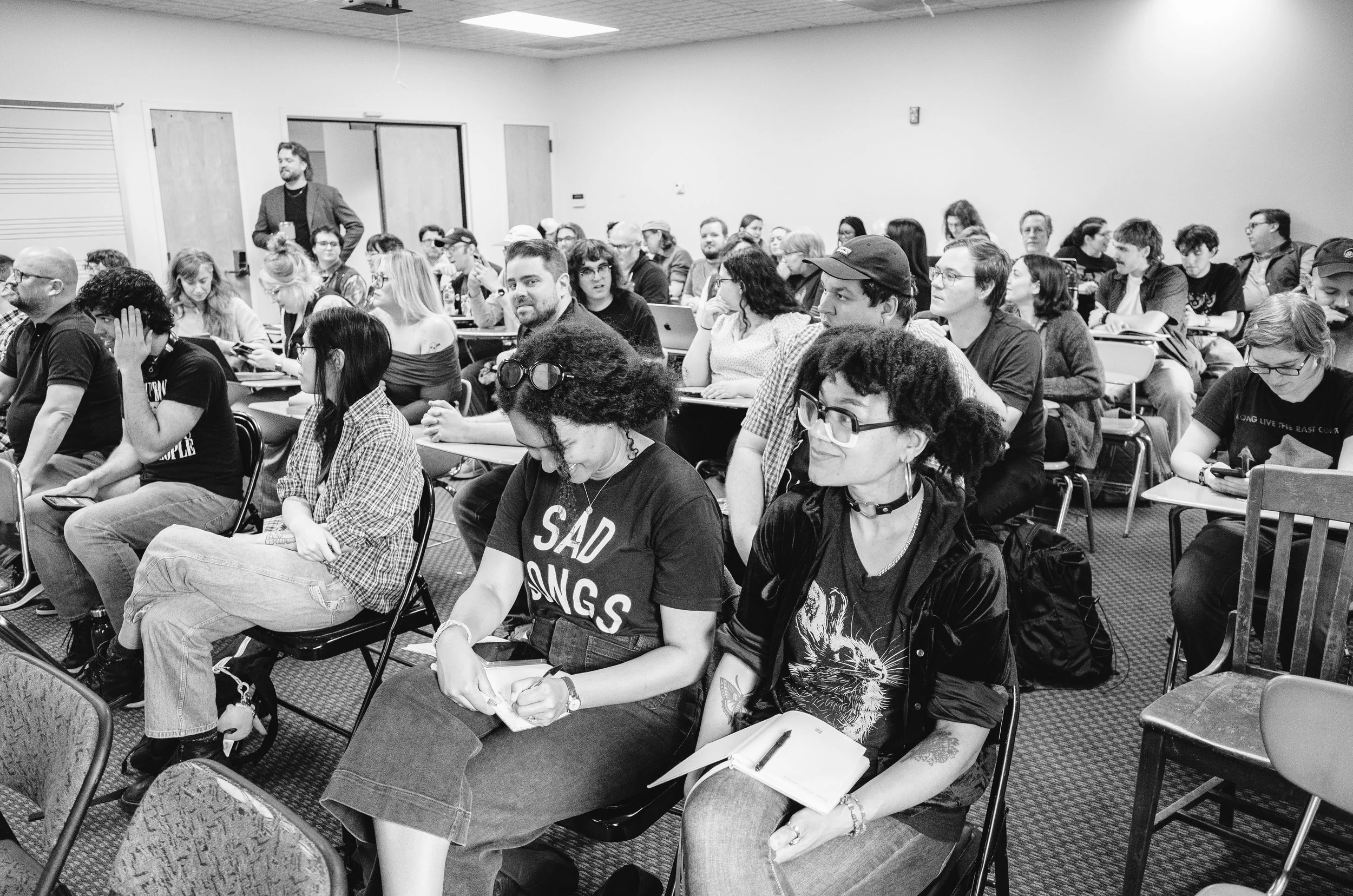
Photo by Dan Ozzi

After the last talk, we had two hours to ourselves before the concluding keynote and concert. One quick outfit change and a glass of wine later, we made it to Platypus with just enough time for dinner and a beer before Dan Ozzi’s talk. If you don’t pay attention to the names of journalists, you should. Ozzi is a long-time music journalist who wrote “SELLOUT: The Major Label Feeding Frenzy That Swept Punk, Emo, and Hardcore (1994-2007),” which is now a foundational text for researchers and enthusiasts of alternative music. His talk focused on aspects of selling out, gatekeeping, and poserdom, and how those words mean something different now than they did 20 or 30 years ago. The setup was notable as Dan talked at the front of the room for the better part of an hour, facing down a crowd of 40-ish two-beers-in academics with questions that could have lasted the entire evening. 

Eventually, Varun and Patrick broke up the Q&A and segued us into the concert, starting with Girl Gordon from Cincinnati, Ohio. This set alone convinced me that every conference should end with a concert. Not to mention, at least half the band members had also been presenters earlier in the day. They were followed by the cover group Silly Little Emo Band, which pulled a double set of all your cooler older sister’s favorite songs, including “Ohio is for Lovers,” “Twin Sized Mattress,” and “My Immortal.” In true emo fashion, the band revealed mid-set that this was a “farewell show of sorts,” and they were going on a “temporary hiatus” until all the members could finish up their degrees. 

By the end of the night, I had sweat out about three beers and was completely losing my voice. The night ended with a cover of “Welcome to the Black Parade” and about an hour's worth of goodbyes as people trickled out of the bar one by one, making last-minute exchanges, promising to keep in touch before heading back to their hotels, AirBnbs, and friends’ couches. 

There were many unforgettable memories made at EmoCon. Though at one of the archivism talks, we discussed how EmoCon itself wasn’t being recorded or archived very much beyond iPhone pictures and Instagram stories. To help hold onto a very special weekend, we put together a wall of diary entries from the attendees. 

— Braden Allmond


“It was hilarious to be in the same room as Steve Lamos when one of the panelists did a dramatic reading of the ‘real emo’ copypasta, which directly bashes American Football. A lot of laughter was shared throughout the whole weekend. ” — Annie Watson, Attendee


“The biggest memory I think I’ll have is how inclusive it felt, especially for someone who would otherwise consider herself an outsider to the emo world. I appreciated how accepting and welcoming everyone was.” — Lizzy Cook, Attendee


“When Patrick and I started planning EmoCon about a year ago, we never thought it would grow in the way it did. We hoped that the conference would be able to mix the welcoming realities of the DIY communities that built emo with the academic rigor that sustains educational life, believing that both could complement and improve the other. Everyone was so wonderful in every way, and it resulted in EmoCon being an effortlessly amazing event. It filled my heart with so much joy to see how welcoming, intellectually stimulating, and fun it was and to see what perhaps the best of academia (and emo) could end up being!” — Varun Chandrasekhar, Conference Organizer


“I think of all the Gerard Way love. He and MCR make women, youth, and LGBTQ+ feel seen and safe during post-9/11. Also, Ella’s classic Gerard photos, the fashion, the laughs, the uplifting of BIPOC scholarship, and all forms of emo. An honorable mention to Blueberry Hill grilled cheese and gooey butter cake with my new friends.”— Kristy Martinez, Presenter 


“Love was on full display at EmoCon 2026. The love of music and community was palpable; I hope this is the first of many emo conferences to come. I believe I made lifelong friends and colleagues. A special thank you to Steve Lamos for being such a kind spirit. Eternal gratitude to everyone who made this possible! <3” — Victoria Smith, Presenter 


“I’m watching Free Throw and Macseal at Delmar Hall alone after the conference, feeling desperate to keep the magic alive. It’s been over a decade since Those Days are Gone came out. The kids in the middle are anxious to start a pit, and I realize they all look so young. So familiar. The openers, Wakelee, all look about the same age. The stage lights cast Cory Castro in long, wilting pink shadows across the far left wall, and I think of that Current Joys lyric, “all the punks are writing memoirs.” I don’t stand for the whole set, but I record Two Beers In on my voice note app before I walk to the hookah bar. I tell Luna and Braden over text the next day that it felt like walking into my own house party on the last song when everyone is giving it everything they can.” — Sarita “Rita” A. Deleon-Garza, Presenter


“It was so beautiful to be surrounded by fans and enthusiasts of a genre that literally saved my life. My favorite memory was Izzy yelling ‘Hello gay people!’ before the LGBTQ+ emo scholars’ working lunch and seeing an idea we had for ages take form in flesh and blood. Also, sorry Stars and Stripes, but the MCR Trans Flag is the only flag I’ll salute. It was an empowering experience to meet Mick and learn the stories behind this flag, especially as a queer person in Nashville, Tennessee, where Vanderbilt University has stopped doing gender-affirming healthcare.”— Logan Dalton, Attendee
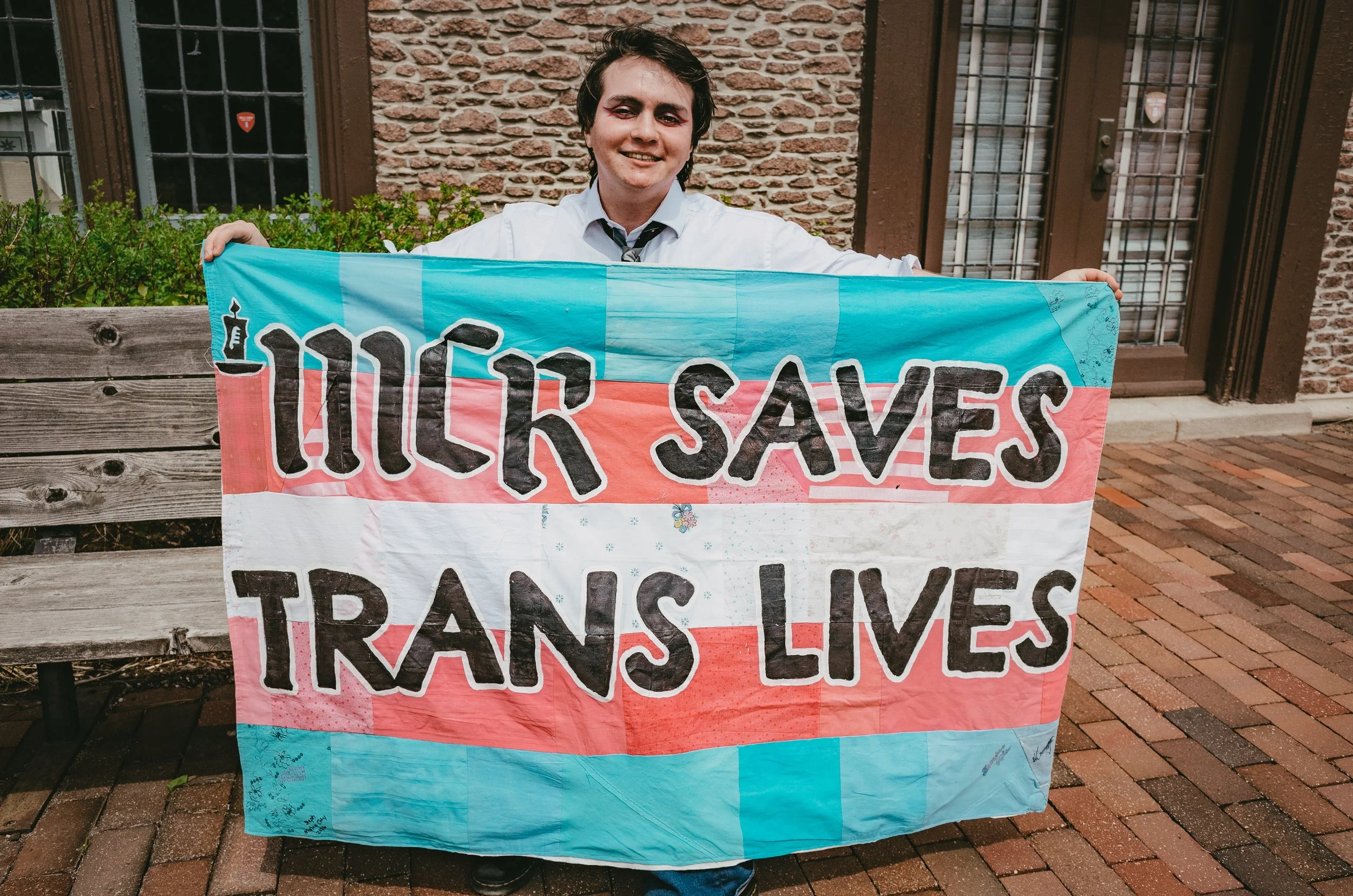
Photo by Dan Ozzi


“Being a non-academic elder emo, I had no idea what to expect from this conference and was blown away by it all. Seeing people from so many life paths come together to talk about this lens of identity we all share, from their own points of view, expanded my mind (and heart) in the best way. The emo in me sees the emo in everyone who attended.”  — Amanda Brennan, Presenter


“I spent much of my beautiful Saturday tuning into various Zoom rooms from Philadelphia, PA, the emo capital of the world (to me). I got to learn about agency and individualism across three different waves of emo, see some cool maps on the genre’s locality, and delve deep into the Queer Worldmaking of My Chem. That evening, I walked to catch Ultra Deluxe and Boyclothes at a local pizza shop and felt overflowing with positivity about this genre that’s so easy to parody, skewer, and criticize. There’s cool stuff happening everywhere, you just have to know where to look, and I thank EmoCon for elevating such thoughtful discussions on this genre I love so dearly.” — Taylor Grimes, Digital Attendee


“It’s not very often you attend an academic conference, and then four hours later all those same attendees are jamming out to a live performance of “Catalina Fight Song” straight into “Constant Headache.” It was special and surreal. I blinked and it was over.”— Keno Catabay, Presenter


“Home is a feeling, or so the cliché goes. When you’re queer and Filipinx and maybe emo and coming up in the semi-rural exurbs of St. Louis, the feeling of home is always ambivalent, always asterisked, always with one or two or twelve caveats sticking in your ribcage, sharp and stubborn and raw. On top of this, emo is (or can be) a scene with rigid, sometimes violently policed borders and high barrier to entry. We all know the truism-turned-meme about “real emo.” So, it’s a tremendous testament to the organizers, participants, and community that EmoCon was wholly a space of welcome and refuge. What this gathering made clear is that if emos are antisocial, it’s because we’re busy facilitating different forms of the social. It felt radically open. It felt radically undisciplined. It felt intentional, exciting, and new. If home is a feeling, EmoCon felt like coming home.” — I.F. “izzy” Gonzales, Presenter
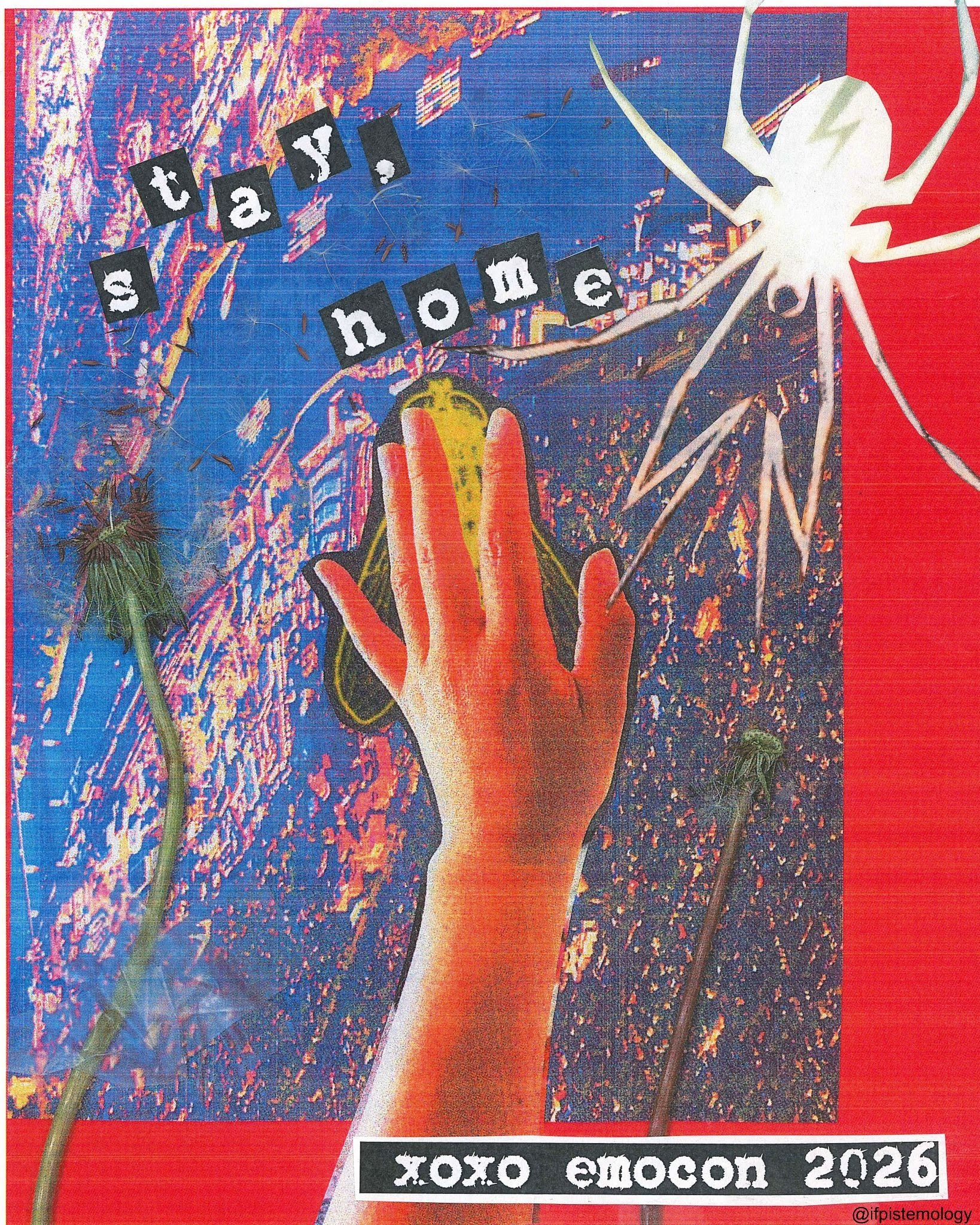
Collage by I.F. “izzy” Gonzales


“I think a lot about the words of the artist Corita Kent when it comes to art making: ‘Find a place you trust and try trusting it for a while.’ This applies to everything, though. How are we supposed to build new, beautiful worlds if we don’t trust each other? EmoCon gave me that place physically, and now I’ve brought it home as I continue to stay in contact with my new friends/colleagues! The work we are doing is important, and I want to hold everyone at the conference in my arms and tell them, ‘You matter! What we are doing is so fucking special that they’ll have to write about it in the history books!’ ” — Luna Maldonado-Velez, Presenter


“Emo has meant a lot to me since I was wee. Growing up as a Scottish, Nigerian, and Welsh kid in Edinburgh in the 90s/00s, I found my way to emo through blogs, zines, and friends. Being at EmoCon in St. Louis felt beautifully surreal, especially hearing and learning from many people who, too, have been at the fringes of emo and who embrace how it collides and communes with jazz, punk, post-hardcore, hip-hop, and rap. A very generous and insightful opening keynote by Steve Lamos set the tone for the heartening times that followed. The “Musickal Mattering” that he shared about was deeply felt throughout, including during the brilliant gig by Girl Gordon and Silly Little Emo Band. Big thanks to everyone who made this awesome, caring, and intergenerational space <3 I’m excited for all that’s ahead.” — Francesca Sobande, Presenter 


“EmoCon was nothing short of a delight. During lunchtime, many people clustered around the courtyard of the conference venue, talking to strangers, making new friends, and organizing new groups. A repeated comment I heard from both presenters and attendees was that this was the friendliest academic conference they had ever been to—and as someone who's only been to philosophy conferences, I have to agree. EmoCon hosted a broad range of disciplines spanning a wide intersection of generations, cultures, and identities. People were safe and welcome to be who they are, regardless of labels and appearance. The result was a turnout that boasted the most creativity and diversity I have ever seen at a conference—but none of that compromised the passion, quality, or rigor of the presentations. That's the beauty of it: People being their full selves, pouring love into their favorite art. It's what community is all about.” — Kierra Hammons, Attendee


“Everything about EmoCon was so ideal—from the presenters who provided the academic quality to the audience members who brought a warm, DIY energy to every panel. Not only was the positivity palpable, but our wonderful keynote speakers (Steve Lamos and Dan Ozzi) gave EmoCon a validity that matched the program’s impressive scholarship. There was also something poetic about ending the conference with a concert. Even after a long day of presentations, the venue was still packed with a bunch of emos, academics, and emo academics singing along to their favorite songs. Varun and I still can’t believe how beautiful EmoCon was. All of this leads me to believe that while EmoCon ‘26 was the first academic conference on emo, it will not be the last. We hope to see you soon <3” — Patrick Mitchell, Conference Organizer
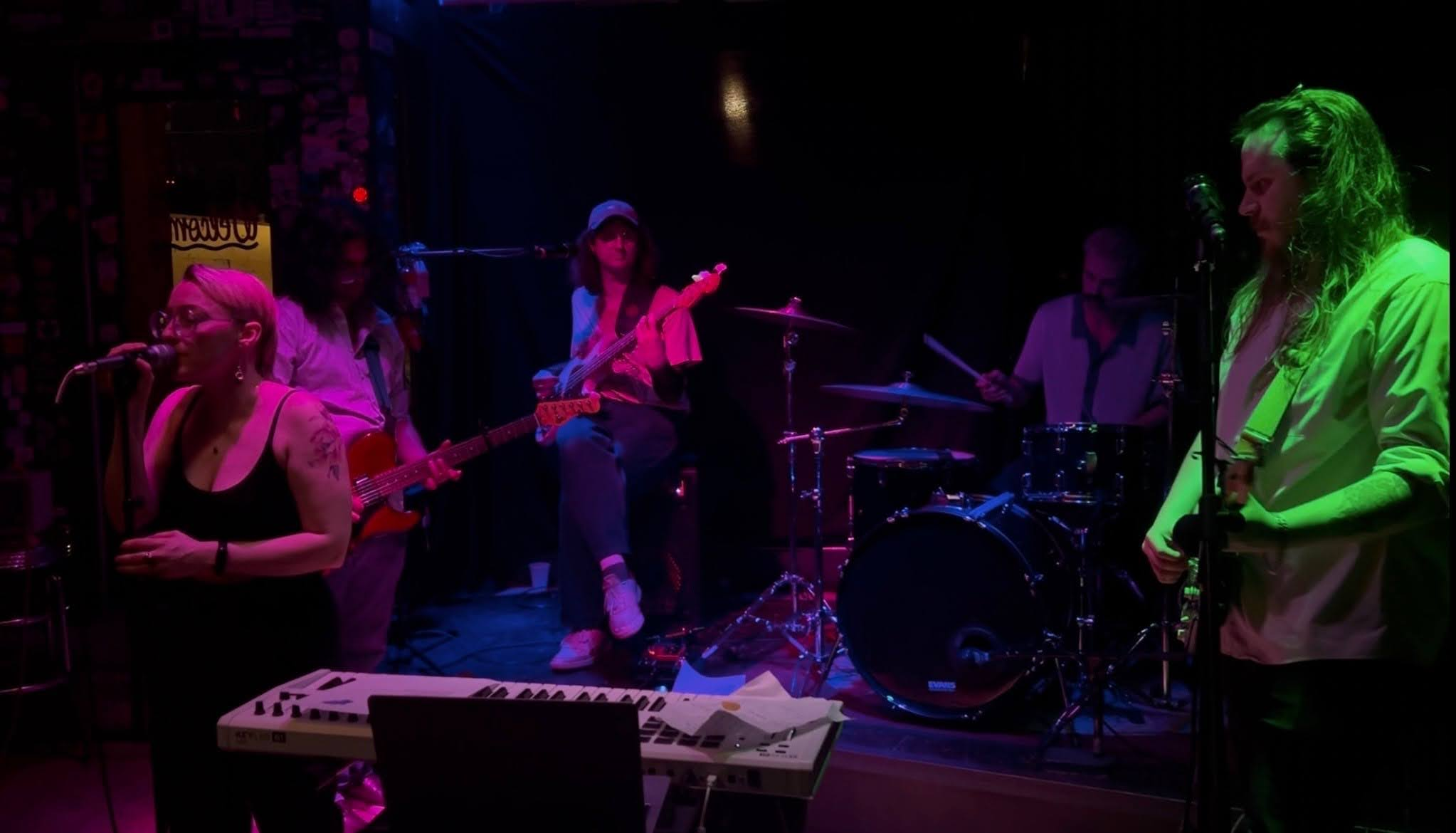
Photo by Annie Watson


“In grad school, you're told to go to conferences to network, make introductions, sell your book. Real ones know the best conferences are the friends you make on the way. Three Cheers for Varun and Patrick for creating a welcoming place where innovative interdisciplinary scholarship can thrive within (and break down) the university walls. Also, never forget that the Daily Mail once described The Black Parade as ‘the place emos go when they die.’” — Alex Valin, Presenter


“This was truly one of the most enjoyable conferences in which I’ve ever participated.  Varun, Patrick, and everyone else involved in the event were just wonderful–and I truly hope that this is the first of many EmoCons to come!” — Steve Lamos, Keynote Presenter


“EmoCon was genuinely one of the most thoughtful and engaging conferences I have ever attended. It was amazing to meet and talk to people from so many different places and scenes and hear about their experiences. As an elder emo kid, it was so electric to hear from younger folks how they discovered these bands and what their scene is like. It was the best mixture of academic nerding out and meeting new (have I actually known you my whole life??) people. Emo Summer Camp vibes! The reception I received at EmoCon healed my deep academic trauma in so many tangible ways. Thanks, Varun and Patrick, for creating such an intellectually engaging space for us to come together!” — Alex Plante, Presenter


“I think so often in the academic world, we get caught up in our field and collect accolades to build up ‘cred’ with those peers. However, having an outlet for such a variety of people to come together in shared love and express themselves in authentic ways speaks to the power of this conference! I’ve never been a fan of ‘passion projects,’ but I feel like I found a real one. Sure, I love my job and the work I do, but to have a legitimate place to explore, learn, and play with people from all over gets me excited for the future with you all!” – Pete White, Presenter


“EmoCon was such a wonderful experience. It’s amazing to see so many people studying this music, and we’re grateful we could share our research with this community. Thanks to Varun and Patrick for putting it all together, and we look forward to the next one!” — Matt Chiu & Tyler Howie, Presenters


“EmoCon was all of the experiences I love about academia—connecting with others about the same interests, sharing my ideas and learning in return, and having deep and satisfying conversations about a topic that is important to all of us. I met so many insightful, passionate, and open-minded people from all sorts of places and fields that I would likely never have crossed paths with otherwise. I wish there had been more time to talk to everyone, but I can’t believe how many meaningful new friendships I was able to make in such a short time, and I am really looking forward to watching this community continue to grow!” — Lauren Posklensky, Presenter
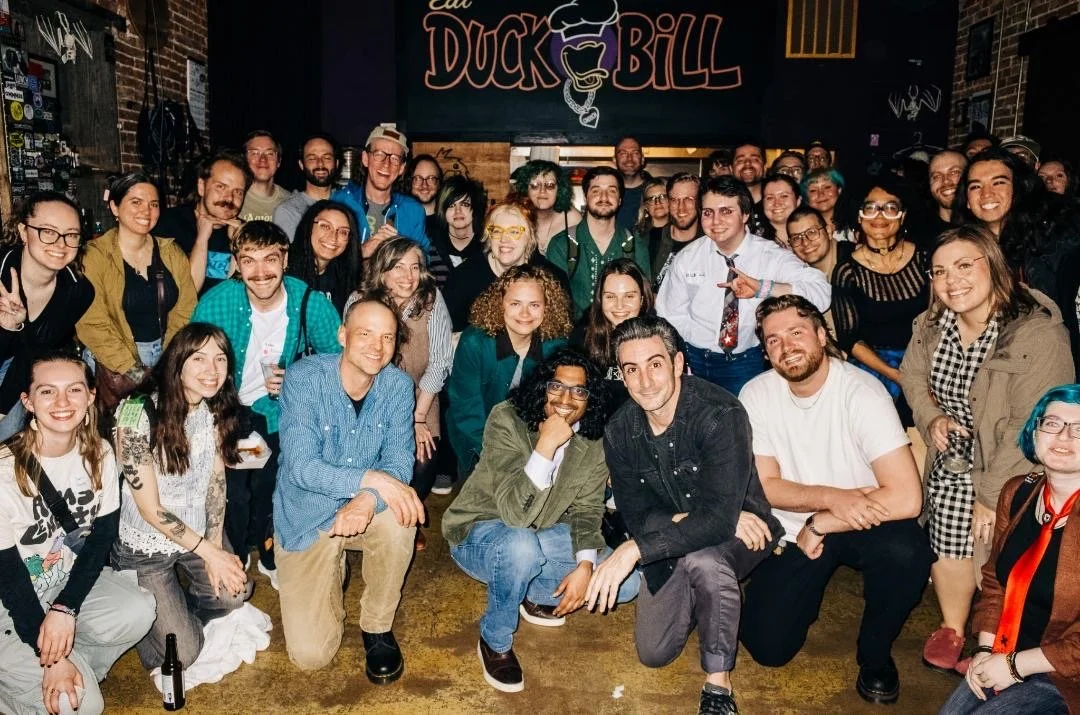
Photo by Dr. Jenessa Williams

Stop Streaming, Start Listening

You know that James Baldwin quote that’s something along the lines of “Every writer has only one story to tell, and he has to find a way of telling it until the meaning becomes clearer and clearer”? Well, sometimes that’s how I feel with this blog, and this post might be my most concerted effort to articulate that yet. 

I’ve written critically about Spotify before: about how the streaming service has made music feel disposable, how they can yank your songs away at a moment’s notice, how they encourage streaming bloat and gluttonous album rollouts, how they’ve alienated the listening public from their own libraries and laid the groundwork for an algorithmically generated hellscape long before anyone realized it was happening. Combined, these articles add up to over 10k words against Spotify, and that’s just the stuff that I’ve written. 

Spotify made fake genres and fake musicians. They underpay artists and overpay bigots. They brought back payola and chased TikTok endless scrolling in a bid for our increasingly worsening attention spans. If quotes like Spotify saying that the company’s “only competitor is silence” didn’t tip you off, this is not an artful app designed by people who care about music. Rather, Spotify is an experience designed around collecting your data, funneling money upwards, and contributing to the “contentization” of music. Everything is designed to keep you in the app to track you for longer, facilitating surveillance creep in the process. There have been entire books written and podcasts recorded dedicated to covering how Spotify is actively ruining music, so all the hyperlinks shouldn’t be too surprising. 

As if there already wasn’t enough to criticize Spotify for, most recently, the company’s CEO, Daniel Ek, chipped in nearly 700 Million Euros toward an “AI defense company” called Helsing. Even though this isn’t the first time he’s reinforced that allegiance, this recent warmongering double-down has spurred a wave of discussion about the place Spotify holds in our lives and what we might be actively contributing toward, either with our $10 monthly subscription or with our time and attention. Bands like Deerhoof, Xiu Xiu, King Gizzard, and Hotline TNT have all removed their music from Spotify in direct protest to this news, sparking a long-overdue reckoning with the application that acts as the de facto hub for all things music. 

While these are relatively modest household names in the indie community (they’re no Neil Young or Joni Mitchell), these artists have acted swiftly and decisively, and one after the other, each making explicit statements about why they’re making this decision in their own words. “We don't want our music killing people. We don't want our success being tied to AI battle tech,” Deerhoof wrote. In an interview with Anthony Fantano, Jamie Steward of Xiu Xiu stated it plainly, saying that “bands lost the battle with streaming.”

In response, many people have been cancelling their Spotify subscriptions (met with a creepy "goodbye" playlist in a feeble plea to reel you in one last time), but hopping from one streaming company to another isn’t the entire solution. Swapping Spotify for Apple or Amazon on moral grounds is laughable—no ethical consumption and all that. Sure, cancelling your Spotify subscription sends a message, but I believe the bigger solution is to disentangle as much as you can

All the time, people ask me how I find new music, and the answer is never any one thing; it’s more to do with an underlying curiosity. It’s not just opening Spotify and clicking on whatever playlist the algorithm sputters out; it’s following bands and keeping tabs on their label. It involves digging through related artists and seeing which groups a band is touring with. It’s going to see the opening act or creeping through someone’s Bandcamp collection to discover other albums they've purchased. It’s following writers and small blogs (cough cough) to see what they recommend. In an era where AI threatens to water down and homogenize literally every aspect of life, flawed but earnest human creations and recommendations are going to win out every time.

When you approach music this way, with the idea that your new favorite band could be one click away, something beautiful happens. You’re no longer waiting for your favorite artist to drop another album; you’re making your own luck and digging until you find something that scratches an itch you didn’t even know you had. It’s music culture vs platform culture.

As with all technofascism, I believe that breaking out of the currently designed scroll cycle, logging off, and spending your attention elsewhere is an act of defiance. In that regard, having control over your own files is about as radical an act as a music fan can make in 2025. I currently have over 80k songs in my iTunes library. I say that not to boast, but to show that it’s possible to have a bunch of music you care for in one place. It’s rewarding and worthwhile and intimate and can even be a fun hobby. 

Go download some albums. Spend an afternoon burning all your old CDs. Redeem those codes that came on the little slips of paper in your vinyl. Go into Bandcamp and press “download” on everything in your library, even if it’s just to keep them in a folder somewhere on your desktop. What you might find is that that collection of music feels more representative of you and your taste than whatever Spotify is shoving into your face on the home screen. As you build this library out and listen to it, you might find you need Spotify less and less. 

There’s no escaping the fact that your money is going somewhere evil, so I think most of this boils down to intentional listening. It’s about asking yourself what you want and putting a record on, not letting Spotify tell you what it thinks you want. It’s about engaging with what you’re taking in, thinking about what you consume, and supporting what you enjoy. It’s about being informed, empowered, and making intentional decisions. 

Ultimately, the solution to so much of this is just a modicum more autonomy. The cool thing is, we can grant ourselves that.

Once More From the Top: Thoughts on Anniversary Tours

Eagerness died in the early 2000s with the icebergs and the American dream. Despite our weary bodies and crushing debt, millennials are more than happy to resurrect our enthusiasm the second a formative band announces an anniversary tour for a beloved album. We dress up our nostalgia in a jean jacket several sizes bigger than the ones we wore during the album’s original release and prop it up in scuffed Doc Martens, now outfitted with extra sole support. We wear the years on our face as we gather a decade (or two) later with a craft beer, often with a non-alcoholic label. Then, when the venues allow it, we set our eagerness down nicely in a chair so it can rest its feet.  

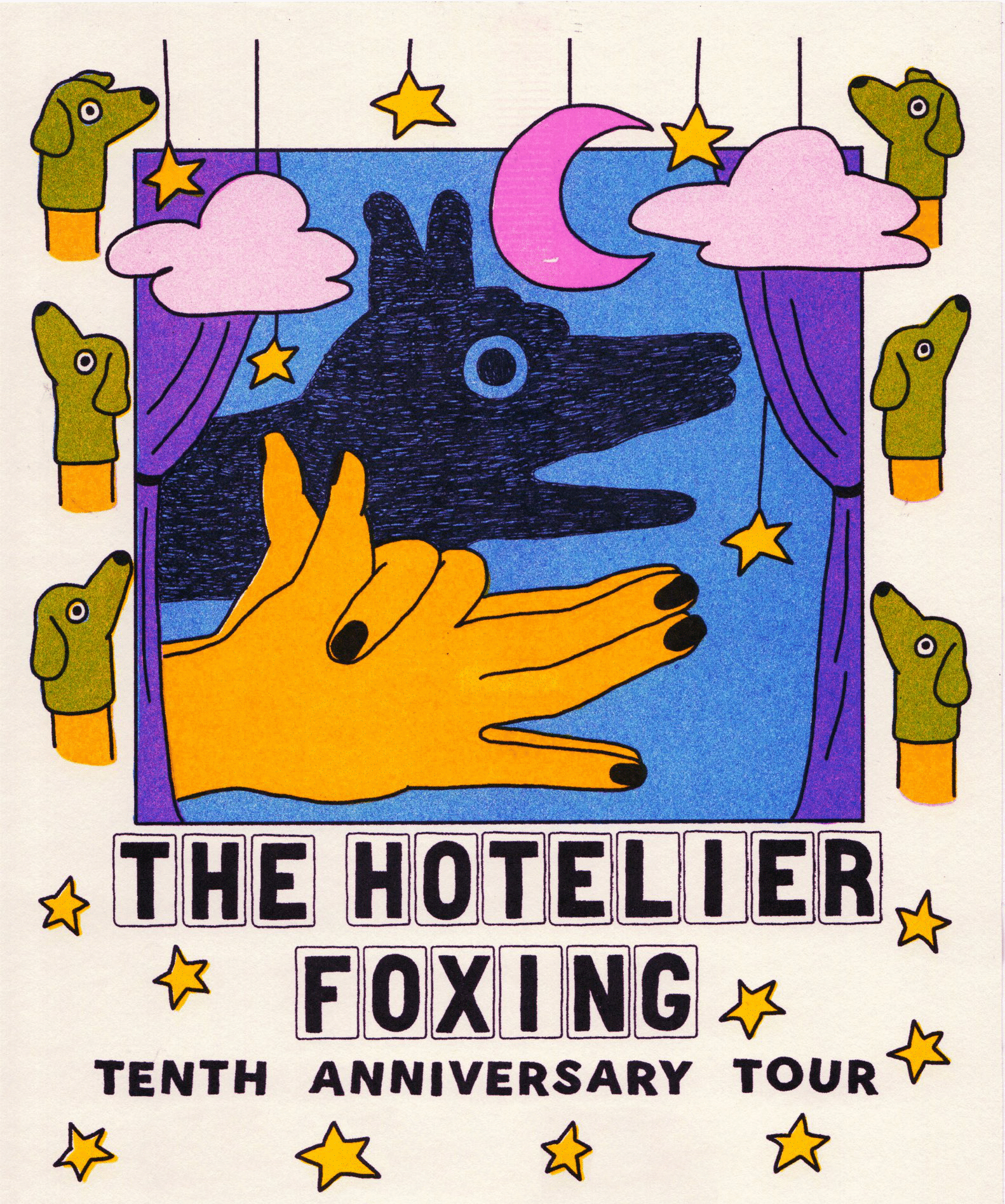
Over the past few years, album anniversary tours have grown increasingly popular. Some of the most significant records of our youth are reaching milestones, and the bands are going to let you know, dammit! The ennui-addled have the Ben Gibbard double-feature of Transatlanticism and Give Up by Death Cab for Cutie and The Postal Service, respectively. The angsty can watch the ten-year anniversary of The Hotelier’s Home Like NoPlace Is There paired with Foxing’s The Albatross. R&B fans can snatch up tickets to the 25th-anniversary tour of The Miseducation of Lauryn Hill and wait to see if the legend actually shows. Folk fans have My Morning Jacket’s 20th-anniversary tour of It Still Moves. Even the former Christian youth group kids, with their deconstructed beliefs and unused seminary degrees, can go see Switchfoot play The Beautiful Letdown.

These concerts tend to follow the same format: the band will go on stage to uproarious applause and start the first song. They’ll talk here and there about the process of creating the album and its lasting impact, then continue playing through the tracklist in order. If there is time left over (and there is almost always time left over), the band will play their lesser-loved songs while we nod along and pretend this isn’t our first time hearing them.

At their core, these types of concerts are meant to showcase the legacy of the band and, specifically, one of their most formative records. The audience is a combination of people who bought the CD upon its original release and newer fans who might have since discovered the music through streaming sites or a cool older sibling. Occasionally, you’ll see a preteen in the audience standing near a misty-eyed dad, simply happy to share this moment with his kid. 

Music has the ability to tuck you inside itself. To suspend memories that you’ll forget about until the song comes on years later. I know a man who refused to listen to any new music throughout 2020 because he didn’t want to find something he loved, only to be transported back to the dark months of early quarantine when he revisited it in the future. Several years later, he wandered into our group chat as though he had caught a helicopter flying over his deserted island, feverishly asking us if we had listened to Phoebe Bridgers’s Punisher. We poked fun, but I stopped doubting his decision when I recently put on “Garden Song” for the first time in a year and felt the loneliness I had since repressed. 

These anniversary concerts allow you to relive memories in real time. You’re no longer a thirty-something in a failing marriage getting priced out of your shitty apartment. Instead, you’re wandering across a quiet college campus, heading back to your dorm after staying a bit too late at your boyfriend’s. For a few hours, we live back in the dawn of our youth with the full acknowledgment that, after midnight, the magic will fade, and eagerness will return back to its grave. 

While the memories we dig up are often positive, the performances occasionally force you to come face-to-face with how much you’ve edited your perception of self. Because a few of the songs are typically kept relevant thanks to throwback playlists, you see them as sparks in a highlight reel. When you add in the rest of the album, you suddenly remember all the sticky parts of the past few decades. 

Language changes. Societal shifts. We continuously transform. This is often very good news as we slowly slog on toward progress, but it’s easy to forget how much of the process involves shedding our skin. When we’re celebrating an album from 15 years ago, we’re listening to a relic from a time before same-sex marriage was even legal in most of the United States. A good majority of the people in the audience have probably gone through some form of self-examination that has brought them to a new conclusion on social issues. We might think we’re pretty untouchable, but if we were forced to step up to a microphone and read our own diaries from ten years ago, we would likely wither in shame. During anniversary concerts, our favorite artists do exactly that. 

There is mercy in most standard setlists. They allow the band to curate an image for their fans to perceive. In 2018, for example, Hayley Williams announced Paramore would be retiring their most famous song, “Misery Business,” because of the lyric, “Once a whore you’re nothing more.” Over the next few years, she’d explain her personal growth and say that she was no longer comfortable performing a line filled with such internalized misogyny. In 2022, the song once again made its way into their setlists but was now accompanied by a short explanation of the outdated lyric. On their most recent tour, when it was time for the infamous line, Hayley would hold the mic out to the audience and let them decide whether or not it reverberated through the venue. While Paramore will always be known for that song, they still get a say in whether they want that reminder at every concert. 

On the other hand, you lose that ability when dealing with the entire album playthrough. Taylor Swift faced this challenge when releasing her “Taylor’s Version” of Speak Now. In the time since the album was first released, Taylor has tried to establish herself as a feminist icon, calling out the industry’s misogyny and nearly getting a television show canceled after they made a joke regarding her dating life. In the song “Better Than Revenge,” she quietly swapped out the lyric, “she’s better known for the things that she does on the mattress” with “he was a moth to the flame, she was holding the matches.” People quickly noticed, and the typical energy of Swift’s rereleases was now divided as fans and critics alike picked apart the text. Some wondered if Swift’s actions supported this change while others debated whether it was all that problematic to begin with. To this day, the simple lyric change remains the primary conversation regarding Speak Now (Taylor’s Version). 

When you’re not one of the most popular acts in modern music, you get the chance to escape relatively unscathed. Sure, you may have done the work and read all the books, but you aren’t often forced to discuss this personal evolution. You can rewrite the setlists as needed, excluding whatever songs are painful to look back on. Anniversary concerts rid you of this opportunity entirely. Most likely, fans have spent weeks relistening to the album in preparation for this night, so if an artist wanted to exclude a song, it’s noticeable. You can either grit your teeth and play through it or offer an explanation. 

When The Hotelier was first actively touring, they decided to take the Home Like NoPlace Is There song “Housebroken” off their setlist. While they originally meant it to be an anti-establishment anthem, many fans had visceral reactions and interpreted it as a song that justified abuse. In 2014, the band released a statement on their Tumblr announcing that it would be retired out of respect for those crowd members. When I saw them during their St. Louis anniversary concert in 2023, they played the song with no discussion before or after. A few days later, Christian Holden returned to their Tumblr to address the readdition of the song. He admitted that, while he still stood by his original decision to nix the song, much of his previous reaction was fueled by youth and naivety. He concluded by writing, “And here we circle back to trauma not as a thing done to us by bad people, but now by people we love with every ounce of our being, people we wouldn’t throw out in front of a moving car. Many people will have their own interpretation of what that means to them, and I’ll let them have it. I’m just the messenger.” The band continued to play the song throughout the anniversary tour.

A similar situation came up when I saw Pedro the Lion this past summer for an anniversary tour of Control and It’s Hard to Find A Friend. The lead singer, Dave Bazan, has gone through a very public religious deconversion. For a period of time, the band was signed to the Christian record label, Tooth and Nail. Here, they gained a huge audience of angsty evangelical youth group kids who stayed with them even after Bazan was explicit about leaving Christianity. Before the show, I stood with several people I had never met before, and we all spoke about the comfort we found in the band after experiencing a parallel journey with our own faith. It felt as though we could have written these lyrics ourselves. Halfway through the set that night, Bazan paused the music between tracks. Looking as grizzled as ever in his plain black shirt and zip-up hoodie, he offered an apology, saying he now realizes how misogynistic many of the lyrics were. He then invited people to leave as needed so they could care for themselves. It was a stark reminder of how often the path to improvement is marked by giant missteps.

To be an artist means you’re constantly putting your innermost thoughts on display for the world to judge. As with everyone, you’re allowed growth, but performing anniversary tours forces you to address it firsthand. As audience members, we face a similar reckoning. Of course, we aren’t personally responsible for these lyrics, but they are a part of a band’s identity that we decided to accept as we became lifelong fans. It’s not comfortable to stand there in the crowd and hear a lead singer address the fact that our old favorites are seeped in misogyny and bias, but god, is it important. And while it might halt our trip on the time machine, it allows us to leave behind a layer of nostalgia that creates a faultless view of a time that was actually pretty damn harmful for much of the population.

Anniversary tours are likely not going anywhere any time soon. Most of the people from my generation feel hopeless, whether we’re thinking about rising house costs, increased fascism, or the very real threats of climate change. While the announcements of these tours make us reach for the retinol, they’re also a way to relive our youthfulness in one of the most immersive ways imaginable. At the same time, we’re going to have to continue facing the painful aspects of the past. In a few years, Brand New’s The Devil and God Are Raging Inside Me will turn 20, and while I doubt they’ll have a tour, I’m confident we’ll be having a conversation over the seminal album while also keeping the misdeeds of Jesse Lacey at the forefront. Likely, we will see this with similar bands we let go of during the #MeToo conversation. 

The internet has entirely shifted how we talk about music from this era. The same technology that allowed us to listen to these formerly obscure artists has since brought about hyperawareness about the environment in which they arose. Even our nostalgia is painted with a shade of reality, forcing us to wrestle with the systems we once were complicit in upholding. Personally, I’ll continue to attend these concerts as long as I can. And while I’ll happily come home too late with blisters from my Docs and too much adrenaline to fall asleep, I’ll be grateful for the suspension of memories followed by a realization that I am still becoming a better version of myself.


Lindsay Fickas is a freelance writer based near St. Louis. When she’s not busy chasing around her kids or vehemently defending provel cheese, she is most likely at a concert, crying. She spends far too much time on social media, and you can find her on pretty much every site at @lindsayfickas

WHAT HATH FRENCH MONTANA WROUGHT?

COKE BOYS RECORDS

French Montana is spamming his own Spotify page. 

Okay, folks, here are the facts. On Friday, February 23rd, 2024, French Montana Released a mixtape called Mac & Cheese 5. It’s a 21-song collection that clocks in at 60 minutes and zero seconds. Boom. One hour flat, how do you like that?

There are currently seven different versions of Mac & Cheese 5 on Spotify:

  1. Mac & Cheese 5, for the purist.

  2. Mac & Cheese 5 (Clean), for the family man.

  3. Mac & Cheese (Acapella), for the raw vocal performances.

  4. Mac & Cheese (Instrumental), for people who want the beats.

  5. Mac & Cheese (Slowed Down), for all your chopped n screwed needs.

  6. Mac & Cheese (Sped Up), for the ADHD-riddled TikTok youth.

  7. Mac & Cheese (Versions), which collects all of the aforementioned versions into one 126-track-long album.

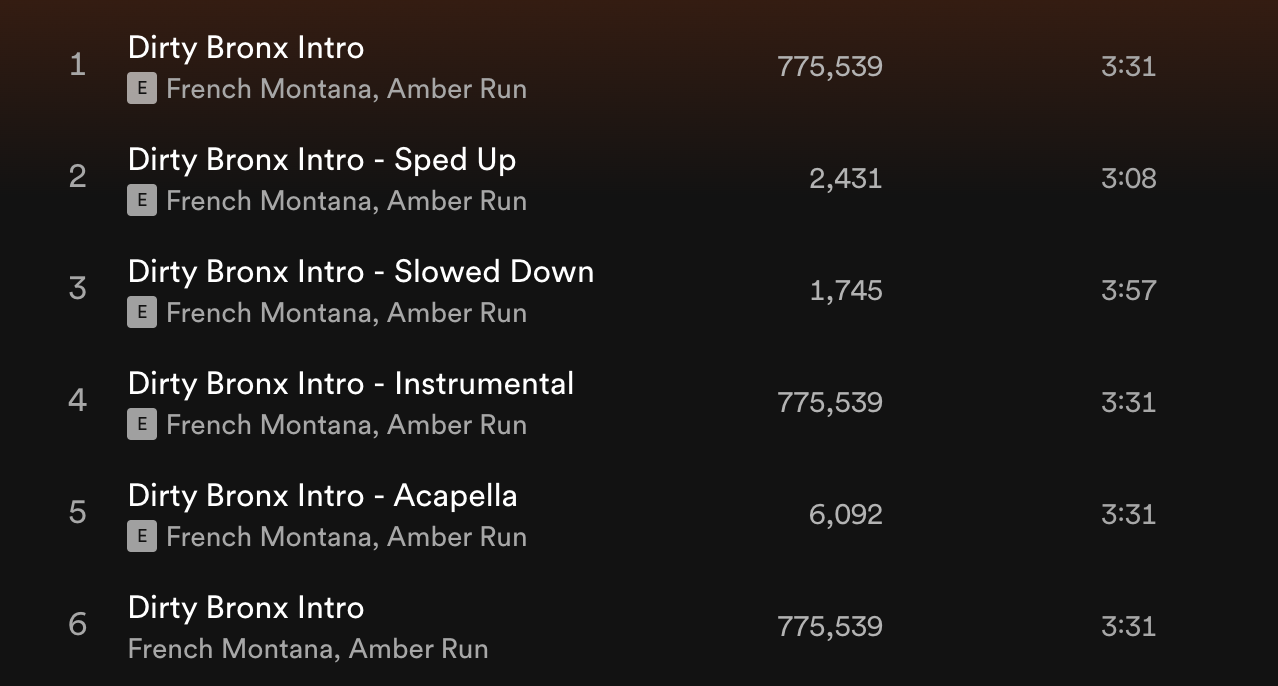
So, in theory, one could click play on the (Versions) rendition of the album, and if you listened in order, you would hear each song in slightly different permutations six times in a row. First the OG version, then sped up, then slowed down, then the instrumental, then acapella, then the clean version. Here’s what that looks like. 

If you’re curious about the Time Math, that means this first three-and-a-half-minute song called “Dirty Bronx Intro” becomes a 21-minute experience when each version is stacked back to back. This all amounts to a 6 hour, two-minute runtime, a duration so gargantuan that the Spotify desktop app rounds down, not even bothering to give an exact time, instead opting to list the album as “about 6 hrs” long. It’s exhausting and amazing.

You know what’s even funnier than French Montana releasing a six-hour album packed with every possible iteration of every song? The fact that French Montana also released each of these one hundred and twenty-six songs as singles. Overnight, his artist page became a genuinely cumbersome experience to navigate, stretching the bounds of what the Spotify engineers ever considered plausible or sensible. 

It’s kind of hilarious to even try scrolling through Montana’s page right now. Especially when you factor in the features listed underneath each song, the whole thing just becomes a disorienting wash of metadata. One Twitter user jokingly asked, “Yo did French Montana drop?” accompanied by a screenshot featuring a 7 by 9 grid of repeating album art. And that’s only half. It’s quite hypnotizing to take in French Montana’s mug that many times, all cast in an identical green-red glow. 

Another Twitter user thought a video might be a more appropriate way to showcase the scope of Mac & Cheese 5 (Versions). They did the only logical thing and made a screen recording showing what it’s like to scroll through the entire thing, taking 18 seconds to reach the bottom.

One brave poster with the handle @Keegan59992745 took it upon himself to listen to the entire thing, leaving followers a harrowing message at the onset of his adventure, posting “See you guys in 6 hours and 2 minutes” along with a screenshot of the album page for context. Later that day, Keegan followed up, explaining that after seven hours (he had to take a break to eat), that was enough French Montana for the rest of his life. Montana may have gotten his 126 streams, but at what cost?

In general, people on Hip-hop Twitter and various message boards were quick to clown on this practice of turning a mid mixtape into something the length of a day shift or multiple Lord of the Rings movies. “All of this just to sell 43k first week,” snarked one person on Twitter. The top comment on the /r/hiphopheads thread for the album bluntly assesses, “This is so embarrassing 🤦.” Further down the same comment thread, one Redditor recognized Montana’s craven and transparent ploy for streams and hoped Spotify would take notice, stating, “That’s insane. This has to be a wake up call for something to change with streaming services. I had to see it for myself and it just ruined my night.

Elsewhere, people were eager to point out how poorly this six-version format fits some songs. Maybe mankind wasn’t meant to hear an acapella version of French Montana’s trademarked “HAAAN” with such clarity. Others were quick to point out the absurdity of having this wealth of options available for something as inconsequential as a mid-album skit. It’s hard to look at “Skit (Sped Up),” “Skit (Slowed Down),” “Skit (Instrumental),” “Skit (Acapella)” and not find it all a little outrageous. 

In fact, let’s take a closer look at the skit on Mac & Cheese 5. Taking place at a train station, we hear 

Montana and an unnamed man reminisce on previous installments of the Mac & Cheese tapes. While the conversation starts centered around Montana and his music, the dialogue quickly devolves into a sexist triage against the unnamed man’s sister. Here’s an excerpt. 

Man, what've you been doin', cuz?
Man, I haven't seen you in about a decade, bro
On the Lamb' with your sister
Last time I saw you, workin' on that Mac & Cheese 3
Yeah, you know, my sister leaked it
No, she leaked Vol. 4, you fuckin' dummy
Well, she leaks everywhere, anywhere she goes
She leaks like a faucet
Yeah, someone's got to fix that up with a wrench
Last time I seen your sister was the zoo
Yeah?
Yeah, and she was over there bouncin' a ball off her nose
Like a sea lion
Yeah, you know what you call your sister?
What?
Glazed donut

This continues on for about a minute until the insults peter out and make way for the next song, “Too Fun,” featuring Kyle Richh, Jenn Carter, and a hip-hop group that simply goes by the name “41.” Maybe I am too old for this. Of course, if you’re listening to the (Versions) rendition of the album, the skit is followed up by a sped-up and slowed-down version, like toying with the playback speed on a podcast, but also listening to it three times over. 

Then we have what’s possibly the funniest moment on Mac & Cheese (Versions), a song called “Skit - Instrumental,” which is actually closer to a field recording than hip-hop. The track is an 87-second-long swirl of ambient noise, interspersed with light background murmurs and the sounds of a distant train car. This is all punctuated by a solitary laugh at the very end, and it’s nothing short of haunting. Brian Eno could never.

Six years ago for Vulture, Craig Jenkins described Migos’ Culture II as a “data dump,” pointing out that the album’s quality did not justify its nearly two-hour runtime. In that article, Jenkins claims that the 24-track Migos record felt like “the first deliberate artifact of Billboard chart gamesmanship” simply because it was packed with so many songs that it felt too unwieldy to even view as an album in the traditional sense. I agreed with him to some degree, but I also kinda took issue with that article at the time, arguing that Culture II wasn’t meant to be listened to all the way through or digested in any traditional way. Sure, it was a lot of content with very little quality control (wink wink, nudge nudge), but the way that most people were using this album negated any claims of data dumpage. At least they were all songs. French Montana must have seen people calling Culture II a data dump and thought, “I haven’t even begun to dump.”

One year ago, I got really interested in the “meta” of the music industry. I wrote at length about Spotify’s AI-generated playlists, TikTok’s influence on streaming and the phenomena of sped-up songs, and even the lack of visibility we have as fans when a song gets yanked offline for arbitrary reasons. Also around this time, I also wrote a piece called “Everything’s a Single Now,” in which I detail my experience stumbling upon Trippie Redd playing this same game of releasing every song off an album as a standalone single. In that case, Trippie Redd released a 25-track album called MANSION MUSIK and also released each of those songs a dedicated single. In that article, I also mentioned Coke Boys 6, a 29-song tape from French Montana and associates that indulged in the same practice. 

At the time, I was mainly writing about those techniques out of morbid curiosity. I wanted to document this objectively goofy practice as it stood in early 2023 because I’d never seen anything quite like it. I never would have dreamt that one year later, Montana would be doing the same thing five times over. 

So I must ask, where does it end? In 2025, will we get a French Montana album with ten versions? One album-length collection of just the bass? A version with just the adlibs? What about a slowed-down clean version? How about a sped-up acapella version with a touch of reverb? Where does it all end? I don’t have the answers, but with French Montana as our fearless leader, I’m excited to continue exploring the bounds of acceptable runtimes until the servers of Spotify overload and DJ Khaled needs to get involved

French Montana, never stop. You are a pioneer and a trailblazer. I will follow you to the ends of the earth until you release an album that lasts years. Hell, why not drop an album that could take me to the end of my life? I’d gladly spend the rest of my days with you, just give me that sweet time-filling Spotify link and let me drift off into the void. I’m ready.

The Long & Winding End of the Road: How KISS Spent Four Years Saying Goodbye for the Second Time

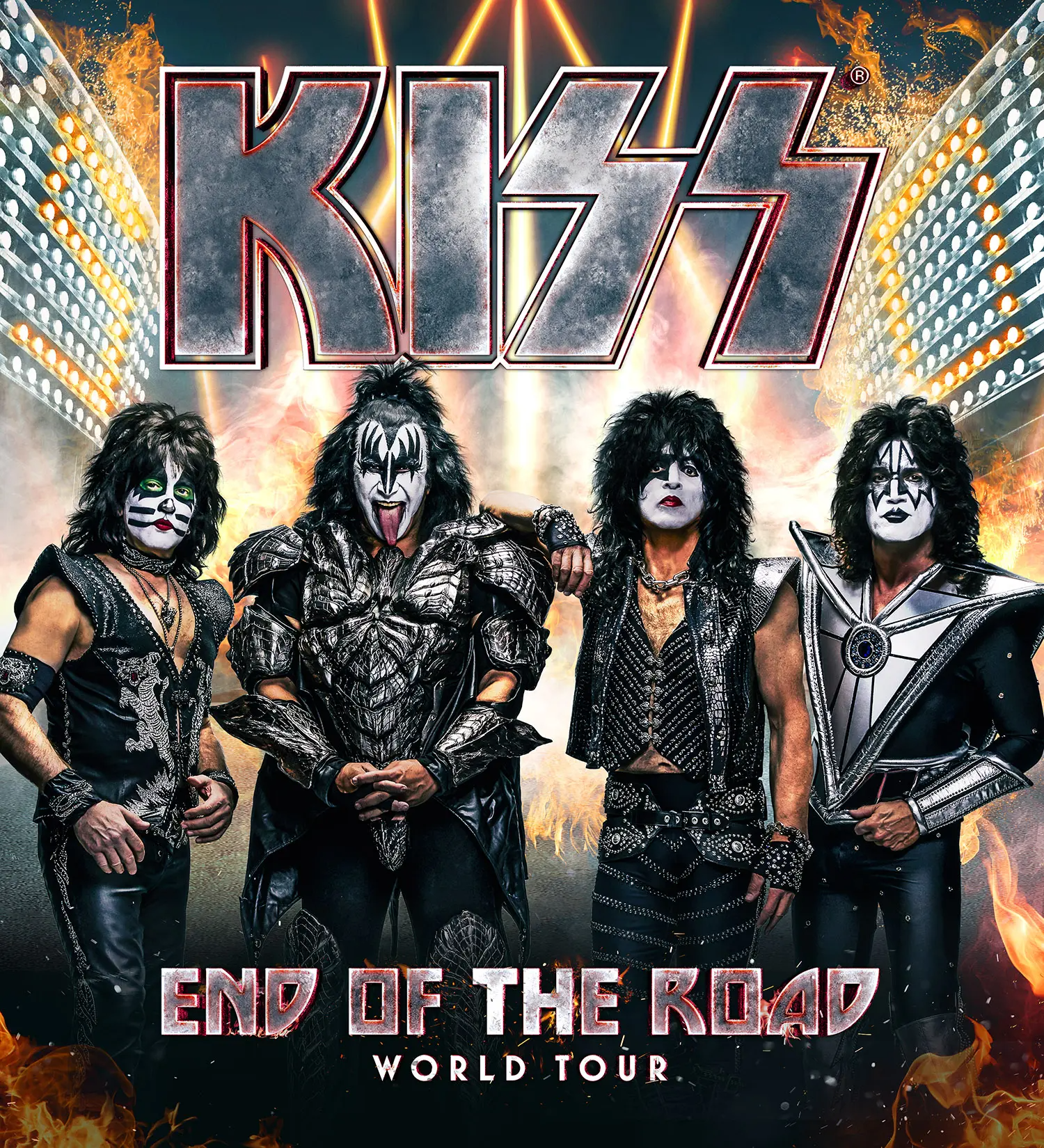
On March 1, 2023, the hard rock institution KISS announced they would perform just 50 concerts this year before turning in their iconic stage show for good. They’re celebrating a half-century as an active group and finishing up the last leg of their ‘End Of The Road’ world tour, which began in 2019. KISS’ final live performances, closing out the ‘Countdown’ leg, will be on December 1st & 2nd at Madison Square Garden on their home turf of New York City. But KISS getting to this point has not been particularly straightforward or well-received. The band has long had their critics from all angles, whether that’s being perceived as a joke band in makeup with bad music, the embodiment of satan, or just a rock and roll cash cow. Most recently, the fact that this is their second farewell tour (and that it has taken four years to complete) has left some fans tired out. Fifty years as a band isn’t something that gets to happen to everybody, though. To understand what it means for KISS to have hit that milestone, it’s crucial that we go all the way back to the beginning. 

January 30th, 1973. A small club in Queens, New York, called Popcorn, later renamed Coventry, is about to host the very first performances of the hottest band in the world. The lineup is as follows: George Criscuola, the “Catman” behind the drums known as Peter Criss. Stanley Eisen, the flamboyant “Starchild” frontman known as Paul Stanley. Paul Frehley on lead guitar, seemingly from another dimension that gave him his name, “Spaceman” Ace Frehley. And Chaim Witz, the decades-long, fire-breathing, blood-spitting “Demon” bassist known as Gene Simmons. Costumed and made up in a way that’s only reminiscent of how we’ve seen them in their peak periods, KISS play the first live chords of their career. “Deuce,” a Simmons-penned tune, opens the first and second sets of the night. This was the first, but certainly not the last time “Deuce” would make a KISS setlist.

November 30th, 2022. The second to last show of the ‘End Of The Road’ tour’s third year. The band takes the stage at Tokyo Dome, where they’ve been performing in Japan since 1997. Simmons takes the mic for “Deuce” once again. According to the concert archival website Setlist.fm, KISS has performed the tune 1,513 times since 1973. It is their ninth most-played song, only 21 plays behind the 1983 anthem “Lick It Up” in the number eight spot. If you know one thing about KISS, you may have already guessed the number one spot goes to “Rock And Roll All Nite,” which has garnered an impressive 2,145 plays since 1975.

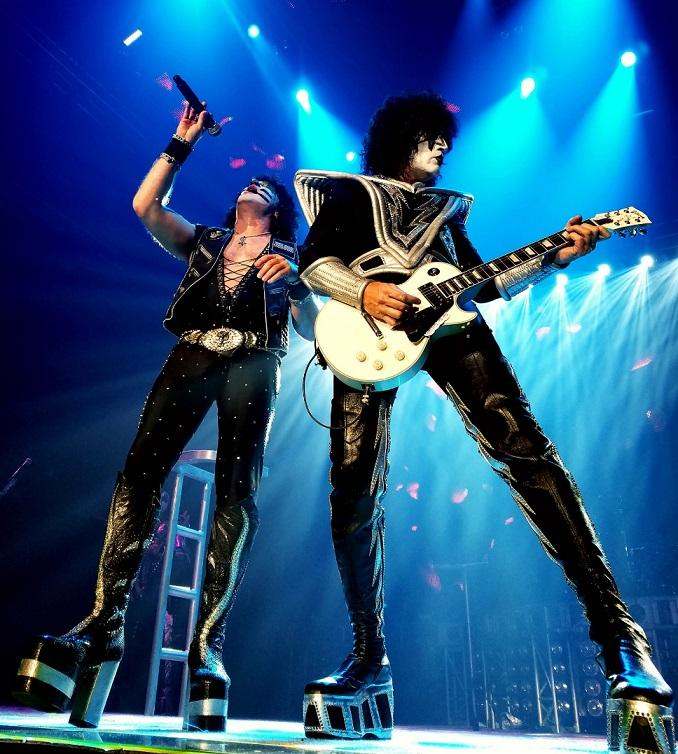
Stanley introduces “Deuce” to the estimated 32,000 Tokyo natives, noting this is from the very first album, 1974’s KISS. But casual fans may not know that Criss and Frehley are no longer on stage with the band, despite archival footage being shown during the performance where they’re both featured. They left the band around the same time twice over, first in the early ‘80s when KISS’ success was at its lowest and the tensions were at their highest. Then, again after the original lineup reunion tours that lasted through the beginning of the 2000s. Donning the “Catman” and “Spaceman”  makeup at the Tokyo Dome are Eric Singer and Tommy Thayer, respectively, who make up half of the longest-running lineup in the band’s history.

As early as 2002, Singer and Thayer have caused controversy among the loud and proud KISS Army by adopting their predecessors’ personas. The characters that the original band created were meant to be reflections of their personalities, not just interchangeable identities. This is why, in 1980 and 1982, new drummer Eric Carr (born Paul Charles Caravello) and guitarist Vinnie Vincent (born Vincent John Cusano) created their own – the Fox and the Ankh Warrior – until the entire band left the makeup behind for 12 years in 1983. For me personally, I take no umbrage to Singer and Thayer in makeup for a couple of reasons. Firstly, they are essentially just doing a job. Don’t get me wrong, they’re both incredible players and do justice to the KISS brand; their interpretations of the “100,000 Years” and “Cold Gin” drum and guitar solos from 1975’s landmark Alive! album are played exceptionally to this day. To me it’s like James Bond or Doctor Who, albeit more of a long-form tenure that can evolve as necessary. But this leaves the conversation open for what happens after KISS ceases to exist as a touring unit.

Many people have speculated there will be a “KISS 2.0” in the future, with younger musicians wearing the makeup and keeping the music alive in venues across the world. This would be different from the millions of Beatles or Guns N’ Roses tribute acts in every town, as the original band members would still be involved. The rumor has been that KISS will audition and hire hopefuls themselves, putting the official stamp of approval on whoever is out on that stage. In the same way that new casts come and go in Broadway musicals, KISS might be the first rock group to achieve that feat – touring classic rock lineups with zero original members notwithstanding. So while it may be the ‘End Of The Road’ for KISS themselves this year, it may be the start of a new road for some up-and-coming rockstars.

Secondly, if these guys didn’t come in to back up Simmons and Stanley, I might not have seen the six KISS concerts I’ve been lucky enough to attend. If all the personnel lore erupted after 2002, and that was truly KISS’ final farewell, there would be no opportunities for me to experience “the Hottest show on Earth” in my formative years. Thankfully, I’ve had six of them up to this point, five of them on the ‘End Of The Road’ tour, and potentially two more in the ‘Countdown’ leg.

September 19th, 2018. After performing on America’s Got Talent, KISS officially announced the tour would begin in February of the following year (they circled back to a big-broadcast breaking news stunt with Howard Stern to promote this final 2023 leg). They promised to “play every city they’ve ever played one more time,” and “once we hit yours, that’s it.” Most rock fans and critics alike know how these promises go. Despite the tour’s length, KISS did pull off not repeating any specific venues, except for a few locations where they held two-night residencies. But by the time the ‘Countdown’ leg is over this year, there will have been some crossover as they’ve already played MSG in New York and Centre Bell in Montreal, among others.

During a performance at their yearly KISS Kruise in November 2019, they announced the final show would take place on July 17, 2021. So you factor in an entire planet’s worth of cities to attend, with some breaks in between, a little over two years sounds like a respectable timeline for a farewell tour. On March 10th, 2020, KISS performed their last concert before the lockdown in Lubbock, Texas.

KISS spent the height of the pandemic like any reasonable and responsible group of industry professionals: live-streaming their ‘End Of The Road’ stage show from Dubai. Somewhat cleverly titled “KISS 2020 Goodbye,” the concert featured a documentary about the band traveling to the United Arab Emirates during the pandemic and what it meant for them to be performing the concert. It was a decent performance that provided some respite from the outside world at that time. However, at the time of this publication, fans have still not received their merchandise packages from the concert. The band resumed touring in Mansfield, Massachusetts, on August 18th, 2021.

A sentiment amongst the KISS Army throughout all of this has been, “how can we miss you if you never go away?” Granted, the COVID-19 pandemic doubling the tour’s timeline was unexpected, but it also seemed there were way more shows on the books post-vaccine than pre-vaccine. These feelings may have affected the band’s cancellation of a Las Vegas residency in early 2022. The truth of the matter is, no matter how many times I see the same tour with the same songs with the same solos, I will miss KISS when they stop playing big shows. I won’t pretend that, even after the sometimes frustrating ‘Road’ we’ve been driving down, I didn’t get a little emotional once the ‘Countdown’ leg was revealed and set in stone. Even in repetition, it’s unlike any rock concert I’ve ever seen. The music is genuinely powerful, the guys are having a good time playing, and the crowd continues to lick it up after all these years. An important asterisk here lies the careful words of Gene Simmons and Paul Stanley, though: that KISS is ending as a touring unit. So the opportunities for one-offs are still on the table, theoretically. From an optics standpoint, I think it would be incredibly unfair to pull something like that.

And let’s not stray away from the fact that these two guys are now officially over 70 years old. As good shape as they’re in, they won’t be able to do this forever. In 2021, Paul Stanley’s longtime guitar tech Francis Stueber passed away during the tour from a COVID exposure. In an already brutal 2023, we’ve lost the likes of Jeff Beck, David Crosby, and Ozzy Osborne finally announced his potential retirement due to health concerns. KISS has no reason to push themselves. Lemmy Kilmister of Motörhead played his last show 17 days before he died. It is possible if he had taken a stage sabbatical earlier, there could have been another album or even a chance to announce a final tour. 

KISS has nothing to prove now that they’ve crossed the 50-year mark, which some fans speculate is the only reason the tour has gone on this long. They’ve made their place in rock and roll history, and it’s been well-deserved and diligently worked for over their five decades. The old adage “Stop while you’re ahead” could have applied to KISS in 1977, 1997, or even in 2009. I think we should treasure the last 50 years and be thankful it’s ending at an amicable conclusion, not a forced halt. You can rock and roll all night and party every day, but after five decades, it’s going to take a toll on you somehow. So to my favorite hard rock band on the planet, thanks for all that you’ve provided. But please, after December, stop while you’re ahead.


Logan Archer Mounts once almost got kicked out of Warped Tour for doing the Disturbed scream during a band’s acoustic set. He currently lives in Rolling Meadows, IL, but tells everyone he lives in Palatine.