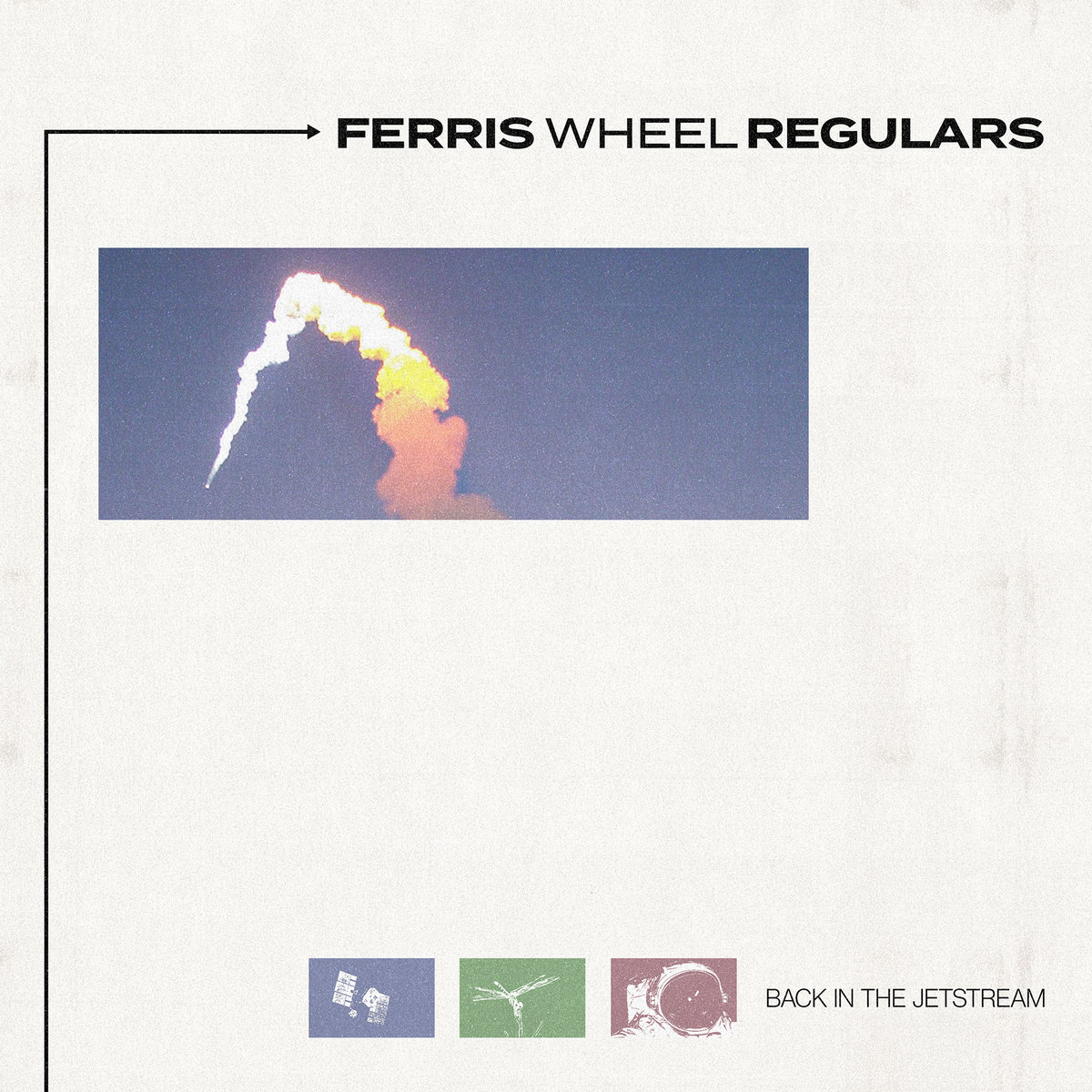
Ferris Wheel Regulars – Back in the Jetstream | Album Review

Hunkofplastic Records

A few summers back, I took a trip to DC for the 2024 edition of HFStival, an attempt to revive the long-defunct fest that had been a must-stop in the late 90s and early 2000s for alt rock radio’s top bands. The 2024 lineup was made up mostly of groups that were big during the festival’s heyday—think Tonic, Lit, Filter, etc.—with Death Cab for Cutie and the Postal Service closing out the show. I mostly went to catch Postal Service and Jimmy Eat World, but neither band was at the top of my mind as I walked out of Nationals Park at the end of the night. What stuck with me were two things:

  1. People are feral (sexually) for Gavin Rossdale in a way that I did not anticipate.

  2. Incubus rule. 

I tried to push the first thought out of my head by mulling over the second. I used to love Incubus back when I was in middle school, but I totally fell off listening to them when most other people did. Seeing the band live made me regret throwing them aside, and it also got me thinking about their legacy. This was right around the time that the Deftones resurgence was at its height, where it felt like you couldn’t open Instagram without hearing a new band using them as a sonic reference point. Could something similar happen for their contemporaries in Incubus?

As 2024 turned to 2025, the answer appeared to be a resounding no, and as 2025 rolled on, that no only got louder, so I stopped thinking about it. Then, I started listening to this new Ferris Wheel Regulars record, Back in the Jetstream. When I got to track three, “Dragonflies,” and heard the opening lines “There’s no other way / To say I love you / I find it kinda strange / The way the clouds move,” a subtle pang in the vocals and the timbre of the guitars immediately brought me back to the first time I heard Morning View. This is what I was looking for. 

Before I get over my skis here, I want to make clear that I’m not trying to say that this record rises to the level of straight-up Incubus worship; Ferris Wheel Regulars are not treating Brandon Boyd the way that The Gaslight Anthem treats Bruce Springsteen. At its core, this is more of a post-hardcore record than anything else, though the record’s shoegaze and “space rock” tags on Bandcamp also make groups like Hum an easy reference to reach for. Still, there’s just so much here—the soft to loud shifts, sledgehammer distortion, the digital processing on breakdowns—that presents what I was looking for when I started hoping to see more Incubus pulls in contemporary music. It’s part of the palette in a way that’s very compelling to me. For example, “Trajectory” pulls from a similar bag of tricks as “Nowhere Fast,” from the shift in character between verse and chorus to the feedback sounds over the closing fade out. I love to see it. 

Back in the Jetstream is Ferris Wheel Regulars’ third record, but they’re a band that’s new to me, first coming onto my radar last December when I started to see hype for lead single “Wires Cut for Two” on Twitter. What most impressed me about the track when I first listened to it was that the group didn’t treat their soft sections as an afterthought. Sometimes when I listen to bands whose bread and butter is heavy/distorted guitar, it’s clear that they’re only getting softer to create contrast for contrast’s sake. Ferris Wheel Regulars are at their best when they’re noisy, but when they pull back—like on the first verse of “Wires Cut for Two”—the music is still inspired, letting the vocals shine through and leaving room for more agile guitar work. 

Where Ferris Wheel Regulars really excel though is when they fully step on it, like the closing breakdown of “Scarlet,” where screaming vocals come in to duel with the main voice line and a heavy rendition of the song’s main riff. The interlude after the first verse of “Moves Like Clouds,” with its soaring guitar lead, is another section that only sounds better the more you turn up the volume. It’s music made to make your windows shake.

Another thing that really stood out to me about this record was its thematic consistency. This is most obviously appreciated when you look at its bookends, with “Sister Star’s” refrain of “Take me out there / Somewhere Far / There’s blue out there / Somewhere far” morphing into “Take me out there / Somewhere far / Feels good nowhere / Just like stars” as the album closes with “Just Like Stars.” In between those two moments, the sky is a constant presence throughout the album, mentioned in every track, sometimes presented as a balm and other times as cold comfort. Particularly striking to me is the opening of “Simple Systems,” where we hear the lines: “You’ll see the sunrise / Winter follows mine.” There’s this economy of words that you can only really tap into when you’re laser-focused on something as universal as the sky above. Because we’re seeing the heavens hit again and again throughout the record, there’s this cumulative impact that makes that “Feels good nowhere / Just like stars” hit so incredibly hard. 

This speaks to what is perhaps my favorite thing about Back in the Jetstream, the fact that it’s a record that doesn’t wink at you. Though influences of 90s post-hardcore and 2000s alternative come through clearly in the music, there’s nothing about the presentation that’s trying to be meta about it; there’s no cutesy song titles or comedic interludes, nothing memeified. There’s room for all kinds of music with different tones and moods out there, but the straightforward and earnest approach that we see here is what resonates with me the most. Because of this approach, you get to see the music standing on its own, compelling not because it makes you feel like you’re in on something, but because someone is truly letting you in. When you do hear pieces of artists from the past poking through, it feels more reverential than referential, the sum of a lifetime of listening to music spilling out rather than a choice made to seem clever. You don’t need to be well-versed in the encyclopedia of emo to get what’s going on here; it’s just very good music that’s ready to meet you where you’re at, and you can’t really ask for much more than that. 


Josh Ejnes is a writer and musician living in Chicago. He has a blog about cassette tapes called Tape Study that you can find here, and he also makes music under the name Cutaway Car.
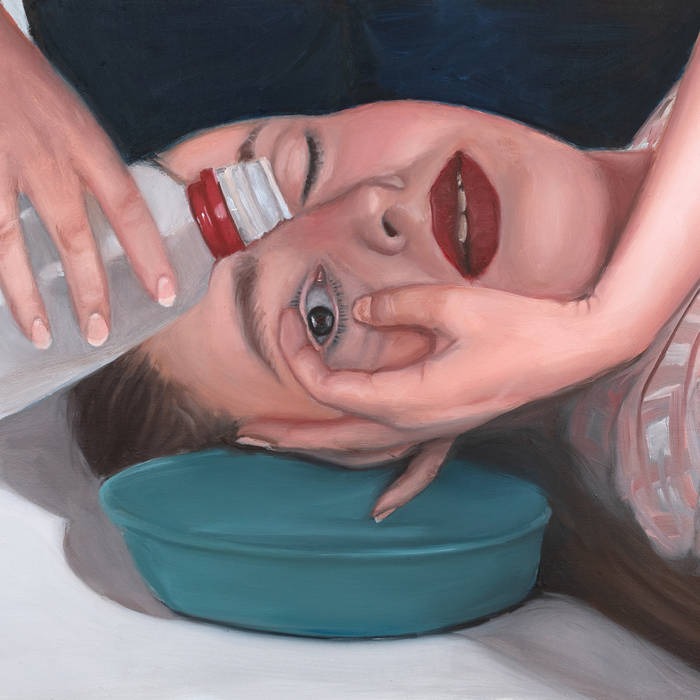
Dry Cleaning – Secret Love | Album Review

4AD

I threw my hair into space buns as I ran ten blocks from my late shift at the library to catch Dry Cleaning at Webster Hall. This was the band’s second US tour post-lockdown, and friends I made in line for a Mannequin Pussy show months ago were saving me a spot on the barricade. At that first meeting, I’d ached to come out as trans, shameful to be seen as a man taking up space, and desperate to express the femininity I related to so deeply. When I joined them on the floor at Webster Hall, Lily complimented my hair, and I immediately blurted out my confession. There was no better place to do it than a Dry Cleaning show. 

Since their initial duo of EPs in 2019, Dry Cleaning has undergone subtle shifts that have refined their style to its core elements. Their debut LP, New Long Leg, was less outwardly caustic, resulting in a creepier, more sinister record, while 2022’s Stumpwork included Florence Shaw almost singing and the band diving deeper into constructing haunting grooves. 

Over the last four years, with the production help of Cate Le Bon, Dry Cleaning have once again burrowed deeper into themselves and emerged with Secret Love, their finest record yet. Secret Love is an expansive album with lyrics that explore the genocide in Palestine, gender roles, manosphere food influencers, and the search for love, all while the instrumentals bounce from hardcore punk to jangle pop and synth ballads. All of these influences and topics coalesce around a single question: how do you live an authentic life today?

Dry Cleaning has always had hooks. So many of Shaw’s lines have the uncanny ability to become instantly inscribed in listeners’ brains as if they’d always been there. The first time I heard her declare “never talk about your ex / never, never, never, never / never slag them off because then they know / then they know,” I could tell I would be screaming it at friends while commiserating breakups for the rest of my life. Then there was her sigh of “must I look at my belly in the mirror” on “Every Day Carry,” which stuck with me as someone who hated everything she saw in the mirror. Few bands have drum rolls I want to sing along to, like on “More Big Birds,” guitar lines I want to whisper into my lover's ear like on “Viking Hair,” or bass lines I want to murmur as I shake mourners' hands at a funeral like on “No Decent Shoes For Rain.”  

I once met Florence Shaw after a show and got to tell her how essential the Dry Cleaning records have been to my transition. She replied that she was grateful they helped, as her lyrics speak to her own feelings of disaffection with the world, and on Secret Love, she reveals more of her soft underbelly than she ever previously allowed. On “Let Me Grow and You’ll See the Fruit,” she sings about how “people move away from me / I constantly think there are spiders on me and around me.” As someone who bristled anytime I was asked to turn to my neighbor and share during class, when she recites these lines, I’m reminded of the lecture halls full of classmates who paired off and left me alone. The following line, “I yearn for a friend who I can tell my secrets to,” cuts when all your life has felt like desperately waiting for someone to understand you so innately that you don’t have to speak. Alongside Shaw’s pained vocals, I want to travel back in time to hold my past self and whisper this track's sighing horns to her in an attempt to help her understand that everything will be okay. 

Then there is Shaw’s love of tidying, as detailed on “My Soul / Half Pint,” where she discusses how much joy organizing her possessions and assigning them set places in her home provides. But don’t get her confused; she doesn’t love cleaning, in fact, she “find[s] cleaning demeaning.” Over a strutting instrumental, she resents the implication that, as a woman, she should be the one cleaning. At each piano-key plink, you feel her shaking off the expectations her gender assigned to her. It’s simply thrilling. 

The group returns to objects of love on “The Cute Things” and “I Need You,” as Shaw describes the sacrifices one makes for their partner over a whimsical, drifting melody on the former and a synth mire of want on the latter. “I Need You” contains one of the most unexpected references Shaw has ever made in her lyrics, likening the selection of a lover to Donald Trump picking an Apprentice. It’s an unsettling comparison to make, but isn’t love by definition unsettling? If love weren’t unsettling, the sacrifices made in pursuit wouldn’t be worth it. 

When Shaw looks towards the larger world, she sees manipulation everywhere: “objects outside the head control the mind / to arrange them is to control people’s thinking,” she sings on the lead single “Hit My Head All Day.” That track slinks along seductively as Cate Le Bon’s production almost turns the band into a pick-up artist. They stay in the realm of bad advice givers on “Evil Evil Idiot,” one of the most aptly titled tracks in the band’s discography, as Shaw takes on the perspective of a man who only eats food that has been burnt so severely it may as well just be charcoal. Tom Dowse’s guitar springs into the mix like a performer jumping into your face from around the corner of a good haunted house. “Evil Evil Idiot” perfectly captures the feeling of radicalization, showing how people descend from normal fears like ingesting too many microplastics to refusing to even let black plastic touch their food. 

“Evil Evil Idiot” is an excellent example of Shaw’s newfound strength in writing explicitly from manipulative characters’ perspectives. But it is not just the exaggerated personalities she’s interested in, elsewhere she looks at the mundanities of life. On “Cruise Ship Designer,” she takes on the titular job and forces you to listen to someone justify their career choice. When contrasted with the late-album highlight “Blood,” the cruise ship designer seems quaint, but Shaw understands he is just as insidious as a drone pilot. One provides escapism from the terrors of the world that the other enacts with the cold detachment provided by distance. On the latter, over a constant beat that pounds away like the thrum of violence that undergirds society, she sings about looking away from tragedy: “I’ve shown my arse now.”

Dry Cleaning’s advice after all these challenges to living a good life? Caring. After being confronted with dozens of obstacles to happiness as described on “Rocks,” Shaw sings on the final track, “Don’t give up on being sweet.” You never know what can come from putting kindness and empathy into the world. In the face of malicious actors, sweetness could be what builds a better world. 


Lillian Weber is a fake librarian in NYC. She writes about gender, music, and other inane thoughts on her substack, all my selves aligned. You can follow her on Insta @Lilllianmweber.

Addy – fire, fire | Single Review

Self-released

Around this time a couple years ago, I made a terrifying leap. After moving across the country from Portland, Oregon, to Wilmington, North Carolina, I reached a point where my short-term lease was up and I was forced to make a decision. It was almost December, and I wanted to travel back home to visit my family for the holidays, so I struck up a deal with my landlord: they’d let me skip out on a month of rent and come back in the new year so long as I moved all my stuff out of the apartment for that intervening month. 

Since the place was fully furnished, this wasn’t too big of an ask. I tossed all my clothes into my car, then drove to my partner’s house across town to stash my stuff there. Because of the timeline and how all this worked out, this meant there was about a ten-day window where the two of us were living together for the first time ever. Sure, it was just temporary and mostly consisted of my shit sitting in boxes off in the corner of her living room, but still, it felt like a milestone. 

I remember this vividly because that day, December 1st, 2023, Addy released temperance, and I was floored. I had come to Addy by way of Heather Jones, who earlier that year had released the phenomenal LP a horrid whisper echoes in a palace of endless joy. I enjoyed that record so much that I kept up with all of Jones’ output, including her mastering work at So Big Auditory. Her involvement in any project came to signify an instant sign of quality, so I ventured into temperance relatively blind after a day of lugging my belongings across town, up a flight of stairs, and into this weird, liminal living situation. What I found was affirming beyond belief.

The songs on temperance ache with beauty, coalescing into 22-minutes of pillowy indie rock that works through layers of adoration and connection in the most effortless way. Opening track “hudson” slowly unfolds to envelop the listener, welcoming them into this revelatory, folksy world before “tandem” picks up the pace. Penultimate track “poison ivy” might be my favorite: a five-minute narrative of uncomfortable physical pain that crescendos into a sea of distorted guitar as everything reaches its emotional peak. The EP centers around friendships, identity, presentation of self, and trying to maintain genuine, adult relationships when all the realities of life seem hellbent on peeling us away from each other. 

One year later, in 2024, Addy released “rosemary,” a standalone love song that bounces forward with emphatic acoustic guitar, likening the feeling of love to the smell of a lover’s deodorant and splittin’ a six-pack on a porch. It’s a highly sensory track, relishing the detail of salt on fingertips and cold packs pressed against wrists – all distilled into a collective, intangible magic that pulls two people together.

Continuing this trend of smaller, lowkey releases, Addy has now released fire, fire, a pair of tracks that continue to construct a home around this lush sound the project has been cultivating since its start. 

cradle” plucks forward carefully as Ada Paige depicts a day at the beach with unhurried prose. After detailing the snacks and drinks in the cooler that her and her partner lugged to the water’s edge, she sings “This is how I know how to heal / let’s fuck around and see if we can” before shifting into this whisper that pulls you in and forces all your attention on her voice. After the stark confines of the first track, “fire, fire” settles into a more upbeat groove that expounds on the mysteries of the universe, finding beauty and intimacy in the randomness of it all. 

Together, these tracks, and really the last few years of music from Addy, come together to paint a beautiful portrait of self-discovery, of finding your people and finding yourself. After years of transitory living and uncertain movements (no matter how beautifully rendered), Addy has now found bliss in the simple facts of her surroundings and the people she finds herself in the presence of. I think that’s just lovely. 

Ben Quad – Wisher | Album Review

Pure Noise Records

Ben Quad are back. Not only are they back, but they’re fucking huge. Or at least that's what it feels like for those of us in the emo world, anyway.

I first discovered Ben Quad because I was endeared by the idea of a new band using so many interesting tricks and flips from the same dust I grew up in. They’re one of several Oklahoma acts from the past several years to break out of their local scene to more renowned heights, alongside acts like CLIFFDIVER, Chat Pile, and Red Sun. What makes Oklahoma such an outpost for this style of music? I am not quite sure, but earlier this year, I was in Ben Quad’s home state for a couple of concerts. Both nights, I stood outside my hotel room, looking at the way the sky never ends there. If I grew up under that sky, I would try to absorb the world with my guitars, too. 

Wisher is technically Ben Quad’s sophomore album. But between 2022’s I'm Scared That’s All There Is and present day, the band has unleashed a steady flow of releases that tightened their sound and expanded their ambitions. First, they released “You’re Part of It,” a standalone screamo single that felt like an instant addition to the Emo Canon. Then there was Hand Signals, a tour split, and finally Ephemera, their 2024 post-hardcore EP where they cited groups like Underoath and Norma Jean as inspiration. Wisher elaborates on the Ben Quad that Ephemera left behind, offering something not quite as genre-hopping but upholding that harsher sonic twist with even more experimentation. 

Ben Quad have described their new album as “post-emo,” a kind of theoretical subgenre that I’ve heard described as “emo but better” or “not real” depending on who you ask. Whatever it is, it marks a departure from the rules of the original emo sound and a step further into the depths of rock.

Wisher is an album that spans the parking lots of Warped Tour metalcore, the terrain of midwest emo, and the highs of country lilts, all with dizzying guitar tapping, frenzied screaming, and a desperate demand for something better than this. The record is full of “what-ifs,” both sonically and lyrically. What if we dialed this amp to eleven? What if we added tooth-grinding bass here? What if I told them I’m sorry? What if they told me they’re sorry? Say you’re sorry, you’ve been so hard on me. You. You. You.

The album begins with a banjo’s twang on “What Fer,” floating over the atmosphere that Ben Quad are desperately trying to find the limits of. The instrument bends with the breeze before ripping into the sky with electric guitars playing so ferociously you worry they might summon a lightning strike. The energy they build here shocks everything directly into “Painless” where Sam Wegrzynski begs some faceless other to “please just tell me how you’re doing” while Edgar Viveros’ guitar arcs around the song.

It’s at this point that I realized this album is so big that I had to talk to them about it.

Swim Into The Sound: This album sounds massive. As a long-time Ben Quad listener, I have always appreciated how flexible y’all are in your sound, but this is the biggest the band has sounded yet. I know you spoke a bit about the expansive studio access inspiring some of the sound, but what about the scale? 

Edgar Viveros: A lot of that has to do with Jon Markson’s magic. We really wanted to go with someone who could have a major impact on the production of the record. We walked into that studio with the intention of writing bigger choruses, and he knew exactly how to make them sound massive. We had so many new direct influences on the record, too — country, electronic, pop-rock. We knew early on that we wanted to have songs that got as big as a Third Eye Blind, Goo Goo Dolls, or Killers track.

No matter whether the band was tapping out Midwest Emo, post-hardcore, or playing along to an Always Sunny clip, Viveros’ guitar playing has always been a beloved aspect of Ben Quad. His style is very distinct in this era of post-emo: irrevocably fast, intricate, and loud. During live shows, Viveros stands center stage, radiant, as the crowd screams at him to play forever. On Wisher, he does seem to play forever, each song demanding something new and exciting, like the ethereal reverberations of “Classic Case of Guy on the Ground” or the world-absorbing work on the closer, “I Hate Cursive and I Hate All of You.” 

SWIM: I personally hear a lot of the stuff I grew up with — third and fourth wave emo, 2010s metalcore. What music were you inspired by while recording this album? What was it like working with Jon Markson?

VIVEROS: This record was influenced by so many things that I know I’ll probably forget something. The 3rd and 4th wave influence is definitely there. We’re all big fans of stuff like Taking Back Sunday, The All-American Rejects, and Motion City Soundtrack, and I don’t think there’ll ever be a Ben Quad record where my guitar playing won’t be inspired by Algernon Cadwallader and CSTVT. Stuff like Brakence and Porter Robinson heavily inspired the glitched-up guitar samples that are all over the record. There’s a good amount of banjo and slide guitar that draws inspiration from country and folk music. Personally, the recent wave of alt-country, like MJ Lenderman, really inspired me to dive into that style of playing. Beyond that, there’s huge Third Eye Blind and late 90s/early 2000s pop-rock influence. 

When it comes down to it, a lot of this record was us channeling the sounds we loved growing up to make something new. Jon Markson helped out so much with making that vision come together. His perspective was such a valuable resource when we were finalizing songs, and I don’t think I’ve ever worked with anyone who has pushed me to be a better musician as much as he did. It was such a cool experience to wake up and record music all day with him for three weeks. That guy rules. I look forward to being isolated on a farm with him many, many more times.

Photo by Kamdyn Coker

There’s a chance that this album might launch a dozen tweets about Ben Quad not being emo anymore from whatever the remnants of DIY Twitter are posting these days, but know that there’s nothing people can say that Ben Quad doesn’t already know. They make this abundantly clear on “Did You Decide to Skip Arts and Crafts?” with Sam Canty from Treaty Oak Revival.

SWIM: I’ve always heard that Oklahoma sound in your music, but never as much as I hear it in “Did You Decide to Skip Arts and Crafts.” What inspired y’all to bring a country twang to such a loud emo song? Do you see a connection between country and emo?

VIVEROS: I demoed out the instrumentals for that song in the summer of 2024 and really didn’t know where to take it. I kind of just wrote the song structure to be a mixture of big, anthemic Wonder Years choruses and some of the twangier moments in the Beths’ catalogue. It really came together when we invited our friend Sam Canty to hop on the track. That’s when I think we decided to really lean on the arena country-rock sound. I specifically love how Rocklahoma-coded the bridge sounds. Sam Canty’s feature fits so perfectly. I think the link between the two is a lot closer than people think. Sonically, both genres incorporate sparkly single coil guitars, and they both get pretty sad. Country is just farm emo.

I agree with all of the above: the connection between country and emo is storied, they’re both wrought, misunderstood genres that come from the middle of our nation. The aforementioned track starts with a phone call from Canty, playing a detractor of Ben Quad’s ever-evolving sound, telling them that they “ain’t the same anymore.” The song kicks in, and eventually Ben Quad gets him to change his mind and his sound too. Isaac Young clears a space in his drumming for Canty to return to the song to yell too, his Texas accent curving around an exasperated, “I guess it never made a fuckin’ difference to you.”

It’s impossible to discuss this album without acknowledging just how many people are on it; in addition to the Treaty Oak Revival frontman’s appearance, Zayna Youssef from Sweet Pill joins Wegrzynski and Henry Shields to kick your teeth in on “You Wanted Us, You Got Us.” Later on, “West of West” features Nate Hardy of Microwave, who contributes what might be the heaviest moment on the entire LP. It all starts to feel like a totally deserved victory lap, a testament to how big emo (or post-emo) has grown over the past few years, and a reminder of how much Ben Quad has grown since they met each other on a Craigslist post over their love of Microwave and Modern Baseball. 

SWIM: Y’all have called this album a kind of evolution for Ben Quad. How would you describe Ben Quad’s evolution since I’m Scared That’s All There Is, sonically? Since that album, y’all have also toured pretty nonstop (I think I’ve seen you guys three or four times on different tours over the past few years) – How would you describe Ben Quad’s evolution since your debut beyond the sound? Any ideas on what’s next after Wisher?

VIVEROS: I’m Scared That’s All There Is was cool because it was basically us doing emo revival worship with a little bit of a modern twist. Since then, we’ve just been throwing more and more influences into the kettle. I love that you can trace through our discography and see us gradually adding influences of screamo and post-hardcore. This new stuff has country, electronic, pop, and so much more thrown into the mix, and I’m just excited to keep growing that sound moving forward. 

Beyond sound though, I think we’ve grown in a lot of ways since the ISTATI days. We’re way more road-worn. When we released ISTATI, we hadn’t actually done a proper tour. Now, we’re releasing this new record on like our sixth full US tour. That alone has given us so much perspective on the world and many chances to meet a lot of talented and insightful people. I’d say our biggest area of progression has been in the confidence of our songwriting abilities. We’ve put out a handful of releases at this point, so sitting down and writing songs just feels so natural now. We’ve learned to just go with our gut when it comes to making music. I think any writing roadblock we encountered during the recording process was sheerly because we were afraid of sounding too honest or vulnerable. 

At the end of the day, if we think it sounds good, then that’s all that matters. As far as what’s next after Wisher, I have no idea. Maybe we’ll make a real butt-rock record. Some real Breaking Benjamin type shit.

Anything is possible when it comes to Ben Quad. At its heart, that’s what Wisher is about: testing how far post-emo can stretch, showing off the possibilities of the sounds they can craft, and clearing a path for what’s next. On Wisher, Ben Quad ain’t the fucking same anymore, but who would want them to be?

Around this time, three years ago, Ben Quad released “You’re Part of It,” where they chanted endlessly and heart-wrenchingly about how they were just waiting for all of this to fall apart. Unfortunately, with Wisher, they’re just going to have to keep waiting, because this album is universe-engulfing and none of this is falling apart.


Caro Alt (she/her) is from New Orleans, Louisiana, and if she could be anyone in The Simpsons, she would be Milhouse.

Tiberius – Troubadour | Album Review

Audio Antihero

During my sophomore year of college I recorded a breakup album. It was not very good. When I was writing it, I thought it was a raw—dare I say important—portrait of a self-loathing lover scorned. When I go back and listen to it now though, I find that it’s actually just mean and annoying, a dishonest collection of songs that feature little to no introspection. The main problem is that I ultimately just wanted the person I was writing about to hear the album and feel bad for me, a last-ditch effort to get them back. I was pretending to look at my heart while actually targeting theirs; it was a doomed pursuit from the start. 

When you try and fail at something, it gives you a greater appreciation for those who approach the same task and succeed. People who are able to paint their pain without bitterness coming through as the dominant force make me take note, because I know how hard that can be. This is the main thing that struck me when I first listened to Tiberius’ third album, Troubadour. Throughout the record, we hear about people in Brendan Wright’s life and how they made Wright feel, but the lens through which we see this is consistently pointed inwards. That’s not to say there’s no anger towards others or spiteful words on Troubadour—there’s definitely some of that—but when we do get those ugly feelings, they’re almost always tempered with self-reflection. 

Take, for example, the album’s fourth track “Tag,” where Wright sings: “Went to her apartment when she’s on a date / I’d rather hang with her than not at all / Lying on the lap of some dumb fuck that she doesn’t even like.” No argument from me, definitely anger there, both in the words and in Wright’s vocal affectation, but, this anger is almost immediately cut with the realization that “I just can’t let you know that I despise to be apart / I need to take this time to learn to be alone / And to really be alone I have to be alone.” The song gains a lot from this quick shift in viewpoint, which seeks the internal root of the emotion; it transforms what could be a simple “fuck you” into something more substantial. 

This all works especially well because the record’s path of reflection is not linear; we’ll get a track like “It Has to Be True,” where it feels like things are getting figured out, followed by “Moab,” where we once again find ourselves in despair. Too often, the road to self-actualization is portrayed as a one-way journey, but on this album, it’s presented much more accurately as a rollercoaster; ascendant acceptance that can be followed by a sudden, vindictive drop, only for us to rise again moments later. This is something that’s well encapsulated on “Sitting,” where Wright sings, “Am I starting to have fun? Am I starting to have hope? / Am I starting to be let down? Am I down again?”

There are so many different sounds and genres traversed throughout the record that it feels impossible to touch on them all in a short review. This range makes each song feel huge, with even the shorter tracks having distinct movements that stick with you. After I first played through the album, I thought that I had a few songs stuck in my head, but when I listened back, I found that what I’d been mentally replaying was actually just different parts of “Sag.” I love how this is done because you never get bored as you jump from moments that sound like Uncle Tupelo to moments that sound like DIIV to moments that sound like Modest Mouse, sometimes all within one song. There’s gazey post-hardcore, gut-wrenching emo outpourings, and wide-open indie country soundscapes. To seamlessly switch from one sound to another like this without ever feeling frenetic or scattered is truly impressive, and it all results in a great experience for the listener. 

Existential country rocker “Moab” is probably my favorite song on the record. I thought I might be tapped out on country-influenced alternative music, but I was wrong. Perhaps it’s the vocal inflection in the opening verse when Wright sings “plans her day while laying down for bed,” but something about the song conjures images of the country music I used to listen to as a kid in a way that modern alt-country rarely does. I also love the track’s more anthemic back half, which slows down and brings some indie influences to the table, sounding almost Band of Horses-esque. 

A sonic thread throughout Troubadour that I found to be particularly effective is the subtle use of non-core-to-the-band instruments to make certain moments really stand out. For example, at around 2:45 of “Tag,” bouncing piano chords come in out of nowhere to give things a groovy little boost; similarly, I loved this really reedy and dissonant sax that’s deployed about a third of the way through “Redwood,” giving the song some extra edge as it ramps up. These aren’t the biggest moments that will necessarily knock you over, but cumulatively, they add up and keep you engaged through multiple listens.   

I’d be remiss to talk about Troubadour without mentioning trees, which loom large over the journey the record takes us on. Where this most struck me was on “Sitting,” particularly the lines: “I need to leave again / Meander ‘round the trees / As if I’m looking for the sign / As my brother sings to me / What I'm feeling is alright.” As I listened to this, I thought back to Wim Wenders’ 2023 film, Perfect Days. When I saw the movie in theaters, they had a pre-show clip that featured Wenders and the film’s star, Koji Yakusho, discussing the concept of “komorebi,” a Japanese word that refers to the sunlight as it’s filtered through leaves and trees. This is core to the film, as Yakusho’s character is always able to escape and find joy by photographing the trees in the park where works. The main thing I took away from Perfect Days is that appreciation for the beauty of komorebi—or nature more broadly—is something that’s incredibly centering.

This sort of naturalism is woven throughout the record. In Wright’s own words, Troubadour was written during a period of time where the relationships in their life were changing significantly, likening that experience to ego death. For months, they “found solace in nature and the constant of the trees,” explaining that, for a period, “I felt utterly connected to the universe in a way that was completely outside my sense of self. I was everything all at once, and it was one of the most profound experiences I’ve ever had.”

As we see Wright’s journey through Troubadour and the way that nature and trees factor into it, I’m left feeling the same sense of power. That centering is key to everything. That’s why, by the time we get to the end of the roller coaster with “Barn,” we’re ultimately somewhere placid and peaceful, even if there is still some sadness along with it. It’s why we get reflection rather than just anger and why the album has such depth. It’s what separates those who can make a work like this—something truly reflective—from those stuck lashing out in attack mode. With that as the foundation, everything else clicks into place and we’re left with a really special record. These types of experiences are never linear, nor are their conclusions definite. In the case of Troubadour, the ending is satisfying, not because we’re at the end of a journey but because we feel like we’re finally on the right path. We’re left with reasons to keep pushing, and sometimes that’s all you need. 


Josh Ejnes is a writer and musician living in Chicago. He has a blog about cassette tapes called Tape Study that you can find here, and he also makes music under the name Cutaway Car.