The Menzingers – Hello Exile | Album Review

a0671515294_10.jpg

I’ve been in the punk and hardcore scene since I was a sophomore in high school. I sold merch for local bands, and all my friends were either in bands or involved in the scene. I’ve seen people come and go, and I’ve made some of my closest friends to date through punk and hardcore. Punk and all its subgenres have shaped my politics and my world view, growing up in a conservative middle-class family, punk saved me from growing up and becoming a Republican. There aren’t many punk bands I’ve been able to grow up with, but that’s the reason The Menzingers holds a special place in my music collection. I was a fan of The Menzingers when I first heard On The Impossible Past during my senior year of high school. They instantly became the soundtrack to that year, and again in 2014 with Rented World, but it wasn’t until 2017 when After The Party came out that I realized this band was making music specifically for people like me. I’m not exactly 30 yet, but I related to every word of that album. I was simultaneously coming to terms with having a new group of friends and being pummeled by a failed relationship. As you could expect, listening to After The Party and watching the music video for the title track felt like one of those moments where art eerily imitated life. Now three years later, The Menzingers are back reminiscing on bygone days and being nostalgic about the former self with their newest album Hello Exile.

Buy and large, Hello Exile continues the sound of After The Party but also offers a newly-adopted sound that blends old guy punk with a beach rock-type sound. When the first couple singles “Anna” and “America (You’re Freaking Me Out)” dropped there was some fan backlash and criticism regarding the vocal mix, but after listening to Hello Exile dozens of times since release, I don’t even notice the mixing anymore because it fits so well with the band’s new friendlier sound. While After the Party may have been a gut punch, Hello Exile offers a much more mellow and relaxed feeling, though it’s still not short of any nostalgia that the band has become celebrated for. The album starts with a big political statement, addressing first the state of America, and the monsters that our parents voted for before tackling the idea of Christianity and politics being one and the same, and the idea of not shipwrecking life after your 30s.

Some of that iconic Menzingers nostalgia is seen on “Anna,” which feels like a pre-breakup song set during that awkward phase of knowing the breakup is just around the corner, but when you’re still attempting to savor those memories of when things were easier. We get a glimpse of that with the first verse as Greg Barnett recalls drinking too much cheap red wine and laughing while dancing in the kitchen. Then we see memories of moving in together, and later it’s revealed Anna has been absent for so long that the city of Philadelphia has changed, and all their friends keep asking about her. That emotionalism isn’t just seen in Anna, but also “Strangers Forever,” which was inspired by Leo Tolstoy’s classic novel, Anna Karenina. It presents the idea of a relationship ending and having to see that person again at a show, coffee shop, or just in your peripheral vision and deciding it’s best not to make eye contact and to stay strangers forever. Barnett sings with a bleak emotional outlook “Maybe it's for the better we both stay strangers forever, maybe  it's for the best we pretend like we never met, forget everything that we've ever known,” so even in the post-breakup heartache The Menzingers manage to find a reassuring peace. That reassurance is continued in the album’s title track “Hello Exile,” in which we see a summer romance that lasts for just a season, but whose memory lasts for a thousand years. And how, even years later, the singer still thinks of that summer love and it brings a smile to their face.

The album ends in true Menzingers fashion with “Farewell Youth,” which is a little bit of a slow burn, and one of those reasons I love this band so much. I moved from Los Angeles to outside of Nashville, Tennessee, and in my high school, I was the only punk around until I converted some friends into punks and hardcore kids. This song is essentially about exactly that, being one of a few punks in a city and growing up and then growing apart from those friends. The chorus is a call back to former you, with “farewell youth, I’m afraid I hardly got to know you,” and the rest of the song looks at being a punk in a small town, getting high while listening to favorite albums and drinking the cheap stuff. The album ends with a love letter to the days of youth and adventure, days when you tried to fit in by hanging out with the older kids. Days of desperately attempting to escape your hometown, whether that was driving to god-knows-where or just killing empty days in the basement of a friend's house.

 Hello Exile is an album for any punk who has found themselves growing up in the scene and asking yourself what’s next now that you’re older. While After the Party was about failing a relationship in your 30's, Hello Exile examines the dissociative nostalgia that comes with your 30's. It's an album dedicated to looking back at the person you were through the years and the continued search for the person you are continually growing into. Anyone who is experiencing a shift in life can find this album as a soundtrack because it covers everything from the American political landscape to remembering those days of summer love, and even getting high while listening to your favorite albums with your high school friends. Hello Exile by The Menzingers will be your soundtrack down memory lane. 


Just a 20-something former hardcore kid living in Nashville. Follow @EyeHateHockey (formerly EyeHateBaseball, but after the Dodgers elimination I’m done with baseball until April) on Twitter and Instagram for lukewarm music takes and bad sports opinions. 


A Guide to Concert Photography

Guide to Concert Photography.jpg

Taking photos of live music is simultaneously one of the most exciting and challenging forms of professional photography. If you’ve ever tried to take a picture of a concert on your phone, then you know that the flashing lights, loud music, and enthusiastic crowds combine to produce an atmosphere that’s less-than-conductive to an even halfway-decent photo. 

Now imagine trying to do that professionally, with a time limit, and finite resources at your disposal. With so many restrictive and uncontrollable factors, it’s easy to see why many experienced photographers tend to stay away from concert photography entirely. That said, if you’re a photographer who likes challenging yourself, or you find yourself with the opportunity to shoot one of your favorite bands, then this guide will help you capture the performance confidently.

If you’re a beginner, these tips will help ensure you go into a concert with the right setup and will prepare you for some of the inevitable issues that come with shooting in such a specific environment. If you’re already a professional photographer, this guide will help you make the most of working under these intense, ever-changing conditions and come away from the concert with a group of photos that forever immortalize the energy poured out on stage.

Fast Lens

The first thing that you need when prepping to shoot a concert is a fast lens. As many of you know, fast lenses work better in low light situations as the larger maximum aperture allows for more light to go through it. These types of lenses typically run a bit on the expensive side, but are worth the upgrade in the long run, especially if you are considering doing more concert photography in the future.

If you’re on a tight budget, you can always opt for an inexpensive fixed 50mm lens with an aperture of f/1.8. This lens won’t have zooming capabilities like most others do, but the wide aperture makes up for this. If you are looking for more options, the LensesPro blog offers some useful information to help you choose the best lenses for your camera.

Aperture

Whenever possible, you should shoot photos with your lens wide open. Shooting with the lowest aperture allows your lens to let more light through which is always helpful when working in low-light conditions. There are some exceptions to this rule, but for the most part, shooting with the lowest aperture will always make your photos look better. This is one of the reasons to consider upgrading to a lower aperture. Lenses that have maximum width f/stop of 2.8 are usually good enough, but lower is even better.

Shutter Speed

When it comes to shutter speed, try to use a speed of 1/250 or faster. Otherwise, you risk capturing blurry images that most people won't appreciate. There are exceptions to this rule, such as when band members are standing still or not performing, but for the most part, you will want to go with a faster shutter speed as it allows for cleaner and better-looking images.

ISO

The general rule when it comes to ISO is to bump it up to at least 1600 as your camera will respond faster to the light. Concerts are usually performed in relative darkness, so you will need higher ISO settings to capture better photos. 

That said, bumping your ISO too much can result in producing images with more noise. Try to find the optimal ISO settings that will balance light and noise to let you capture optimal images.

You should also remember that having a little bit of noise on your photos is fine, especially in these conditions, so don't stress too much and just try to find the optimal ISO settings that work best for you.

Be Prepared

You should always scope out the working conditions before you go to a concert. Photographers who are prepared and know more about their workspace will perform better and with more confidence that the ones that don't. Get to know the venue, introduce yourself to the staff, and know the vibe of the artists before you get there. 

A good tip is to watch a band’s previous concerts on youtube to get a better idea of what their lighting situation will be. It is always better to come prepared as that will allow you more time to photograph, especially when you consider most shows have a "Three song rule."

Additional Tips

  • Know the time limit. Unless you are lucky enough to get All-Access Pass, you will be restricted to photographing for the first three songs only. This will put more pressure on you, so be prepared to make the most of those first ten to fifteen minutes of the concert.

  • Know the boundaries. Depending on the size of the concert, you may be forced to photograph from the "photo pit." This is a designated space right up at the front of the stage dedicated solely to security and photographers. At most concerts, you will not be allowed to shoot outside this area.

  • Don’t use flash. Not only will the artists not appreciate this, but it will also mess up your photos and everyone else’s! Use the tips above to master shooting concert photos in low-light environments the way they were meant to be seen.

  • Travel light. Since you will likely be restricted to the Photo Pit, try to carry only the camera equipment you need. Carrying bulky camera bags and cases become restricting once you find yourself sharing limited space with other photographers. Try to keep things as simple as you can.

  • Don’t block the fans. Pay attention to the crowd behind you; after all, they are the ones who came to watch their favorite artists perform. Don't stand in their way and don't shoot over your head as that will obstruct their view.

  • Thank security. Security guards are there to keep performers, fans, and you safe. If they warn you for any reason whatsoever, listen to them.

  • Don’t be a jerk. Just because you have exclusive access over the general admission crowd, don’t abuse it. Don't sneak around where you’re not supposed to be and don't physically touch the performers. Nobody will appreciate this, and it could easily get you banned from the venue.

  • Get to know the music. This is easy if you’re already a fan, but by studying up on the band’s songs and setlist, you’ll know when the big moments are coming and can shoot around them, capturing the most engaging moments in the process.

  • Develop a style. This may not come right away, but developing your own unique style of photography (concert or otherwise) will help you stand out from the crowd. Try using Lightroom like Kaytlin Dargen or mirrors like Em Dubin.

  • Tag bands. When posting your photos on your website or social media, make sure to tag the band, venue, and any other relevant parties. Musicians will appreciate the free publicity, and may even share your photos to their audience.

Conclusion

Being a concert photographer can be demanding, but it can also be rewarding and fun at the same time. You need to make sure you have the right camera equipment and knowledge to make the most out of the gig.

Just like anything else, being a concert photographer is a process, but if you follow these tips, keep attending concerts, and keep shooting bands, then you’ll soon be on your way to becoming a great concert photographer.


John Bennet is a photographer and part-time author of Lensespro.org blog. He has been a professional photographer for six years now, fueled by knowledge and passion for camera lenses.


A Guide to Supporting Bands in the Streaming Age

guide4.png

The landscape for how music is consumed has changed unrecognizably in the past 10 years. When we started the label we were selling hundreds of CDs (imagine that?!). Nowadays streaming is a big focus and can make a huge difference to whether we break even on a release or not, and if a band gets heard outside their immediate scene. This isn't meant to be an attack on streaming, I'm a big fan, it's super convenient and I've discovered loads of great bands through Spotify. But the reality is payment rates for streams are tiny (£0.003-4 a play). 99% of streaming income goes to the top 10% of tracks and we're participating in a system which only works financially for those at the top and leaves those at the bottom unheard and unpaid! 

It looks like that system is sticking around for a while, so here are a few ideas for how to support artists you like and try to level the playing field a bit. 


Be An Active Listener

Playlists, algorithms, 'radio' playlists all work to highlight those lucky few who get handpicked or get enough data to enter the recommendation algorithms. If you never break that threshold you're destined to remain in '<1000' streams territory. 

Listen
Listen to small artists, listen to ones you already like, actively check out ones you haven't heard, listen to their tracks in full (don't skip through), save their songs / albums to your library. 

Use Playlists
Set up some playlists for songs you like, maybe separate them by genre. It doesn't matter if anyone apart from you listens to the playlist, Spotify picks up on what tracks are on the same lists together and will use that data for their recommendation algorithms. 

Turn Off Auto Play!
You know when you finish listening to an album and it starts auto playing similar songs (usually from the lucky handful of top artists in that sub-genre)? It's nice not have an awkward silence, but it does serve to inflate the play count of those already popular artists. By not using it, you're choosing what to listen to and who to support. 

Discover
If you're looking to discover new music, by all means check out Discover Weekly, Release Radar and other recommendation systems. But also try listening to your mates playlists, look through related artists, listen to what's come out recently on labels you like, check out what blogs are recommending, read reviews in zines / MAXIMUM ROCKNROLL / Razorcake, look through the Bandcamp homepage. There is endless good shit out there and the best stuff is not necessarily what's being directly recommended to you. 


Share 

The influence of traditional media is dwindling, the influence of online music websites is dwindling, how many people actually look outside their own social media bubble anymore? The reach of bands and business Facebook pages has basically dropped to nothing unless they're willing to pay for it.

Your personal social media probably has more influence on the tastes of your friends than anything else! If you like a song, tell your mates, if you like a video show your mates, if you're going to a gig invite your mates or at least encourage them to check out the bands. If you have a playlist of new music, share it with people! If you're at a gig, take a photo / video, stick it on Instagram (obviously try not to be obnoxious about it, we've all been stuck behind someone at a gig that can't put their fucking phone away). If you're playing a record at home stick a photo on social media. 

If you do a blog / write reviews, I love you, you truly are doing awesome work! But it doesn't need to take that kind of time commitment to help share music, a simple repost and "If you like 'X Band' / 'Y Band"' type recommendation really helps. 


Put Your Money Where Your Mouth Is

The reality is most artists aren't making any significant money from streaming. If you can afford to support in other ways it will make a huge difference to their ability to continue touring and continue making music. Music will always be created regardless of the financial returns, it's fun and its cathartic, but a healthy music economy means that making music isn't only for those privileged enough to have spare cash and spare time to put into it. 

Buy The Record
I'm sure you've all heard about the so-called 'vinyl revival', and yes in total record sales are higher than they've been in years. But just because everyone's dad is buying Led Zep reissues at Tesco, the reality is small bands and labels are struggling. There are so many records coming out now, pressing turnaround times are going up, prices are going up. If you like physical music, buy that record you've been streaming constantly! 

Buy Advance Tickets to Gigs
Touring is pretty much the only consistent revenue stream for most bands! So go see them, buy advance tickets when the shows get announced, and try to bring some of your mates along. Services like Songkick do a great job of emailing you when bands you've been listening to on Spotify / Apple Music are playing nearby, so sign up for that as well as actively looking at venue listings and following local promoters. 

Buy Merchandise
Apart from touring, merch is probably the next most lucrative way bands have to make money. So pick something up at a show, check out their Bandcamp page and see if you can order online. 

I know some of this shit is obvious, and hopefully this isn't teaching you how to suck eggs! You have more power than you think to help out musicians you like, and it doesn't take a huge amount of time or money. No one's getting rich off this shit, bands you perceive to be doing well are probably still struggling, your support & enthusiasm can mean the world.


 I love talking about this kind of stuff so if you have any thoughts / ideas hit me up - andrew@specialistsubjectrecords.co.uk 

A PDF of this is available free at shop.specialistsubjectrecords.co.uk. Words by Andrew Horne, layout by Kay Stanley. Specialist Subject Records is an independent record label and shop based in Bristol UK. Follow them on Twitter here.

Focus / No Angel: Charli XCX’s Two-Track Masterpiece

Dg3Bo0HWsAM1JRS.jpg

Charli XCX has two careers. Her top songs on Spotify are “Girls” (by Rita Ora, featuring Charli, Cardi B, and Bebe Rhexa), “Dirty Sexy Money” (by David Guetta, featuring Charli and French Montana), and “Moonlight” (by Lil Xan, featuring Charli). Her most successful album was 2014’s Sucker, which I enjoy, but sounds just about the same as every song on the pop charts at the time. This year, she toured with Taylor Swift (I love Taylor, but I wouldn’t exactly call her innovative), playing her hits like “I Love It,” “Boom Clap,” and “Fancy,” which were all bolstered by soundtracks or memes. Despite what this list of features may look (and sound) like, Charli XCX is also one of the most innovative and unique popstars making music today, and there’s no better proof of this than her two-track pop masterpiece “Focus / No Angel.”.

In 2017, Charli XCX released two mixtapes largely produced by PC Music’s A.G. Cook and SOPHIE, which harken back the more experimental bent of her early mixtapes and debut album, True Romance. The tapes sound like the pop music of the future and heavily feature other loves of the alt-pop scene including Carly Rae Jepsen, Cupcakke, Brooke Candy, Tove Lo, and ABRA. This year, she has expanded on this alternative catalog with a series of singles including “5 in the Morning,” “Girls Night Out,” “1999,” and finally, “Focus / No Angel.” This two-track single is my 24th most listened to “album” of the last year with 122 plays and counting. Again, it’s only two tracks. And it’s only been out since late June.

“Focus / No Angel” is fiercely infectious. “Focus,” the A.G. Cook-produced opener, is repetitive in the best way. There are only 65 unique words in the songs three-and-a-half minute running time, but somehow Charli’s delivery (combined with the instrumental) make it equal parts catchy and captivating. I played it in the car for my 58-year-old dad, and his only response was “I don’t think this was made for me.” That’s right, Dad. It wasn’t. It was made for me. It’s great in a DJ set—the DJ played it during my college’s LCD Soundsystem-themed ball this fall, and I absolutely lost my shit. It’s also great just blasting in my headphones while I do homework, because I know it so well at this point that I can listen to it even while I’m reading—though there are no guarantees that I won’t put down my work at any point because the urge to dance is too strong.

“No Angel” has a bit more mythos attached to it than “Focus,” as it is one of the Charli XCX tracks that has alternately been leaked and performed live over the last few years, compelling fans to beg for its release. I, by principle, do not listen to leaks, so I hadn’t actually heard the track before its release, but I was aware of its legendary status, and it fully lives up the hype. It shows off a bit more of Charli’s party-focused songwriting mentality and the hook, “I’m no angel, but I can learn,” references the more self-reflective parts of her 2017 mixtapes. All I can say is, she’s got me and she won’t let me go.

I hadn’t really kept track of Charli XCX until 2018. I’ll admit, I was one of those teens enchanted by “Boom Clap” on the Fault In Our Stars soundtrack, but by last year and the disappointing release of Taylor Swift’s reputation, I’d drifted a bit from my poptimistic roots. Charli was all I needed to get right back into it. I listened to Number 1 Angel for the first time around January, and then Pop 2 a couple of months later. I quickly became enamored with Charli’s future-forward pop, but I found myself disappointed with the first of the 2018 singles. The hip-hop-flavored “5 In The Morning” seemed sort of formulaic, repeating the ‘party all night’ sentiments of previous songs like “Die Tonight” and “After The Afterparty.” “Focus / No Angel,” however, in its incessant repetitiveness and format as a two-track single, is the kind of project that begs to be left on repeat. Just when you might get bored by “Focus”’ chorus, you’re drawn in once again by the hook of “No Angel.” The two tracks balance each other out perfectly and not only prove that Charli XCX is the future of pop, but also work together to form one of the best “albums” of the year.


Delaney Neal is a college student splitting her time between Portland, OR, and the Bay Area. You can usually find her listening to Car Seat Headrest and thinking about her dogs. She’s on Instagram @laneyrse.

The Elephant Visual Album

e5ee6d-20130401-white-stripes-elephant.jpg

When I trace my musical history back to its origins, there are four or five key discoveries from my childhood that have gone on to become foundational cornerstones of my taste. I’ve written about many of them here from my first iPod and 2006 pop music to entire genres that I stumbled into by accident all thanks to people with better taste than me. I measure my life with music, and these events have all become part of my personal mythology; milestones that have gone on to inform not only my taste, but who I am as a person.

I was fortunate enough to grow up with a dad who cared about music. While that mostly relegated itself to me raiding his CD collection to rip classic rock albums onto my iPod, there were also a small handful of (then) modern bands that we bonded over as I began to show an interest in music. The shared section of our musical Venn Diagram has expanded over the years as my taste has continued to mature, grow, and spiral in unexpected ways, but the first “new” band my Dad and I found common ground with was none other than The White Stripes. 

Luckily, because my dad loved The White Stripes, this meant I had the band’s entire discography at my fingertips. He owned their studio albums, B-sides, singles, live albums, demos, side projects, you name it. As a result, I have a worryingly-deep connection to (and knowledge of) Jack White’s musical catalog.

Around this same time, I was also taking guitar lessons. Aside from the standard “starter” songs like “Smoke On The Water” and “Pipeline,” The White Stripes’ “Seven Nation Army” proved to be low-hanging, easy-playing fruit for a 10-year-old Taylor. Between borrowing the CDs and playing the songs, I showed enough of an interest that my dad decided to take me to see the group on tour in 2003 for my second concert ever. 

JON_WS030917.jpg

While I’ll admit that the 1.5-decade marination time of nostalgia plays a huge part in it, Elephant remains one of my favorite albums of that genre, this era, and my entire life. Hits and overplayed singles aside, there’s a lot to love about Elephant, and there’s a reason it remains the band’s most enduring release this many years later. 

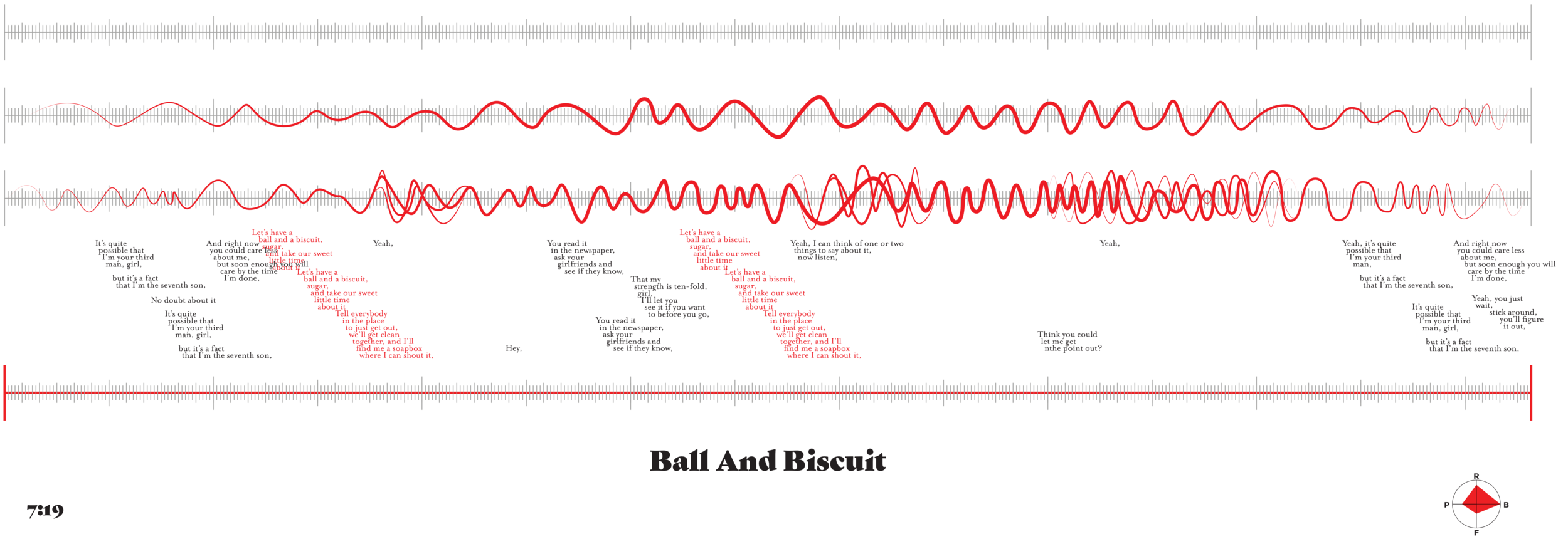
Literally every track on Elephant hits. “Seven Nation Army” is an unparalleled anthem of the early-2000’s. “Hardest Button to Button” bears one of the best drumlines of the decade. “Ball and Biscuit” is one of my favorite songs of all time with its lumbering blues riff that slowly erupts into blistering guitar solos. There isn’t a wasted moment or an unpolished idea. Elephant is rock in its purest form. A feeling that can’t quite be put into words made by two people with two instruments. Perfect.

As eye-opening as Elephant was, sometimes your favorite albums can slide into the background of your life without you ever noticing. New music, other mediums, or life events can keep you from venturing back, and as embarrassing as it is to admit, this had absolutely happened to me with The White Stripes. It’s almost like taking art for granted. I’d listened to Elephant so many times, heard “Seven Nation Army” in so many different movies and TV shows and commercials that at a certain point it just kind of feels like “well, yeah, everyone knows this album is great, so what’s the point?” 

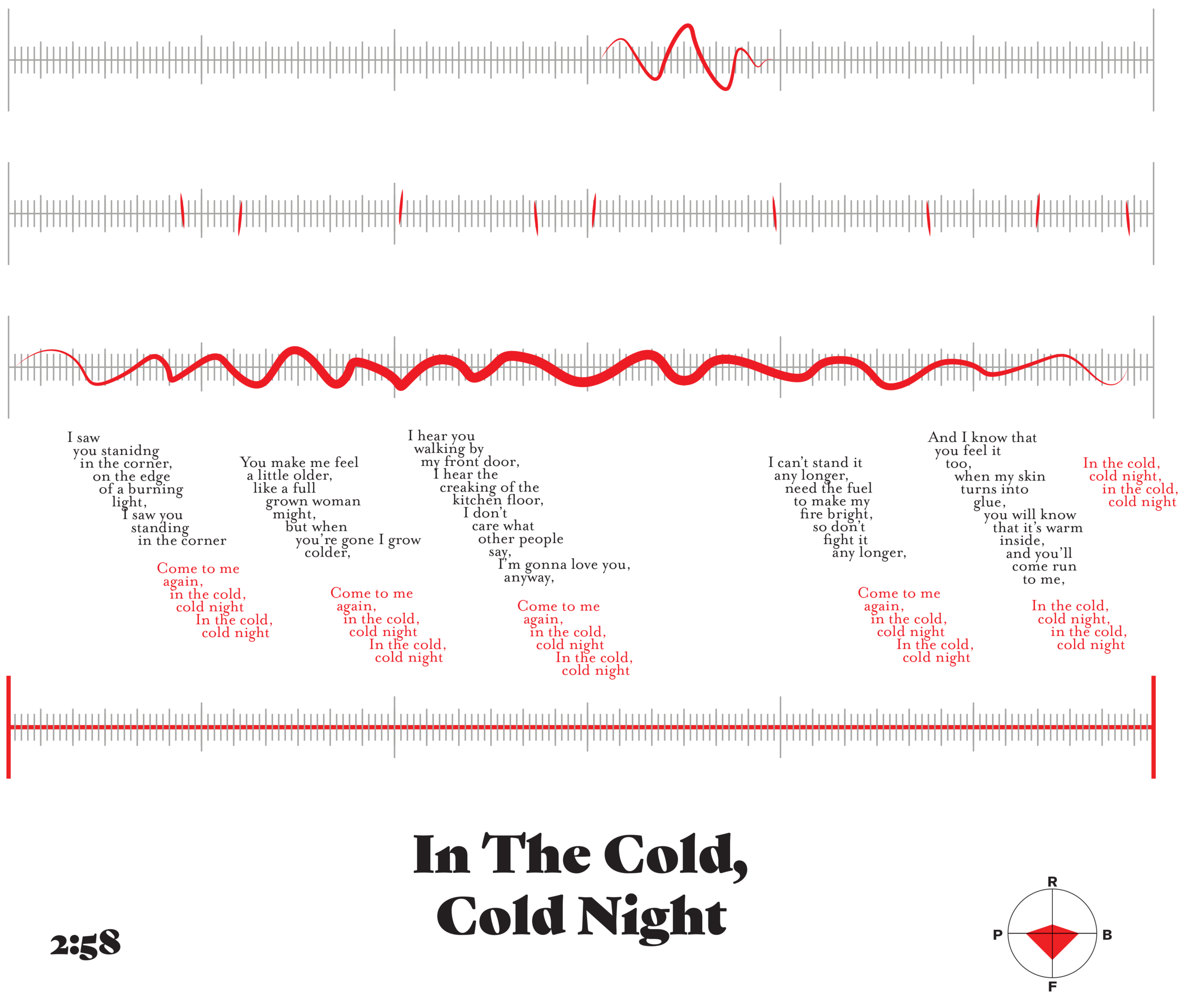
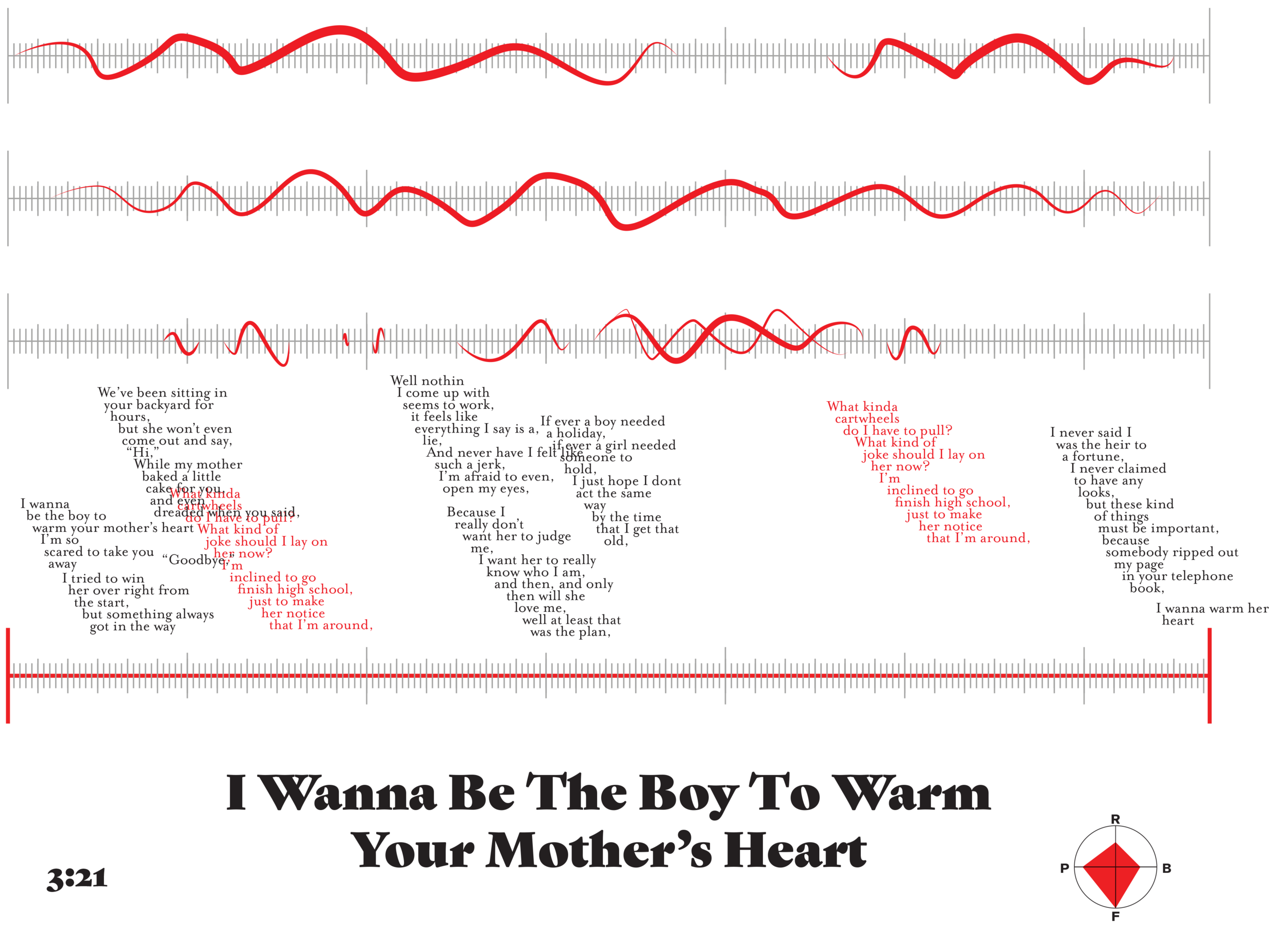
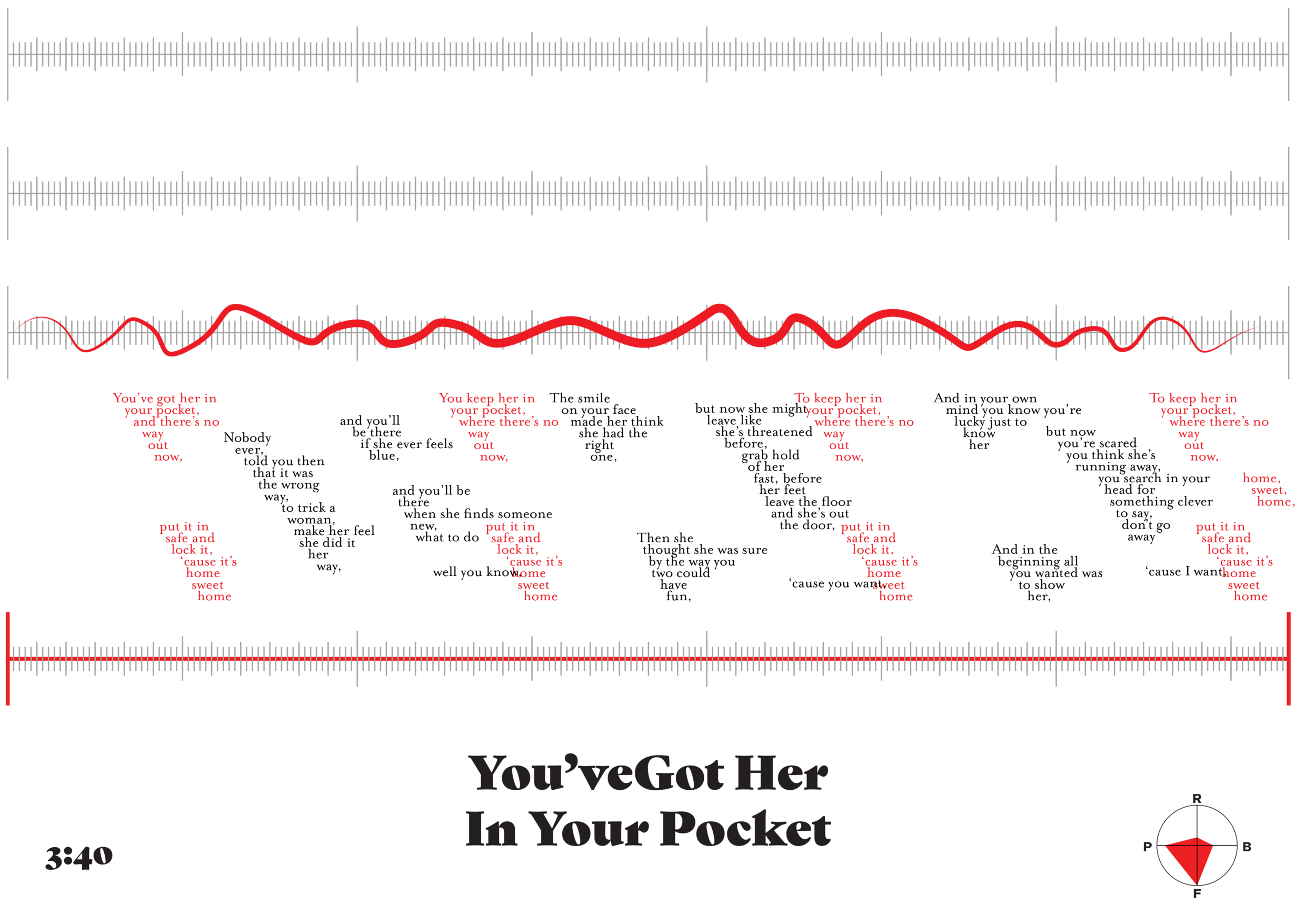
While my relationship with Elephant is ongoing, a chance encounter with a designer completely renewed my love for the record with a project that was crafted as lovingly as the album itself. Sometimes the classics are not only worth revisiting, but worth diving into on a microscopic level, and that’s exactly what Chandler Cort did with this beloved album. 

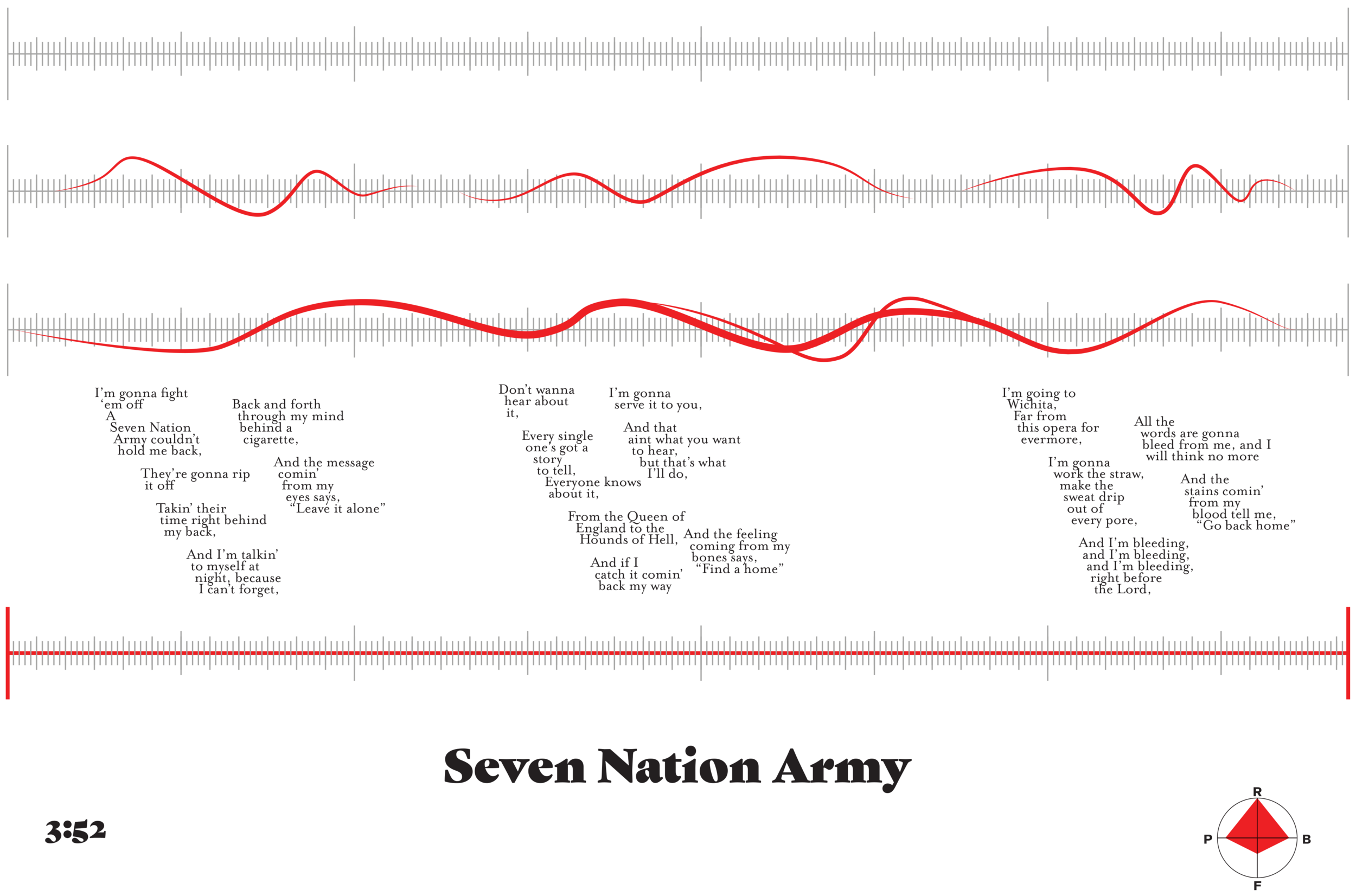
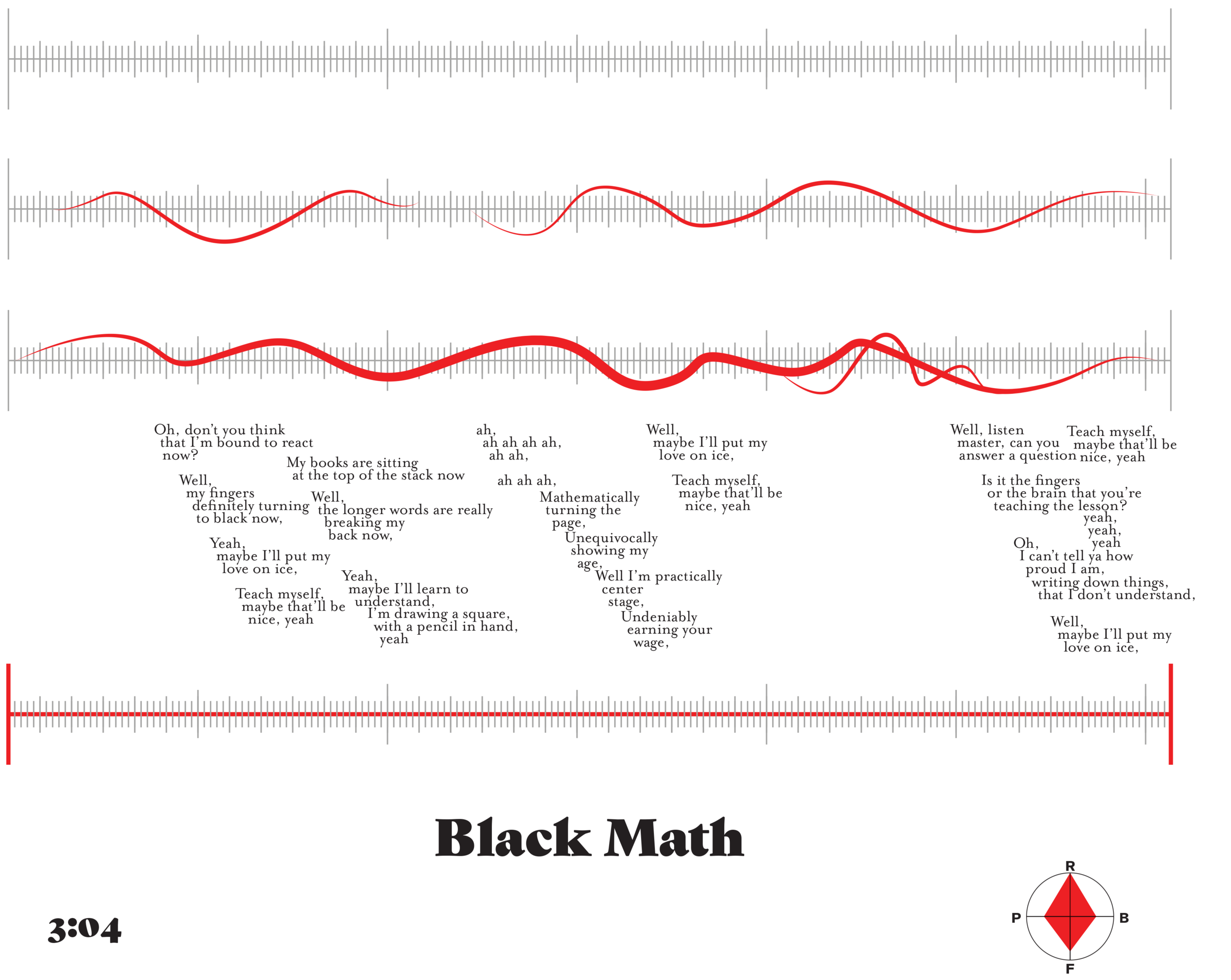
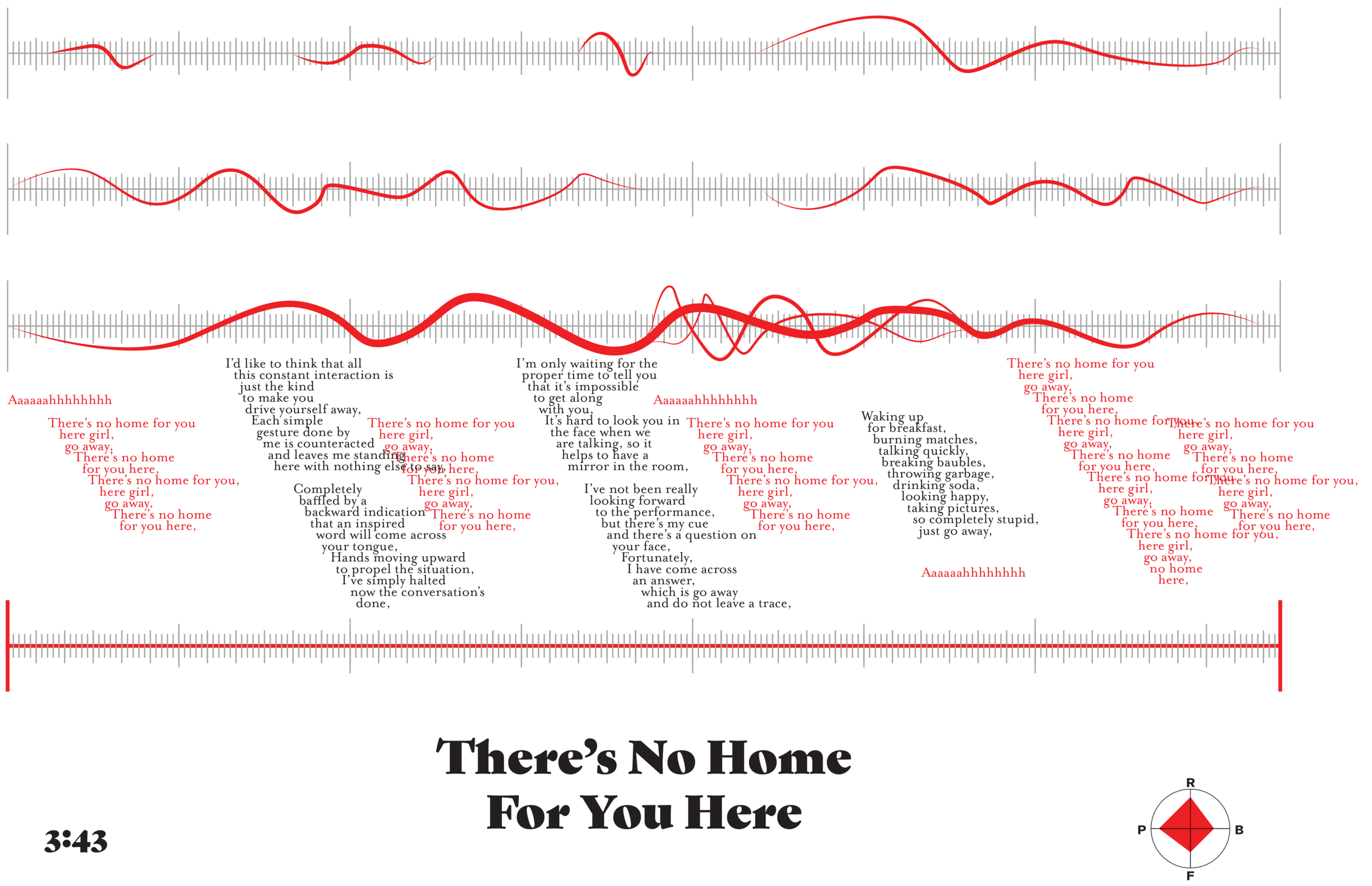
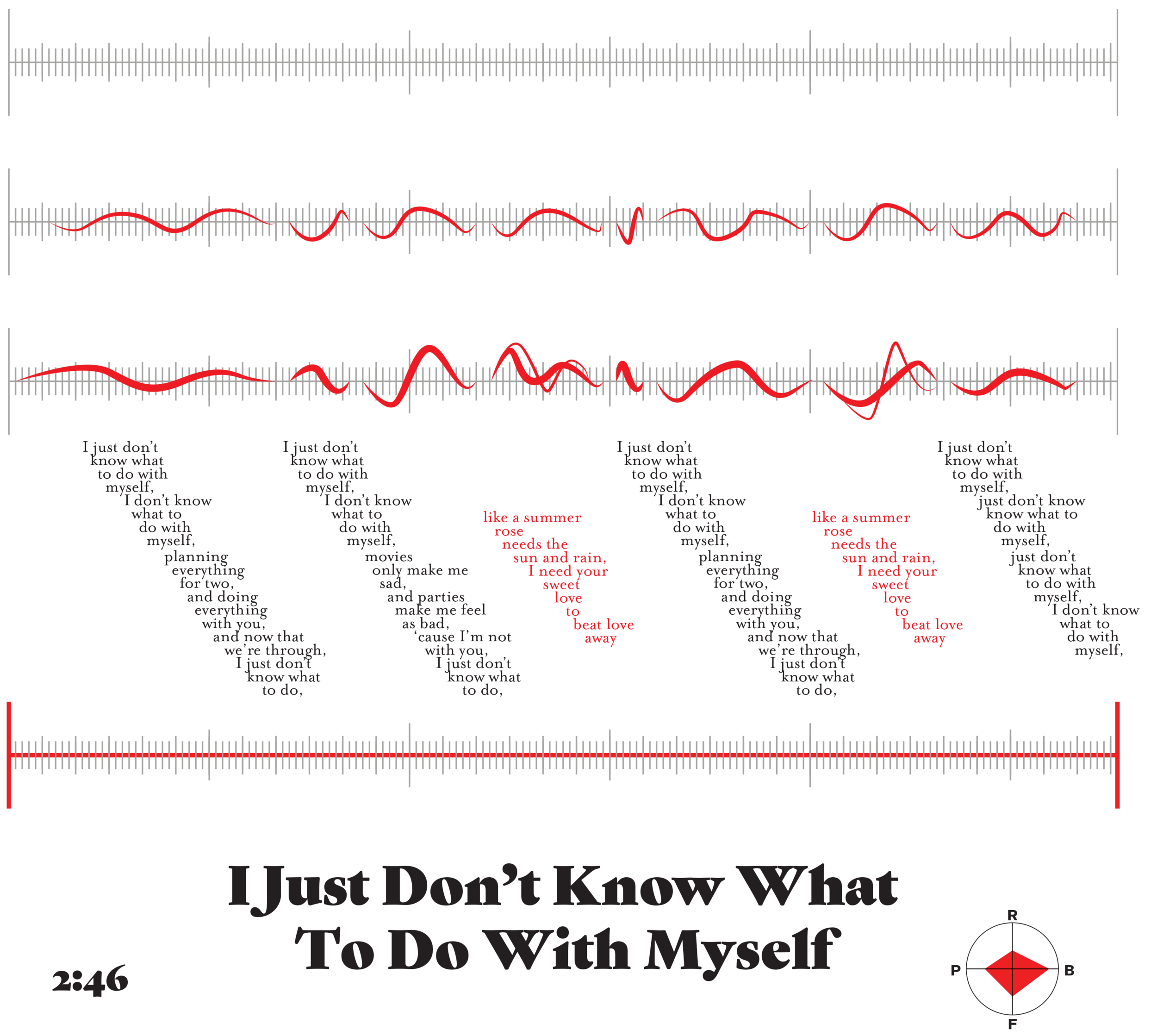
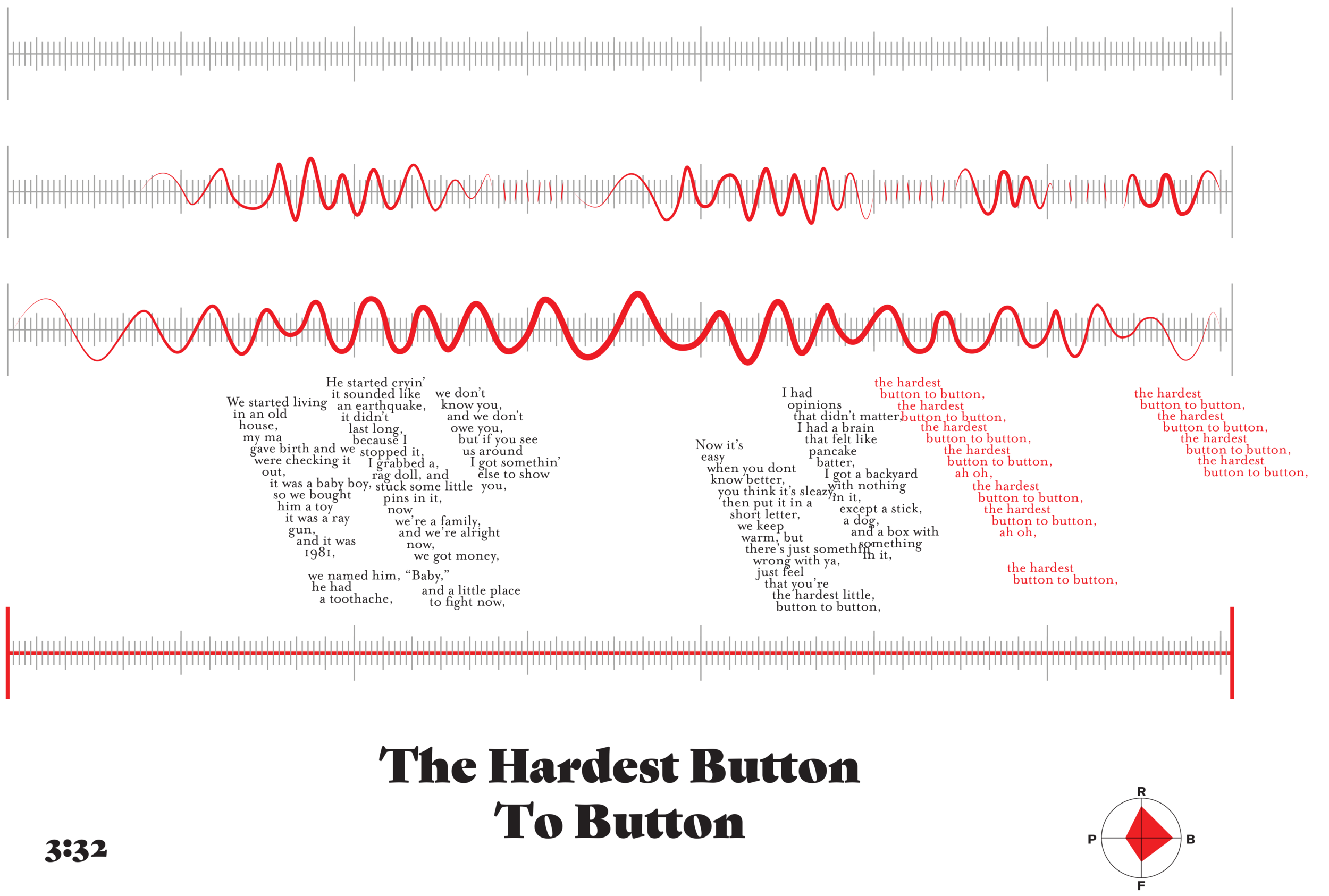
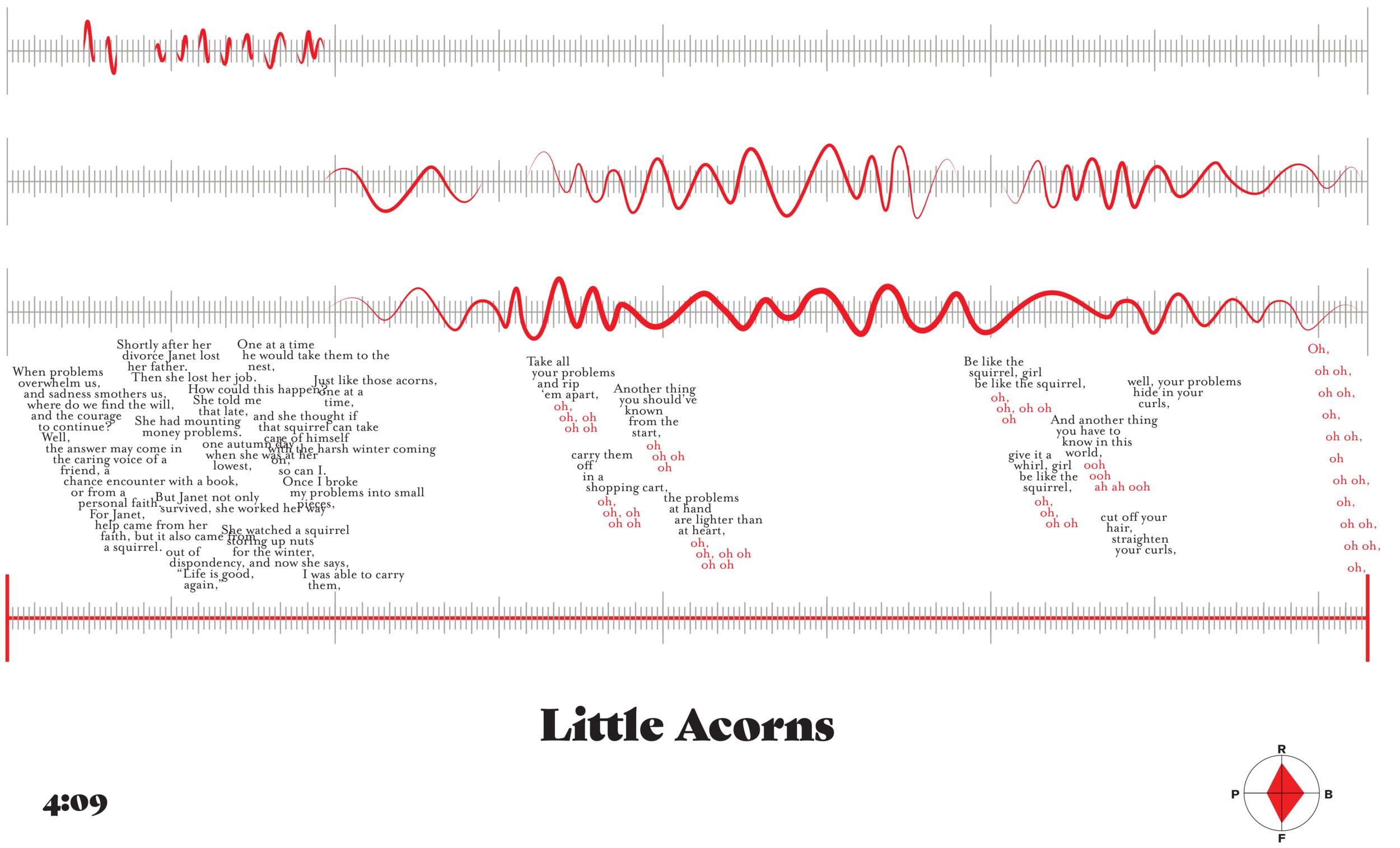
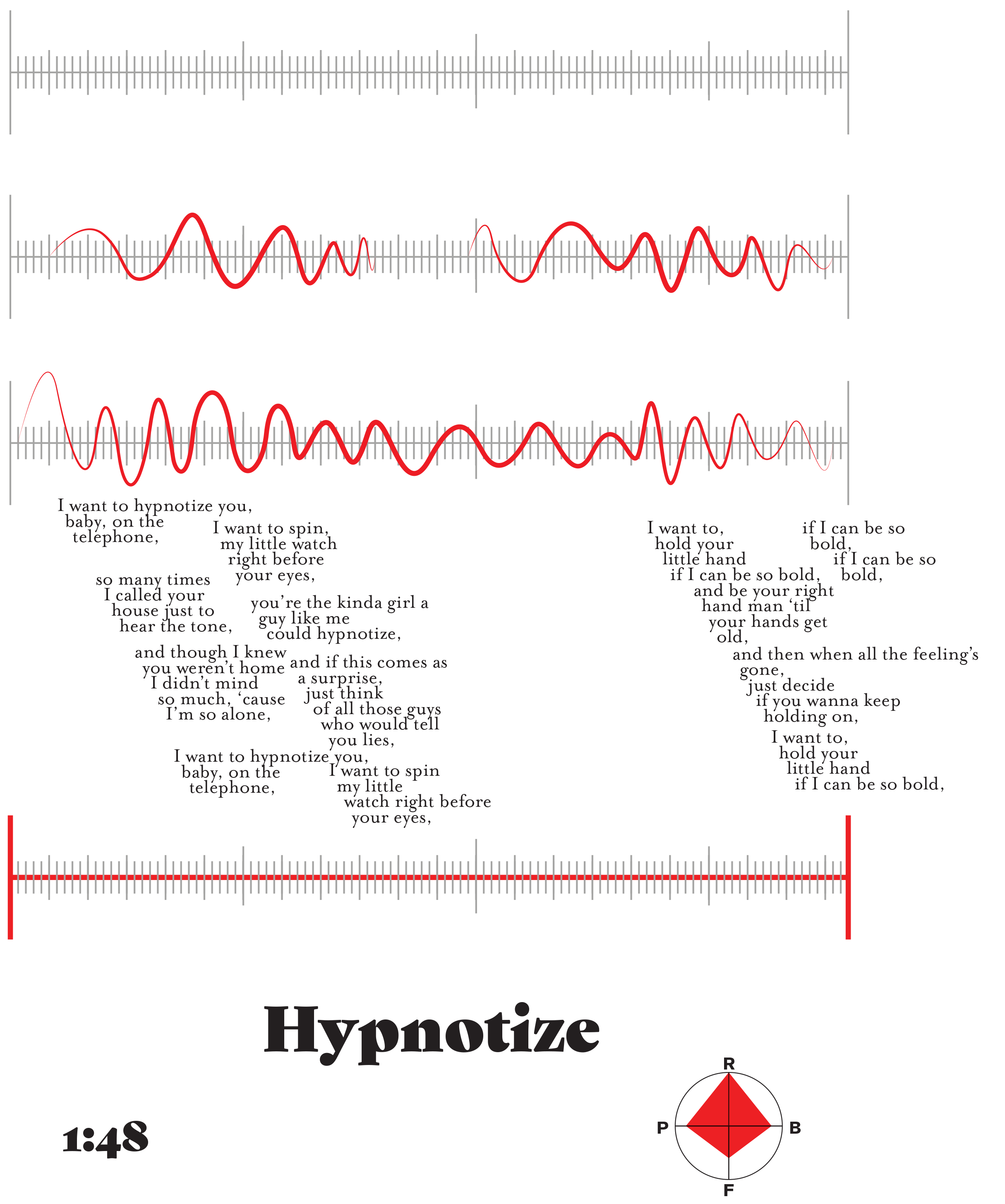
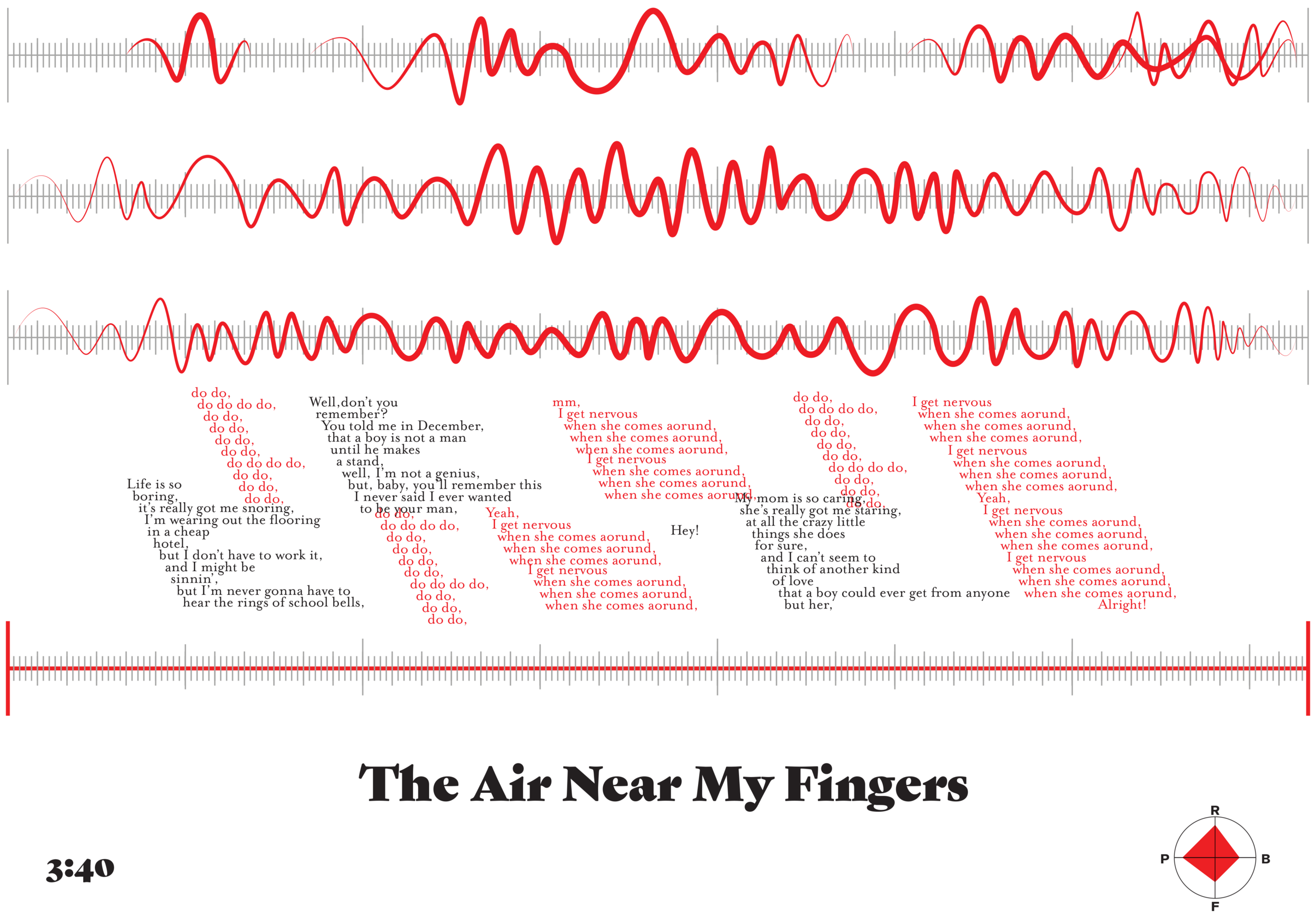
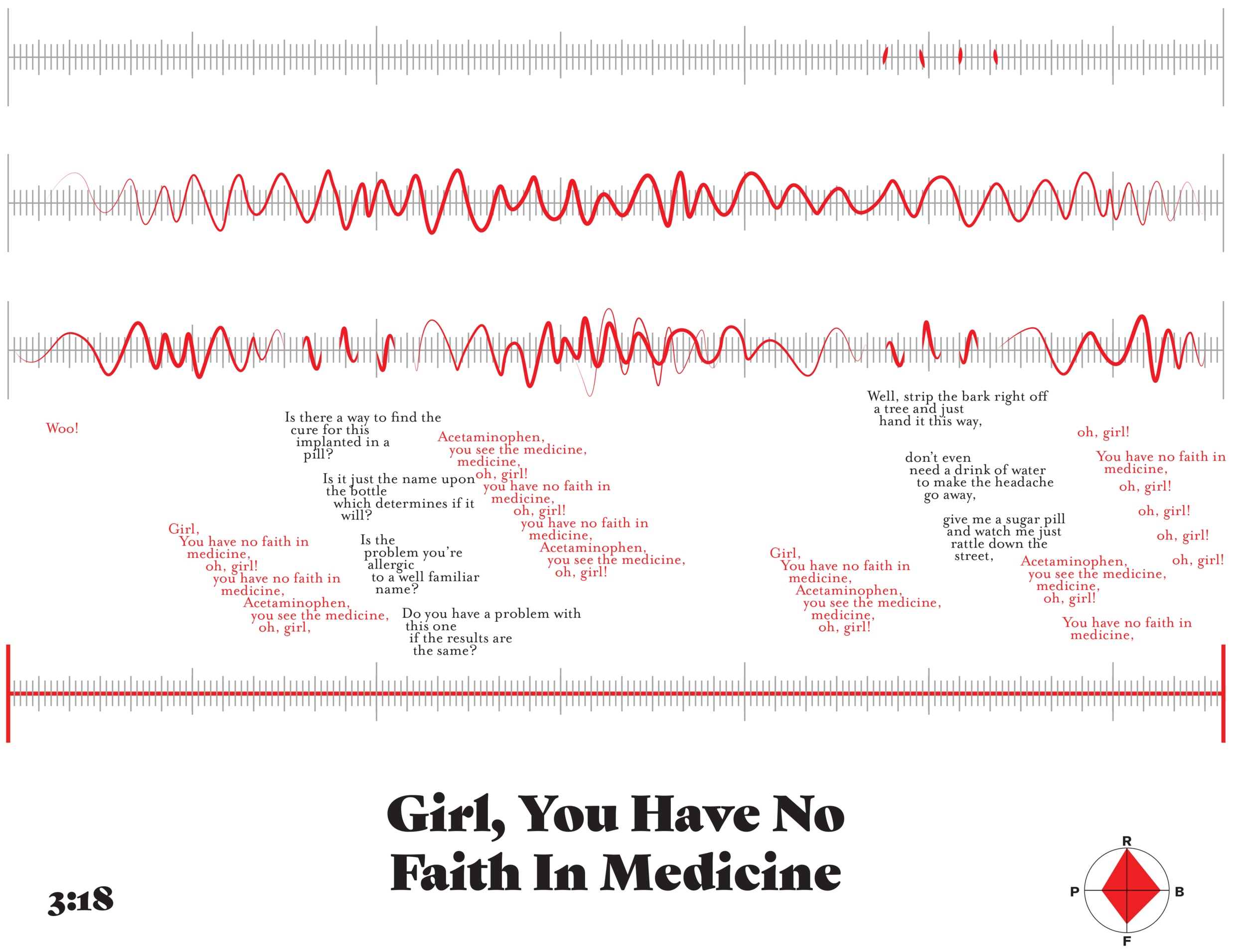
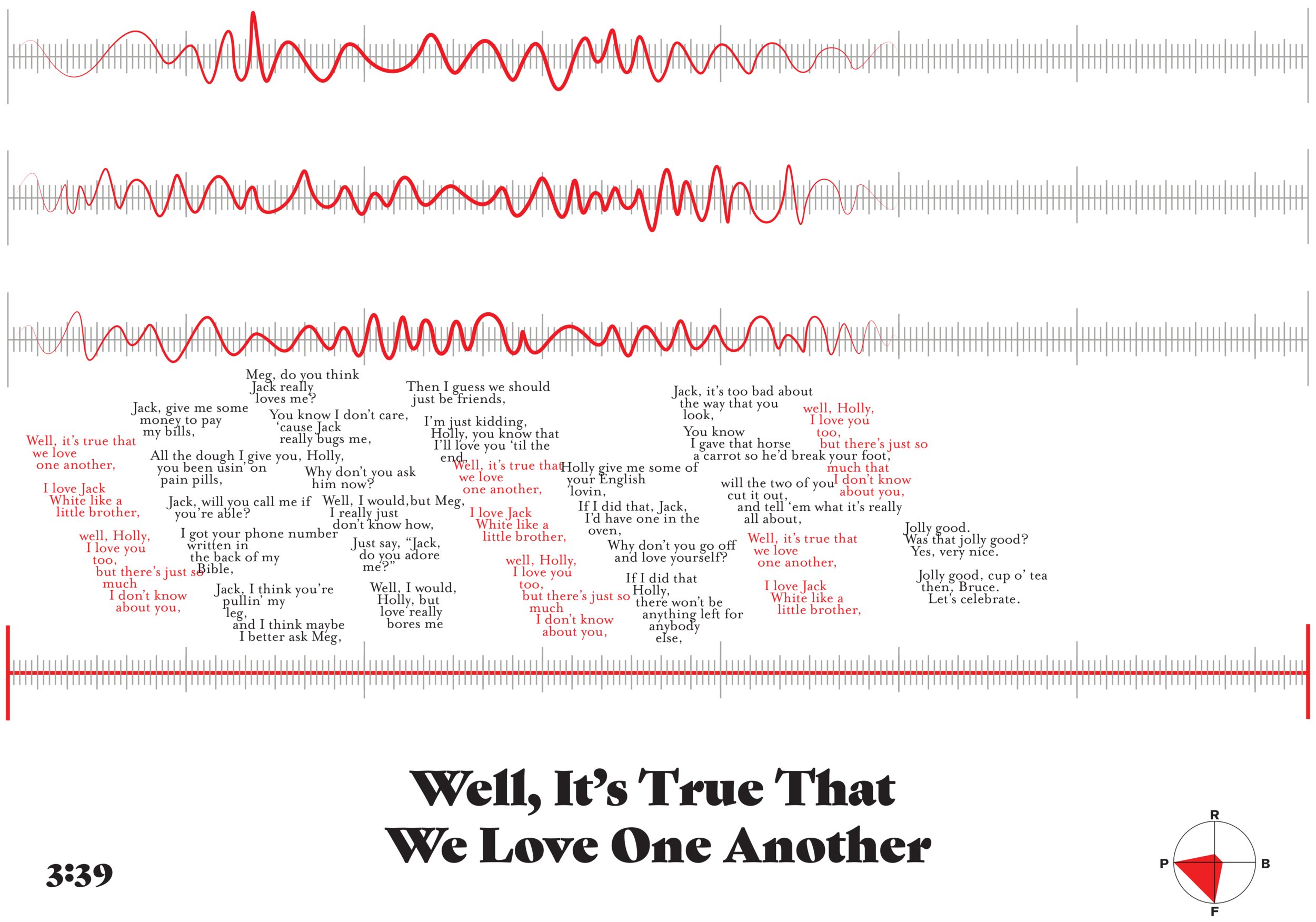
Creating what he calls a “visual album” Chandler transposed Elephant onto a 9-foot scroll that tracks the entire record second-by-second. Interpreting each instrument’s volume and the exact starting point for every word sung, Chandler’s creation is one-of-a-kind and unlike anything I’ve ever seen before in my life. There’s something to be said for standing face-to-face with one of your favorite records and taking in the entire thing as it towers above you.

While it’s impossible to translate the feeling of interacting with the scroll itself, I wanted to share this beautiful and original piece of art with as many people as possible. Not only was Chandler kind enough to let me share his incredible work on Swim Into The Sound, but he also sat down with me to talk about the process that went into making it as well as his personal background with the band. So without further adieu, I’m excited to present The Elephant Visual Album. 

Full-resolution PDF version of the Elephant Visual Album at the end of the article.
 

The Visual Album and Its Creator: An Interview With Chandler Cort

Much like Taylor, I have a very distinct memory of my introduction to the White Stripes. I came to the party very late, as my parents found it borderline impossible to break away from anything outside of the typical 60’s - 80’s hits they grew up with.

There aren’t many specific events in my life that I would refer to as “life-changing,” but hearing “Rag and Bone” for the first time in my high school art class was absolutely one of them. My obsession with the White Stripes began with Icky Thump and worked its way back to the very beginning of the group’s discography until I had completely immersed myself in everything they had ever produced. The White Stripes were something I listened to exclusively for months. When I wasn’t listening to them, I found myself watching interviews with the members, reading about their history, and completely immersing myself in the group’s mythology. I had never quite felt myself become so taken by a band before.

Six years later, the White Stripes are still one of my favorite bands, if not my all-time favorite. Jack and Meg White have taken hold of a very big piece of my heart, and I don’t know if that will ever be able to be eclipsed.

Screen Shot 2018-07-20 at 1.30.29 PM.png

The way the project really came about was kind of funny. I was in my first infographics class at Portland State University, and we were told to make a timeline for our first project. The professor made sure he kept things very open-ended, so we had the choice to do an incredibly accurate historical timeline, or we could do something more whimsical like a timeline of the Harry Potter Universe.

I remember going on break one day listening to Elephant, and thinking “it would be funny to do an infographic on the number of times Jack White goes, ‘WOO!’ in one album.” So that’s where it really kinda started. I refined my guidelines a little bit further and decided that I would track the main instruments: guitar, drums, and piano, as well as the vocals. 

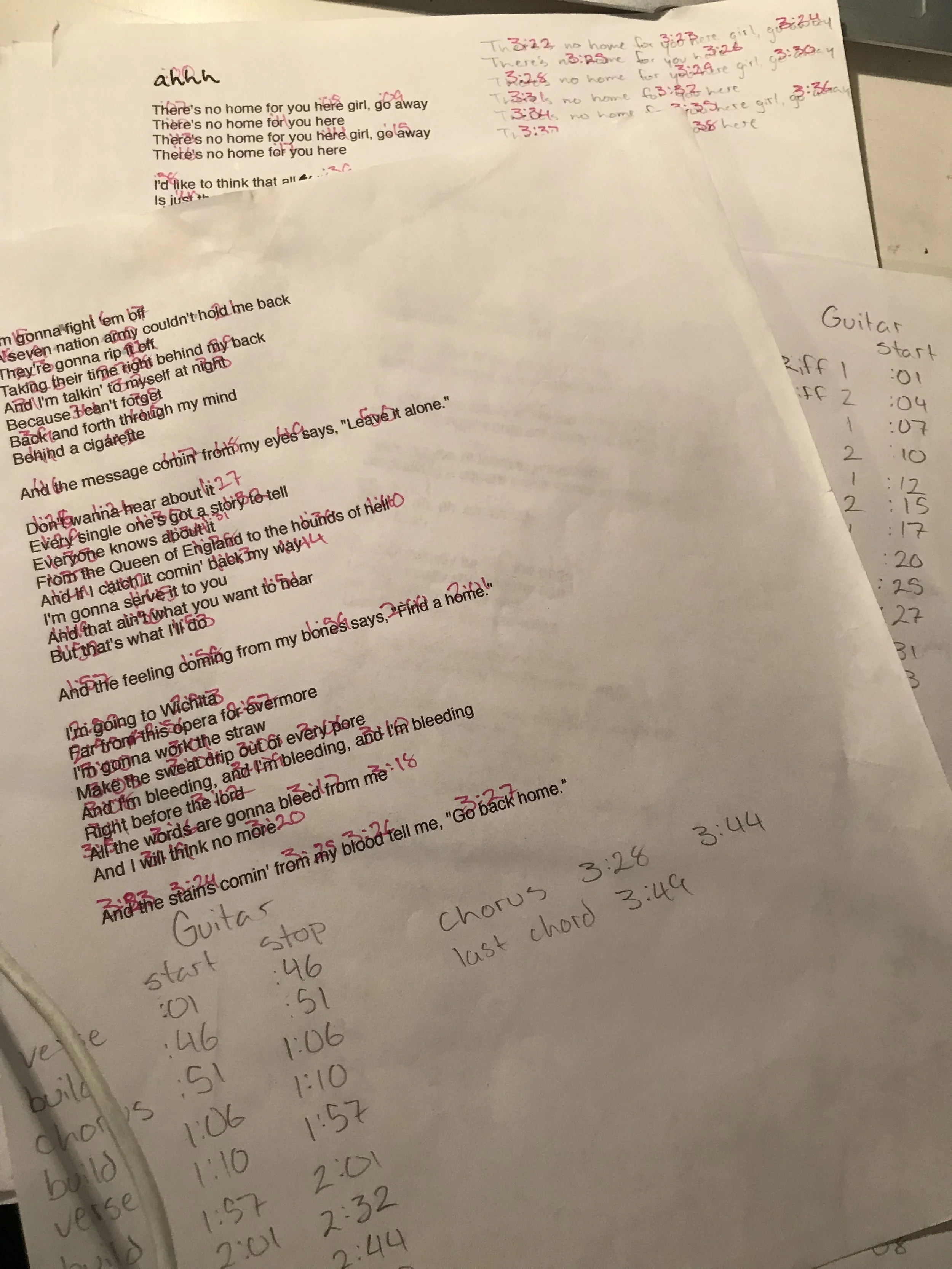
The process for this piece is something I feel just as proud of as the actual work itself. All of my research for this project was done entirely audibly. I printed all of the lyrics to every song, and I would sit down at my desk every day, listen to the song, and get the second-by-second timestamps for every lyric, and then go back through, and repeat the same process for the guitar, drums, and piano. This means I listened to every song at least three or four times in full, not counting pausing, rewinding, and playing again to make sure the time signatures were as accurate as possible.

In addition to the individual instrument timelines, each song also got a “genre gauge” that I had designed too. Because Elephant is such a diverse album, I feel like it was very important to describe how each song was different in comparison to the others. Every song was ranked on a scale of punk, blues, folk, and pop, with the end result being a circular graph that represented the track’s sonic texture. 

This was then translated into a second graph that I constructed to help best visualize the album in its entirety. I’d guess this project took somewhere between 40-45 hours total. It was truly a monster, which can be seen in the final 9-inch by 9-foot print. I remember people telling me in class that I was doing was ridiculous, and that I was crazy for even attempting something like this, which honestly just kind of pushed me to do it even more.

A lot of my design work has been very music-focused, and I have done very intense pieces about other albums I love, but I feel like this one is probably the most accessible, and the most interesting. I describe this piece as a visual album because I feel like it is the most literal visual translation of an auditory piece. I’m so happy that this piece has received the reaction it has, and I’m incredibly thankful that Taylor was moved enough to offer me this opportunity, and I hope to be here again someday. 

Until then everyone, be good, and love what you listen to.

IMG_0603.jpeg