Cover Collector – April Greens
/
Design by Ryan Morrissey
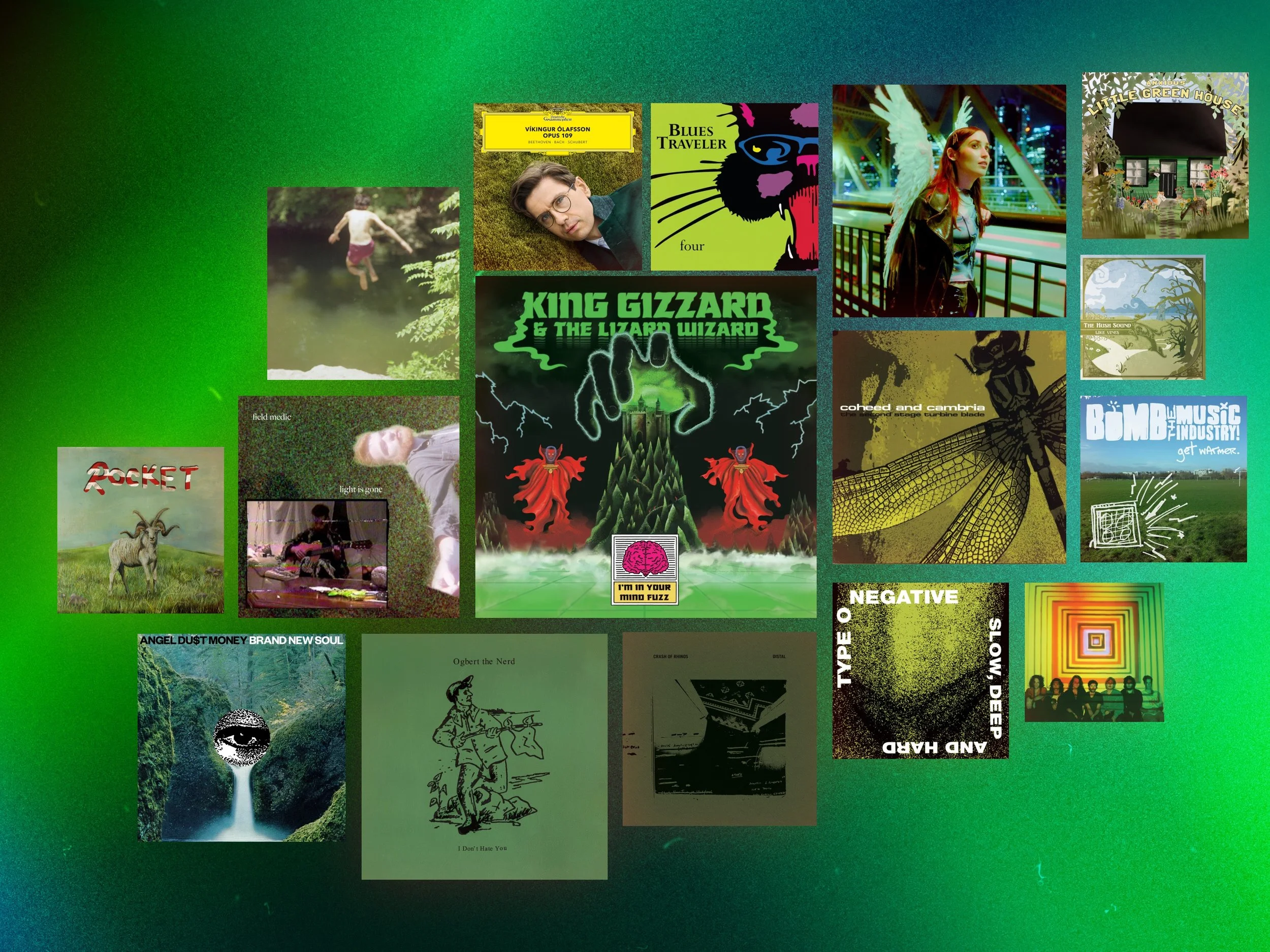
I don’t know about you guys, but I love a good album collage. One of the first things I do every Friday is head over to tapmusic.net and render a 4x4 chart of the albums I listened to most over the past week. At the end of each month, I do the same thing with a 5x5 that recaps my previous 30 days of listening. By the time December rolls around, I look forward to recapping the last twelve months with a gigantic 10x10 grid in an unwieldy encapsulation of the 100 albums that defined my year.
Is it a little self-aggrandizing? Sure, but it’s also a fun way to see a quick snapshot of what my last week, month, or year has sounded like. At its best, this practice has led to fun conversations and solid recommendations going back and forth with friends as we bond over specific albums. Sometimes it’s that shared love over a deep pull from years gone by, other times it’s just noticing trends with a recent fave that seems like an unshakable presence week in and week out. At the very least, I suppose it’s satisfying to see a bunch of records that I feel an affinity toward lined up and embodying a specific stretch of my life.
At some point near the tail end of last year, I conceived of a more communal way to bring this love of album collage to life. Because, sure, getting a live readout of your listening history is cool, but this is also about album art, an essential part of the experience and something us nerds can fixate on just as much as the songs that sit beneath the cover. As such, I’m excited to welcome you to the fourth edition of Cover Collector: a monthly installation where the Swim Team discusses some of our favorite albums based on album color. For April, we’re writing about gorgeous greens.
The World is a Beautiful Place and I am No Longer Afraid to Die – Whenever, If Ever
Topshelf Records
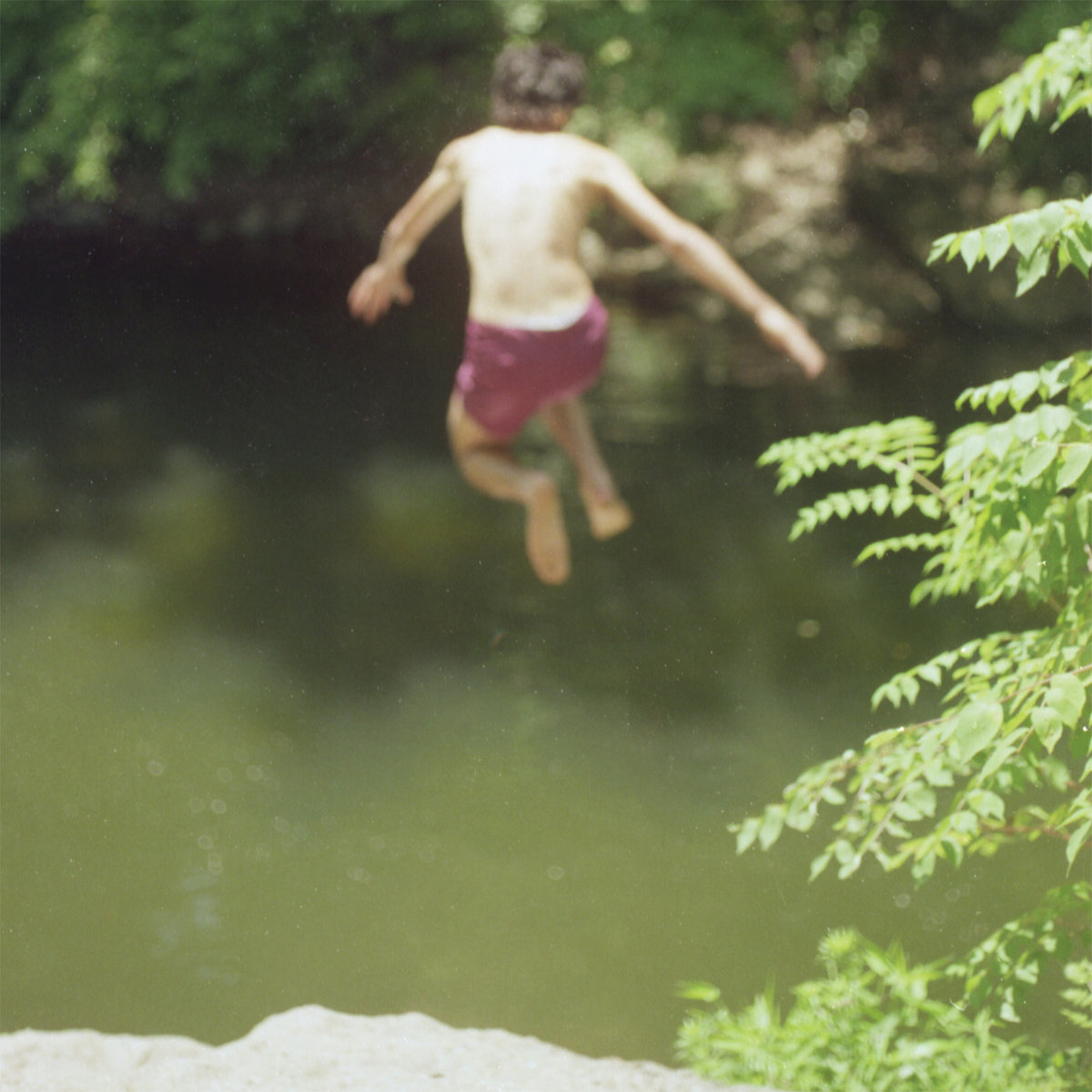
Much like the color blue, I think there’s something primordially calming about green. It’s everywhere in our natural world, from the grass of the field to the leaves on the trees that tower above us. It’s calming, pastoral, and speaks to something deep within our brains that seems to signal pause and restoration. It’s no big surprise then that the cover for Whenever, If Ever, the debut studio album from the foundational emo act The World is a Beautiful Place & I am No Longer Afraid to Die, evokes a sense of fuzzy nostalgia before you even hit play. The slightly out-of-focus photograph shows someone jumping off a high rock into a cool body of water below, everything framed by foliage and warmed by the bright sunbeams above. The album’s two-minute instrumental welcomes you into this world before whisking the listener away into the brilliant splendor of “Heartbeat in the Brain.” Not only is Whenever, If Ever a defining emo album, it operates from this mystical point of undying adventure and youthful adoration that every nostalgic teenager and wistful 20-something understands as soon as they realize that the world will never quite be the same again. The band rouses and rises to the occasion. There’s a collectivist sense of powering through with each other, despite it all. The band said it best themselves in the knockout seven-minute closer “Getting Sodas,” when they sang “The world is a beautiful place, but we have to make it that way.”
– Taylor Grimes
Blues Traveler – Four
A&M
In my journey as one who writes about music, I often return to my origins: MTV2, VH1, and my Mom’s big purple CD binder. My earliest music memories involve sitting at the foot of our wooden entertainment center, next to the six-CD changer-stereo combo, beneath a blue curtain with that classic ‘90s gold-moons-and-suns astrology pattern, leafing through this CD binder that must have held 300 CDs.
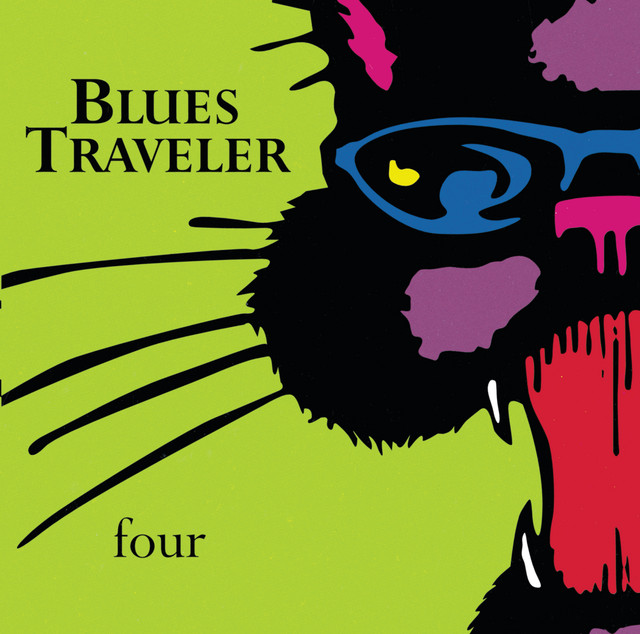
Among the Dave Matthews Band, Aerosmith, and Sheryl Crow CDs, two discs always caught my eye. The first was Kid Rock’s Cocky, because the image on the disc featured Mr. Rock flipping the double bird. The other was Blues Traveler’s Four. Not only because the disc was bright green, in great contrast to other CDs at the time, but because of the cartoon cat smoking a joint at the top. What can I say? I was like seven years old and titillated by things I knew were naughty! And yes, I’m sorry for airing out my Mom just now and admitting she owned a copy of Kid Rock’s Cocky, though it’s entirely possible that one belonged to my stepdad, and this was after the “Great CD Co-Mingling of the Early 2000s.” That’s where his Ludacris Chicken and Beer CD touched faces with her copy of Madonna’s Ray of Light, and they found happiness.
Four became one of my favorite albums over my childhood and adolescence, and it still reminds me of car rides with my Mom to this day. Blue Traveler has picked up a sort of “Nickelback Factor” where people love to talk shit but refuse to admit that they had some real joints. The singles from Four (“Run-Around,” “Hook,” and “The Mountains Win Again”) can come off a bit hokey now, but that’s because they’re devoid of context. Four was released in September of 1994. Grunge was in the rearview mirror, and labels were clamoring to catch the next rising star. Blues Traveler arose as something different with drawing power. In a crowded field of jammy, blues-inspired acts from the Northeast and Southeast (along with Spin Doctors, Phish, Widespread Panic, God Street Wine, Dave Matthews Band, and Medeski Martin and Wood), they innovated an entire new genre in a couple of years, playing thousands of live shows at colleges all over the Eastern United States. There’s a really great book about this mid-90’s jam scene, Mike Ayers’ Sharing In The Groove.
There’s really not a skip on Four, and it’s an outstanding document of a band at the tippy-top of a scene doing what they do best. For my money though, their first live CD, Live From The Fall, is the best way to hear what those A&R guys heard in 1992. John Popper is one of the greatest frontmen of all time, and Live From The Fall is the proof.
– Caleb Doyle
Type O Negative – Slow, Deep And Hard
Roadrunner
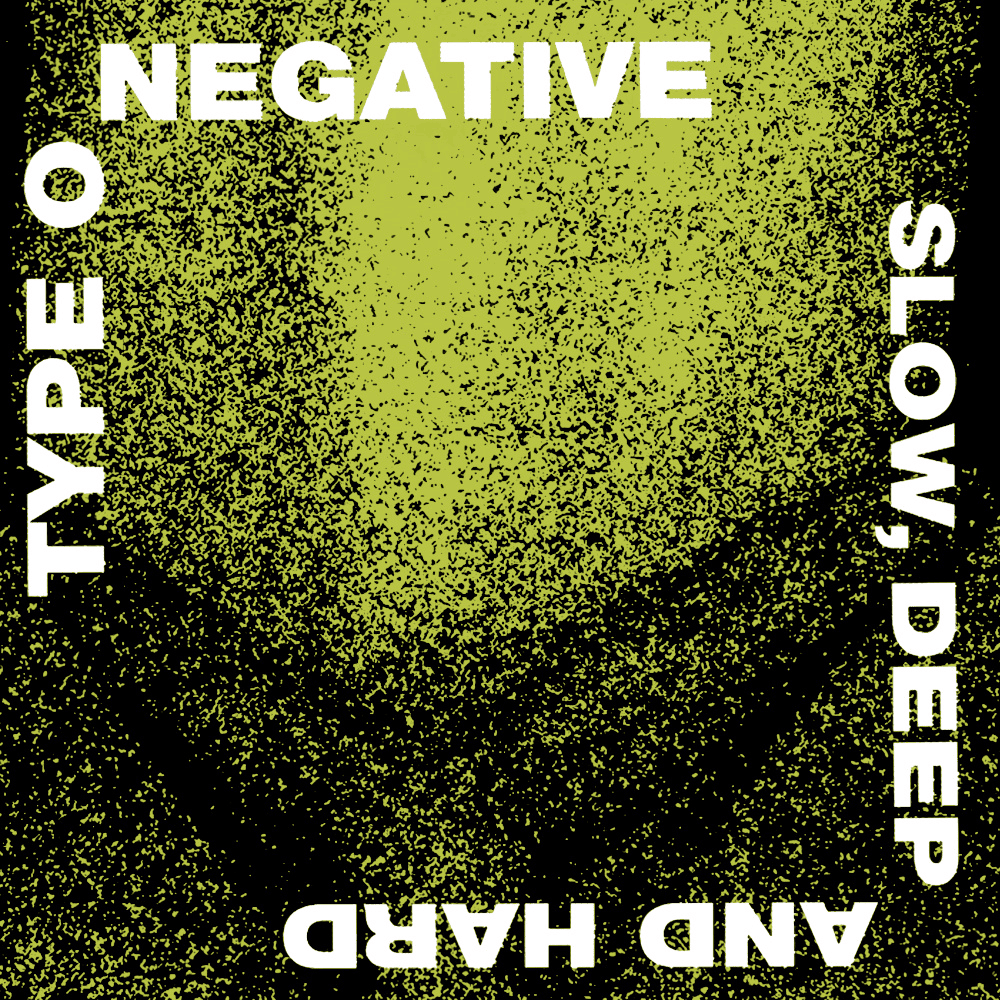
There may not be a more obvious, entry-level, green-coded band than Type O Negative. Few bands have held their identity with just one or two colors, but from 1991 to 2007, the Brooklyn “drab four” created an entire discography of iconic green-and-black imagery. My favorite Type O album is 1996’s October Rust, although that cover art is the least directly green of them all, so let’s dive into their penetrative debut, 1991’s Slow, Deep And Hard. Lead vocalist, lyricist, bassist, and 1995 Playgirl centerfold Peter Steele was beginning his next musical chapter after the end of his previous band Carnivore, and he was not in a good mood. Slow, Deep And Hard may be the first and only thrash metal breakup album, bridging the gap from Carnivore’s direct East Coast fury to the introduction of Type O Negative’s (anti-)romantic doom. It doesn’t sound much like what the band would become afterward, nor does it line up with any other metal album before or since. The twelve-and-a-half-minute opener “Unsuccessfully Coping With The Natural Beauty Of Infidelity” is a signature moment of Steele’s tongue-in-bleak attitude that he would carry throughout the rest of his career, even with it being a completely raw and unfiltered reflection of his feelings. “Xero Tolerance” moves back and forth between dissonant sludge and major-key punk rock, with a “kill you tonight” shouted refrain that’s as nasty as it is ridiculous.
Of the album’s seven songs, two of them are back-to-back entries in Type O’s list of album pranks: “Glass Walls Of Limbo (Dance Mix)” is nothing but a dark ambient/martial industrial interlude, and “The Misinterpretation Of Silence And Its Disastrous Consequences” is… well, you’ll have to listen to get it. The five core, multi-movement songs end with “Gravitational Constant: G = 6.67 × 10⁻⁸ cm−3 gm−1 sec−2,” simply one of the finest, physics-inspired, relationship-dissolving, gothic thrash album finales in Type O Negative’s history. Slow, Deep And Hard is something all its own, not for everyone, but should be heard by everyone.
– Logan Archer Mounts
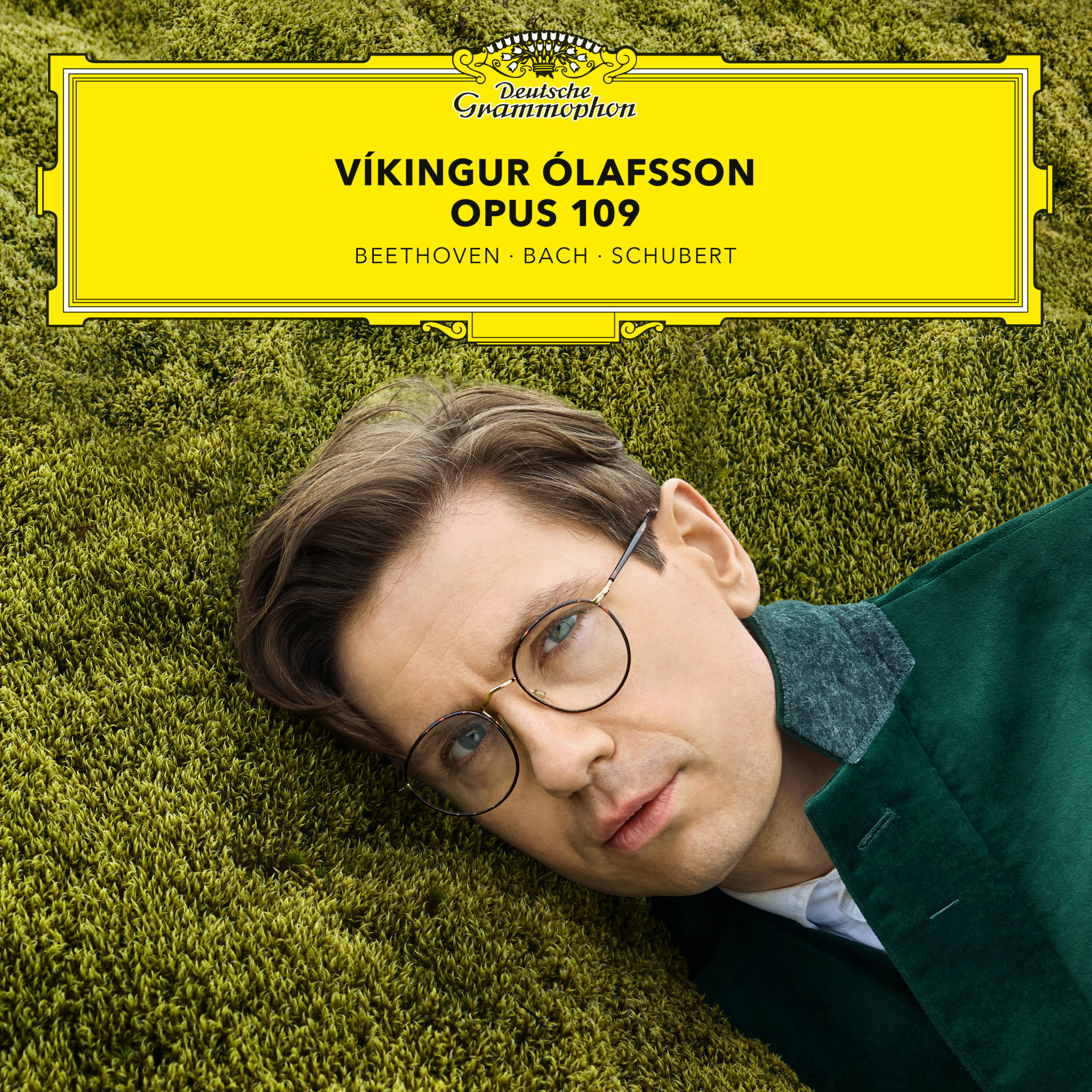
Víkingur Ólafsson – Opus 109 (Beethoven | Bach | Schubert)
Deutsche Grammophon
It’s challenging to break through the noise in any genre of music, but I would argue that it’s particularly difficult to do so in classical music. The genre is overshadowed by great performers and ruled by strict, historically accurate performance demands. And yet Vikingur Olafsson has done the impossible and cut into the surface of this realm with clear, precise intent. I am an avid fan of Olafsson’s interpretations and claim him as my favorite performer of classical piano music - his 2017 album of various Philip Glass selections is a treasure, and he made waves with his fresh, sparkling recordings of the Goldberg Variations in 2023.
In Olafsson’s latest recording, Opus 109, he explores the throughline that runs so clearly through Bach to Beethoven to Schubert. You can hear the pull of emotion in every note of Olafsson’s interpretation, indicative of the new era that music was hurtling towards. Programming Schubert alongside two giants of classical music may seem an unusual choice at first glance, but upon closer inspection, we can trace a theme from Beethoven to Schubert: both composers defied traditional compositional structure in their later works. Schubert’s two-movement sonata, widely considered incomplete, is argued to be the opposite by Vikingur. Schubert would be utterly pleased to see his name alongside Beethoven’s on this cleverly planned album.
Vikingur Olafsson’s renditions of the works on this album are resonant, warm, and thoughtfully prepared. The album exterior reflects an equal amount of care: it’s impossible to ignore the mesmerizing cover photo. Vikingur has always leaned into his artistic sensibilities for the covers of his releases, and this portrait of him is no exception. Lush, sensual, and surreal, the artist invites the listener into his world with a direct gaze that breaks the fourth wall. You are beckoned to experience the beauty of these works alongside him. The performer is nothing without someone to play to, for what is music without anyone to hear it?
– Britta Joseph
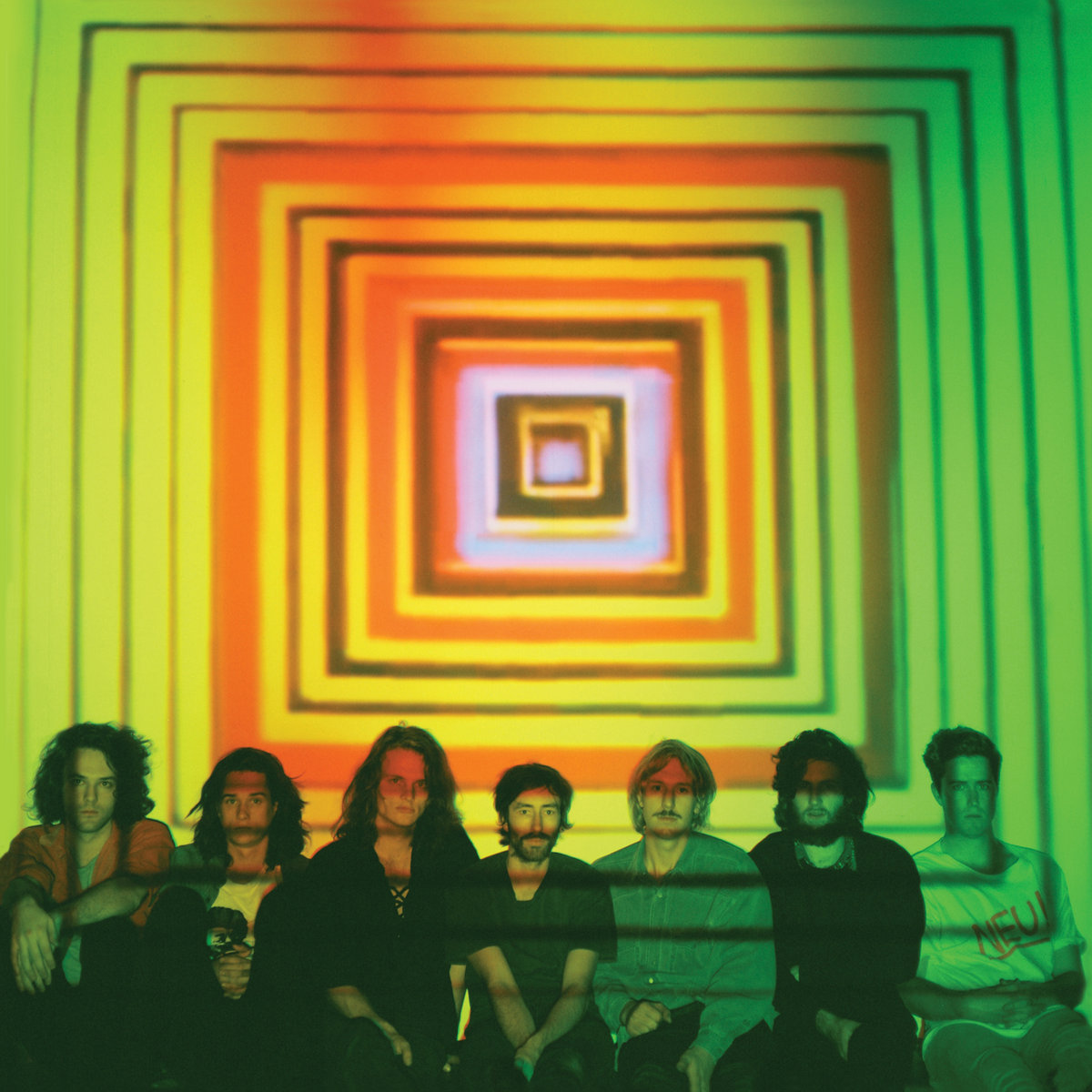
King Gizzard & The Lizard Wizard – Float Along - Fill Your Lungs
Flightless
Back when I was a green Gizz listener, I prided myself on holding the niche take that Float Along - Fill Your Lungs was the Australian psych-rock genre-be-damned mega-unit at their very best. And, even as “good ole days,” I still stand by it. Hearing “Head On/Pill” for the first time rewired what I thought a long song could be. (People joke about riffs or melodies being able to lift them from comas, but the “Head On” riff really does summon my Gizz geeker self from the depths of my psyche.) The opening guitar echoes and wobbles on “Head On/Pill” felt like a green, slimy, sticky, swampy flare shot straight into the night sky. (As Stu wrote in the liner notes: “It was short at first, but it just kept fucking growing like pond scum.”) And I realize now that I used to think it was the best Gizz album because it was the first Gizz album where the minds were truly meeting, the Gizzards letting their improvisational freak flags billow until they broke. It was also the de facto double-drummer album, a return to form that became a focal point of Gizz's live presence in the mid-2010s. With a ripping, wandering opener and a theme-song-esque title-track closer, the middle of the album is oft overlooked, but not in my world. Not in the world I’m living in. That’s where the Gizzards sneak their droning (“30 Past 7”), their fuzzy (“Pop In My Step”), their overmodulated (“God Is Calling Me Back Home”), and their funky (“I’m Not a Man Unless I Have a Woman”)—a great, big green journey into the outer reaches of it all.
– Cassidy Sollazzo
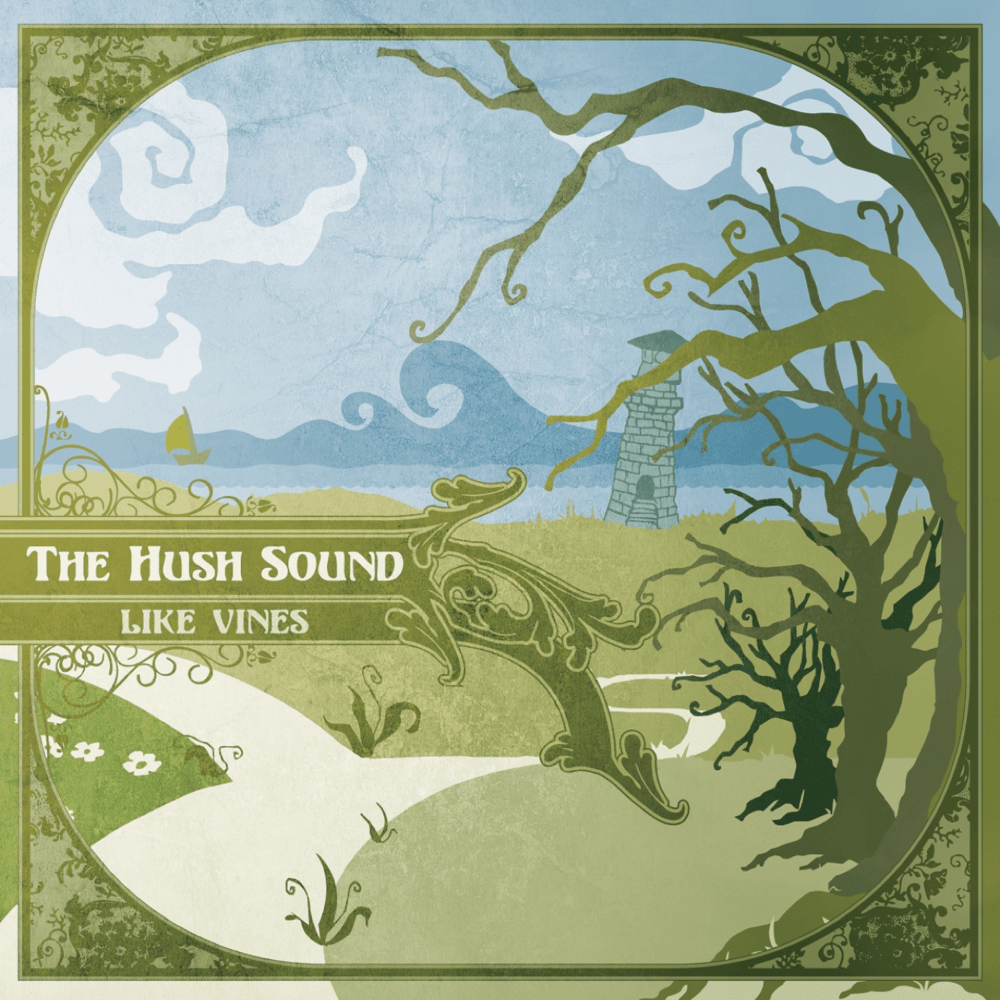
The Hush Sound – Like Vines
Decaydance Records
When I was around 11 years old and burning the midnight oil on World of Warcraft in the family computer room, there was a good chance I was usually either listening to Billy Talent’s second LP or Like Vines by The Hush Sound. Released in 2006 on Pete Wentz’s Decaydance Records, this no-skip banger of an album is a masterclass in imaginative poetry and use of playful textures. Despite this release dancing in the same circles as Fall Out Boy and Panic! At the Disco, Like Vines stands strongly on its own feet outside the shadow of its contemporaries. This record’s unabashedly twee nature and jaunty rhythms, combined with its melancholic lyricism, feel very much at home in a time period where Hot Topic and the global village coffeehouse existed simultaneously.
Like Vines gives you such a strong impression of what it’s about within seconds of starting with the charismatic, almost showtune-esque “We Intertwined” while tracks like “Lighthouse” and “You Are the Moon” display the group’s more heartstring-tugging, piano-forward qualities. It’s the effortless versatility, this shifting between full-band tracks with the more subtle breaks consisting of a single vocalist and a piano, that help this album stand the test of time.
While I believe every track on this album is its own perfect, self-contained world to explore, the song “Wine Red” alone is reason enough for everyone to experience Like Vines at least once in their time on this earth. Of course, I’m also going to give a special shoutout to the Patrick Stump feature in “Don’t Wake Me Up” that I admittedly did not clock as him until many years into listening to the album.
– Ciara Rhiannon
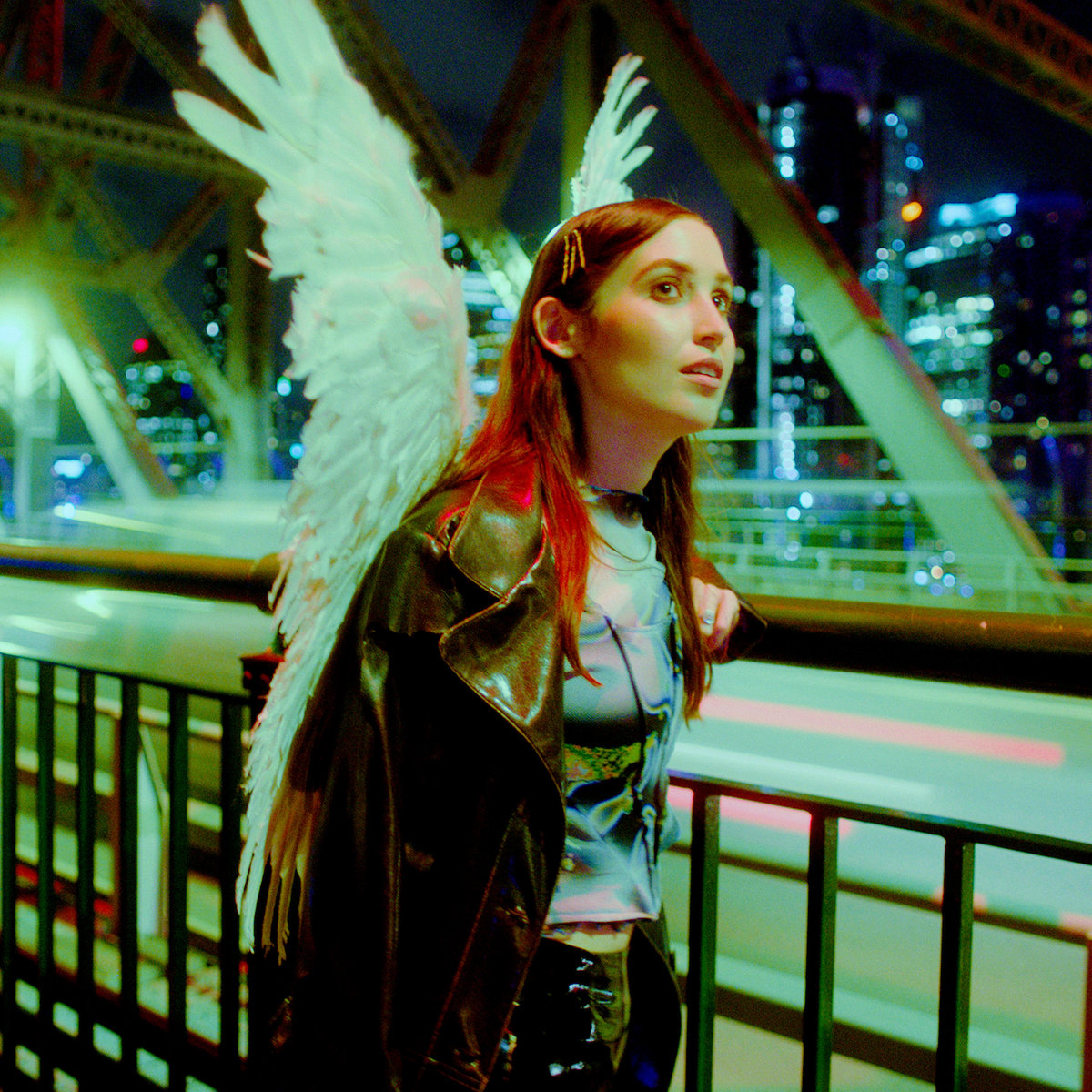
Hatchie – Giving The World Away
Secretly Canadian
If you’ve been looking for something to listen to while walking in a dusky city on a cool, spring night, look no further. Hatchie’s 2022 breakout album has the whimsical reverb that perfectly parallels Giving The World Away’s dreamy album cover, with beams of light and a glow reminiscent of a still frame from a futuristic Wong Kar-wai movie. The standout “Quicksand” was on my playlist for the entirety of 2022, making its way into my personal library when I would take the green-bullet G train and get a glimpse of the downtown skyline before heading back into the tunnels underneath Brooklyn. That bass during the chorus envelops me in such a beautiful way. Outside of Hatchie’s pop masterpiece, songs like “This Enchanted” explode with sound and color, while “The Rhythm” feels equipped for your dancing shoes. There’s a deep cut on this record called “The Key,” which is simply shoegaze perfection, with a chorus that slams with levels of distortion like nothing you’ve ever heard. There’s RANGE on this one!
– Samuel Leon
Alex G – Rocket
Domino Recording Co
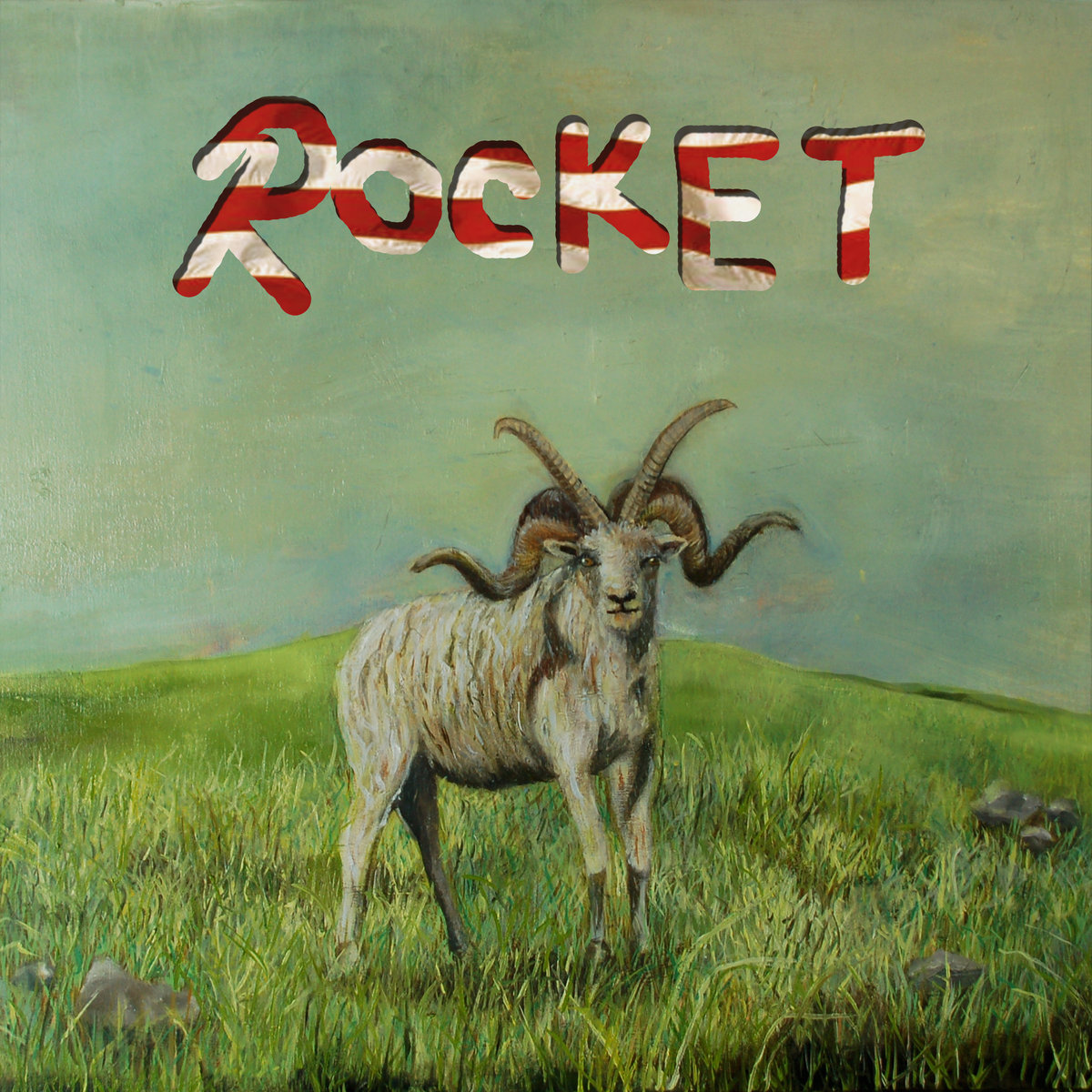
They say you never forget your first, and when it comes to Alex G albums, that’s certainly true for me. I distinctly remember trying to “get into” Alex G back in 2017; he was fresh off his contributions on Frank Ocean’s Blonde, and I was eager to learn more. First, I tried DSU since that seemed to be a consensus fan favorite at the time, but that record didn’t do much for me. This was still during his “(Sandy) Alex G” era, and I remember deciding to give him another shot early on in the summer when he released Rocket. I threw the album on while out for a walk, and the whole thing soundtracked my walk perfectly, seeping into the grooves of my shoes and flinging the hot air past me. I was walking through neighborhoods and fields that looked eerily similar to the one on the cover of Rocket: lush, waving, and full of motion off toward an indistinguishable horizon. There was no Jacob Sheep staring me down, sure, but I will tell you the first time I heard the dog bark on “Poison Root,” I took out my earbuds because I thought it was coming from a nearby backyard. That moment turned out to be transportive in the best way, making me laugh as I slipped my headphones back on and hit play again. The rest of the record is super laid-back and breezy, barring the off-kilter three-song suite from “Witch” through “Brick,” but even that I love as a sort of mid-album bridge into “Sportstar” and the remainder of Side B. Rocket is just a really special record that helped me unlock the rest of Alex G’s discography. I feel lucky to have fallen into it.
– Taylor Grimes

If we’re talking solid-color album art, there’s one band that stands above the rest, and that’s Weezer. Across fifteen studio albums, more than a third of their discography is made up of self-titled albums that fans simply refer to by their color. Each features the band members lined up staring down the barrel of the camera against a solid-colored background. In this recurring section, we’ll address the elephant in the room that is Weezer’s discography.
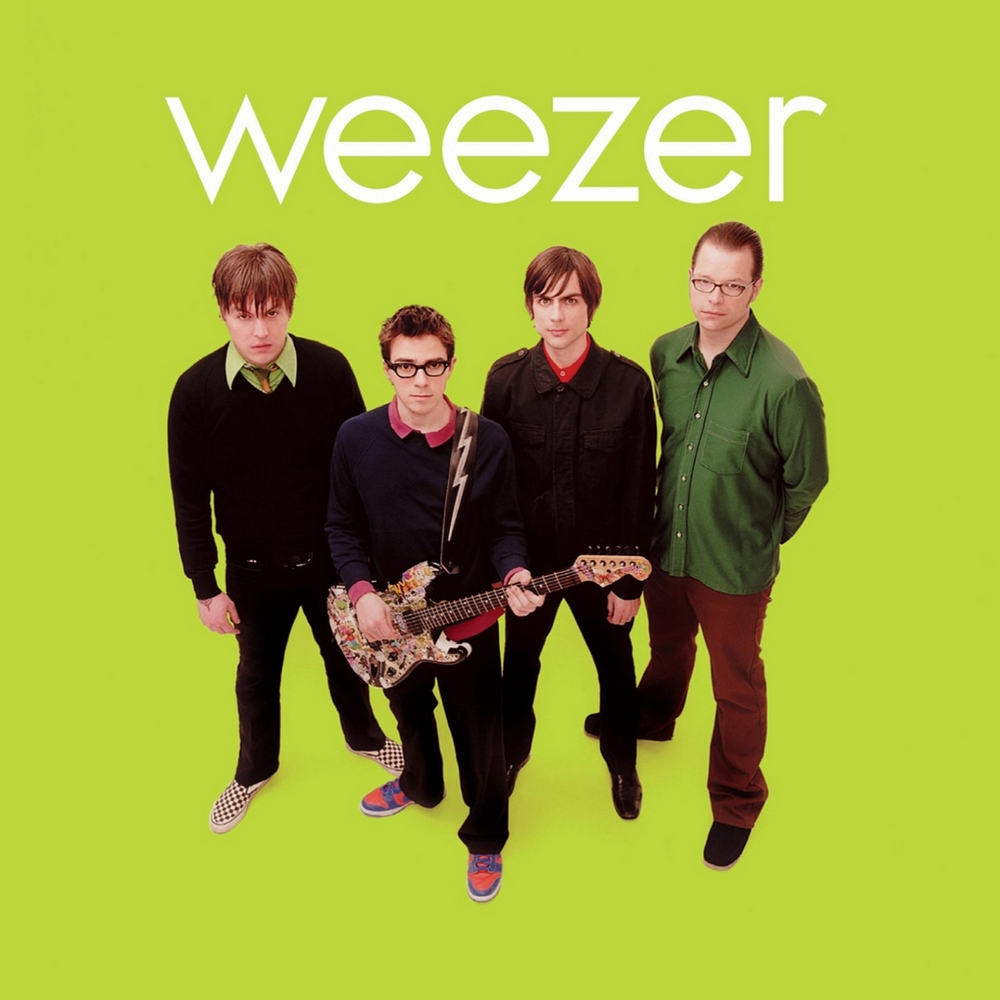
Alright folks, big Weezer fan Lillian Weber talking here. And by that I mean up until today, April 25th, 2026, I have only listened to Weezer, Pinkerton, Everything Will Be Alright in the End, and Weezer in full. No, those are not in chronological order, and which colored Weezer albums I am referring to is for you to decide. Weezer (The Green Album) was not one of them. Beyond those four albums, I knew the singles, and no one could convince me I really needed to listen to anything more from further Weezer albums. With Green, I knew one song that wasn’t a single, and it’s this live performance of “Don’t Let Go.” This is much better than the version on the record because River’s sings like this song actually has a target, like there is actually a love he is desperate to keep in his life. But I’m getting too close to my issues with this record, and we have singles to talk about.
What do I think of the singles? “Hash Pipe” is obviously a perfect song, and “Island in the Sun” is just that: a pleasant idea. Listening to this record today, what I’m most struck by is how pleasantly this record goes down. You can’t call it bad, per se, because the melodies are good, the lyrics are inoffensive (except “crab at the booty”), and the instrumentals are the perfect bridge between the emotive alt-rock of The Blue Album and the fluff Weezer would continue to pump out until EWBAITE (but which immediately returned on White). The band went to the studio with the intention of resetting to what fans liked about Blue after the EVERYTHING of Pinkerton. But what makes The Blue Album so good to this day is how it melds the emotional anguish with hooks. The Green Album is just hooks for the sake of hooks, and hey, I’m not above the platonic ideal of a hook, but this is WEEZER we’re talking about. But now that I think about it, this is Weezer we’re talking about.
The cover is okay. River’s looks a little surprised by the camera, and that’s about all the emotion we get out of him on this record…. I’m sorry he really sings “crab at the booty.” WHAT ARE WE DOING HERE?
– Lillian Weber
Crash of Rhinos – Distal
Triste
If you have an opinion on the term “midwest emo revival,” then you probably know this album already. Released in 2011, Distal is a brooding work of dueling guitars and uncertain trajectories, inhabiting the intricate space between emo and math rock. The reason I call this period “revival” is because bands like Crash of Rhinos, Algernon Cadwallader, and Sport brought back a sound from the mid-to-late nineties. The sound they breathed new life into was originally concocted by Cap’n Jazz and Braid, who crafted fast, chaotic, and thoughtful tunes for as long as they could manage. The cost of their energy and intensity was an all-too-brief lifespan. This was similarly borne out by Crash of Rhinos, whose original run as a band lasted from 2009 to 2014.
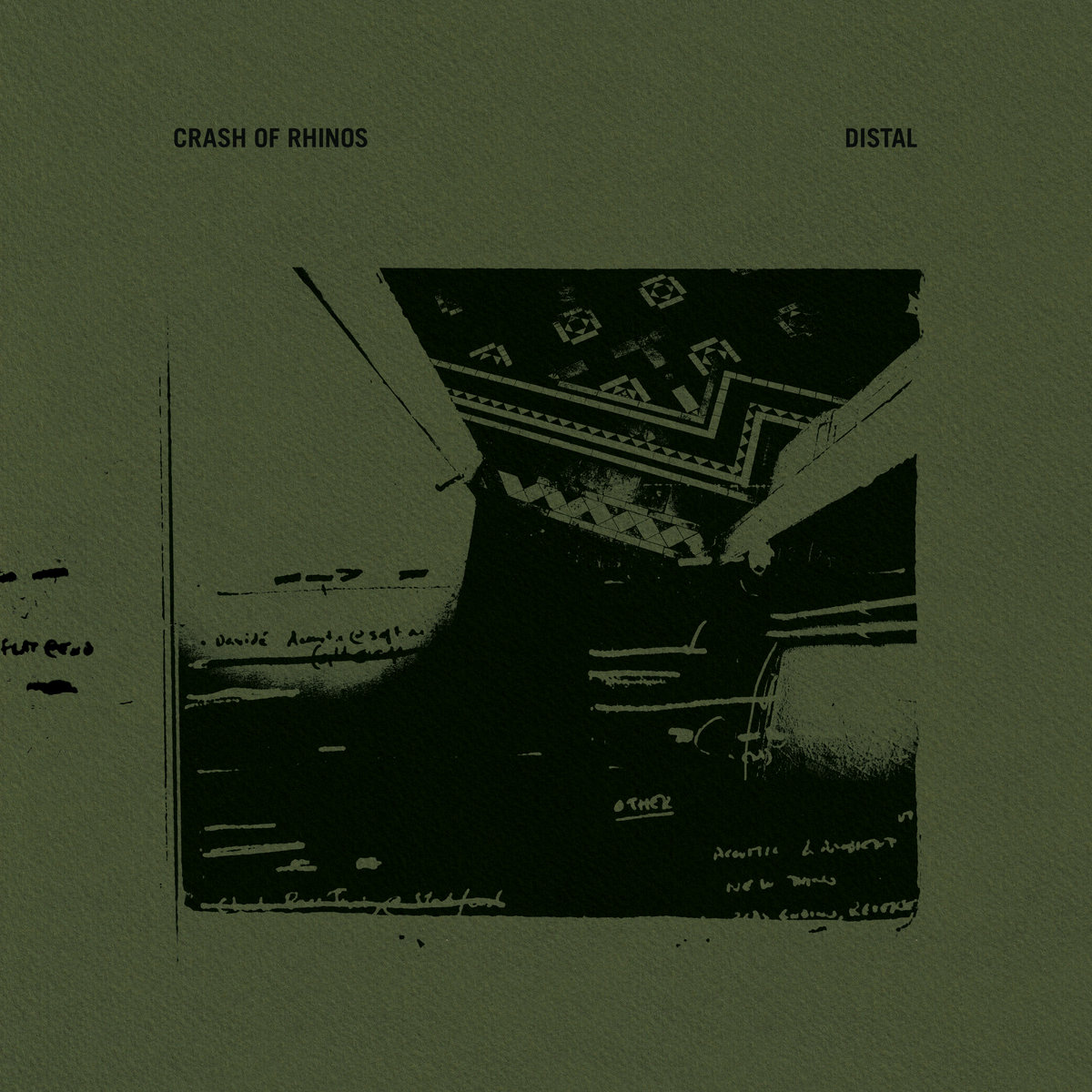
Despite knowing about this album and listening to it for the better part of five years, this is the first time I’ve looked intently at the cover. It appears to be a picture of a threshold into another room, with a dark green filter applied on top of some building notes. The cover is maybe even referenced in “Lifewood” with the line, “Take back these ideas / These words and notes and papers and plans.”
It would seem to me we are living through another revival, but this time it might stick. Emo is approaching mainstream “cool” in a way it never has before, long-defunct bands are reuniting for huge festivals, and the internet has made it possible for anyone with enough free time and DIY grit to achieve global listenership. Luckily for us, Crash of Rhinos is one of these reuniting bands, with a full album releasing on May 22nd. If you can’t wait, you can already listen to two new badass singles on Bandcamp, released just last month.
– Braden Allmond
King Gizzard & The Lizard Wizard – I’m In Your Mind Fuzz
Flightless
Am I in Heaven? No, I’m just listening to King Gizzard’s fifth studio album: I’m In Your Mind Fuzz. Often called a psych rock or garage rock record, this album transcends both genres to do something bigger, opening with a four-song suite, the first of many that Gizz would go on to do, becoming a staple of the band’s sound. This album is much more than its ripping first four tracks, however, as Side B gives us something else we’ve never seen before from this band: slow jams. Throw away your spring reverb, fuzz pedals, and turn down the gain on your amp, cause it’s time to slow things down and talk about saving the earth.
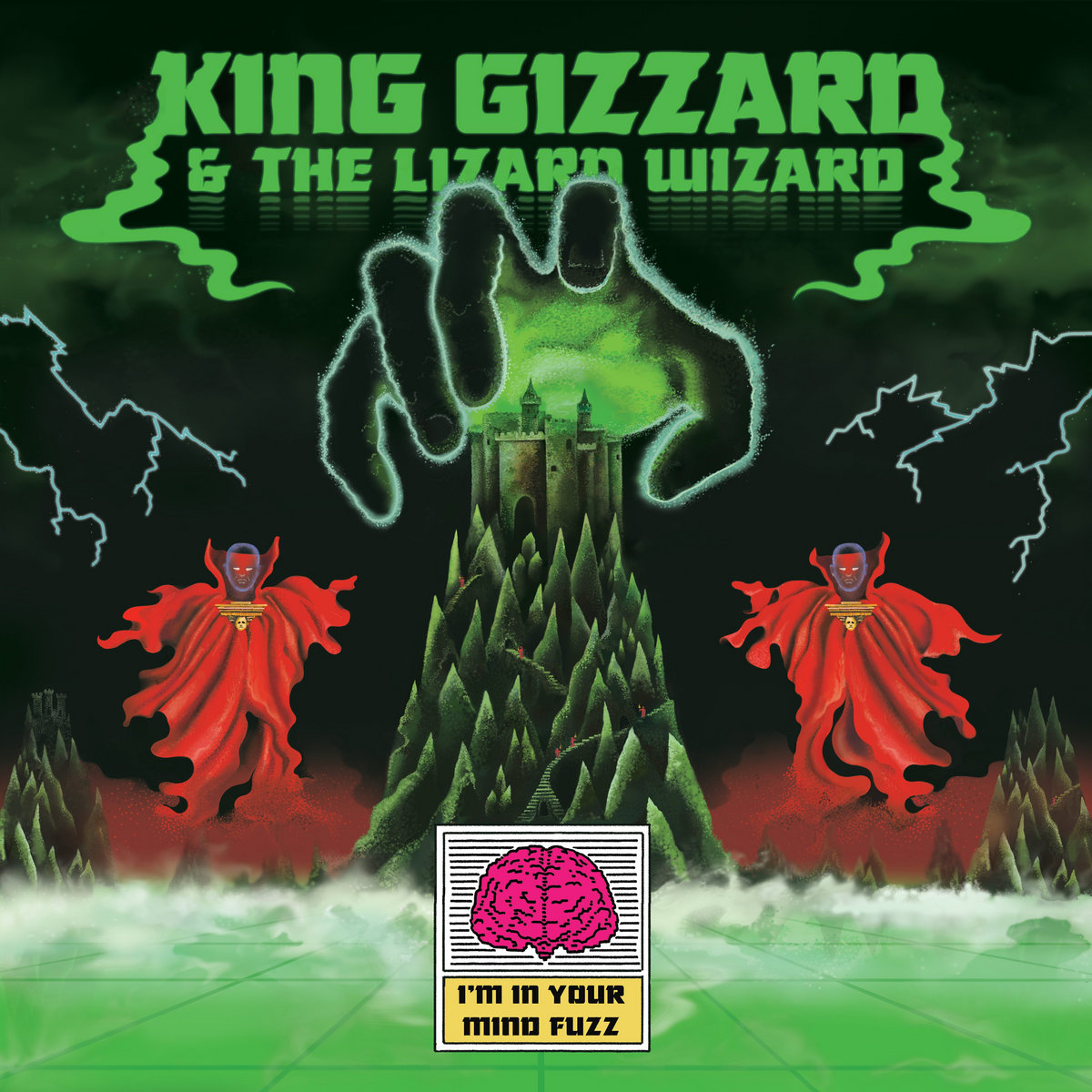
Of course, it’s hard to talk about this album without talking about the album art. Visual artist (and essentially the bonus member of Gizz) Jason Galea designs nearly all the band's visuals, from album artwork and music videos to show posters and projections. Galea, in short, is the band’s visual identity, which is why it’s so weird that this time he just shamelessly ripped off the cover art for the 1983 Atari game Fortress. as the band begins to create The Gizzverse, an interconnected story that ties together many of their albums and songs.
The Gizzverse is only visually depicted on this record through the cover art, but in subsequent albums, we’ll get context for why the sea is green on the cover and why the castle is crumbling. Perhaps we even get answers as to where the lightning is coming from. Indeed, this record’s art sets up the story for at least the next eight records the band would release. Don’t call it psych rock. Vocalist Stu Mackenzie has tried to shed that label. Rather, think of it as a puzzle piece, a first look into what’s to come, and an invitation to put in some work on this angel of a planet we call home.
– Noëlle Midnight
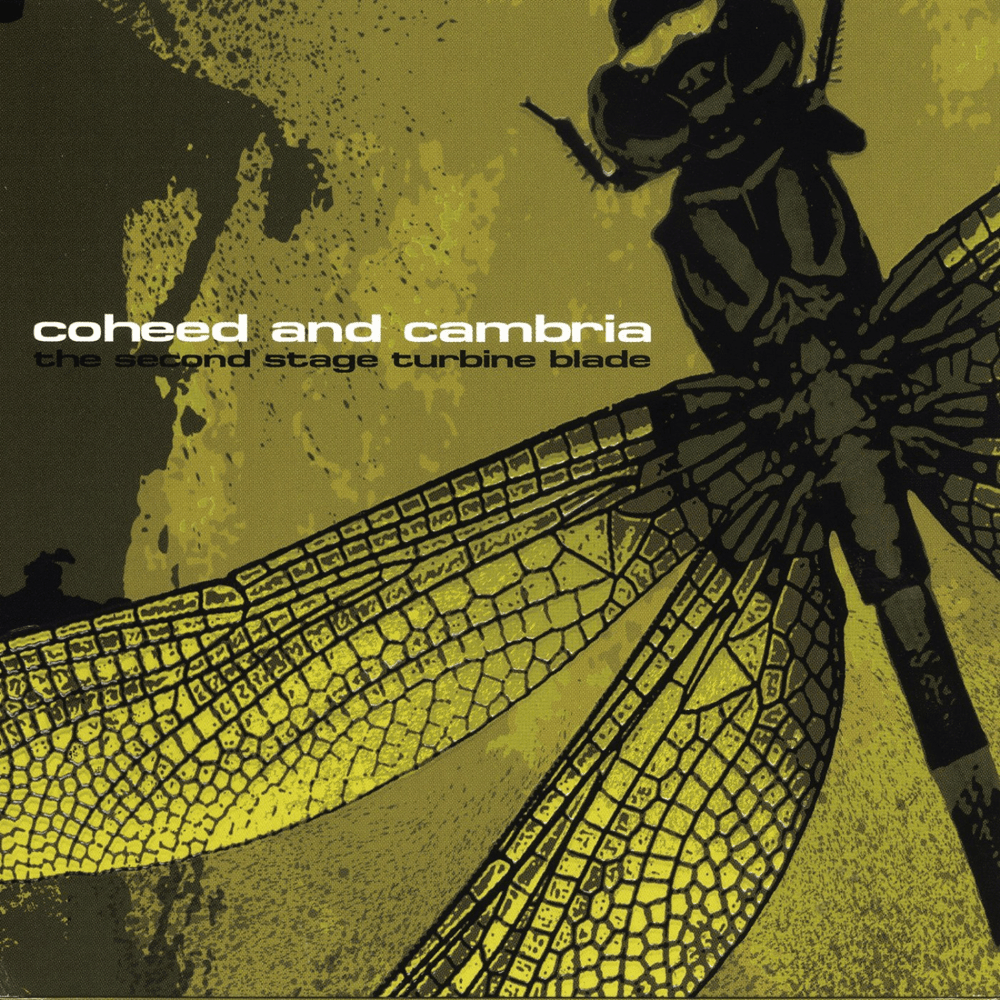
Coheed and Cambria – The Second Stage Turbine Blade
Equal Vision Records
As a lifelong Coheed and Cambria fan, I would be remiss not to give a special collection of words to the green album that started it all. The Second Stage Turbine Blade is easily one of the most ambitious debut albums I have ever heard, and even 24 years after its release, I am continually impressed and inspired by it. Coheed’s firstborn originated many of the group’s staples – the eerie, instrumental opening track and outro, the handful of proggy tracks exceeding 10 minutes in length – while also birthing a discography-spanning, sci-fi epic centered around the two characters for whom the band is named.
While Coheed’s third album, Good Apollo, I’m Burning Star IV, Volume One: From Fear Through the Eyes of Madness, is my indisputable favorite of the band’s catalog, The Second Stage Turbine Blade contains some of my top Coheed tracks, including the impossibility badass and sonically rich “Delirium Trigger” that I once transcribed by ear for classical guitar quarter in my final year of college. “Everything Evil” similarly ranks high in the pantheon of Coheed tracks and is probably their best live song to date, with its entrancing final “Dear Claudio-o” chant and typically present ripper of a guitar solo. It’s difficult not to list every track on this album as heavily influential, but “Junesong Provision” holds a special place for me, along with its acoustic demo featured in the deluxe version of the album, complete with an audio clip from the cult classic, Army of Darkness.
The Second State Turbine Blade is owed reverence not only in the history of great rock albums, but in my history as a music-lover, leading me down the paths I have been able to walk and the relationships I’ve been able to form through Coheed and Cambria. Fortunately, it remains a classic and a timeless masterpiece that I get to return to and enjoy to this day.
– Ciara Rhiannon
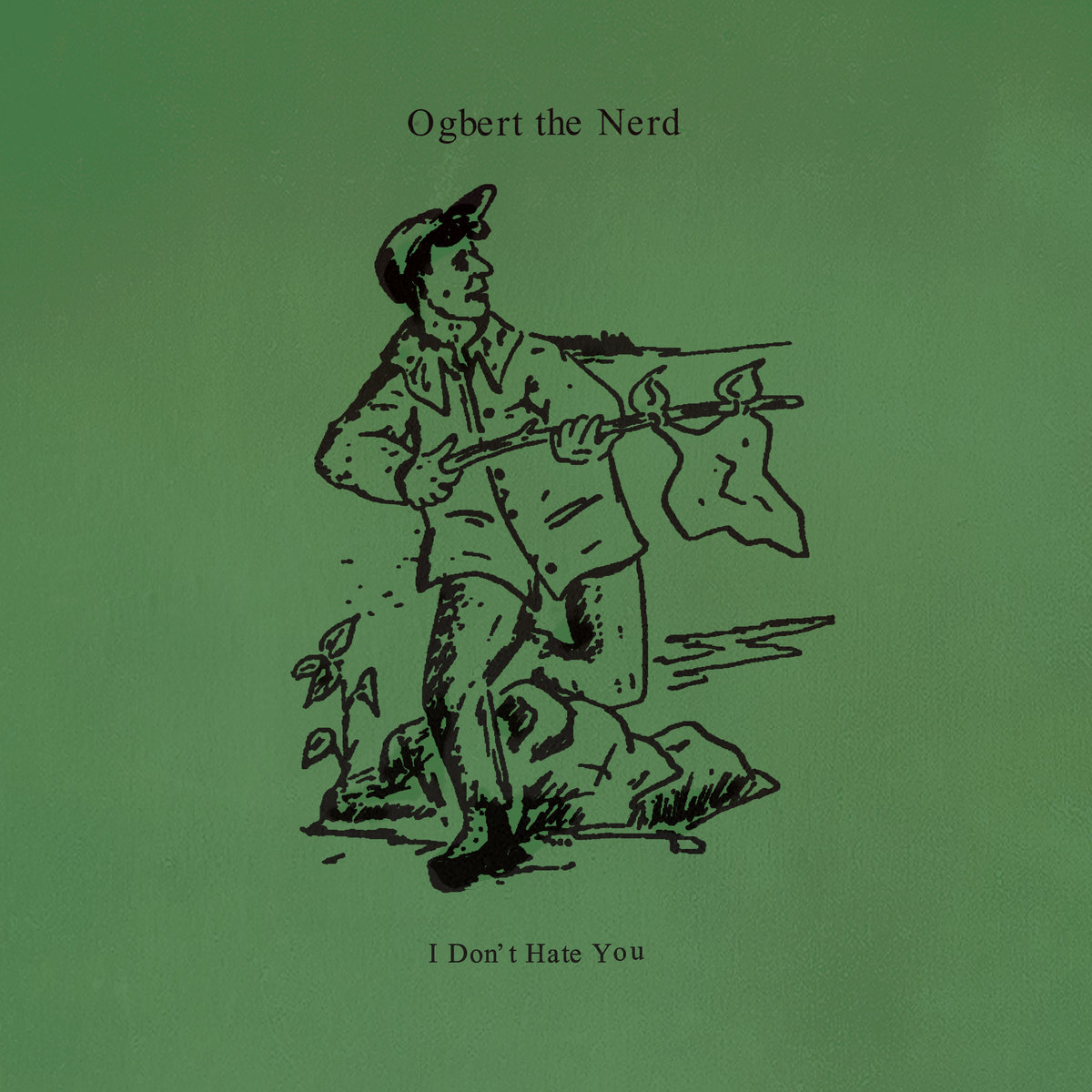
Ogbert the Nerd – I Don’t Hate You
Sun Eater Records
My first show after the COVID-19 Pandemic was in July of 2021. It was called the DIY Super Bowl, featuring an absolutely stellar lineup: Guitar Fight from Fooly Cooly, Blue Deputy, Oolong, Carly Cosgrove, and Ogbert the Nerd—a veritable who’s who of the burgeoning community of fifth-wave emo bands. After over a year without shows, the DIY Super Bowl finally offered the catharsis we all so desperately needed. No one brought that catharsis on that sweaty July night quite like Ogbert the Nerd.
Their debut LP, I Don’t Hate You, showcases their incredibly messy brand of emo perfectly. It is far from polished, even by the increasingly lo-fi, messy standards of fifth-wave emo. The guitars are frantic, constantly driving forward and nearly careening off course. On “Do It For Elio,” lead singer Madison James’ voice is constantly breaking and straining with pure emotion. Throughout its brisk 30-minute run time, their vocal cords always sound moments away from snapping in half while screaming about being a fuckup, being fucked up, and being fucking mad at your fuckup friends. “You Like the Raiders?” opens with genuinely one of the meanest opening lines of any song: “Hey fucker, nobody ever gave a shit about you.” For a 20-year-old whose life was just derailed by a global pandemic, who struggled with finding joy, who didn’t believe in herself, and who was harboring a great deal of frustration with the world, I Don’t Hate You felt like a bolt of lightning. An album that was the pure distillation of all the energy, anger, and anxiety I had bottled up inside of me.
The moment from Ogbert’s set that will always stick with me is when I attempted my first-ever stage dive. Attempted is the keyword here, as it was much more accurately a belly flop. I fell directly into the first row, where somehow the perfect number of people both dodged and tried to catch me, leaving my feet pointing sky high, my face planting into what must rank as one of the top three grossest venue floors of my life. Despite this, the most vivid part of my memory is how I bounced right back to my feet, energized by the hectic, frantic music, ready to keep swinging, keep dancing, and keep embracing the pure catharsis that Ogbert the Nerd brought that evening.
– Caroline Liaupsin
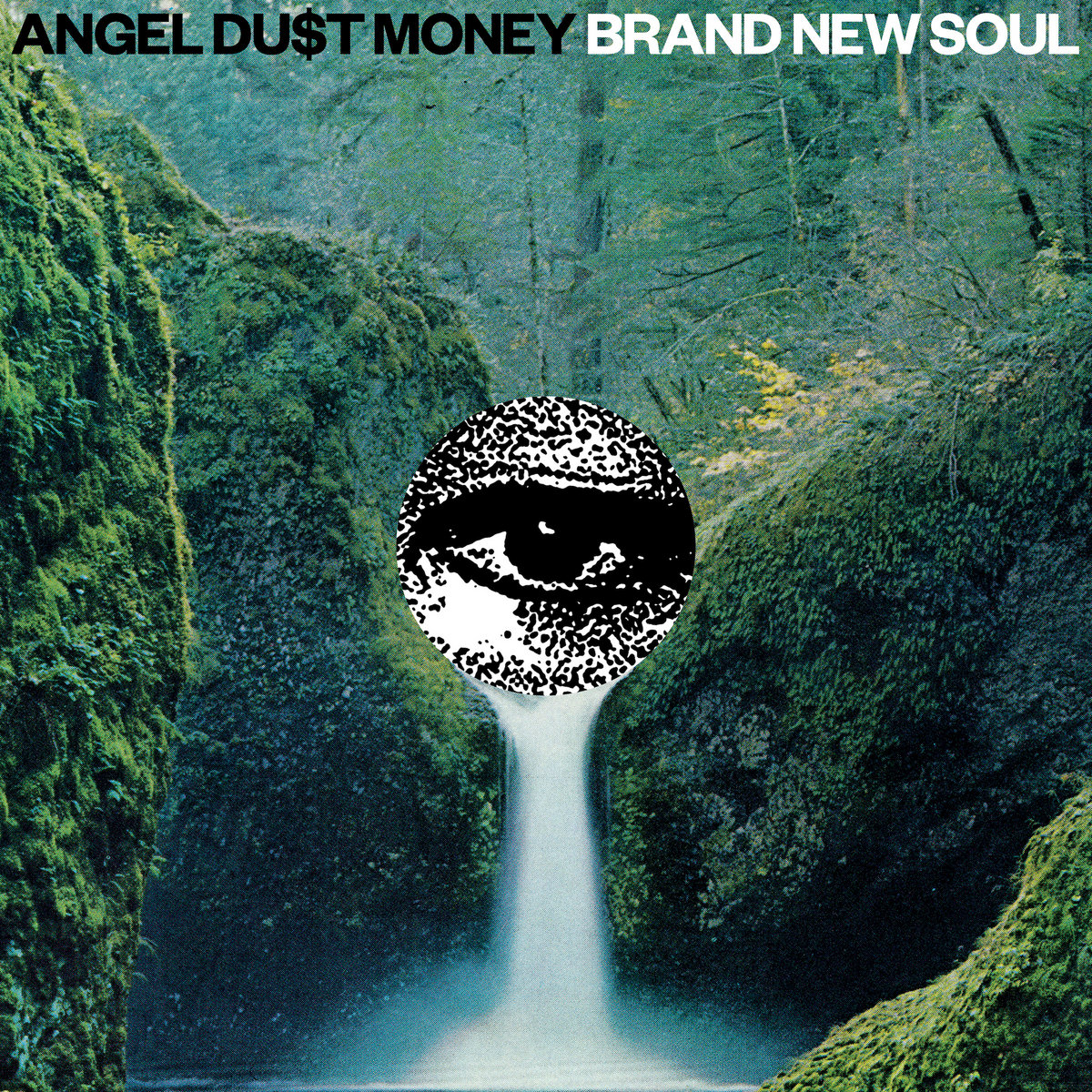
Angel Du$t – Brand New Soul
Pop Wig Records
I am going to hop on my fucking soapbox and declare that Brand New Soul is the best record to drive to. Ever. Of all time. Don’t believe me? Okay, well, get in my Accord, baby, and we’ll go for a spin. “Brand New Soul” is the perfect song for trying to connect your phone to the Bluetooth thing. “Love Slam” is the perfect song for pulling out of your parking space and hitting the gas a bit too fast. “Don’t Stop” is a humble trucking song. “Racecar” is a song for sitting at the red light. “Space Jam” is for the light finally turning green. You get it? It’s a perfect LP, and I’m not just saying that because it has “Sippin’ Lysol” on it.
– Caro Alt
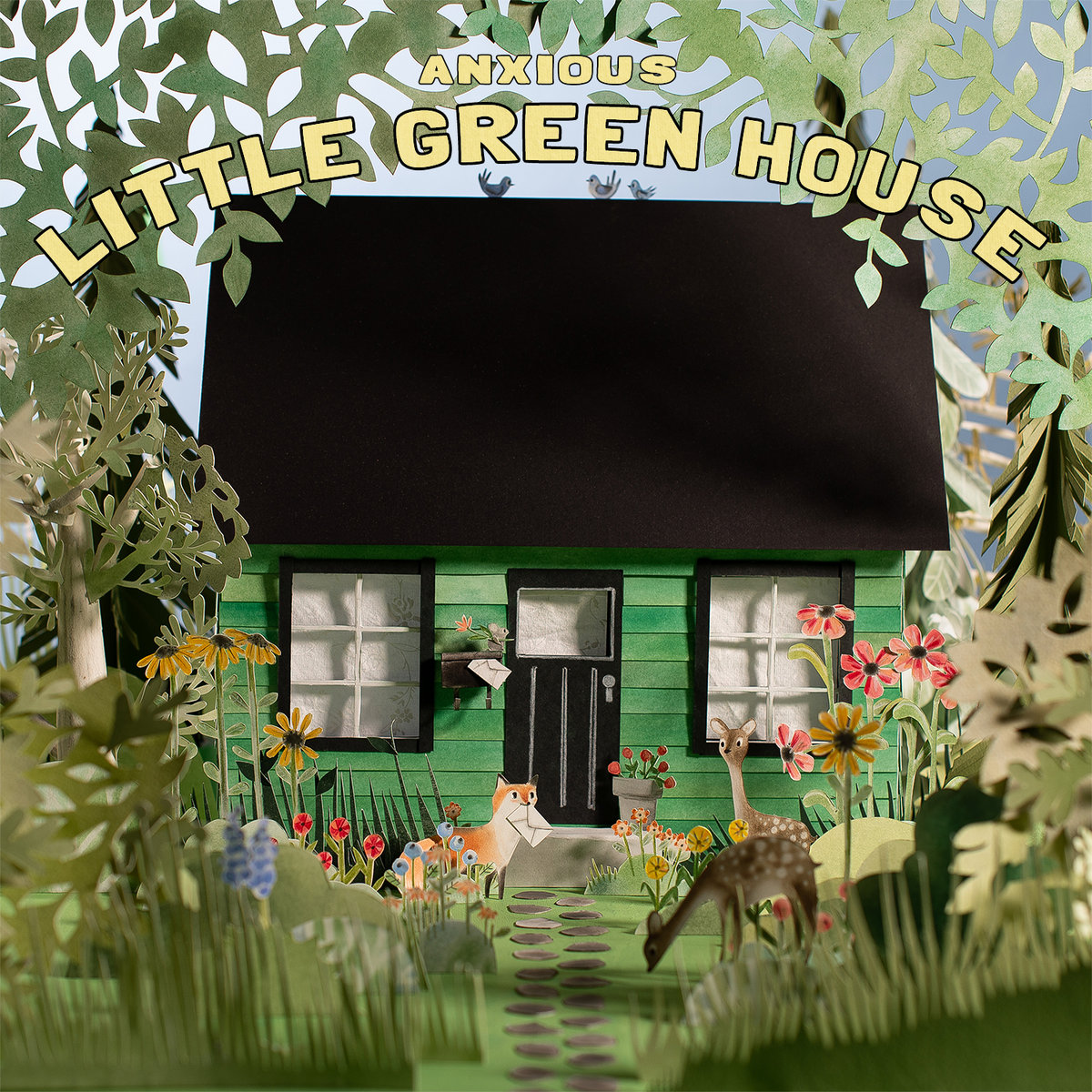
Anxious – Little Green House
Run For Cover Records
Anxious doesn’t waste time with sugarcoating difficult emotions in their debut album, Little Green House. Sitting at a tight 32-minute run time, this record approaches the bittersweet experience of growing up with honesty and wisdom beyond the band’s years at the time of writing. In the same way that life often demands that we balance many feelings at once, Little Green House simultaneously addresses themes of relationships, grief, change, and doubt. What better way to work through such heaviness than the tender, precise blend of melodic hardcore and emo that Anxious has been refining since high school?
Despite its subject matter, this record doesn’t lead me to dwell on things. Instead, it evokes grit, determination, and an intent to keep moving forward after reflecting on the past. The first three tracks are punchy – anthemic even – and they carry a momentum as if to suggest that the only way out of pain is by going through it. This energy is contrasted beautifully in the stripped-down moments of “Wayne” and the poignant closing track “You When You’re Gone.” Anxious stay true to the genre in their configuration, yet deliver an instantly recognizable sound through subtle vocal processing and unique instrumentals. This record feels like a raindrop-soaked memory in a rearview mirror; the perfect backdrop for leaving something behind before facing a new chapter. If you’re wrestling with confusion, gloom, or transformation in life, you very well may feel at home within the walls of Little Green House.
– Annie Watson
Bomb the Music Industry – Get Warmer

Quote Unquote Records
A bright, empty green field is a promise, a clean slate to build on. Jeff Rosenstock knew what he was doing when he picked a photo of a field for the cover of Get Warmer, a record about how you can get a clean slate by moving states, getting sober, and riding bikes, but things won’t really change unless you do. When Rosenstock sings, “It never seems to get warmer / no matter how far south you go,” he doesn’t just mean literally. The obvious double entendre implies that when you look outside yourself for the truth, you just get colder. It doesn’t matter what the Georgian summer brings when “problems are all I create.” For as goddamn fun as this album sounds — specifically how euphoric “I Don’t Love You Anymore” is to shout along with — this is a desperate record that can’t fulfill any promises you can’t do yourself.
– Lillian Weber
Field Medic – Light Is Gone
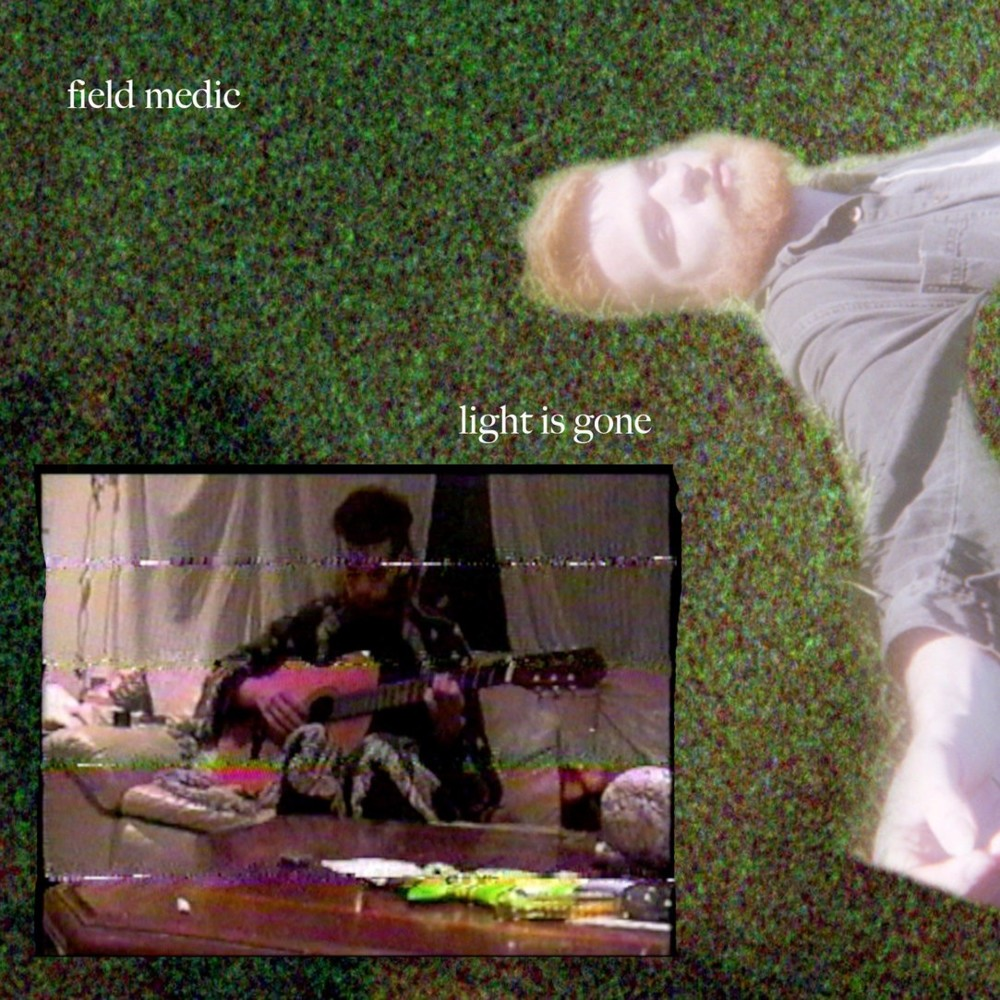
Self-released
I was pretty late to the Medic Nation. I jumped on board after seeing a tweet someone had posted about not being able to listen to Field Medic because of the way he looked. Usually I just scroll past that sort of online hate, but it was 2020 and I didn’t have anything better to do considering the world outside had stopped, so I decided to see what this person looked like that made someone so angry. Six years later, Kevin Patrick Sullivan, the man behind Field Medic, Paper Rose Haiku, and Protection Spell, remains one of my favorite artists. Debut album Light Is Gone is a homebrewed, lo-fi folk album that is somehow reminiscent of the old folk music my mom would play in the kitchen, yet also contemporary and fresh. Recorded live directly to cassette tape, the songs on Light Is Gone are sparse in their arrangements but dense in their lyrics of love lost and nights spent alone drinking. One of my highlights on the album is the closer “it’s still you,” where Patrick sings about a sketchy situation of some dudes getting him to cash a stolen check for them. I was genuinely shocked to hear something so transparent and vulnerable from an artist. That courage to put out a song that revealing inspires me to this day and always keeps me coming back to not only Light is Gone, but to Patrick’s work in its entirety. May we all be that true to ourselves in our lives.
– Nickolas Sackett
Honorable Mentions
Hey, we can’t write about every album with this color, so here’s a list of some more that we feel like we should mention.
American Football - American Football
The World is a Beautiful Place and I am No Longer Afraid to Die - Harmlessness
Prince Daddy & The Hyena - Adult Summers
Alien Boy - Don't Know What I Am
Minus The Bear - Menos El Oso
Anxious - Little Green House
Fleet Foxes - Fleet Foxes
Soup Dreams - Hellbender
Charli XCX - Brat
Band of Horses - Everything All the Time
Big Black - Songs About Fucking
The Beths - Expert in a Dying Field
Enter Shikari - Common Dreads
SZA - Ctrl
Wilco - Schmilco
Big Thief - Double Infinity
The Smashing Pumpkins - Pisces Iscariot
Alex G - DSU
Deftones - Private Music
Pool Kids - Easier Said Than Done
Tiberius - Troubadour
Gladie - No Need to Be Lonely
Ratboys - Singin’ To An Empty Chair
Origami Angel - Somewhere City
Fiddlehead - Between the Richness
Lucky Boys Confusion - Commitment
Opeth - Watershed
Type O Negative - The Origin Of The Feces
Type O Negative - Bloody Kisses
Type O Negative - World Coming Down
Type O Negative - The Least Worst Of
Type O Negative - Life Is Killing Me
Type O Negative - Dead Again
Alex G - Rules
MJ Lenderman - Manning Fireworks
bedbug - pack your bags the sun is growing