Cover Collector – July Rainbows
/
Design by Ryan Morrissey
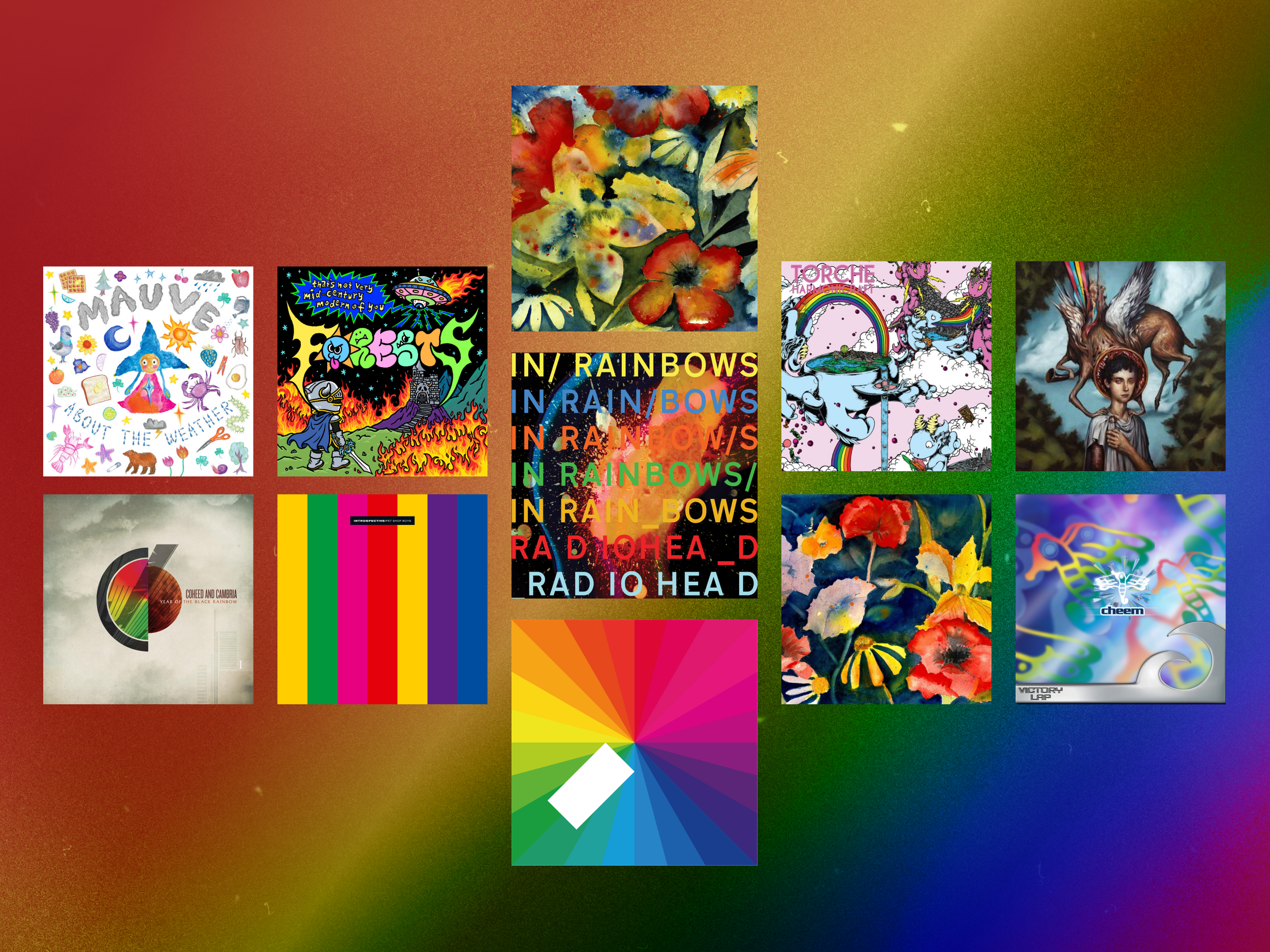
I don’t know about you guys, but I love a good album art collage. One of the first things I do every Friday is head over to tapmusic.net and render a 4x4 chart of the albums I listened to most over the past week. At the end of each month, I do the same thing with a 5x5 that recaps my previous 30 days of listening. By the time December rolls around, I look forward to recapping the last twelve months with a gigantic 10x10 grid in an unwieldy encapsulation of the 100 albums that defined my year.
Is it a little self-aggrandizing? Sure, but it’s also a fun way to see a quick snapshot of what my last week, month, or year has sounded like. At its best, this practice has led to fun conversations and solid recommendations going back and forth with friends as we bond over specific albums. Sometimes it’s that shared love over a deep pull from years gone by, other times it’s just noticing trends with a recent fave that seems like an unshakable presence week in and week out. At the very least, I suppose it’s satisfying to see a bunch of records that I feel an affinity toward lined up and embodying a specific stretch of my life.
At some point near the tail end of last year, I conceived of a more communal way to bring this love of album collage to life. Because, sure, getting a live readout of your listening history is cool, but this is also about album art, an essential part of the experience and something us music nerds can fixate on just as much as the songs that sit beneath the cover. As such, I’m excited to welcome you to the sixth edition of Cover Collector: a monthly installation where the Swim Team discusses some of our favorite albums based on album color. For July, we’re writing about ravishing rainbows.
Radiohead – In Rainbows
XL Recordings
I’ve had the greatness of Radiohead explained to me by several dozen white dudes in my 32 years. And I, too, am a white dude, so I know many others have gotten it worse. On first dates and in comment sections, Radiohead has become perhaps the foremost band whose legacy requires defending and proselytizing.
I’m not going to do that to you. Mostly because I don’t believe in it. I completely missed Radiohead until I was like 30. At first because I was a tweenager more heavily invested in what Taio Cruz and The Beatles were doing, but then I avoided them precisely because of the “Front Row of Every Anthropology 201 Class” guy who feels the need to preach about OK Computer’s influence.
Earlier this year, Pitchfork made a completely unforced error in creating a March Madness-style bracket of every album they’ve granted Album of the Year to since 1996. The Pitchfork of 2026 is written by people who are relatively more diverse than 30 years ago, and they cover a much wider array of music more forgivingly than ever. But the reader base and the nature of online commenters have not evolved quite as much. Hilariously, the final 2 albums in the bracket—one that featured Outkast’s Aquemini, Beyoncé’s Renaissance, and Fiona Apple’s Fetch the Bolt Cutters—were Radiohead’s Kid A and Radiohead’s OK Computer. It wasn’t Pitchfork’s fault. The RadioBros move like amoebas.
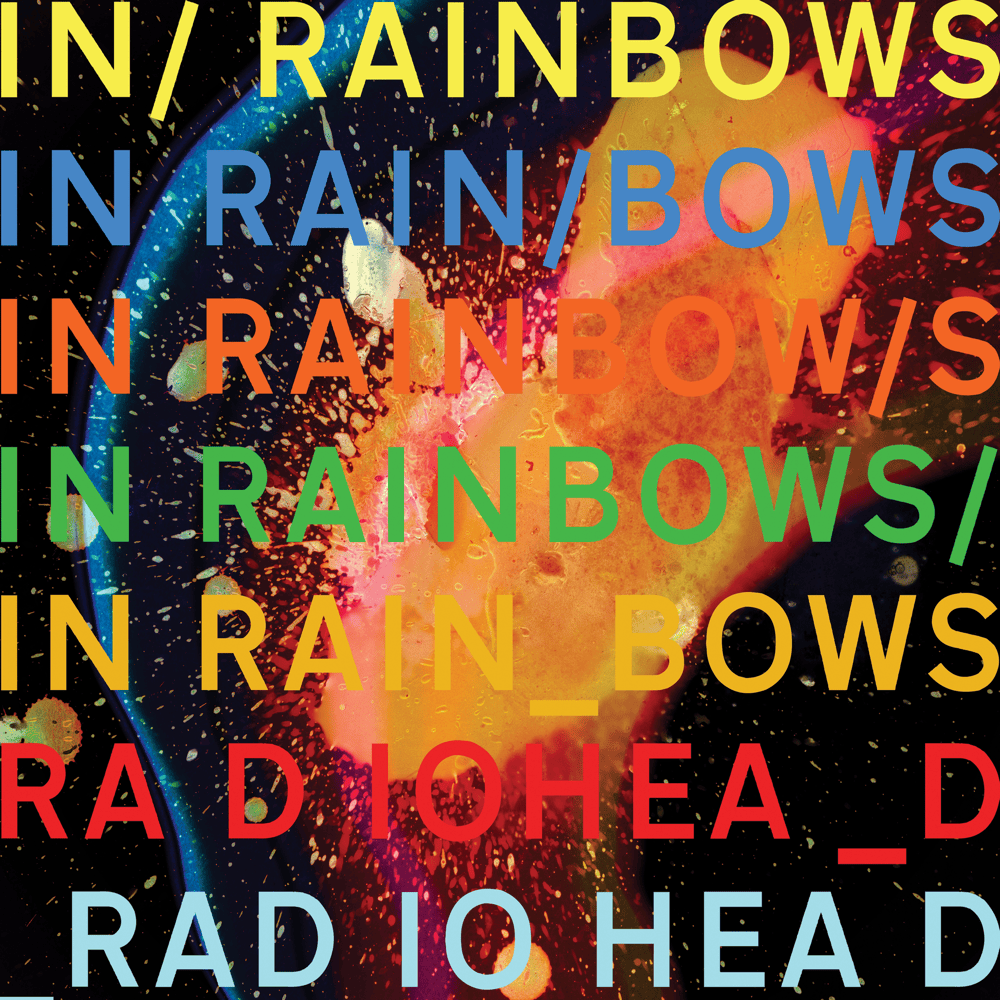
Anyway, whoa, okay…I’m supposed to be writing about In Rainbows. When I get the urge to listen to Radiohead, when I want something spacey and atmospheric and maybe groovy, I will put on In Rainbows. My second choice is The Bends. If those two are not available (why would they not be available?), I simply do not listen to Radiohead. Y’all ruined any chance of me enjoying Kid A and OK Computer. I think In Rainbows is an example of what I like most about Radiohead: big, layered compositions, every type of guitar sound imaginable, and Thom Yorke caterwauling over it all, singing about god-knows-what. (“Weird Fishes/Arpeggi” is the best Radiohead song, let’s fight).
The first time I heard about In Rainbows was in 2007 when it came out. My mom got me a subscription to Entertainment Weekly (not one of the cooler magazines), and they were talking about Radiohead choosing to self-release this on their website with a pay-what-you-want model. I thought it was cool then, and it’s still cool now. This model, along with their music, has served as a real eye-opener to modern musicians about what is possible.
Much like every conversation about Radiohead, this piece wasn’t really about the music, now was it?
– Caleb Doyle
Circa Survive – Blue Sky Noise
Hopeless Records
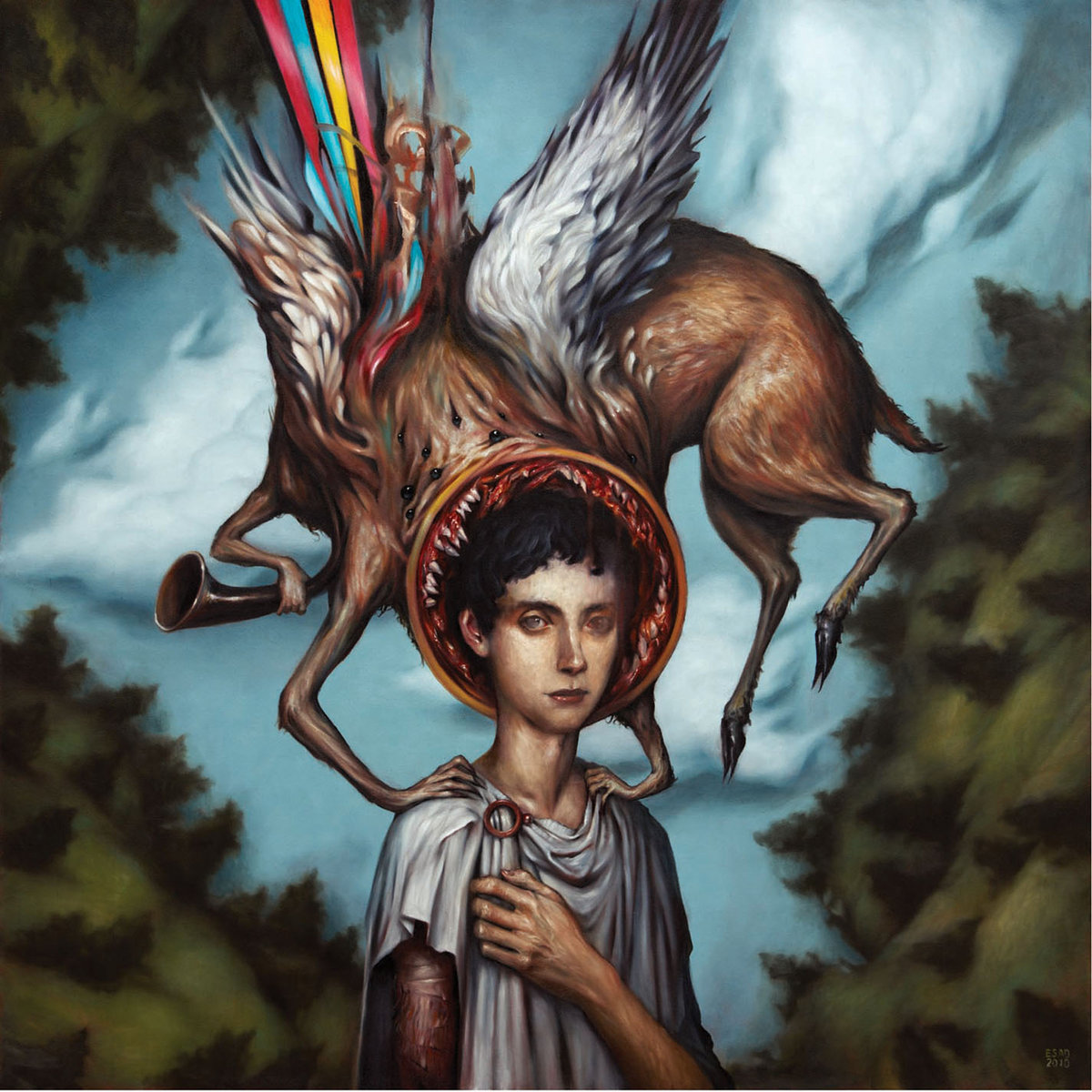
I am a devotee of the surreal, and few bands capture that quality as well as Circa Survive do. Their distinct brand of indie prog and Anthony’s siren-like vocals create a lush, strange atmosphere, and the art gracing their album covers is equally captivating. There aren’t many better pairings than the work of celebrated painter Esao Andrews and the music of Circa Survive. Esao’s work is instantly recognizable - elegant figures, vivid colors, and otherworldly beings adorn bizarre landscapes. While he is probably most famous for his work on the covers of Juturna and On Letting Go, the cover of Blue Sky Noise is my favorite of Esao’s. It shows a young boy making direct eye contact with the viewer, hand moving to cover a wounded arm. His head is haloed by the gaping maw of a winged eldritch creature – not deer, not angel, but something in between. The sacred meets the profane here, surrounded by hills that encroach at impossible angles. It is simultaneously one of the most beautiful and most chilling paintings I’ve ever seen, and I love it with my entire being.
Every song on Blue Sky Noise captures that same paradox of allure and terror. “Get Out,” one of the album’s best-known tracks, parallels striking melodic passages against urgent vocals that rise to a shriek. “Imaginary Enemy” is a feverish and frantic defense of self, with textures that ebb from thin to dense in a matter of seconds. The band is impeccably in the pocket, wound almost too tight, and Anthony is at his vocal ultimate. The palpable tension throughout Blue Sky Noise rages and mellows with desperate intensity - causing me to feel as though I, the listener, am the wounded child saint, pursued by a creature that already has its claws in my back.
– Britta Joseph
Torche – Harmonicraft
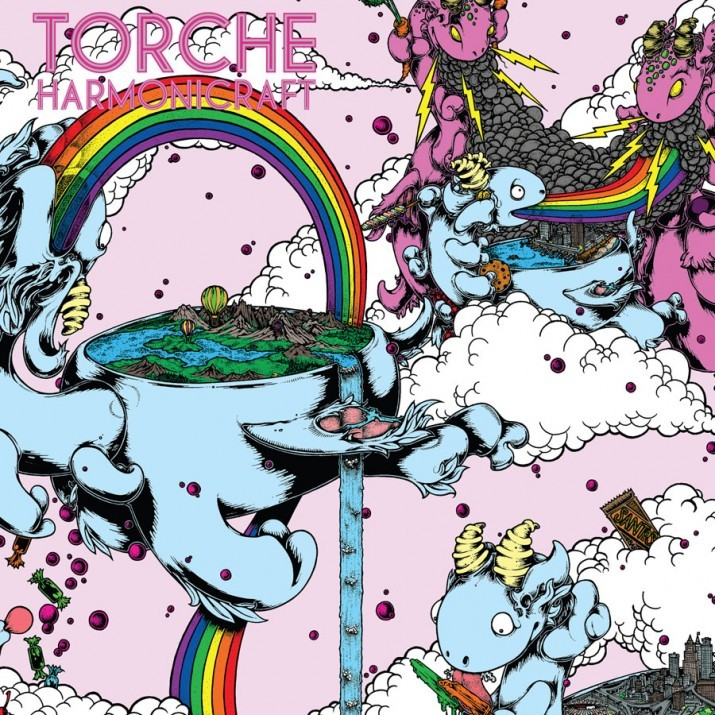
Volcom
Remember Volcom hardcore? Perhaps Scion metal? No, you’re only familiar with Google AI Olympics ad corporate shill punk? Okay, look, I understand the anarchist argument that any sponsorship for your music is “selling out” or somehow compromising the “punk” ethos. But just picture the late 2000s and early 2010s when companies who, in some cases, had no business getting involved with bands like High On Fire or the Melvins, were actually doing cool and creative things for them.
Volcom was at least a skateboarding company and already rooted in underground culture, so when Florida sludge-pop pioneers Torche released their third full-length Harmonicraft through Volcom Entertainment in 2012, that didn’t seem like a mismatched partnership. There was even a limited-edition skate deck bundle for the hardcore fans. I was only hardcore enough at the time to get the vinyl version that came with a rainbow lollipop slipmat, but that did me just fine for a number of years. Harmonicraft is an excellent starting point if you’ve missed out on Torche all these years, featuring their catchiest songs yet but not turning down the heaviness whatsoever. Much like its rainbow-detailed album art, the band seamlessly melds headbanging and harmonies better than almost anyone.
– Logan Archer Mounts
mauve – About the Weather
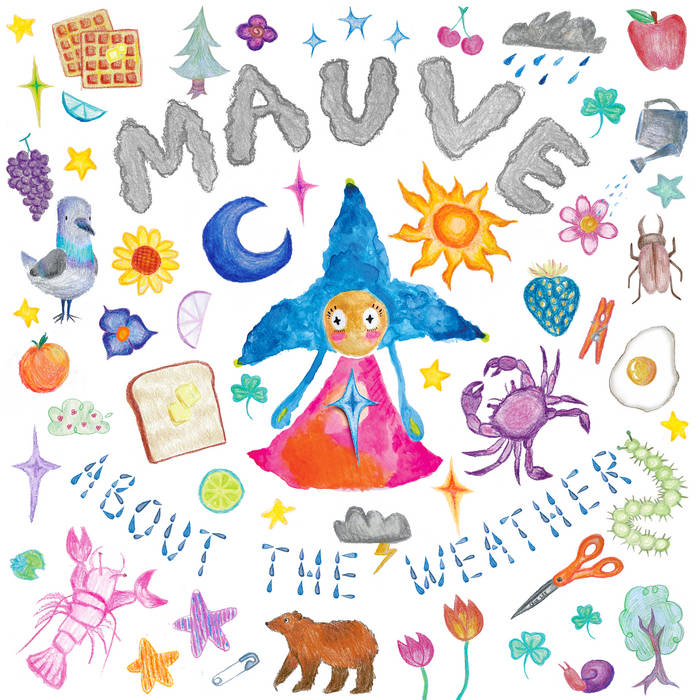
Really Rad Records
Pine trees, a raincloud, an orange, a purple crab. It’s always nice when an album legitimately sounds like its cover, and I have always loved how much mauve’s one and only release, About the Weather, sounds like the bright, trinket-y illustrations that adorn their cover.
mauve was a late addition to the 5th wave sound. They popped up on Twitter radars in 2022 with their barnstormer, “20,000 Degrees,” and released their debut in the summer of 2023, a spectacular high for the crashing wave of the emo era. I think about the switch-up on “Drive/Threw” all the time still, a deceptive, jangly track that blows the album open for “Oh My God!” and the gloomier “Two.” Their Origami Angel influence (another band I almost picked for the rainbow cover – shout out The Brightest Days mixtape) comes through the clearest on the final song, “Sun,” but is honestly closest to the older emo waves of yore (like late second wave). mauve was a cool little blip on the emo radar that I still miss, but at least I have this cover. My favorite illustration is the pink lobster.
– Caro Alt
Cheem – Power Move: Victory Lap
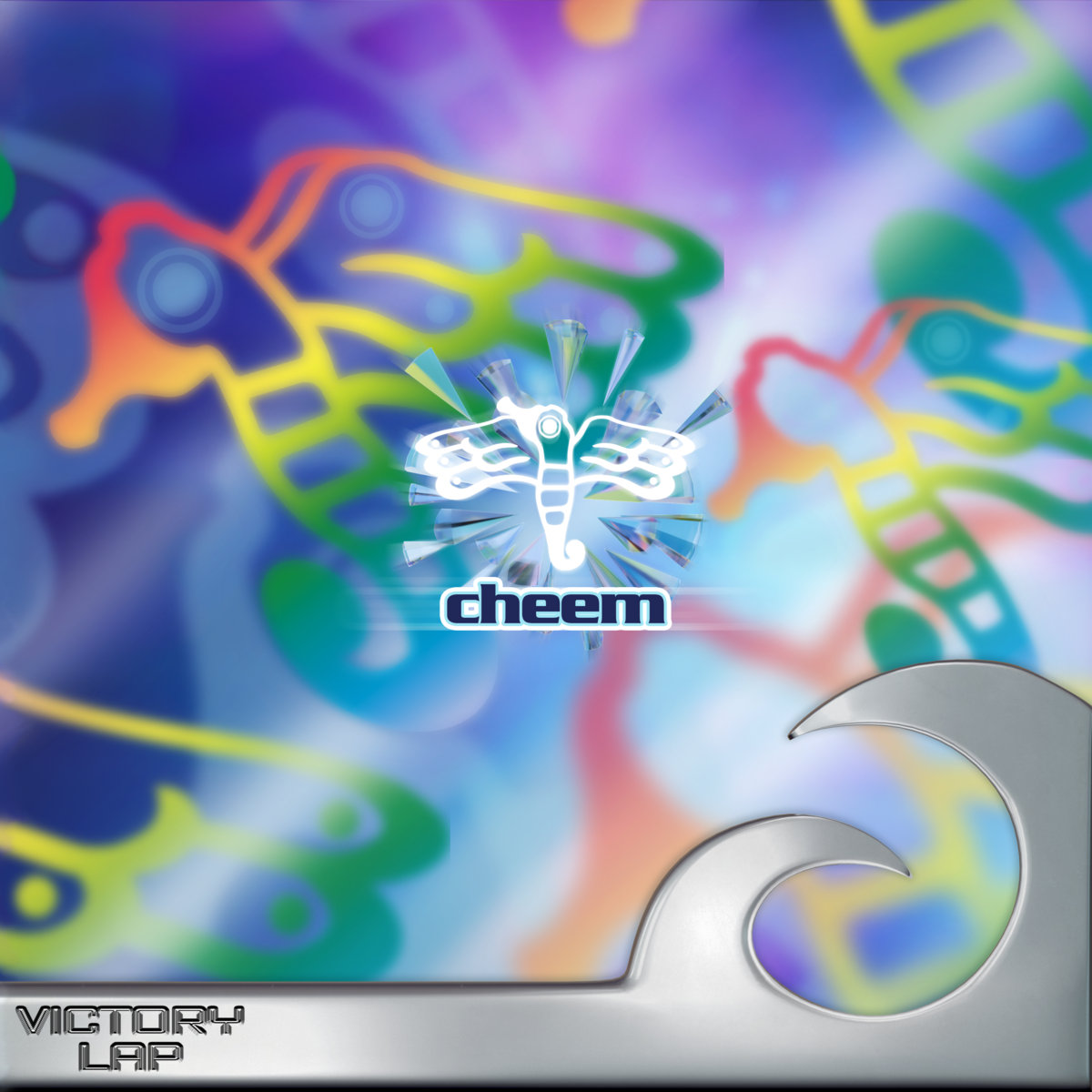
In Bloom Music
It’s no secret that I’m a huge fan of the Connecticut nu-pop quintet, Cheem. Their undeniable sense of self, their approach to genre blending, and their impressive instrumentation all make them a standout act in the big ‘26, and their latest release, Victory Lap, is no exception. Typically, I can take or leave deluxe albums. Too often, the extra tracks feel tacked on for a separate release and probably should’ve stayed on the cutting room floor. However, when lead singer Sam Nazaretian sent me the original Power Move ahead of its release in November, something felt missing. I only realized this once I received the deluxe version, and those bonus tracks helped round the whole thing out and make it feel like a complete album.
Cheem continues to improve and excel with each release, and Power Move: Victory Lap adds that extra oomph to send the original album into the stratosphere. “Future Tense” opens the album perfectly with commanding instrumentation and slow, steady rhythms that pull the listener straight in. “Rhyme/Reason” is yet another classic hip-hop-inspired Cheem hit to really show you what the band is about, while my personal favorite on the album, “Mistake,” feels like it was pulled straight out of the Persona 3 soundtrack and encapsulates so much of what I love about Cheem. Power Move: Victory Lap has quickly joined its predecessor, Guilty Pleasure, as one of my favorite albums of all time, and I don’t see a world where the next Cheem release doesn’t achieve the same status.
– Ciara Rhiannon
Jamie xx – In Colour
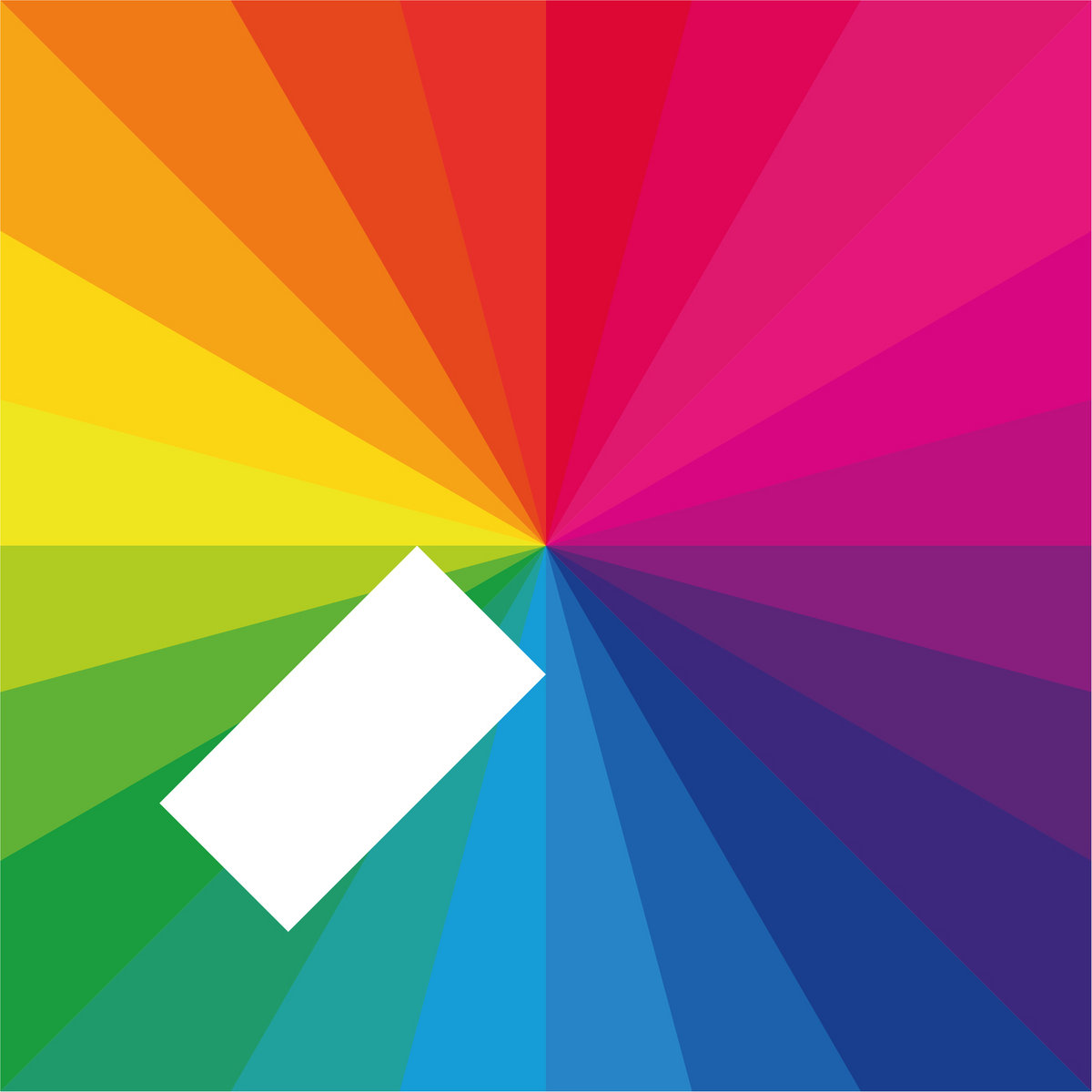
Young
Back in the early 2010s, I was obsessed with The xx. We all were. The group’s self-titled debut dropped when I was halfway through high school, and songs like “Infinity” and “Stars” captured a steamy moodiness I’d never heard in music before. Coexist was a more mellowed-out follow-up that I utilized as “study music” on a regular basis – a little less exciting, but reliable and still recognizable as that thing I was first drawn to. When Jamie xx released In Colour in 2015, I wasn’t sure how I felt at first. Sure, there were a couple of features from Romy and Oliver Sim that gave off whiffs of The xx, but it felt like a much more instrumental and electronic project than the bedroom-whisper indie I was used to. Fortunately, 2015 also marked the beginning of my obsession with Young Thug, and his feature here, where he passionately delivers the line “Imma ride in that pussy like a stroller,” was emphatic enough to keep me coming back. These days, I view In Colour as a very good electronic album. The opener, “Gosh,” does a great job pulling you into this kaleidoscopic world, and after a handful of listens, it quickly becomes clear that each track takes its own hyper-distinct approach, whether that’s due to the handful of features or a choice in the instrumental like the killer steel drum in “Obvs.” It’s a fun record to throw on in a group setting with its own distinct little pockets of vibes and, when it comes to rainbow album covers, it simply doesn’t get better, or more satisfying, than this.
– Taylor Grimes
Pet Shop Boys – Introspective
Parlophone / EMI-Manhattan
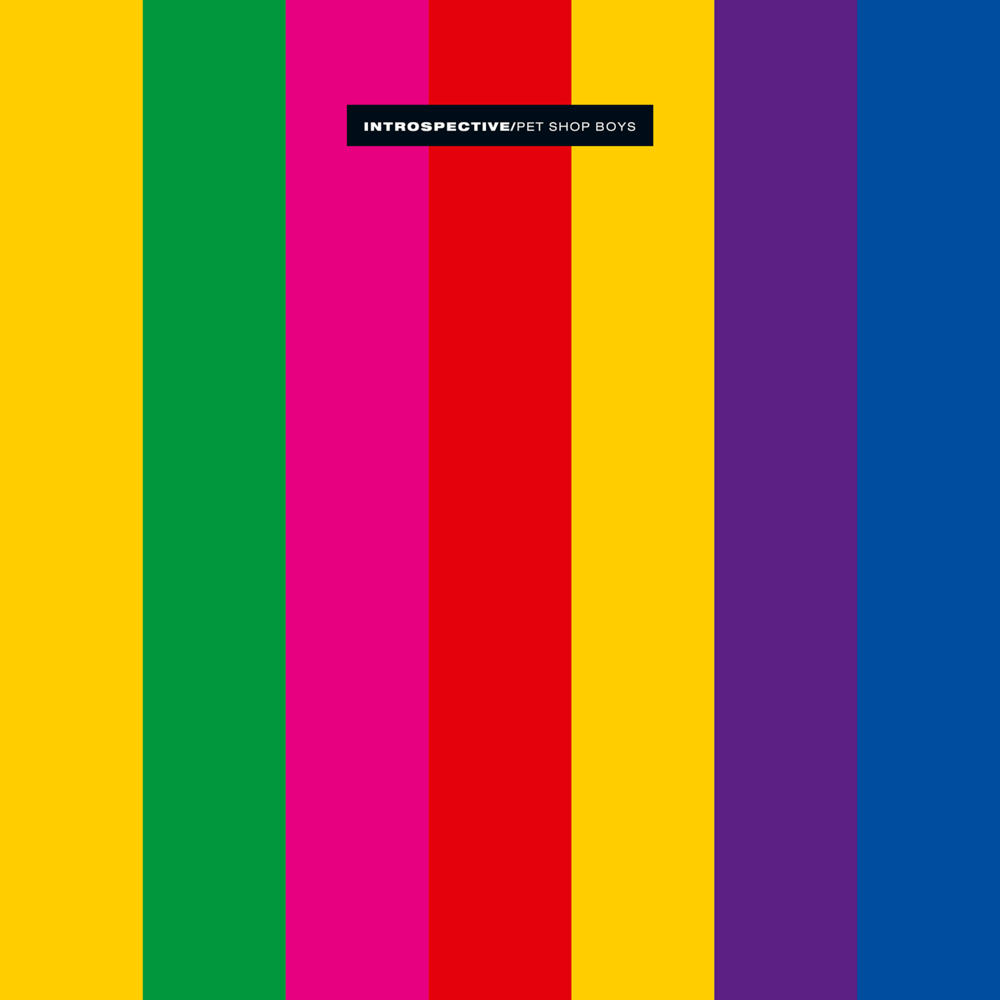
Pet Shop Boys remain very high on my concert bucket list, especially after the sting of their New Order co-headline tour being rescheduled twice over due to the pandemic. Chris Lowe and Neil Tennant crafted some of the greatest keyboard music of the 1980s, starting with their breakout single “West End Girls,” and are still steadily releasing music today. 1988’s Introspective feels like the full-circle evolution of the group’s sound: theatrical and grandiose dance anthems that would get even more blown out on later records like 1993’s Very.
This six-track LP wastes not a moment of synthpop bliss, each number carefully crafted from beginning to end like the opener “Left To My Own Devices” or the moody “Domino Dancing.” Pet Shop Boys’ unbeatable streak of cover tunes begins on this album with their surprising but successful take on the country classic “Always On My Mind,” and in 2009 they used “Domino Dancing” as the dancefloor plan for a version of Coldplay’s “Viva La Vida,” which to me remains the best version of the millennial pop opus. Introspective brings its title theme to full-body movement music, cementing Pet Shop Boys as undisputed progenitors of their genre.
– Logan Archer Mounts
Coheed and Cambria – Year of the Black Rainbow
Columbia Records
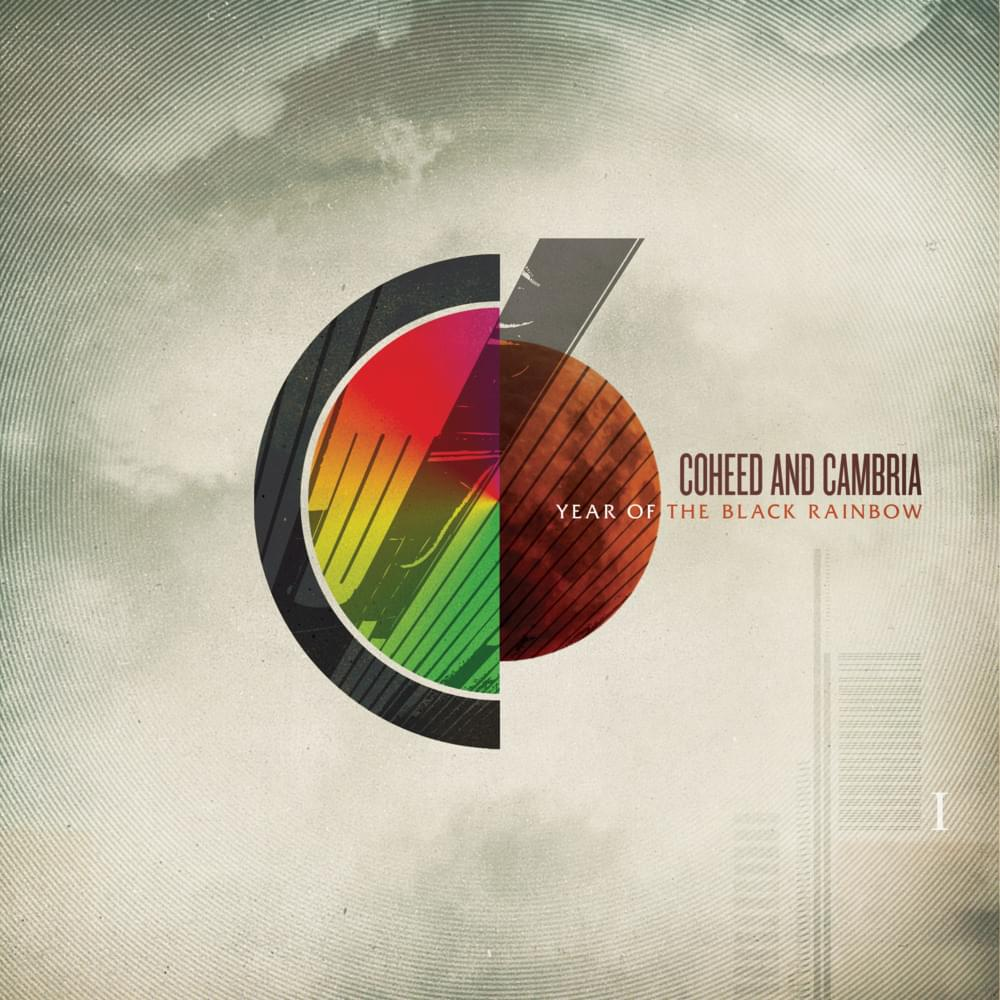
If we’re all honest with ourselves, I think there’s always at least one album in our favorite band’s discography that sticks out like a sore thumb. Sure, we like to think we love all of our children equally, but when pressed, we have to hit ‘em with the “I don’t care for [X album].” I’m as die-hard a Coheed fan as they come, but have always had a complicated relationship with their fifth studio album, Year of the Black Rainbow. It’s not just that the release had notable shake-ups surrounding it – the booting of their original drummer, Josh Eppard, and subsequent replacement with Chris Pennie of The Dillinger Escape Plan, Atticus Ross of Nine Inch Nails’ eccentric producing influence, and lead singer Claudio Sanchez’s ongoing desire to evolve the band’s sound and musical approach – and the final product was heavily affected.
The resulting album is, to this day, the most oddball release the band has ever done. While I have never completely gelled with the album as a whole, it does contain a couple of my favorite tracks of theirs, and songs like “Guns of Summer” really swing for the fences and show off Pennie’s truly staggering drumming chops. When it comes to Coheed’s discography, there are no releases that I dislike; it always comes down to which albums I love the least, and the reality is that I think Year of the Black Rainbow will always sit toward the bottom of the pack for me. Either way, I think it’s always good practice to revisit those black sheep albums in your favorite band’s discography every once in a while to remind yourself why you love them, not in spite of those albums, but to appreciate how they deepen and expand the band’s catalog.
– Ciara Rhiannon
Forests – That’s Not Very Mid-Century Modern of You
Self-released
Forests is an emo band. That’s what their Bandcamp description was in 2016 when they released their debut album, Sun Eat Moon Grave Party. Despite being based in Singapore, they’ve cultivated a strong fanbase in the US with the perfect blend of melodic/abrasive vocals, mathy riffs, and all-too-relatable lyrics about memories that would be better off forgotten. Something Forests does particularly well is blending in references and influences, most obviously on “Trauma Dumpling,” uniting both Title Fight’s “Numb, But I Still Feel It” and Linkin Park’s “Numb.” This half-joking, self-referential humor isn’t anything new, but Forests pulls it off more effectively than any other group I know.
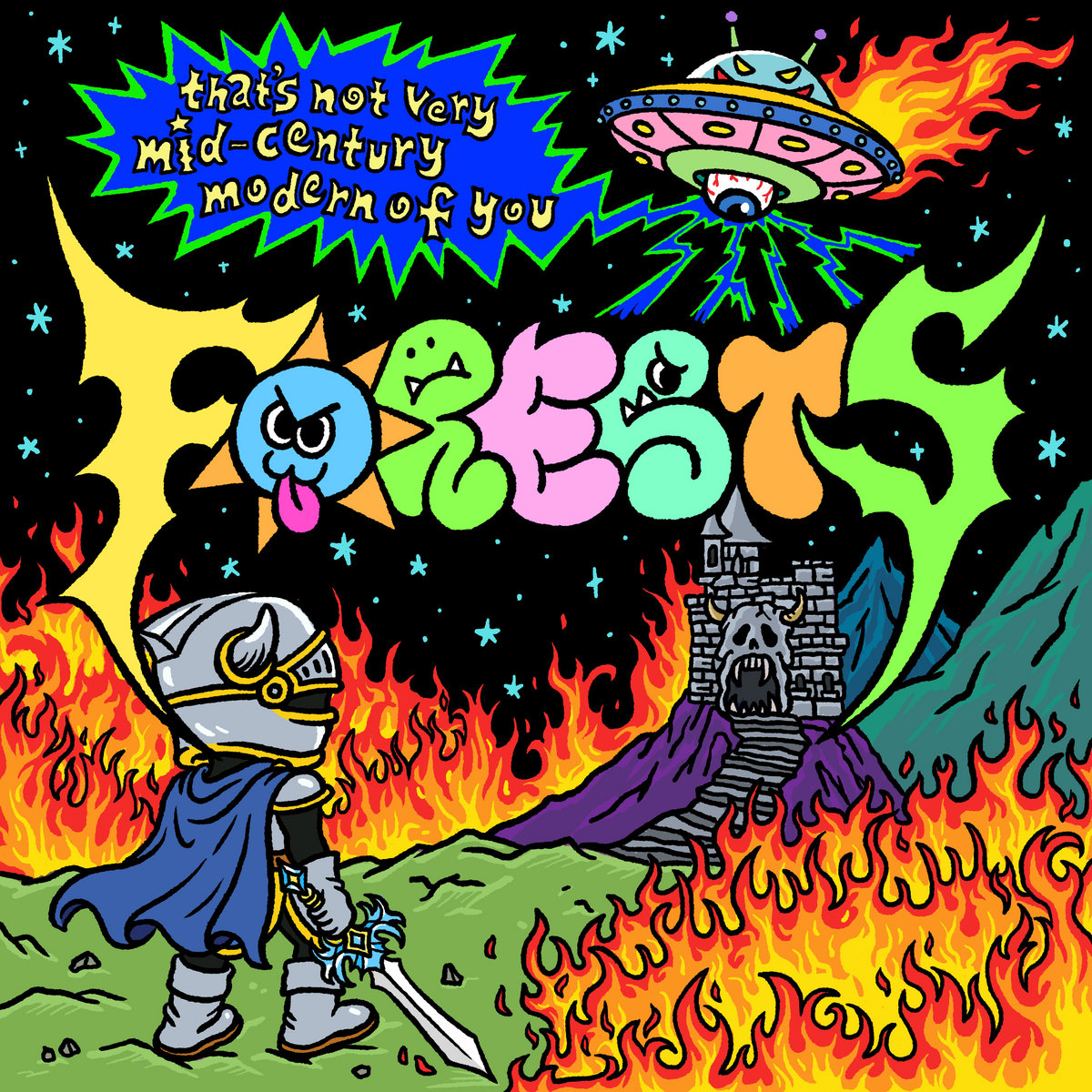
The album art for That’s Not Very Mid-Century Modern of You is a good metaphor for the ground the band has covered in ten years. Much like the cover of their debut, there are still mountains, stars, and a UFO, but now with much more detail. Their name on the album isn’t just one color, but a rainbow of creatures. They’re like they were ten years ago, but with more experience, more influences, and more control. I usually say that the best emo bands break up, but I hope Forests is making music like this for decades to come.
– Braden Allmond
Adrianne Lenker – songs/instrumentals
4AD
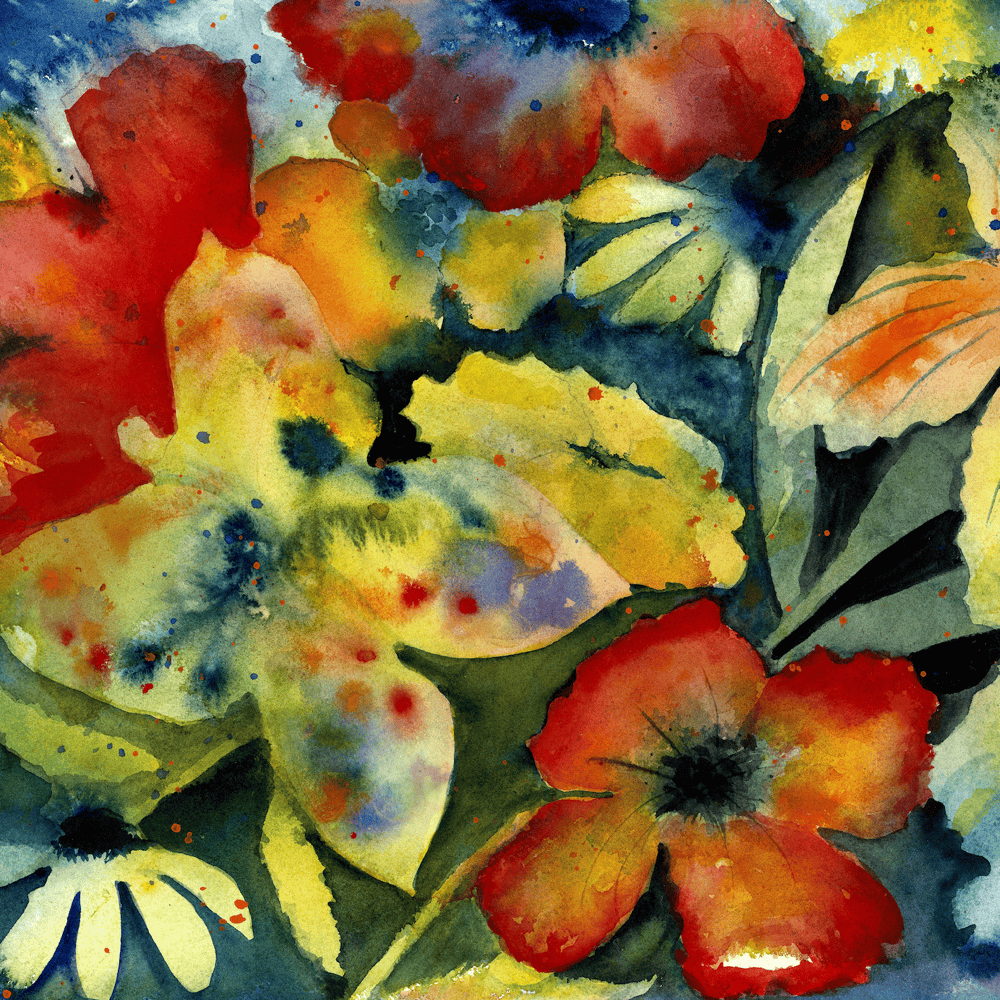
The two most common questions I get when people find out I play guitar are either “Can you play Wonderwall?“ or “Do you have a favorite guitar player?” My answer to both hasn’t changed in the last few years: No, I do not know how to play Wonderwall, and I am not interested in learning how, and Adrianne Lenker is my favorite guitarist living today. Generally speaking, I tend to drift toward her solo output more than her work with Big Thief, not only to take in the wonderful ways she navigates across the fretboard, but to hear the often devastating stories she blends with her beautiful playing. songs/instrumentals, like much of the art that was created during the 2020 COVID lockdowns, evokes a very lonely time and place that most of us have probably subconsciously put away to find some sort of reason to keep going. But Adrianne, with a resilience I could only hope to achieve at some point in my life, carved out a remote space in the mountains for herself and her regular collaborator Philip Weinrobe to process the crushing feeling of what she dubbed “heartsickness” from not only the despair the pandemic had wrought, but also the dissolution of a romantic relationship and the death of a grandparent.
Both songs and sister album instrumentals are the result of a month of processing that heartsickness in the woods of Massachusetts. Lenker decided to take a more personal approach to this group of songs, making them feel strikingly intimate (especially so during a time when we were all communicating through screens and webcams). The detail in the tracks across the album is painterly in just how visual they are. “Circle of pine and red oak / Circle of moss and fire smoke / Fan on the ceiling like a wheel spoke / Push the clutch and I pull the choke,” she sings in one of my favorite sequences during “anything.” I’m there with her and her lover, passing the time in the woods, simmering slightly in the summer heat of a hot bedroom, driving down an empty street trying to time the mechanism of a manual vehicle with another. Floating in time, in memory, in whatever the day brings when you’re so deeply in love with someone.
Instrumentals, as you may have guessed, consist solely of Lenker’s guitar playing and the ambient sounds surrounding the cabin where the album was recorded. It’s two pieces, “music for indigo” and “mostly chimes,” clock in at just about 37 minutes. “mostly chimes” starts with some quiet guitar improvisation and ends with about 11 minutes of nothing but wind, chimes, and birdsong. The intimacy of Lenker’s songs is beautifully reflected through the intimacy of just being- a reminder that despite it all, the simple fact of existence is an act of love itself.
– Nickolas Sackett
Honorable Mentions
Hey, we can’t write about every album with this color, so here’s a list of some more that we feel like we should mention.
Anthony Green - So Long, Avalon
Discus - To Relate To
Karmanjakah - Diamond morning
Pool Kids - Pool Kids
Pretty Bitter - Pleaser
Death Cab For Cutie - Narrow Stairs
Hey, Ily! - Hey, I Loathe You!
Longfriend Timefriend - Here’s to Not Feeling Worse
Microwave - Stovall
Cotton Jones - Paranoid Cocoon
Every Time I Die - From Parts Unknown