The Liminal Beauty of I Need To Start A Garden

‘I need to start a garden’ is a phrase most of us are familiar with. Even if you don’t have a green thumb, you probably at least identify the sentiment behind it. A natural and meditative place that rewards patience, quietness, and maturity, the garden is metaphysical. It embodies the parental feeling of satisfaction that comes with the measured nurturing of something too helpless to survive without you. This sort of transitional longing for adulthood and stability is the exact type of conflict that Haley Heynderickx is grappling with on her debut album (aptly titled) I Need To Start A Garden.

Haley Heynderickx is an Oregon native who has found a home for her record on Portland’s own Mama Bird Recording Co. Accurately capturing the pensive, rainy-day headspace that defines life in the Pacific Northwest, I Need to Start a Garden is at once a casually-simple and laid-back listen that also features an inescapable darkness throughout. On first listen, most of the songs can be read as relatively-pleasant and straight-forward singer-songwriter fare, but multiple close listens soon reveal an underlying throughline of fear and self-doubt. 

HaleyHeyndrickx.jpg

Fueled by this ever-present threat of existential dread, many of the songs on Garden bear the same intimate setup centered around Heynderickx’s voice, her guitar, and (most importantly) her poetic lyricism. There’s some sparse instrumentation provided by her talented backing band, but for the most part, the record takes a minimalist approach to music that allows for Heynderickx and her words to be front and center.  

Sometimes opting for veiled metaphors that the listener can project themselves onto, other times utilizing hyper-specific depictions of her own life and relationships, all of Garden’s songs are well-crafted. On “The Bug Collector” Heynderickx shows herself attempting to quell her partner’s paranoia as they see past traumas embodied on insects throughout their home:

And there's a centipede
Naked in your bedroom
Oh and you swear to God
The fucker's out to get you

As Heynderickx explores her own emotional limits through each verse, the instrumental crests when tensions are high, and lies in the background calmly whenever Heynderickx needs to writhe in her emotions. No matter the song’s approach, every word is chosen carefully, every breath is measured, and every strum is calculated. 

As poetic and careful as Haley’s words are, she will, in some of the album’s more passionate moments get “stuck” on a certain phrase lodged between two verses. She’ll utter a phrase once and then keep repeating it with increasing intensity, adding a slight variation to it each time, until it becomes an explosive powder keg of energy. 

36515448281_ff4094ff22_z.jpg

On the album’s 8-minute centerpiece “Worth It” Heynderickx sings a series of doubts until she lands on the song’s namesake:

Maybe I, maybe I've been selfish
Maybe I, maybe I've been selfless
Maybe I, maybe I've been worthless
Maybe I, maybe I've been worth it

With each line the guitar mounts and her voice begins to reach its upper register. Using the same framing device of “Maybe I,” she keeps the listener hanging on each word, waiting with bated breath to hear the resolution. As the verse continues, the instrumental gradually builds and mounts until Heynderickx eventually gets hung up on the song’s namesake. She repeats that final line four times until the song fades, each reading more passionate than the last. The contrast of “selfish” to “selfless” and “worthless” to “worth it” is a striking note to leave Side A on, and a wonderful bit of sequencing on Heynderickx’s part. 

One of the most dense and complex songs on the album is the penultimate “Oom Sha La La.” Featuring male background vocals and a bouncy doo-wop chorus, the song begins disarmingly with Heynderickx listing all the doubts she has about herself:

The milk is sour
I've barely been to college
And I've been doubtful
Of all that I have dreamed of
The brink of my existence essentially is a comedy
The gap in my teeth and all that I can cling to

As the song rumbles forward, the album reaches its climax as these self-grievances culminate into a single realization that also happens to bear the name of the album:

I'm throwing out the milk
The olives got old
I'm tired of my mind getting heavy with mold
I need to start a garden
I need to start a garden.
I need to start a garden!

As Heynderickx hits upon that sentiment her voice peaks into a near-scream until she cuts herself off and the instrumental pauses for a beat. Soon the next verse begins, and she regains her composure enough to explain her thought process over a single violin:

Gonna start a garden in my backyard
I'm gonna start a garden in my backyard
'Cause making this song up is just as hard

It’s that kind of combative self-struggle that Garden so perfectly encapsulates. The knowledge that you need to do something… but you’re going to end up avoiding it, even if it's to your own detriment. The self-help you need but are too scared to ask for. The work you need to do but can’t bring yourself to care about. The adulthood you know you need to embrace but feels too hard to adopt. 

From selfishness and personal demons to death and religion, Heynderickx packs innumerable topics into the album’s 30-minute runtime. At its core, this is an album about human complexities – about the things that hold us back and hang us up. The things that break us down and build us up. The line between metaphor and real life. The space between childhood and adulthood. Between happiness and acceptance. 

Portland Oregon may not be the warmest place in the world, but it’s certainly a great place to start a garden. Whether or not Haley Heynderickx ever actually set aside the time, money, and dedication to start a garden of her own, this record is irrefutable proof that she was able to nurture herself and struggle through all of that liminality to bring us something beautiful. 

9a5a93c9-236e-454b-a8e6-67844e14b1c0_518574.jpg

March 2018: Album Review Roundup

DZaySnPVwAAre2d.jpg

This is getting out of hand.

As I do my best to stay up on “the culture,” my monthly lists of notable releases seem to be growing longer and longer. While I’m trying to limit these roundups to fewer than ten albums per post, roughly thirty albums came out this month that grabbed my attention in one way or another. There’s so much new stuff I almost don’t know where to start, yet I must.

Here are some of the best/most notable releases from March of 2018.

Previous Roundups: January, February.


Soccer Mommy - Clean

a1223441986_10.jpg

While she made some waves in 2017 with her career-spanning Collection, Soccer Mommy (whose real name is Sophie Allison) has arrived in full-force this year with her debut album Clean. This 2018 release finds Allison moving away from the solo bedroom recording of her previous work and into full-band indie rock territory. With sparkling guitars, a rumbling rhythm section, and of course Sophie’s passionately-delivered vocals, Clean is the raw emotion you’ve been waiting for. Sometimes spiteful and vitriolic (“Your Dog”), other times writhing in insecurity (“Last Girl”), and occasionally wholly-triumphant (“Scorpio Rising”), the tunes off this record have cemented Soccer Mommy as a well-deserved star of the indie circuit, and the voice of a million awkward people fumbling through their own relationships.


Camp Cope - How to Socialize and Make Friends

a0098736570_10.jpg

Fists clenched and voices raised, the outspoken Melbourne trio has returned with the follow-up to their much slept-on 2016 full-length. Striking while the iron’s hot, How to Socialize is an album for right now. Fraught with political commentary and much-needed callouts, this is less of an album and more of an open defiance. The catalyst for change and the soundtrack to a long-overdue rebalance, this record is a blunt and open dialogue giving words to a group that’s needed them most. The music itself is beautifully-goosebump-inducing. Exploding with unrestrained vocal takes, cresting guitar strums, bouncy basslines, and rocksteady drum patterns, Camp Cope is the exact type of band that the music industry needs right now.


Sorority Noise - YNAAYT

a0911614037_10.jpg

YNAAYT is a full-album reimagining of You’re Not As _____ As You Think that casts new light on last year’s landmark emo record. Not content to merely swap electric instruments out for acoustic ones, YNAAYT indeed is best described as a “reimagining.” With loving acoustic arrangements, beautiful orchestral flourishes, and a remixed tracklist, Sorority Noise transformed what could have been a one-off gimmick into a gorgeously-composed piece of art. The songs are reworked, shifted, and changed just enough that it’s almost unrecognizable from the LP upon which it’s based, making for a compelling back-to-back listen. Released alongside a hiatus announcement, this would be a graceful note for the band to go out on (as much as I hate to think about it). This album is concrete proof that there’s beauty, serenity, and eventual recovery in grief.


Jack White - Boarding House Reach

Jack-White-Boarding-House-Reach-artwork-1-1.jpg

I’d describe myself as a “begrudging Jack White Stan.” For better or worse, White has played the single biggest role in the formation of my musical taste. The foundation for everything I like, and an artist that has loomed large in my library for a majority of my life. In spite of (or perhaps because of) his importance to me, his work post-White Stripes has been hit or miss for me. While I eventually came around to Blunderbuss, Lazaretto came across as the musical equivalent of jerking off while staring into a mirror. Perhaps feeling the need for a pivot himself, White described his 2018 album as “a bizarre one” that sounded like “good gardening music or roofing music or… back-alley stabbing music.” The craziest thing is he isn’t wrong.

It seems that in between unearthing old music, sounding like an old man, and being hopelessly conceptual, Mr. White actually had time to cook up a decent record. I’ll admit that (of the two sides of Jack) I’m a bigger fan of his more thrashy garage rock half, so the fact that this album takes that distorted riffage and cranks it up to 11 makes me a very happy stan. There’s still a decent amount of jangly country Nashville sound, but “Rock” (with a capital R) is this record’s primary language. There are moments of unbridled weirdness, which are to be expected (ironically), but at its heart, Boarding House Reach is the best album that I can expect from Jack White in 2018.


Earthless - Black Heaven

earthless-black-heaven.jpg

Speculate what you will about where music is “headed,” but there will always be room in my heart for a great rock album. On Black Heaven, the typically-instrumental Earthless gives us a collection of sprawling and hard-charging metal tracks. Their fifth album as a band, Black Heaven is a psychedelic heavy metal odyssey. 39 minutes of forward momentum and chest-inflating riffs that fire on all cylinders up until the final notes. An album for driving through the desert as fast as your car will allow while the sun is at its highest point.


Yo La Tengo - There’s A Riot Going On

ylt_riot.jpg

While Yo La Tengo may not be the biggest band in the world, their influence can be felt all over the indie rock sphere. Over the course of their thirty-plus-year career, they’ve hardly ever made a misstep, and There’s A Riot Going On only adds another layer of greatness to their legacy. Half ambient, half traditional Velvet-Underground-Esque slow jams that they’re known for, Riot is best described as a pleasant album. A record you can devote yourself to entirely, or let run in the background, both to equally-enjoyable ends. A calm, relaxing, and chilled out hour of new material that will provide the soundscape for years of creativity to come.


Haley Heynderickx - I Need To Start a Garden

On I Need To Start a Garden we witness as Haley Hendrickx attempts to balance the cultivation of her soul with the well-being of those around her. With deeply-cutting lyricism, haunting, fragile vocals, and wonderfully-arranged instrumentals, Garden is a carefully-crafted record. At its best moments, the album’s minimalism serves Hendrickx’s style well as the songs crest from held-back whispers into full-blown explosions of sound and emotion.

Easily my biggest surprise of the month, and an early frontrunner for album of the year, Haley Hendrickx is a person to watch, with a record to love. For my full review of I Need To Start a Garden, click here.


Quick Hits

young_fathers_pic.jpg

Two Dozen albums from the past month. All summarized in one sentence.

  • Donovan Wolfington - Waves: Released posthumously following the band’s untimely demise, Waves is a textbook shredder of an album. Proof that it’s better to go out on top than not at all.

  • Disco Inc. - The Boredom Keeps me up at Night: Five forthright and punchy punk rock tracks stretched across 15 electrifying minutes. Equal to or greater than the energy received from a cup of coffee.

  • Titus Andronicus - A Productive Cough: Eschewing all previous conceptual frameworks and punk-leanings, A Productive Cough finds frontman Patrick Stickles embracing, emulating, and achieving a pitch-perfect version of the singer-songwriter music that he was brought up on.

  • The Breeders - All Nerve: As if the last two decades never happened, the Deal sisters are back alongside their primo ‘93 line-up. Together they deliver a collection of 11 beautifully-grungy tracks that prove the 90’s aren’t dead yet.

  • Superorganism - Superorganism: Eight pseudonym-clad bandmembers deep, this synth-laden indie pop group formed, and turned this record around within the space of a calendar year. Bright, vivacious, and charming as all get out, Superorganism have already made a name for themselves with this bubbly debut.

  • Lucy Dacus - Historian: Slow-moving and heavy-minded singer-songwriter moodiness for a rainy day or a broken heart.

  • Gulfer - Dog Bless: Tappin’ guitars, screamin’ vox, bombastic drummin’, Gulfer deliver emo revival goodness on their gleaming sophomore album.

  • Lil Yachty - Lil Boat 2: Coasting off the recognition of his breakthrough mixtape, Lil Yachty offers up 17 sleepy and unfocused tracks that only occasionally meander into genuine entertainment. Overall, it seems like Yachty has lost the plot.

  • Logic - Bobby Tarintino II: Rick and Morty skits aside, the latest Logic mixtape isn’t as cringy as the internet would have you believe. Packed with dense lyricism and hyper-technical bars, this release cuts out all the fat and gets straight to the rapping.

  • Young Father - Cocoa Sugar: Electronic, unpredictable, and utterly new, Cocoa Sugar is future music.

  • Vile Creature - Cast of Static and Smoke: Optimistic queer black metal from the fantastical Canadian duo.

  • Remo Drive - Pop Music EP: A trio of fresh tracks from the breakthrough pop-punk band. Aptly-titled, this 8-minute release is catchy, bright, and colorful. Essentially the musical equivalent to fructose-laden soda.
  • Of Montreal - White Is Relic/Irrealis Mood: A groovy, dancy, funkwave inferno of radiant two-sided indie tracks.

  • Nap Eyes - I’m Bad Now: Indie rock with Lou-Reed-esque vocals that display resolve, even while in the calamitous eye of the hurricane.

  • Mooseblood- I Don’t Think I Can Do This Anymore: The UK pop-punks offer up a vague and uniform 36-minutes of relationship strife on this blue follow-up to Blush.

  • Mount Eerie - Now Only: Another long-form meditation on the death of a loved one. Heartwrenching and spell-binding.

  • The Decemberists - I’ll Be Your Girl: The Portland, Oregon five-piece return with a mixed bag of brightly-colored election reaction tracks.

  • Preoccupations - New Material: sharp and bombastic post-punk from a future that almost didn’t exist.

  • Citizen - Live at Studio 4: Live in-studio versions of three of the best cuts off 2017’s As You Please.

  • Hot Mulligan - Pilot: Chicken soup for the modern emo’s soul.

  • Blessthefall - Hard Feelings: Neon-lit metalcore with a hyper-clean and poppy approach.

  • The Sword - Used Future: Equal parts jammy, psychedelic, stoner, and riffy. This is a chill and laid-back album that’s perfect for the outdoorsy metalhead.

  • Trace Mountains - A Partner to Lean On: Chilled-out Alex G-esque Americana with an electronic slant.

  • The Voidz - Virtue: An hour of political indie rock from the outspoken and leather-clad Julian Casablancas.

  • Frankie Cosmos - Vessel: Verbose (professional) bedroom folk from the Princess of Bandcamp.

  • Czarface x MF DOOM - Czarface Meets Metal Face: Bars. Just. Bars.

  • Casey Musgraves - Golden Hour: Lovely, lovesick, loveless country music made for sun-drenched valleys and porch-lit beers.

  • The Weeknd - My Dear Melancholy,: Six smutty, spacy breakup songs from the void of heartbreak.

Plus singles from The Voidz, Gucci Mane, The Wonder Years, Snail Mail, Jack White, DJ Khaled, Royce Da 5’9”, God Is An Astronaut, Parkway Drive, ZHU, Half Waif, Anderson .Paak, Beach House, Dj Khaled, Vince Staples, The Decemberists, A$AP Rocky, Grouper, Dr. Dog, Parquet Courts, Courtney Barnett, Weird Al, Panic! At The Disco, Underoath, Flatbush Zombies, Miguel, Jens Lekman, , Our Last Night, Iceage, Cardi B, Migos, Manchester Orchestra, Alvvays, Lil Pump, CHVRCHES, Rae Sremmurd, Unknown Mortal Orchestra, Hop Along, and N.E.R.D.

Field Medic – Songs From the Sunroom Mini Review

a2258808128_10.jpg

There’s an interesting dynamic at play when you discover an album “naturally” on your own. You had no involvement in its creation, no connection to its author, and you probably weren’t even aware of its existence until the second you stumbled across it. In all likelihood, that “discovery” was just a file served up by an algorithm trying to give you something it thinks you might like… yet there’s still a strange sense of pride in uncovering something new and falling in love with it.

Over the past year it feels like I’ve been subsisting almost entirely on new recommendations and old favorites, but just this past month I made a discovery that has gripped me in the most fantastic and unexpected way. While I’ve been enamored with the music itself, the fact that I discovered it on my own just makes the album feel all the more precious and one-of-a-kind. Lately I have been posting a lot of overly-long and/or abjectly-goofy write-ups, so I just wanted to hit you guys with a quick recommend and introduce you to one of my favorite new artists: Field Medic.

Field Medic is the pseudonym of Kevin Patrick Sullivan, a San Franciscan creating a self-described amalgamation of “freak folk, bedroom pop, and post country.” Despite the barrage of genres I just used to describe his music, nearly everything created under the Field Medic moniker is immediately accessible, instantly catchy, and impressively melodic.

Sullivan’s 2017 full-length Songs From the Sunroom was recorded during a “heightened creative period” in which he was writing, creating, and recording music in the titular sunroom of his San Francisco apartment. Bearing a singular lo-fi charm throughout, Sunroom strikes a perfect balance between a handful of disparate genres and packages them all up in one compact 46-minute listen.

The lowercase love ballad “uuu” was the first Field Medic song I heard, its title immediately sticking out amongst a playlist as a post-internet embrace of non-conventional capitalization. The track itself is a laid-back acoustic jam that sounds like it’s coming through a record player from an alternate universe. The next song titled “GYPSY DEAD GIRL” is the album’s emotional centerpiece, a heart-aching pang of vulnerability and hurt wrapped in an immensely-catchy melody. With crests of high-pitched vocal strain, the song culminates in a cathartic cry of its title before ultimately settling away to a single programmed drumbeat.

Whacky song titles aside, there’s lots of genre experimentation here from “NEON FLOWERZ” and its warbly hip-hop beat to the jaunty “do a little dope (live)” which is a just straight-up country song. Other highlights include the trippy “p e g a s u s t h o t z” and the beautifully-stripped-down “OTL,” both of which depict two sides of the same relationship coin from equally-stark perspectives. Finally, the late-album cut “fuck these foolz that are making valencia street unchill” is a verbose and hilariously-spiteful Bob Dylan-esque song of gentrification and displacement in the tech cradle of San Francisco.

tumblr_inline_p5c339xwgJ1twzzd8_1280.png

Every song off Songs From the Sunroom adds a different flavor to the record, yet at the same time, they all blend together, creating a consistent and charming lo-fi haze. Sullivan manages to strike a wonderful balance between his alt-country poetry and straight-up pop-music levels of earworminess. Sunroom is an intoxicating mix of gut-punching emotional indie and bouncy banjo-plucked alt-country. The lyrics oscillate between deeply-resonating beat poetry and realist slice of life tales, all interspersed with gummy choruses and phrases that lodge themselves in your head.

And speaking of balance, part of my love for this album probably comes from where I’m at in life right now. Stuck between a million choices in my personal and professional life, I feel absolutely paralyzed and frozen that any choice I make could be the wrong one. Sometimes the right thing presents itself to you at the right time, and this album came to me like divine intervention. The exact sort of remorse and reflective nostalgia that I crave in this early phase of the year. I’ve felt emotionally stagnant for months, but this album has managed to spark something inside that moved me on a cosmic level. I’m glad that Songs From the Sunroom is around for me to appreciate it, and I want to formally thank Kevin Sullivan for ushering this creation into the world.

February 2018: Album Review Roundup

Swim Into The Sound is back with another Monthly Roundup! I’m honestly not sure how long I’ll be able to stay this “up” on new music, but so far I’ve been having a good time keeping track of new releases and compiling my thoughts.

As great as January was, February was even better, both in terms of quantity and quality, so I’ll waste no time in jumping into it. Here are some of the best/most notable releases from February of 2018.

Cameron Boucher & Field Medic - Split

Released on Valentine’s Day, this lovely and heartfelt split features two songs from Kevin Sullivan of Field Medic and two from Cameron Boucher of Sorority Noise. With both artists coming off wildly-successful2017 releases, this split seems to be a low-key acoustic victory lap of sorts from two of emo folk’s current reigning champs. Oh, and all of the album’s proceeds go to Covenant House, so on top of the great tunes, these two dudes are also class acts.

Hovvdy - Cranberry

Easily my biggest surprise of the month, Hovvdy is a band I’d never heard of until I sat down to listen to this record. When I hit play, I instantly fell in love with the warm, hazy, nostalgic sound of Cranberry, and with each subsequent listen a different track has jumped out at me and grabbed my attention. Both spiritually and stylistically, this album reminds me of Turnover’s Peripheral Vision from 2015. Both albums hooked me on first listen and bear the same fuzzy spaced-out sense of nostalgia. While Turnover’s record is more pop-punk influenced, Cranberry finds itself taking cues from bedroom indie, Americana, and even country at times, but both play out like a distant memory that slowly grows to shroud the listener in their own nostalgia.

MGMT - Little Dark Age

MGMT have had a long and storied history since their humble college-based beginnings in 2002. Continually straddling the line between synthpop, psychedelia, alternative, and indie, their 2018 record Little Dark Age finally seems to have attained the perfect balance of every one of their styles. While nothing may ever be as iconic as the breakthrough “Kids” or instantly-recognizable as “Electric Feel,” this album strives for (and achieves) something much different. From the opening narration-based exercise of “She Works Out Too Much” to the far-off echoes of “Hand It Over,” every move on Little Dark Age seems more self-assured than ever. A compact, addictive, and beautifully-crafted comeback.

Turnstile - Time & Space

Hardcore will never die, and bands like Turnstile are here to prove that single-handedly. Over the course of 25 minutes, the Baltimore group runs the listener through an obstacle course of unbridled ferocity, pure aggression, and raw power. You’ll experience throat-shredding vocals, chest-pounding riffs, and thunderous drums, eventually to be spat out on the other side invigorated and aggressive. Proof that there’s beauty in brevity, the forceful grouping of songs off Time & Space rarely cross the two-minute mark. Turnstyle doesn’t seem to be interested in wasting a second of the listener’s time or expending one ounce of wasted energy.

Various Artists - Black Panther: The Album

Unlike Drake’s More Life, the Kendrick Lamar/Top Dawg-helmed Black Panther album feels more like a playlist than a record. With a (loose) central theme, a wide range of guest collaborations, and consistent contributions from its figurehead, Black Panther: The Album is what all collaborative art should strive to be. Well-performing on its own right outside of the already-successful movie, Kendrick’s accompaniment is both an achievement for Marvel and an artistic work that stands on its own. Between the album’s pop bops, futuristic chase songs, and braggadocious fight music there’s something here for everyone. When I saw a grandma groove out to SZA as the movie’s credits rolled, I was more confident than ever of this album’s universal appeal.

2 Chainz - The Play Don’t Care Who Makes It

images.washingtonpost.jpg

2 Chainz has been on a roll for years now. Often opting for smaller, more bite-sizedprojects and collaborations over full-on albums, The Play Don’t Care Who Makes It is the newest installment in Mr. Chainz’ series of low-commitment EPs. Coming in at a crisp four songs over 16 minutes, each song is expansive enough for Tity Boi’s usual comedic bars, a couple of guest features, and even a loving shoutout to all of Atlanta’s strippers. The Play is 2 Chainz incarnate: every song hits, and the short running time doesn’t leave any room for it to wear out its welcome.

Justin Timberlake - Man of the Woods

Whew. I don’t want to spend an excessive amount of time shitting on this record because I’m far from the first to do it, but also because it feels a little over-done… that said, Man of the Woods is a pants-shitting mess from front-to-back. Self-described as “Americana with 808s,” this album was doomed from conception. Even one half-attentive viewing of the “Supplies” music video is a good indicator of the full-album experience: a violently-bright and schizophrenic country-fueled acid trip gone wrong. Each track feels like Timberlake is throwing everything at the wall, indiscriminately mashing ten ideas into one track, laying terrible lyrics over the top, and then just delivering it all in the most earnest way he possibly can. In a way, I admire it.

As a whole, Man of The Woods feels like some sort of Joaquin Phoenix-esque meta career move in which you’re not quite sure how much of this is serious and how much is parody. Featuring Do-wop vocals, dueling harmonicas, and unnerving narration, it’s like Timberlake heard Young Thug’s Beautiful Thugger Girls and thought “I could do this” … but he can’t.

Some cuts are perfectly fine and listenable (“Montana” is pretty great, “Breeze Off the Pond” is at least pointed), but the remainder of the songs are comically bad and go on for minutes longer than they need to. The album’s most definitively bad moment comes in the backstretch when a half-awake Jessica Biel provides the excruciating introduction to “Flannel” which sounds like Lonely Island performing a children’s lullaby.

At the end of the day, this is just a pop album from Justin Timberlake, so I didn’t expect high-art, and I didn’t expect a mind-shifting release. That said, it’s been fun to revel in the collective schadenfreude of watching someone fail at such an audacious genre experiment in such a spectacular and public way. The full album may leave the listener in a state of ongoing agony begging for it to end, but the good thing is: it’s just pop.

Car Seat Headrest - Twin Fantasy  (Face to Face)

For the sake of getting the rotten taste of Man of the Woods out of your mouth, we’ll end with one of the best albums of February: Car Seat Headrest’s remake of Twin Fantasy. Already a breakthrough record in its own right, this 2018 release is a version of the record that’s been completely remade from the ground up. While the original album is still up for streaming in all its lo-fi charm, it’s hard to deny the absolute achievement that Twin Fantasy represents.

Just as verbose, meta, poetic, philosophical, and fraught with emotions as the day that it was first recorded, Twin Fantasy will stand the test of time as an album about the most universal of journeys. About the simplicity of letting go and putting your hands around someone else’s shoulders and the complexity of everything that tends to follow. Temptation, rejection, debauchery, desire, contradictions, fears, manias, sexuality, routine, experimentation, depression, addiction, nervousness, otherness, love, and heartbreak. This album somehow manages to touch on every one of those topics in a raw, poignant, and open way that rarely is captured in life, much less crystallized on an album.

The fact that one of this generation’s most pivotal breakup albums could not only exist but be remade not to its own detriment is a testament to the creative core and message at the center of this record. Car Seat Headrest managed to improve the original, change it just enough that it feels new, and managed to keep the original spirit intact, all of which sounds like an impossibility, yet at the end of it all, there’s this album. It’s the most accurate portrayal of modern love ever captured in sound. It’s love and heartbreak on an oceanic scale. It’s Twin Fantasy.

Quick Hits

0011826118_10.jpg

Because I may not have a lot to say, but I listen to a lot, and I like to be thorough.

• Rich Brian - Amen: After achieving viral success and undergoing a name change, the Indonesian rapper offers up his first official release packed with chilling, bassy, self-produced songs.

• Ratboys - GL: A four-track EP of slidey, female-fronted emo songs in which every move is measured, and every past action is regretted.

• Towkio - WWW.: Dropped from space, WWW. is this Savemoney crew member’s debut following the excellent .WAV Theory mixtape.

• Dashboard Confessional - Crooked Shadows: Chris Carrabba’s first album in 9 years is the definition of “hit-or-miss.” We’ll probably never get another song as precious or hard-hitting as “Ghost of a Good Thing,” but this album still has its moments.

• SOB X RBE - GANGIN: After introducing themselves to a broader audience with their Black Panther appearance, the group smartly follows-up their newfound exposure with this ballistic sophomore album.

• Rhye - Blood: Adult contemporary, but not in the way you’re thinking.

• Pianos Become the Teeth - Wait For Love: An unrelenting, explosive, and propulsive grouping of 10 songs from the post-hardcore torchbearers.

• American Pleasure Club - a whole fucking lifetime of this: The recently-renamed Run For Cover signees openly noodle, experiment, and remorse for a laid-back genre-less half-hour.

• Caroline Rose - Loner: Yet another album filed under “surprises provided by the internet,” Loner is the exact type of lowkey hyper-conscious slacker indie that’s eternally-appealing to me.

• Superchunk - What a Time to Be Alive: The 90’s DIY-rockers are back with 11 tightly-wound tracks that they volley at the listener without pause.

• Thundercat - Drank: The “chopped not slopped” remix of last year’s Drunk finds even more groovy mellow bass-centered love here.

• Ought - Room Inside the World: Ought lurch forward sadly with this collection of glowing tracks that bubble up to the listener’s ears with palpable remorse and moodiness.

• Palm - Rock Island: Traditional time signatures be damned! The fourth record from the Philadelphian math rockers is polished, jagged, and filled with more unexpected moments than a Black Mirror episode.

• Franz Ferdinand - Always Ascending: It’s ok.

• U.S. Girls - In A Poem Unlimited: Psychedelic, sexy, and occasionally-dancy indie jams that explode with violence and lust.

• Ravyn Lenae - Crush EP: Slow-moving and delicate, this Steve Lacy-helmed EP is a brief outing that should fill the R&B-shaped hole in your heart.

Plus we’ve also got fresh singles/covers from Frank Ocean, The Wonder Years, Beach House, Courtney Barnett, Ryan Adams, Father John Misty, Blocboy, Parquet Courts, Sorority Noise, Underoath, Code Orange, Run The Jewels, 6Lack, Kero Kero Bonito, Girlpool, Mount Eerie, , Remo Drive, Rae Sremmurd, The Voids, Flatbush Zombies, Car Seat Headrest, Post Malone, Julien Baker x Manchester Orchestra, Janelle Monáe,Jay Som, A$AP Rocky, A$AP Ferg, Kim Petras, Chvrches, Soccer Mommy, and Future.

Universal Melodrama: Lorde and Medea

135e9ae4d19e7816e0ffdd9a95922a0c.1000x1000x1.jpg

“We told you this was Melodrama.”

Lorde’s Melodrama is a shining pop masterpiece, but as new as the album sounds, the story that it tells is one as old as humanity. Autobiographically-told, it follows Lorde as she grapples with heartbreak and fights to free herself from the intensity of young womanhood. Beloved by both fans and critics, Melodrama is a record that perfectly captures what it’s like to be in love. From the initial feelings of being “wild and fluorescent” to the shift of wondering why you’re dancing alone, the album tracks love as its vibrance slowly fades.

However, to say that Melodrama is merely about romance would be missing the point. The record also addresses what it’s like to be a young woman, transitioning into a world full of expectations and contradictions. In her own words, Melodrama follows the story of a house party, from the euphoric highs of “The Louvre” to the dark intricacies of “Liability,” each song depicts a different stage of the evening as Lorde searches for peace in the aftermath of a breakup. In an album filled with complexities and confusion, the line between heartbreak and freedom becomes blurry, and the party rages on while Lorde tries to keep up.

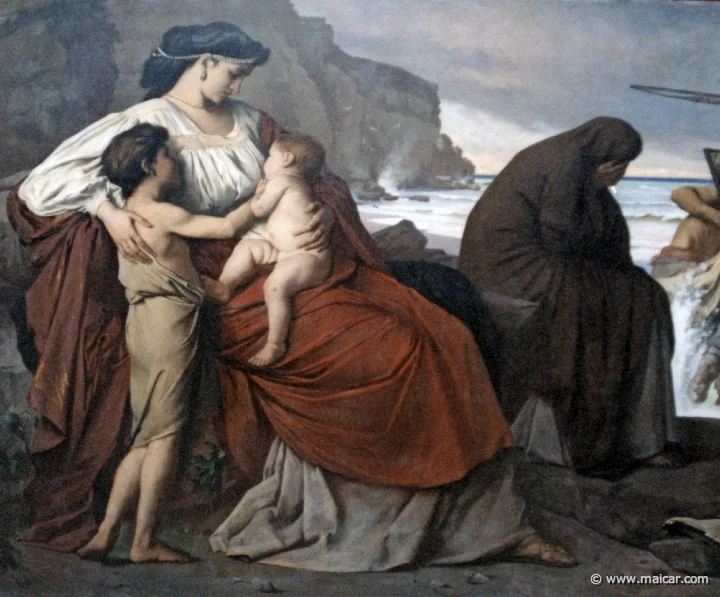
About 2,000 years prior to Melodrama, Greek playwright Euripides wrote a tragedy called Medea that touched on many of the same topics. The plot focuses on the heartbreak our heroine Medea faces and her plan to get revenge on her adulterous partner. But more than that, it follows a powerful woman who struggles with the expectations placed on her by society. Lorde and Euripides’ works bear a striking number of similarities to each other. Both of our protagonists become obsessed with their lovers, and find themselves willing to betray friends and family. The two narratives posit that love often leads to heartbreak, but it can also lead to freedom.

186121489048454.jpg

Part 1 | The Lover

At the beginning of Medea, our main character falls in love with Jason when he visits her island of Colchis on a quest to retrieve the Golden Fleece and take his spot on the throne. Compelled to help her lover, she feeds Jason tips and helps him attain the fleece through the power of her wizardry. After the current king blocks Jason from taking the throne, Medea hatches a plot to take the kingship illegitimately by tricking the king’s daughters into chopping him up. When her plan is uncovered, both Jason and Medea are banished from the island, chased away by Medea’s own family. In an attempt to escape by sea, Medea devises a plan to slow her father down by killing and chopping up her brother’s body then throwing it to the sea, knowing that her father will stop to collect the individual body parts.

Meanwhile, on Melodrama Lorde finds herself experiencing the same intoxication of love on “The Louvre” where she feels ready to betray friends and family for her lover much like Medea did. At the start of the song’s third verse, she recounts “Blow all my friendships / to sit in hell with you / But we’re the greatest / They’ll hang us in the Louvre.” While she obviously doesn’t go as far as killing, Lorde is still obsessed with her lover in the same way that Medea was, willingly destroying all of her friendships in favor of newfound love. Earlier on in the track, she bottles up that feeling of infatuation with the lines “I am your sweetheart psychopathic crush / Drink up your movements still I can’t get enough.” Both women experience the electrifying fluorescence of new love and succumb to the rush that it fuels.

tumblr_inline_p4qolkL0HI1twzzd8_1280.jpg

Part 2 | The Betrayal

After escaping her homeland, Medea and Jason relocate on Corinth, a remote island where they settle down and have a number of children together. Eventually, Jason finds himself enamored with another woman, Creusa, who also happens to be a princess on the island. Drawn to Creusa’s beauty (and her social status) Jason abandons Medea, leaving her stranded on a strange land, alone with no standing as a foreigner and as a woman. Her time in love with Jason was ultimately quick and intense, and they fall apart just as quickly as they were drawn together.

Lorde also finds herself grappling with a similar situation of new and unfamiliar love on “Homemade Dynamite” where she opens the song with some scene-setting lyrics: “A couple rebel top gun pilots / Flying with nowhere to be / Don’t know you super well / But I think that you might be the same as me / Behave abnormally.” Intoxicated with the feeling of fresh love, Lorde is inspired to act irrationally, jumping into a relationship with little foresight or evidence of compatibility.

Within the same song, we witness the relationship’s quick end as it devolves into a spiteful and violent split. Lorde ends up with someone else despite seemingly still being attached to her original lover. “See me rolling, showing someone else love / Dancing with our shoes off / Know I think you’re awesome right?” Right after asking that, Lorde transitions into a vengeful chorus of “our rules our dreams, we’re blind / blowing shit up with homemade dynamite.” The rapid transformation within the song highlights how quickly the intense feelings of love can retreat and metamorphosize into equally-passionate emotions of hate or violence, just as they did with Medea.

lorde.jpg

Both Lorde and Medea find themselves impassioned by their unfaithful lovers in different ways. While Lorde finds herself partying and wanting to “blow shit up,” Medea’s emotions come out in the much more biblical form of a speech. Tied to her husband by law, Medea is left feeling powerless once he abandons her for someone who will lift his status in society. Men, she claims, lead an easy life and can leave their woman whenever they want. Meanwhile, women are the ones who suffer as divorce is reprehensible, women are the ones who have to give birth, and powerful women are feared. Abandoned by Jason, Medea shares her frustration, orating to the women of her city, she claims that even death is preferable to marriage.

“In my case, however, this sudden blow that has struck me has destroyed my life. I am undone, I have resigned all joy in life, and I want to die. For the man in whom all I had was bound up, as I well know—my husband—has proved the basest of men. Of all creatures that have breath and sensation, we women are the most unfortunate. First at an exorbitant price we must buy a husband and master of our bodies. And the outcome of our life’s striving hangs on this, whether we take a bad or a good husband. For divorce is discreditable for women and it is not possible to refuse wedlock. And when a woman comes into the new customs and practices of her husband’s house, she must somehow divine, since she has not learned it at home, how she shall best deal with her husband. If after we have spent great efforts on these tasks our husbands live with us without resenting the marriage-yoke, our life is enviable. Otherwise, death is preferable. A man, whenever he is annoyed with the company of those in the house, goes elsewhere and thus rids his soul of its boredom. But we must fix our gaze on one person only. Men say that we live a life free from danger at home while they fight with the spear. How wrong they are! I would rather stand three times with a shield in battle than give birth once.”

After the outward destruction found on “Homemade Dynamite,” Lorde tries her best to find peace in her own company. She confesses her own experiences of being isolated in “Liability,” the emotional centerpiece of the record in which Lorde finds solace in her own self-love. No longer dependent on someone else for her happiness, she focuses on her relationship with herself. “So I guess I’ll go home into the arms of the girl that I love / The only love I haven’t screwed up / She’s so hard to please, but she’s a forest fire.” In these lines Lorde admits that love has shaken her up, but begins to realize that happiness can (and must) come from within first. She goes on to depict a scene of her evening alone, revealing that she’s indeed talking about herself. “I do my best to meet her demands, play at romance / We slow dance in the living room, but all that a stranger would see / Is one girl swaying alone, stroking her cheek.”

Part 3 | The Revenge

Betrayed by Jason, Medea plots her revenge, eventually deciding to kill Creusa, and the children she’s had with Jason. By taking Jason’s fatherhood and social status, she hopes to harm him in the most painful way possible. Medea eventually decides to kill Creusa by sending her a cursed crown and robe delivered by the children that Jason had with Medea. At first reluctant to accept the kids into her house, Creusa immediately becomes amicable when she notices the beautiful gifts they are offering. Once put on, the crown takes a moment before it latches into Creusa’s skull while the robe burns her skin into a waxy substance. Before she is killed, Creusa is given a chance to admire herself in the mirror, only to watch her beauty that was so treasured be torn away.

In Melodrama Lorde is at her most vengeful on “Writer In The Dark” where she warns her ex of the mistake he made. Instead of remaining heartbroken, she turns her ex’s departure into something empowering. Just as Medea hurts Jason and Creusa in the most personal way possible, Lorde defies her ex by achieving superstar status off an album partially about the empowerment of being alone. “Bet you rue the day you kissed a writer in the dark / Now she’s gonna play and sing and lock you in her heart.” The chorus portrays Lorde at her most vicious as she bares her fangs through flashes of love-infused threats. “I am my mother’s child, I’ll love you ‘till my breathing stops / I’ll love you 'til you call the cops on me / But in our darkest hours, I stumbled on a secret power / I’ll find a way to be without you, babe.” Eventually, she lands on the self-reliance detailed above in “Liability” and explains that she found her own way out of the darkness of heartache.

Part 4 | The Escape

After having achieved her revenge, Medea leaves the Earth and disappears into the sun on a chariot given to her by her grandfather Helios, the sun god. By giving her the chariot, Helios is also sanctioning her actions and is giving Medea a chance to escape the world that has caused her such pain. This is a moment of triumph, as Medea is now free of her lover and all the actions that came in the aftermath of his betrayal.

Melodrama also includes a reference to disappearing into the sun on “Liability” when Lorde whispers “They’re gonna watch me disappear into the sun / You’re all gonna watch me disappear into the sun” on the track’s outro. In Melodrama’s context, disappearing into the sun is the final act of an incredibly dark and intricate song, yet this disappearance, like the rest of the record, isn’t easy to reckon with. She’s leaving behind her lover in favor of her success, much like Medea left her world behind after achieving revenge. It’s not the choice either would have made in a vacuum, but rather a step that is necessary in order to fully attain the freedom from their past lives.

On Melodrama’s closing track“Perfect Places,” Lorde is confronted with the reality that perfection is impossible, despite the bliss partying seems to bring. To start the song, she details her attempts to get lost in the ecstasy of an average night out. “Every night, I live and die / Feel the party to my bones / Watch the wasters blow the speakers / Spill my guts beneath the outdoor light / It’s just another graceless night.” Checking to make sure her company is as immersed in the party as she is, Lorde asks “Are you lost enough? / Have another drink, get lost in us / This is how we get notorious.” She quickly turns around and explains why she feels the need to party in order to be free, offering that she is ashamed of herself and is afraid of facing the fact that her heroes are disappearing around her. “All of the things we’re taking / 'Cause we are young and we’re ashamed / Send us to perfect places / All of our heroes fading / Now I can’t stand to be alone / Let’s go to perfect places.” After trying to avoid her pain through partying and drinking, Lorde finally comes to realize that life will probably always be an unavoidable mess, and distractions won’t help her deal with her issues despite providing a few hours of escape. She sends the album off with an anthemic chant of “All the nights spent off our faces /  Trying to find these perfect places / What the fuck are perfect places anyway?

Universal Melodrama

So how did these two works of art end up with such eerily-similar arcs? Well, they are both centered around universal themes that are always relevant to the human experience. While love and heartbreak will always be relatable topics, Lorde has admitted that she designed Melodrama to emulate the feeling of a Greek tragedy. In an interview with Vanity Fair she elaborated:

“[Melodrama is] a nod to the types of emotions you experience when you’re 19 or 20. I had such an intense two years, and everything I was feeling—whether it was crying or laughing or dancing or in love—each of them felt like the most concentrated version of that emotion. I also have a love of theater and I love drawing a parallel with Greek tragedies. But there’s definitely an element of tongue-in-cheek; it’s very funny to title your record Melodrama.”

Lorde clearly invokes classical ideals in her record, as she emphasizes the unity of time, place, metaphor, and action. This makes for a more concise album, and as a result, everything is condensed and easy to follow. Similarly, she employs unity of metaphor with repeated references to the sun and fire, ribbons tying her to someone, and the feeling of being used in a relationship. All the imagery is meant to connect, spawning echoes and reflections across the album.

On “Sober II (Melodrama)”, Lorde cautions “We told you this melodrama / Our only wish is melodrama.” Much like the Greeks used to pen cautionary tales of being swept away in a fit of emotion, Lorde’s cry acts as a claim that the listener got exactly what they came for, just as she presumably knew that heartbreak often follows love. Despite the suffering caused by the disintegration of her relationship, Lorde knows every part of her life will be amplified in her transition to womanhood, even the highs.

tumblr_inline_p4qpd3DOqb1twzzd8_1280.jpg

The upside to these stories is that both Lorde and Medea turn their cautionary tales of heartbreak into stories of self-success. Thinking less about the specifics of what Medea did and more about the concept, we see two women who successfully seized opportunities to take control of their lives when they could have easily blamed the world for what was happening to them. Without discounting the fact that they both did take a moment to acknowledge the pain of their situation (“Liability” in Melodrama, Medea’s speech in Medea), we can see they were both more interested in accepting the challenge the world had given to them than they were in wallowing in self-pity. That can be a scary concept to tackle, and one that is even harder to realize in actuality. But as Lorde sings in “Liability,” her forest fire-like passion is what enables the wild fluorescence of love, the following crash of being alone, and the ability to embrace a new life. And the unique confusion that comes from that mix of feelings is worth it to have her strength and passion.

Another metaphor that unites both Lorde and Medea is the idea of disappearing into the sun. Lorde does so in “Liability,” a song about feeling used and retreating into yourself. Medea disappears into the sun literally as the final act of the play, leaving behind Jason to join the gods. They both do this as a way of showing heartbreak is not only something that can be overcome, but that the lessons learned from it and the resulting actions might have a more positive and permanent impact than loving someone else did. Lorde and Medea both understand that they can be better off alone and that the empowerment that comes along with their actions allows them to defy the usual feelings of heartbreak.

lorde-perfect-places-vid-2017-billboard-1548.jpg

In many ways, the human experience will always be the same. We will always search for connection, we will always find heartbreak, and we stumble into relationships that change us forever. The fact that these two vastly different works, in two disparate mediums, from two artists centuries apart can both feel equally valid speaks to this. Viewing these universal truths through different lenses is how we evolve and connect as humans. It gives us an outlet to reflect on our own experiences, and (hopefully) grow as people through them. Whether it’s a murderous sorceress ascending into the sun or a New Zealand teenager dancing in her room by herself, there is truth, experience, and life to be gained through both of these pieces of art.


Studying at Boston University, Grant loves writing about all things music. From Jeff Rosenstock to Bleachers, you can see what he his is listening to here. To stay up to date on more music thoughts, follow him on Twitter here.