Sella – Well I Mean | Album Review

Bar/None Records

“Biggest rule of two-song Tuesday—where’s Brian? … Brian?”
“Everyone say ‘Brian’ really loud. One, two, three…”
BRIAN!!!

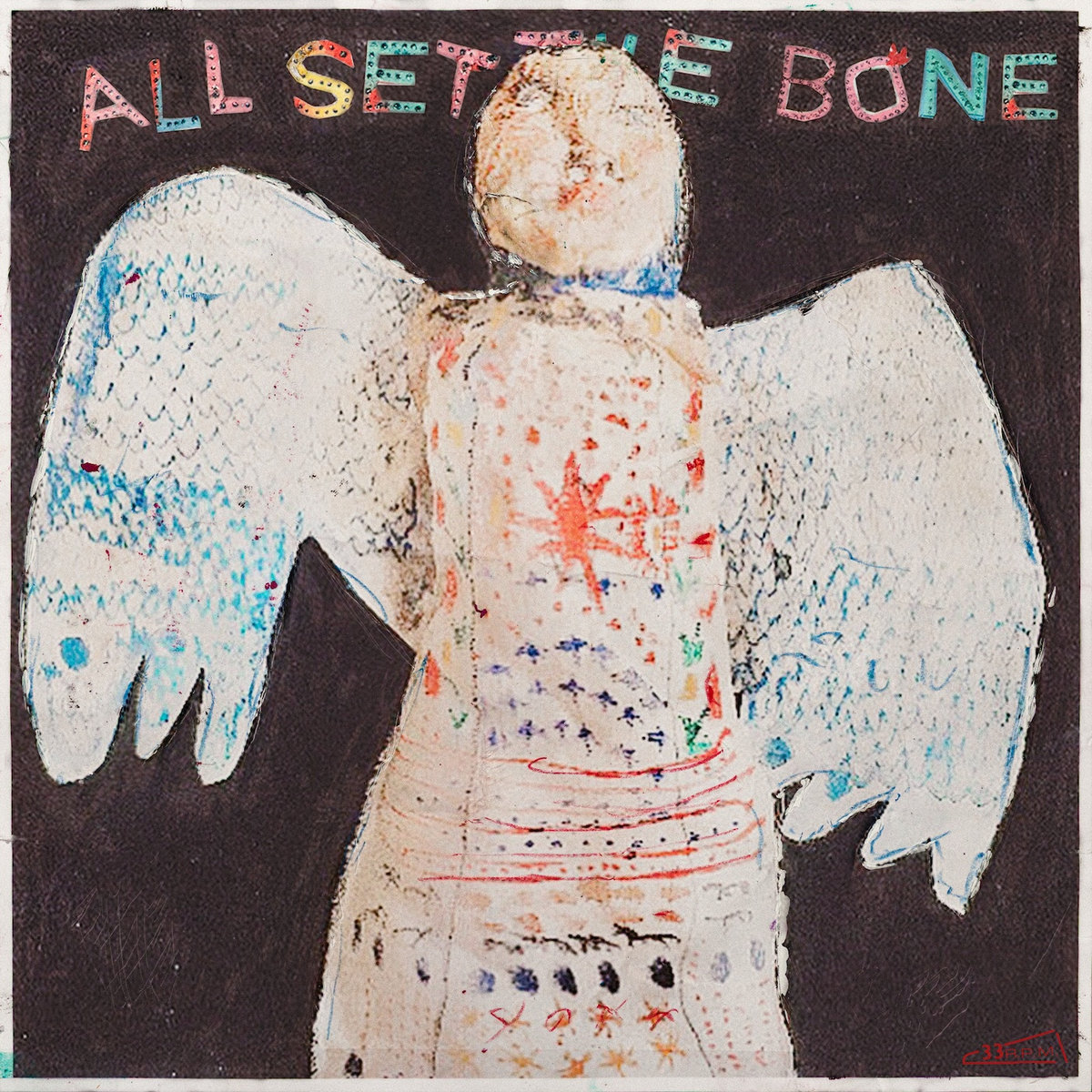
These are the opening seconds of Well I Mean, the first album of Brian Sella’s mononymous new solo project, Sella. You might recognize that name as the singing and guitar-playing half of The Front Bottoms, and while he’s still unmistakably himself throughout this new venture, we find him in a completely new soundscape. According to Bar/None Records, this album was recorded “to amuse the muse, to re-find the fun and deliver something personal to the listener.” This music is pretty in a way that TFB has never ever been; it’s wholly its own, and completely sheds any baggage it might have had coming from a frontman of an established act, though it might take the listener a few passes to come to terms with that.

As someone who’s read, sung, hummed, cried, and shouted every TFB lyric, I feel pretty confident saying that Brian’s characters are always asking themselves questions: where they are, where they want to be, how they’re going to get there. This album is a fresh start, and it knows it, reflecting on lessons learned the hard way, advice accumulated over the years, and overflowing with gratitude for the people who stuck through it all. 

Sonically, Well I Mean is a brass-dominant 25-minute jaunt that dispenses with the usual guitar-forward sound of TFB, opting instead for a softer style with plucky strings, shiny horns, and upright piano. Lyrically, there’s still a spool of matter-of-fact wisdom, picked up in remote places and doled out in an introspective, storytelling style. At times abstract, and at others more concrete than an ocean, Well I Mean could take a few listens to pick apart, but don’t worry, self-help has never sounded catchier.

After the opening shout, we get into the music with the faraway and somewhat regretful “American Shark.” We’re brought in with a shimmering set of strings, accompanied by a simple finger-picked melody, setting the tone as pensive and self-assuredly unworthy. Brian then immediately upends this table-setting with “Skipping Out,” which is ridiculously bright, youthful, and full of color. This is primarily thanks to the cornet, which you first hear in the call-and-response with the lyrics, “Falling into a nice routine / I’m drunk every time you see me.” The cornet lingers and builds in the verse, then lithely breaks away to support the piano in the chorus, “It seems / I’ve been lookin’ at things reversed / this whole time / So much so that at this point / the right way just don’t feel right.” It evokes the feeling of dancing at a celebration of life, summoning joy on a day meant for mourning. Positive tunes to losing-it-a-little lyrics is a classic juxtaposition very much in the TFB wheelhouse, now masterfully rendered in a new domain, setting the album on a firm foundation of its own. 

A little later on, we hear the similarly light and jubilant “South Dakota.” If you’re from a rural part of a landlocked state like me, you should understand immediately that roads, highways, and interstates are our lifelines to other people, hence the metaphor “The ocean is the highway.” Even in 2026, there are miles and miles of dead zones where you’re left to contemplate why you’re on that road in the first place. In the bridge, the narrator shares a revelation he had out there: “You finally realize / life’s but a dream / But exactly how you’re feeling / ain’t exactly how it seems.” Notably, “All that we see or seem / is but a dream within a dream” comes from Edgar Allen Poe’s A Dream Within a Dream. I think the narrator of “South Dakota” is assuring themself that emotions are not our reality; with time and experience, the difficult ones will pass.

Obviously a huge part of Well I Mean are the trumpets (or cornets, or flugelhorns). They have a literally instrumental role in a third of the songs on the album, most notably on “Perfect Worth It,” at first in support of the narrator, then fully taking over and playing out into a silvery conclusion. In researching for this review, I actually couldn’t believe that the last three TFB albums don’t have brass at all. The most recent song in their discography with a trumpet is “Don’t Fill Up On Chips” from Going Grey, then “The Plan (Fuck Jobs)” and “2YL,” both from Back on Top, around 10 years ago. It’s poetic for the brass on Well I Mean to be so good, because it was inspired directly by the intentionally amateurish brass sounds in TFB’s early catalog, namely “Flashlight,” “12 Feet Deep,” and “Swear to God the Devil Made Me Do It.” This album is orchestral in a way that we only saw glimpses of in early TFB. The best example is “Maps” from their self-titled album, which uses strings and simple piano to get about halfway to the style of Well I Mean. Now, Brian has made it out of his room, onto his big, big plans.

Well I Mean was produced by the prolific and incredibly cool Chad Matheny, of the DIY folk-punk band Emperor X. Actually, the music video for “Perfect Worth It” was a part of a joint release, with Emperor X publishing “Pissing With the Flashlight On” on Bar/None Records the same day, which details the darkly humorous realities of the all-too-real evil in our world. Emperor X and Sella have a short tour together this spring, and, in one final piece of kismet, it’s not the first time they’ve been on the road together. About 15 years ago, Emperor X and The Front Bottoms went on a DIY tour, which you can read a bit about in this interview from The Aquarian. This long friendship bearing fruit couldn’t summarize the album any better; dipping into the past for inspiration, finding new ways to be yourself, and creating something at once bathed in history and completely unique. 

At the beginning of this review, I mentioned Brian’s intent with this solo excursion was to “refind the fun.” In that same Bar/None Records page, they open by talking about the distance between the stage and the bedroom. Throughout, I’ve referred to Brian as, well, Brian. It felt so odd to call him Sella, even though that would be the correct “journalistic practice.” To me, he’s an everyman; he could be my eccentric neighbor, my favorite buddy’s favorite buddy, or the mailman. His songs have always seemed like something a friend of a friend could have made and played in a garage or backyard. Those qualities are most obvious to me in TFB’s earliest on-label works, The Front Bottoms and Talon of the Hawk, which Brian magically channeled into Well I Mean

For example, on their self-titled album from 15 years ago, The Front Bottoms built their album closer, “Hooped Earrings,” around voicemails. They’ve had voice samples here and there throughout their discography since, and now Sella uses this trick again, building a full song around a voicemail in “Stocking Up.” Actually, what we’re privy to sounds more like a deposition, which, oddly enough, also sounds like directions for a DIY music video. In it, we hear the lines, “You got a gun in your hands / but it should be a guitar” and “At this point giving up the gun / should be easy to do / Don’t worry, just know / I’ve got another you could use.” At first, I thought this meant another gun, but I think the narrator is saying he wants to help his friend change, letting them know that if they want to change, he’ll support them. It might seem like a reach, but I think it actually falls nicely into place if you consider the line, “I’m sure that we could find something for you to do on stage / Maybe shake a tambourine or when I sing, you sing harmonies” from TFB’s most famous song, “Twin Size Mattress.” These are the same sentiments: making space in your life to help someone, even going so far as to let them join your band if it means they can get better.

While we’re on the abstract stuff, two quick notes about the stream-of-consciousness track “Wichita.” First, the line “If you were brave enough / to drink the Arkansas / you cast a shadow / on the river like an art piece” refers to the Keeper of the Plains on the Arkansas River in downtown Wichita, Kansas, about 30 miles from my hometown. Second, I couldn’t help but notice the similarity between the Yogi Berra quote “You can observe a lot by just watching,” and the line “Walk around from light to dark / you see a lot.” Neither of these guys are trying to be profound; they are kindred spirits articulating how they see the world, and through their matter-of-fact descriptions, they arrive at somewhat profound (if at times cockeyed) conclusions.

THE KEEPER OF THE PLAINS ON THE ARKANSAS RIVER IN WICHITA, KANSAS. PHOTO BY ANNA WATSON.

One track before the end of the album is “Daredevil.” This is the second time the narrator directly refers to himself as the devil, saying, “I was the same old snake / We made a cute couple / and a couple mistakes.” The first instance can be found in the opener “American Shark” where Brian says, “I feel like I am the devil / and I’ve got an angel / lying next to me.” Also, Captain Obvious has indicated to me that there is a devil even on the album cover, how subtle. Where other tracks used rhythm guitar or Latin percussion to keep time, “Daredevil” uses a drum machine, breaking sharply with the rest of the album. 

While I really do think it stands on its own, making space for a new sound with a matured voice and musical style, there is a rich web of connections to older TFB songs. In some ways, Brian’s always talking about the same ideas, but—miraculously—he keeps it fresh. After all, he told us a long time ago, “Freshness is expected from any hip-hop artist.” Brian is always saying something new, even when it’s the same, or as he puts it on “Daredevil”: “But this new normal / is under heavy disguise.”

Earlier, we got the line “Walk around in circles / like I’m trying to walk my manic out / Talk to all my problems / but I’m only talking to myself” from “Skipping Out,” which now pairs nicely with “In my life and in my mind / endless running around / chasing highs.” The majority of the narrator’s perspective in this album can be explained by just these two songs. It seems that they suffer from bipolar depression, experiencing mania, chasing highs, fucking up, blaming themselves, getting depressed, and repeating the cycle. These two songs alone tell us the album is about recognizing wrongs and trying to be better, and just about every other lyric on the album supports that conclusion. 

In all, Well I Mean is a shining example of what 15 years of growth looks like, both personally and musically—waking up, approaching healing as a process, and making a choice every single day to get better and to be better. The album doesn’t sugarcoat the slip-ups, but the narrator’s best days are not begrudged to them. It ends with a winding ambient track helpfully called “Untitled,” which I believe contains audio from a eulogy. In it, the priest says, “It was one of the saints that said, ‘Music is the only art of heaven we can experience on Earth, and the only art of Earth that we will take with us to heaven.’” But I think this is a paraphrase of something normally attributed to the 18/19th century English poet Walter Savage Landor, who once wrote, “Music is God's gift to man, the only art of Heaven given to Earth, the only art of Earth we take to Heaven.” I make the point of crediting the poet because Brooklyn Vegan quoted Brian recently as saying, “I’m a poet first and foremost, so my focus is always on communicating something emotionally and artistically.” I’ve always thought that about him, but I’m glad to know he thinks it about himself, too.


Braden Allmond is a particle physicist and emo music enthusiast. He anticipates graduating from KSU in August with a PhD in experimental high energy physics. When he isn’t writing his thesis, he’s data-scraping articles and books about emo music, making tables and graphs to interrogate and understand the genre.

Abacot – Songs About Problems | Album Review

Abacot and Many Hats Distribution

It’s been almost three years, but I still remember where I was when I first heard Abacot’s EP Promo 2023. I had just hiked over a bridge for a mile in direct sunlight, and it was only getting hotter as I tried to get through my dreaded commute. I made the mistake of wearing a cloying polyester dress, and mosquitoes were tearing me up as I descended the endless Woodley Park-Zoo/Adams Morgan escalator. Ultimately, it was just a regular Tuesday in July. I waited for the train, squeezed in, and, naturally, the A.C. was out. I checked my phone while crammed between two businessmen and saw that Swim Into The Sound had reviewed a new EP from a band in the DMV, so I listened to the whole thing through the rest of my commute. I was late for work.

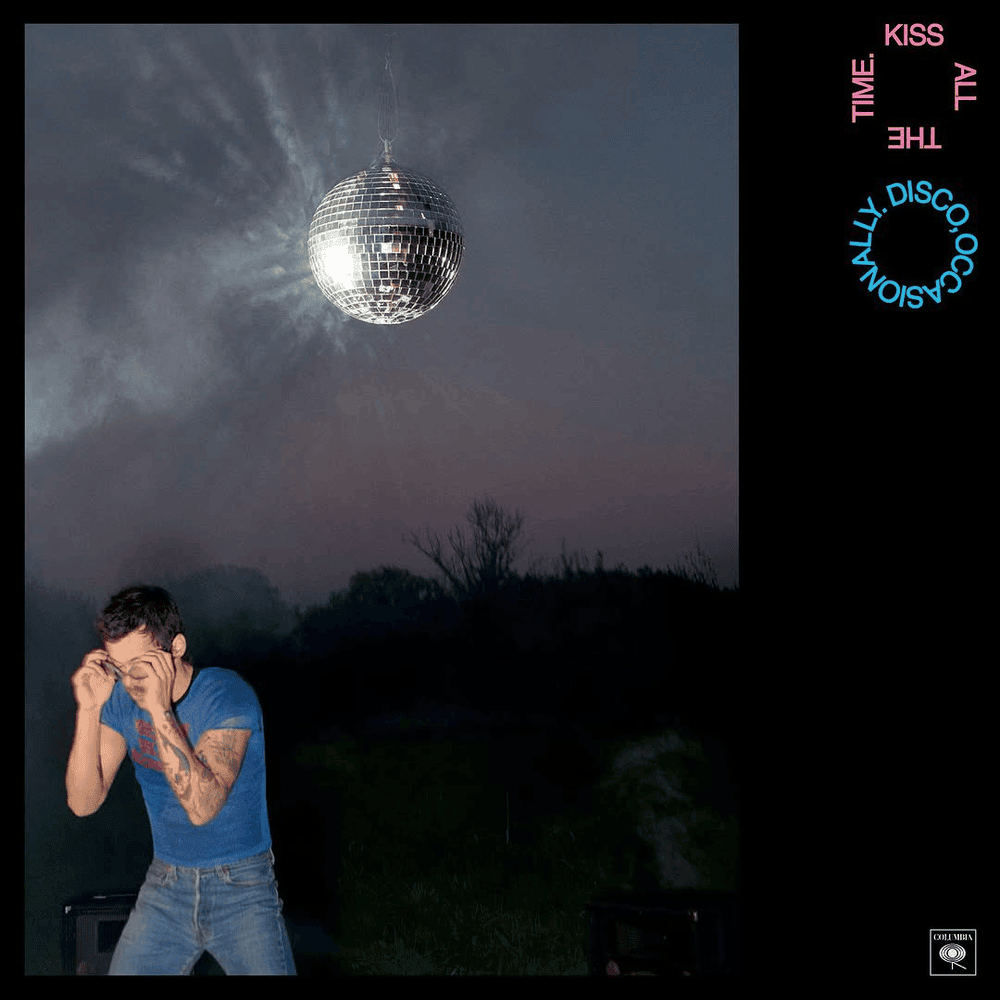
It’s been a couple of years and change since I was sweating it out on that train, and Abacot has returned with a follow-up to that EP today — Songs About Problems is here in all of its bright and bitter glory. For those out of the loop, Abacot is a project helmed by Claudio Benedi, the former frontman of D.C.’s beloved Commander Salamander. Abacot always feels like a true puzzle piece to understanding the larger regional rock sound: this album was produced and engineered by Ryland Heagy, and better yet, when they perform live, their shows are stacked with familiar faces from the world of DMV music (think Combat, think Origami Angel).

Songs About Problems picks up where Promo 2023 left off. While it still features the three songs from that initial EP (with some rerecording), the concentrated misery underpinning all of Promo 2023 is expanded into a rounder emotional release. Benedi totally recontextualizes the initial project – one born out of grief, betrayal, and banality – and transforms it into an examination of difficult personal growth after these dark moments have passed. Beyond the inimitable ear of Ryland Heagy, this album was mixed by Drew Portalatin, the mastermind behind Origami Angel’s mixtape The Brightest Days and Combat’s instant thrasher classic, Stay Golden. It was also mastered by Will Yip, fresh off his Grammy win for Turnstile’s NEVER ENOUGH —a combination that instantly pushes Songs About Problems into an echelon of undeniable ragers.

Sonically, Songs About Problems starts somewhere in 2001 or maybe 2003; I’m still debating the exact year, but it was definitely when you could buy checkered wristbands at Hot Topic, guys in emo bands wore collared shirts, and it was mandatory to spike your hair like Deryck Whibley. The lyrics of “Remember When” match this nostalgic sound as Benedi reflects on the distance between him and a former friend. What starts as something The Starting Line-adjacent switches up mid-song, and Benedi shows off his guitar prowess, a sound distinctly reminiscent of that early ‘20s emo sound he helped popularize, across the bridge.

The frustration of “Remember Me” softens into “One Way Street,” a daringly optimistic song. Benedi is a very talented musician, and one of his undeniable strengths is his ability to create absolute earworms. After just one listen to the chorus, I caught myself singing along to that helplessly catchy, “And I’m yours / are you mine?” on the second spin. The song chugs along, evoking a kind of Fountains of Wayne-style build before opening into “Check Engine Light” and “Vertigo” from Promo EP

These songs have lived on my shelf and in my playlists for three years, and they are still just as electric as they were when I first listened to them on that Metro ride. I’ve thought about “Check Engine Light” every time I can’t get my car engine to turn over when it gets a bit too cold out. “Vertigo,” devastating yet unafraid to get a little King of the Hill-theme song with it, has been perpetually stuck in my head since the first time I heard Benedi sing “I see all your lies / I see through your disguise!” 

After revisiting these tracks from the Promo EP, we have some songs that totally reorient the Abacot project from something wrought with nausea and exhaustion into a broader, more pop-bent with begrudging positivity. “Vertigo” launches into the anthemic, arena-rock “Show You,” molding Benedi’s shapeshifting agony into a single question: “I freed my heart / what about you?” On “Iridescent,” he flexes his Bowling For Soup-y humor over a song that could easily soundtrack a Tony Hawk Pro Skater game, and the synths on “Drifter” take the whole album to Saturn and back.

In Swim Into The Sound’s initial review, Taylor Grimes aptly diagnosed how “When people think of ‘emo music,’ they tend to think of sappy, tappy, whiny bullshit. That’s all well and good, but it’s SUMMER, and the people need something light, something they can sing along to with the windows down.” That’s what “Horror,” the third song from Promo EP, does. While the other two carryover songs are visceral in their anguish, “Horror” is hauntingly hopeful. Benedi soars into the song as he sings, “If we’re going to make it / I know we’re gonna make it to the end.”

“Horror,” in this new context, provides the perfect aerial arc for the album’s ending on the titular “Songs About Problems.” I wouldn’t call it a positive or even a helpful song, any more than I’d call this album particularly optimistic, but it’s honest and self-assured. Benedi doesn’t necessarily regret these difficult years, but that doesn’t mean that the outcomes don’t still hurt. Instead, he diffuses what frustrates him the most and recognizes it in others. We will get through this together.

I don’t live in D.C. anymore and no longer have to do that long commute, but for one day, I wish I could do it one more time, listening to Songs About Problems.


Caro Alt (she/her) is from New Orleans, Louisiana, and if she could be anyone in The Simpsons, she would be Milhouse.

It's You! It's Me! And There's Dancing! – Tell Me All About It | Album Review

Self-released

There are a few things that are guaranteed to set off my “hell yeah” meter. One of them is bands from Portland, Oregon. Even though I haven’t lived full-time in the Pacific Northwest since 2018, I’m still a Portland native who feels a strong sense of pride for any cool art coming from my hometown. Second is short-ass albums. The shorter the better, honestly. I recognize 40 minutes as the standard, but if you can deliver an equally impactful experience in 20-some minutes or less, I’m all for it. Third is emo music, which feels pretty self-explanatory, especially if you’ve ever talked to me in person or read this site before. It should come as no surprise, then, that when Portland band It's You! It's Me! And There's Dancing! dropped a 14-minute scorcher of an album on Valentine’s Day, I ate that shit up like it was a gourmet meal. 

Though the band is named after one of the most famous Los Campesinos! songs, the music on Tell Me All About It isn’t really emo in any traditional sense. Instead, the songs tend to lean into a more shouty punk direction. Maybe a touch of Orgcore, a hearty helping of screamo, and a dollop of post-hardcore. But fuck that, these labels are all just marketing terms anyway, right? Instead, I’ll just sum things up with the group’s bio on Bandcamp, which labels them as “Some kind of guitar music from Portland, OR.” Once again, I say hell yeah.

Introductory song “II” kicks off with a tempo-setting guitar lick; essentially a 30-second acclimation to get the listener up to speed before the triumphant bombast of “Work Hard or Suffer Every Day of Your Life,” which itself is only 49 seconds long. The lyrics offer glimpses of beauty to be found out in the world, but these natural blisses are tempered with the knowledge contained in the song’s title that we’ll be stuck either working or suffering for the rest of our lives. As vocalist Cxh barks about trying to be a better person in all walks of life, the guitars point upward in a riff that feels like an angelic counterpoint to the scratchy punk vox. 

The immediately following song, “Tenderness,” shows no signs of slowing down, opening with a chuggy circle pit riff that slashes forward as the band articulates the pain of letting down someone that you love. “It’s harder for me, to throw a punch, than take one,” goes one line in the first verse, mirrored by a brief scene in the following verse, “I admire the way you’ve learned to fight / And I’ll be standing at ringside to wrap your hands / With tenderness.”

On the two-part “Ruminate // Ward,” the band plays up their minimalist side, giving the listeners slight breathing room as Cxh spins witchy imagery in their Ian Shelton-esque bark. The 24-second “For Whomever” acts as a sort of mid-album epilogue before the ascendant guitar theatrics of “Softer Sympathetic” bring us up to the stars. There’s another moshpit riff to keep the restless energy coming, almost like they have to pack as many notes into their allotted time as they possibly can, but maybe it’s just because they know what’s coming next. Penultimate track “Great Collision States” offers gruesome car crash imagery as a means of depicting the desire for change and only being met with stagnation. It’s a frustrated and honest song that grapples with much more than the lyrics first let on. 

The album’s best moment comes in its final track, “Here Comes the Hurrah,” where every couplet offers a goosebump-inducing morsel of prose as the band spins up one of their more pop-punk-leaning instrumentals. After all’s said and done, the sweat and beer and blood have spilled across the basement floor, It's You! It's Me! And There's Dancing! send the listener off with plenty to think about, including a kiss-off to bad friends, misplaced trust, and the innate power of New Jersey. 

This is all on top of the rest of the release’s veiled frustrations at the state of the world. Even from one of the most progressive cities in the country, Portland is still plagued with rampant ICE activity, feckless leaders, and an ineffectual population where some are trying their hardest and others not at all. Tell Me All About It is uniquely Portland, undeniably hard-hitting, and wonderfully emo. 

Even with bellowed rough-around-the-edges vocals, there’s still a lot of beauty, brightness, and consolation to be found here. I think when you live in a place as gloomy and demoralizing as Portland, you learn to look extra for those little outcroppings of light. I think when you live in times as dark as these, you have to harness every bit of strength and community you can find. It may only be 14 minutes, but Tell Me All About It offers an outlet, a shoulder, a fist, a shield, and a parade. 

Ratboys – Singin' to an Empty Chair | Album Review

New West Records

Snowed in. Roads iced over. Trying on New Year’s resolutions and dropping New Year’s resolutions. What else is there to do at this time of year but think about last year? Openly celebrate what went right and privately obsess over what went wrong. Why did that one thing happen? How can you make sure it never happens again? Why did they say that to you? What should you have said back? Why didn’t they talk to you after that? Why didn’t they listen to you? Why didn’t you try harder to make them stay?

Julia Steiner, frontwoman of Ratboys, got the title for the band’s latest album, Singin' to an Empty Chair, from a therapy tool called The Empty Chair Technique. The premise of the exercise is simple on paper: you imagine that someone you want to have a difficult conversation with is sitting right across from you, and you have that complicated conversation. Alone. But this is obviously easier said than done. Actually mustering up the courage to verbalize the words you have kept buried for so long, to even say them by yourself, is intimidating. Gathering the courage to admit wrong, to share a secret, to ask for better, to try again, is an impossible feeling. Ratboys know this well.

Singin' to an Empty Chair is the sixth album from the Chicago indie stars and their first release on New West Records. This album also marks their second collaboration with Chris Walla of Death Cab for Cutie, who also produced 2023’s The Window. Steiner described their last album as a “dedicated and intentional process,” the product of a meticulous couple years of writing and rehearsing before recording anything officially. Singin' to an Empty Chair offers a different perspective. Bassist Sean Neumann describes this record as a quilt – a collection of songs written in different places and recorded in different spaces. This patchwork approach is pieced together by songs describing half-conversations and one-sided admittances, all sewn together with their signature mind-bending guitar and twangy lilt. 

Photo by MILES KALCHIK

Where were you while we were getting high? Wanna go for a ride? On “Open Up,” Steiner adds to the canon of great rock music questions when she asks, “What’s it gonna take to open up tonight?” She asks this over the confident strum of a guitar, but as the song builds, Steiner’s bright voice is interjected by sparks of the rest of the band, a moment of fuzz here, a kick drum there, before building into a folksy jam. The whole band is firing on all cylinders, and the only place to go from here is the stars.

Ratboys’ greatest sleight of hand is their cosmic bend, and they are very precise with how they blend it into their twang. On their last album, Ratboys took listeners to the brink of the world on “Black Earth, WI.” On Singin' to an Empty Chair, Ratboys avoid their own beaten path but find a new supersonic twist on “Light Night Mountains All That.” The song starts by sweeping you off your feet, sending you into a vortex of Dave Sagan’s swirling guitar and the uncanny rhythm of Marcus Nuccio’s drumming. At first, Steiner’s voice steadies the spinning, repeating an increasingly frustrated accusation that “you didn’t care.” Her voice, while always clear and measured, builds and builds until it’s blistering because “you didn’t care / you didn’t care / you didn’t / care!” This irritation seems to blow a hole in the vortex, turning Sagan’s guitar into something more intergalactic. 

The music video released alongside this single matches its extraterrestrial spin. Styled like a found-footage horror film, some kind of haunting evil forces invade while the band plays their song. The ghouls flicker in and out of the video, almost like they’re interfering with the signal, until they’re playing the song too. This cataclysmic feeling Ratboys spin is one of their most exciting tricks—a soundtrack for the final frontier. 

Just because we’re singing to an empty chair here and embracing conversations we hesitate to have does not mean that every imagined conversation has to be upsetting or frustrating. It’s hard to admit how much you love someone, too. In “Penny in the Lake,” serene optimism is conveyed through berry pies, Ringo Starr, and the breathless crow of a rooster. “Strange Love” is an earnest confession that conjures slightly sweaty palms, and “Anywhere” evokes a vulnerable, but freeing feeling, like admittance with avoidant eye contact. 

The title of the album appears in “Just Want You to Know the Truth,” the album’s 8-minute bittersweet barnstormer. Across a mournful pedal steel, Steiner weaves snapshots of a past she can’t return to: construction sites, lasagna on Christmas Eve, and Antiques Roadshow. The emotional core of the album is buried somewhere in the sawdust of this song, between Steiner’s aching lyrics and Sagan’s biting guitar. The resonance of the Empty Chair Technique is laid bare as Steiner grimly sings “A couple some odd years ago / You said, ‘Sweetie take your time’ / So now I’m singin’ to an empty chair / Bleedin’ out every line.” It’s a punishing admonishment about forgiveness and time, combined with a cathartic release of finally saying something, even if it's alone.

The album closes with two opposed songs. The penultimate track, “Burn it Down,” while starting syrupy, turns incendiary as the band unleashes a fury they have tamped down for five albums. Steiner gives in to the doom built up by the song’s ferocious sound, just for a moment, saying, “It’s always been this way / It’s never gonna change.” But this anger washes away. The album ends on “At Peace in the Hundred Acre Woods” offering a bookend to the breezy sound that it began with. It’s a swaying, reassuring song, something that is supposed to play softly from a speaker on your patio while you’re talking to an empty lawn chair. 

On “Just Want You to Know the Truth,” Steiner sings, “Well, it’s not what you did / it’s what you didn’t do / I just want you to know the truth.” It was here, as I was caught in my thoughts about 2025 and my weirdest, lowest points, that I understood the Empty Chair Technique. It’s not just about addressing the truth, but verbalizing what you need to get to the truth. Since then, I’ve been thinking about who I want to talk to in the empty chair next to me. The blue one next to the couch I’m writing this on. What truth do I need to be made real? What about you? Who is in your empty chair? What do you want to tell them?


Caro Alt (she/her) is from New Orleans, Louisiana, and if she could be anyone in The Simpsons, she would be Milhouse.