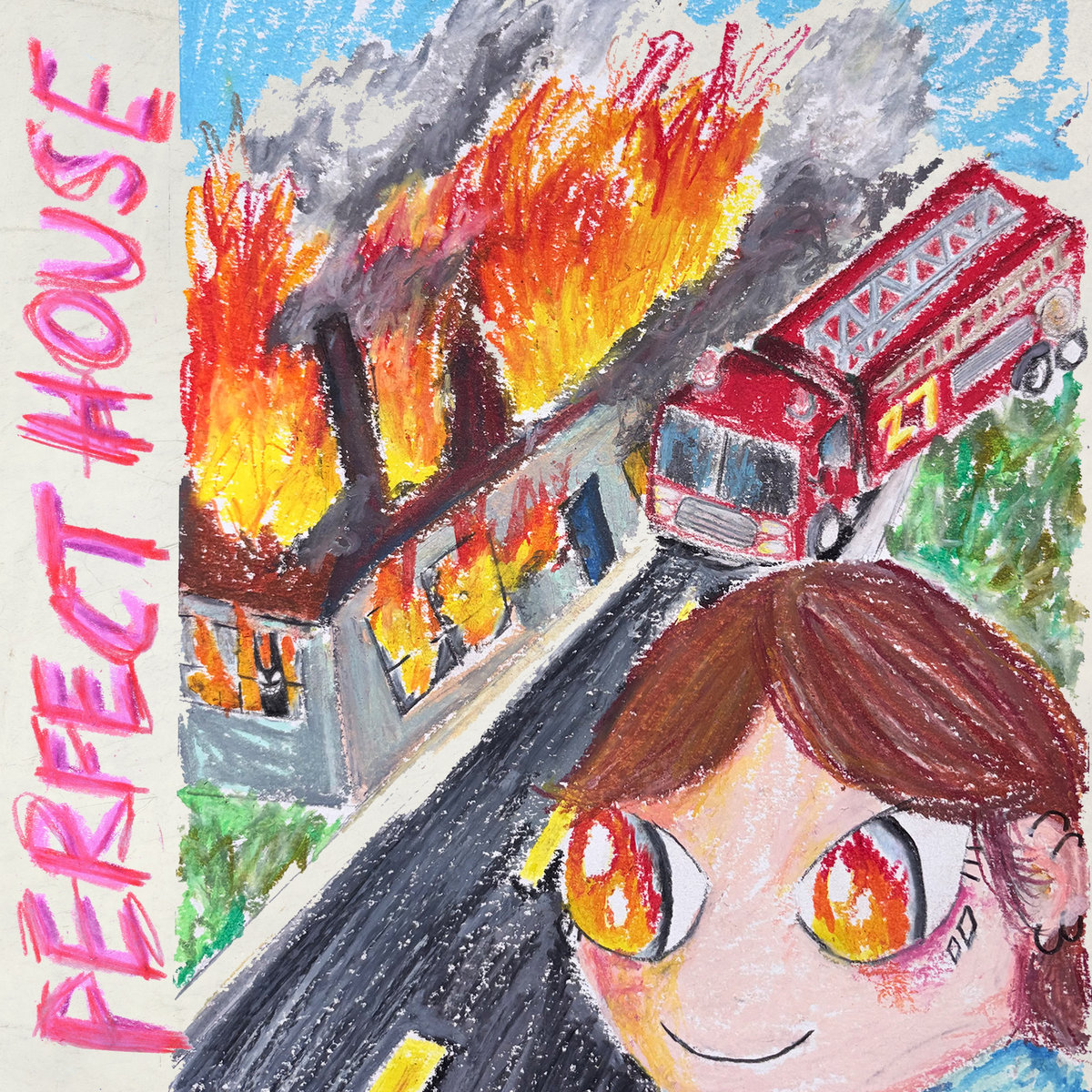
more eaze – valley and structure | Album Review
/
Thrill Jockey
In my dreams, I inhabit a world that has become reassuringly familiar over my thirty-odd years of sleep. I often return to the same three landscapes. One is a large room, wood-paneled and crowded, where I often encounter friends, or at least memories of them. The next is a vast mountain landscape, stretching beyond the tree line, sickeningly sheer cliffs dropping into millions of acres of granite. The last is my favorite: a deeply verdant and misty hill region, threaded by a road that never leads me to my destination, no matter how long I sleep. There is strange comfort in these landscapes - relief in the repetition of whatever pattern my unconscious brain is tracing. I feel similarly about music, finding myself consistently drawn to minimalist works. The thrum of the music’s predictability brings me comfort, cocooning my ears with a beautiful structure of rhythms, patterns, and notes.
Because of this, I expected that valley and structure, the latest release from composer Mari Rubio, would immediately capture my minimalism-loving ears. Mari releases music under the name more eaze, both solo and with a rotating group of musicians behind her. I’ve greatly enjoyed her body of work over the years, watching with admiration as the worlds she spins with each new release build upon themselves in delicate, haunting webs. When I reviewed one of more eaze’s recent albums, sentence structure in the country, I commented on the otherworldly aspect of the music - it felt surreal, even dystopian, merging nature with machines. This effect is certainly also present on valley and structure, but in a distinctly different way. Instead of a darkly alien dystopian atmosphere, I sense vast open spaces, eternal fields of waving golden grass, and mirages that taunt from an indistinct horizon. A cloudless sky screams silently above, empty and infinite and possibly too blue. It’s a different brand of dystopia: everything is so perfect, so clean, so empty, that it cannot be anything but unsettling. The tie between these two albums is clear, not only in name but also in theme: whispers and fragments of sentence structure float through valley and structure like leaves in a breeze. It’s a brilliant concept, further tying more eaze’s worldbuilding into itself in a deeply satisfying way.
The album opens with a track titled “they tried to shove me in the structure,” featuring a deftly plucked guitar line that loops and drives forward incessantly. It’s accompanied by warm string swells that alternate between joy and unease, captured in a continuous dance. As I wander the golden grasses of this album’s landscape, I see the first sign of life in the terrible blue sky above: a hawk and a sparrow whirling in dizzying spirals, fighting over territory. The sparrow is relentless, but the hawk evades her, and their struggle traces a Möbius strip in the sky. A thin layer of strings hum in my ears as I watch them, and I notice the guitar’s arpeggios have started to lead away from the home key. However, the tension eases slightly as the rhythmic playing returns to the familiar notes of the opening chord progression. The hawk, realizing it will not be able to outsmart the persistent sparrow, breaks the loop and disappears into the endless azure ceiling. The sparrow has avoided the structure. Radio feedback crackles in my ears, and I realize I am not alone.
I look around me and catch a glimpse of something metallic on the wavering horizon. The next track, “what’s wrong with the structure?” begins to play: a solo violin enters, bowing a precise string of notes that resemble a technical exercise. Its eerie quality is heightened as another violin joins, harmonizing in various intervals, and the music begins to melt together as a wind instrument adds to the arrangement. There is a faint clatter of voices and static layered behind the instruments, the piece whirring from one ear to the other until, at last, the guitar joins in. Dreamy whole-tone progressions create a blurry atmosphere - I notice a piano fading in and out, the deep thud of a bass, and even the shimmer of a distant synth organ. The silvery chords match the glint of the structure on the horizon I am walking toward. It flickers like a mirage, but the closer I get, the clearer it comes into focus.
As I mentioned earlier, I am deeply drawn to minimalism for its sense of familiarity and the comfort I find in repetition. This same hypnotic quality is present throughout valley and structure, especially on track three: “once you say yes to the structure, you never get out.” An intensely rhythmic violin melody opens the track, paired in unison with guitar and bass. As I trudge towards the monolithic silver building on the horizon, I am reminded of an album that drives in a similar way. “Different Trains,” I muse silently. It’s one of minimalist composer Steve Reich’s best works. A moving, captivating, and powerful piece of art, I love its texture and depth. I find more eaze employing her own gifts of textural writing here, the instruments whirling around each other, mirroring their melodies in a method so contrapuntal that it feels damn near Baroque. The building is closer than ever, yet I have never walked so far. Everything comes around to itself in the end - modern music sounds Baroque, and the hawk is conquered by the sparrow.
I notice that the music has not stopped playing. Pleased, for I don’t want the song to end, I note that it’s exactly 20 minutes and two seconds long. 20:02 - a delightful numerical palindrome. Another Möbius strip of sorts. Around the eight-minute mark, “once you say yes to the structure, you never get out” slows, skulking back into the only shadow on this planet: the one cast by the building, its darkness a gash across endless miles of golden wheat. There is no whirling melody now, just sustained strings and the occasional comment from the piano. A low, dull humming fills the air as I find myself at the base of the building. There are no windows and no doors. It is hot even in the shade, hotter than it was under the eternal blue void. So I wait as brass and guitar offer their nervous harmonies. I hear a soft voice humming beneath the strings, though I’ve not noticed any company. The air grows heavier as the seconds pass, and the music plods now, no longer hiding in the shadows, but pulling itself along under the blazing sun. I notice the hawk has returned to the sky, whirling in spirals that draw closer to the ground with each rotation. The music has become frantic, and I find my heart beating in my hand, staining my palm red. On the horizon, the grasses dance with anticipation, and the violins follow in a fierce ostinato. I am weeping without knowing it. My heart is no longer a heart; before my eyes, it becomes the sparrow. And then the building opens with a scream –
– and swallows me. “i’m in the structure.”
This is my favorite song. A heartwrenching melody, sung by an invisible entity, echoes in my ears as I am borne up, up, up to the top of the building. Major one to minor six chords, I note. It’s the same progression as my favorite song of all time, “Hallelujah” by Leonard Cohen. I am still weeping, tears coursing silently down my face. I do not know why. The violin wounds me, so beautiful that I ache with every note. The sound of waves crashing surround me, filling my ears with pressure as though I were underwater, but I am dry and surrounded by light. I am at the top of the building now, and I still hear the voice singing to me: "I’m content to be the void that collapses time and space / tracing out the melodies, replacing / tones / the faceless friend somehow never alone / blanketed by tastes.” I know these lyrics, for they are the same ones used on “The Producer,” a track from sentence structure in the country. Hearing them on this album, in an ethereal new setting, is like greeting an old friend. I am in the structure, and have only just entered the structure, but maybe I have always been here.
Time bends, and cold air burns my lungs without warning. I am on top of the monolithic building now, and there is no visible way to leave. “how can we get out of the structure” is the final track on valley and structure, and the only means of escape for the listener, and for me. The plucked, near-percussive rhythm at the beginning mirrors my heartbeat as I contemplate my options for escape. I sense that I am not alone: I turn slowly and behold something more than light but less than solid. I am briefly reminded of the Eldil of Perelandra. So this has been the source of the singing, the melodies, the driving life of this strange planet. As the music begins to deepen and build, the ever-present piano weaves through the top and then the bottom of the melody like a bright blue thread. Harmonies begin to melt into dissonance, and as the chill of the thin air cuts through my clothes, I hear the more-than-light being start to sing. The music is disintegrating slowly, beautifully, but the driving rhythm never falters. The light atop the structure is all-consuming, growing with each breath, and a honey-sweet breeze carries the sound of victory. I too am light, more than light, and I watch the structure sink into the golden grasses. Suspended in air, I spiral higher with the hawk and the sparrow. The entire planet vibrates with joyous melody, and I – I am singing too.
Britta Joseph is a musician and artist who, when she isn’t listening to records or deep-diving emo archives on the internet, enjoys writing poetry, reading existential literature, and a good iced matcha. You can find her on Instagram @brittajoes.