The State of Pop Music

Stop me if I sound old. 

As we find ourselves on the precipice of fall, I defy you to tell me what the “Song of the Summer” this year was. I know that’s a nebulous term that can range from something as concrete as the most-streamed song in a three-month window to something as personal as your favorite song of the season. In fact, some people insist the Song of the Summer doesn’t even need to be released this year, a categorization that I personally reject. And that’s kinda what I wanted to talk about: where are the songs this year? Hell, what are the songs this year?

Sure, I have my fair share of summer bops I’ve had on repeat, but these are mostly smaller songs from indie labels and DIY acts. It might be hard to believe, but not too long ago, I was “tapped in” to popular music. My annual summer playlists were vast tapestries of culturally-relevant hip-hop and vibrant pop tunes. Back then, it felt like there was ubiquity to these songs, which meant that the playlists practically made themselves. You heard these songs coming out of car windows and venue speakers. You saw clever lines turned into memes, and music videos became internet-wide events. Now? I have to go to Billboard just to see what’s charting because I’m that far out of the loop. I guess what I’m saying is I used to be ‘with it,’ but then they changed what ‘it’ was. Now what I'm with isn't it, and what's ‘it’ seems weird and scary to me, and it'll happen to you, too.

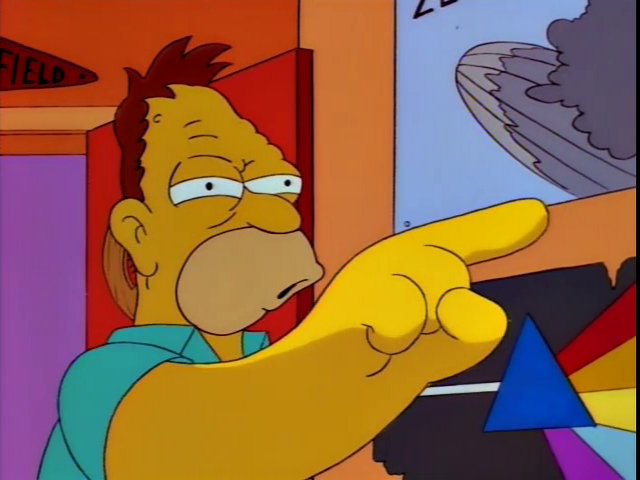
Maybe I am just Grandpa Simpson-ing, but I think there’s something deeper going on here. Just look back at the oft-cited summer of 2016 and compare it to this year’s offerings. Six years ago, summer gave us (arguably the last great) landmark albums from big-name acts like Kanye and Drake. DRAM had “Broccoli,” and Rae Sremmurd had “Black Beatles.” Gucci was home, and Frank Ocean was back. Travis Scott and Schoolboy Q were mounting their careers with Birds In The Trap Sing McKnight, and Blank Face. Chance the Rapper followed up his smash hit Acid Rap with the great-but-not-as-good Coloring Book. Young Thug was on a tear of stellar EPs, and Lil Uzi made himself a household name with Vs. The World. Both Lil Yachty and 21 Savage introduced themselves to the world in earnest. It felt like an exciting time to be following popular music, and I don’t think that’s just nostalgia.

On the pop side of things, 2016 is still the last time we heard from Rihanna. Beyoncé was making headlines with Lemonade, and The Weeknd was following up the smash hits of Beauty Behind the Madness with the slightly poppier Starboy. Whether you like them or not, 2016 also birthed “One Dance” by Drake and “Closer” by the Chainsmokers, two songs remarkable if only because of how many records they set and how long they hung around the charts

To be fair, within the pop/hip-hop dichotomy I tend to fall more on the hip-hop side, so maybe I just have a myopic view of culture. To me, XXL’s 2016 Freshman Class is a perfect example of how the year was a peak for the genre, at least on some level. Meanwhile, what popular artists released music this year? Lizzo? Harry Styles? Yeat? Put a gun to my head, and I couldn’t even fake hum a single melody off Harry’s House, and I bet you can’t either. 

Maybe I’m just checked out of pop culture, but I’d argue that there hasn’t been any legitimately unifying pop music since 2019’s “Old Town Road.” Hmm, what ever could have happened in 2020 that altered our sense of community?

I’ll admit, within my personal music listening over the last couple of years, I’ve noticed a decreasing emphasis on “popular” music in general. I say that not to sound cool or above it all, but because I legitimately don’t know what counts anymore, and that’s a problem. I wasn’t invited to every single party in college (shocking, I know), but even then, I could be anthropological about it. Especially throughout the middle and late 2010s, it was so easy to troll subreddits and Twitter to gauge what people were excited about. Now it feels like the whole of culture has shifted to something far less unified. 

Maybe that’s good. I’ve written before about the death of The Monoculture. Never again will we have a large-scale unifying act like Nirvana that comes in and shakes up the entire music industry, if only because there’s less to shake up. Music in 2022 is competing with the return of movies, a constant barrage of streaming TV shows, and of course, the ever-present deluge of social media. It’s a war for attention, and music doesn’t always win that fight. That’s not to mention how streaming services have made music consumption more on-demand and egalitarian than ever before. No longer are we beholden to what radio stations and MTV will play for us, and I think that’s unequivocally a good thing. 

The flip side of this is that there are far fewer universal touchpoints than ever before. Drake, once the biggest artist in the world, is now about four albums deep on a string of releases designed to juice up streaming numbers with bloated tracklists and middling, inoffensive buffet-style artistry. Come in, take what you want, throw it on a playlist or two, and get the fuck out. No questions, no customizations, and no quality control. Look no further than the number one global artist on Spotify right now: Ed Sheeran, the musical equivalent to a Great Clips haircut. 

I’m not even trying to shit on pop culture; just asking, where is it? It feels like the pandemic has irrevocably stifled culture as a whole on some level. Just look at everything vying for our attention; it’s never been easier to tune out individual pieces of culture if you don’t like them, even culture as a whole to some degree. What I’ve found is that when social life was sapped and reset to zero in 2020, it felt like there was less incentive for me to keep up with culture. Not only that, but there was less culture to keep up with. 

I look back on my “Summer 2020” playlist as an exemplary relic of this time. A hilarious attempt to cobble together a string of hip-hop and pop hits of the era where each entry feels like a palpable shrug of ‘I guess…’ You’ve got “Toosie Slide,” “Rockstar,” and “WAP,” but man, who cares? I guess “WAP” is still pretty good and made a decent cultural impact, but that’s about it. 

Summer 2021 I tried even less, mostly just filling the lineup with songs that felt like they “should” be on a summer playlist. I still remember thinking, “I guess this new Lorde song counts,” and “people like this Megan Thee Stallion song, I think.” It was all a fool’s errand: trying to capture a moment in pop culture that never really existed. 

That’s why this year, I just threw on songs I liked that seemed to capture the summer vibe. I don’t care if only a few thousand people ever listened to the new Camp Trash album; those songs are summer to me. And that’s the dilemma with most “Song of the Summer” entries; is it the culture’s song of the summer or your own? 

Summer aside, I’ve felt less and less incentivized to keep up with pop culture as a whole over the last year or so. Maybe it’s just my age (hello, 30, I see you peeking over the horizon), but I've come to realize how ephemeral all this is. When people were rallying around “Old Town Road”  back in 2019, it felt like an event. When people discuss the 2016 XXL cypher with Kodak Black, 21 Savage, Lil Uzi Vert, Lil Yachty, and Denzel Curry, it feels like a shared cultural touchstone. Be honest with yourself: how many of those touchstones have you felt over the last two and a half years?

I’ll still check out the occasional “big name” pop album just to see if anything grabs me, but more often than not, I’m left with a feeling that it’s missing something. I listened to the new Weeknd album earlier this year and thought it was pretty slick and cool sounding, but I don’t think I’ve returned to it since February. Beyoncé dropped an album in July that I still haven’t listened to and feel zero pull towards. And apparently Harry Styles is doing like fifteen nights of shows in California, so I guess someone has to be listening, right?

There’s an odd symbiotic relationship between albums of this scale and people’s embrace of them. That kind of goes without saying (and technically could apply to any genre), but follow me here. To borrow a parlance from Stan Twitter, if an artist puts out an album and nobody listens to it, the record “flops.” It takes support and fandom to keep a piece of art relevant. But the symbiotic part comes in the form of affirmation and re-engagement. If I listen to a song and the chorus gets stuck in my head, I’ll probably want to go listen to it again later. If I am keeping up with an album’s rollout and hear the lead single while I’m out in the world, I’ll be more drawn to it in the future. If I recognize the song used in the background of a TikTok or some meme, I’ll feel a sense of payoff, as if my previously committed attention has been rewarded. 

Where is that connective tissue in 2022? Maybe it’s just harder to find in the ever-splintering media landscape, but it feels like few of these culturally-sustaining practices exist now. For an old fart like myself, it turns out I’m perfectly content to just stay in my realm of whiny emo and dumb indie rock. After all, what reason do I have to keep up with what’s popular? Furthermore, why would I listen to something that’s “popular” when it doesn’t feel like it is? 

And therein lies the problem: the feeling of popularity. That’s the draw of most pop music on at least some level; the knowledge that you’re participating in something bigger than your specific taste. You’re joining a club of millions, a worldwide network of people bonded by a specific chorus, verse, sound, or person that you all share an affinity for. That’s a hard thing for me to feel in 2022. 

Pop music needs to be more than just catchy and well-made in order for it to succeed; it actually needs to be popular. That’s a harder and harder thing to achieve in an increasingly fragmented world. I’m more than willing to throw on some bland, common-denominator music if it gives me some sense of connection to the larger pop-culture sphere, but either my time for that phenomenon has passed, or the world has become too divided for that magic trick to work any more. Maybe both. 
Mitski and the Complications of Modern Fandom

Indie-Pop singer/songwriter Mitski recently embarked on a North American and European tour to promote her sixth studio album Laurel Hell. This is her first tour and album since 2019’s Be The Cowboy, which concluded with Mitski taking some much-deserved time away from the spotlight. Upon release, Laurel Hell received acclaim from music critics, and has done well commercially, charting #1 in both the US Top Alternative Albums and US Top Rock Albums. However, despite the critical praise and commercial success, Laurel Hell has been divisive among fans, which is not uncommon when an artist returns from a hiatus period. The consistent criticisms range from Mitski’s vocal performance sounding “bored” to her songwriting being “trite.” The album also borrows much of its sound from 80s pop hits, which sometimes limits Mitski from committing to the signature dauntlessness that has defined her music up to this point. What sets Mitski apart from her contemporaries in the indie genre is her urgency and ability to channel raw emotions into spellbinding performances. However, the production on this new album makes her delivery feel impersonal and frustrating. 

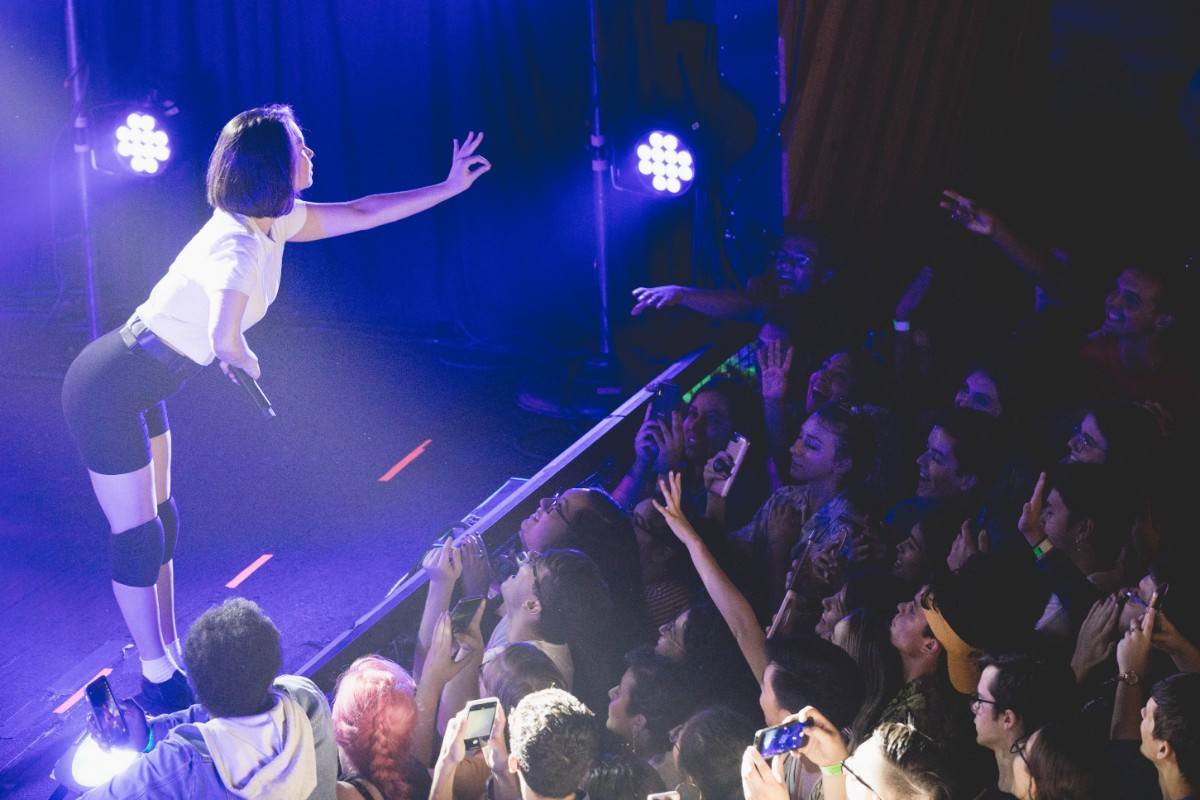
Beyond the critical scores and fan debates about the composition of the album – there has been quite a bit of discourse surrounding Mitski herself and the way certain fans consume her music. It started with a Twitter thread from Mitski in which she asked that fans refrain from taking videos of the entire set or songs. She said she felt as if she was being “consumed as content” instead of sharing an honest moment with fans. This idea is not a new one – the majority of concerts I’ve been to have a “no phone” policy, in which there are signs in place and aggressive ushers who are more than happy to escort you off the premises if you so much as check the time. The split reaction within the fanbase to this request caused the first in a series of moralistic debates. You were either on Mitski’s side, or you weren’t. The tweets were deleted following an intense weekend of discourse and fan in-fighting.

Mitski’s choice to communicate this sentiment over her management-run Twitter account is unconventional, given that her social presence online is nonexistent. Despite her genuine intention to relay her wishes delicately, it makes sense that the clinical nature of the tweet thread went over the heads of her audience, who have been born and raised in internet culture. Weeks prior, the disconnect between Mitski and her fandom was apparent when she was traveling the press circuit to promote Laurel Hell. In Cracked Magazine’s “Mitski Reacts to Posts About Mitski” video, Mitski reveals how she lives in “blissful ignorance” of what’s happening online while reacting stiffly to Stan Twitter memes about her music. Halfway through the video, she reads a tweet that says: “New Mitski it’s a big day for sad bitches.” Mitski taps her hands on the armrests of her chair and says, “Y’know, the sad girl thing was reductive and tired five years ago, and it still is today.” She pauses to say she appreciates the person who made the tweet, but then follows up by saying: “Let’s retire the sad girl schtick. It’s over.” Retired from Sad, New Career in Business, indeed. 

While this detachment style may allow Mitski to live in 'blissful ignorance,' it doesn't allow for many fans to receive her words with the earnestness she hopes. Mitski appeals to a very online generation, and with the rise of applications like TikTok, where hyper-categorization for oneself is how you appeal to its algorithm (i.e., get views), it is only natural that fans will view her music as a piece of their identity. Mitski asks not to be “consumed” by her fans, but perhaps she needs to come to terms with her life as an entertainer. Mitski’s real name isn’t even Mitski – it’s a stage name, a persona that she embodies as a performer, making entertainment to be consumed. The very nature of a concert relies on the performer to gain monopolized, undivided attention from onlookers. I mean, why else would you be on a stage, a literal platform that elevates you above an audience? 

It’s innate human behavior to connect with art on a level of self-introspection. A defining element of art is that it means different things to different people; everyone consumes art through their own lens, but this isn’t a reality that a subset of fans are willing to accept. Whether they’re a devoted member of the fanbase or not, it seems that everyone is rushing to supply their takes on the situation. However, a collective sentiment has emerged of supporting the artist no matter the circumstance, even if that means turning on others in the fanbase. As if Mitski will personally thank those who protect her image and adhere to her social demands. 

While Mitski wants people not to consume her and reduce her music down to catchphrases, a portion of her fanbase has equated that to other fans disregarding the racial context of her music. This argument is strange to me because the overwhelming majority of Mitski’s music is about, well, love. Falling in love, falling out of love, being in love too much, not being in love enough – you get the idea. The only song explicitly detailing Mitski’s struggles with identity as a person of color is her song “Your Best American Girl.” Perhaps an argument can be made that “Strawberry Blond” is about Mitski’s personal anguish that she is not white enough for the man of her dreams – but then again, Mitski has never publicly said that’s what the song is about. It is not clear how her racial identity or upbringing features in her music. She very well could be singing about alienation, perhaps as a woman, or just as a generalization. Mitski does very little to bring politics, background, and identity as an interwoven factor within her music. This isn’t a criticism – I just find it necessary to address when fans are other-ing each other and gatekeeping, as if only viewing Mitski’s music in relation to her being a person of color isn’t a reduction and exclusion in its own right. 

Whether it’s the desire to control how she is perceived as “sad girl” music or resistance to being recorded while performing, Mitski’s differing attitudes in communicating with her audience showcase her inability to commit to a public persona. Mitski will dish out contempt for her audience regarding how they categorize its lyrical and sonic content, but will approach delivering requests concerning concert etiquette like a kid trying to convince their parents to buy them a dog. In the past, Mitski has demonstrated her fearlessness and conviction. Her obsessive love ballads on Puberty 2 make me think of Nina Simone – this is the artistic height that Mitski is capable of reaching. In my opinion, Be The Cowboy was a step down from her two previous albums, and it’s disheartening to see this trend continue on Laurel Hell. This decline all happening while Mitski publicly conflates her inability to grasp her new life as a performer and entertainer, ultimately failing to define a boundary of what her fans are to her. 

When discussing her song “Nobody” in a Genius Lyric Breakdown video, Mitski explains how the chorus came to her in a real state of anguish, but she thought: “Let me use this pain and exploit it for money.” This, of course, can be perceived with light-heartedness, but it’s difficult not to take it at face value, considering Mitski is currently at the height of her popularity, and her name is equated with producing music to consume when you are in some state of distress. 

Perhaps she is personally tired of the “sad girl schtick,” but Mitski has to decide whether to embrace the description she trademarked or rebel and create a new identity for her music and voice to exist in. You can’t please everyone. If she truly wants fans to abandon labeling themselves in accordance with the themes of her past work, then why would she continue to write songs that have a similar pay-off? What is the difference between “Love Me More(I need you to love me more / Love me more / Love enough to fill me up) and “Lonesome Love (Why am I lonely for a lonesome love?) – Mitski is still indulging in the same self-aggrandizing individualism that was evident in her previous records, so why should the content be treated differently than before?

As an artist, you have to recognize that a great deal of effort is involved in rebranding and creating new material that allows your career and the subsequent music you make to possess a longer lifespan. Meaning, Mitski will have to rise to new heights and challenge her fans' perceptions of her through the design and function of her music. If you give your fans work that feels familiar, then they already have a conditioned response. By supplying your audience fresh and innovative ideas, you are by default requesting that they open their minds to imaginative possibilities; sometimes, you have to just let your music speak for you. 


Kaycie is a high school senior and writer. You can find them on Instagram at @boyishblues.

The Slow Cancellation of the Future: 70s Cosplay in Modern Pop Music

Despite only being two years into the decade, the music of the 2020s has already revealed a trend of artists relying on styles that other musicians have established long ago. In his book Ghosts of My Life: Writings on Depression, Hauntology and Lost Futures, Mark Fisher described this phenomenon as “The feeling of belatedness, of living after the gold rush.” Our expectations have been lowered and we rely on a formal nostalgia, perhaps, as Fisher speculates, because there’s “an increasing sense that culture has lost the ability to grasp and articulate the present.” 

Before Fear of Death was released in 2020, comedian Tim Heidecker had to convince his audience that this was not an elaborate setup — his intention was for this studio album to be taken seriously. “I’m like Dylan,” Heidecker bites, responding to a viewer question during his podcast Office Hours Live. “My name ‘Tim Heidecker’ means Dylan,” he elaborates while his crew chuckle in the background. It’s clear that Tim is not in on the joke. The music video for the titular single on the record is intriguing. In the first 20 seconds, Tim is “showing” the band what cords to play. The camera is directly in his face, but he never acknowledges it. It’s a similar effect to the illusion in documentaries where subjects are aware they’re being filmed, but do their best to pretend to be un-spectated. Shot in 16mm, Tim Heidecker sees himself as a rockstar; one or all of his 70s musical idols at once, a strange showmanship emerges, and it’s a pattern you’ll see throughout the entire record. 

Heidecker has a public playlist on his Spotify titled “Fear of Death,” though it features no songs off his own album. Instead, you’ll find Paul Simon’s “Graceland,” Joni Mitchell’s “A Case of You,” John Lennon’s “Mother,” Bob Dylan’s “Tangled Up In Blue,” Leonard Cohen’s “Famous Blue Raincoat,” and more. I want to praise Heidecker for wearing his inspirations on his sleeve, but sometimes when an artist says they’re “influenced by” something, what they really mean to say is that they have borrowed from it liberally. If you look up his songs on YouTube, the most popular comments consistently reference other artists. The top comment on “Nothing” compares Heidecker to Harry Nilsson, a prominent singer/songwriter from the 70s. A few comments on “Property” call the album Randy Newman-esque. Did I mention the record also has a cover of “Let It Be”? 

In a Washington Post article, Heidecker said he’s better at sounding like Dylan than himself. “My voice doesn’t have its own character,” he reasoned. Later, the article mentions how Heidecker felt his hair looked similar to “Wings-era McCartney.” In addition to this, reviewers and fans alike had no problem comparing Heidecker’s lyrical ability to that of Paul Simon or Stephen Stills. Is this not a tired precedent? Why are we placing these high accolades onto a comedian whose music career is a hobby, or at the very worst, an after-thought?

Fear of Death promises a pursuit of existential topics, but it has little to no emotional catharsis. Heidecker’s voice is loud, but what it projects is trite lyrics surrounded by equally loud but bland instrumentals. It’s an easy-listening album, but there are no elements that compel you to hear it out. Heidecker fears he lacks a distinct voice, and I believe he uses that as a shield from fully committing to a challenging artistic endeavor, instead settling for something that he can add to his resume, Wikipedia page, or whatever personal book of accomplishments he keeps for himself.

Elsewhere in the music industry, other even more established artists aren't immune to this kind of historical navel-gazing. The most recent albums from Bleachers and St. Vincent both struggle with the same problems. Bleachers lead singer Jack Antonoff also produced St. Vincent’s album, so it's safe to assume Antonoff was juggling both projects at once, and it shows. Both Take the Sadness Out of Saturday Night and Daddy’s Home follow the same beats, right down to the album artwork and the costumes. Pop artists are chameleons, shapeshifting into new aesthetics to correlate with the sound of their album — it’s an extra step in branding that’s existed since the beginning of time. However, behind the Bruce Springsteen feature and rogue George Harrison worship, Antonoff reveals his agenda through the yelpy vocals and millennial pop beats. It’s a record tailor-made for alt-pop radio, but it hides behind these distinct influences, pretending to sound bigger than it is.

Antonoff performed some of these songs on Saturday Night Live earlier this year—dressed in cuffed jeans and a leather jacket, he feigns the rockstar aesthetic and sound, without any of the angst or true emotions that fill the songs he’s trying to replicate. There’s a desperation to it. The desire to stand out and be different. Young people don’t notice it because they aren’t familiar with the music it’s referencing. It’s akin to how tweens & teens listen to Lemon Demon and Jack Stauber before they find out who Oingo Boingo and Talking Heads are. Older people are waiting for something better to come along, and with their lowered expectations, they happily take St. Vincent in a Candy Darling wig riffing on a rejected Steely Dan instrumental over another Justin Bieber tune plaguing the radio. 

There’s an issue of class here as well. Both Antonoff and Heidecker come from upper-middle-class backgrounds, growing up in the suburbs of New Jersey and Pennsylvania, respectively. Juxtapose this to Bruce Springsteen (as he is an inspiration to both), who grew up poor in the 50s, which in itself led to a lot of traumas. However, Springsteen tapped into that troubled generational atmosphere as it was in the turbulent process of spiraling down. He earned the title of rockstar by performing with a fearless passion. He believed in what he was singing because he lived it, and the things he didn’t live he observed through the experiences of his peers and fans. He was a natural showman, charismatic, and in the business of projecting a big story. I don’t believe you necessarily have to go through intense hardships in order to write a good song, but in the case of Heidecker and Antonoff, their economic class and shallow life experiences lead to boring records. An isolated life leads to a limited perspective. 

I should also touch on Daddy’s Home a bit more. Annie Clark (St. Vincent) used her father's 12-year incarceration for his role in a $43 million stock manipulation scheme as the crux of this 70s pastiche album. She attempts to be educated about the faults of the prison system and how it affects the black community, but Clark exhibits a clear dissonance when she stumbles through a watered-down reference to Nina Simone and positions black backup singers to sulk about her white father who committed a white-collar crime. Clark, of course, kept this story hidden until journalists forced her hand. “People are flawed, but also are capable of change. We can’t just write somebody off,” Clark said in an interview. To cope, she dropped into a cobbled-together character based on stolen and reappropriated aesthetics. Clark went from a “white-haired, sadomasochist cult leader” to a “dominatrix at the mental institution” to a “Cassavetes heroine” in the span of three album cycles. She attributes this current phase as a tribute to the albums she grew up on, which is the case for all millennial / gen x musicians. There isn’t anything unique about listening to Joni Mitchell and wishing you could be her. 

Artists are perceiving the past as a mythical entity, which is contributing to the slow cancellation of the future. Focusing on aesthetics alone can lead to limited hindsight about an era and its ideals. Through appropriation, these artists are shrinking the possibility for an organic/original sound to emerge. This leads me to the next topic of discussion: Greta Van Fleet. 

Greta Van Fleet is a band from Michigan who is best known for being Led Zeppelin emulators. As this article states: “the music, the costumes, even the backlash against them — is crafted intentionally to appeal specifically to people who are too young to know that they’re derivative and people who are too old to care because they remind them of when they were young. They’re a band designed to be regurgitated by algorithms, worming their way onto “Recommended If You Like…” playlists and nabbing themselves the No. 1 rock album in the country without so much as an original thought. They themselves are still young — but old enough to know exactly what they’re doing.” Greta Van Fleet does not push the world of rock music forward; their art is stagnant and without any new or original ideas, concepts, and styles. There is no authenticity, experimentation, or excitement. They’re gliding into their rising popularity, and with the external increase of 70s cosplay within their peer group, there are no signs of it slowing down anytime soon. 

Whether they're creating rock, pop, or overly-earnest singer-songwriter fare, artists like Greta Van Fleet, Bleachers, and Heidecker take the aesthetics of the 70s and believe that is enough. However, the songwriters of that era implored a strong use of language and narrative. Randy Newman was known for his tongue-in-cheek satires, Harry Nilsson was known for his spontaneous imagination, Joni Mitchell was known for her equally heartfelt and intricate poetry. Excellent writing and a knowledge of how to use figurative language is the core of what makes a song compelling, memorable, and worthy of being passed down to a future generation.

Another hit album of 2021 was An Evening with Silk Sonic. Throughout this release, the duo comprised of Bruno Mars and Anderson .Paak indulged in a faithful and committed tribute to the R&B genre. Though music videos and lyrical references throughout the album fetishize the 70s, it is clear that their revival of this sound is tongue-in-cheek; they’re aware of how well-worn this aesthetic is. The irony doesn’t absolve the album from fault, but is an indicator of how it was a passion project, never meant to be perceived as anything deeper. However, as Pitchfork mentioned: “any significant level of investment poses the question: When artists invoke music as beloved as Motown and Philly soul, how can anything they create measure up?” 

What is the purpose of 70s cosplay if not to invoke feelings of nostalgia? Even to those of us who were born way after that decade, the sounds and color palates still feel warm and inviting. It’s easier to accept false replications of the past than to conceive of something new. Why should you seek out new genres or singers when you can listen to an established artist that makes you think of being a kid, sitting in the back of your dad's car while he had the classic rock station on? 

What’s worst yet is that this 70s revival refuses to acknowledge the influences artists from the 70s borrowed. Bob Dylan thanks Jimmy Reed and Woody Guthrie for his career, Led Zeppelin wears the influence of Muddy Waters and Skip James on their sleeve, Joan Baez cites Pete Seeger and Odetta as an inspiration. It is true that no one is uniquely individual or without inspiration, but what's different about artists of the 1970s to the ones of the 2020s is that they elevated themselves with these influences while constantly reinventing, experimenting, and being brave enough to let their voice waiver without the clutch of reverb and electronic drum beats.

The culture of nostalgia has reached an evolved form with films, documentaries, and music celebrating pop auteurs. The past already happened. To recreate it is a futile attempt to capture a moment that was never really there. What glamor is there in recycled fashion looks or referenced bass lines? Is there no pride in swallowing your inspirations and channeling a new ambition from them?

It is in my humble opinion that inspiration can be found in idiosyncratic talent and artistic motives. It is more admirable to place recognition in the greatness of creatives before you and try to imbue their philosophy in the voice you project into the world rather than stand in as a cheap knock-off. You don’t have to dress like Marc Bolan and sound like Bowie to be alluring—you just have to possess a relentless passion for performing. Modern artists are so terrified to fail openly, and their music shows it. To do something that hasn’t been done before requires a certain bravery that groups like Bleachers and Greta Van Fleet don’t possess. 

None of these albums will make an impression. They will be forgotten in the same vein of how we remember The Beatles and not the hundreds of copycat bands that came to be as a result of them. These albums are the result of admiration — but it’s not a case of, as Brian Eno stated, "The first Velvet Underground album only sold 10,000 copies, but everyone who bought it formed a band" where the energy and attitudes were what was desired to replicate. Instead, this modern crop of albums represents the fetishization of aesthetic, recontextualization of the past in a contemporary lens, and carrying a pretense of leveling on the same heights as the artists they’re replicating. The lack of subtlety is tiring. These musicians assign themselves a self-importance because they are aware of the acclaimed arts of the past. The core issue with all of these projects is that they don’t understand the source material. They don’t understand the context in which the art they adore was made, and this self-indulgence prevents cohesion. What purpose does a referential album or gimmick serve in an age where all of history is accessible in three clicks? 

In the past, writers, musicians, and activists operated under a political sentiment of engagement. This is how counterculture was born. But as it stands today, we have no oppositional culture. We’ve surpassed the end of history in terms of chance for political upheaval or drastic societal change, and no one really knows what to do. Nostalgia, though well-worn and bittersweet, is a type of regression when liberally exerted. If artists keep dipping back into the honeypot, we may never witness the future. In order for the future to exist, we must participate in new thoughts and imagination and rid ourselves of styles we weren’t supposed to hold onto this long. 


Kaycie is a high school senior and writer. You can find them on Instagram at @boyishblues.

Metadata, Alienation, and Music Ownership

Let’s talk about metadata. That’s right, metadata; the least-sexy part of cultivating your offline media library, even for a geek-ass music nerd like myself. 

For those unfamiliar, metadata is “data that provides information about other data,” which, yes, I pushed my glasses up the bridge of my nose as I wrote that. How could you tell? Within the context of your local music library, this includes things like song titles, album names, track numbers, artwork, and everything in between. 

See, I first started cultivating my music library when I got an iPod Mini sometime around 2006. Gradually, my iTunes collection blossomed from a handful of Matchbox 20 singles and Weird Al albums into the sprawling 60k-file monstrosity that it is today. Over time, this library has been corrupted, lost, recovered, converted, moved between computers, backed up, digitized, and, most importantly, edited

It’s the closest thing I have to a documented musical history. Sure, I have last.fm, but that just shows what I listen to and when. This collection of MP3 and ACC files sitting in my iTunes feels representative of my entire musical taste and, by extension, who I am as a person. I have music from every phase of my life: Bandcamp rarities from DIY bands, Myspace-era metalcore demos long since lost to time, a one-for-one replication of my childhood CD collection, and screen recordings of Tiny Desk performances that I’ve painstakingly spliced up into individual songs. It’s a labor of love, there’s no other way to put it. 

Aside from the act of obtaining and listening to this music, a seldom-discussed aspect of curating an offline music library is how much work goes into actually organizing it. Not just the structured nest of Artist > Album > Song folders buried deep in my computer’s hard drive, but also the way that iTunes interprets, arranges, and displays these files.

Despite using Spotify almost every day, I’m still hyper-critical of the platform and streaming giants at large. First, there’s the issue of just paying the artists, which, any rational person will agree, is one of the most imbalanced systems in the entire music industry today. There’s also the far more amorphous topic of how streaming has adjusted the way we value and consume music, making it more disposable in the process. It’s also robbed us of things like hidden tracks and any sense of physicality related to our music. This perceived loss is one of the big reasons why vinyl, cassettes, and CDs have all regained popularity in recent years.

Another negative aspect of streaming that I’d like to talk about today is the idea of ownership. The music on your Spotify app is not yours, full stop. That company could go bankrupt, destroy your account, or go down tomorrow, and all would result in the same thing; you losing everything attached to it. All your saved albums, hearted songs, and carefully constructed playlists; gone in an instant. 

That’s standard operating procedure for any digital-based company in 2022. You buy a game on Steam? Sure, you “own” it, but if Steam ever goes away, that shit’s gone for good. This is why companies like GOG and Bandcamp have gained extra momentum over the last decade because they offer the consumer a digital purchase without any DRM (digital rights management). That means when you buy a game or an album from those platforms, you can download it, play it, share it with a friend, back it up to a USB, and generally do anything you want with it short of going off to sell it again yourself. Those files are yours, and you are in control. 

So how does this apply to Spotify and streaming?

Well, one of the recent downsides I’ve been grappling with in regards to streaming is how out of my control my library feels. God knows I’ve spent dozens, if not hundreds, of hours just making playlists on Spotify. For the most part, these playlists only exist on that one platform, and that scares me. By contrast, the playlists in my iTunes library are based on actual files saved directly to my machine, which means they’re in my control. Hell, I can burn those playlists to a CD or export them to Unicode, XML, M3U, or even good ol’ plain text if I wanted to. If you don’t know what all that means, it’s okay. Essentially, even if my computer gets fried and my backups fail, I still have the playlists. This freedom is a massive benefit to cultivating an offline music collection.

This applies to everything outside of playlists too. I can import a CD, download my Bandcamp purchases, or rip a song off Youtube and then craft those files in my image. I can add the album art, adjust the song titles, change the album name, or give the songs track numbers, and all of that is my decision. If this seems overwhelming or doesn’t sound like something you’d do, that’s totally understandable. But when you’ve spent the better part of your life carefully curating and adding on to this collection of files, this freedom means the world. 

If I like the physical cover of an album more than the digital one? I can change that. If I want to add a one-off B-side to the end of an album in order to keep the entire release in one place, I can. If I have a remastered version of an album where all the song titles end in “(Remastered),” then I can take that word out of every track and keep the song titles in their original form. Why would I care about this? First off, it looks nice. I’m a control freak, and it feels good to keep these files as clean as possible. Another very simple answer is last.fm.

See, in a way, my last.fm goes hand-in-hand with my iTunes library. My last.fm account might not be as longstanding as my music collection, but it still goes all the way back to 2010. That platform has recorded over a decade of listening history and statistics that I view as priceless. It’s cool to look back and see what I was listening to on a random Thursday in college, or what my listening habits were like over the summer of 2016. There’s value to be had in that kind of information, especially for a music nerd like me.

This leads to genuine anguish when I look at my music history on last.fm and see that I’ve listened to Nevermind by Nirvana a certain number of times, but those play counts are allocated to two different versions of the album; one simply titled Nevermind and a second one titled Nevermind (Remastered). This is aside from the other versions that exist on Spotify like Nevermind (Deluxe Edition), Nevermind (Super Deluxe Edition), and Nevermind (30th Anniversary Super Deluxe). Guys, what are we even doing? At a certain point, this is just bad stewardship of your own musical catalog, and for what? A twelfth demo version of “Something In The Way” to catch runoff streams? No thank you. 

This on its own is frustrating, but where Spotify gets even more cheesy in this metadata conversation is how little autonomy you have in what you want to listen to. To continue the grunge examples, let’s say that you want to listen to Gish by Smashing Pumpkins. Well, I hope you don’t mind listening to the two-disc 2011 Deluxe Edition with 28 tracks because that’s all that exists on Spotify!

In my mind, this destroys the sanctity of the core album experience as originally envisioned by the artist. Sure, you can still listen to tracks 1 through 10 on Gish and experience the album as initially released, but that’s not what Spotify wants. Most importantly, they don’t even give you the choice. Gish as it originally existed in its 1991 form with its ten tracks and non-codeine-colored album art does not exist on Spotify

To keep using this one album as an example, this problem gets even funnier if you want to listen to those bonus tracks like the killer 8-minute version of “Drown” that ends with an alternate guitar solo, which is inexplicably not playable right now for some unknown licensing reason. You can listen to all the other 27 tracks of Gish (Deluxe Edition), but the last song is just… unplayable. 


Sometimes, this even results in instances where an objectively worse remaster of an album (like Soundgarden’s Superunknown) will be the only version available on your streaming service of choice. Want to listen to the songs as they existed in their original form? Well, you can’t! Examples like this are few and far between but still highlight how little choice we have in the music that’s readily available to listen to on these services. 

This is a horrible way to interact with music. It hurts the “vision” of the original album and poses more problems than it does conveniences. Sure, for the average music listener, these details are negligible, but when you’ve spent your whole life caring about shit like this, it’s hard not to notice. 

At the risk of sounding like a doofus equating music listening with genuine human suffering, I’d like to relate this to Marx’s theory of alienation. For Marx, this theory essentially posits that the further workers are from the end product, the less satisfaction they will find in their work. It’s obviously a lot deeper than that, but that’s the best I got for a one-sentence summary. 

If you’re a cog in a machine sitting on a computer all day and you never interact with the thing you’re actually making (or theoretically contributing towards making), what are you actually doing? More importantly, what do you have to draw satisfaction from in your work? Sure, you’re making money so that you can live, but you’re also making more money for someone further above you who’s even more removed from the process. You lose connection to your autonomy, so you become increasingly alienated from the goods and services produced by your labor, eventually estranging you from your own humanity. 

Now, look at your streaming library through this lens. Your library is not yours. These files exist to play when called upon, but the entire thing could go away tomorrow, and you’d be left with nothing. Owning these files and having them on a hard drive I can hold in my hands is a satisfying feeling. Knowing that I can change these files, edit their data, and load them onto any device I please is a relief. Sure, there are lots of other things that could go wrong that would lead me to lose this data, but it’s my data to lose, not some mega-corporation.

The same day that I wrote the majority of this 2,000-word rant, the awesome Endless Scroll Podcast uploaded an episode talking about Spotify Canvas, album visualizers, and things of the like. One of the most poignant conclusions made about 33 minutes into the episode by host Miranda Reinert was, “Spotify doesn’t want you to have a library; Spotify wants you to use Spotify and perceive Spotify as music.” And therein lies the problem. It felt serendipitous to hear this the same day that I spent hours articulating my own feelings on the topic.

I write this, riddled with caffeine, not to shame anyone for using Spotify but to get you to think about your music collection. If you care about it, you might want to re-analyze what’s actually yours. When music is as integral to your identity as it is for me, it’s easy to spend hours thinking about this type of stuff. I’ve also spent countless hours doomsday prepping for a world without streaming. It’s a world that seems further away with each passing day, but one I’m willing to hold onto just in case.  

Spotify is a bad company for many reasons, and it’s okay to ask for more. I still use Spotify almost every day… that said, if the service went belly-up tomorrow, I wouldn’t lose that much. Would you?

​​BURSTING THE BUBBLE: AN INVESTIGATION INTO BUBBLEGRUNGE

Wednesday December 1st was a Big Day For Annoying People. If you’re reading this, I can assume that you’re already aware of its significance, but on the off chance that you’re not, it was Spotify Wrapped, the day that good little Spotify users everywhere woke up to find their yearly listening history compiled into a brightly-colored slideshow of stats. Along with some new features (Have you ever wondered which song would play over the opening credits in a movie of your life, or what color your “audio aura” is?) and some cringey, shoehorned-in buzzwords du jour (“While everyone else was trying to figure out what an NFT is, you were slaying 2021 with your main character vibes!”), were the traditional Spotify Wrapped presents we’ve come to expect-- a playlist of your 100 most-played songs of the year, as well as a ranking of your top 5 artists and genres. The latter category is what I want to focus on here. My own Spotify Wrapped raised a notable question-- no, not “did I really listen to 11 episodes of True Anon in one day?” although I did ask myself that. I, like many other Spotify users, took a look at my top 5 genres laid out in that disgusting “graphic design is my passion” font and asked, “What in the goddamn hell is ‘bubblegrunge?’”

My first encounter with the term ‘bubblegrunge’ was about a week before Spotify Wrapped on the application Stats For Spotify. I assumed it was one of those seemingly algorithm-generated music genres like ‘escape room’-- a similarly puzzling item on my top genres list from last year. On the day that Spotify Wrapped came out, it seemed like everyone on my Twitter feed was both trying to pin down a definition of the genre and ripping it to shreds. A quick glance at the tweets from music fans with bubblegrunge in their top 5 genres and those from artists who’d had the bubblegrunge label thrust upon them initially led me (and others) to believe that it was corporate streaming platform-speak for “pop-punk sung by a woman,” but I decided to investigate further.

Tracking “bubblegrunge” as a search term on Google Trends revealed a sharp uptick in google searches on December 1st, peaking at around 11:00 am (presumably shortly after most Spotify users checked their Spotify Wrapped). When I googled the term a few hours after its peak popularity, I found the following Urban Dictionary definition from 2013:

I assumed that this definition was somewhat obsolete by 2021’s standards. I’ve listened to almost no radio-friendly 90s/early 00s grunge-pop of this sort recently, so if this were the definition that Spotify was working with, it wouldn’t make much sense data-wise for the genre to show up on my year-end list. Most of the artists I’d been seeing in the lists of people with bubblegrunge as one of their top genres were bands that blended modern pop-punk with elements of 90s garage rock nostalgia-- think Kississippi, Charly Bliss, and Diet Cig. I wondered if, in this context, bubblegrunge might refer to what illuminati hotties frontwoman Sarah Tudzin has coined “tenderpunk,” defined by its irreverent yet affectionate infusion of DIY punk. “There’s a sweeter vulnerability to it, and then there’s a tongue-in-cheek, give-no-fucks attitude,” Tudzin explained in a 2019 interview with SF Weekly

I searched “bubblegrunge” on Spotify. The first result was Spotify’s official Sound of Bubblegrunge playlist. Among the related playlists linked in its description were ones dedicated to Indie Pop, Midwest Emo, 5th Wave Emo, Philly Indie, and a playlist exclusively dedicated to female-fronted bands in the bubblegrunge genre. This did little to disprove my initial write-off of bubblegrunge as just another attempt from the music streaming industrial complex to push “female-fronted” as its own musical genre. 

Returning to the Sounds of Bubblegrunge playlist, I saw that many of the artists featured on it were ones that I’d expected based on previous context clues. Each of the aforementioned artists had at least one song on the playlist, and other artists with overlapping fanbases were featured prominently as well. Generally, it seemed like a convergence of bedroom pop (Cherry Glazerr, Adult Mom, Sir Babygirl), emo (Slaughter Beach Dog, Radiator Hospital, Home Is Where), pop-punk (Pinkshift, Oceanator, Antarctigo Vespucci), and some folk-infused alt-pop (Lucy Dacus, Waxahatchee, Samia). There was also some straightforward guitar rock like Snail Mail, some more experimental cuts from artists like Spirit of the Beehive, and even a few ska tracks from bands like Bomb The Music Industry and We Are The Union. For the most part, all of the songs included seemed to be from the 2010s or early 2020s. Other than that, and the tendency toward the broad umbrella category of “indie,” I saw little cohesion that would warrant grouping these songs into a defined genre or subgenre. A similar algorithmically-generated playlist titled Intro to Bubblegrunge had a link to Sounds of Bubblegrunge in its description and seemed to offer a smaller sample of bubblegrunge highlights, though its content seemed somewhat indistinguishable from one of the algorithm’s standard indie rock playlists.

I decided that if I was going to do a deep dive into the genre, I had to also look into the users’ interpretations of the ‘bubblegrunge’ label. One of the first user-curated playlists to come up was one that mainly consisted of what I might jokingly refer to as “tiktokcore”-- I’d use the term not as a genre descriptor, so much as a means of categorizing music associated with a certain platform, grouping together artists like beabadoobee and girl in red. Much of the playlist also included big-name contemporary pop artists like Solange and Lorde, as well as some 90s shoegaze icons like Cocteau Twins and Mazzy Star. Once again, I saw very little cohesion within the genre label; the main commonality tying together all the music I was encountering was that most of it would be at home on a playlist called something like “songs for pretending that you’re the main character.” The bubblegrunge for beginners playlist was a bit more streamlined-- partly by virtue of its brevity, at least compared to the other bubblegrunge playlists that clocked in at 10+ hours with tracklists in the triple digits --and had a focus on late-2010s/early 2020s pop-punk and emo. This playlist, which called bubblegrunge “the best genre!” had a similar blend of emo, indie rock, and tiktok-adjacent alt-pop, with a focus on female vocals. Had there been more inclusion of earlier acts— ones that have influenced the sound of contemporary bubblegrunge —the case could be made for artists like Letters to Cleo, Veruca Salt, and Juliana Hatfield to be called bubblegrunge pioneers.

Though a decent number of non-female fronted acts were featured on bubblegrunge playlists, I was feeling a certain frustration with the “genre,” not unlike the frustration I feel towards the “sad girl indie” movement in music (many of the recommended playlists in featured below the bubblegrunge playlists I checked out were ones along the lines of Spotify’s sad girl starter pack). Much has already been written about the subtle sexism of the “sad girl” label and how it casts a limiting, two-dimensional view of female musicians and their work. Several of the so-called “sad girls” of indie music have publicly criticized the label. In a 2017 interview, Mitski confronted the perception of her as a “fevered priestess,” calling out the ways in which public discussion of female musicians often implicitly strips them of their ownership over their work and disregards their intentionality and technical skill. In a tweet from earlier this year, Lucy Dacus expressed her qualms with “sad girl indie”-- how it often exploits female pain, flattens complex emotional expression by slapping on the vague label of “sadness,” and pushes a harmful narrative that equates womanhood with suffering.

I know that on the surface, it may seem hypocritical of me to point to the inclusion of “sad girl indie” artists like Soccer Mommy and Indigo De Souza on bubblegrunge playlists as my reason for finding the two genre labels similarly frustrating. In doing so, aren’t I feeding into the “women-as-genre” propaganda? Not to mention the various non-female voices included on the bubblegrunge playlists I’ve come across in my investigation. Still, between the cutesy genre name and the algorithmic emphasis on female vocalists, it’s hard not to be skeptical. The other commonalities that make the argument for bubblegrunge to be considered a “real” genre of music paint with a broad brush at best (“post-2010 indie guitar-led pop-rock” is pretty vague criteria). 

This is not to entirely disregard newer music genres as illegitimate-- if someone said the word “hyperpop” to you three years ago, would you have any idea what they were talking about? New genres arise all the time as music evolves-- my issue isn’t with the newness, but with the attempt to put a name to a category that does not exist. What “bubblegrunge” really reveals is how detached corporate streaming platforms are from the artists that they’re featuring (and grossly underpaying). I’m not the first to point out that Spotify Wrapped is essentially a brand’s approximation of personal connection-- they made you a personalized mixtape; look how well they know their artists and users! When they try to put a name to a genre that isn’t really a genre at all, it’s nothing more than a lame attempt to homogenize and generalize a vast variety of artists, disregarding their creative and sonic diversity. Bottom line: corporations don’t define music, musicians do. 


Grace Robins-Somerville is a writer from Brooklyn, New York. You can find her on Instagram @grace_roso and on Twitter @grace_roso.