Big Vic – Girl, Buried | Album Review

E_QlU6GXMAAMFG-.jpg

My favorite albums and songs aren’t great just because of the random assemblage of lyrics and instrumentals they possess; they’re great because the artist is pursuing a specific vision. Sometimes the writing is so vivid that it places you right alongside the narrator. Other times the band’s instrumentation is so distinct that it fleshes out their own corner of the musical universe. Those are the pieces of music that stick with me and keep me coming back because they offer something more than just a simple collection of sounds.

Specifically, in regards to the album format, a well-crafted world can be an infinitely renewable resource. I relish escaping into the countryside of Saint Cloud. I love donning my imaginary leather jacket for Born To Run. I will never get tired of the power and confidence that I feel while listening to Yeezus. Each of these albums flesh out their own one-of-a-kind universe thanks to the unflinching commitment of their respective creators. In capturing their reality, these artists offer up something of themselves. They welcome the listener in and let us find comfort, or coolness, or confidence in the space that they’ve created. That is what keeps me coming back to an album over time because it’s bigger than a good hook or a killer solo; it’s a world all its own. 

As a whole, shoegaze is a genre that understands this commitment to world-building. Bands like Greet Death, Gleemer, and Clearbody are all chipping away at different visions of the same thing. While Greet Death describes their style as “Blackened Post-Alt-Country,” Gleemer takes a more relatable, poppy singalong approach, meanwhile Clearbody offers a punchy style of Grungegaze. These bands can exist alongside heavy-hitters like Deafheaven and Hum, as well as exciting up-and-comers like Dazy and Alien Boy. You get the point. There is enough room in this genre for a wealth of diverse sounds, even when most bands are playing within the same sandbox of fuzzy guitars, sludgy bass, and crashing cymbals. 

This genre is all-encompassing. There are sub-shades of shoegaze where the core mechanics are cross-hatched into other sounds, but by and large, the genre follows the same approach; pummel the listener with distortion and trepidatious lyrics. Turn it up as loud as possible for maximum effect. 

In a genre that seems to be constantly shifting and ever-expanding, the Ann Arbor-based shoegaze act Big Vic is finally ready to unveil themselves with Girl, Buried. While they’ve been an entity since early 2019, it’s clear the band has spent the last two years practicing, honing their skill, and fleshing out their vision. Girl, Buried is a transportive piece of music that warps the familiar sound of shoegaze into something ferocious, groovy, and totally unique.

Once the listener presses play on the opening track, “Dinky,” they have no choice but to sink into the album like a water bed. The record opens with a squeal of feedback, quickly followed by a snappy slice of rock riffage. Lead singer Victoria Rinaldi sounds borderline Kim Deal-esque, affecting a sort of disgruntled 90s intonation that allows the band to bring things down a touch before swinging back into the next shoegaze riff. As the band shifts from one section of the song to the next, it feels as if you’re watching Spider-Man swing from one skyscraper to another; it’s acrobatic, exhilarating, and it all flows in an effortless, naturalistic way. 

Track two, “Broken Car,” is a bit of a sunkissed shift in sound. The song sounds agreeable enough; you can practically see the breeze wafting through the trees while you take in the jangly indie rock. As the opening verse unfolds, the band shifts into this kind of spiky cadence where the instrumental comes in fits and starts that coincide with Rinaldi’s delivery, emphasizing each word in the process. After a couple of verses, it all fades into a sort of Cure-like build which itself winds back up to the starting point, resolving in a neo-psychedelia Jay Som riff.

Salt” opens with a radiant synth which is quickly paired with a searching Souvlaki-style space riff. The lyrics are just brief flashes that hit you like a jab from a dark alley; they hardly linger long enough to do anything, but still manage to knock the wind out of you. Right as you start to get a grasp on the sentiment, the guitar morphs into a sludgy wall of stankface tone, and we’re swept up into a tornado of overbearing emotion.

Album highlight “Gun Girl” changes things up with a fist-balling rager that alternates between a muscular, soaring punk riff and jagged, unsettling instrumentals. These whiplash-inducing passages are accompanied by vitriolic monologues aimed at creepy guys. The sentiments all pile up at the end of the song and culminate in a disorienting horn outburst that keeps things deliciously off-kilter. Not only does “Gun Girl” inject energy into the tracklist at just the right time, but it also wonderfully captures the out-of-control feeling you get from just trying to keep up with your thoughts while the world around you moves at lightning speed. 

The shoegaze-tinged half-steps into other genres don’t stop there. “Kerrytown” possesses lush slide guitar, lackadaisical banjo plucks, and a laid-back temper that’s slow as molasses and easy as the rolling hills. It’s a woozy little country-tinged pitstop that offers a perfect landing stip necessary for the comedown of “Gun Girl.” And while it starts mild-mannered, “Kerrytown” still crescendos into a beautiful, searching guitar solo that’s downright transcendental. This bleeds effortlessly into “Interlude,” where a whirl of static spins over some more banjo plucks for a wordless two-minute prattle before the final one-two punch of our closing songs.

Worms” opens like a horror movie; proggy bass, guitar, and drums all jostle the listener around before igniting into an Adebisi Shank-style of robot rock. After a few whisper-quiet verses, the song degrades in real-time, slowing down with each bar before a crushing doom riff sweeps the entire thing into an endless abyss.

Closing track “Anymore” opens with a rolling, arid post-rock stretch that sets the scene for a reserved vocal performance. As the first verse nears its natural breaking point, the band falls into a lumbering Greet Death riff. Not content to repeat the same tricks twice, the next passage sees the group speeding the track up and slowing back down, distorting time like a warped Dalí clock or a piece of Laffy Taffy. The final 50-second stretch takes a page straight out of Mannequin Pussy’s playbook and breaks out into a riff so distorted and blown out it feels like you’re witnessing the end of the world. You can practically feel the walls of the studio shaking as the band breaks through the confines of the record, igniting into a solar flare and hanging themselves upon the night sky.

And that’s Girl, Buried. For a band named “@​​diet_emo” on Twitter, Big Vic is much less diminutive and far less emo than that handle would lead you to believe. This is a record that takes up space. This is a record that has things to say. This is a record that’s in control of its own destiny. 

Aside from the broad swath of genres represented here from shoegaze and beyond, Girl, Buried is also an excellently sequenced album that walks the listener seamlessly from one emotion to the next. Whether the band is getting technical and progressive or shaking with vitriol, Big Vic does an excellent job of making it all feel continuous. 

As the cataclysmic events of the world outside continue to bury us alive every day, sometimes having a world in which you can escape is vital. Girl, Buried isn’t a distraction. This album is not a world in which those hard feelings and oppressive events don’t exist; it’s a world in which they do, and you’re strong enough to confront them. This record is all your own rage, sadness, anger, and helplessness reflected back at you. It’s the band saying, “We feel it too.”

As we try to un-bury ourselves each day, Big Vic offers a forthright album-length reminder that, if you’re feeling the pressure, at least there’s comfort in knowing you’re not alone.

Colleen Green – Cool | Album Review

a0272834123_10.jpg

Yet another installment in our series of “first impression” reviews, the following write-up was written and published in just one day based solely upon a few sequential listens of Colleen Green’s newest album.


Like many other denizens of 2015, I was enamored by Colleen Green’s third album, I Want To Grow Up. The combination of bratty pop-punk, borderline-stoner rock, and genuine human insight felt completely revelatory to me at the time. Place these Insomniac-era Green Day riffs underneath an iconic cover, Descendents reference, and sunglasses-clad getup, and it felt like Green had the potential to be one of punk music’s next great visionaries. Then a year passed. Then another. Eventually, six years down the line, we finally have a proper follow-up to that breakthrough record, and it feels just as impressive as the release that Green first staked her name on. 

I honestly thought enough time had passed that I’d be “over” Colleen Green’s sound by now, but one song into Cool and I was immediately proven wrong. Just when I thought I was out, she pulled me back in. Leaning further into a sort of One Beat-era Sleater Kinny style of Pacific Northwest indie rock, Cool is a different album from Grow Up in the best way possible. The opening track “Somewhere Else” sets the tone (and pace) for the record perfectly with a rolling instrumental evocative of other spacious album openers like Japanese Breakfast’s “Diving Woman.” After roughly a minute of jazzy, open-ended riffage, Green saunters into frame talk-singing the first verse in a poetic cadence that makes you lean in further and further with each bar. Then the song drops out into a guitar solo before throwing back to another obfuscated verse fleshing out a one-sided relationship. To carry out the track, a series of hummed “oooooh’s” lead directly to a glitchy repetition of “Do you?” That phrase loops out into a whispered refutation of “he has someone else” which repeats until the song fades into silence—a pretty incredible range of ideas for a three-minute opener. 

The other singles,  “I Wanna Be a Dog” and “It’s Nice To Be Nice,” bring the listener up to speed on Green’s artistic ethos in 2021; biting, acerbic lyricism basking underneath the glow of a sunny feel-good instrumental. It’s a delicious contradiction that results in some of the sharpest and most exciting songwriting I’ve heard all year. In the former track, Green takes the same sentiment as the famous Stooges song and reinterpolates it as a lens through which to view, analyze, and critique her outlook on life as well as her interpersonal relationships. Much like “Heavy Petting” by Future Teens, it’s a track that fully commits to its pet-based analogy, resulting in a song that can be enjoyed on a different level with each re-listen. In the latter single, Green takes a breezy sailboat instrumental and works up to a chorus that acts as a reminder to be kind to both yourself and others. 

Even though “It’s Nice To Be Nice” comes halfway through the tracklist, the song acts as the self-proclaimed sentimental peak of the album. On the record’s Bandcamp page, it reads of the track, “[it’s] Green’s reminder to herself that you get what you give, so it’s important to try and be the best person you can—a hard-won but essential lesson in the emotional maturity that defines Cool.”

From that point on, the Cool winds from patriarchal Mitski sentiments on “How Much Should You Love a Husband?,” Powerplant-era Girlpool sounds on “I Believe In Love,” and a meditative instrumental closer on “Pressure to Cum.” Throughout the first half of the album, you’ll find surfy indie rock on “Posi Vibes” and Diet Cig-flavored critiques of the always-on social media world with “You Don’t Exist.” There are harrowing tales of emotional disconnect on “Highway” countered by shimmering bass-guided adoration on “Natural Chorus.” Simply put, there’s a dazzling range of sounds and ideas on this record that somehow all manage to congeal into one cohesive piece of art. Every drum beat, bass thump, guitar lick, and synth note are all filtered through Green’s UV-protectant sunglasses, and that makes Cool feel like a fantastically singular creation.

Throughout each track on the album, I’m amazed by Green’s restraint in song structure. Whether penning multi-layered critiques on things as big as the society in which we live or zooming in to write about things as specific and singular as herself, Green always manages to find time to fit those observations between razor-sharp choruses and spectacular guitar solos. Even with a fairly traditional 36 minute run time, it feels like each of these ten tracks have enough time to do exactly what they need. Because each song has enough space to breathe, this means everything feels urgent, but nothing feels rushed. 

This measured approach to song structure is easily my favorite thing about Cool. Some songs like “Someone Else” open with this sort of curtain-up instrumental level-set, while others like “Natural Chorus” sputter out into these listless musical ruminations. It makes Green’s presence on vocals even more impactful and makes each word land harder due simply to the contrast with their surrounding environment. The tracks essentially strike a perfect balance between poetic observations, memorable choruses, and awe-inspiring compositions. Cool is a fantastic example of letting the instrumental tell the story, and that’s an art form that often feels lost within the indie rock sphere where some bands are eager to paint over any white space in an arms race toward the next area-ready chorus. Green’s approach to music leads to this economy of words where the listener pays even closer attention to each verse just for a brief glimpse at what’s going on behind those iconic sunglasses.

Overall, Cool is a stunning release that effortlessly shakes off the slump of a six-year album gap in favor of something inventive, new, and authentic to Green as an artistic entity. It may have taken a while to get here, but much like the songs themselves, Cool is proof that sometimes you just need to move at your own pace. 

Jail Socks – Coming Down | Album Review

It’s Not Forever, the debut EP by Jail Socks, was always meant to be a document of a past life. It’s 21 minutes of high school memories, smoke sessions, and drunken phone calls. This release saw a group of 18-year-olds looking back wistfully on both the low and high points of their teenage years just as they were at the onset of something new. The instrumentals were as jittery, fast-paced, and anxious as you would expect from someone entering this scary phase of life that we call adulthood. The experiences captured on this EP all lead to a bottoming-out in the epic six-minute closing track “Steering Wheel.” 

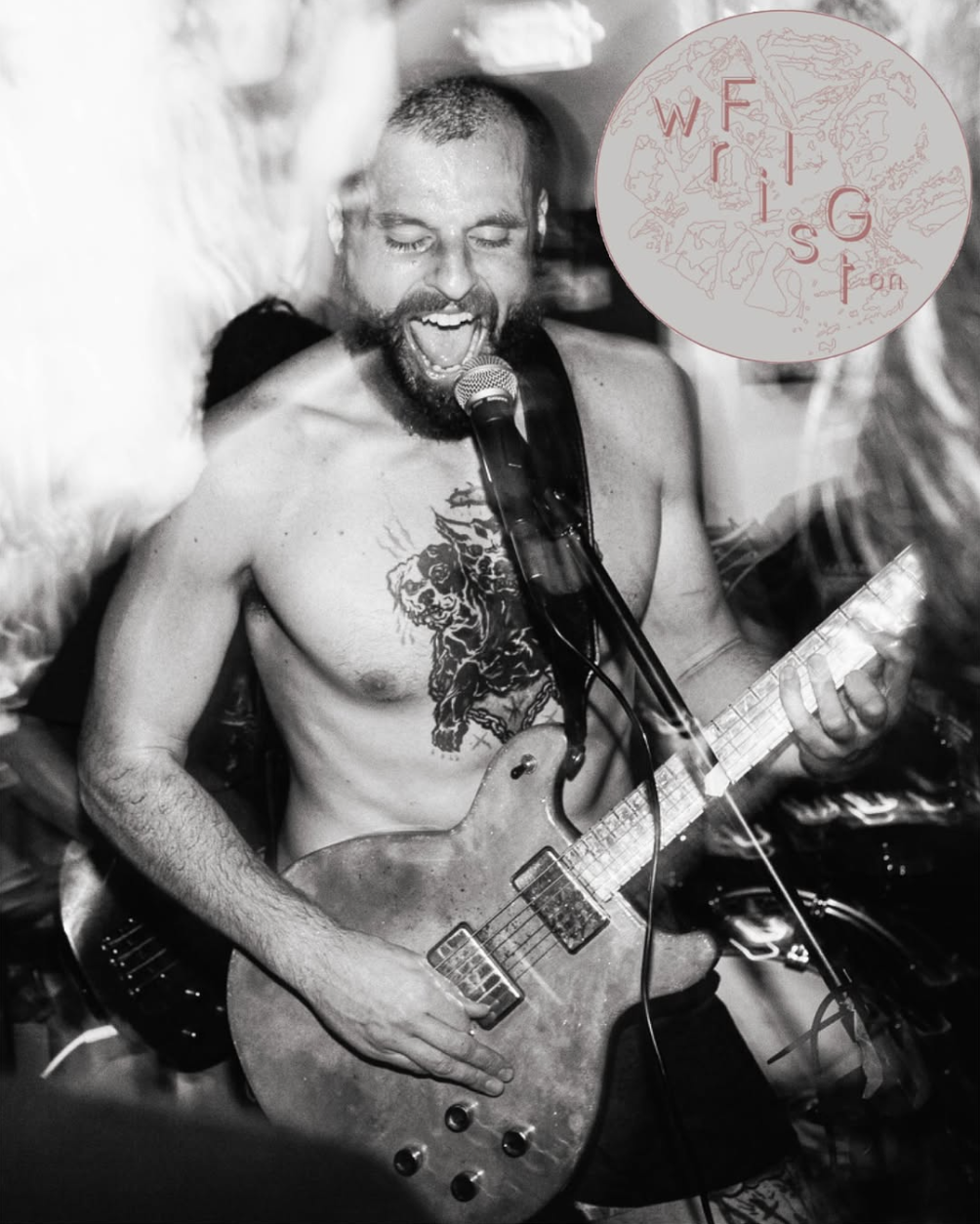
Peep yours truly in the turquoise flannel going buck-wild up front.

That song sets the scene with an angelic starry night guitar intro but soon pans down to Earth as we join lead singer Aidan Yoh who has just collapsed in their car. As the world falls apart around them, we hear our narrator at their lowest reflecting on all the events that have led to this point and all the irreversible hurt that has been caused along the way. The lies have caved in, and somehow Yoh is still self-aware enough to realize they don’t have the coping mechanisms to deal with the emotions that lay before them. Despite all this, they decide to face reality, clinging to the hope that “it’s not forever” before a violent instrumental erupts beneath them. From here, the lyrics sound as if we’re listening in on one half of a fight over the phone. Half phrases are shouted across a sparse instrumental. “You lied to me / I lied to you / So I don’t get your bullshit claims / What makes you so special / That makes me the only one to blame?” Now at a loss, the narrator circles back to one phrase; “What makes you so special?” Yoh belts the question repeatedly as the instrumental rises in intensity until the entire thing simmers over. Then it all fades out. 

And now Jail Socks pick up where they left off with Coming Down. Taking a decidedly less-tappy approach to their music, the group’s debut LP swaps the overtly emo sounds of their early work for a genre they’re simply calling “rock and roll.” 

The contrast between the song that opens the first Jail Socks EP and the song that opens the first Jail Socks album is stark. While “Jake Halpin” begins with an electrifying jolt of midwest guitar tapping, “Caving In” kicks off with a series of swaying guitar chords followed by a propulsive drum fill. It immediately sounds different than anything else the band has ever recorded, and that’s either good or bad, depending on who you ask.

Previously, my love for Jail Socks was rooted in how over-the-top emo the songs were. I got into the band from this clip, which sounds sloppy as fuck now, but captured a sort of sweaty DIY basement je ne sais quoi that the group absolutely nailed. I saw that clip, and I wanted to be there. I wanted to be shouting and screaming along. I wanted to be in it. Three years down the line, it shouldn’t surprise anyone that Jail Socks sound tighter than that clip, but what is surprising is how far their tastes have developed past midwest emo emulation. 

In fact, over the last few years, watching the band members individually explore (and fall in love) with acts like Metallica, Third Eye Blind, and Jimmy Eat World has been an amazing thing to watch unfold. It’s like the heavy music to shoegaze pipeline for emo bands. You can’t stay stuck on Mike Kinsella forever, and Jail Socks is proof there can be something honest, unique, and just as artistic on the other side. Watching the band members get into music outside of the emo sphere has been a pivot, but it’s also an immensely relatable horizon-broadening phase that every music fan goes through at least a few times throughout their life. It’s no surprise then that this brand of hook-heavy alt-rock bleeds through on nearly every song found on Coming Down, but we’ll get to that in a little. 

Part of this sonic change is due to the maturation that comes naturally with time, but is also thanks to a more democratic songwriting process. While all previous Jail Socks material was penned by guitarist and singer Aidan Yoh, Coming Down saw bassist Jake Thomas and drummer Colman O’Brien joining in on the creative process from the inception of these songs. What’s more, the band’s LP also sees Thomas tagging in for vocals on quite a few tracks, effectively making Jail Socks a “dual lead vocalist” band. The group detailed these changes in a loving multi-thousand-word profile over at Queen City Nerve, which is, as far as I’m concerned, the new Jail Socks Bible.

Photo by Nick Lewis

Photo by Nick Lewis

These creative and lineup changes aside, it’s still the same old Jail Socks I fell in love with back in 2018, just with a coat of fresh paint… but it took me a few listens to realize that. Lead single “Peace of Mind” is a standout track that did a lot to assuage my fears of the changing sounds. Releasing this as the first song off the album was not just a smart move, but the only move, in my opinion. The band deploys just enough emo riffage that the song expertly segues fans from the old style to the new. Lyrically, “Peace of Mind” is a hard-charging ripper that takes aim at toxic, manipulative people. It’s written in a faceless way that anyone can project their imagined foe onto the track with minimal effort and that interactivity is a powerful appeal. Add onto it some spitfire verses, a catchy singalong chorus, and just a touch of emo noodling, and you have an absolutely flawless lead single. 

The second single, “Sick Weather,” sees Yoh formally handing vocal duties over to Thomas for their mainstage debut. Yet another well-chosen single, “Sick Weather” has it all; handclaps, a socks-and-sandal-clad guitar solo, a series of multi-tracked “ooooh’s” in the chorus, and even a hard-hitting scream that comes right at the betrayed emotional climax. This track also dials up the “rock” sound while subtly turning down the “emo” slider at the same time. “Sick Weather” serves to further immerse the listener in the world of “New Jail Socks,” introducing the toolbox of sounds that the band will be playing with throughout the album.

Given Coming Down’s minimalistic one-month rollout, I supposed any extra singles would have been overkill, but at times it genuinely feels like any song off this record could have served as a single. “Spinning” feels like a snappy gen-z take on “Semi-Charmed Life,” “Point Pleasant” is an aching love song with a killer chorus, and “Losing Everything” retains the melancholic ‘in my feels’ sentiment of the emo genre while playing with a fun loud-quiet dynamic. In another bit of excellent sequencing, “No Ground” kicks Side B off with a fast-paced rager where cool phrases like “Leave me here / endlessly alone” throw directly to some old-school Jail Socks prickly guitar tapping. Simply put, there were no bad options here.

And with the length of a full LP at their disposal, the band finally has enough time to explore the lighter side of their sound. “Pale Blue Light” channels a version of lush, early-career Owen before vaulting up to a cathartic Goo Goo Dolls refrain in what is easily the band’s most heartfelt song. And while “Pale Blue Light” may be the band’s softest song, “More Than This” might be their quietest. Featuring just Yoh and an acoustic guitar, the song has a late-night pop-punk porch show vibe where emotions are laid bare for all to glom onto. The rug pull of a transition from this song into “Peace of Mind” is a masterful bit of sequencing on the band’s part. 

Photo by Nick Lewis

Photo by Nick Lewis

Individual songs aside, the bridge between the opening track “Caving In” and the closing track “Coming Down” is easy to connect. “Caving In” captures substance abuse and passivity as coping mechanisms. Midway through the song, as numbness becomes Yoh’s only escape, they admit over an instrumental break, “I think I’m finally caving in / Now I don’t even know who I am.” 

This disassociative sentiment rears its head once more on “Coming Down,” where Yoh sings, “Every time I see you around / It takes me back to a place / Where I didn’t know myself.” They forge ahead, touching on other subjects like uncertainty, old news, and the desire to go back in time. In one of the album’s most compelling sections, the instrumental builds as Yoh croons the album’s namesake, eventually pairing it down to almost nothing.

Can you feel it coming down?
Can you feel it?
Can you?

As the guitar, bass, and drums all rise, the band suddenly breaks into a soaring redemptive instrumental, setting the scene for Yoh to deliver the album’s final lines. 

​​And you cannot save what doesn’t exist
So you can’t move on with confidence

There it is. That’s what this record is all about, tied up in a nice little bow within the album’s final two minutes. In my estimation, these last two lines are endlessly interpretable; you can take them in within the context of this one song, the album-length journey that preceded them, or simply use these lyrics as a canvas on which to project your own experiences. 

Given the band’s previous focus on nostalgia and aging, I read this as a send-off to youth, past relationships, and old selves. It’s also a recognition that those feelings, events, and people may never come back. You can fight kicking and screaming, but you’ll never be able to retain those memories forever. Not only that, they may have never even existed in the first place. 

With Coming Down, Jail Socks find themselves on the other side of youth, looking back with reverence but also realism. It’s the kind of thing that you can only accurately write about with enough distance and perspective. It’s hard to tell when you’re in it, but years removed from all those events, you can see that phase of your life for what it really was. Jail Socks have come down from their youth, and they’re finally ready to move on to something better… or at least something different. This growth is signaled not only by the band’s change in sound, but also by nearly every lyric sprinkled throughout the album. The concept of change is woven throughout Jail Socks’ entire discography; it’s just taking on a different tone here than previous work. Most importantly, it’s a shift in tone that reflects this band’s truth and accurately captures their development over the past three years. The late-night smokes and overwrought feelings of their previous work have all led to this moment, and by the sound of it, Jail Socks are ready to seize it.

Johnny Football Hero – Complacency | EP Review

a3737407727_10.jpg

If you’d allow me to indulge in some time travel for a moment, I’d like to take you back to 2010. We were two years into the Obama administration, and the phrase “Tik Tok” evoked Ke$ha rather than a social media platform. I was sixteen, a senior in high school, and just starting my first job. Every day I consumed music with a voracious hunger, but it always came back to one band for me… Dance Gavin Dance.

Their music may have been a little cringy, over-the-top, and occasionally too-noodly, but their first three albums set my teenage brain on fire with endorphins. It was everything I loved about groups like Underoath and Chiodos cranked up to 11 with a Ween-esque commitment to a unique brand of Gonzo-hardcore. They were going to scream, “I am a million fucking bucks / I am a thousand fucking fucks,” and they were going to say it with their whole chest. They meant that shit. 

In fact, I loved Dance Gavin Dance so much that I’d spend hours going on deep, early-aughts internet dives in search of anything that sounded remotely like them. You pick a number, and I can name a band that only a handful of people would even remember in 2021. We’re Not Friends Anymore? You got it. Jovian? You betcha. Artifex Pereo? I was there. It’s funny to look back at this crop of bands with any sort of reverence in 2021, if only because the bands hardly have any reverence themselves. I’m talking about those groups who somehow still manage to net 1,000 monthly listeners on Spotify despite the fact that they only have cover art as their profile picture… That is if they’re even on streaming services at all. I’m talking about the Rosaline’s and the Arms Like Yours of the world. These are groups that were taking a swing at fame because, honestly, there was a good chance they could at least land a record deal by just looking the part. These are the bands that time has forgotten, but don’t get me wrong; they still mean something to me even a decade removed from being the center of my musical world. 

I even went back to older acts like Circa Survive, The Fall of Troy, and Glassjaw in my never-ending search for screamo. These bands were arguably doing more “important” work in post-hardcore the same way that Deftones makes “important” nu-metal in comparison to, say, Limp Bizkit. But at the time, I needed that goofiness, and nothing hit quite like Dance Gavin Dance. Well, in my decade-plus journey of searching for the next DGD, I’m proud to say I’ve finally found it in Johnny Football Hero.

First off, their band name could have fit in perfectly alongside any act off Tragic Hero Records or InVogue back in 2010. These guys could have easily hopped on a tour opening for Akissforjersey and Lower Definition, and I wouldn’t have batted an eye. Not only that, I probably would have bought a ticket.

I mean this in the nicest way possible, but when I listen to Complacency, I am transported straight back to 2010. I can practically see myself one decade ago, swigging on a Monster Energy Drink in between rounds of Halo: Reach. I feel like this is an EP I would have ripped off of Mediafire or some obscure Bandcamp page while chasing the dragon of post-hardcore. 

The release begins with a static-filtered guitar that eventually opens up to a propulsive post-hardcore riff. What really seals the deal is when guitarist/vocalist James McGill saunters into frame and lets out their first soulful bellow about ten seconds into the song. The vocalizations careen over the track, perched nicely atop a fuzzy chord progression and crashing cymbals. Near the end of the first verse, the music drops out into some emo tapping as the band articulates the struggle that accompanies the daunting combination of numbness and neurodivergency. 

Emotions hit a peak midway through the song as McGill reaches their upper register while stretching the word “deraillll’ into a four-second affair. Then things bottom out completely when the band hits the riff one last time before dropping out into a slow-paced post-rock gallop. As this subtle instrumental twinkles, they leave enough space for a Bojack Horseman clip to steal the spotlight. In this clip, Bojack’s half-sister Hollyhock (played by Aparna Nancherla) talks about her struggle with her inner monologue. She says, “But sometimes I have this tiny voice in the back of my head that goes like, ‘Hey, everyone hates you, and they’re not wrong to feel that way.’” to which Bojack (Will Arnett) flatly replies, “I know what you mean.” Hollyhock then elaborates in a worried tone, “That voice... the one that tells you you're worthless and stupid and ugly? It goes away, right? It's just like, a dumb teenage girl thing, but then it goes away?” After pausing for a beat, Bojack simply replies, “Yeah.” Then the instrumental kicks back in.

Man.

I know at a certain point, using external material like this in music can feel like cheating, but it’s hard to think of the last time I heard a sample utilized this well. As the instrumental builds back up, everything abruptly cuts out, and all we can hear is the shaking of a single tambourine. Suddenly the track explodes back to life over some Donkey Kong-style hand-drumming that’s borderline Salsa-esque. Then the band hits us with the chorus one last time. And this was only the first song on a 26 minute EP. 

From here, the band makes the most of cathartic group chants and a classic rock guitar solo on “41.” They deploy a searing slow-burn “Complacency, Pt. 1,” a razor-sharp shout-along chorus on “Sister Hellen,” and even some mathy midwest guitar tapping on “Aurora.” In the context of the modern “DIY emo scene,” Aurora sounds exactly like what certain bands are trying to achieve; earnest lyrics and hyper-technical instrumentation that all lead up to a stunning shoegaze riff. This is what groups like Clearbody and Dad Bod have been circling around; universally relatable emotions surrounded on either side by a sludgy tone that perfectly captures the mood without using any words. 

While Complacency opens beautifully and the middle fleshes out an excellent range of sounds, what pushes this EP over the edge for me comes in the form of its six-minute closer “Complacency, Pt. 2.” The song opens up quietly much like its preceding counterpart; a single delicately plucked reverb-laden guitar accompanies McGill’s repetition that things are “much clearer.” Then we hear a guitar strum that is caked in so much static it’s almost unrecognizable as an instrument. After a short introduction, McGill settles into their default yelp alongside a steady kick drum which slowly increases in intensity as the seconds tick by. A minute and a half in, things erupt into a barrage of drum fills and the band rolls into their final charge. One verse and 30 seconds later, things reach a boil as Mcgill hits a soaring Kurt Travis vocalization. At the same time, drummer Misha Datskovsky screams a borderline-rap verse that sits somewhere between Jon Mess’ contributions on “Heat Seeking Ghost of Sex” and “Swan Soup.”

These dueling vocalizations last a little over 20-seconds, but they are better than anything Dance Gavin Dance has done over the last five years. As someone who’s still a diehard Dance Gavin Dance fan, that simultaneously pains me to say but is also some of the highest praise I can give Johnny Football Hero. 

This vocal duel ends in a guitar solo (because, of course) and throws to another group chant that offers a cathartic ray of optimism delivered in an instantly catchy cadence. 

I'm not okay but I'm just fine
I think I'll get there with some time
If I'm complacent how have I moved on through
Cause I'd rather die than put up with your abuse

At the tail end of this chant, you hear the sounds of cheers, laughter, and in-studio tambourine shaking. It’s a brief moment of celebration in an otherwise confessional and emotionally draining release. The EP could have ended there, and I would have been satisfied, but instead, we hear one more verse before things quiet to a hush. Finally, with one minute and 22 seconds left, a single snare hit calls things to order as the group re-forms into one last seismic shoegaze riff for a final push. 

As the EP ends, I’m transported back to the modern-day. I’m no longer in high school, my iPhone 4 transforms into an iPhone 12 Mini, and I am once again an adult with responsibilities. It’s a brutal comedown, but worth it for the half-hour portal back to the past. 

Not only is Complacency a great EP from a young, upcoming band, but it’s also a powerful bout of nostalgia that allows me to revisit my past self. It’s evidence that maybe not everything I listened to in high school was a total waste of time; maybe some of it has more influence than I realize. Maybe it’s proof that these ideas, sounds, and approaches to music transcend time or scene. Perhaps it even speaks to some more profound truth that iterates on unshakable feelings we all experience as humans. Maybe it just shreds. 

Ultimately, Johnny Football Hero is making something more earnest than Dance Gavin Dance. Complacency covers more vital topics and deeper conversations than DGD ever did, but maybe that better reflects where we are as a society in 2021. I guess that’s for the next generation of fans to look back on and decide. Regardless of this EP’s legacy or place in the soulful post-hardcore emo music spectrum, Johnny Football Hero has crafted something equal parts innovative and nostalgic. This release may only be nostalgic for a certain type of guy in his late-20s, but I am here to confirm they’ve landed with at least one member of this audience. The band’s lyrics combined with musical moments that take me back a decade in time result in a one-of-a-kind listening experience unlike any other this year or in 2010.

Liance – This Painting Doesn’t Dry | Album Review

a1433669657_10.jpg

How do you define a life? How will I be remembered? Was I a good person? Many people wait until they’re old or facing their own mortality to grapple with these sorts of existential questions. These are the types of cosmic worries that drive people to pop out kids, write autobiographies, or donate massive amounts of money to have their name emblazoned on the wing of some building—all in the name of ensuring a legacy. Life is hard enough to navigate on its own, but trying to think of life in your absence is even harder to conceive. 

But, in a way, life is just the sum of its parts. It’s not all courageous decisions or life-changing adventures; there are millions of little microscopic moments that are impossible to articulate. Moments of laughter shared between friends. Days of sadness and consolation. Hours of nervousness and worry. Outbursts of pain and violence. Those moments may be less glamorous, but they are what make up a majority of our lives. They may not all be beautiful or noteworthy, but they are honest, and they are plentiful. This Painting Doesn’t Dry, the sophomore album from Liance, is a 44-minute document of these types of moments, both big and small, that make up a life. 

The entity known as Liance can be described in many different ways. The band’s Spotify page self-describes Liance as the “narrative songwriting project of Hong-Kong-Michigan-Brighton transplant James Li.” Meanwhile, I saw a fan online describe Li’s approach to music as “diaristic indie folk-rock electronic chamber pop.” While grounded in physical spaces and the arbitrary boundaries of musical genres, these examples alone prove just how eclectic a Liance release can be. For as long as this project has existed, Li has refused to conform to any single category or sound. Li only knows how to make music that’s true to his experience, and that leads to a collection of sounds, ideas, and thoughts that feel as multi-faceted as any one individual is. Perhaps more than any other record I’ve heard this year, This Painting Doesn’t Dry feels like a collection of stories that flesh out an existence, personality, and viewpoint all at once. 

Opening track “Ellie Takes a Bath” perfectly sets the tone for the album, welcoming the listener into the release with a mesmerizing noise loop that buoys throughout the track. Soon joined by a stuttering drumline and eventually Li himself, the song fleshes out a picture of two people sticking together through sickness and finding connection in shared interests and experiences. The song references, amongst other things, The Glow, Pt. 2 and Ezra Pound, just so the listener knows what they’re getting into upfront.

The following track, “Too Beautiful To Destroy,” acts as a mood-based level-set for the record, letting the listener in on a key inciting incident that frames the remainder of the LP. The song begins with a lush piano introduction which is quickly subsumed by a Flume-esque electronic warble that commands immediate attention. In between stark personal verses, the song’s chorus repeats, “It all adds up / Even small things add up in time / It all adds up” until the phrase saturates every fold of your brain. This all leads to a piano-tracked bridge where Li flashes forward in time, detailing the suicide of a close friend. This traumatic loss is directly contrasted with beautifully poetic moments shared amongst friends. 

These types of losses are the kind that hang with you forever. The pain of losing a friend is something that never entirely goes away; it only numbs over time. Sometimes all you can do to actively combat that sadness is to find comfort in a friend who knows what you’re going through. Though he doesn’t spell it out for the listener, the adjacency of these two opposing states creates an indispensable dichotomy. Placing such a striking tragedy next to moments of contentedness establishes how important each of these feelings are in their own right. Li’s choice to surround such a formative low with hopeful rays of human connection acts as a beautiful reminder of the good that can feel so imbalanced in the wake of loss. These moments are emotional anchors that keep us grounded. 

Outside of the personal experiences depicted in the lyrics, there is also a downright stunning range of textures and musical flavors to be found here. Mid-album “Catalonia” is a beautiful instrumental pit-stop that sits somewhere between the tropical math rock of Standards and the high-fantasy jazz guitar of Shalfi. Meanwhile, the instrumental on “Used To The Signs” sounds like pure National worship, which sits amongst other tracks that lean heavier into eclectic Sufjan Stevens and Destroyer-inspired instrumentation.  

Throughout Painting, songs shift focus from interpersonal to global, sometimes at a moment’s notice. Scenes of livestreamed funerals and tear-gas-laced protests punctuate flashes of beach trips and other “quiet victories” that make the heavy events feel a little less heavy. This is a consistent theme throughout the record, just as it is life. As things outside seem to spiral further and further out of our control, finding small, somber moments of connection is sometimes the only thing we have to hold onto. Whether political, environmental, or systemic, the world is comprised of these things can that feel too monumental to tackle on our own. Sometimes finding solace in the things we can control is all we have. Whether it’s a partner, friend, or parent, finding someone that you can lean on is necessary for survival in 2021.  Sometimes that takes the form of empathizing and wallowing in sadness together, but other times it’s escaping into a moment of happiness where all of those lumbering specters feel far away.

These feelings come to a head on “Untitled 92 at the NPG,” where Li calmly sings, “Blushing through post extinction events / Elated by our own holy insignificance.” These existential sentiments lead directly into “The Decameron,” where Li interpolates an English expression as he explains that he “[doesn’t] want to live through history no more.” As these thoughts spiral, the perspective shifts from grounded to celestial in one of the album’s most poetic verses. 

When I emerged I was covered by the earth
The parking deck was full of rotting flowers
There is a river - shimmer - threading illness back to the past
Seven planets and three stars

The record’s penultimate title track is a 90-second excursion that acts as a thesis statement for the entire piece. The song is so quiet, subtle, and fast that it almost passes by unnoticed. It’s not until further listens that the words really land…. But I’ll get to that in a minute. “This Painting Doesn’t Dry” is followed by “TAMSY,” which is undoubtedly Li’s magnum opus. This epic 12-minute closer is a multi-phase journey that winds from pedal steel ruminations to cosmic spoken-word poetry. The song evokes such indie-rock landmarks as Sufjan Stevens’ “Impossible Soul” and Car Seat Headrest’s “Beach Life-In-Death,” great company to be in. 

On this final song, Li offers up a few more slice-of-life portraits, eventually working up to a series of affirmations over a soaring instrumental that feels about as close to redemption as Li will ever allow himself. The album wraps up with a lyrical callback accompanied by the same noise loop that opens the record, leading to a sense of recursion or repetition. 

As one takes in this oceanic statement of personal truth and poetic observations, everything begins to come into focus. These events all have meaning, even when they have no meaning. As these stories bounce around the listener’s head, the album’s namesake suddenly clicks into place. 

Aside from being a beautifully poetic sentiment, the phrase “This Painting Doesn’t Dry” is a realization that life isn’t over until it’s over. As Li flashes from one small vignette to another, the message becomes clear; these moments will keep happening. Your life is never finished. It’s not until you pass on that your “painting” is finalized. Until then, you will keep adding on layers, colors, and shapes, building out a beautiful landscape of memories, events, and people. Things may get covered up, but they’re always there. Losses and feelings may become distorted with time, but their impact remains. Your life is your canvas, but it’s impossible to know how it will turn out until it’s all over, and even then, you don’t get to appreciate it fully. 

So once again, I ask, how do you define a life? Defining a life is hard, and defining your own is inherently impossible. It’s difficult enough for us to understand how we are perceived day-to-day, let alone how people will remember us once we’re gone. In fact, we have no say in how others will remember us–that’s hard, but it’s also a relief in some ways. In the meantime, all we can do is continue to forge ahead and live life the best way we know how. Existence can be built through these connections and experiences, but we have no say in our legacy. All we can do is hope that others catch enough glimpses of our true selves that once our painting is finalized, it feels authentic to who we were.