Stars Hollow – I Want to Live My Life | Album Review

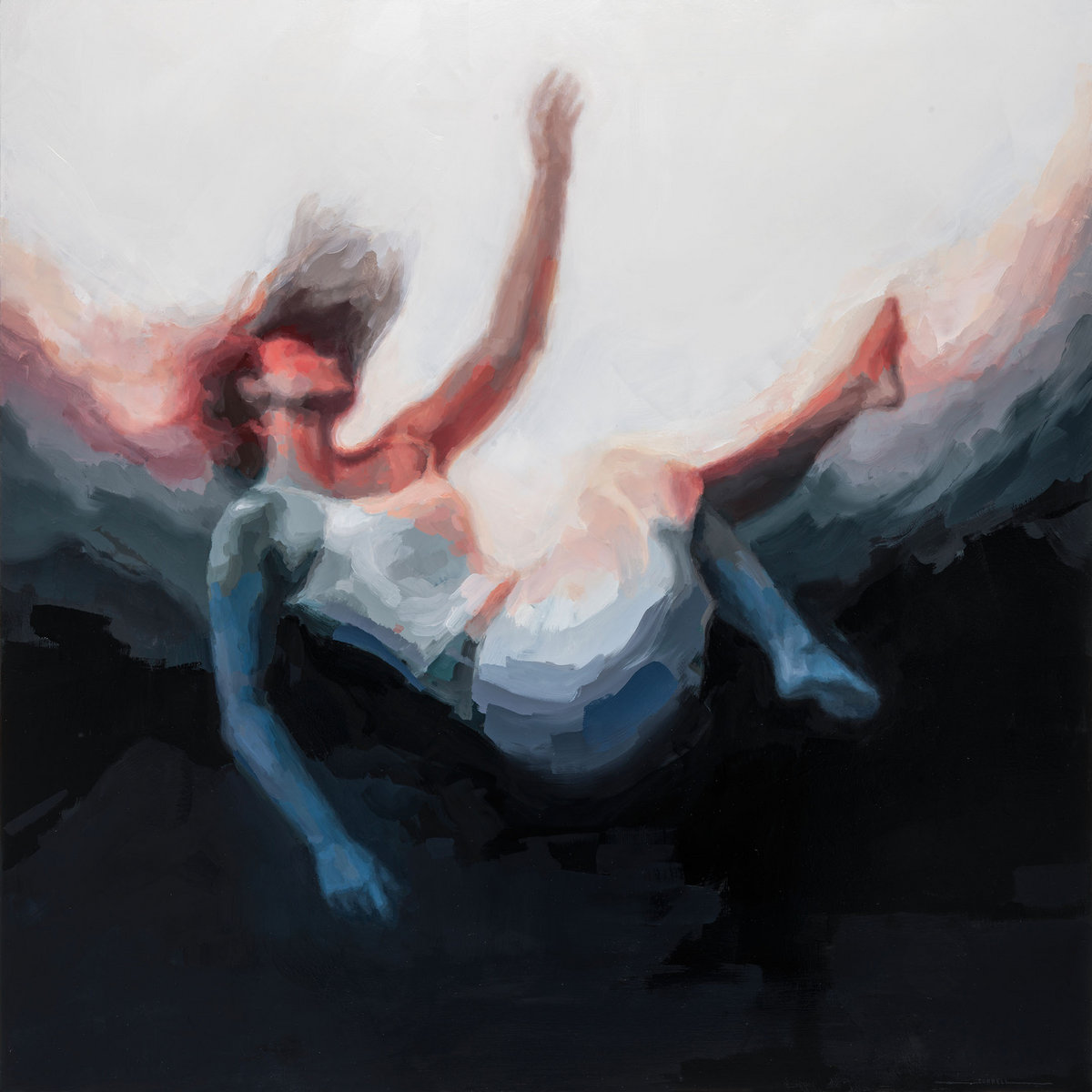
stars hollow - i want to live my life cover - hi-res

The message behind Stars Hollow’s breakthrough EP Happy Again was always sitting right there staring us in the face. “It’s not that you won’t be happy again, you just won’t be the same as you were before.” A poignant (and very emo) sentiment lying in plain sight for all to see. The words used to build this statement are scattered throughout the lyrics on Happy Again (and even contained within the tracklist) but don’t reveal themselves in earnest until the final song, where lead singer Tyler Stodghill cathartically belts them all out in sequence. This lyrical throughline acts as the conceptual cherry on top of an already fantastic midwest emo release and signaled early on that Stars Hollow were doing something more than your dime-a-dozen emo band.

This sentiment lying at the center of Happy Again came straight from Stodghill himself reading about grief while simultaneously processing his own. This revelation that comes at the end of the EP acts as a stand-in for the quarter-life realization that so many of us have following the wreckless, immortal years spent as a late-teenage/early-twenty-something. Whether it’s heartbreak, death, or something in between, eventually everyone arrives at their own understanding of the irreversible nature of life. Some actions can’t be undone, some things can’t be un-lost, and some relationships can’t be salvaged. Happy Again just happened to land extra hard for me because it arrived at a time in my life that I was experiencing this type of deep-cutting and irreversible loss for the first time. 

Happy Again is a whip-smart EP with a poetic throughline that manages to get its message across in less than 15-minutes. It’s a feat of the emo genre and topping it was going to be hard. The band followed this EP up with the one-off “Tadpole” in 2019 and rode waves of DIY success to nationwide tours with fellow fifth-wavers like Origami Angel and Niiice. Now, more than two years since their last song and six years into their career as a band, the group has unleashed their debut LP I Want to Live My Life, and it is jam-packed with emo riffage, poetic lyricism, and a conceptual throughline that rivals their groundbreaking EP. 

0023938348_10.jpg

Much like Happy Again, the concept at the center of I Want to Live My Life is sitting right there staring you in the face. This time, however, the words are only half the story. While the band hinted that the album had a concept like their prior releases, it’s clear that they weren’t going to tip their hand quite as easily this time. 

As I studied the tracklist for clues, I couldn’t help but notice how many of the song titles seemed related. “Through the Windshield.” and “Out the Sunroof.” Two references to cars. “Stuck to You.” and “Beside You.” Two songs referring to another person. There are also similarities in how the songs are stylized, with periods after almost every song title. Even the mid-album “...” is a punctuation-based song title much like “,” off Happy Again…  but what does it all mean?

When the listener hits play on I Want To Live My Life, they’re met with a sort of music box-like melody. Soon after this maudlin instrumental sets the tone, Stodghill enters with a delicate croon bemoaning, 

It’s like something’s in my closet
Laughing at me
I’ll learn to love it
Without it
I don’t think I could sleep
I wish that my comforts
were comforting to me
I want to live my life
but I’ll be here waiting…

That’s a lot to unpack, but before you can think twice about it, you’re swept up in a whirlwind of tappy emo instrumentation and screamed vocals mere seconds later. That effect is very much intentional because the preceding four songs hardly give you a second to breathe. There’s bouncy riffage and gut-wrenching screams on “Stuck to You.” There are heart-wrenching realizations “Until I Bleed Out.,” and self-destructive sentiments on “Out the Sunroof.

Lead single “With Weight.” possesses the most fun, energetic, and dynamic instrumental on the record paired with some of the most remorseful lyrics the band has ever penned. This makes the party-hat-adorned music video feel even more apt as we watch the trio run rampant in a retro skating rink sharing birthday cake, sneaking gulps from the slushie machine, and racking up points on arcade games. These lighthearted childlike antics contrast with the group’s sweat-covered, emotional performance under the rink’s glittering disco ball. As the instrumental rises and falls around Stodghill’s wails, these two opposing feelings combine to evoke warm childhood memories of birthday parties as well as the cold, modern-day realities of adulthood. The song acts as a reminder of a time when fiscal responsibilities and emotional conflict seemed far off. It’s also a call-to-arms for the listener to suspend their disbelief, even just for a minute or two, and recapture this innocent feeling despite the looming dread of a never-ending pile of responsibilities. 

The record’s second half begins with the aforementioned “...” featuring a gentle guitar line that allows the lyrics to set a scene:

I took a step back
When I saw the window cracked
I pulled it shut
And I went back to my room where
I think something’s in my closet
Laughing at me
It’s hard to love
but without it
I won’t fall asleep
I hope someday my comforts
Will be comforting
I’m not sure if life
Is meant to be waiting…

Here, the imagery of an open window sits alongside the familiar scene established in the record’s opening track. As the guitar plays out the same music box melody, we realize the meaning in some of the phrases has shifted. Then, similar to the intro track, the band sweeps in with a bounding instrumental that leaves little time to reflect on the lyrics or the exact changes from their first iteration.

Throughout the next three tracks, the band winds their way from everything as physical as blood-soaked car crashes to things as existential and haunting as cold sweat nightmares. This feels like a good time to point out that each of these songs is masterfully crafted. Whether it’s Stodghill’s emo tapping, Gavin Brown’s buoyant basslines and phenomenal low screams, or Andrew Ferren’s precise drumming, the trio never falters once in their respective contributions. 

These songs all wind their way to the record’s inevitable conclusion on “But Better.” By the time this closing track rolls around, only 20 minutes have passed. On paper, that feels like hardly feels like any time at all, but then you look back and realize the preceding 20 minutes were comprised of life-threatening accidents and existence-altering revelations. Hardly emotionally recharging events. The record’s final song opens with a delicately plucked guitar as Stodghill sets the scene once more. 

I let out a laugh
When I saw the window cracked
I pried it open
But you pulled me back inside
Said “Life’s not kind”
I want to try

These lines depict the album’s cover, revealing the full context of this scenario we’ve been watching unfold throughout the record. After a beat, Stodghill continues with a verse that mirrors the opening track’s lyrics:

There’s something in my closet
Laughing at me
I’ll never love it
Without it
I could fall asleep

Now setting up a clear inverse parallel, Stodghill works his way up to the album’s namesake, singing,

I want to live my life
But better
I’ll face everything
I want to live my life
But better...
I’m tired of waiting.

After this final freeing cry, the group strikes one more resonant chord and lets it ring out for as long as their instruments will allow. As the guitar and bass fade, the same music box that led us into the release now shepherds us off into silence. This twinkling childlike instrumental provides a nice bookend to the album despite how different the two sentiments sitting on either end of the tracklist are. Sure, they may look similar, but the meanings behind these words could not be more different.


What’s so different about wanting to live your life and wanting to live your life but better? The biggest difference is, in one, you’re merely surviving, but in the other, you are improving. In one, you’re living life for yourself, but in the other, you recognize there’s more than that. It’s one thing to live your life, but it’s another to want to live it better. Striving for improvement is a form of self-actualization, and that’s a far cry from remaining stagnant. 

Sometimes just wanting to live your life in the first place is already an uphill battle. Once you’ve reached the point of wanting to live your life, you are faced with a decision: do you maintain or improve? It’s like Maslow’s Hierarchy of Needs; you have to work your way up the ladder in order to become the most fulfilled version of yourself. 

Wanting to maintain your life is fine; after all, why risk losing something you’ve fought so hard for? But wanting to live your life better is a mission. It’s admirable. It’s never-ending. There’s always something to be working toward and always something that you could be doing better. 

Wanting to live your life but better is hopeful. It’s the realization that you might be making it farther in life than you thought when you were seventeen. It’s the highest form of self-preservation. This is not just the mere animalistic instinct to stay alive, but a uniquely human desire to improve. 

Over the course of I Want To Live My Life, we hear one person’s journey between these two states. On the first song of the record, Stodghill hesitantly sings, “I want to live my life / But I’ll be here waiting.” In the final song, we hear the same person sing, “I want to live my life, but better. / I’m tired of waiting” with full conviction. What makes up the journey between those two points is everything that you hear in between. It’s the car crashes, the chipped teeth, and the concrete. It’s jealousy, regret, and doubt. It’s learning how to navigate life through a series of errors that Stodghill somehow manages to twist into lessons. The end result of all this suffering is a realization. At the end of all this is a reason to live. 

Hot Mulligan – Pop Shuvit (Hall Of Meat, Duh) | Single Review

IWROTY.jpg

Hot Mulligan have always been a delicious contradiction. Their music is equal parts catchy singalong pop-punk and hyper-technical emo. Their song titles are goofy in-jokes or intentionally obscure pop culture references, yet the lyrics contained within are as earnest as the scribbles in your pre-teen diary. The band appeals equally to the DIY twitter crowd as they do indieheads and prestigious publications (depending on how you view a 6.7). Despite the constant shit-posting, the Urban Dictionary-like name, and the absurd song titles, Hot Mulligan have emerged as a prominent act in the scene for one very simple reason: the songs are undeniable. The band can be silly and over-the-top because they know the music is that good.

While Hot Mulligan may have started with burp jokes and bitter sentiments, the message underneath has always come from the same heartfelt place. Over time, their sound has evolved from finely-crafted pop-punk to explosive, boundary-breaking emo in the form of one of the best records of 2020. Even though the group hasn’t been able to tour on you’ll be fine, that doesn’t mean they’ve spent the last year slacking off. Guitarist Chris Freeman has been dropping a steady stream of solo tracks; meanwhile, the band has sustained itself on drop after drop of absolutely killer merch. And now, on 4/20, the holiest of days for weed-hazed emo fans, Hot Mulligan have unveiled their next release, i won't reach out to you, along with a steadfast lead single to soundtrack all your cotton-mouthed antics.

Bearing an expectedly goofy title, “Pop Shuvit (Hall Of Meat, Duh)” begins with a mid-tempo electronic beat that immediately evokes some of the band’s previous hits like “How Do You Know It's Not Armadillo Shells?” and “SPS.” Before too long, the full band emerges, guitar, drums, and bass all synching up to the beat, accompanied by a subtle but radiant synth. 

This track is an interesting development of the group’s sound, leaning further into the “pop” side of the pop-punk spectrum. The instrumental is snappy, the chorus is earwormy, and the verses weave together pity-filled self-flagellations that sound as if they could appear underneath any one of your emo friend’s over-sharing finsta posts.

My only ding against the track is how straightforward its structure is. The verse, chorus, verse deployed here regrettably doesn’t leave much room for range in the vocal deliveries or instrumentation. Whether tracks on you’ll be fine were exploding to life or burrowing deep into their own sadness, they always felt like they had somewhere to go. By contrast, “Pop Shuvit” feels like a slightly toned-down version of things the band has done before. There are no high-pitched yelps, zero hardcore breakdowns, and not a trace of jittery instrumentation. 

Truthfully, I can’t be mad about the prospect of new Hot Mulligan songs because the band has never missed once in their seven-year history. “Pop Shuvit” sounds like it could have fit in just fine on 2018’s Pilot, which will either be a disappointing or exciting prospect depending on who you ask. For me, the frenetic, spontaneous nature of you’ll be fine was the best version of the band, but who among us has not grown less impulsive over the past year? Either way, I’m excited to scream along with “Pop Shuvit” as soon as it’s safe to do so, and I can’t wait to hear i won't reach out to you when it drops on May 28th.

Lilac Queen – Things Are Different Now | EP Review

a0516870641_10.jpg

Things are changing. Always. When you’re young, that prospect is exciting, if not a little hard to wrap your mind around. If you’re not careful, the constant nature of change can gradually shift from thrilling to terrifying as you get older. In life, you have two options; you can either lean into change and make the most of it, or you can give in and let change overwhelm you. No matter which path you choose, you must first process through the very nature of change itself, and that’s precisely what Lilac Queen is doing on Things are Different Now

The two-song EP from the Massachusetts-based No Sleep Signees begins with the jangle of a solemn grungy guitar. Shortly after these mood-setting strums, a single snare hit signals the rest of the band’s entrance. Suddenly the guitar, bass, drums, and a whirl of distortion all congeal into a swaying shoegaze riff reminiscent of Pity Sex. As the verses work through sentiments of shame and remorse, the chorus finds lead singer Lily St. Germain openly questioning their actions, singing, “and I wonder if I’ll get into heaven without digging holes under the fences.” They continue, eventually reaching something resembling a resolution, “and I wish I knew what I did to deserve this / it looks like I’m taking my chances.” As the final words of the third chorus ring out, a sear of distortion revives the band for one last push, the musical embodiment of telling yourself ‘you’re almost there.’

Shortly after this explosive final riffage, the song eventually fades, making way for a swirling ambient piece that flows seamlessly into the second track. Much like the first song, this ambient stretch is similarly interrupted with a series of snare hits followed by an equally hard-hitting riff. Here, guitarist Dug Demars takes up vocal duties in a disaffected Gleemer-esque manner over the instrumental. Eventually, both vocalists team up for the chorus, which also bears the release’s namesake, simultaneously singing and screaming, “Things are different now, there’s no way to go back.” 

The sentiments captured in this song’s chorus are the exact type of reckoning with change that everyone must face at some point in their lives. Whether it’s the loss of a loved one, the heartbreak of a decaying relationship, or just the constantly changing nature of life, sometimes it can feel hard to keep up. The release ends with a high-frequency guitar solo accompanied by crashing cymbals and rattling bass, all of which gradually mellow out into a nice instrumental landing strip that leaves the listener just enough time to meditate before the song fades into silence.

The prevailing sentiment throughout Things Are Different Now is sitting right there in the title. On this release, the band finds acceptance of change through their own resilience. No matter how painful or unexpected change may be, recognizing that it exists in the first place is a vital part of the process. Things Are Different Now is a 7-minute document of a young band coming to terms with that fact.

Oldsoul - High on Yourself | Single Review

oldsoul high on yourself.png

The best kinds of songs are the ones that go somewhere, and “High on Yourself,” the newest single from Oldsoul, is a song that takes the listener on a journey in just four short minutes. In listening to the band’s latest track on a loop, I was struck by how tonally different the song’s beginning sounds from its end. It’s like two separate pieces of music with completely different energies, yet if you follow the song’s emotional logic as it unfolds, that path makes all the sense in the world.  

“High on Yourself” is the story of a love that isn’t working. It begins with a slow drum pattern and a synth worthy of a Cyndi Lauper song. As the drums roll on, lead singer Jess Hall soon sways into the frame with self-hating lyrics depicting an imbalanced relationship in decay. As she lays out her needs and anxieties, she tries to see things from her partner’s perspective, gradually working her way up to a realization. About a minute into the track, she belts, “Our best times together are when you’re self-assured.” Two words into her next thought, the band fully kicks in; drums, bass, and guitar all swinging together in rhythm, forming a hearty indie rock riff. 

The synth swells, returning to full-power once more. The band responds with a jangly dance passage before dropping out for a breather. As Hall re-enters the spotlight, she finds herself trapped in the past, singing the song’s most nostalgic and sentimental line, “When I was young I was always with good things / I can’t believe our love isn’t working.” She quickly switches from denial to concessions, pleading, “I don’t even need to take it in / I don’t need to have a voice anymore.”

The group belts one more chorus before it feels like they’ve finally cast the shackles off. They throw to a shreddy guitar solo, the synth radiates, the drums pick up intensity, and Hall’s voice shakes as she reaches a passionate high note. After this outpouring, the group drops back down to a dancy indie rock clip before reaching a snappy send-off that’s as close to closure as a relationship like this will ever allow.

Niiice. Kiss 2020 Goodbye with Explosive New Single "$20 Mints"

144011324_3642701979181928_3110004023287481517_o.jpg

This one took me by surprise. Minnesota rockers Niiice. are well known for their hard-hitting Midwest emo tunes and always-entertaining internet presence (Twitter account #3 still going strong!), but what they deliver on their new single “$20 Mints” is a refreshing new tone for the group. Don’t let the compact package fool you; Roddie, Sage, and Abe make a hell of a statement in just one minute and twenty-four seconds.

The tune kicks off with overlaid guitar feedback and a wonderful sample of Michael Scott at his financial rock bottom before it quickly breaks into form with crunchy strings anchored by a tom-heavy drum beat. This dark and full-bodied sound fits perfectly with the lead vocals, which soar over the heavy but restrained instrumentals. Before too long, the sound starts building in volume and intensity, then explodes into a ferocious chorus featuring some phenomenal screams from Roddie. As quickly as the song gets going, its climax comes quickly and transitions directly into a swift ending. “$20 Minds” is a tune with no fat on its bones; it’s a great show of a band committing, throwing themselves at a track, and burning through it.

Despite its unexpected style, “$20 Mints” isn’t a brand-new song, as evidenced by the live recordings of it that date back as far as summer 2018. The song’s namesake comes from a marijuana-rich tour through Chicago with fellow Minnesotans Harper’s Jar, who put out a fantastic single “Ode to Space Lady” earlier this year. The fact that “$20 Mints” has been rattling around in the band’s toolkit for a while suggests that this may not be a complete shift in direction for Niiice., although it’s a welcome addition to their impressive output as of late. Only a few months off the heels of their LP, Internet Friends, “$20 Mints” contributes a slow and heavy sound to Niiice.’s catalog that I’d definitely encourage everyone to check out. The band keeps their edge while delivering a perfect slow-burn that blows up into one of the best barnburners of the year so far. When live shows return, this will be a song to go absolutely nuts to, and I for one, can’t wait.


Jack Hansen-Reed is an avid music fan from Omaha, Nebraska with a passion for all things DIY. In his free time he enjoys sticking it to the man, cheering on the Cubbies, and drumming in indie-americana act Bearwithus. Send him any music recommendations on Twitter at @jhansenreed.