A Bunch of Emo Nerds Talk About “Emo Revival” by Andrew Sacher
/
CLASH Books
I never dog-ear books. I think people who fold a crease in a page to mark their progress are perverse. Maybe I’m just a nerd, but it feels like I’m defacing something that doesn’t belong to me. Don’t get me wrong, sometimes I’ll highlight stuff or make an underline depending on the book, but I never dog-ear. All that said, there’s a page in Andrew Sacher’s Emo Revival: Community, DIY, and Rebirth in Post-Hardcore and Emo (2008-2018) that struck me so directly that I put a fold into it almost without thinking.
On page 115, there’s a story from Joyce Manor’s Barry Johnson talking about how he wrote “Constant Headache,” and how effortlessly the words came to him. The passage is invigorating, inspiring, and illuminating – incredibly easy to get swept up in as the lyrics play out in the back of your head. One page later, when talking about the production on the band’s self-titled record, Johnson evokes both Weezer’s Blue Album and Pinkerton as barometers on two opposite ends of a spectrum. It felt like a stretch of words and band names that was so specifically my shit, I couldn’t help but fold the page in recognition – what a condensed batch of cool emo minutiae!
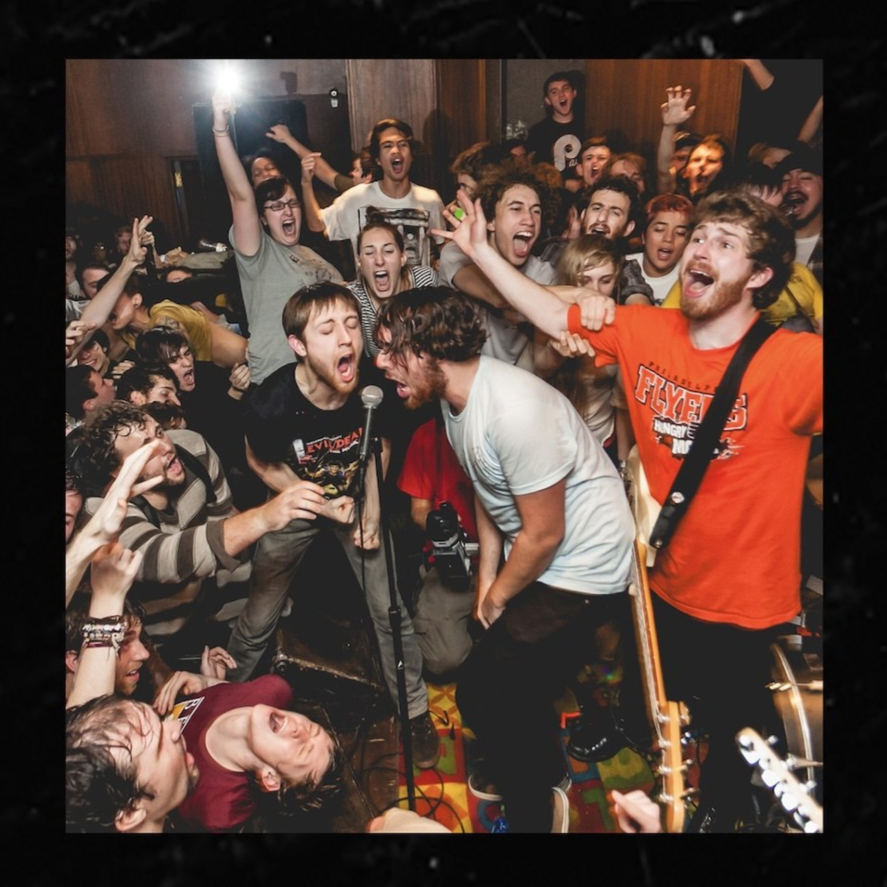
That’s how a lot of Emo Revival reads. It’s a thorough and specific recounting of the circumstances from 2008 to 2018 that led a crop of bands and labels to fortify a scene that became known as the Midwest Emo Revival. It’s a lot of names, locations, and nitty-gritty details about some of the most impactful bands and records of my high school and college years. For anyone else paying attention to music at this time, the book offers a blast from the past, but also a sort of zoomed-out contextualizing showing many artists working in parallel.
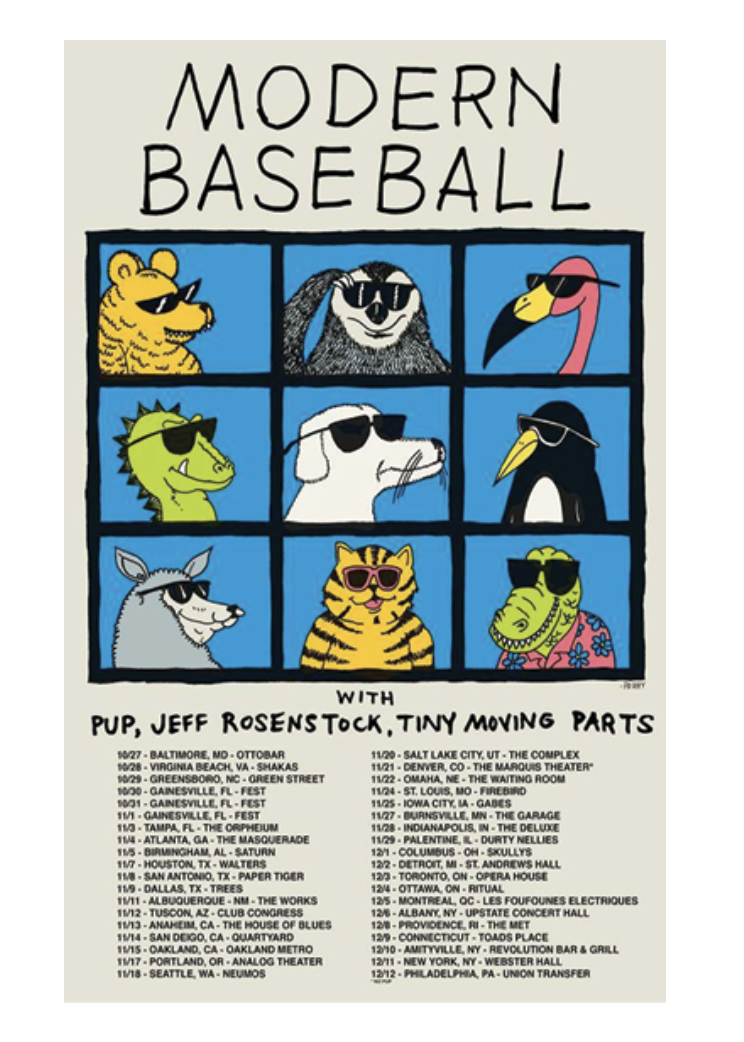
The book initially grounds this in Philadelphia and Jersey, where a crop of bands like Snowing and Algernon Cadwallader started playing shows, touring, and recording together, building fruitful creative partnerships that created a snowball effect as they connected with other like-minded bands. This paved the way for groups like Title Fight, Tigers Jaw, Balance and Composure, Modern Baseball, and Marietta.
Elsewhere, parallel scenes started to pop up: Touché Amore, La Dispute and Pianos Become the Teeth. Connecticut. Chicago. California. Across the country (in a pre-Facebook, pre-Twitter, pre-Instagram world), a network established itself, allowing these bands to tour the country and eventually the world, playing barns, VFW halls, and sweaty basements to increasingly impassioned crowds. By the time labels like Run For Cover, Topshelf, and No Sleep started getting involved, things just amplified.
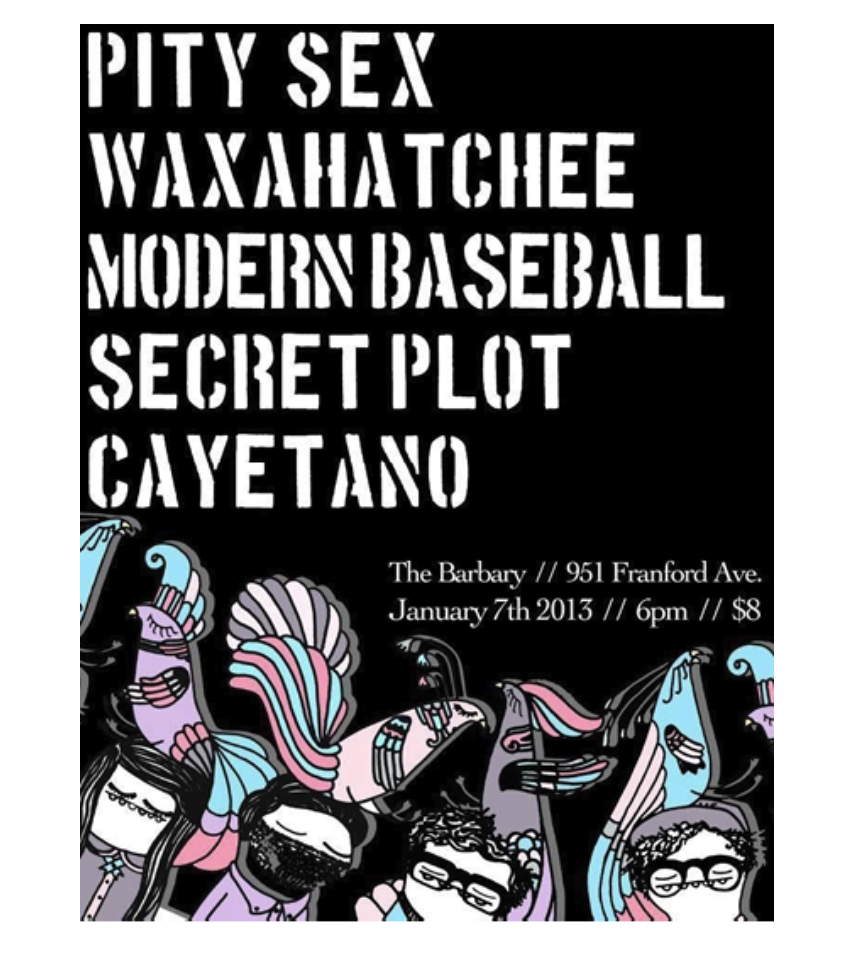
Sacher uses loose and casual language to work everything along. Paragraphs are packed with the names of band members and long-closed DIY spots. Interview quotes from the artists and individuals involved in the scene offer first-person recounting that gives the reader never before heard perspectives. Sacher puts the pieces together nicely, laying out a chronology of tours, collaborations, and relationships that feels easy to get strung up in, especially if you were involved or listening to any of this music at the time.
Reading the book feels like a 500-page domino effect where one band begets another, one tour spreads the gospel to another thousand people, and the whole thing grows into its own ecosystem. The book is a reminder of the seeds one individual can plant. The chance meetings, circumstances, and connections that can result in so many meaningful records, electrifying tour packages, and self-sustaining creative communities.
When Andrew reached out with advances of the book earlier this year, it felt like a no-brainer for The Swim Team to have our second-ever book club. Last year, we all read The Dad Rock That Made Me a Woman by Niko Stratis and had a blast. Below you’ll find a smattering of our takeaways and thoughts on Andrew’s emo tome.
You Blew It! By Not Being At a Title Fight Show in ‘08
The summer before my junior year of high school, I attended a You Blew It! house show. Not many emo revival era bands passed through El Paso during those years, and it was hardly an opportunity I was going to pass up. During YBI!’s set, Tanner Jones encouraged someone in the concerningly packed living room to crowd-surf all the way to the back to dunk a basketball in the hoop that was plastered to the wall. No one had the courage to do it. Later, the band sold merch out of their van, and I stood there with a vinyl copy of Keep Doing What You’re Doing in hand. The band’s bass player approached me and asked if I could hold his instrument while he plopped open the roadie case. At that time, it was the coolest thing that had ever happened to me. I had a minuscule hand in the emo revival– helping YBI!’s bass player put his bass away after a house show.
Andrew Sacher’s Emo Revival appropriately captures all eras of emo in roughly 400 pages. What has traditionally been known only as nebulous “waves,” Sacher is somehow able to pin down into form-fitting eras. Along with this, the novel explores behind-the-scenes tensions between bands that fans would otherwise have no clue about. For instance, The Hotelier, TWIABP, and Foxing competing in an “arms race” to create not the most popular work, but “the most artistically forward thing.”
The novel contextualizes how impactful the Wilkes Barre/Scranton scene was in kicking this thing into motion. Specifically, it highlights the monumental role of Pennsylvania legends Title Fight in sparking the emo revival. Not only did they pioneer a sound that many bands chase to this day, but they crafted a scene that invoked community above all. On page 91, Alex Henery of Basement describes the “single most important video of this whole scene” as this one of Title Fight performing in a Sellersville barn. While I was not in Sellersville, PA, in ‘08, I was at a YBI! house show in 2014, and the two are nevertheless intertwined.
– Brandon Cortez
Honestly? Let’s Have Another Emo Revival
My first, second, and third shows ever were The Front Bottoms (2015), Joyce Manor opening for Modern Baseball (2016), and awakebutstillinbed opening for Mom Jeans (2018). At the time, I was in college, loved American Football, and was dying to talk about these bands with anyone who would listen. Today, not much has really changed for me, except now Andrew Sacher’s book has clued me into the history of an extremely productive period in the genre. Reading this book made me feel like I was a fly on the wall in a green room, every page littered with name drops, unlikely connections, and shout-outs to bands I’ve never heard of before. A favorite moment was seeing the comparison of Turnover’s first album to Title Fight’s early work, validating an apparently not-all-that fringe opinion I’ve had since 2016.
Emo was Never Meant to be marketable or successful, but the success of the emo revival is that bands didn't do it for money or notoriety; they did it so they could have a band, so they could share music, so they could try to sound like their heroes. For many, this included Cap’n Jazz, Braid, The Get Up Kids, and dozens of others. As the world changed and social media grew, local communities of bands grew up together, traded tours, ideas, and audiences, collectively forming the Midwest Emo Revival. This book tells the story of the basements, the DIY attitudes, and the community that gave us Algernon Cadwallader, The Hotelier, Foxing, and so many more.
That said, some of your favorites might be missing. Sacher, in this interview from The Fringe, points to one passage about Basement that wasn’t in the final version. A few of my favorite extremely Midwest emo bands—The Brave Little Abacus, Olde Pine, and Charmer—weren’t anywhere to be seen either. And that’s completely fine. The best part of this genre is discovering and rediscovering it. However we rehash the history a decade from now, I’m sure Emo Revival will remain firmly at its foundation.
– Braden Allmond
Hey Ken, Somebody Methodically Gave a History of Emo Revival
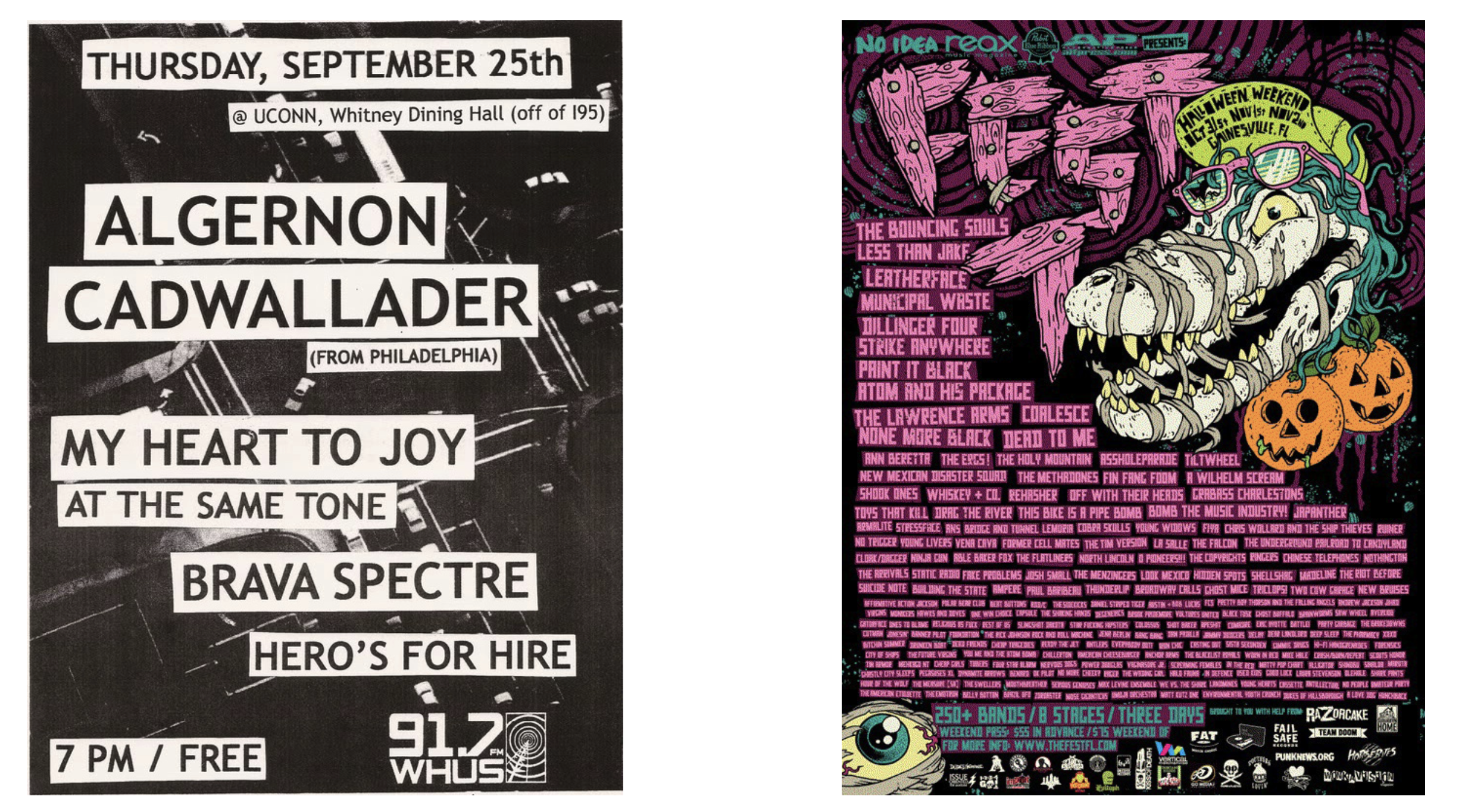
Andrew Sacher’s Emo Revival is a highly compelling description of post-2008 emo. Sacher’s interviews are informative, his knowledge of various scenes encyclopedic, and his love of the genre evident. More than anything else, Sacher’s writing makes you feel like you were part of the movement, as if you were a fan in a podunk little town in the Midwest that maybe only had one venue but suddenly saw this mass influx of bands constantly streaming in, with each one being even better than the last. This is a history book, but you feel like there is a protagonist, with each band slowly scraping out something a little bigger and becoming a symbol of the scene's overall growth. Sacher deserves praise for the exhaustive reproduction of promotional materials, the inside stories that can only come from the people involved, and a carefully constructed timeline that neatly places all of these bands into one (semi)coherent movement.
However, at times, the book loses the forest to the trees. I (and I am an academic, and that shades my reading of the book) would have preferred a little more contextualization, discussion of the music itself, and interpretation. Any history of 2008 to 2018 should discuss the financial crash of 08, the rise of tech companies, Trump’s first presidency, and a host of other notable events. The book almost seems detached from any grander cultural narrative, not asking how these cultural changes are or are not reflected in emo cultures. For instance, while there is a short discussion of the #metoo movement and emo, it is so quick that it gets lost in the shuffle. A broader focus would likely have led to a deeper analysis of the genre.
Regardless, if you are a fan of emo revival, this is a must-read that I imagine will quickly become an authoritative history of the 4th-wave (whatever that is).
– Varun Chandrasekhar
We Owe blink-182 the World
In the year 2010, I attended two important shows that would alter the trajectory of my life. The first was seeing My Heart to Joy, then fresh off the release of Seasons In Verse at the 12th & G warehouse in Chino Hills, CA. Having played a Beauty Shop in Los Angeles the night before, the show was abysmally attended; in fact, I was the only person there besides the bands playing and some people running the venue. After I witnessed what was effectively a private MHtJ show, I spoke with the people running the space and found out about subsequent shows. I would spend some of the best nights of my life there.
The second show that changed my life was when a new online friend invited me to their buddy’s house to see some touring bands: 1994! From Philadelphia and Big Kids from Oakland. Opening that show was the local darlings, Joyce Manor. I arrived at the spot, a condo in Laguna Woods, and watched each band play in a tiny-ass garage, with the people attending high-fiving and shouting along to every word. From there, I would see Joyce Manor every time they played SoCal for the next eight months.
Andrew Sacher's Emo Revival touches on these bands and so many others, discusses places like these where I first fell in love with DIY punk rock, and does a masterful job connecting everything and everyone, weaving the strands of each individual scene into one unified movement. On a map, I was a blip, a barely perceivable dot going to shows in a singular experience. Sacher's crafting of the revival’s narrative turned my blip into an oozing swathe, a coloring of the map that covered not just all of California but the country and beyond.
In the scene at large, I've always invoked the idea of “our shared history,” one that reaches back before I ever pressed play on any album and that continues to stretch forward down roads we can see, and plenty more we could never predict. Even now, there's some band who will enter the catalog of emo legends someday, playing a gig on tour to five people and wondering if it's even worth driving to their next stop. Thankfully, for all of us, they most likely will.
– Elias Amini
Any Book Where Minus The Bear Is Mentioned In the First 25 Pages Is Alright By Me
I think one of the coolest things about Emo Revival is that it offers a wide runway of context that practically any music fan can tap into. I would say my first brushes with the emo genre in its modern incarnation came through Run For Cover Records and their slate of bands in the early 2010s. When you’re a fan like that, starting from square one, it’s in your best interest to download samplers, follow Mediafire rabbit holes, and check out the whole tour package. Through that, I discovered a vast network of new bands to obsess over, and this book does a great job of explaining how the groundwork for that landscape came to be. It’s cool to hear the origins of a bunch of your favorite bands and albums, but it’s also just something that makes so much sense when you see it all placed in chronological order. It really highlights how much cool shit was happening at once, and watching it all compound and grow over the course of the book is a blast.
This is my golden age of emo, and it’s an affirming reflection of my own experience becoming aware of the larger mechanism of “The Scene.” In an era where algorithmic recommendations threaten to flatten our experience of music and most bands are never more than a search away, it’s important to hold on to “old school” ways of doing things and consider what ways we can work outside the system as it currently exists. There has to be a better way, and Emo Revival offers a few reminders that doing things honestly and with difficulty oftentimes pays off in ways you can’t even imagine.
– Taylor Grimes
Revival feels good in a book like this.
While I’ll always be a little bitter that I wasn’t born on the East Coast so I could avail myself of the burgeoning emo scene of the early aughts, reading Emo Revival offered me a taste of what my adolescence could have been like if I had. Though I wasn’t allowed access in my teenage years to the music I now cherish, Andrew Sacher paints such a vivid picture of this era of emo history that I feel like I got to experience a little bit of it after all. Sure, I never got to see Title Fight, but now I know what it was like to watch their rise and consequent explosion into the scene. And even though I’ve been a fan of Touché Amore for years, it was special to read new details about their history. Emo Revival weaves the vibrant, variegated threads of band lore, cornerstone venues, and milestone releases into a wonderfully cohesive tapestry. As a music history lover and devotee of the scene, I consider this book essential to any fan’s knowledge of alternative music and emo.
– Britta Joseph
The Avengers, But Make It Emo
In Emo Revival, Andrew Sacher is answering the big question, “What if you could get that blockbuster, screen-pointing feeling of seeing your favorite character or origin story reveal, but about a relatively niche topic like the emo revival of the 2010s?”
This is a tome that rewards doing your research and knowing your shit, with some much-needed groundwork laid and preamble sprinkled in here and there. The layering and setup pays off mainly for the biggest of emo heads and those who know the who's who of small-town music scenes. I personally loved the moments of reading about some random, small ska band in rural PA, only to turn the page and exclaim, “Oh hey, that's The Menzingers!”
Even if you're someone like me who was listening to a lot more Coheed and blink-182 in the 2010s and discovered bands like Tigers Jaw later in life, Andrew does his due diligence to inform and expand on a topic that needs all the historical documentation it can get. If this topic is even remotely in your wheelhouse, I recommend grabbing a copy of Emo Revival and prepare to feel like an angsty teen again. Class is in session.
– Ciara Rhiannon
MILBAEM
Man I Love Books About Emo Music.
– Caro Alt